-
-
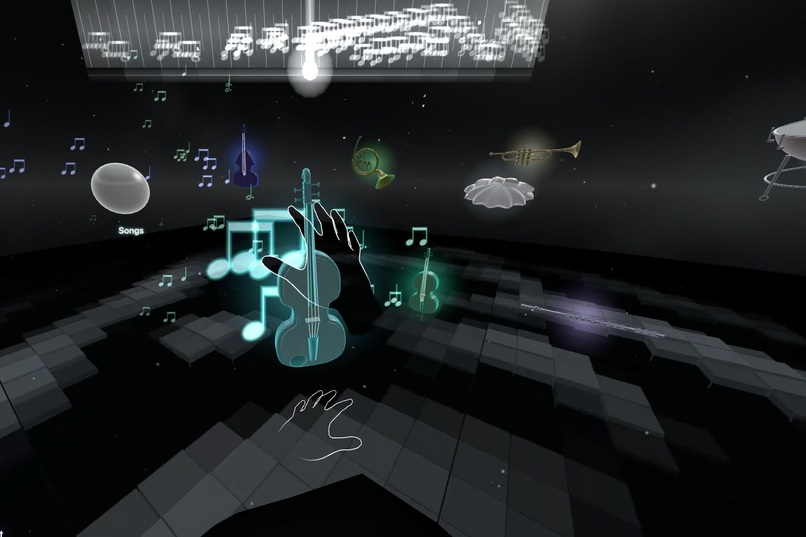
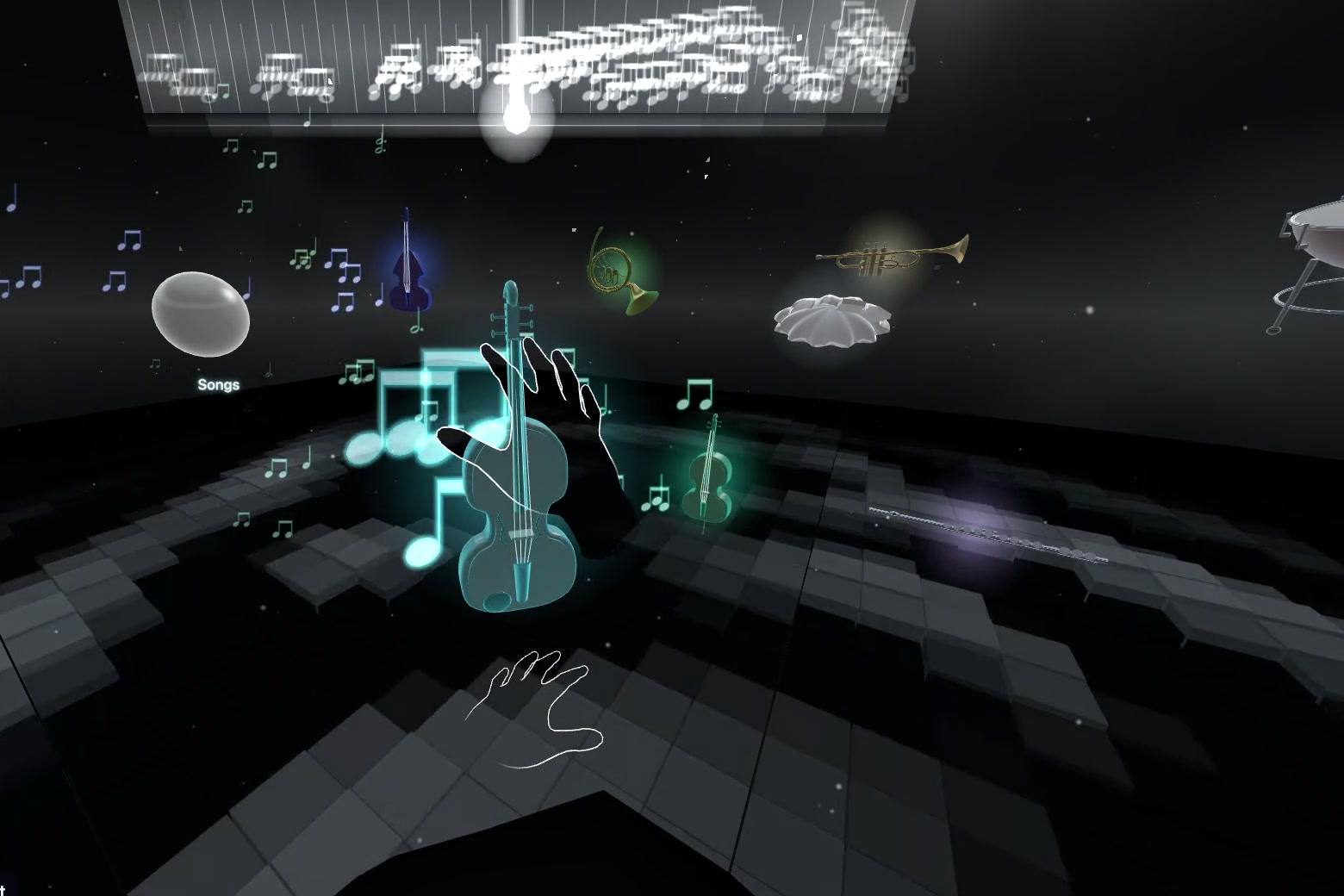
Reach in: a summoned cello, its notes floating from the score
-
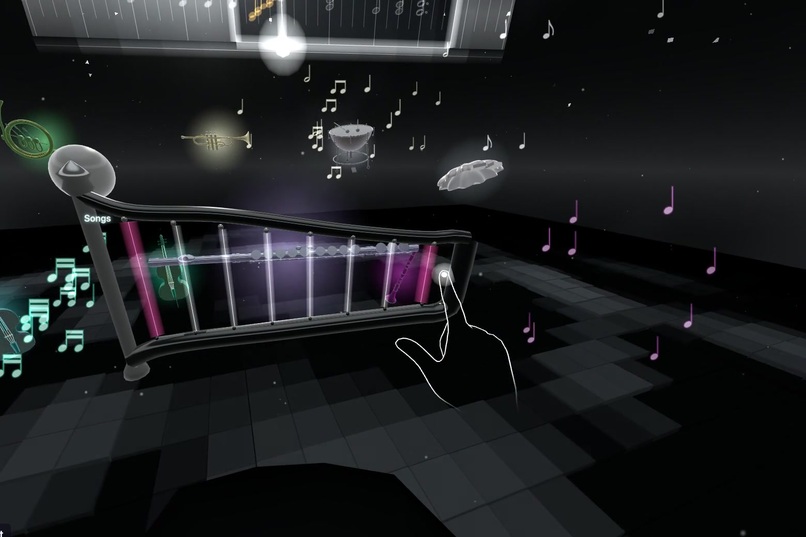
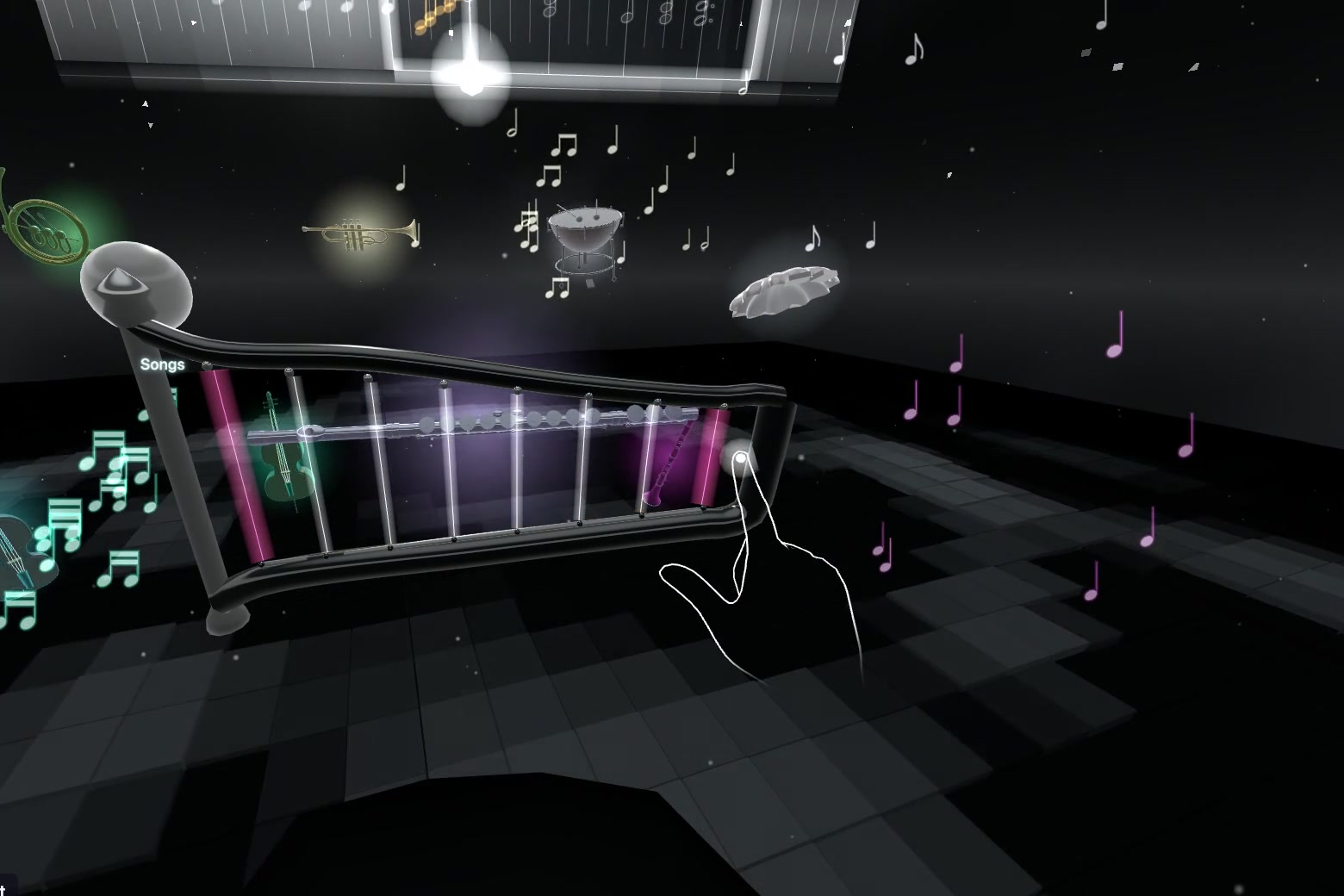
Play the harp yourself: sweep a finger across the strings
-
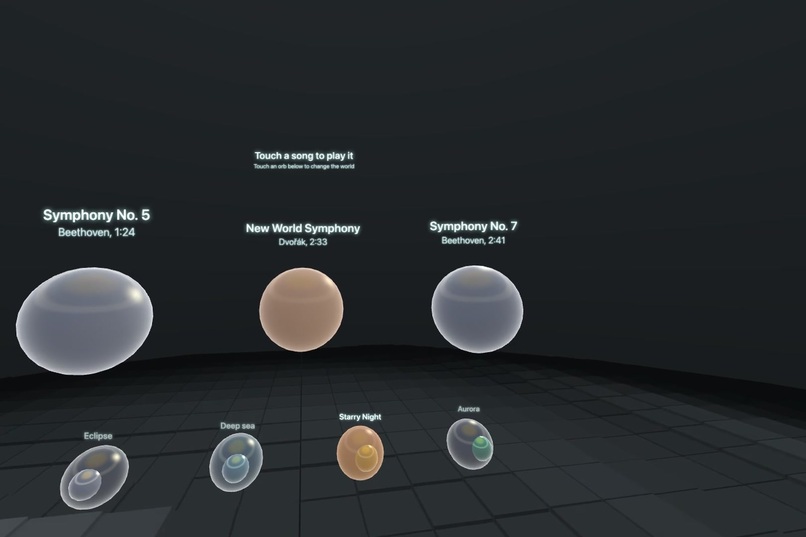
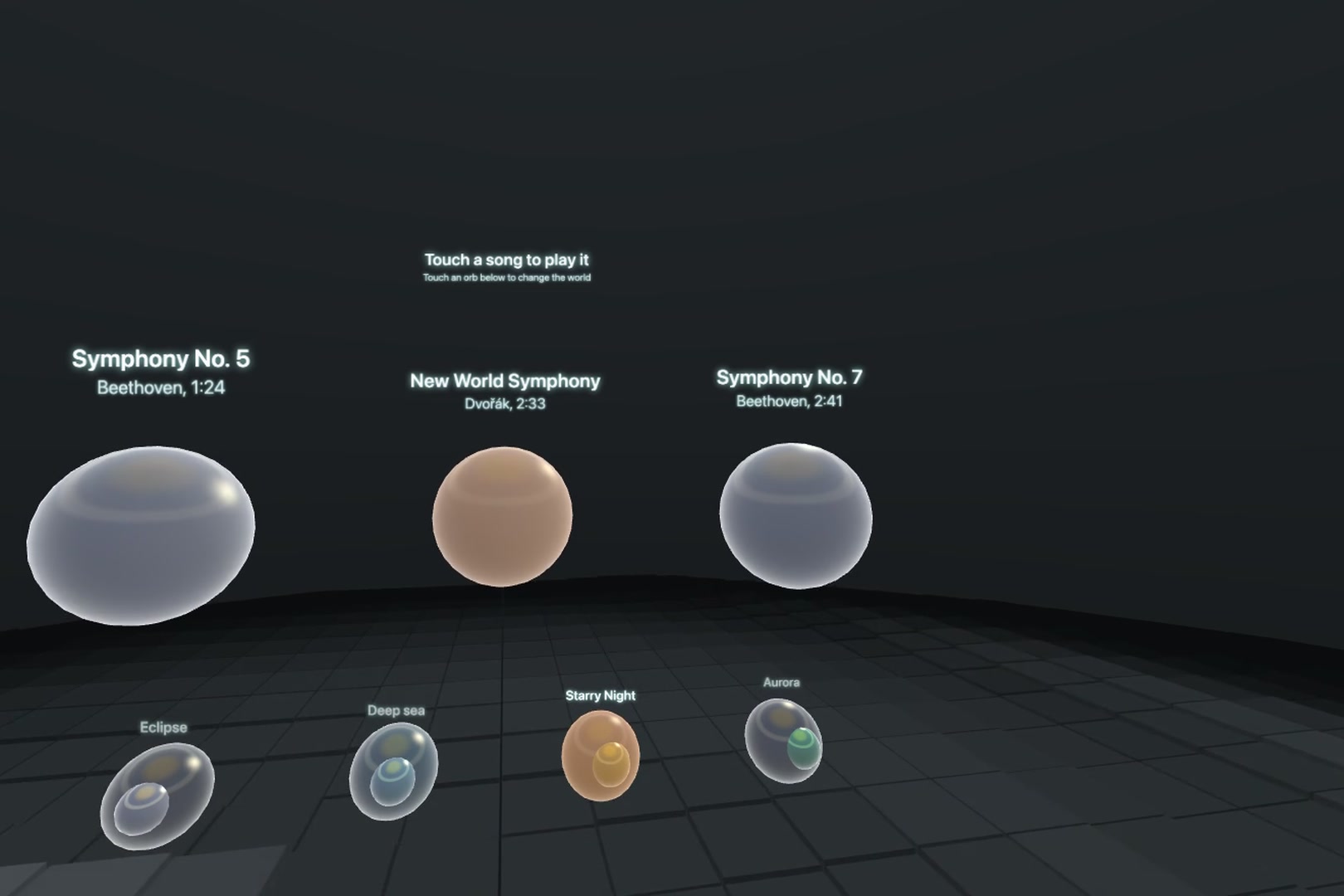
Choose a song and a world in a quiet selection space
-
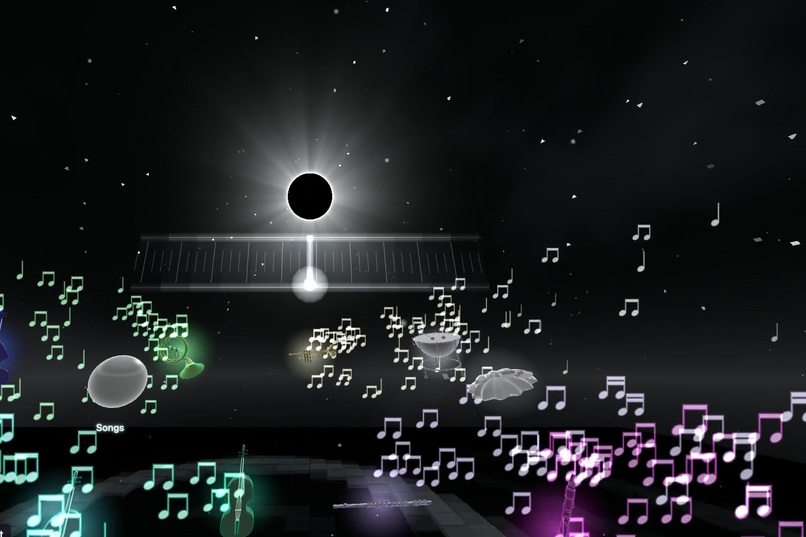
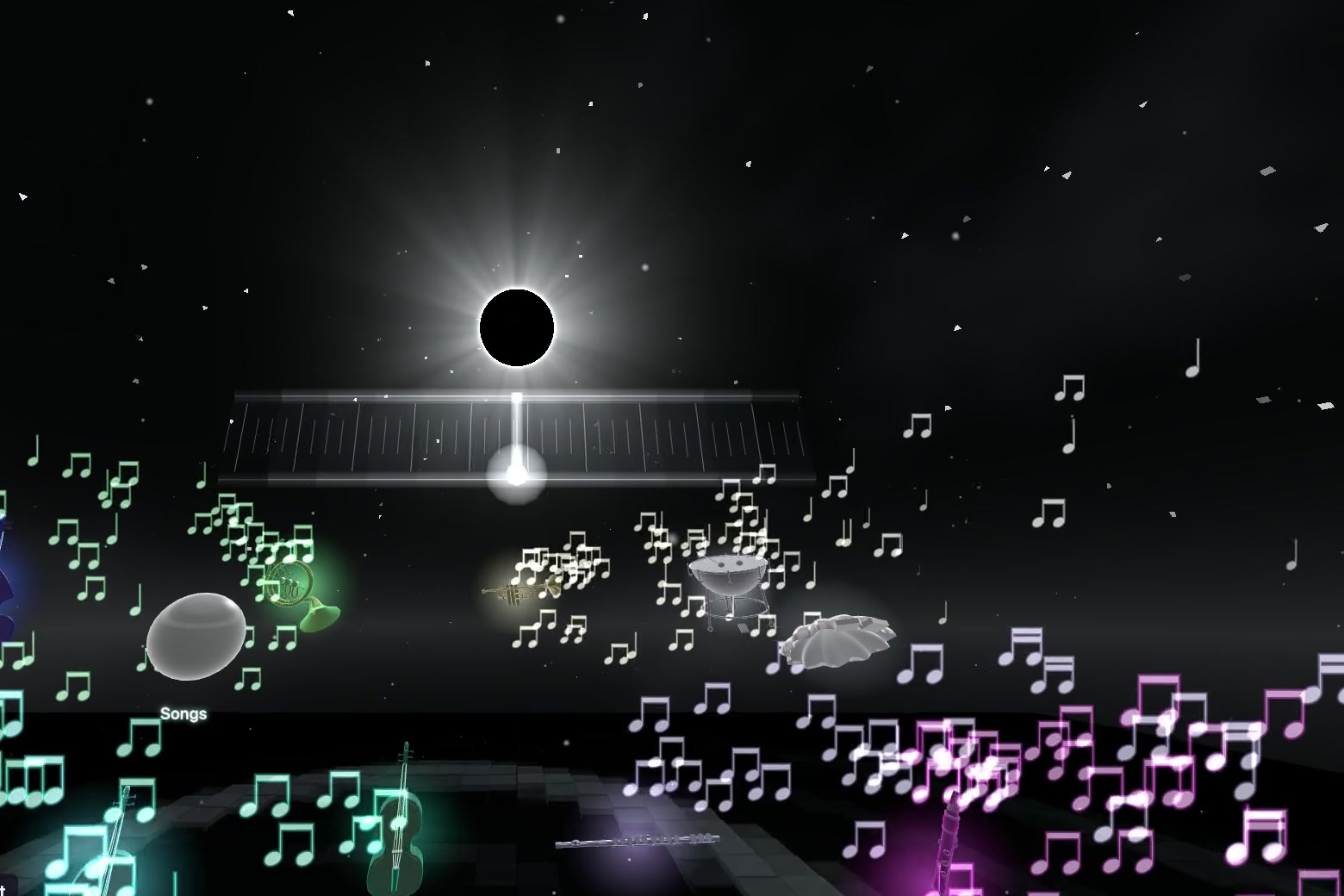
Eclipse, the default world, with the score's notes all around you
-
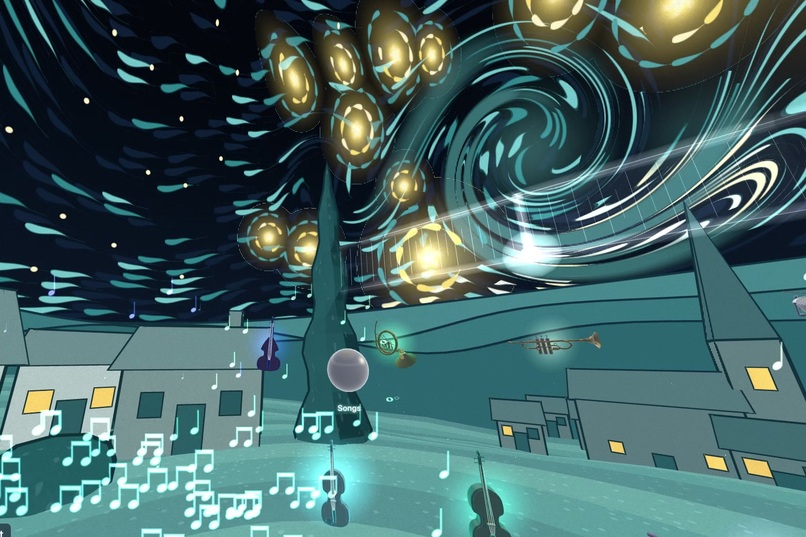
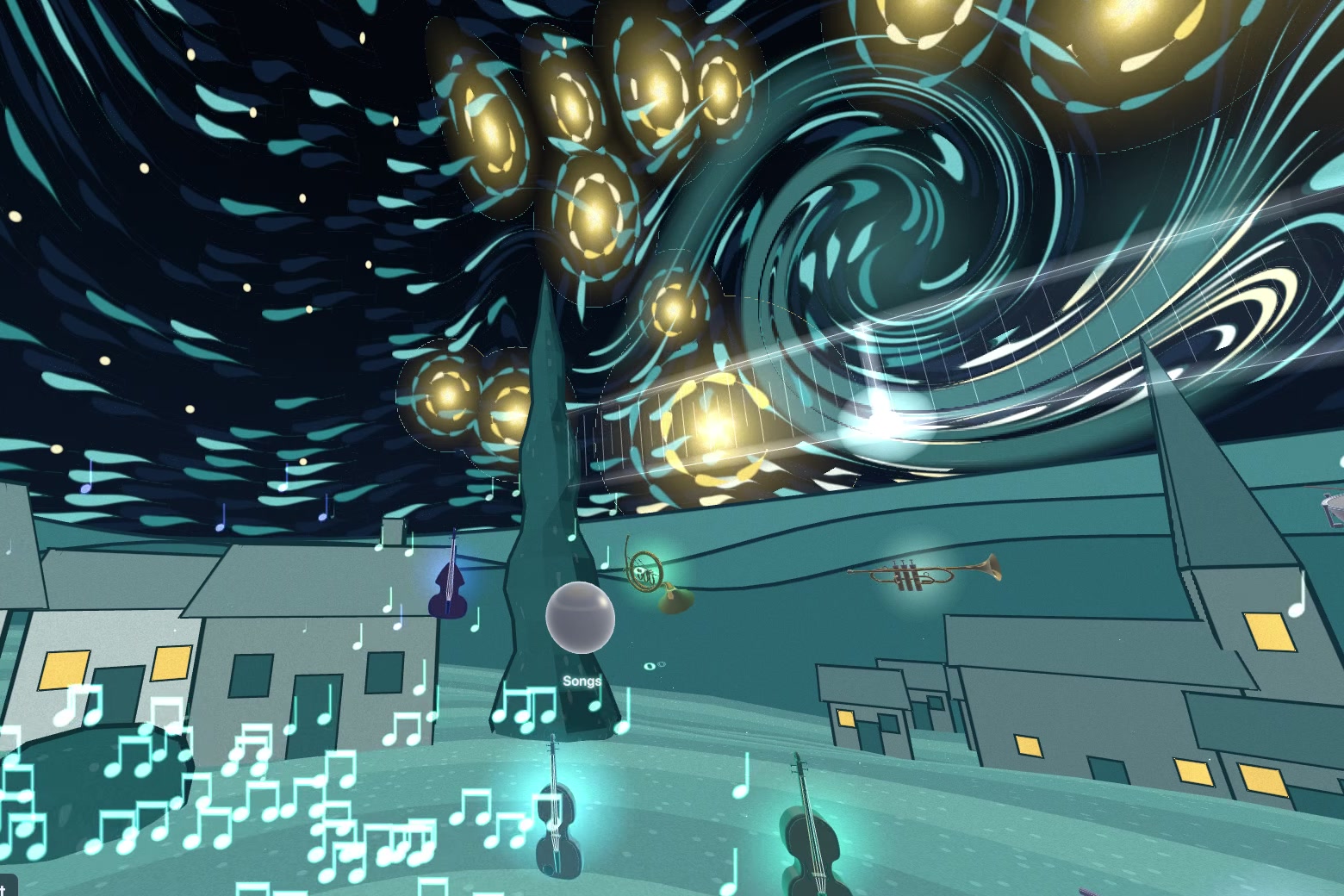
The Starry Night world, painted in code after van Gogh
Stemlight is a seated, hands-only music visualiser. Look at an instrument and it comes to you. Close your fist and it falls silent. Cut its part out and play your own.
Inspiration
We love music but neither of us plays in an orchestra. Tools that split a song into its parts made us want to sit inside one: hear the horns alone, take the timpani out and play them ourselves. A screen keeps you outside the music; a headset and your bare hands put you in the middle of it.
What it is
- Eight instruments float around you, modelled in code, each playing from where it sits through spatial audio. Every note from the score leaves its instrument as a floating notation symbol: its length is the note's length, its height the pitch, its size the loudness.
- Three songs: Beethoven's 5th (with a short tutorial), the finale of Dvořák's New World Symphony and the Allegretto of Beethoven's 7th. You choose them in a quiet selection space by touching a glass bubble.
- Four worlds, chosen with small glass orbs: Eclipse (the default: a black void with an eclipsed sun and a floor that ripples to the music), the deep sea, a cartoon-shaded Starry Night after van Gogh, and Aurora over ice. On headsets that support it, Enter in passthrough plays it all in your own room.
What your hands do
Look at an instrument to bring it close. A fist silences it and freezes its notes into glass; hold the fist to keep it quiet. Pinch twice to solo it. Cut a stretch of a part and drums, a harp or a keyboard appear: play into the gap, and your part snaps to the beat and loops. No controller, no account, no menus; a ghost hand and a word or two teach each move.
How we built it
- IWSDK (WebXR) and its entity system: a static build at https://stemlight.vercel.app.
- An offline pipeline turns open orchestral scores (Mutopia Project) into eight stems rendered with CC0 samples and the note data the visuals use.
- One audio clock drives sound and sight, so the parts never drift.
- The hard problem was fist versus pinch: both curl the fingers. Thresholds that can't overlap, hysteresis and drop-out handling gave zero cross-triggers in 120 scripted gestures.
- With no headset, we scripted every interaction in the IWSDK emulator. At the busiest moment: 64 draw calls and 102k triangles, within budget.
- An AI coding assistant wrote most of the code under our direction; we designed, reviewed and tested it.
What's next
Any song: split a track on your own laptop, then sit inside it, with nothing uploaded. Target: public beta on 15 February 2027.
Credits: Dvořák, Mutopia #1793, CC BY-SA 3.0 (our stems: same licence); Beethoven, Mutopia #941 and #595, public domain; van Gogh, The Starry Night (1889), public domain; VSCO 2 Community Edition samples, CC0; Bravura font, SIL OFL 1.1.
Built With
- iwsdk
- python
- three.js
- typescript
- vite
- web-audio
- webxr


