The rules of college were never written down for everyone
Some students walk into college with the unofficial rulebook, understanding how to navigate the financial aid maze, knowing which courses serve as prerequisites for the classes they desire, and recognizing when they need to ask for help. Other students, often those who are first in their families to attend college, receive the course catalog with the same information and are left to figure it out.
This discrepancy is what we know as the FGLI (First-Generation and Low-Income) achievement gap, and a reason why students who aren't taught the "unofficial" rules of college can fall behind.
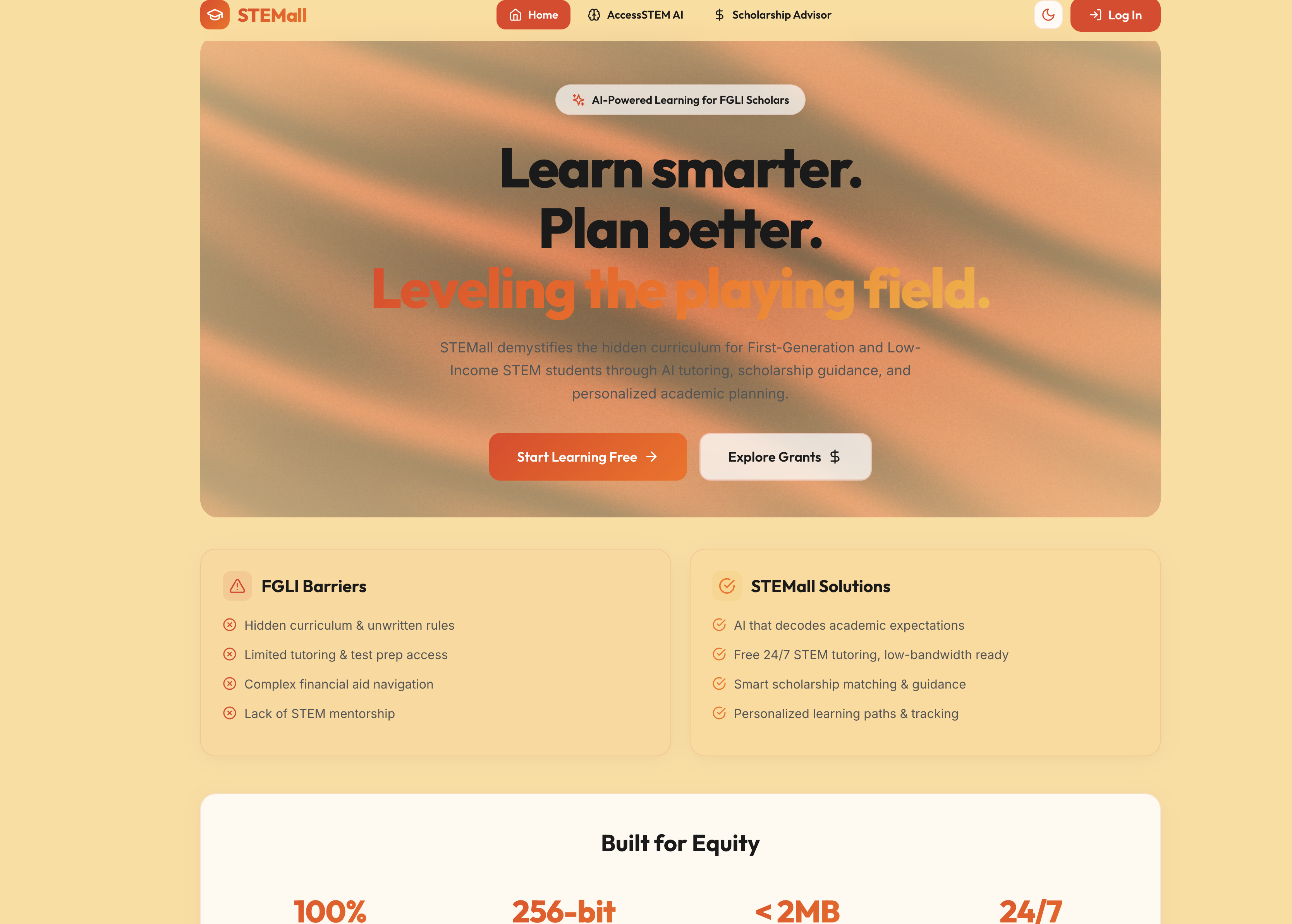
STEMall is a free, AI-powered resource for FGL students studying STEM fields designed to close the STEM-specific skill and resource gap, showing FGLI students exactly what they need to learn, what scholarships and grants they are eligible for, and what they need to do in order to graduate.
Inspiration
My cousin sat in front of the screen of a university portal in frustration, ready to give up. They had missed one critical deadline that had put their entire STEM future at risk, but they hadn't realized why. Betrothed in a sea of rules and red tape, they didn't know exactly how to receive help or who to ask for guidance. They were one step away from quitting.
When we helped them, however, it made us wonder how many other students are not as fortunate to have someone do this for them. This is what inspired us to build STEMall.
What is STEMall?
STEMall deciphers the most complex aspects of a STEM degree:
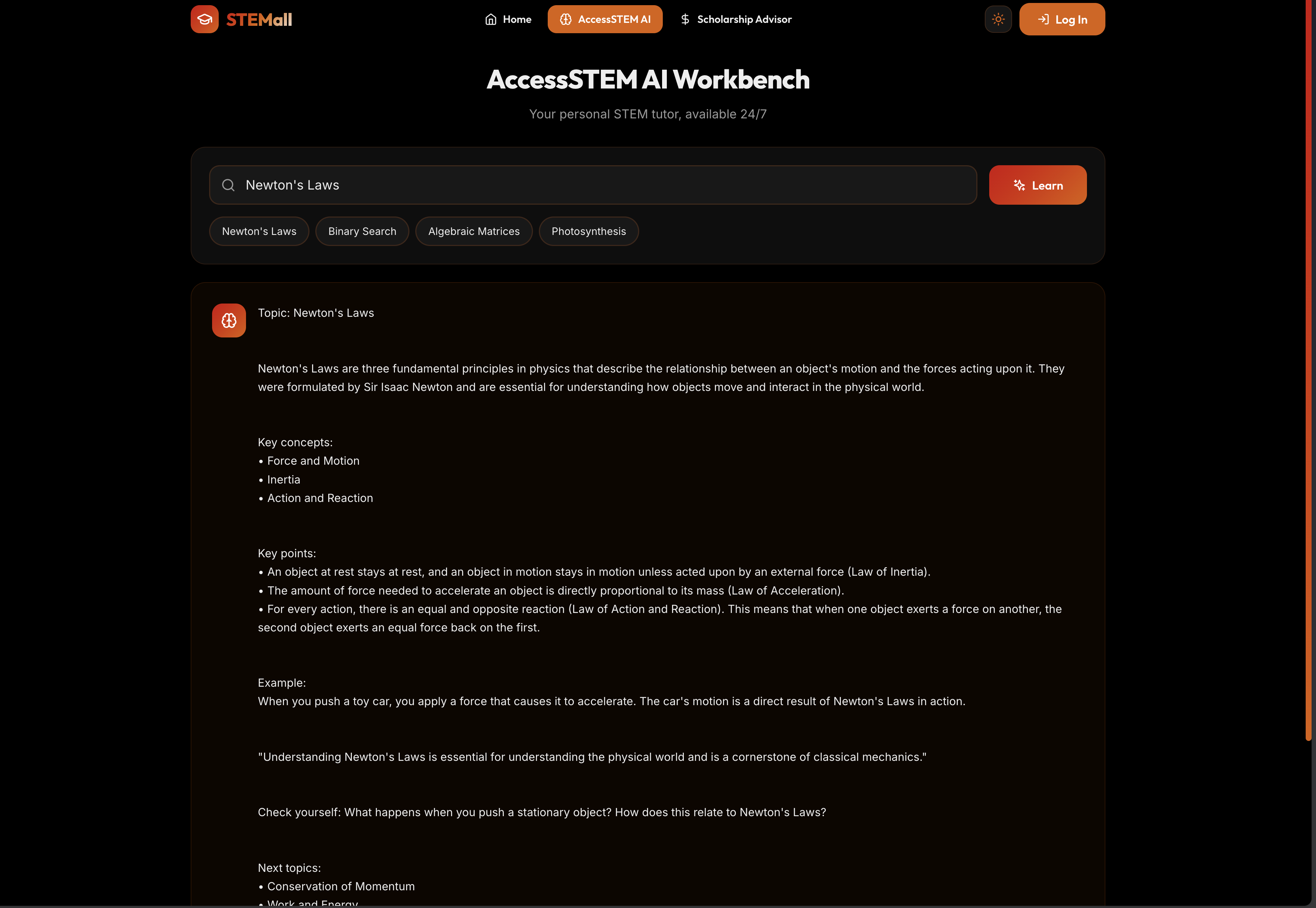
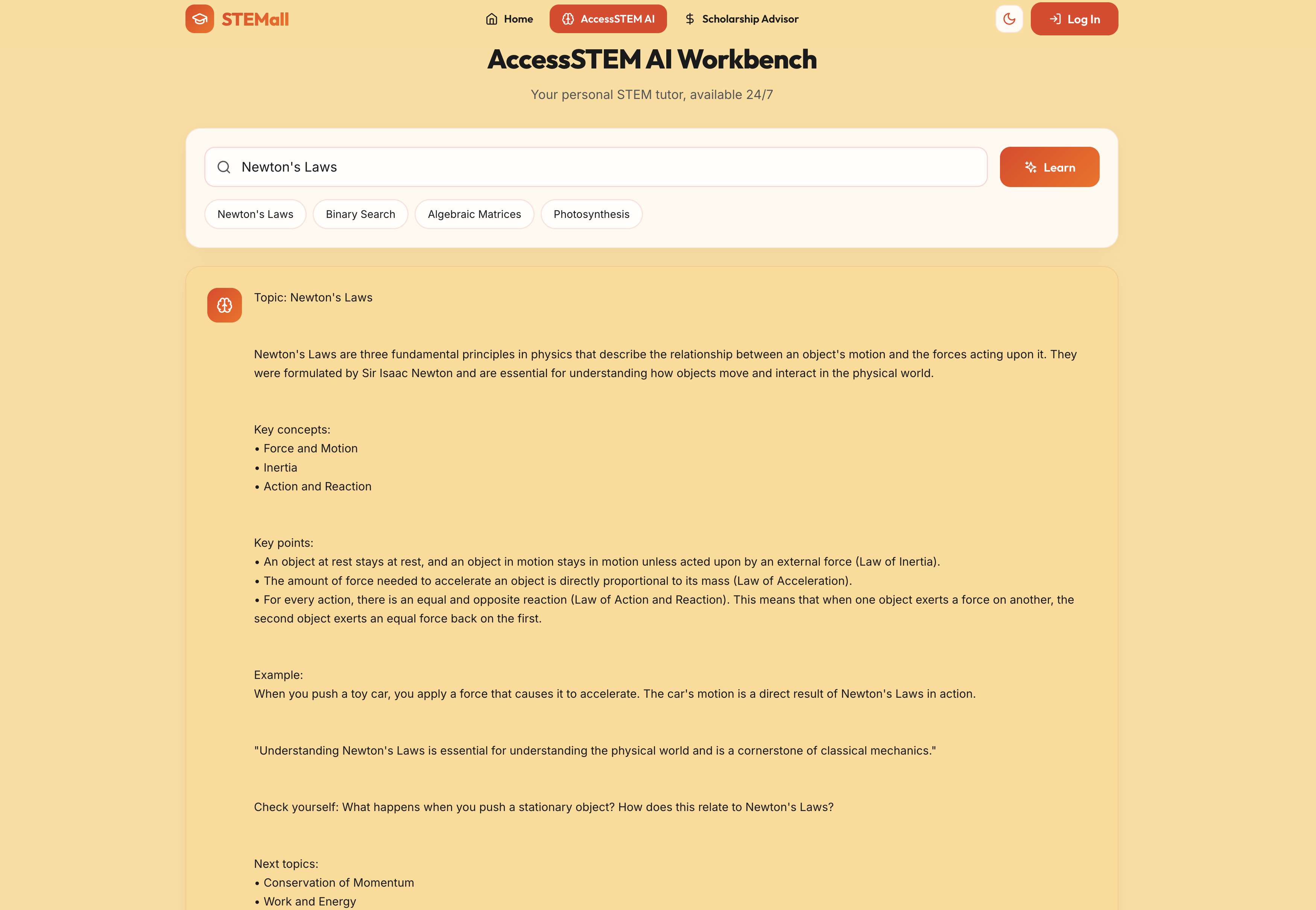
• AccessSTEM AI Tutor: free, easy access to tutoring and guidance in any STEM-related field in both a chatbot and video format
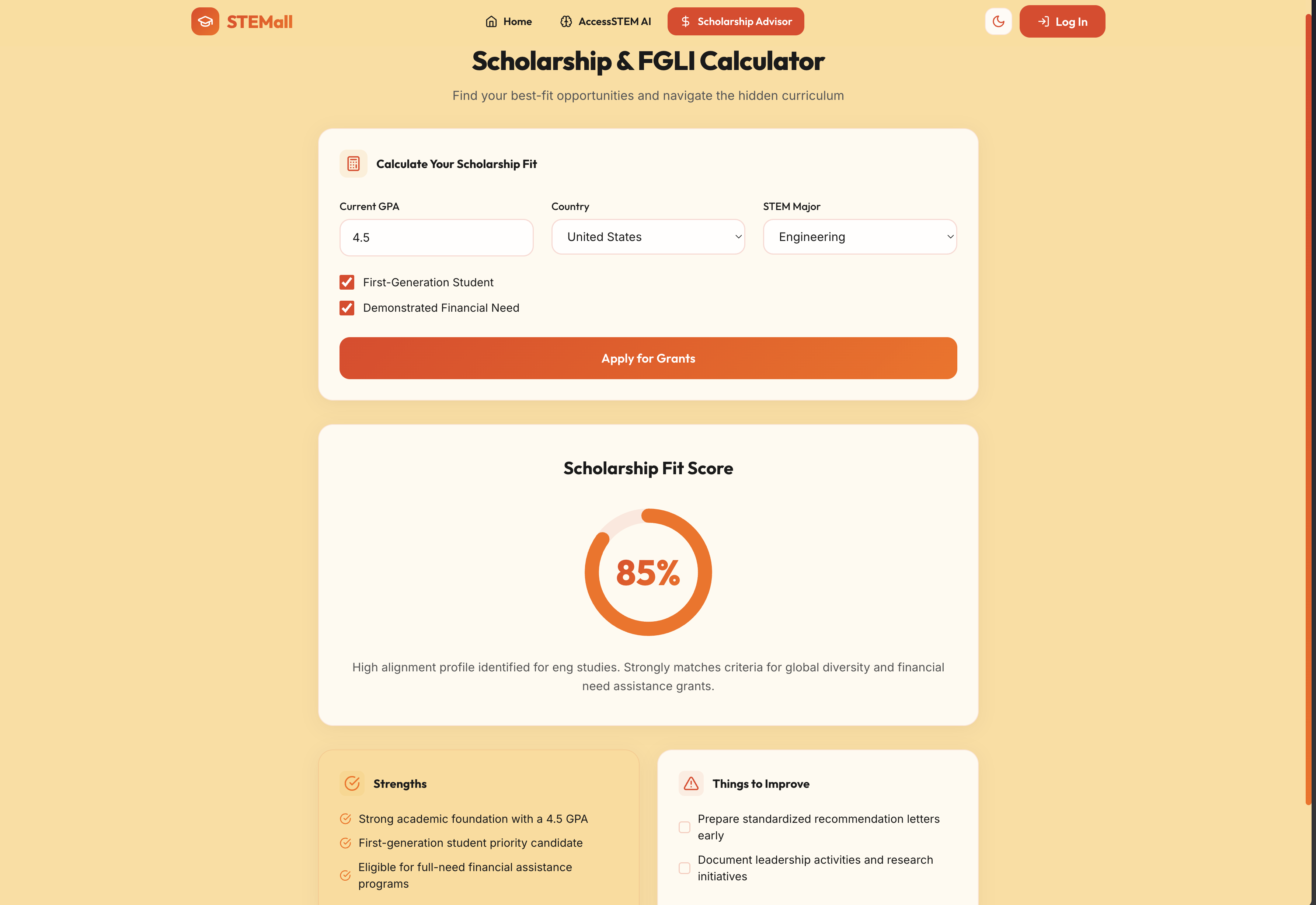
• FGLI Scholarship Advisor: AI-assisted discovery of relevant, easily attainable scholarships and grants based on the student's profile
• Zero-latency architecture: easy to access, even with low bandwidth and unreliable connections
• Decoded academic expectations: a guide to the unwritten rules and expectations of a STEM college experience
The Process
STEMall is built with the free and open source Next.js/TypeScript framework to create dynamic webpages and components, and designed with Tailwind CSS to make sure STEMall is beautiful and user-friendly, even for those who only have a basic understanding of technology.
We prioritized the accessibility of STEMall, as many FGLI students come from low-income households and may not have unlimited access to the internet.
It was also essential that STEMall could provide accurate and reliable tutoring in all STEM fields without costing the users anything.
Finally, we deployed STEMall on the Vercel platform to make sure that STEMall would be a reliable and easily-accessible global resource.
Challenges
One major challenge was that quality and small file size are at odds with one another in terms of web development.
While we want STEMall to provide reliable and accurate STEM tutoring, any additional features put the program at risk for exceeding the file size limit for apps operating on cellular data.
We also had to balance response time and precision to make sure STEMall will be efficient and protect user privacy.
Accolades
We are extremely proud of our accomplishments and strive to do more in the future, but some of our individual and collective proudest moments are:
1. Designing our program to be a fully functioning, free AI tutoring program accessible to all STEM students who need help
2. Designing a UI that makes it easy for anyone, regardless of any prior knowledge of higher education, to use and understand our program right away
Learning
While it was exciting to experiment with the various ways we could design an AI to do tutoring, it was actually more rewarding to figure out how to make our AI accessible to everyone, including those with low bandwidth and limited cellular data. We learned that when it comes to building effective tools for the future generation of STEM students, simplicity and reliability trump fancy extra features.
Additionally, prompt engineering was an interesting and exciting process because it involved a strong grasp for natural language processing and understanding in addition to the technical side of computer science.
However, it was surprising how much a part of the process had to do with understanding how to phrase certain prompts in ways that would be clear and comforting for the end-user, rather than feeling robotic.
Future Development
In the upcoming future, we hope to implement:
• Offline modes
• Peer-to-peer mentorship options
• Grant application tracking
• University portal compatibility
and much more!
Built With
- css3
- github
- html5
- javascript
- next.js
- react
- tailwind
- typescript
- vercel
- vite


Log in or sign up for Devpost to join the conversation.