-
-
-
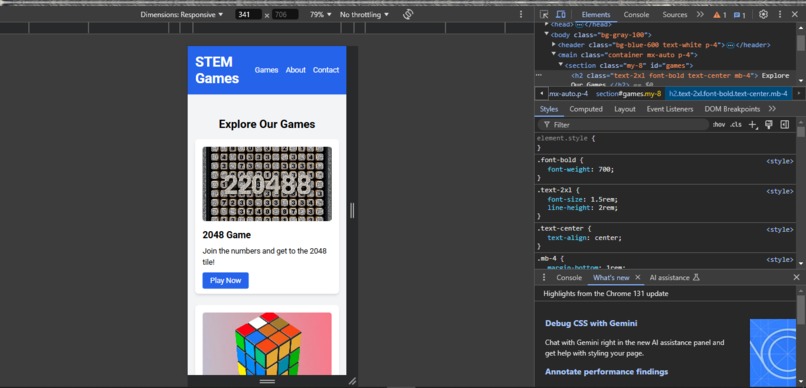
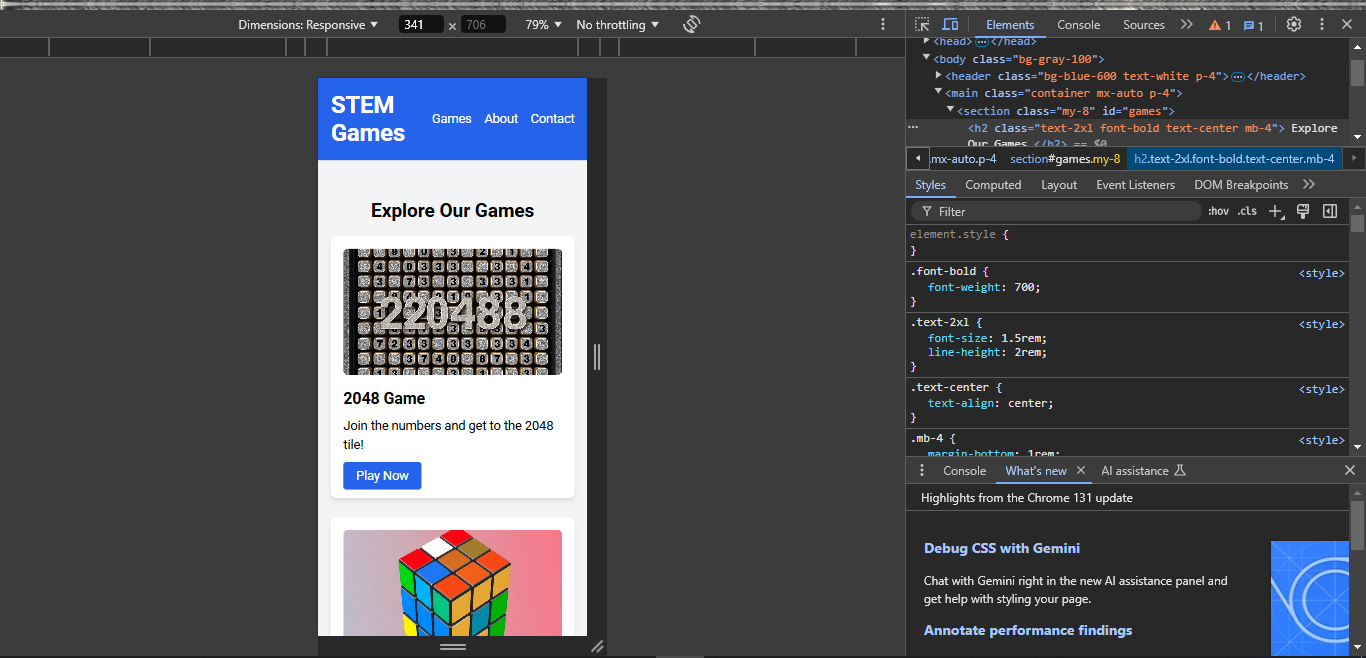
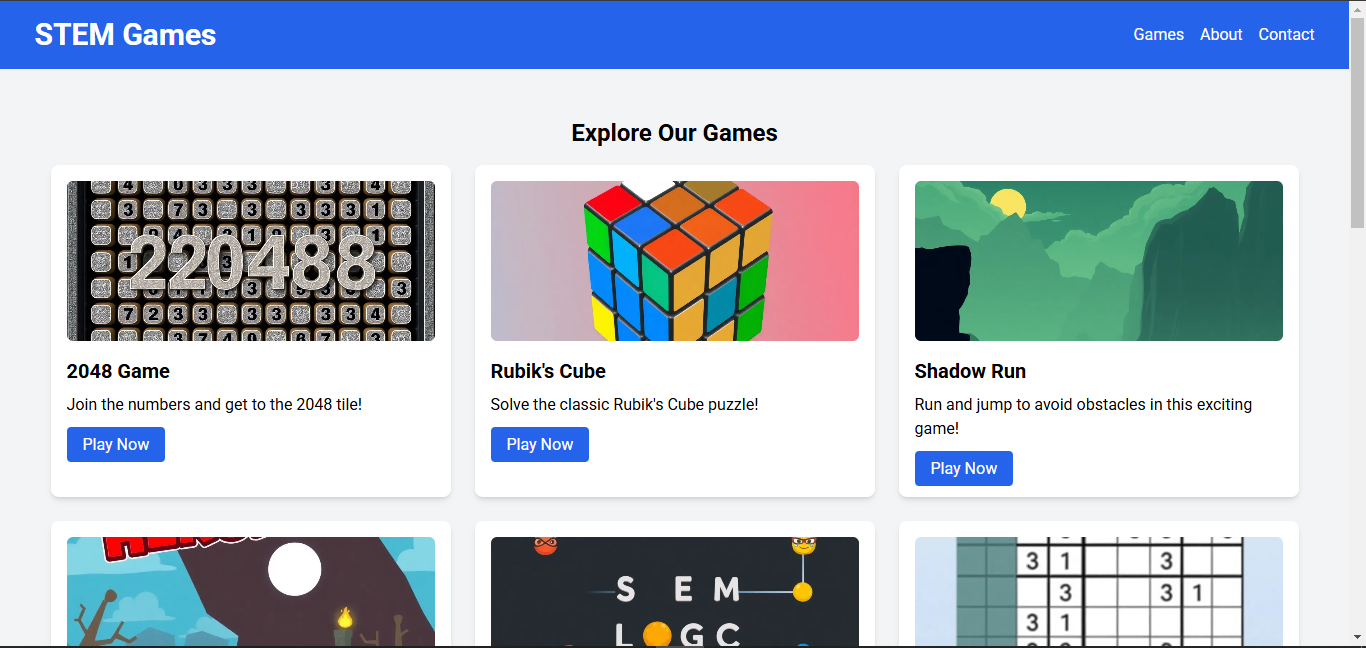
Responsive website
-
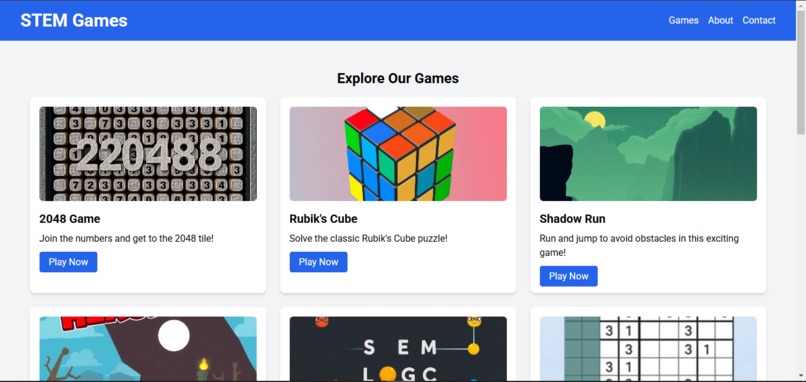
user friendly UI
My STEM Games Journey: From Concept to Gameplay Inspiration:
My inspiration for creating STEM Games stemmed from a desire to make learning more engaging and accessible for everyone. I observed that traditional STEM education often felt dry and uninspiring, leading to disinterest and a lack of motivation. I believed that by incorporating game mechanics into the learning process, we could transform STEM subjects into exciting and rewarding experiences.
Learning:
Building STEM Games involved a multidisciplinary learning experience:
Game Development: I delved into game design principles, including level design, game mechanics, and user interface (UI)/user experience (UX) design. I learned to use game development tools and engines to bring my game ideas to life. STEM Concepts: To ensure educational value, I thoroughly researched and integrated core concepts from science, technology, engineering, and mathematics into each game. This involved understanding topics like physics, coding, logic, and problem-solving. Educational Psychology: I explored learning theories and cognitive science to understand how people learn best. This knowledge guided the design of the games to maximize player engagement and learning outcomes. Programming: I honed my programming skills in languages like Python and JavaScript to create the game logic, implement game mechanics, and ensure smooth gameplay. Building the Project:
Concept Development: I brainstormed and prototyped various game ideas, focusing on games that were both fun and educational. Game Design: I created detailed game designs, including game mechanics, level structures, and visual aesthetics. Development: I implemented the game logic, created the visual assets, and integrated the UI/UX elements. Testing and Iteration: I conducted rigorous testing with playtesters to gather feedback and identify areas for improvement. I iteratively refined the games based on this feedback. Platform Development: I built a user-friendly platform to host the games, ensuring cross-platform compatibility for easy access on various devices. Challenges:
Balancing Fun and Education: Finding the right balance between entertainment and educational content was a constant challenge. I strived to create games that were engaging and enjoyable while seamlessly integrating valuable STEM learning. Accessibility and Inclusivity: Ensuring that the games were accessible to players of all ages and skill levels required careful consideration of game difficulty, pacing, and user interface design. Technical Challenges: Debugging code, optimizing game performance, and ensuring compatibility across different platforms presented significant technical hurdles. This journey of building STEM Games has been a valuable learning experience. It has allowed me to combine my passion for games with my interest in education, demonstrating the power of play in fostering a love for STEM.
Note: This is a tailored version of the previous response, focusing on the specific context of STEM Games. You can further customize it by adding details about specific games you created, the technologies you used, and any unique challenges you encountered.
Built With
- css
- html
- javascript
- python
- tailwind


Log in or sign up for Devpost to join the conversation.