-
-
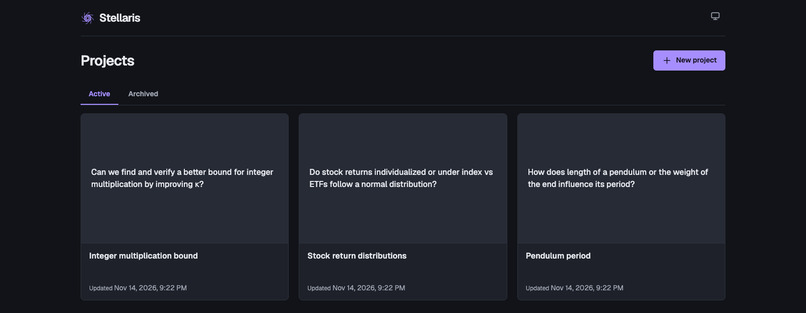
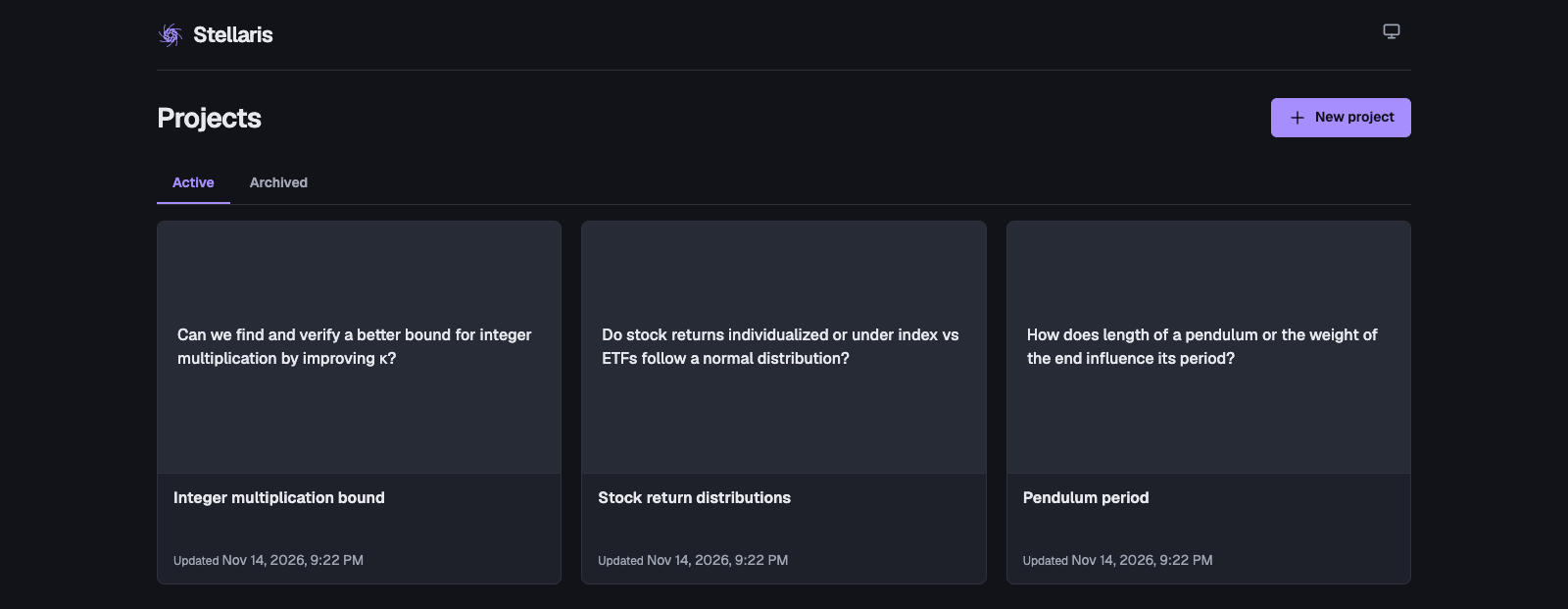
Sample Projects View
-
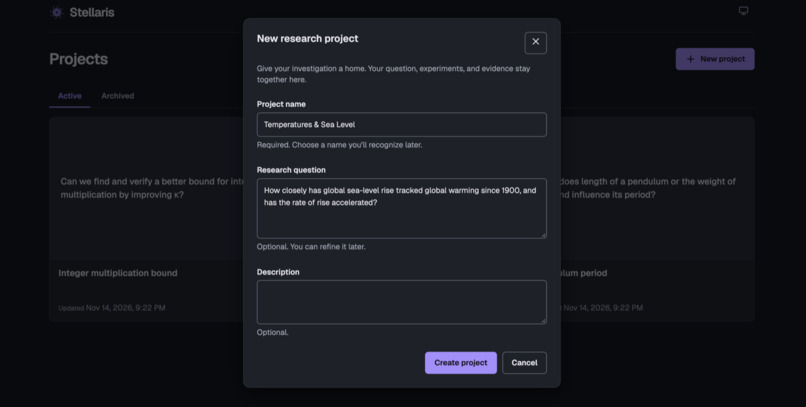
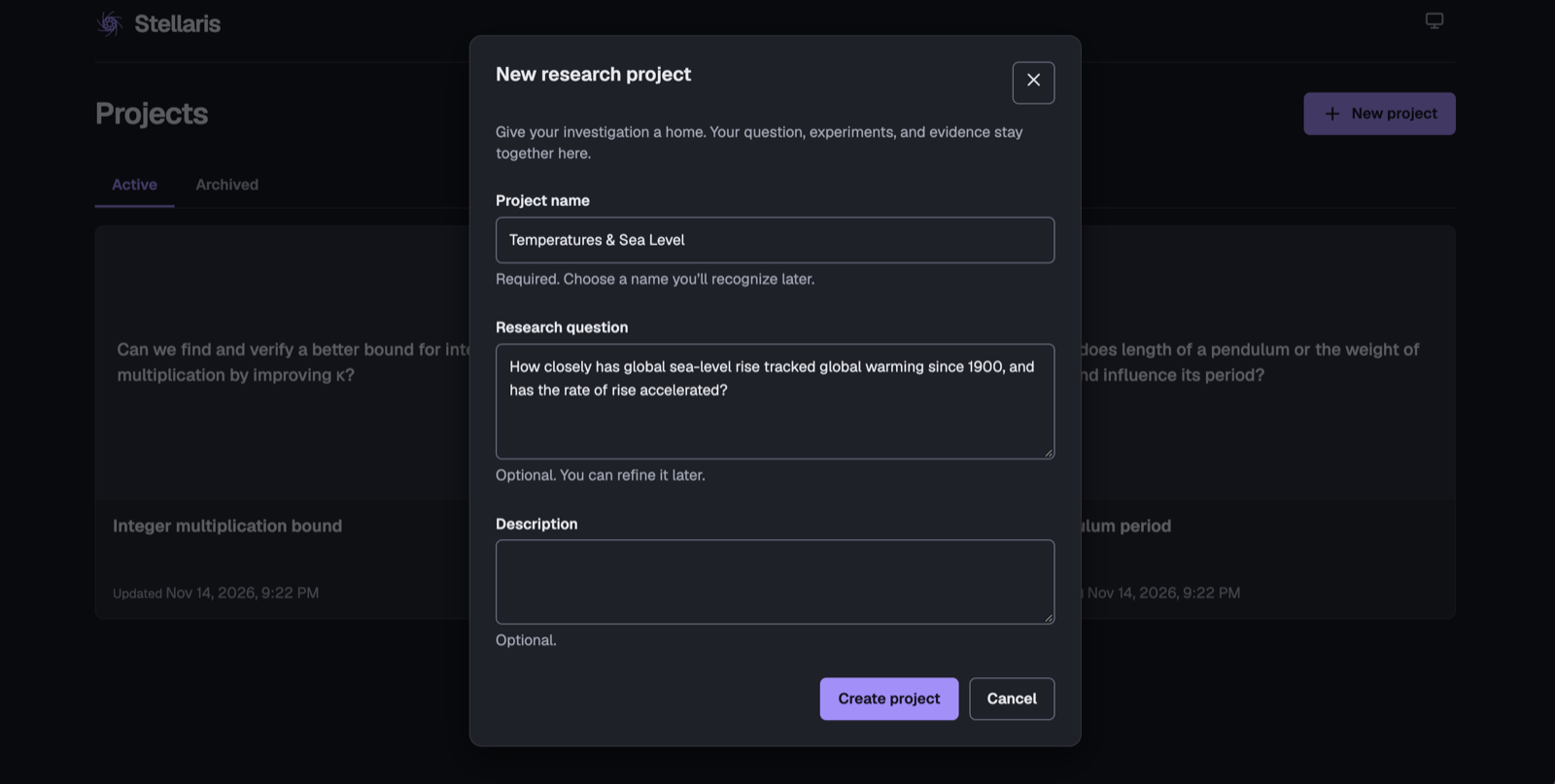
Creating a New Project
-
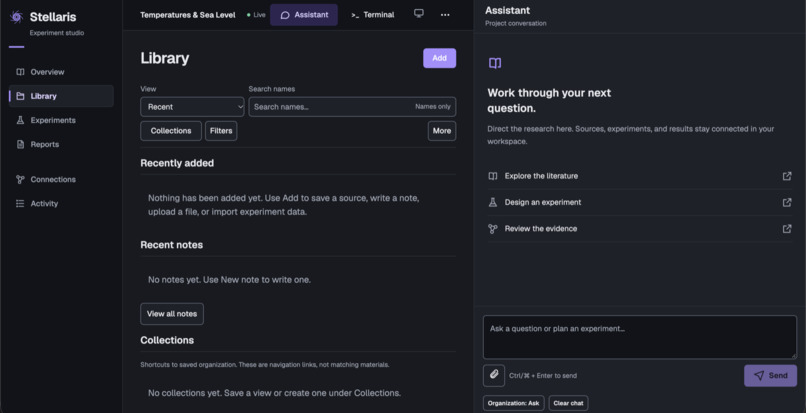
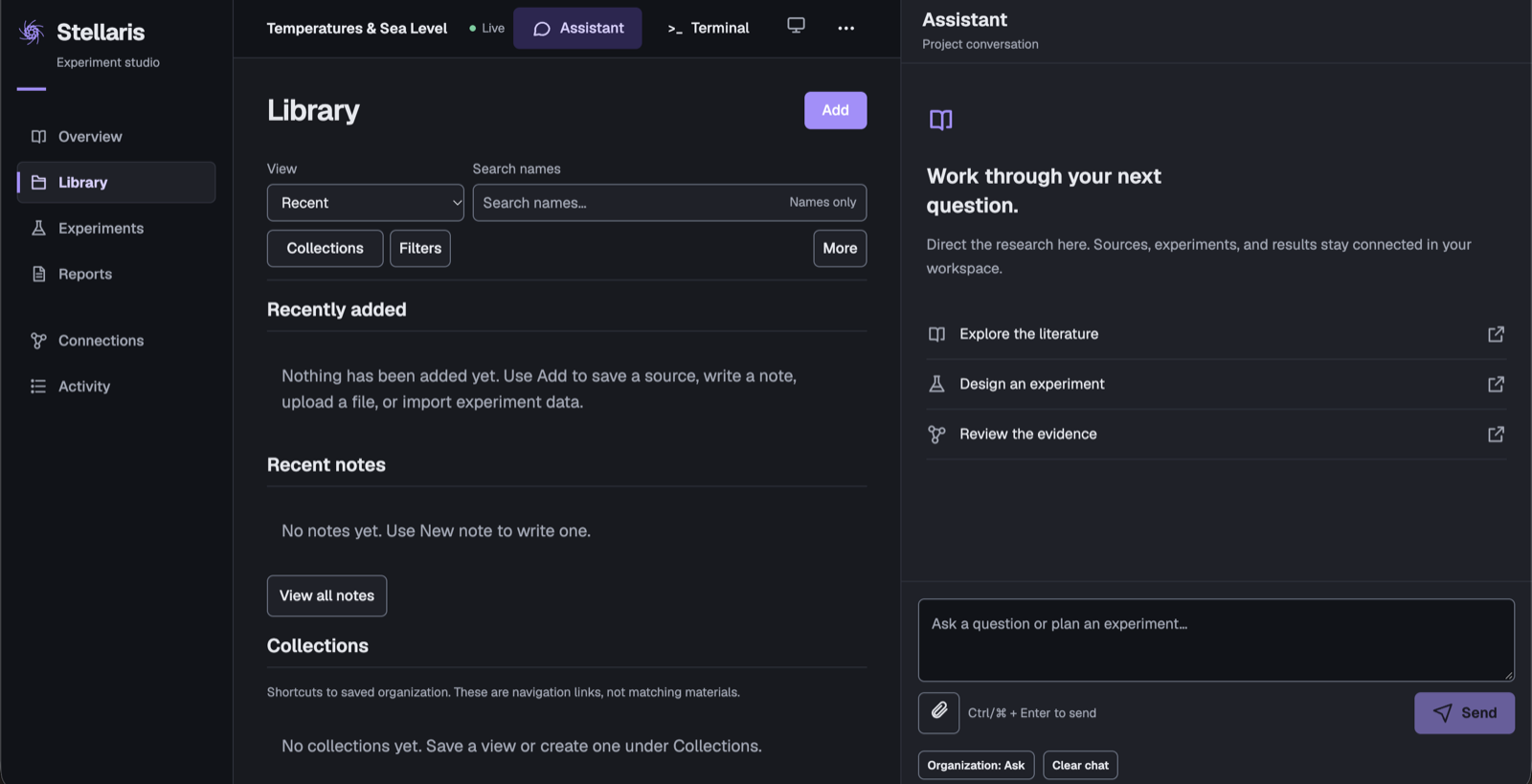
Exploring the view
-
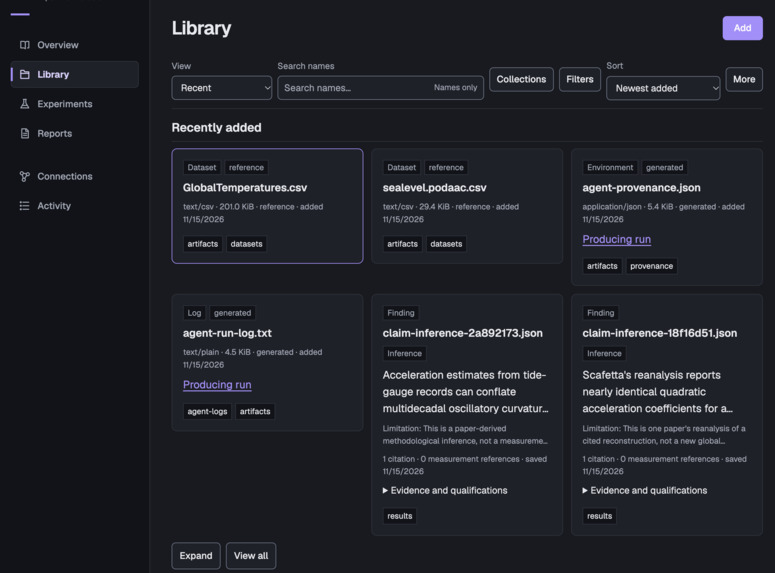
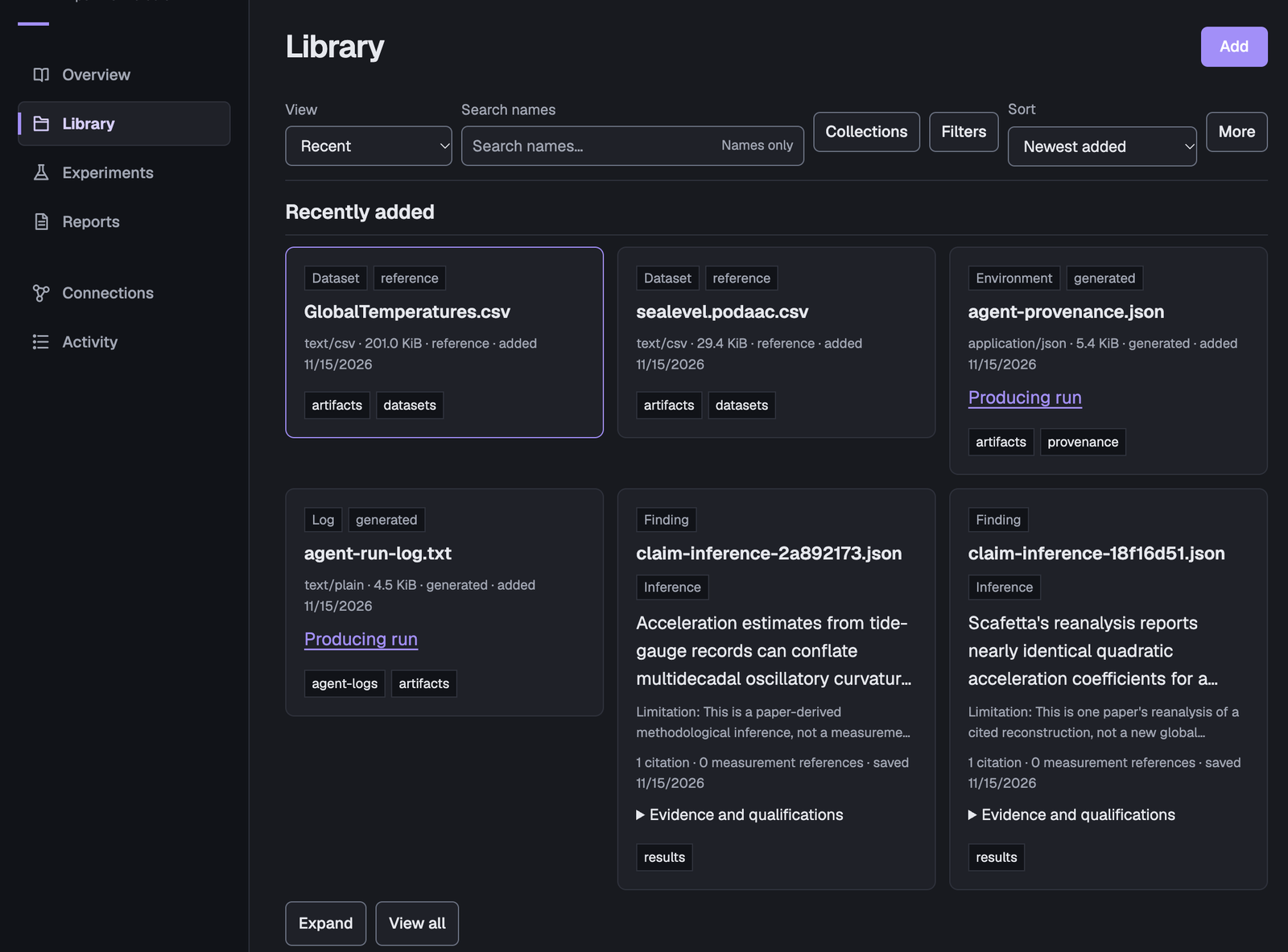
Uploading our own csv files into the library
-
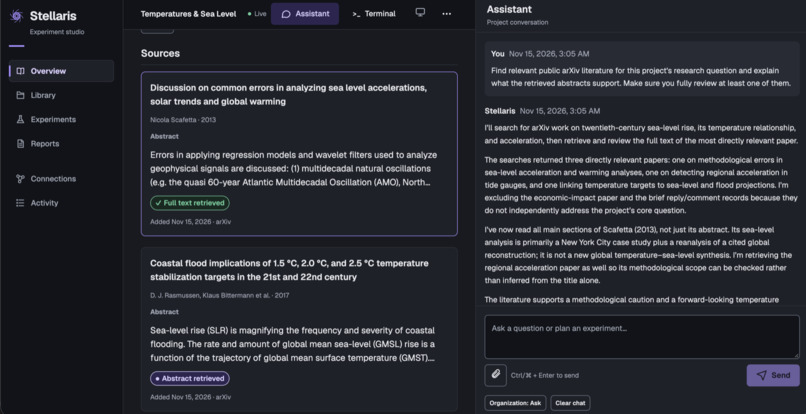
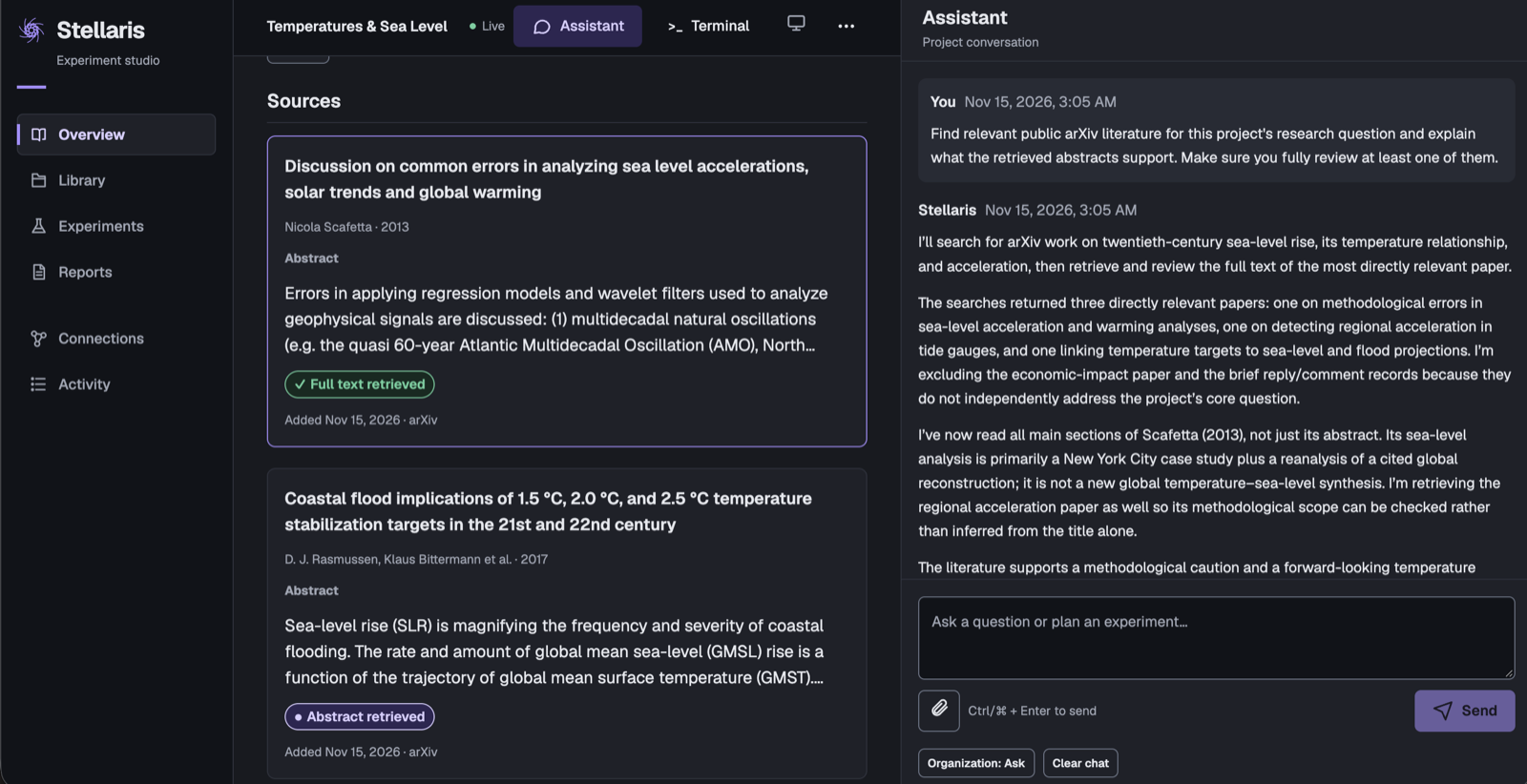
Asking assistant to find research papers
-
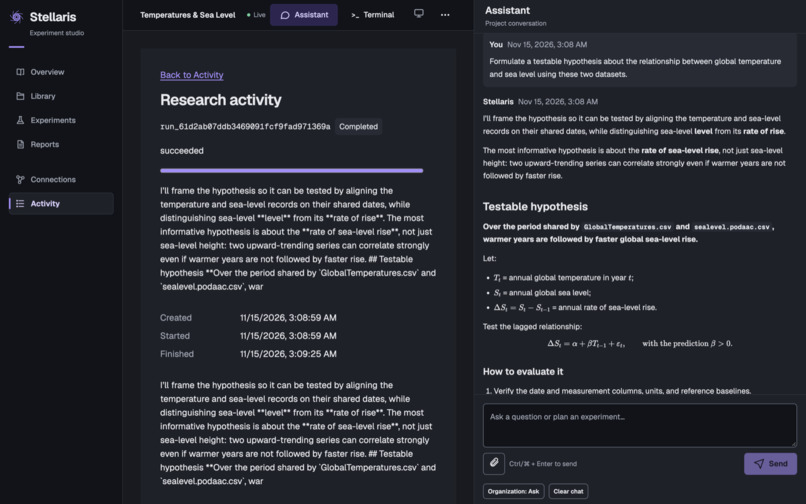
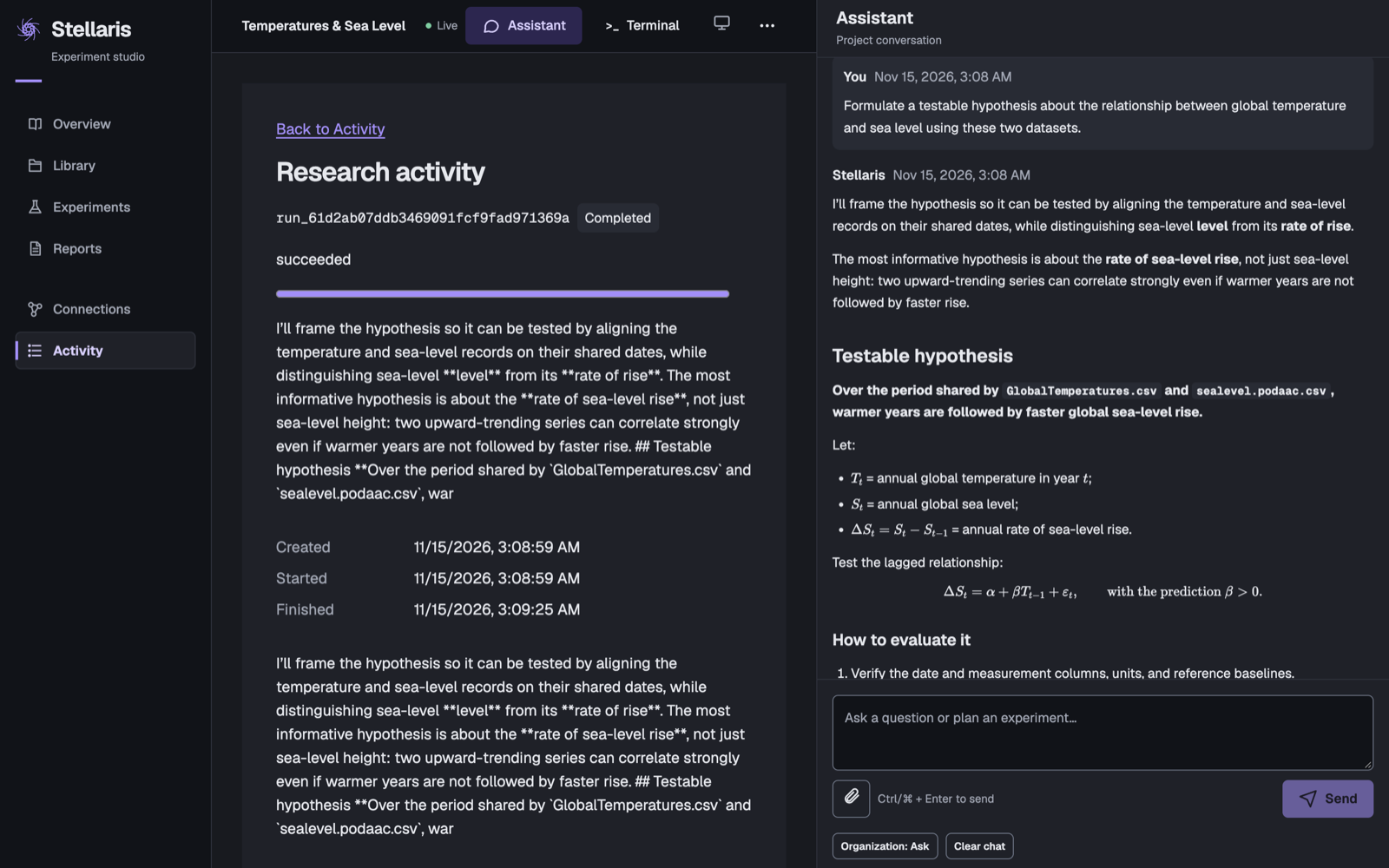
Testing a hypothesis
-
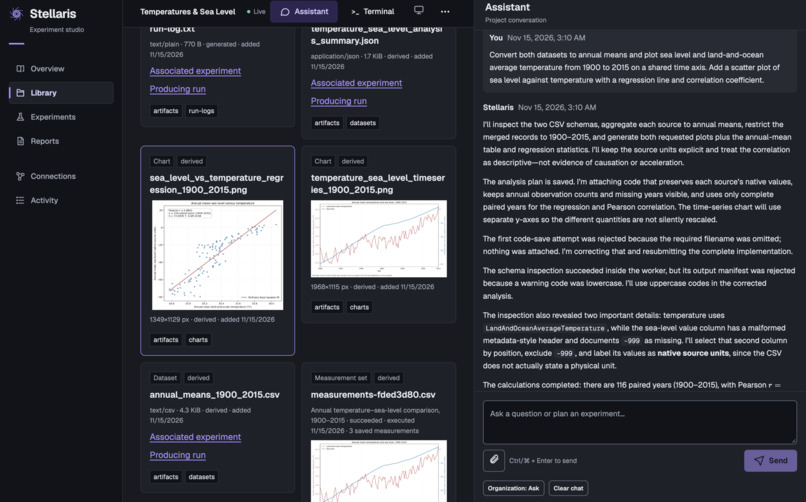
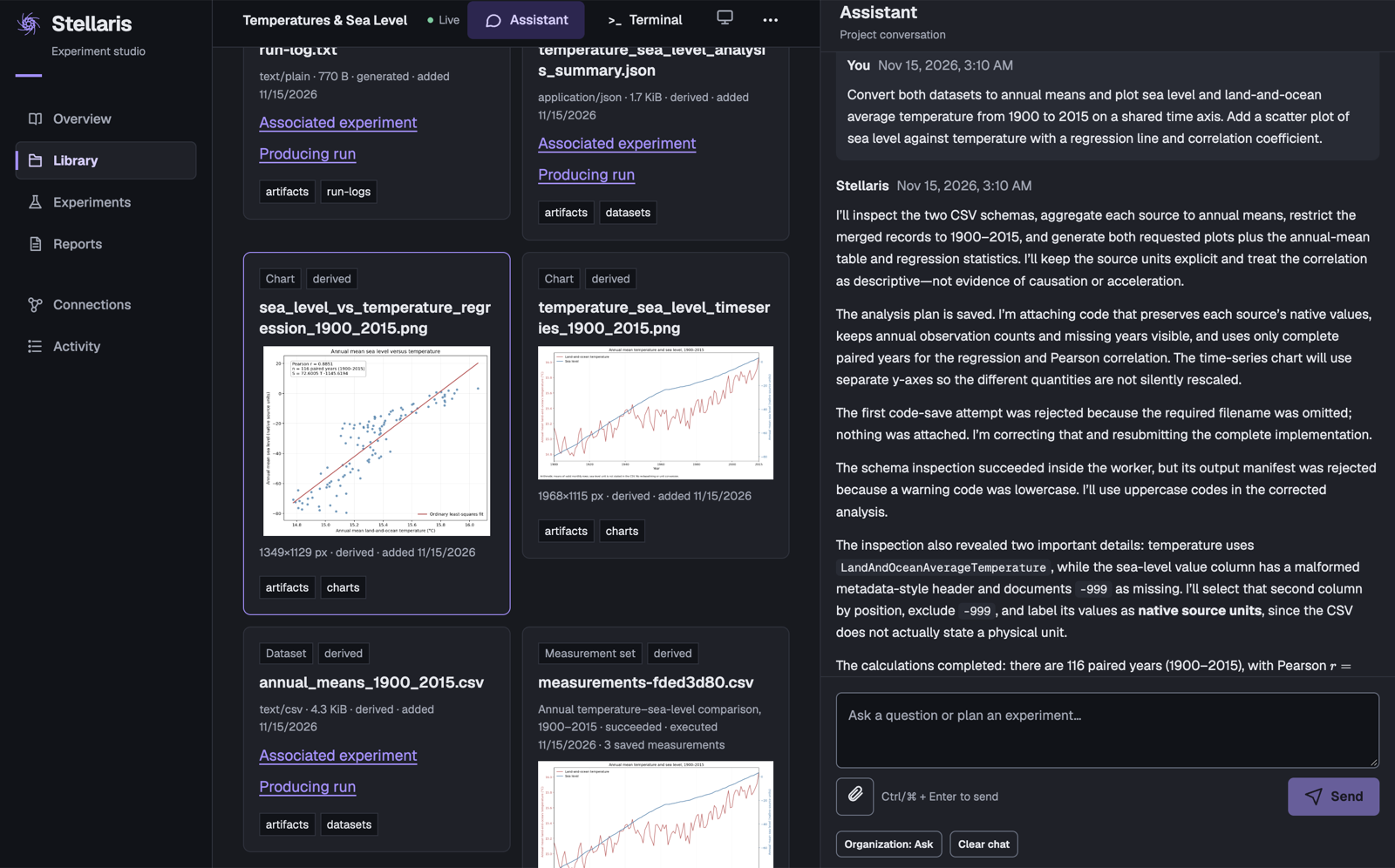
Visualization of data via graphs
-
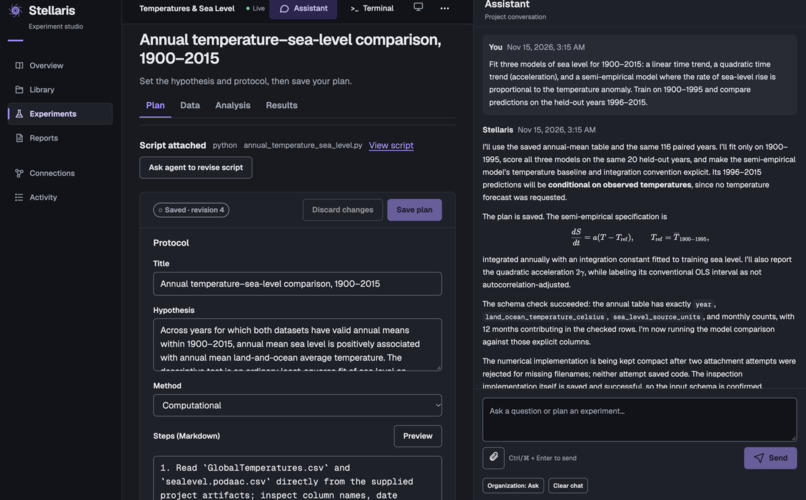
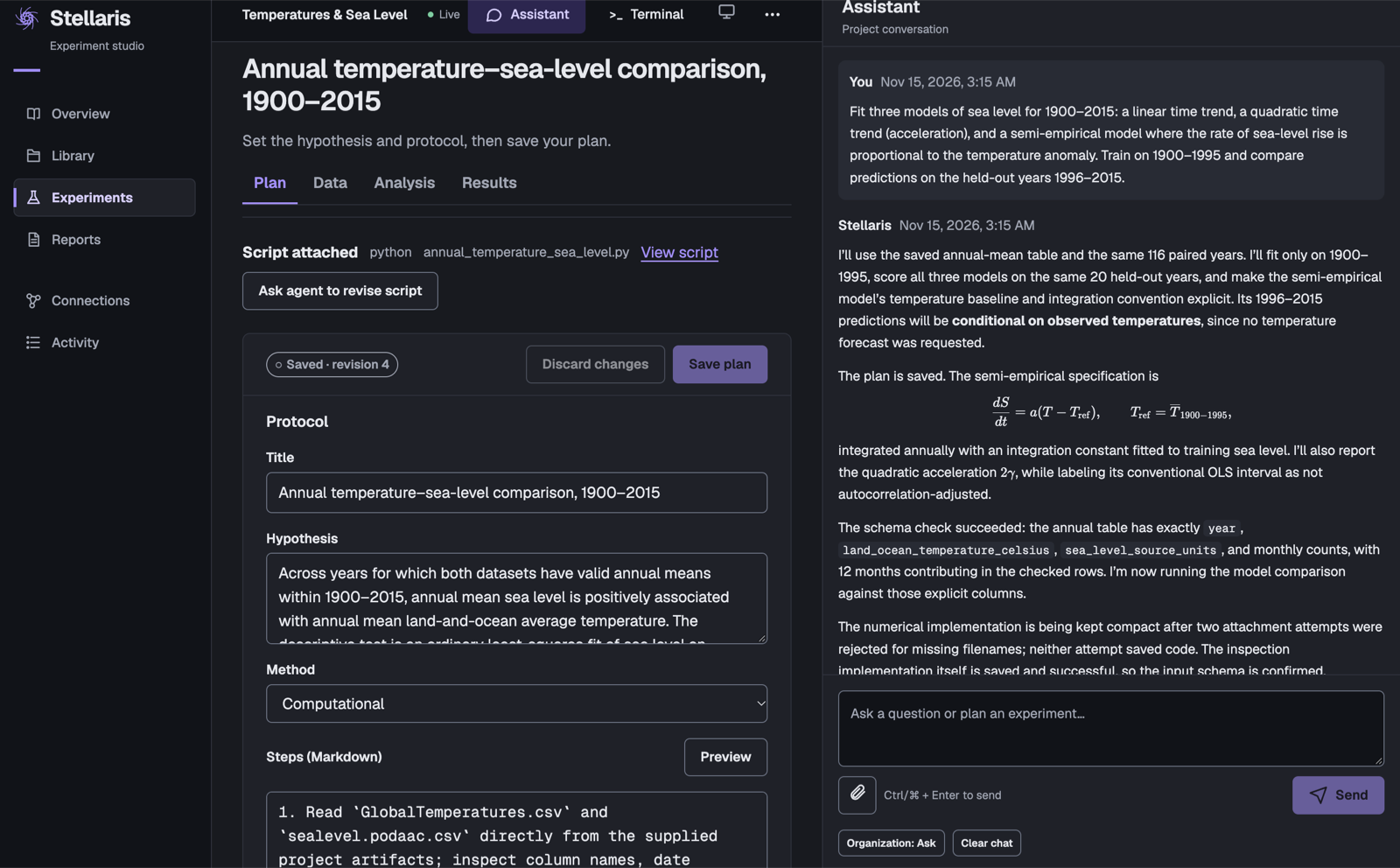
Experiments
-
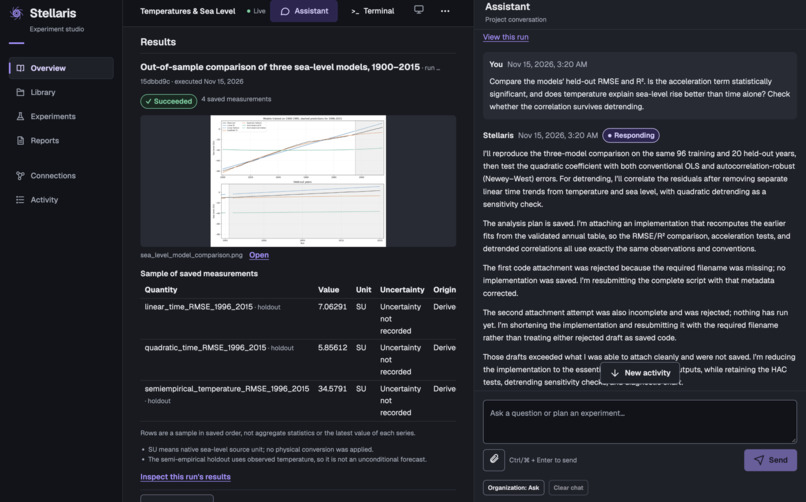
Results Analysis
-
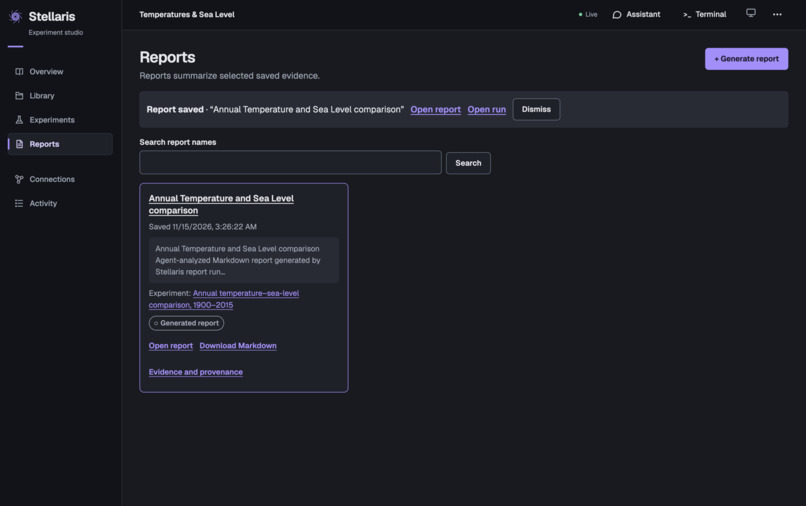
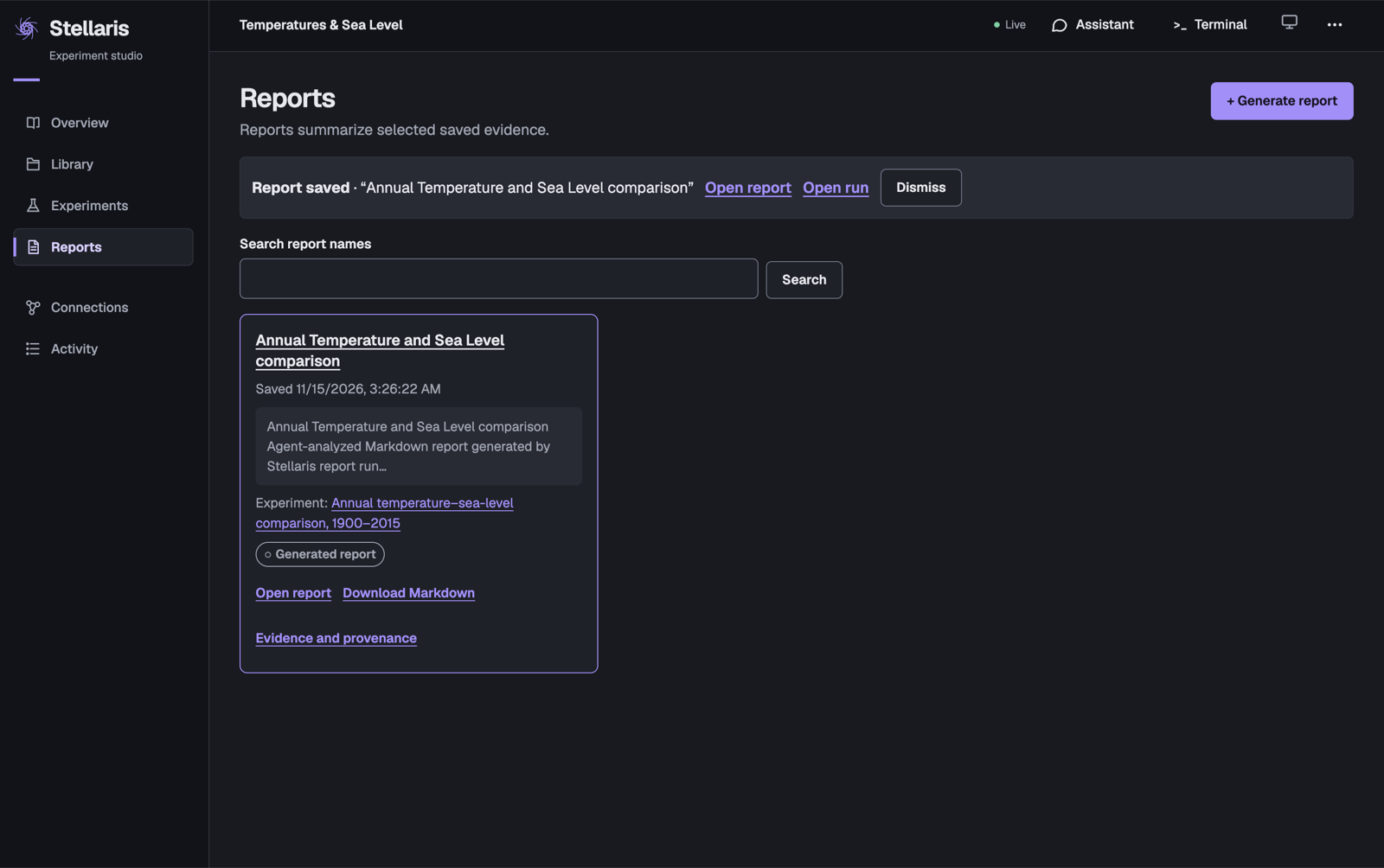
Reports Menu View
-
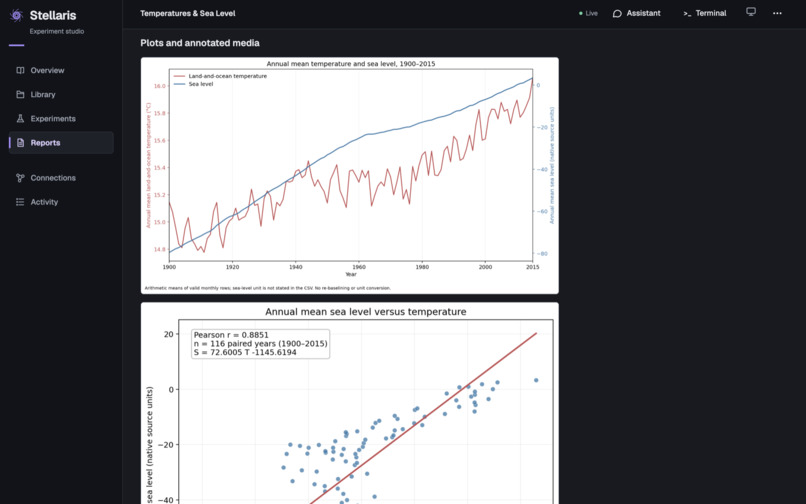
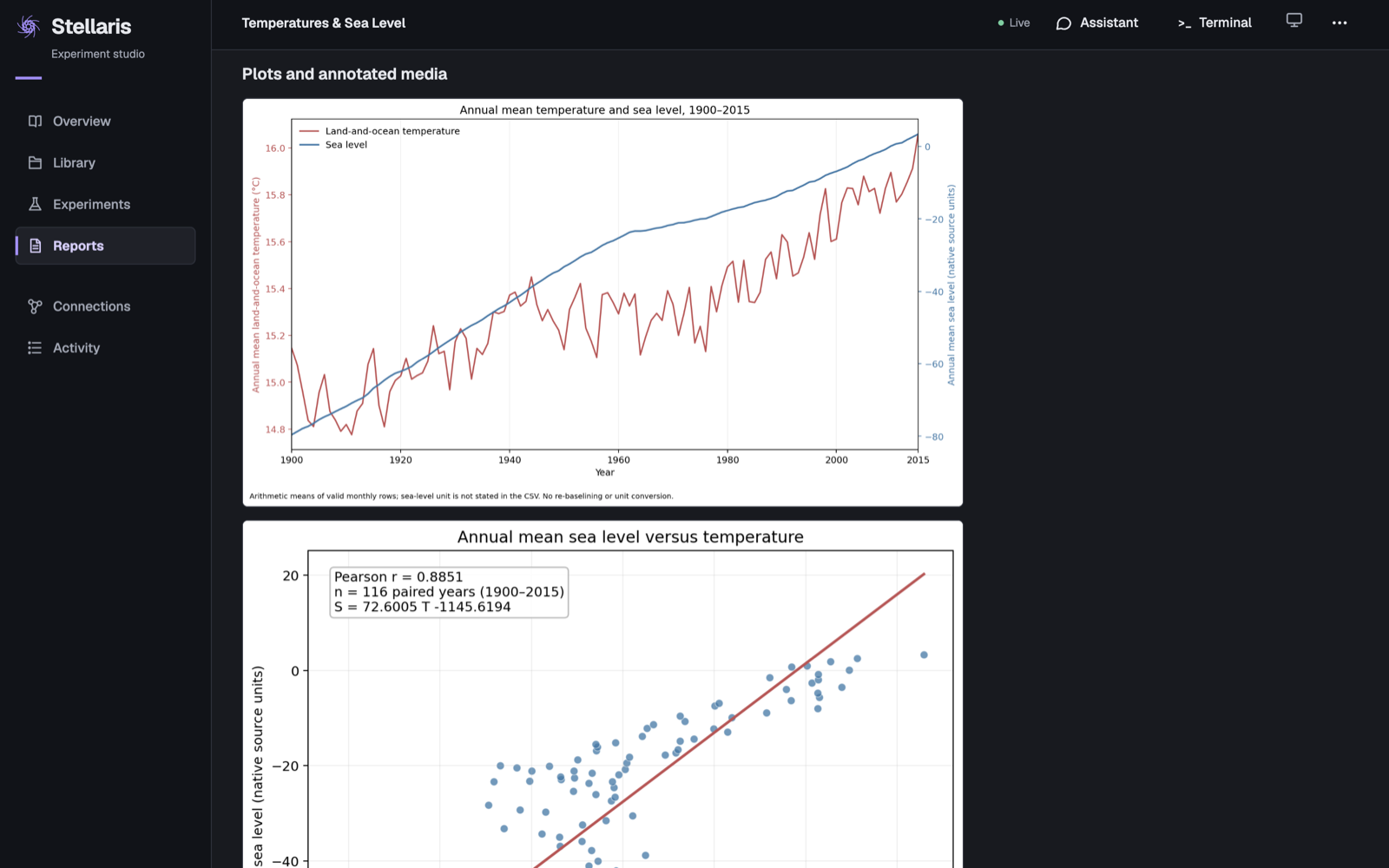
Reports Graphs
-
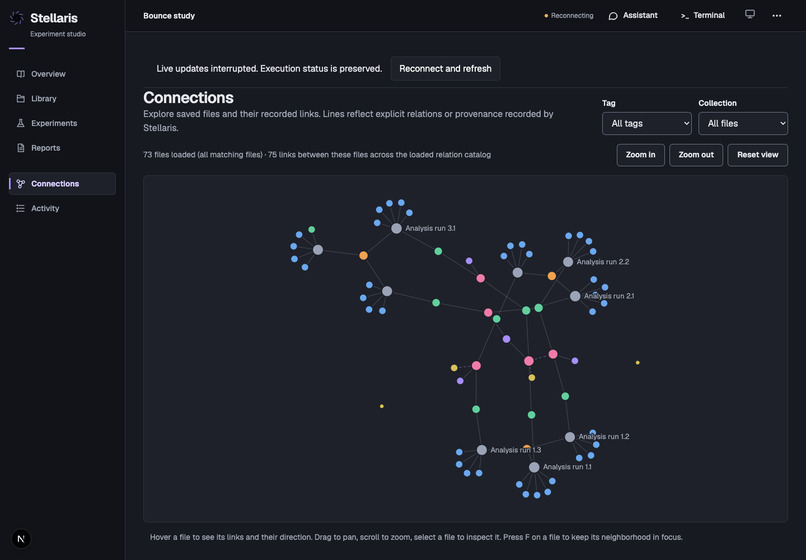
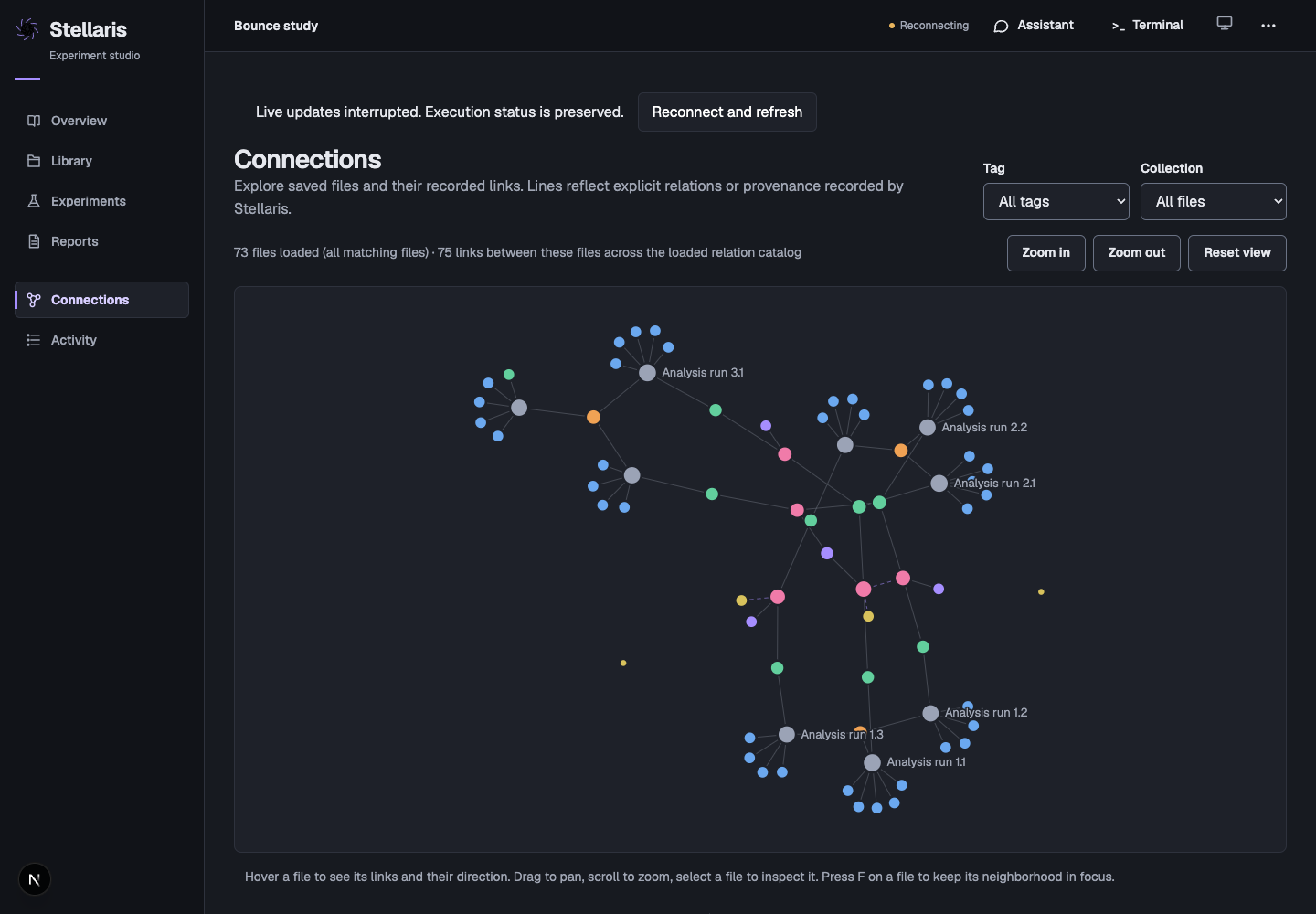
Connections/Graph view (different experiment that has straightforward connectors)
GitHub
https://github.com/stellaris-hackprinceton/stellaris
Inspiration
Research gets scattered fast. You find a paper in one tab, clean your data in a spreadsheet, run an analysis in a notebook, and write up the results somewhere else. Getting those pieces ready to use together takes work. You have to connect what you read to a method you can actually use, prepare your data for that method, and bring the results together to understand what happened. Each change to the investigation means working through those connections again.
We built Stellaris to make that process easier. We wanted to work with an AI assistant that could help us turn an idea into a workable experiment, carry out the analysis, and make sense of the results. Keeping that work in one project lets us spend more time investigating the question and build on what we’ve already done.
What it does
Stellaris is an agentic research workspace that helps researchers turn scientific questions into experiments and reports. Start with a question, upload a dataset, or bring in an experiment recording. The assistant finds relevant literature and helps develop a testable hypothesis and an experiment plan covering what to change, what to measure, and what results would support the hypothesis. You can refine the procedure around the equipment and materials available to you, then carry out the physical experiment and bring your observations back into the workspace.
Stellaris writes and executes code to analyze those observations or an existing dataset, helping you test ideas without building every script yourself. It can autonomously work through multiple steps, choosing tools, responding to their outputs, and revising code without needing instructions for every action. As results come in, you can compare methods, investigate unexpected findings, or work with the assistant to plan another experiment. You contribute the observations and judgment that guide the investigation, while the assistant helps turn each round of evidence into analysis and possible next steps. When you’re ready to write, it produces a report explaining the findings and their limitations.
How we built it
We built the workspace with Next.js and React, backed by a Flask API and SQLite. LangChain Deep Agents on Amazon Bedrock power the assistant’s research, planning, and analysis tools. Each project has a persistent Docker workspace so the assistant can return to its files and continue an investigation across sessions.
Generated code runs in separate, isolated Docker workers with restricted resources and no network access. Each run saves its inputs, code, and outputs, making it possible to compare attempts and revisit results. A dedicated reporting agent evaluates the selected evidence, keeping its interpretation distinct from observations and calculations.
Challenges we ran into
One challenge was letting the assistant revise and rerun its code without losing the history of the investigation. We kept each attempt separately so a successful retry would still leave the earlier code, errors, and changes available to inspect.
As we added more research tools and richer ways to explore experiments, data, and reports, it became harder to place each piece of work in one fixed category. A script could support several analyses, and a chart could belong with an experiment while also appearing in the project overview or a report. We moved to a model where materials keep one identity but can belong to multiple groups and carry links to related work. That let us build views around what researchers needed to see, drawing on the same underlying materials rather than organizing the data separately for each screen.
Accomplishments that we're proud of
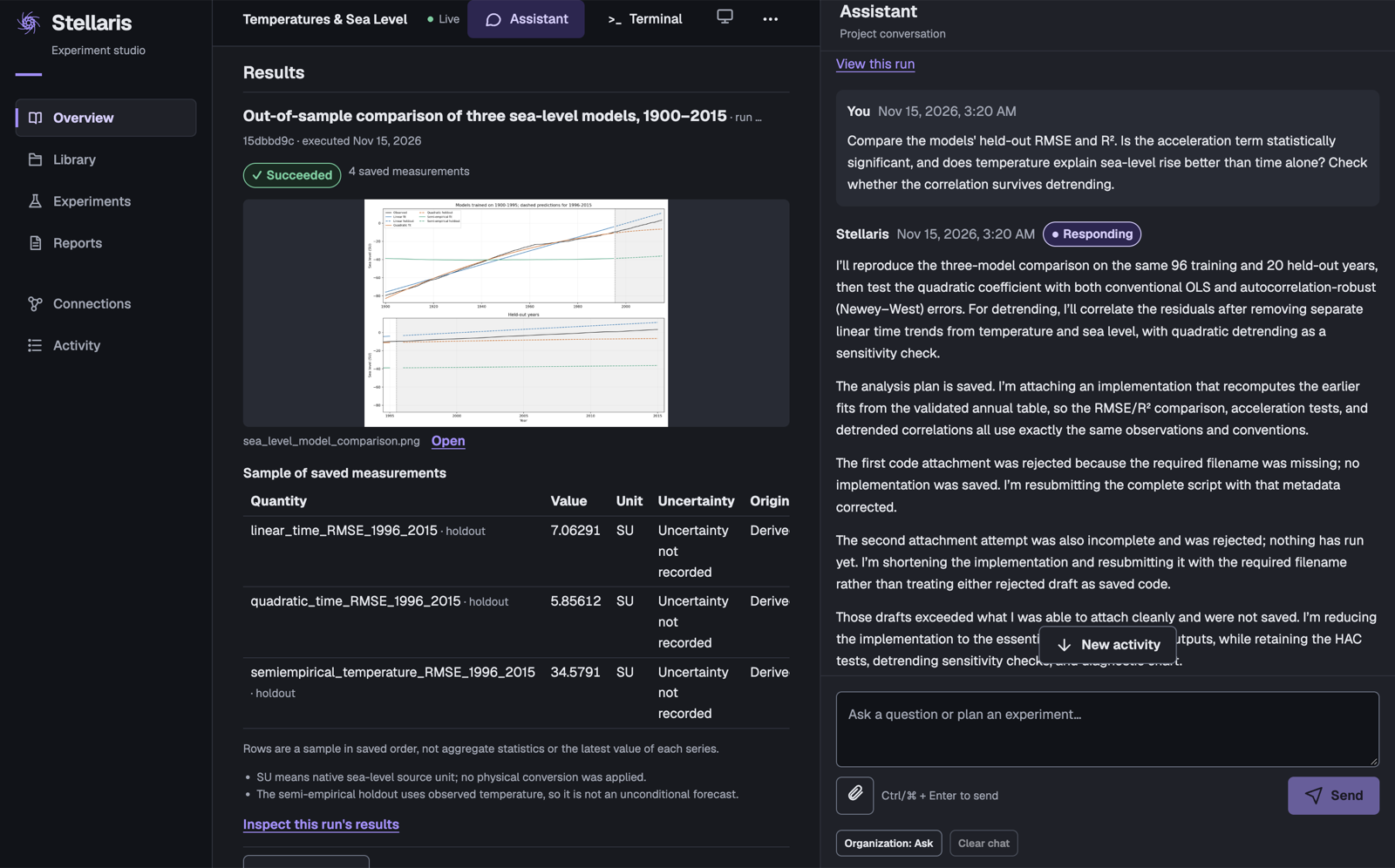
We used Stellaris to carry out a complete data analysis on public climate records. Working with Berkeley Earth’s global temperatures and NOAA’s global mean sea level series, it compared linear, accelerating, and temperature-driven models. We trained on 1900–1995 and tested predictions against 1996–2015. The accelerating trend performed best, with prediction error about 17% lower than the linear trend. We could trace the report’s findings back to the datasets, scripts, and charts behind them.
We also used Stellaris to run simulations and analyze their outputs. In the bouncing-ball investigation, we generated simulated videos through code and extracted measurements from them. The assistant could write and execute scripts, compare results, and revise its analysis while retaining earlier attempts. This let us investigate a modeled experiment within the same workspace used for data analysis.
We brought physical experimentation into that workflow through our paper-drop investigation. We recorded flat, folded, and crumpled paper falling, then analyzed the videos to investigate how shape affected the fall. This connected work carried out by the researcher in the physical world with the assistant’s computational analysis, bringing experiment planning, collected observations, and interpretation into one project.
What we learned
We learned that helping with research means supporting decisions throughout an investigation. Choosing a method, responding to a failed analysis, and deciding what a result supports all matter. Saving evidence makes those decisions easier to inspect, but a report still needs to explain whether the evidence supports its conclusion. The system has to leave room for uncertainty and further investigation.
What's next for Stellaris
We want to make it easier to check individual report claims against their supporting evidence and improve the workflow for camera-based experiments. We also want to evaluate how reliably the assistant handles conflicting results and revises an investigation. Longer term, we plan to test the optional Slurm integration on a real research cluster for larger computational work.
