Inspiration
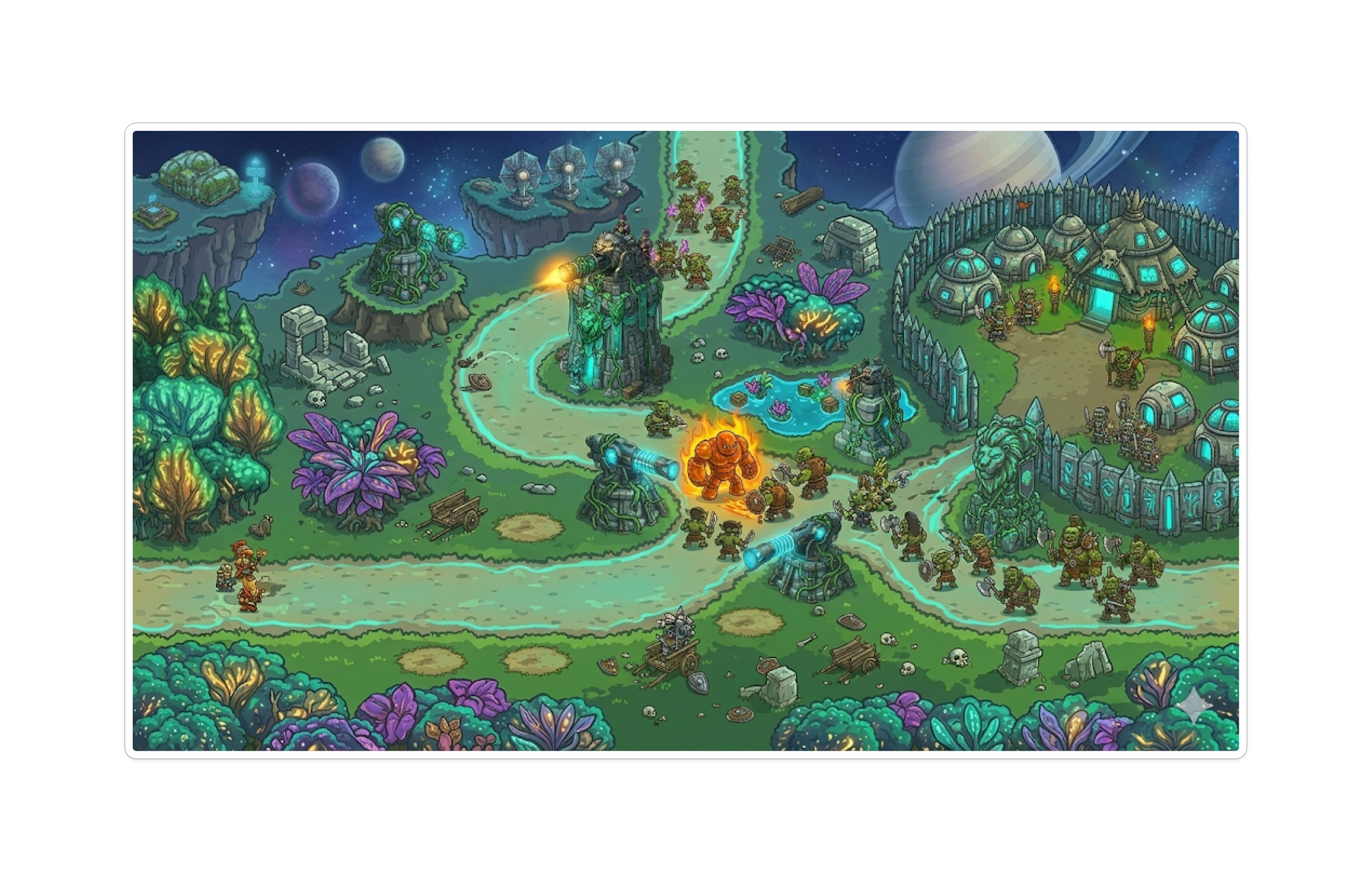
I grew up on Kingdom Rush and Iron Marines, and I wanted to find out what makes that formula feel so good by rebuilding it from the ground up for Meta Horizon. The genre rewards a player who reads a threat and answers it, so instead of chasing a gimmick I chose to nail the proven loop and wrap it in a world worth defending. Stellar Siege came out of that: refugee outposts clinging to the dying frontier of explored space, hunted by a void-entity called The Hollow. My visual north star was the hand-painted sci-fi of Moebius, Treasure Planet, and Castle in the Sky, a frontier that feels lived-in rather than chrome and lasers.
What it does
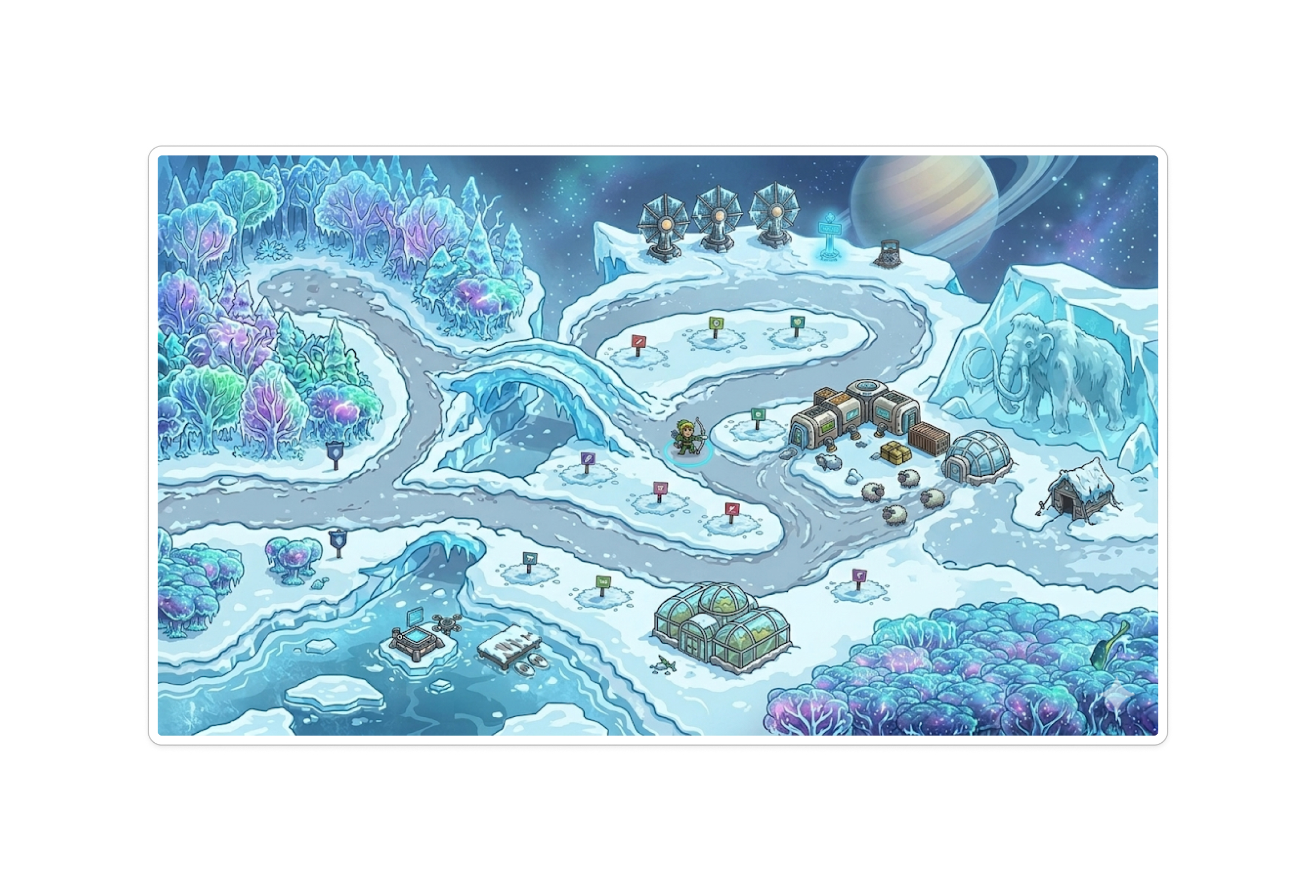
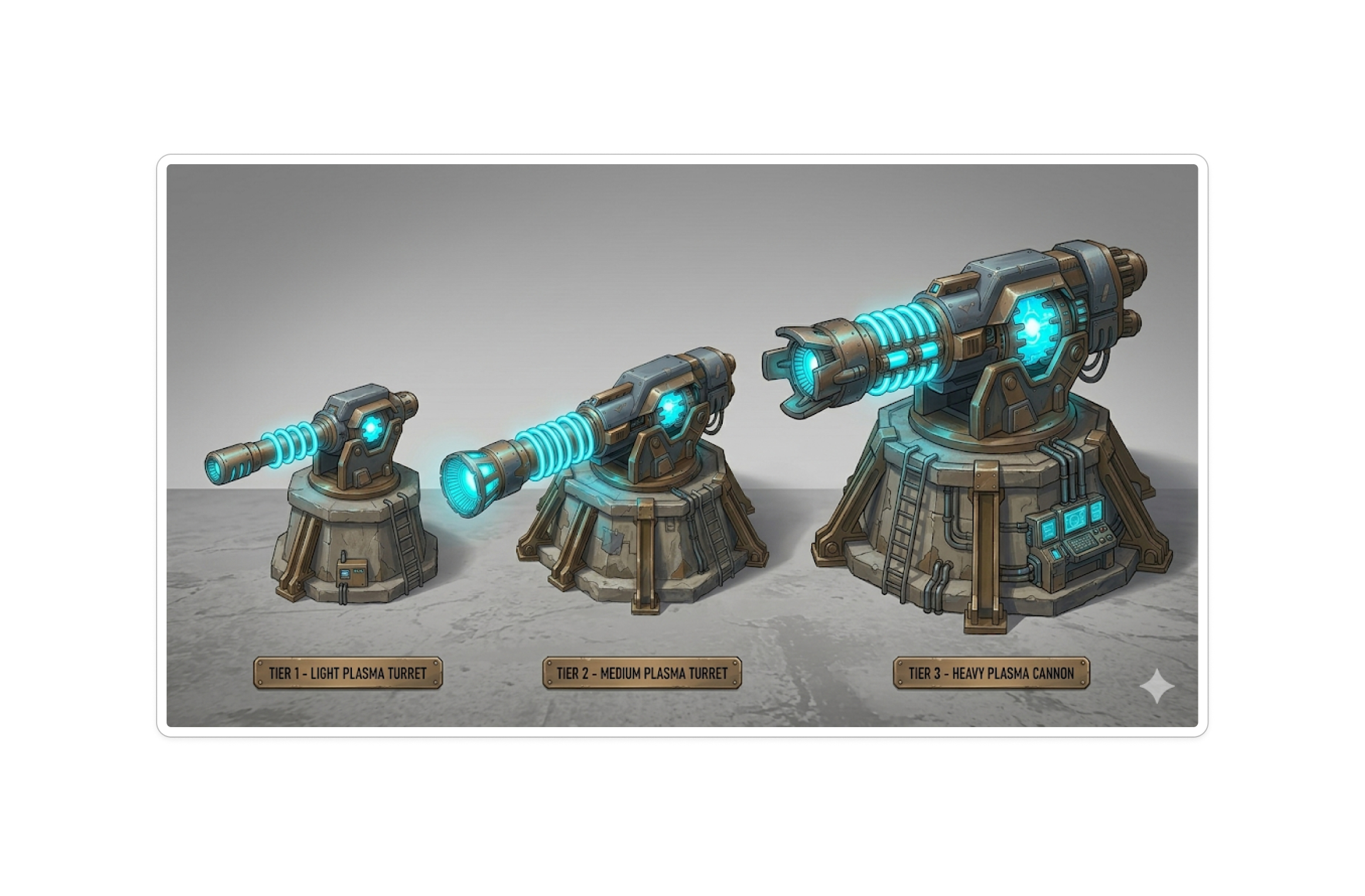
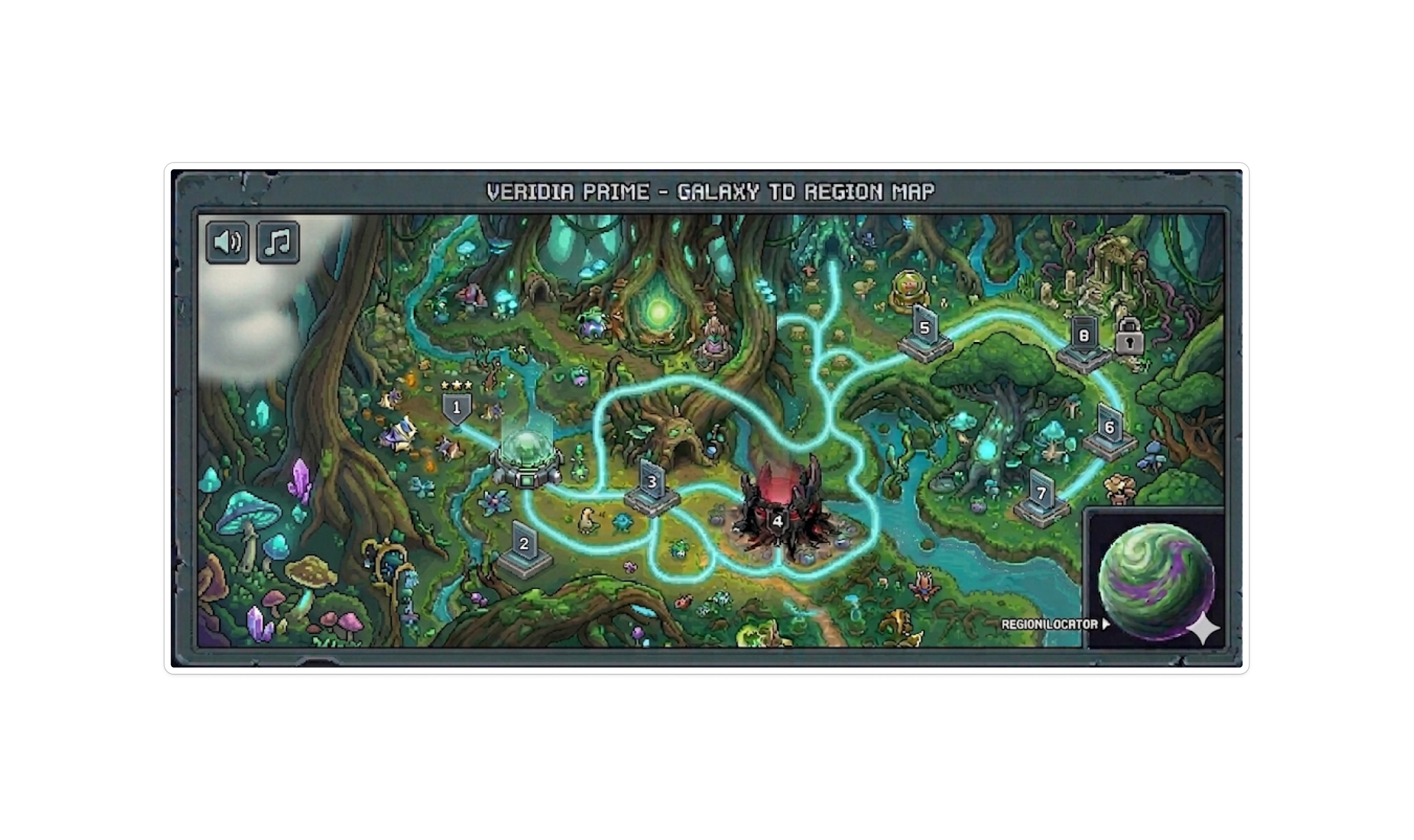
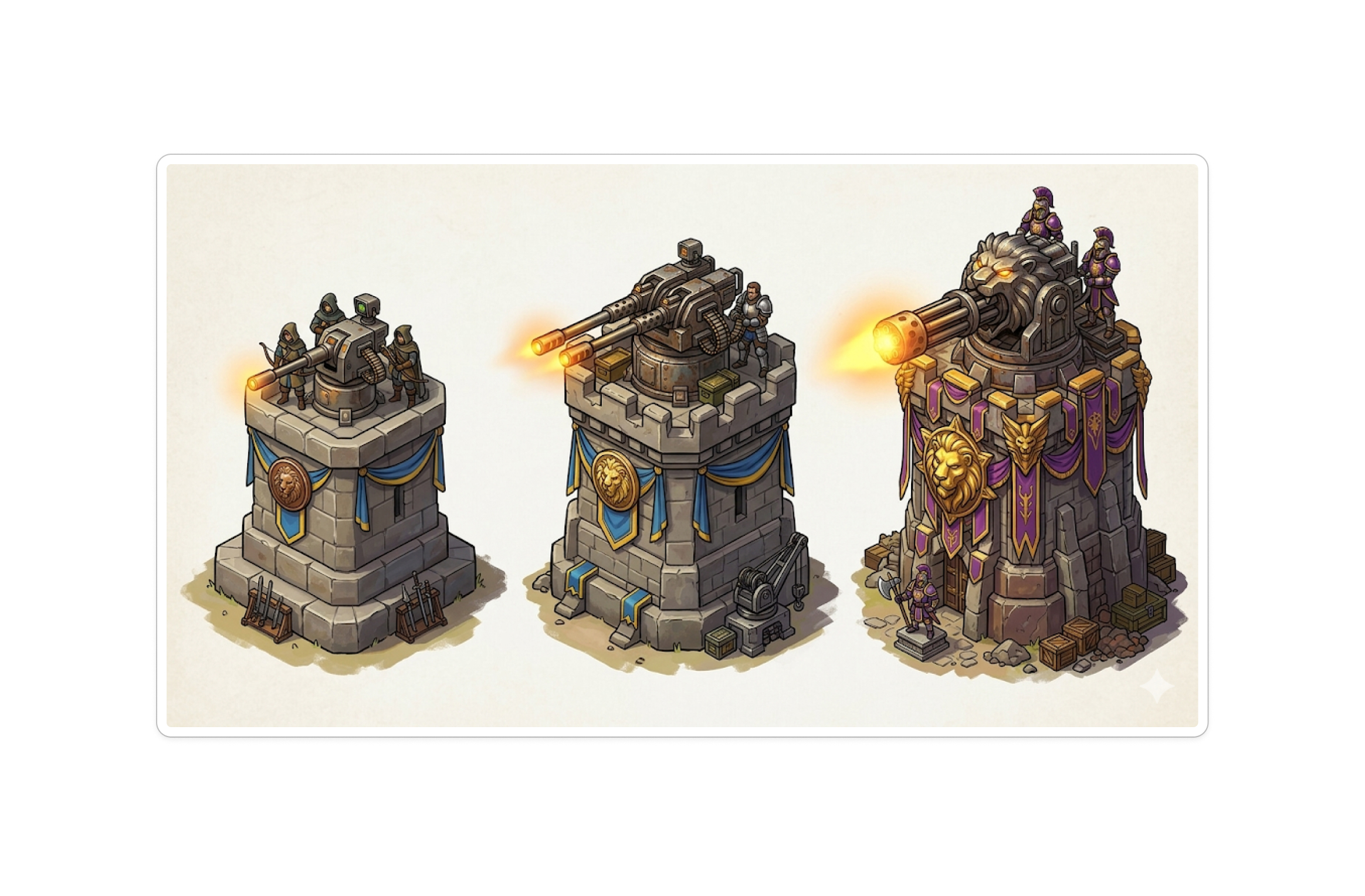
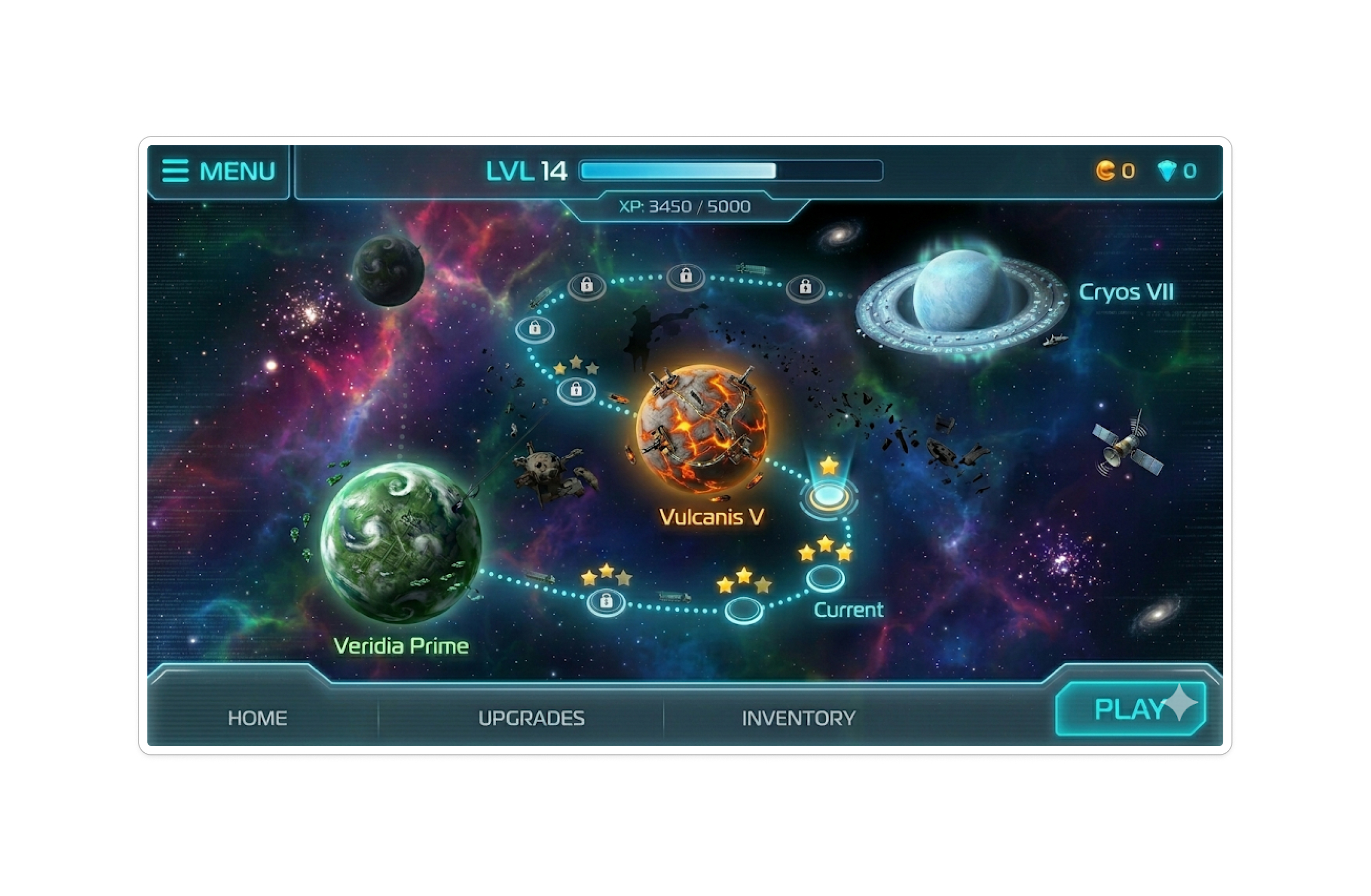
Stellar Siege is a sci-fi tower defense for mobile. You defend a fixed path across 25 Sieges spread over five Sectors, placing towers on plots and dropping static road Blocks to stall enemies inside your killzones. Three launch towers cover the combat roles: the Sentry Gun for kinetic DPS, the Plasma Cannon for energy anti-armor, and the Mortar Battery for kinetic area damage. A Kinetic / Energy / Pure damage triangle drives every read: armored enemies shrug off kinetic, shielded enemies shrug off energy, and no enemy carries both, so you match the right gun to the wave in front of you. Blocks come in two flavors, Steel for reliable flat HP and Plasma for pinning and stripping shields. On top of that sit four heroes, three deployable Orders like the Orbital Strike, and a 10-life, three-star scoring system that feeds a re-allocatable meta-progression tree I call the Foundry.
How I designed it
I designed the whole game for Meta Horizon Studio with TypeScript scripting. I mapped every mechanic to a real Horizon system before writing a line of design copy: enemy movement is a waypoint-follower with Blocks as static HP obstacles rather than maze re-routers, the UI runs on Noesis GUI with XAML and data binding, the camera uses the Camera API in a fixed top-down mode, and enemies are pooled through a SpawnController that repositions rather than despawns. The architecture is a four-manager, server-authoritative pattern, Game, Wave, Level, and UI managers, with tap input and panels running locally per client over NetworkEvents. Persistence rides on Persistent Variables v2, and monetization uses in-world purchases for optional cosmetics only.
Challenges I ran into
The biggest one was platform fit. Meta Horizon does not allow paid games, so I threw out my original premium pricing entirely and rebuilt the model as free-to-play with cosmetic-only purchases, no paywalled towers, no paywalled heroes, no ads, and no energy timers. The second was the blocker mechanic: classic Kingdom Rush leans on a spawning barracks, but moving units need solid pathing and combat AI I did not want to gamble on for launch, so I designed static Blocks as a platform-shaped substitute that keeps the positioning puzzle intact. The third was scoping discipline. It is tempting to ship five Sectors and a dozen towers, but I held the line on three planets, three towers, and a clean core.
Accomplishments that I'm proud of
I am proud that the design reads as production-ready rather than aspirational. Every system in the document points at a concrete Horizon feature, the cut list and the roadmap tell the same story, and the four artifacts stay consistent on the canonical specs. I am also proud of the discipline behind the "proven formula first" strategy: one deliberate point of difference layered onto a loop I genuinely understand, instead of novelty for its own sake. And the visual direction holds together, a coherent hand-painted frontier with a clean cyan-for-energy, amber-for-kinetic color language that doubles as readable combat feedback.
What I learned
The platform constraints are the design, not a footnote. Once I accepted that no-paid-games and waypoint movement were fixed, the best decisions fell out of working within them rather than around them. I also relearned that depth comes from the threat, not the toolkit: the board never moves, but a fast swarm, an armored brute, and a flier each ask a different question, and that is what keeps a fixed loop fresh. Finally, building Kingdom Rush reference versions of each section first, then adapting them to Stellar Siege, kept me honest about which pillars are non-negotiable.
What's next for Stellar Siege
The launch core is a complete campaign, but the roadmap is already mapped. Next up are the Marine Bunker and Squad Redeploy, where a Drop Bay spawns marines you can tap and drag to reposition mid-combat, the one Iron Marines-flavored differentiator I held back until pathing and combat AI are solid. After that come the Tier-4 specialization forks, flying and splitter enemies, and the two post-launch Sectors, the Derelict Cathedral and the Cloud Sea, each with its own signature tower. Longer term I want Endless Siege, a daily Watch challenge, a weekly Sector Trial, and a Hollow Codex that unlocks lore as you push deeper into the dark.
Built With
- claude
- gemini


Log in or sign up for Devpost to join the conversation.