-
-
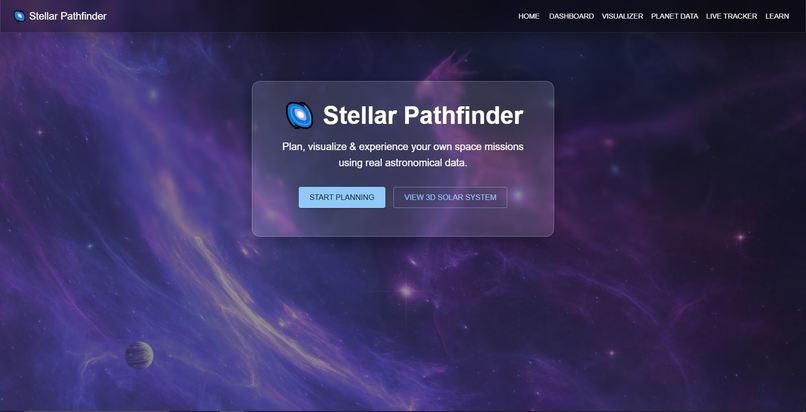
Home Page
-
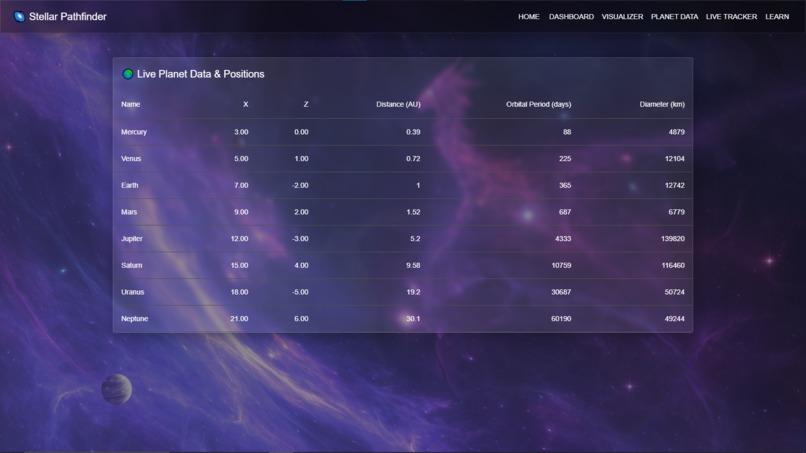
Planet Data
-
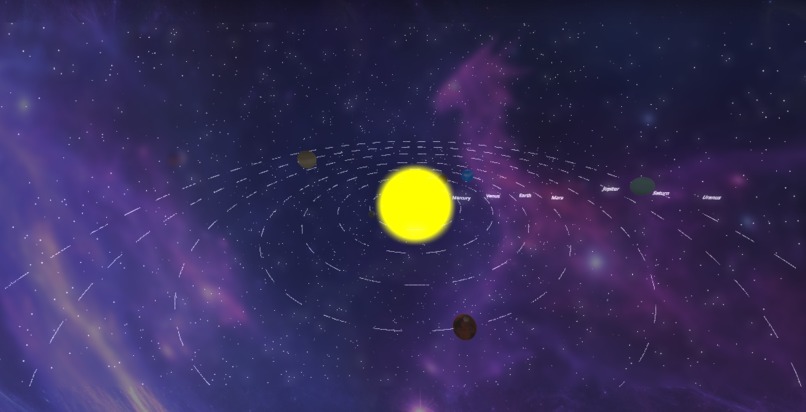
3D Visualizer
-
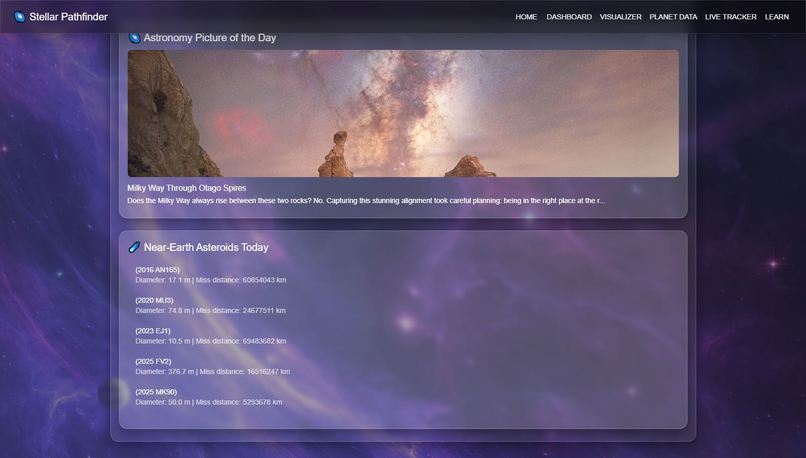
Dashboard
-
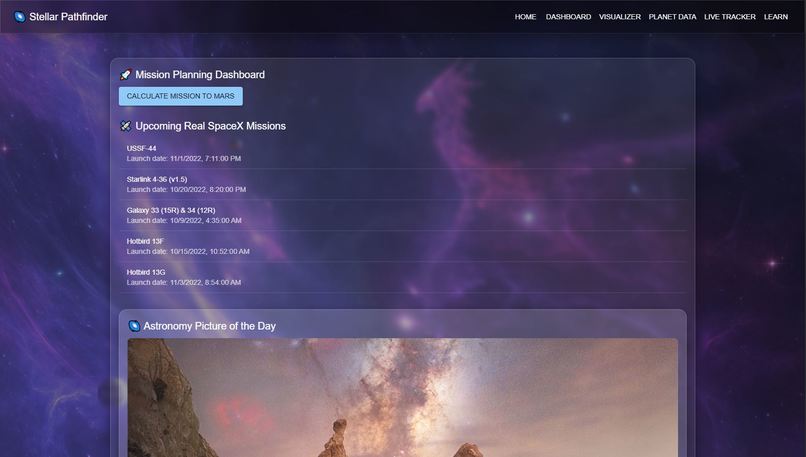
Asteroids
-
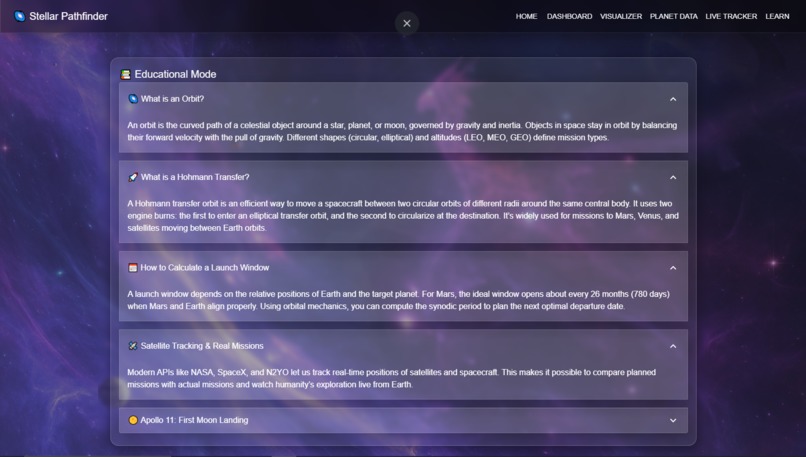
Learn Mode
-
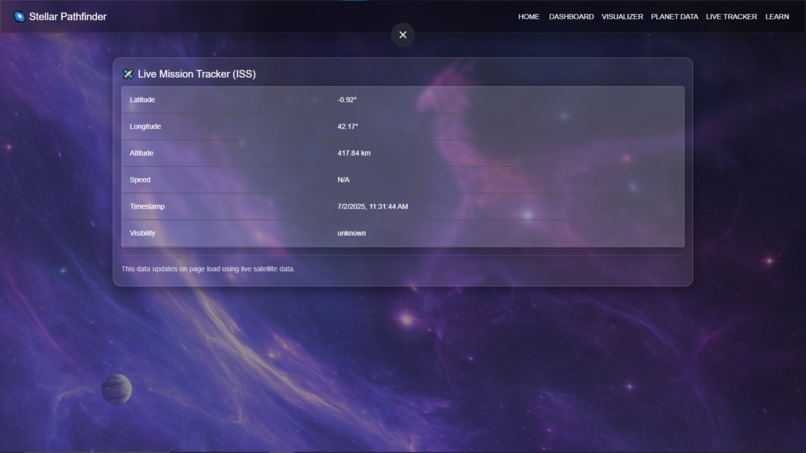
Live ISS Tracker
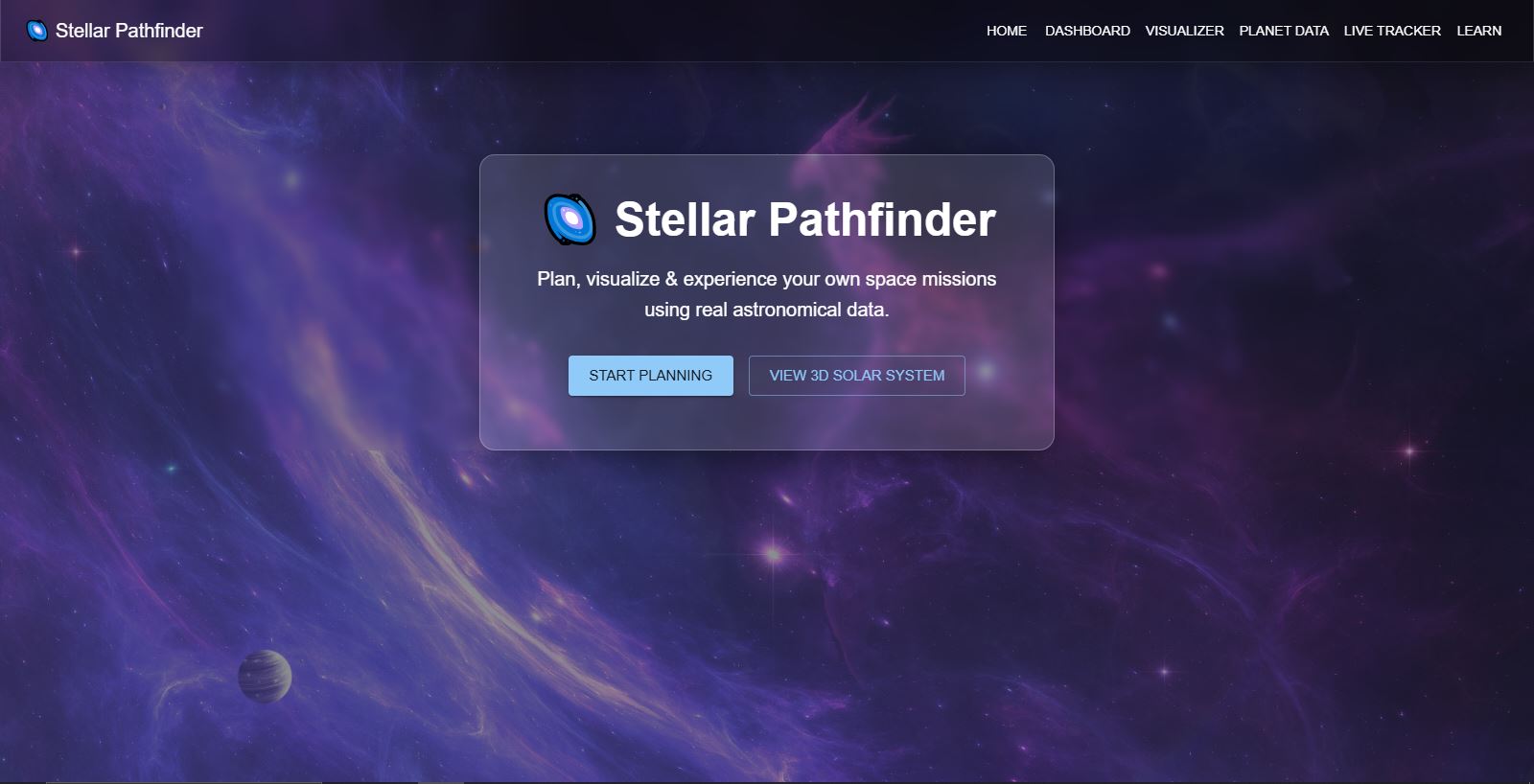
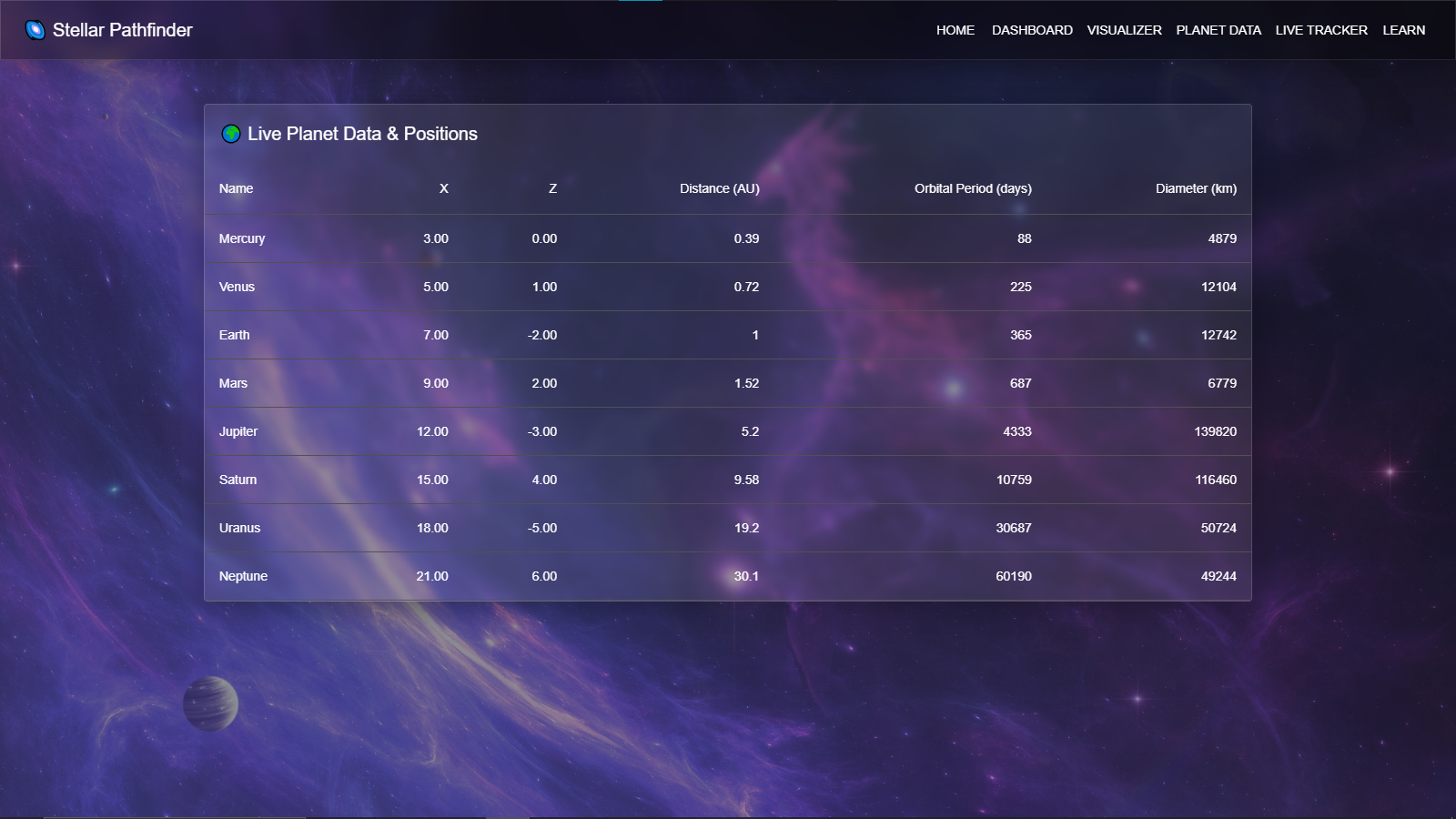
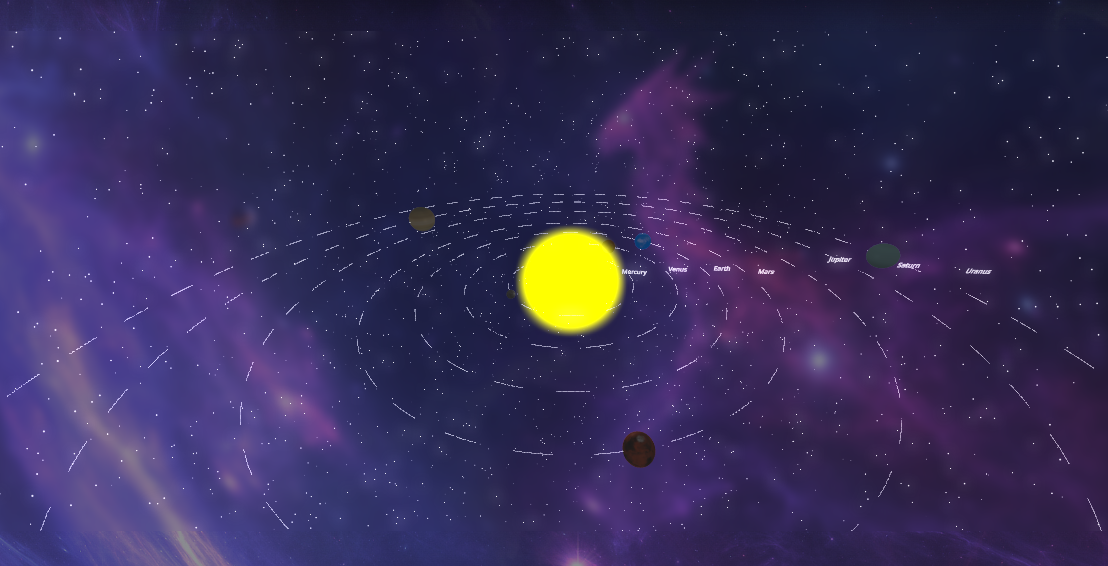
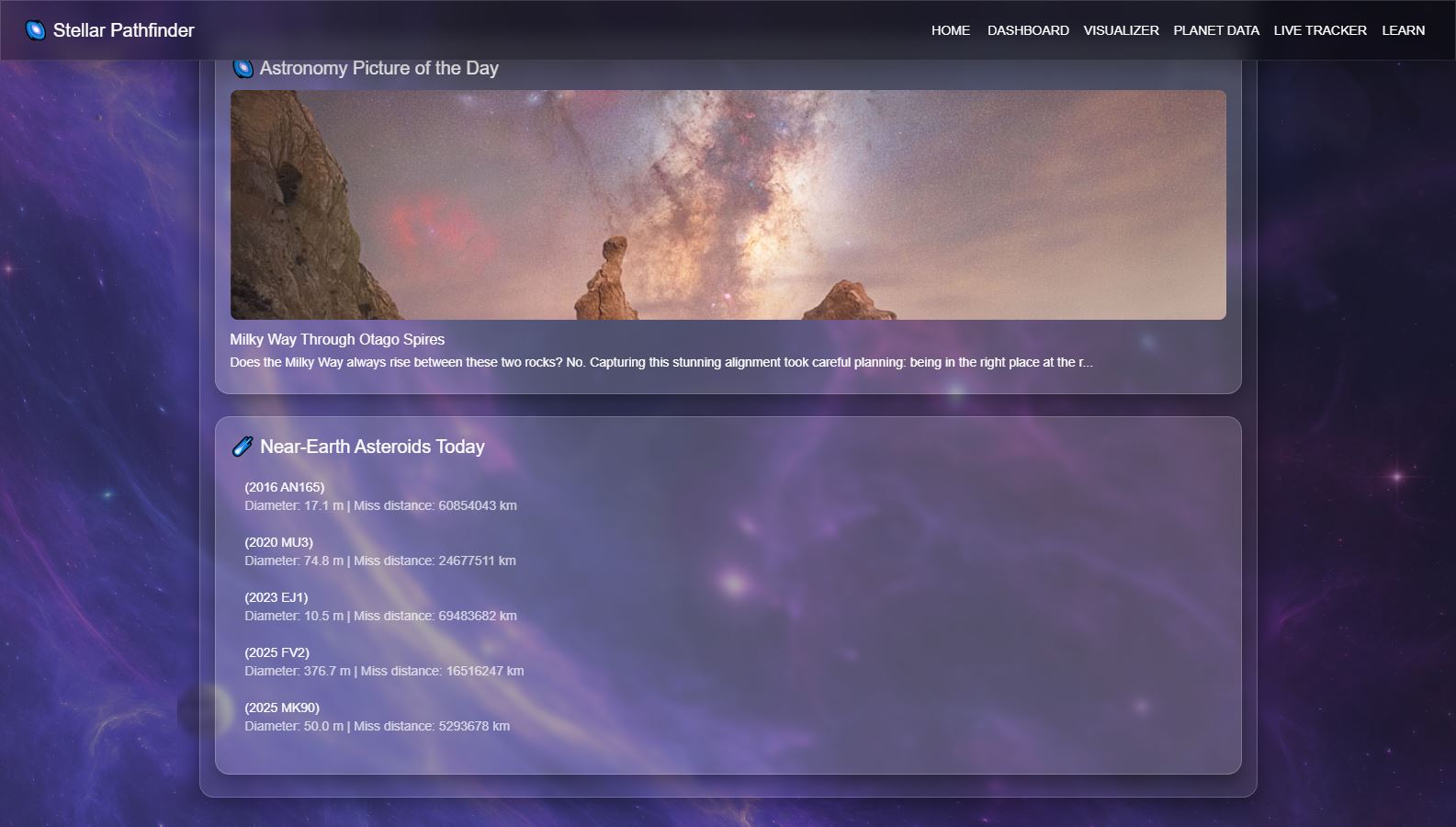
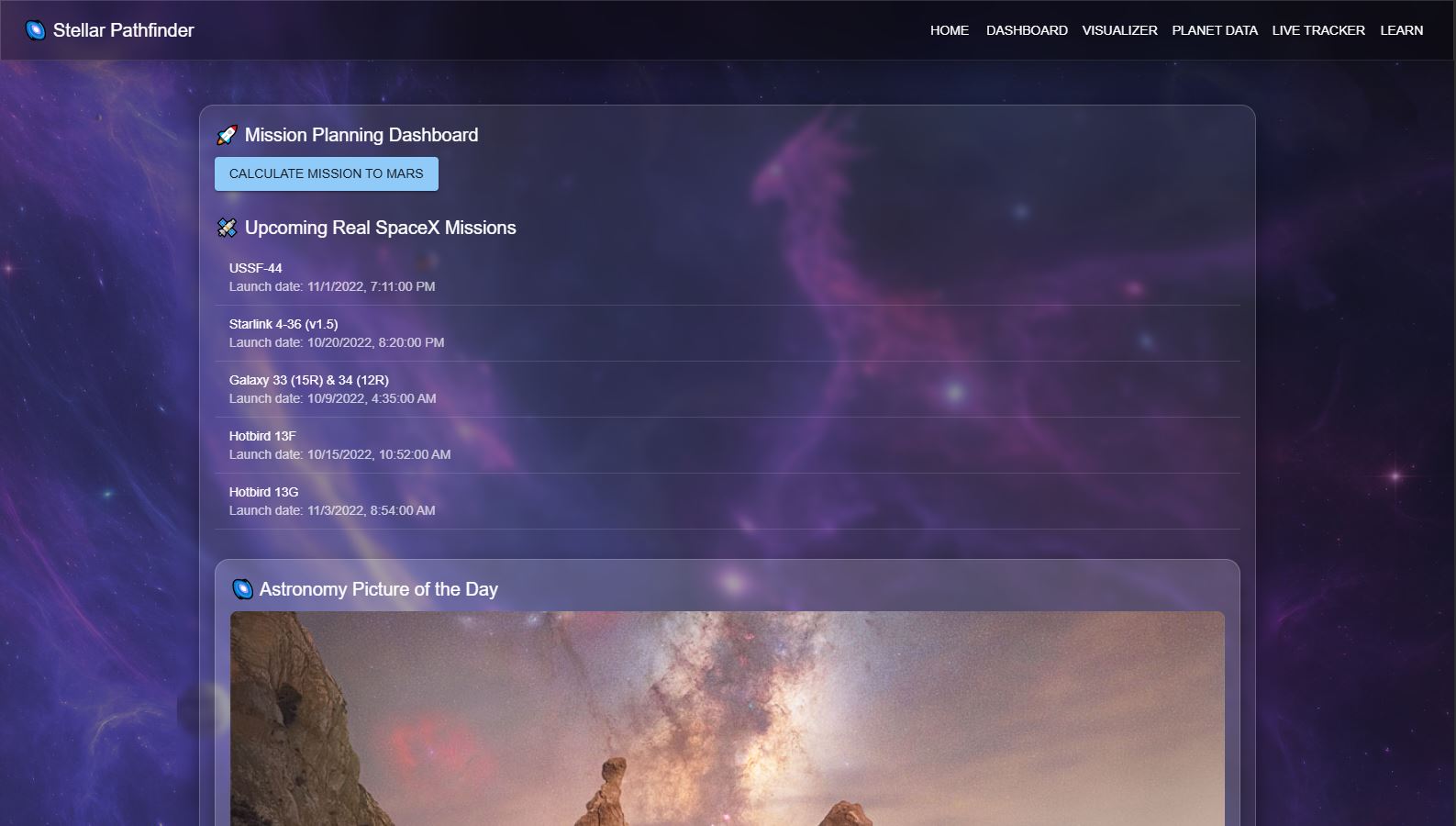
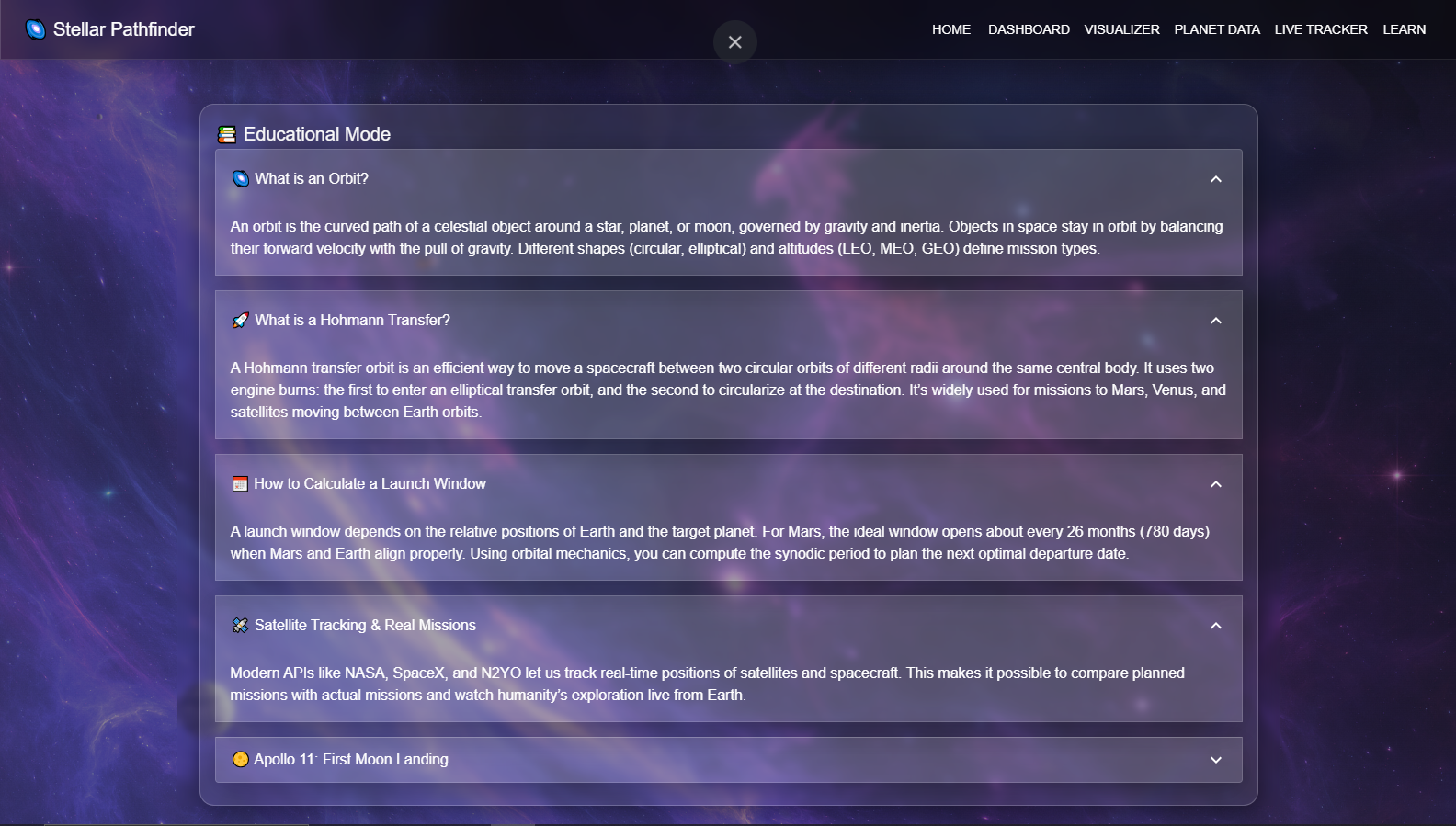
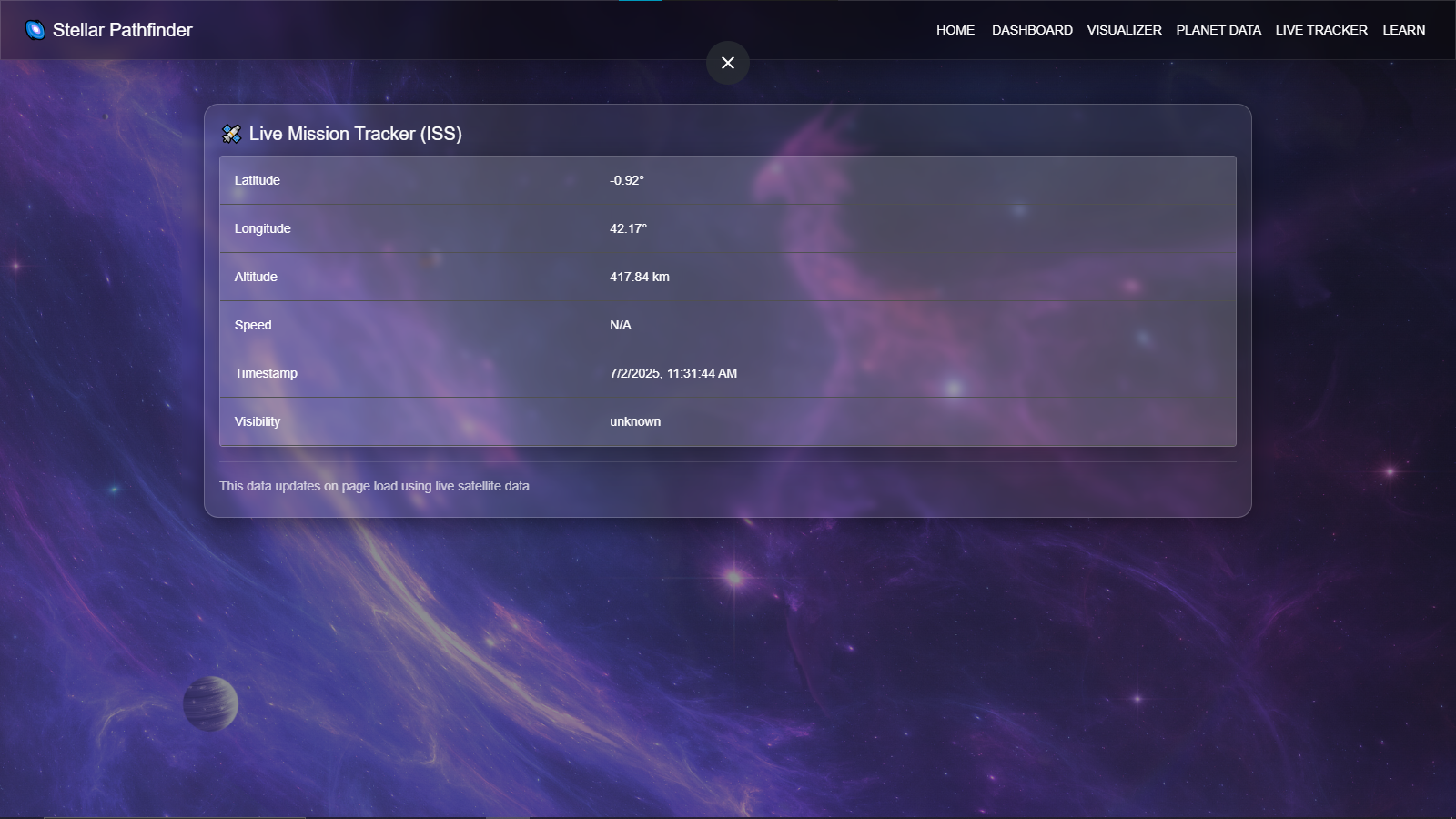
Stellar Pathfinder transforms complex space mission planning into an accessible, visually stunning experience that brings the cosmos to your browser. This interactive 3D application combines real astronomical data with cutting-edge web technologies to create an educational tool that's as beautiful as it is functional.
What Inspired Me
The inspiration struck during a late-night viewing of a SpaceX launch stream. I was fascinated by the precise calculations behind interplanetary missions—the Hohmann transfers, launch windows, and orbital mechanics that make space exploration possible. I realized that while this information exists in textbooks and research papers, there wasn't an intuitive, interactive way for people to visualize and understand these concepts.
I wanted to bridge the gap between complex astrophysics and public understanding, creating something that could make a curious teenager as excited about orbital mechanics as a NASA engineer.
What I Learned
This project became a masterclass in several domains:
3D Web Development: Mastering React Three Fiber opened up an entirely new dimension of web development. Learning to work with 3D coordinate systems, lighting models, and texture mapping in a browser environment was both challenging and rewarding.
Astronomical Mathematics: Implementing Hohmann transfer calculations required diving deep into orbital mechanics. I learned about specific orbital energy, transfer windows, and how planets' elliptical orbits affect mission planning.
Real-time Data Integration: Working with multiple APIs (NASA, SpaceX, N2YO) taught me about handling asynchronous data flows, rate limiting, and graceful error handling when external services are unavailable.
Performance Optimization: Rendering a real-time 3D solar system with high-resolution textures pushed me to learn about WebGL optimization, texture compression, and efficient rendering techniques.
UI/UX for Complex Data: Designing an interface that makes complex astronomical data digestible required careful consideration of information hierarchy and visual design principles.
How I Built It
Phase 1: Foundation & 3D Engine
Started with React + TypeScript for type safety and maintainability. Integrated React Three Fiber as the 3D rendering engine, choosing it over raw Three.js for its React-friendly declarative approach.
Phase 2: Solar System Visualization
Created accurate planetary models using NASA's planetary fact sheets for scaling and positioning. Sourced high-quality 4K textures from NASA's image galleries and implemented realistic lighting with emissive materials for stellar bodies.
Phase 3: Real-time Data Integration
Built a service layer to interface with multiple APIs:
- NASA APOD API for daily astronomical content
- SpaceX REST API for upcoming launch data
- N2YO API for live ISS tracking data
Phase 4: Mission Planning Engine
Implemented the mathematical models for Hohmann transfer orbits, calculating:
- Optimal transfer windows based on planetary alignment
- Journey duration and fuel requirements
- Launch window predictions for Mars missions
Phase 5: Glassmorphism UI
Designed a modern interface using Material-UI as the foundation, then extensively customized it with:
- CSS backdrop-filter for authentic glassmorphism effects
- Dynamic color schemes that adapt to the cosmic theme
- Responsive layouts that work across devices
Phase 6: Educational Integration
Added educational content explaining the science behind each feature, making the tool valuable for students and space enthusiasts.
Challenges I Faced
Mathematical Complexity: Translating orbital mechanics equations into working code was the biggest intellectual challenge. The mathematics of space flight involves complex calculations that needed to be both accurate and performant.
3D Performance: Rendering high-quality 3D graphics in a browser while maintaining smooth frame rates required significant optimization. I had to learn about Level-of-Detail (LOD) techniques and efficient texture management.
API Rate Limiting: Each external API had different rate limits and reliability characteristics. Building a robust caching system and implementing graceful degradation when APIs were unavailable was crucial.
Cross-browser Compatibility: WebGL support varies across browsers and devices. Ensuring the 3D visualizations worked consistently required extensive testing and fallback strategies.
State Management Complexity: Coordinating real-time data updates, 3D scene state, and UI interactions required careful architecture to prevent performance bottlenecks and maintain data consistency.
Astronomical Accuracy: Balancing scientific accuracy with visual appeal and performance was an ongoing challenge. Some compromises were necessary for real-time rendering while maintaining educational value.
Technical Highlights
- Custom orbital mechanics engine calculating real Hohmann transfers
- Real-time planetary position calculations using astronomical algorithms
- Optimized 3D rendering supporting 60fps on mid-range hardware
- Responsive glassmorphism design that adapts to different screen sizes
- Robust error handling with graceful degradation when APIs are unavailable
Impact & Future Vision
Stellar Pathfinder demonstrates how modern web technologies can make complex scientific concepts accessible and engaging. The project has potential applications in education, space advocacy, and public outreach.
Future development will focus on expanding the simulation capabilities, adding more celestial bodies, and implementing custom mission planning tools that could serve as a stepping stone for students interested in aerospace engineering. at's next for Stellar Pathfiner
Built With
- axios
- javascript
- material-ui
- react
- react-three
- three.js
- typescript
- vite
- webgl


Log in or sign up for Devpost to join the conversation.