-
-
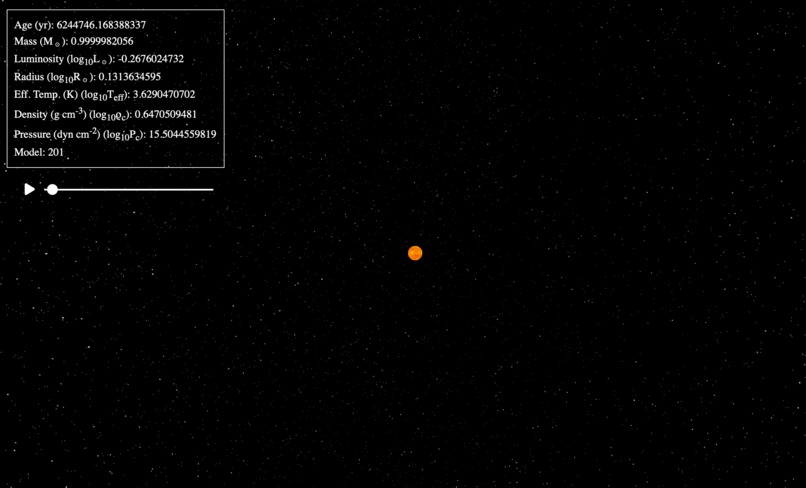
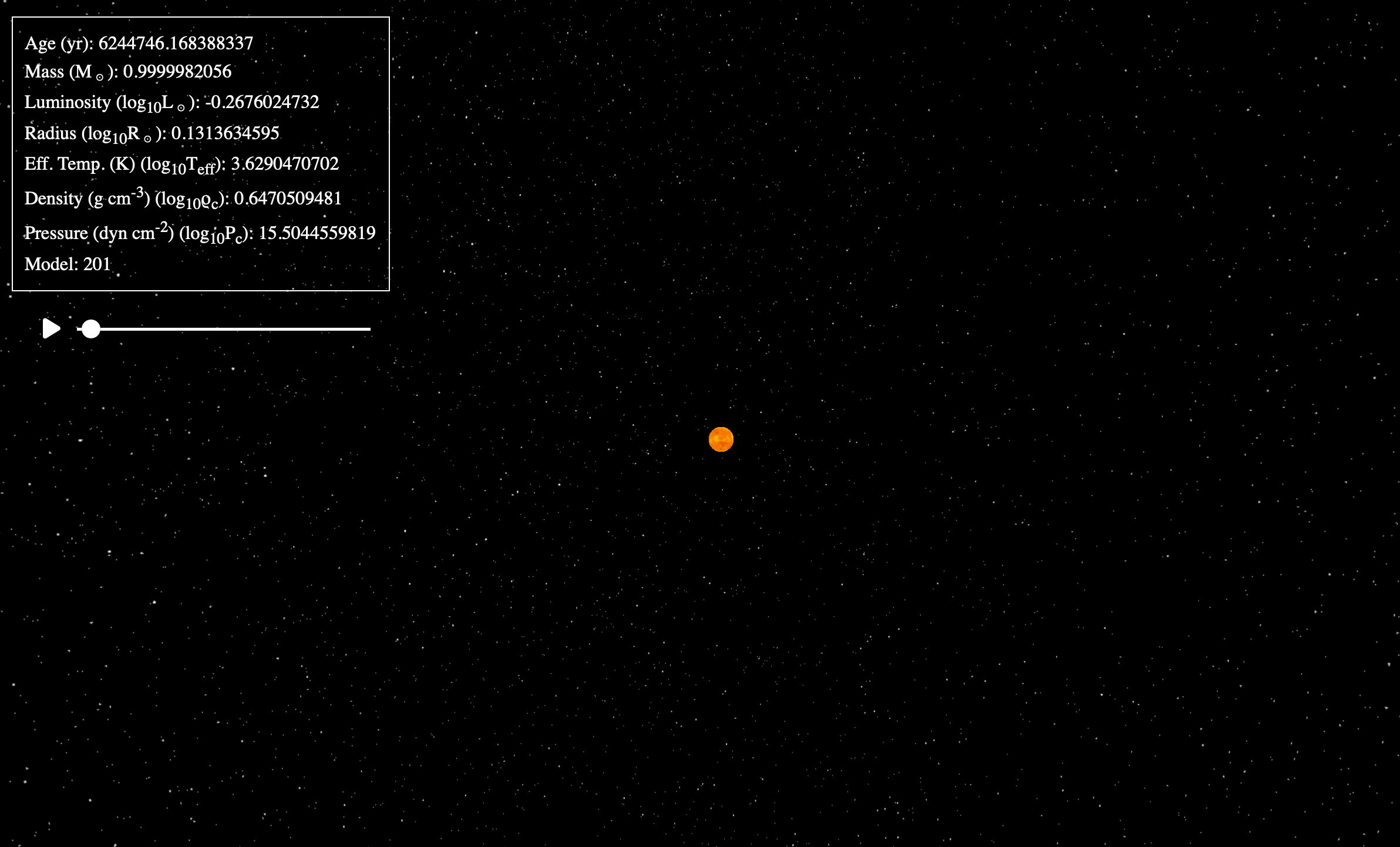
Early stages of star's life
-
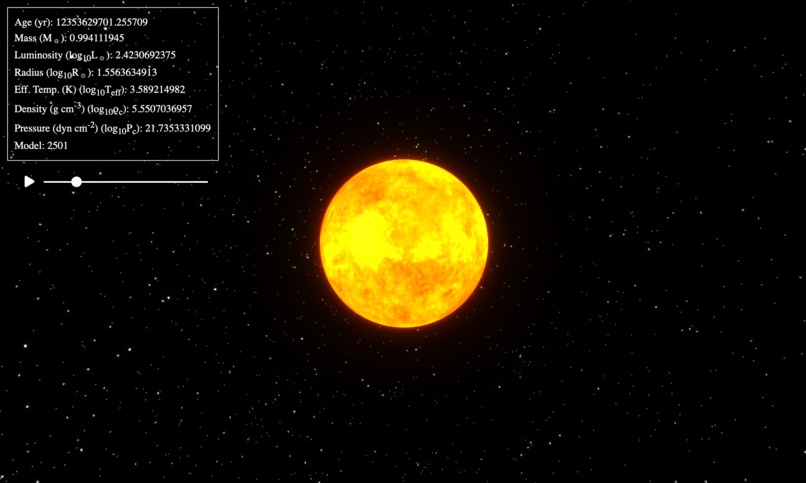
Main stage of star's life
-
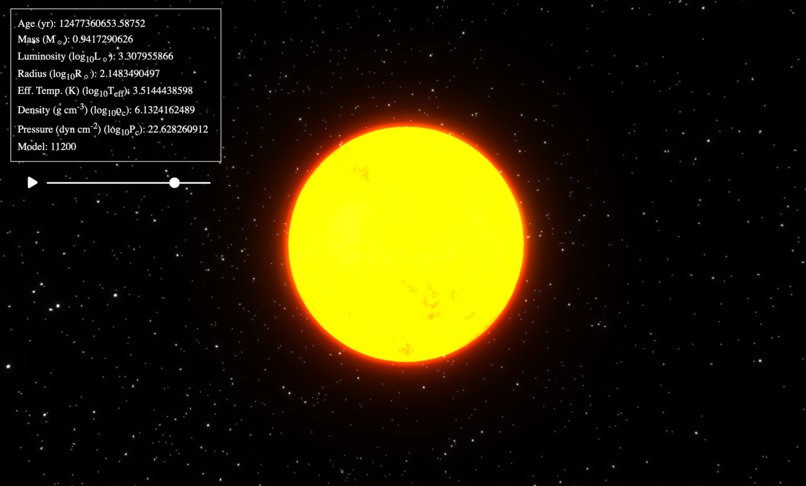
Beginning of the end of the star's life
-
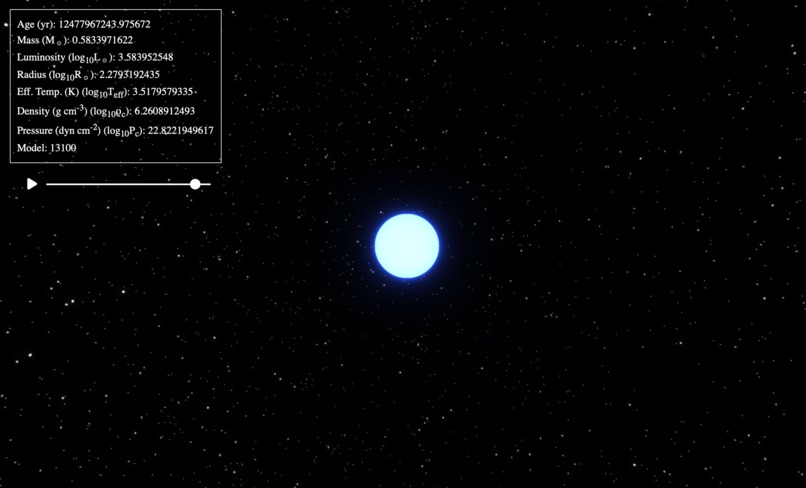
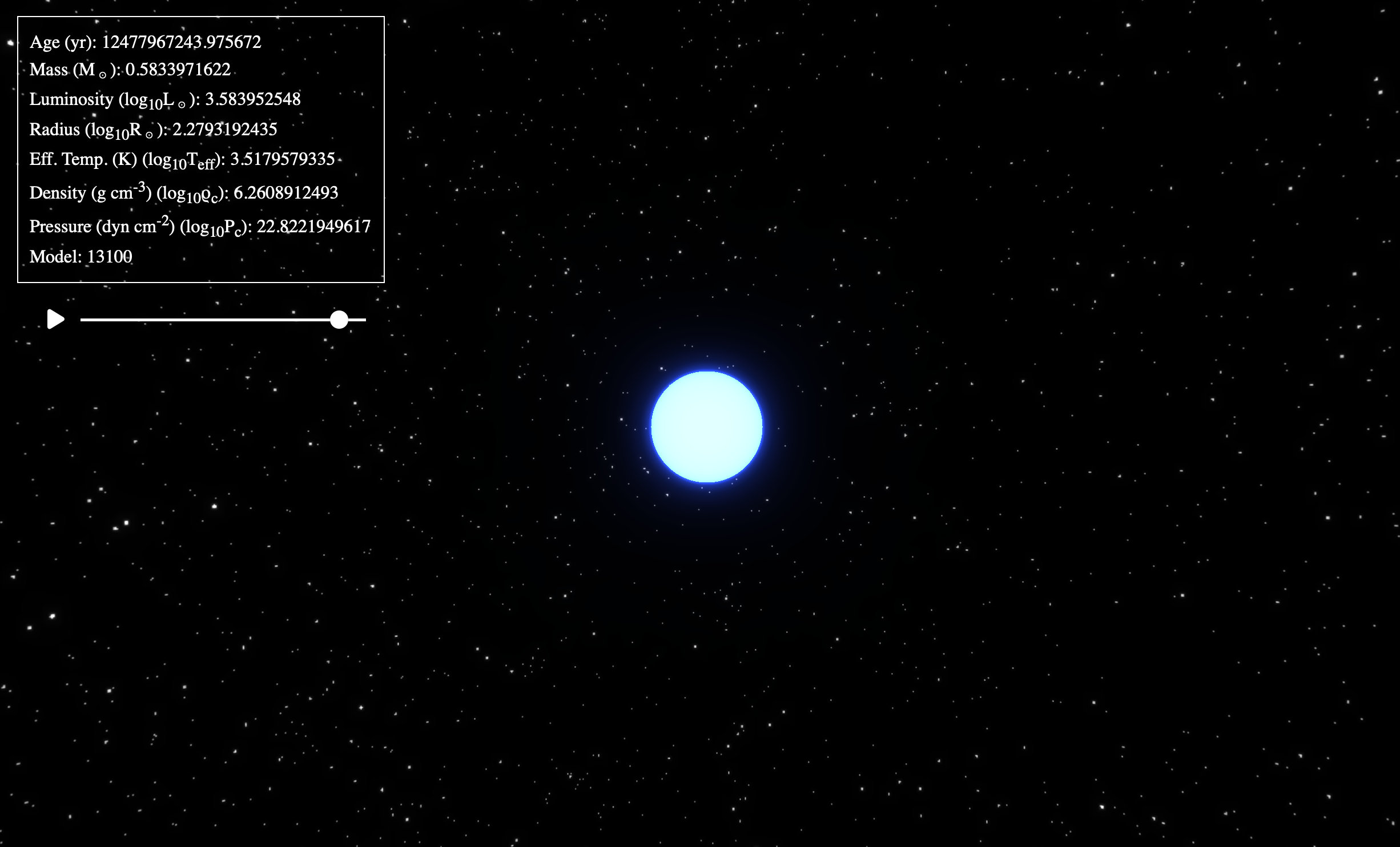
Star is dead, only a white dwarf remains


Inspiration
We drew our inspiration from the 3D models showcased on NASA’s website, fueled by our fascination with the cosmos and astrophysics. Additionally, we’ve been interested in taking advantage of the power of Three.js to produce 3D models, and found the perfect opportunity.
What it does
The visualizer demonstrates a 3D simulation that follows the entire life cycle of a star similar to our sun, from its inception to its epic demise. It starts with initial parameters mirroring those at the sun's birth. As the simulation progresses, you can observe how the star’s scientific attributes evolve over its lifetime.
How we built it
Our project was built by leveraging the power of Three.js, a JavaScript-based 3D modeling library, in conjunction with Python. Python was used to acquire and preprocess the data, after which it was transferred to the JavaScript model for data manipulation and visualization.
Challenges we ran into
We encountered challenges when trying to transmit the data we extracted from the MESA database to the browser. This arose from the limitation of file reading modules, which typically render data exclusively within the backend environment, making it a challenging task to seamlessly display it on the front-end.
Accomplishments that we're proud of
We take great pride in the progress we’ve made in developing the models and data visualization, along with overcoming the challenge of injecting the data into the front-end. Also, it’s worth noting our achievement of delivering a functional build within the tight time frame allotted, achieved by a dedicated team of just two individuals.
What we learned
This project provided us with a profound understanding of the intricate evolution of various star types, shedding light on previously uncharted territory for our team. Moreover, it equipped us with valuable insights into data refinement techniques and the art of rendering diverse 3D models.
What's next for Stellar Evolution Visualizer
Initially, our intention was to create model simulations using input parameters, but due to time constraints, we were limited in our approach. As our next step towards enhancement, we aim to implement input customization, resulting in the creation of multiple models tailored to different types of stars based on the provided parameters. Furthermore, we aspire to optimize our algorithm, increasing the program's efficiency, which will enable us to process a greater volume of data points.


Log in or sign up for Devpost to join the conversation.