-
-
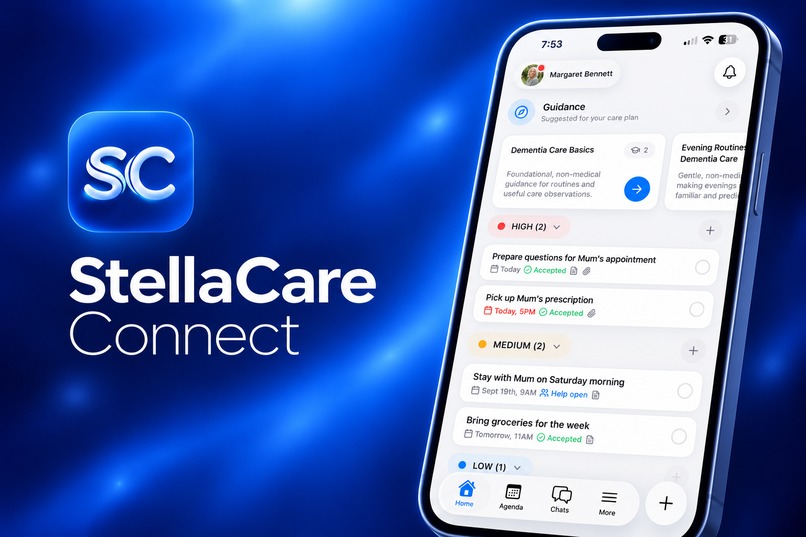
Thumbnail
-
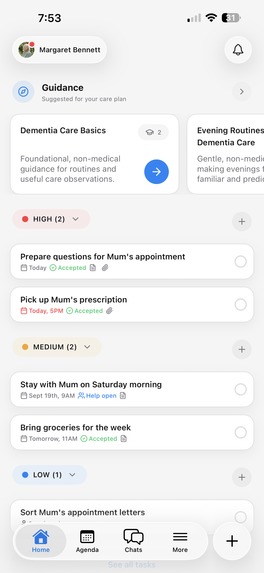
Home Screen
-
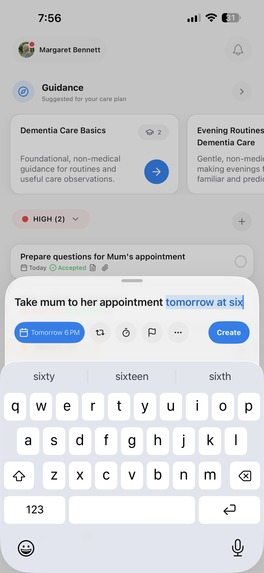
Task Quick Creation
-
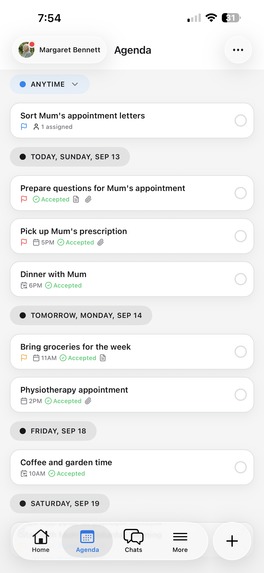
Agenda
-
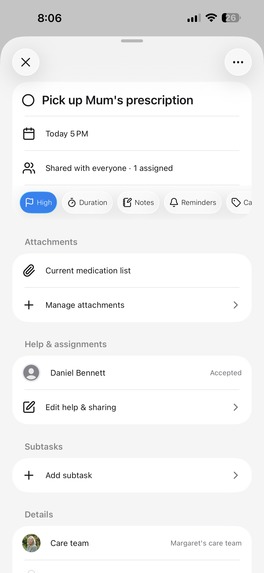
Task Detail Creation
-
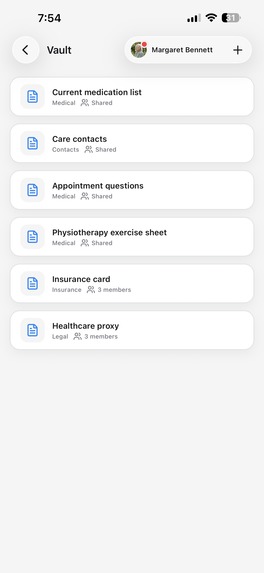
Vault
-
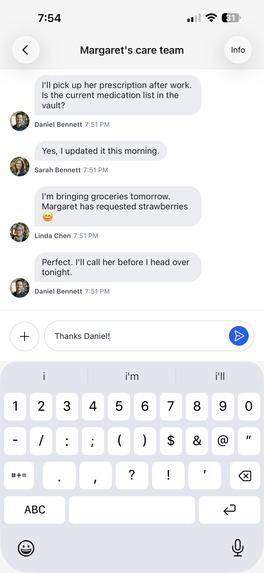
Chat
-

Icon
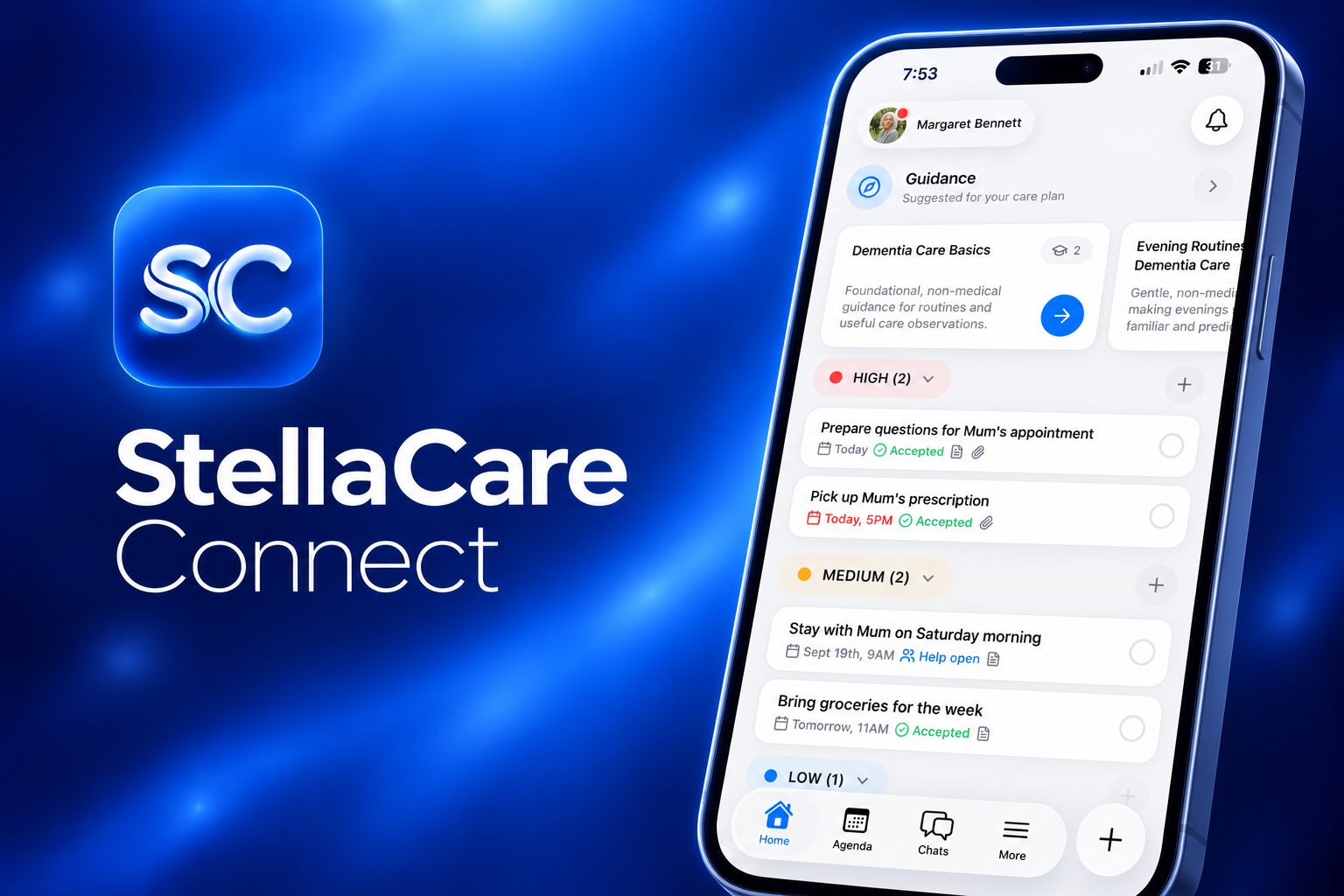

Inspiration
Our own caregiving journeys showed us how much responsibility comes with supporting an aging loved one. Alongside the care itself, there are appointments to arrange, decisions to make, and family members to keep informed. We kept running into the same challenges:
- The Chaos: Keeping track of responsibilities, finding reliable information, and figuring out what needs attention next can feel like a full-time job.
- The Coordination: Keeping everyone updated and finding people to share the work often becomes another responsibility for the primary caregiver.
- The Burnout: Managing all of this while working, raising children, or trying to look after yourself can be exhausting.
Conversations with other caregivers echoed our experiences. People wanted to do their best for someone they loved, but often felt unprepared for what that involved. The tools available still left them to figure out what to do and piece everything together.
We started StellaCare to make those responsibilities more manageable. We wanted to help caregivers understand what comes next, organize what needs doing, and share the work with people they trust. Our goal is to reduce the mental load of caregiving, helping families care for their loved ones while protecting their own well-being.
What it does
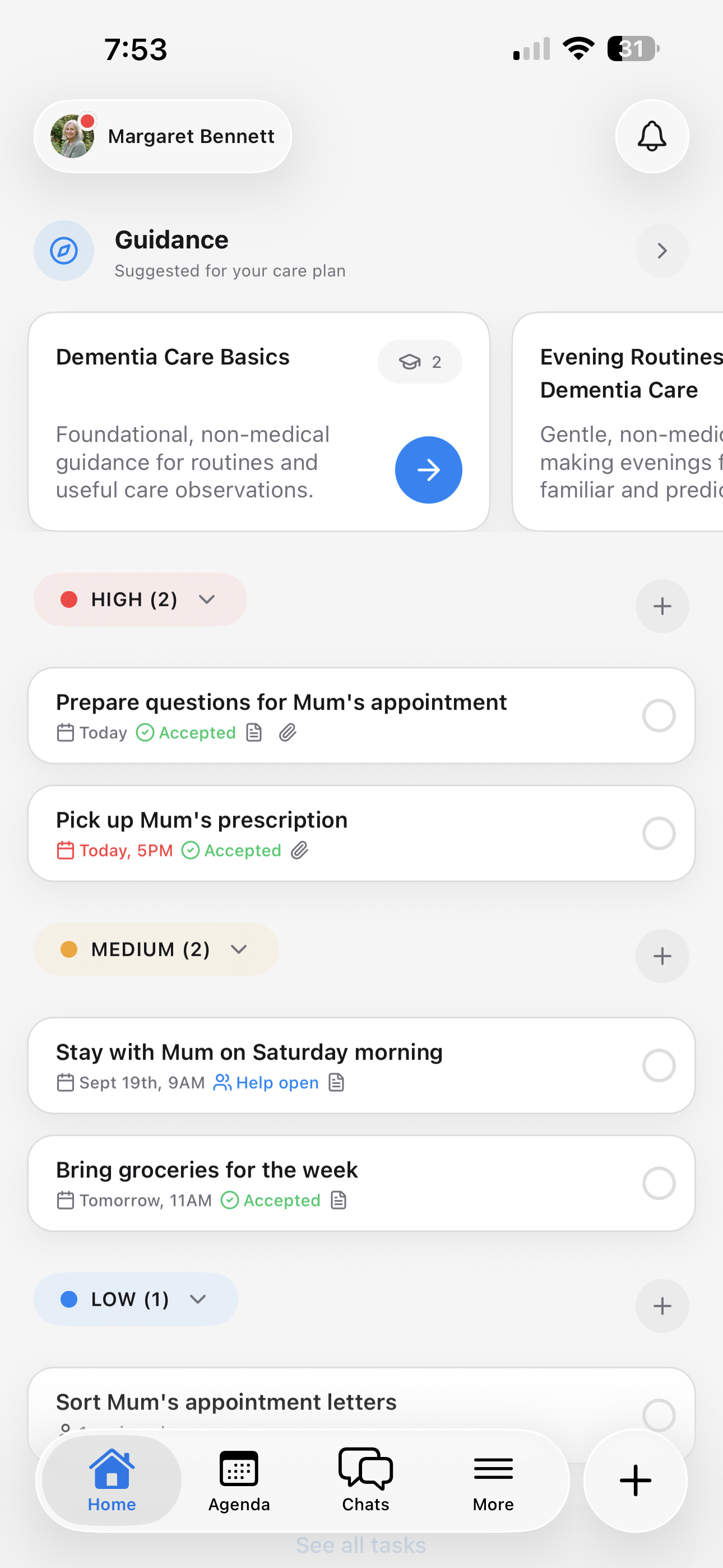
StellaCare helps individuals and families organize the care of a loved one and find guidance relevant to their situation.
A brief onboarding flow asks about the care receiver's health, living situation, and the support the caregiver provides. StellaCare uses that context to suggest relevant articles, courses, and tasks, giving caregivers starting points for responsibilities they may be encountering for the first time.
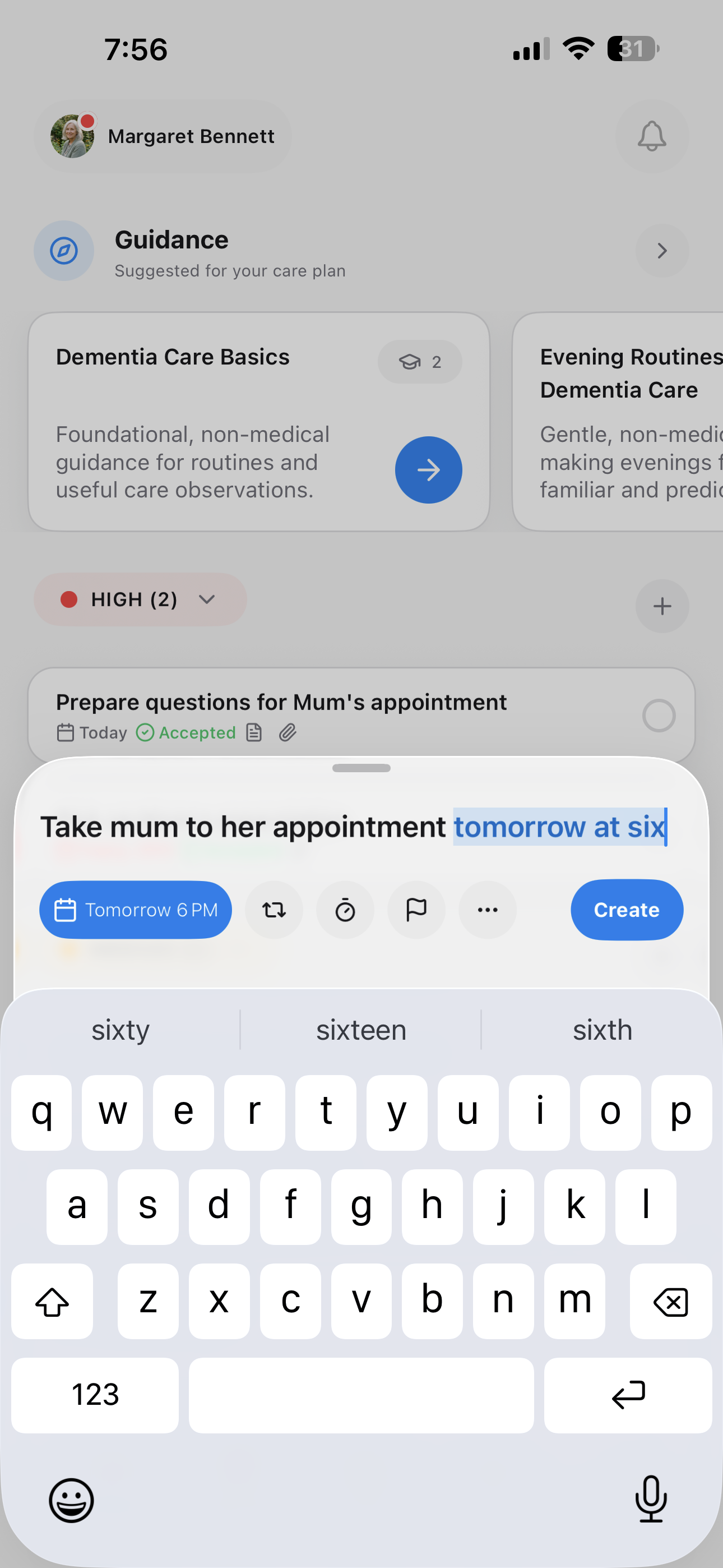
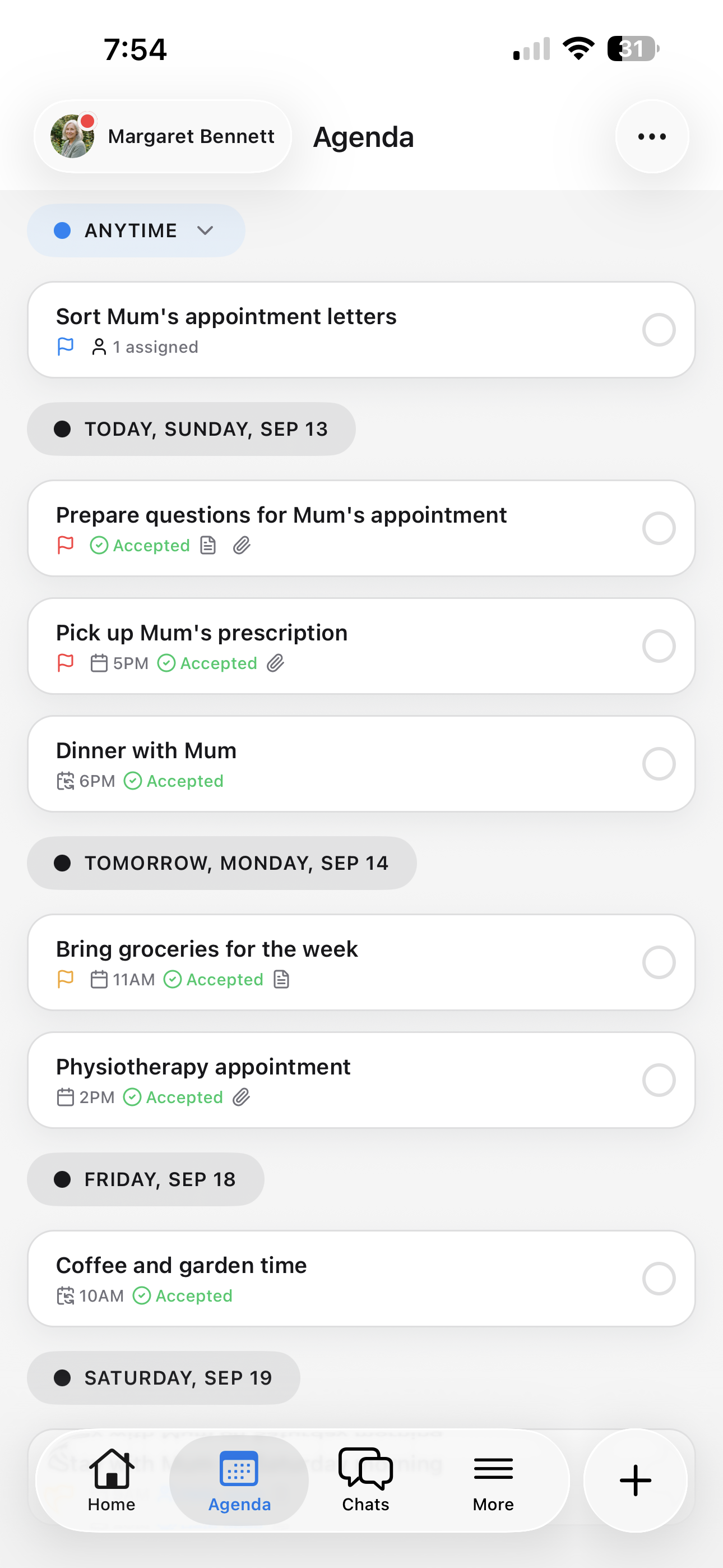
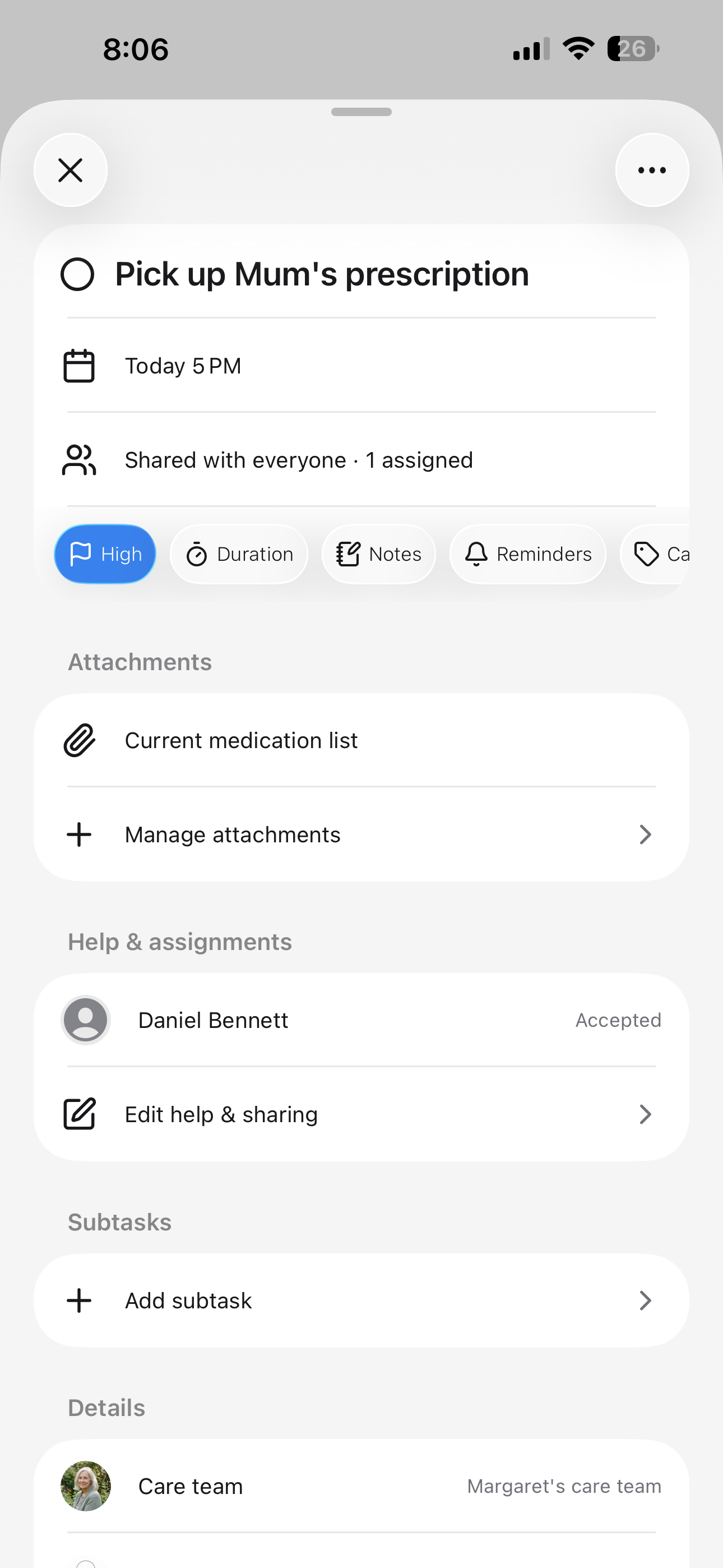
Caregivers can turn that guidance into action through shared task lists and a calendar. They can assign responsibilities to specific care-team members or send a help request when they need someone to step in. This makes it easier to see what needs attention, who has taken responsibility, and where help is still needed.
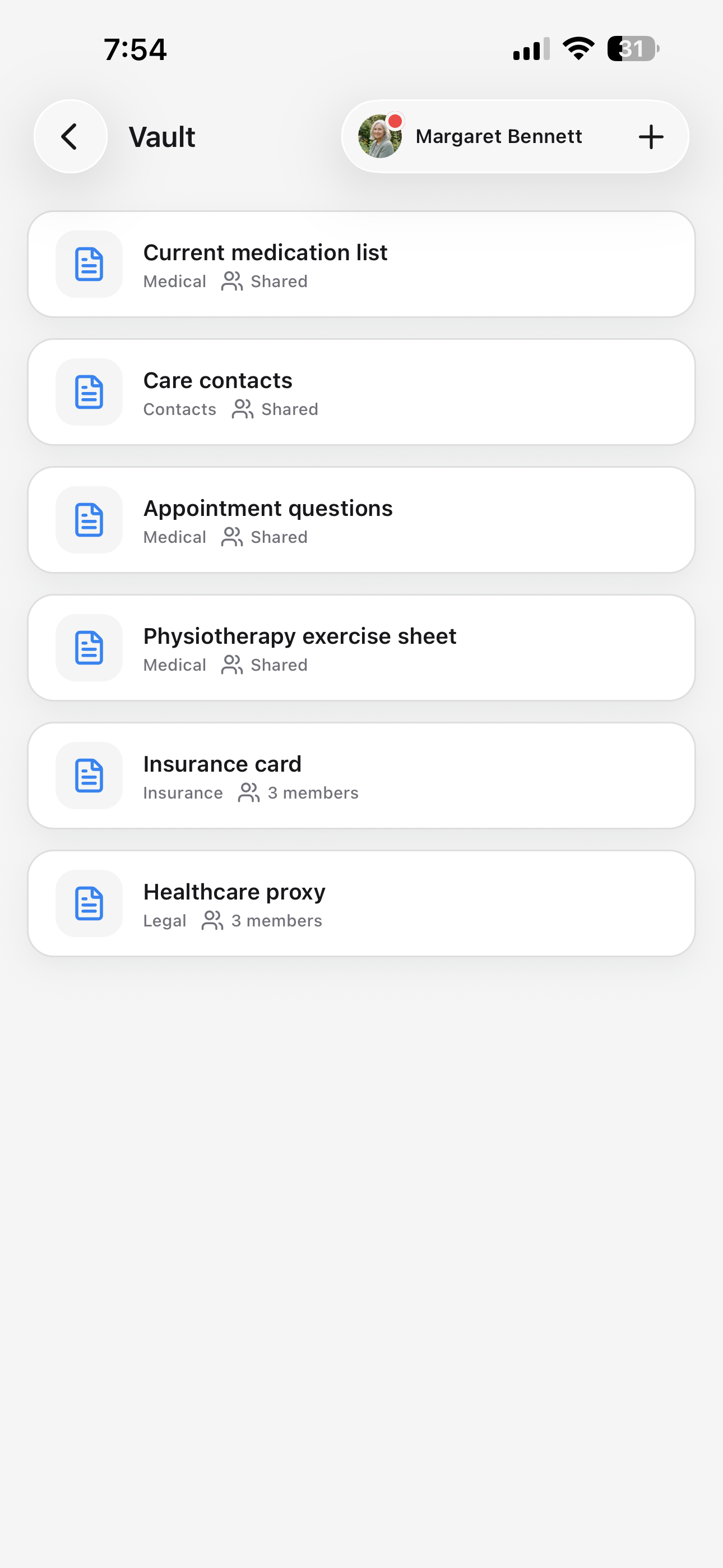
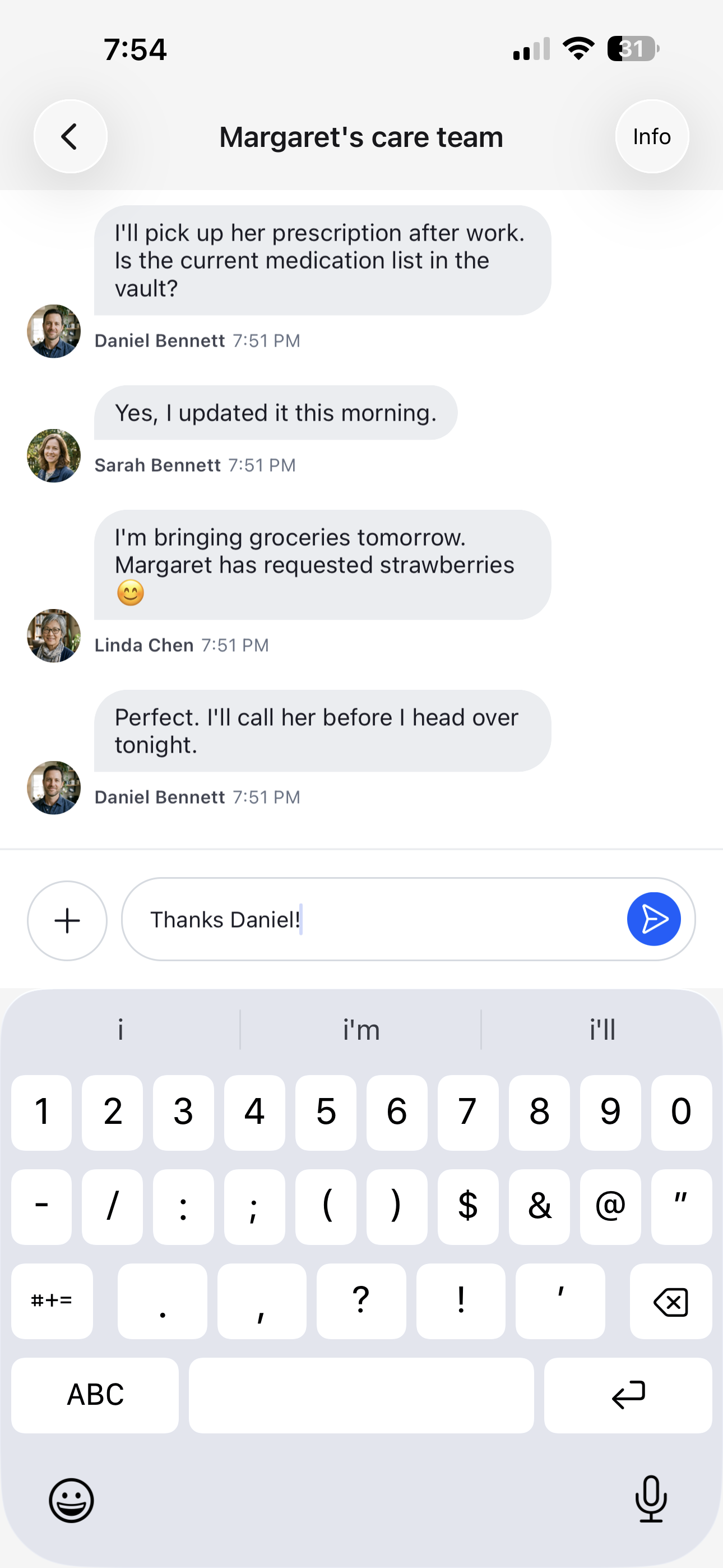
Team chat keeps care conversation in one place instead of scattered in unrelated group chats. A secure document vault keeps important information accessible to the people who need it. Together, these tools help families coordinate care without relying on one person to remember every detail and relay every update.
How we built it
We built StellaCare with React Native and Expo, using TypeScript across the mobile app and backend. The project uses a monorepo with shared types and backend contracts across the mobile app, web, and content-management tools.
Convex provides the database, real-time updates, and server-side logic for care teams, tasks, schedules, document access, and reminders. Documents are stored encrypted in AWS S3. Clerk handles authentication, while team membership and permissions are managed in Convex. Stream Chat powers team conversations, and Expo Notifications delivers push notifications.
Sanity manages onboarding forms, caregiving content, and recommendation rules. Convex connects that content to each care team’s context through a signal system derived from onboarding answers and ongoing app activity. It also tracks each caregiver’s progress and dismissals, keeping shared care information separate from individual interactions with guidance.
RevenueCat manages subscriptions, with backend verification connecting purchases to care-team access. The web application uses React and TanStack, with Cloudflare hosting the supporting web experience.
Challenges we ran into
Our biggest challenge was making personalization useful for someone who may be overwhelmed and unfamiliar with caregiving. A caregiver cannot tell us everything they need help with if they do not yet know what those responsibilities involve. We needed to turn limited context into relevant starting points without presenting so much information that the app became another source of work.
Our initial proof of concept included the core tools we identified through caregiver interviews and deliberation about what would best support them: tasks, chat, a document vault, and care-team features. But it left caregivers to figure out how to use those tools for their particular situation. We needed a way to connect the responsibilities they were facing with useful guidance and actions. That led us to develop signals drawn from both onboarding answers and ongoing activity in the app.
We spent time choosing onboarding questions that would give us a useful picture of the care situation and translate into meaningful signals. The technical challenge was making that picture evolve beyond onboarding. Signals needed defined conditions and lifetimes, and recommendations needed to respond as the team’s circumstances changed.
This shaped our decision to curate content and recommendation rules in Sanity. We considered using a chatbot, but given our time and resources, curating guidance gave us greater control over its accuracy and relevance. It also let us surface useful information that a caregiver might not think of seeking out, with editorial control over what we present and when. Integrating Sanity required a shared signal model that connected editorial rules to live care-team data in Convex. We also had to handle content and rule changes so the app would refresh recommendations and replace outdated cached content without resetting a caregiver’s progress.
Accomplishments that we're proud of
We spent over 100 hours interviewing caregivers. Those conversations helped us move beyond our own experiences and identify the responsibilities, uncertainties, and coordination problems that StellaCare needed to address.
We completed two rounds of friends-and-family and beta testing through TestFlight, with one group recording more than 150 completed tasks. Those experiences showed us what was useful and where the app needed more work. During the Shipaton, we used those lessons to substantially rebuild StellaCare, connecting its core coordination tools with personalized guidance.
We're also proud of connecting curated guidance to the tools caregivers use to act on it. Our Sanity integration gives subject matter experts control over content and recommendation rules, allowing us to refine guidance as we learn more about caregivers' needs.
We built this while living in three different cities, working full-time jobs, and caring for family and friends ourselves. We also participated in two half-day sessions with team coaches. Making consistent progress alongside those commitments has been an accomplishment for the whole team.
What we learned
We learned that asking for context has a cost. Our initial onboarding flow had too many steps, and users did not understand why we were asking certain questions. Each question needed a clear purpose and enough value to justify the effort of answering it, especially for someone already carrying a heavy workload.
We also learned that the way we present guidance matters as much as the content. Early versions grouped recommendations into a single task with subtasks in a calendar view. That was overwhelming and included recommendations that were not relevant to every family. Caregivers needed more selective guidance and a clearer way to distinguish something worth learning about from something they needed to do.
Getting a whole care team involved proved difficult. Families already have established ways of communicating and dividing responsibilities, even when those arrangements are frustrating. Giving the primary caregiver better tools does not automatically mean everyone else will adopt them. We need to make participation useful and manageable for each person.
Testing taught us to consider the effort required before someone even reaches the app. TestFlight was convenient for us as developers, but added friction for some testers. We also learned to question whether every idea needed an in-app feature. Sometimes the most useful outcome is helping someone take an action or have a conversation outside StellaCare.
What's next for StellaCare Connect
Our next priorities are expanding the curated guidance library and supporting Android so more members of a care team can participate. We also want to keep refining how guidance responds to changing care situations and how easily caregivers can act on it.
We plan to explore ways to encourage continued participation, including whether elements of gamification can help families share responsibilities without adding pressure or more work.
We want to partner with academic researchers studying caregiver burden and well-being to better understand StellaCare's impact. That would help us evaluate whether the app is reducing mental load and supporting caregivers over time.
We're also exploring how StellaCare could reach caregivers through employers, health plans, and non-medical home-care providers. Interest from financial planners, estate attorneys, and estate managers has opened further conversations about how the app might support families navigating the practical responsibilities of caring for a loved one.
Built With
- amazon-web-services
- clerk
- cloudflare-workers
- convex
- expo.io
- posthog
- react
- react-native
- revenuecat
- sanity
- stream-chat
- tailwind-css
- tanstack-start
- turborepo
- typescript
- uniwind
- vite

Log in or sign up for Devpost to join the conversation.