
Inspiration
I wanted to make a rocket game that felt playful, slightly chaotic, and easy to understand—but surprisingly difficult to master.
The basic idea was simple: what if flying a rocket was not just about pressing left or right? What if every small movement affected the rocket’s balance, speed, and direction, and players had to carefully recover whenever they overcorrected?
That led to Steer It: a game built around the fun of trying to control something that always feels just a little out of control.
What it does
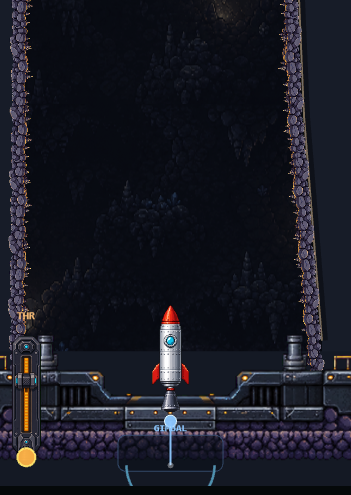
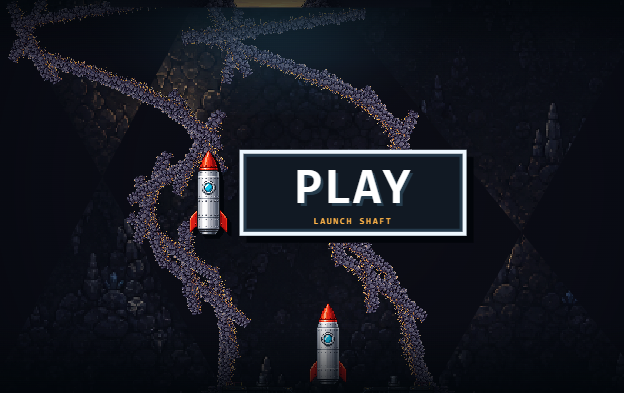
In Steer It, you guide a rocket through a narrow underground shaft and try to reach the opening at the top without crashing into the walls.
You do not directly control the rocket rather you control the thrusters you control it's directions and how much power it produces.
That means every movement has consequences.
Push too hard and the rocket may spin out of control. Correct too late and you may drift into a wall. Overcorrect and suddenly you are fighting a completely different problem.
The controls are simple, but every successful escape feels earned.
Crashing is quick, restarting is immediate, and each attempt helps you understand the rocket a little better.
The fun of the game
Steer It is meant to feel tense, funny, and satisfying at the same time.
Sometimes you make a perfect correction and smoothly pass through a difficult section. Sometimes one tiny mistake turns into complete chaos within a second.
That slightly wobbly and unpredictable feeling is a big part of the game.
It is easy to start playing, but getting genuinely good requires patience, timing, and learning how the rocket reacts.
Built for shared challenges
Each shaft can become a shared challenge that everyone on Reddit can attempt.
Players face the same route, but the outcome depends entirely on how well they control the rocket. This makes it easy to compare attempts, challenge other players, and keep trying to improve.
The game also includes a seed generation for maps for creating different shaft layouts, allowing challenges to feel fresh instead of always repeating the same level.
Players can also use the map editor to adjust the shape of a shaft, test it themselves, and create new challenges for other players.
How I built it
I built Steer It as an interactive Reddit game using Devvit Web, React, TypeScript, Phaser, and Matter Physics.
Phaser handles the game itself, while Matter Physics controls how the rocket falls, rotates, accelerates, and collides with the tunnel.
The shafts are created from a reusable path system, which makes it possible to build handcrafted levels, generated levels, and player-created levels using the same foundation.
Challenges I faced
The biggest challenge was making the rocket difficult to control without making it frustrating.
If the rocket was too stable, the game became boring. If it reacted too strongly, it felt random and unfair. A lot of the work involved adjusting the balance between gravity, engine power, rotation, momentum, and the size of the tunnel.
Another challenge was making the controls feel understandable. Because players control the engine rather than directly steering the rocket, the movement can initially feel reversed or unfamiliar. The visuals needed to make it clear what the engine was doing and why the rocket was reacting in a certain way.
I also had to make the game work inside Reddit’s limited post space while keeping the upcoming parts of the tunnel visible and the controls comfortable to use.
Accomplishments that I’m proud of
I am proud that the game can be understood almost immediately, while still having a real learning curve.
The controls only involve engine direction and power, but those two inputs can create a lot of interesting situations.
I am also happy with the fast retry loop. Crashing does not feel like the end of a long attempt it usually makes you want to immediately try again and correct the mistake you just made.
Most importantly, the game already has its own personality. It can feel calm and controlled one moment, and completely chaotic the next.
What I learned
Building Steer It taught me how much small details affect the feel of a game.
Tiny changes to the rocket’s weight, engine power, rotation, or controls could make it feel completely different. I learned that making a physics game fun is not only about making it realistic it is about making the player understand what happened and believe they can do better next time.
I also learned how to build an interactive game inside Reddit and how to structure levels so the same system can support manually created, automatically generated, and community-created shafts.
What’s next
I would like to continue expanding Steer It with:
- more shaft styles and difficulty levels;
- regularly changing shared challenges;
- community-created maps;
- leaderboards and personal best times;
- different rockets with slightly different handling;
- additional environments, obstacles, and visual themes;
- more ways for Reddit communities to compete and create challenges together.
The long-term goal is to turn Steer It into a game that is quick to start, fun to fail at, and genuinely satisfying to master.
Built With
- css
- devvit
- hono
- html5
- javascript
- matter.js
- phaser.js
- react
- redis
- typescript
- web

Log in or sign up for Devpost to join the conversation.