Inspiration
Most people keep their money in many places: checking, savings, a credit card, a car loan, a mortgage, often at different banks. Each app shows one piece. None shows the whole picture or says plainly how you’re doing. Problems usually surface only once they’re expensive.
A tessera is a single tile in a mosaic. Each account is one tile, and we wanted to build the mosaic: one place that brings every account together, scores your financial health against PNC’s own guidelines, warns you early by text, and helps you understand your next move.
What it does
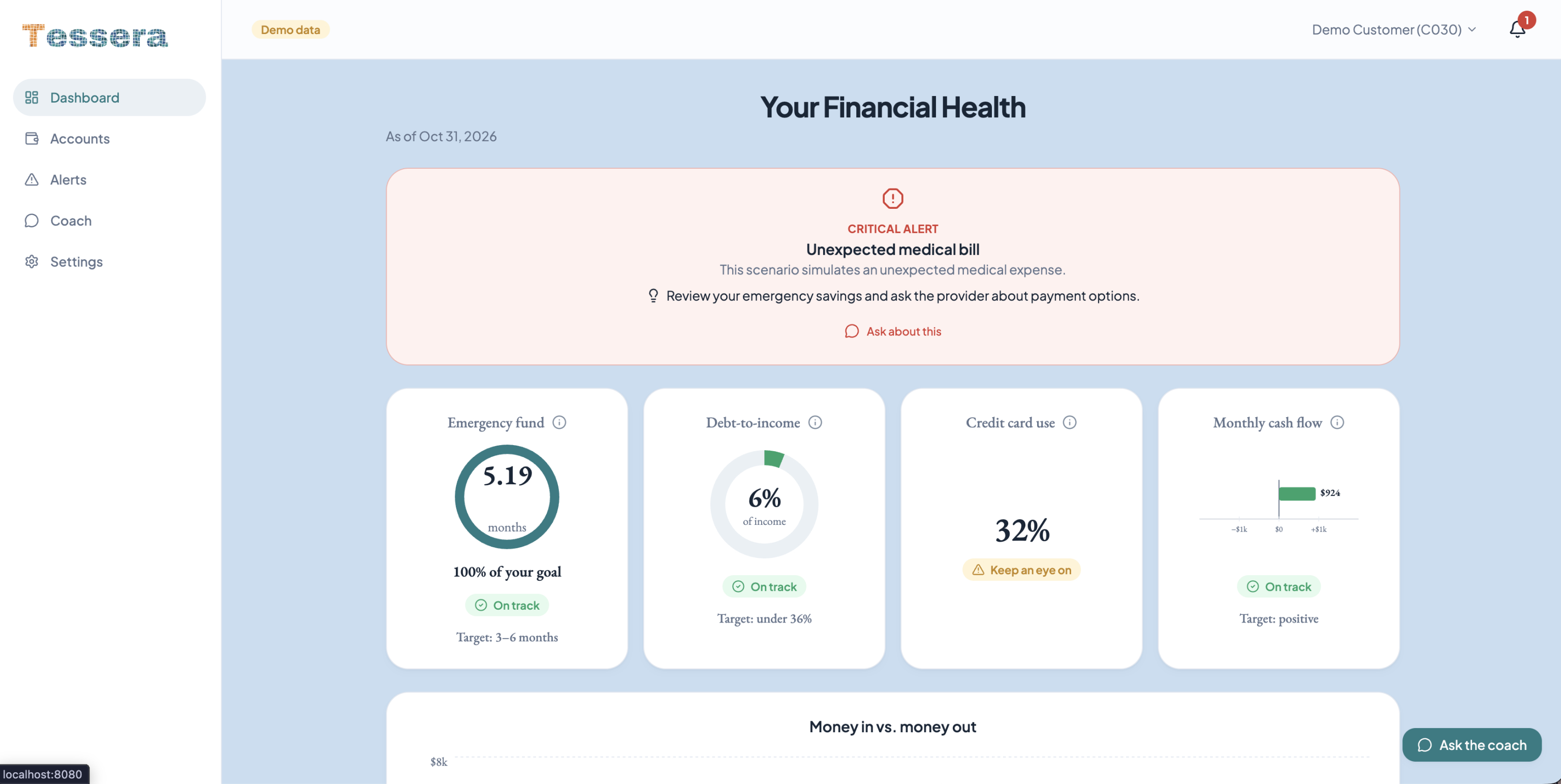
Tessera combines all of a user’s accounts into a single view and turns them into four health indicators: emergency fund, debt-to-income, credit card use, and savings rate. Each is rated good, watch, or risk using the thresholds in PNC’s starter kit. Every indicator shows how it’s scored.
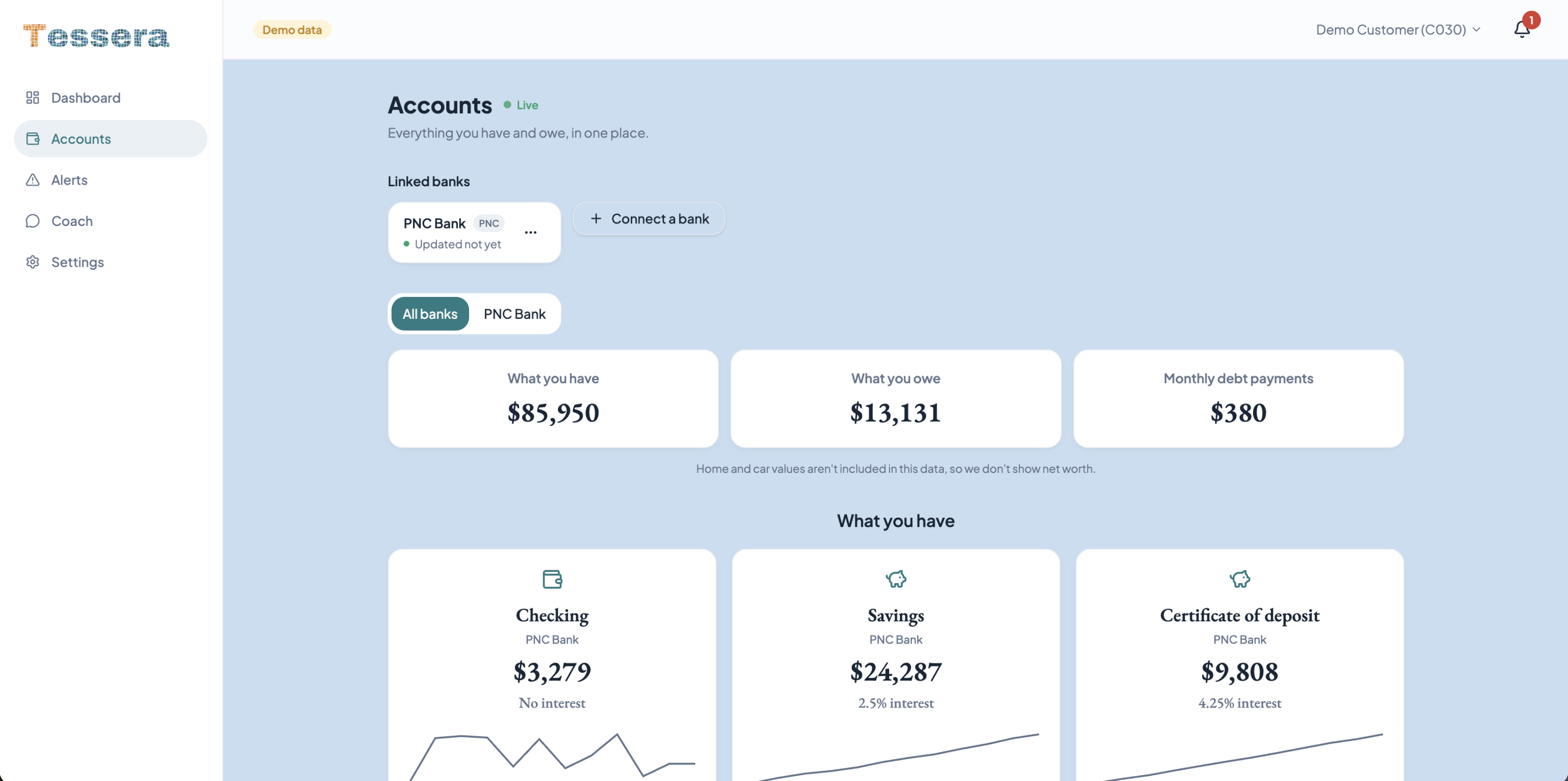
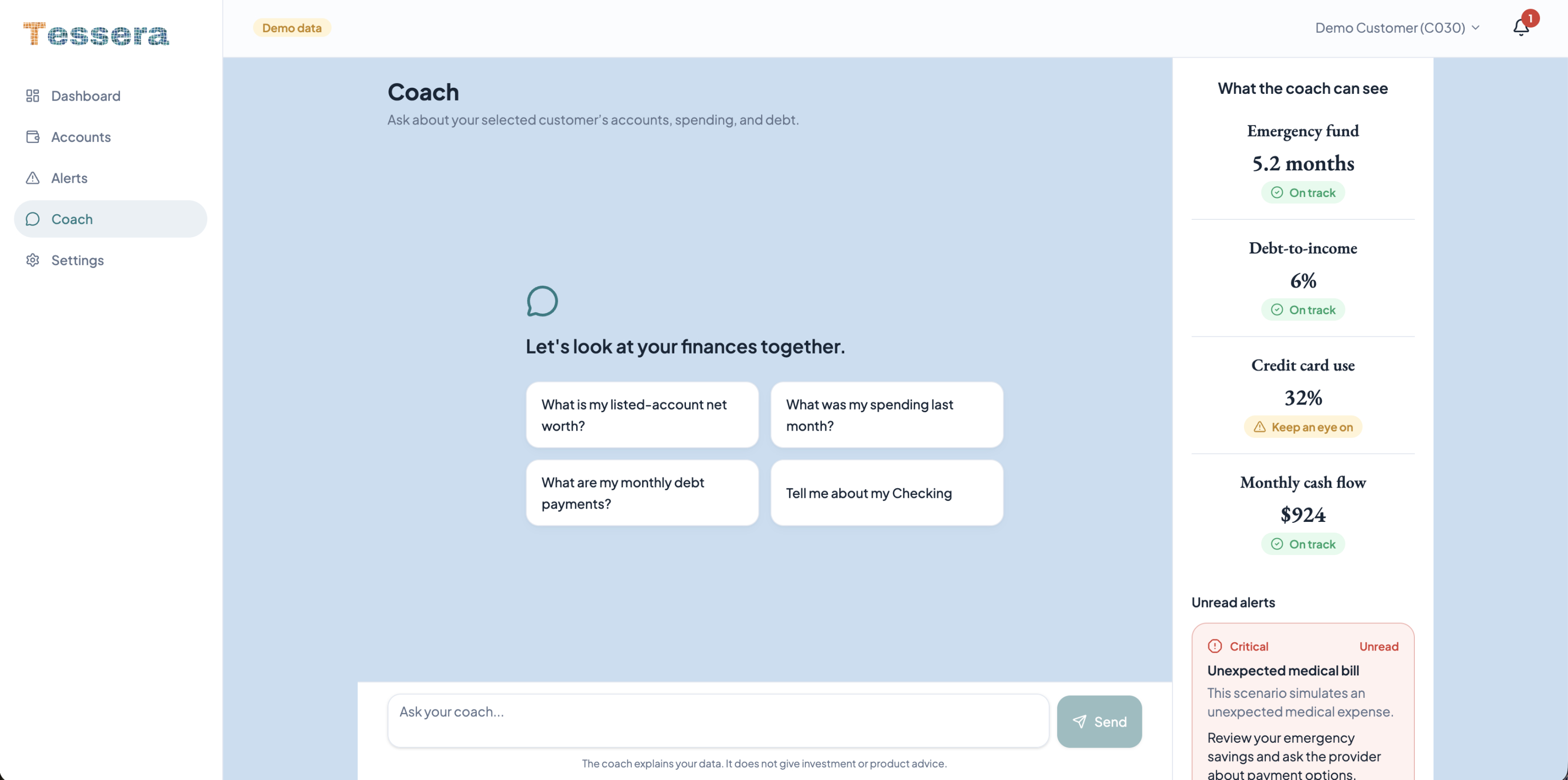
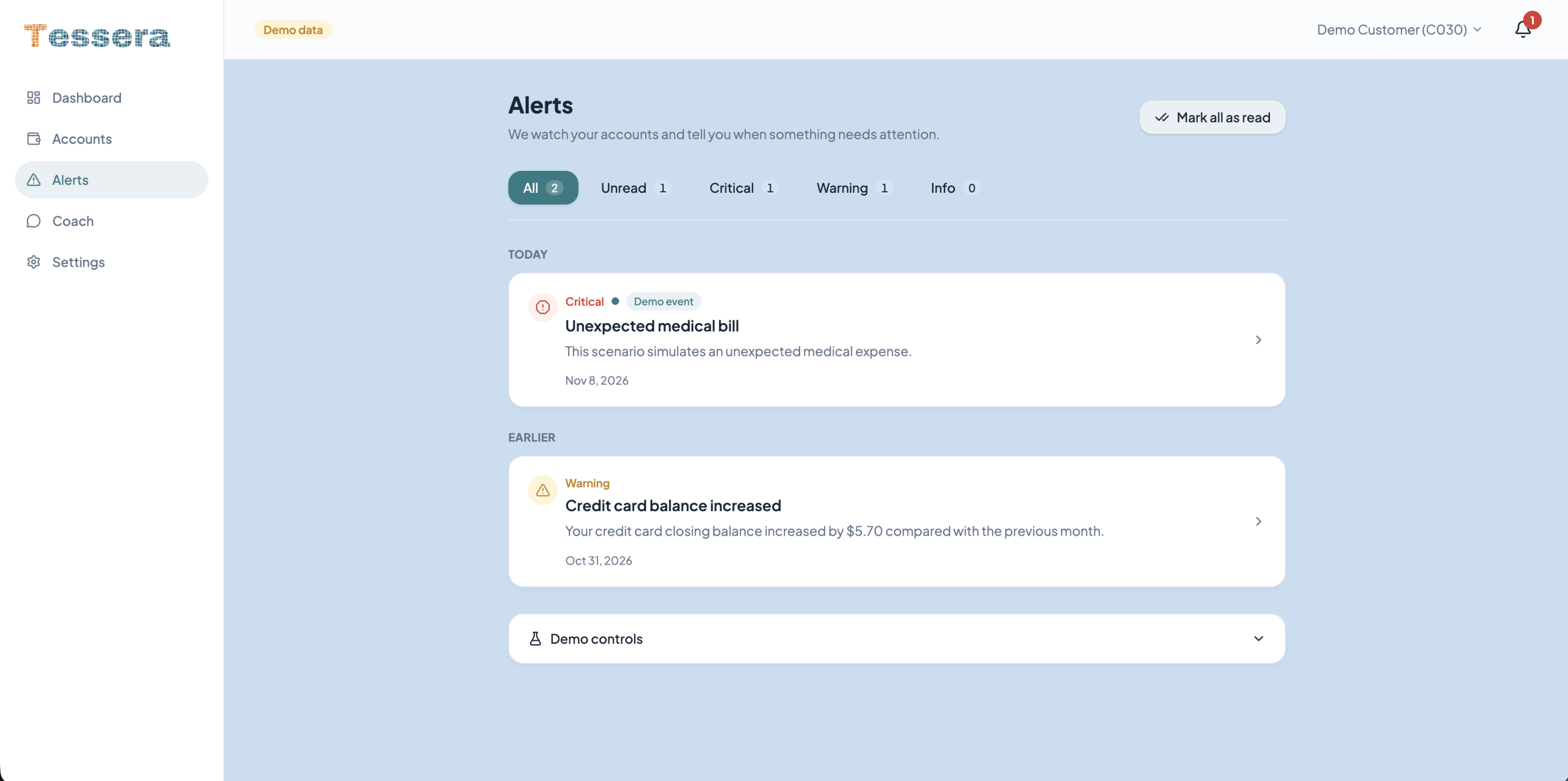
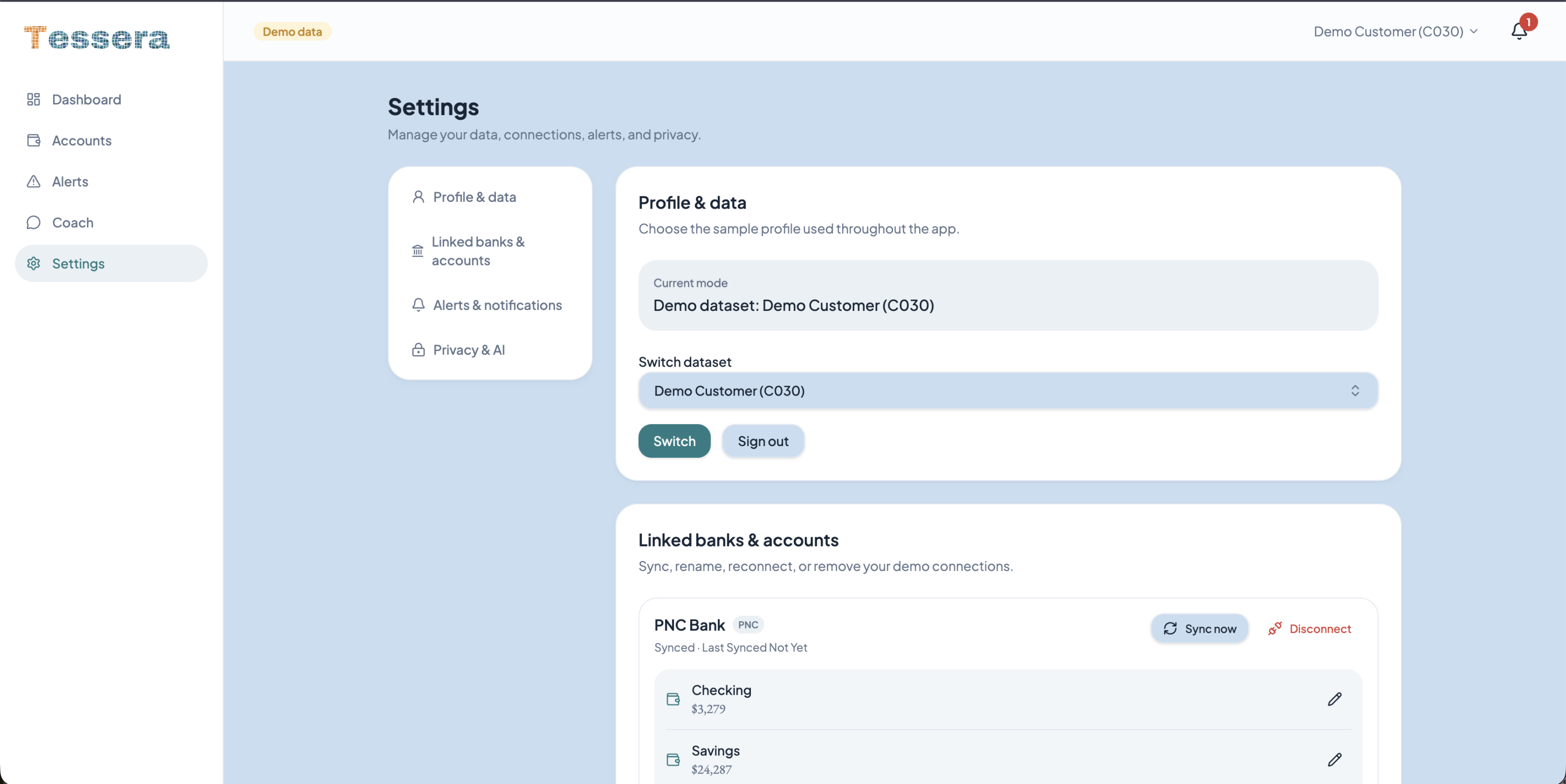
Dashboard: the four indicators, money in vs. money out, credit card trend, spending by category, and everything you have and owe. Accounts: every account with its 12-month history, recent activity, and payoff estimates for each debt. Users can link accounts from more than one bank and watch the totals and indicators update. Alerts: Tessera watches for problems, such as a card over its limit, a shrinking emergency fund, or spending above income. It shows each alert with what happened, why it matters, and what to do. Alerts can be sent by iMessage, with consent, quiet hours, and an option to hide dollar amounts on the lock screen. AI coach: users ask questions on the website or by replying to an alert text. The coach explains their real numbers. It never calculates or invents figures, and answers are checked against the data. Demo controls: simulate a medical bill, job loss, or rate increase, and watch the alert reach a phone in seconds.
How we built it
Front end: built with Lovable (React, TypeScript, Tailwind, shadcn/ui, Recharts). It does no financial math. It only formats and displays numbers from the backend. Calculation engine: a Python pipeline over PNC’s synthetic dataset (30 customers, 24 months of accounts and transactions). It calculates every metric, alert, payoff estimate, and demo event. Database: SpacetimeDB stores customer data, alerts, and settings, and pushes live updates to the browser. [confirm how much is connected] Alerts: a TypeScript service using Photon’s Spectrum SDK sends alerts by iMessage and passes replies to the coach. AI coach: Google’s Gemini API, with tools that read the user’s data. [confirm] Bank linking: a simulated Plaid-style flow, designed so the real Plaid Sandbox can replace it.
Challenges we ran into
Double counting. Our first numbers counted credit card payments as costs, even though the purchases were already counted as spending. Fixing it changed one customer’s monthly cash flow from −$1,153 to +$71. Trusting the numbers. We moved every calculation out of the front end and the AI, so the dashboard, the coach, and the text alerts can never disagree. Synthetic data limits. PNC’s data is very smooth: no merchant names, and steady income. Instead of alerts that would never fire, we built threshold alerts and simulated events. iMessage delivery. Photon only messages approved numbers that have texted the line first. We also had to fix a quiet-hours bug that silently blocked alerts. Temporary hosting. Our free tunnel addresses kept expiring, which broke the connection between the website and the alert service.
Accomplishments that we’re proud of
A real alert reaching a real iPhone within seconds of a simulated event, and the coach answering a text reply. Every number traces back to one engine. We checked it: for all 30 customers, the calculated cash flow matches the actual change in account balances to within $2. Using PNC’s own thresholds. It’s an honest result too: none of the 30 customers meets PNC’s six-month emergency fund guideline. Privacy by design: consent before texting, lock-screen-safe alerts, quiet hours, and STOP to unsubscribe.
What we learned
In finance, being believable matters more than being clever. Keeping the AI as an explainer, not a calculator, made the product trustworthy. How much small definitions matter: a single misclassified payment can flip a “healthy” verdict. How to connect a real-time database, a messaging platform, and an AI model into one product in a weekend.
What’s next for Tessera
Real bank connections through the Plaid Sandbox, then production, with each bank combined into one picture. Moving the calculation engine fully into the database, so indicators update the moment new transactions arrive. Smarter alerts from merchant-level data: unusual charges, duplicate charges, rising subscriptions. A real what-if planner: “What if I pay $200 more on my card?” calculated by the engine and explained by the coach. Permanent hosting and real user accounts.
Built With
- geminiapi
- lovable
- photon
- react
- spacetime
- typescript

