-
-
STEADI
-
the problem
-
our solution
-
how it works
-
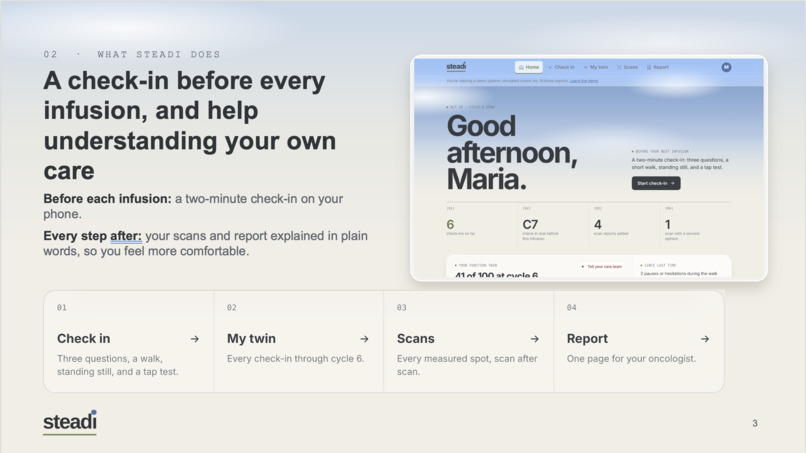
demo patient
-
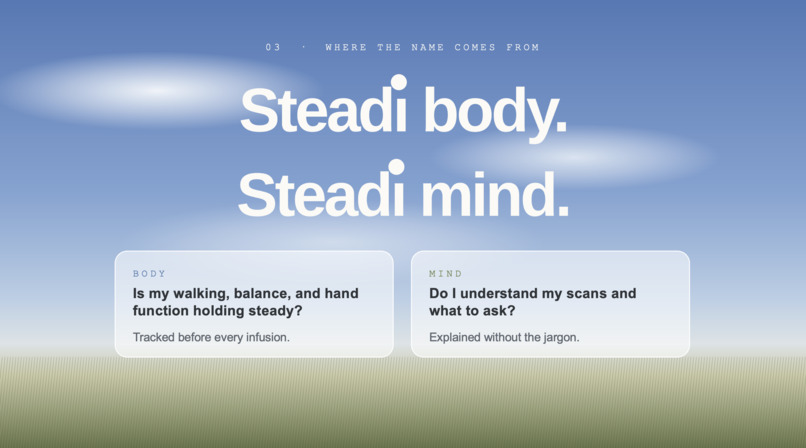
steadi body, steadi mind
-
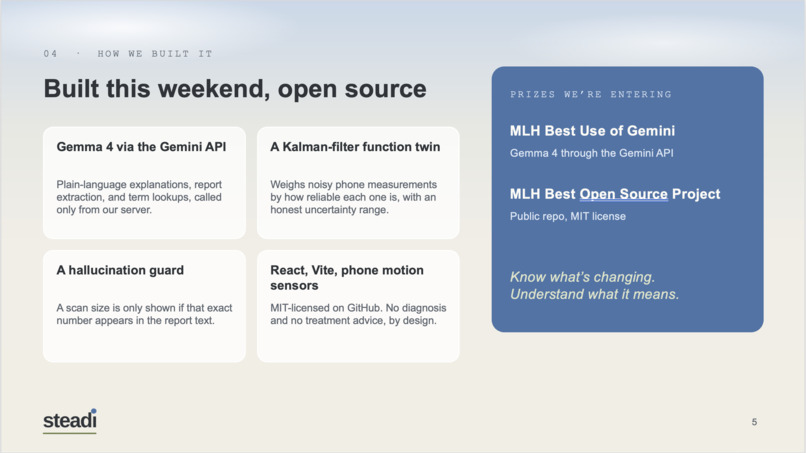
prizes we are competing for
-
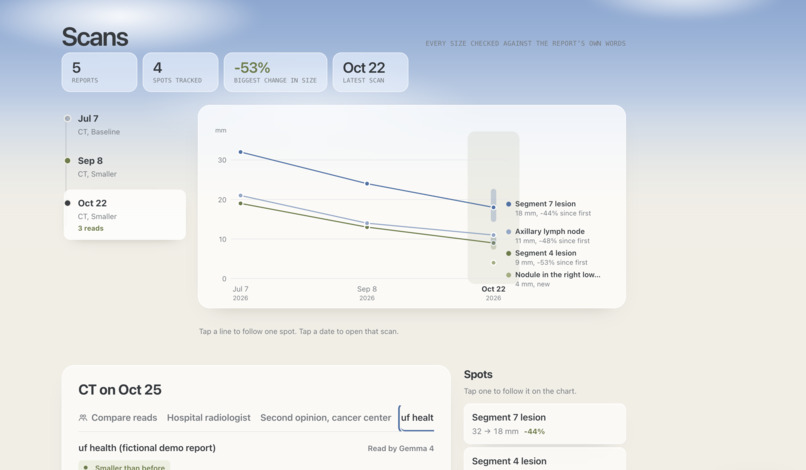
scans explained and tracked
-
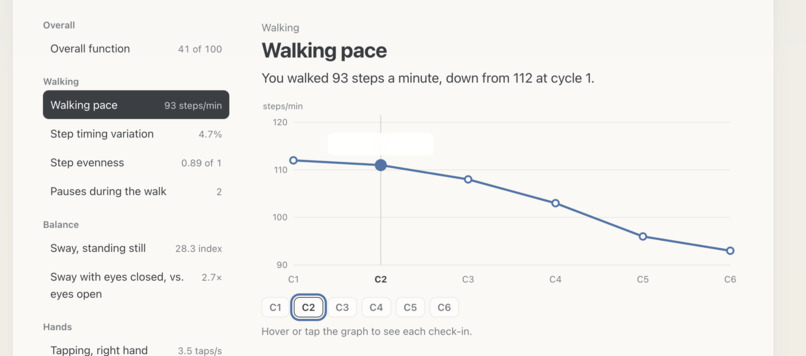
digital twin data
-
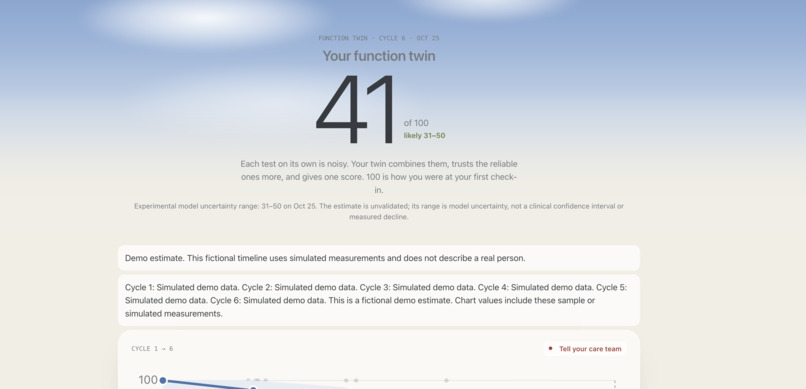
functional score of demo twin
Inspiration
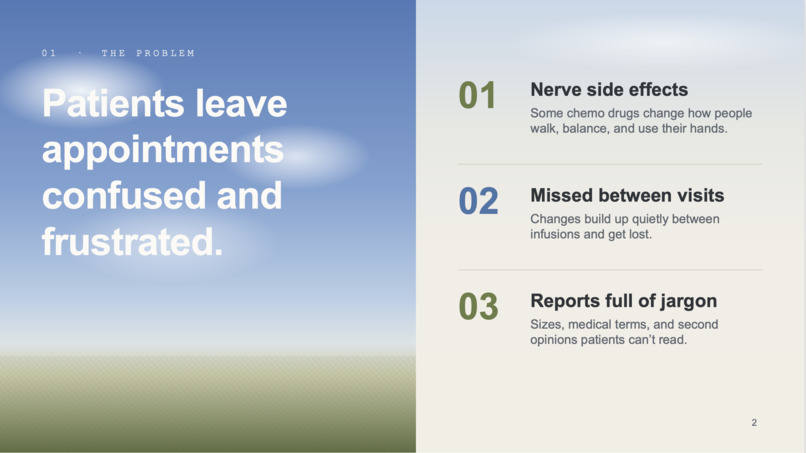
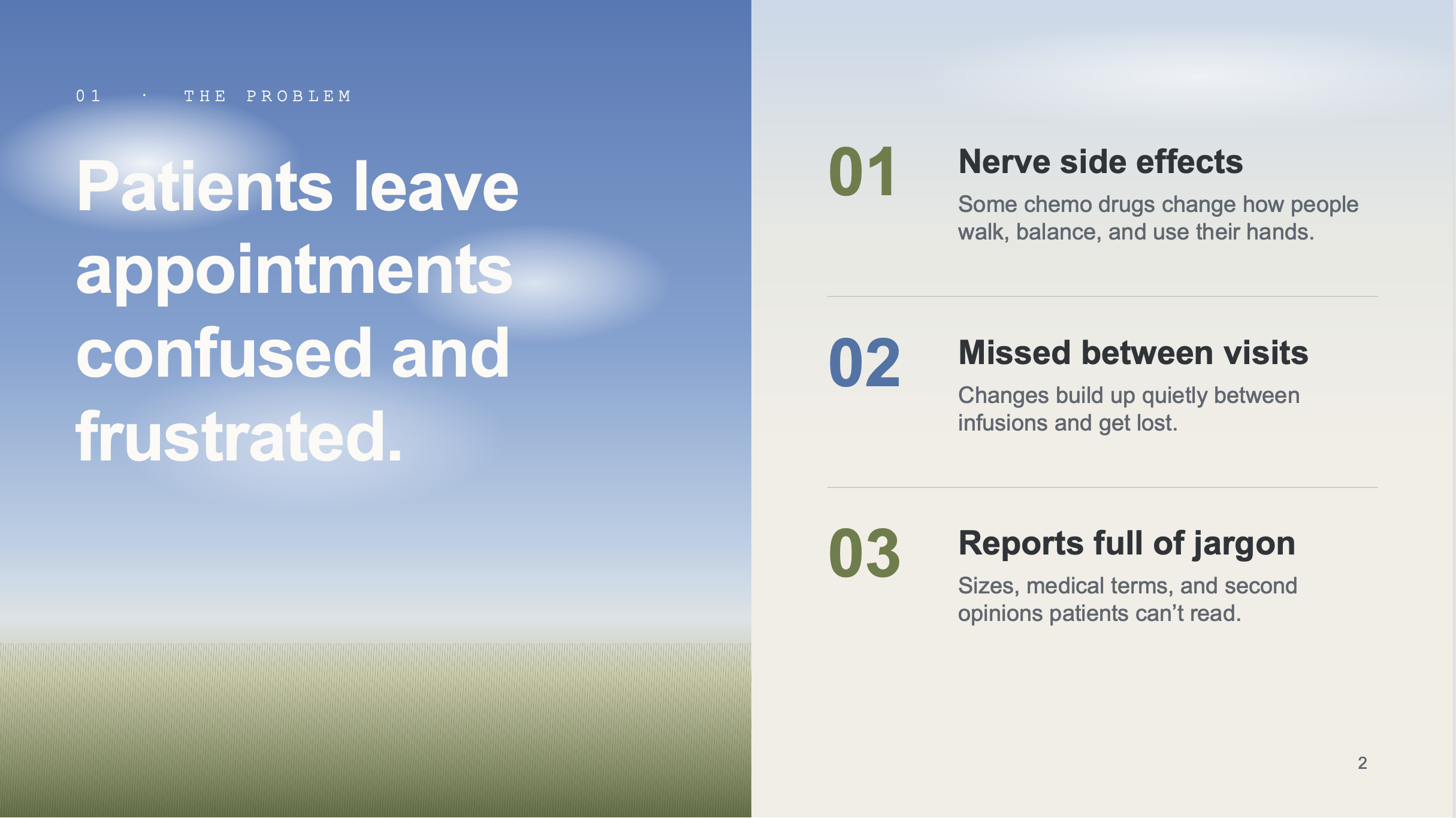
Steadi was built by a team that pairs healthcare and engineering: Nithila has a health background, and Vedhika studies Computer Science. Through clinic volunteering and research work, the team saw that one of problems they wanted to solve was how frustrated and lost patients feel during treaments. Some chemo drugs change how people walk, balance, and use their hands, but those changes build up quietly between infusions and are hard to remember or describe in a short appointment. Scan reports add to the stress, because they're written for doctors, not patients.
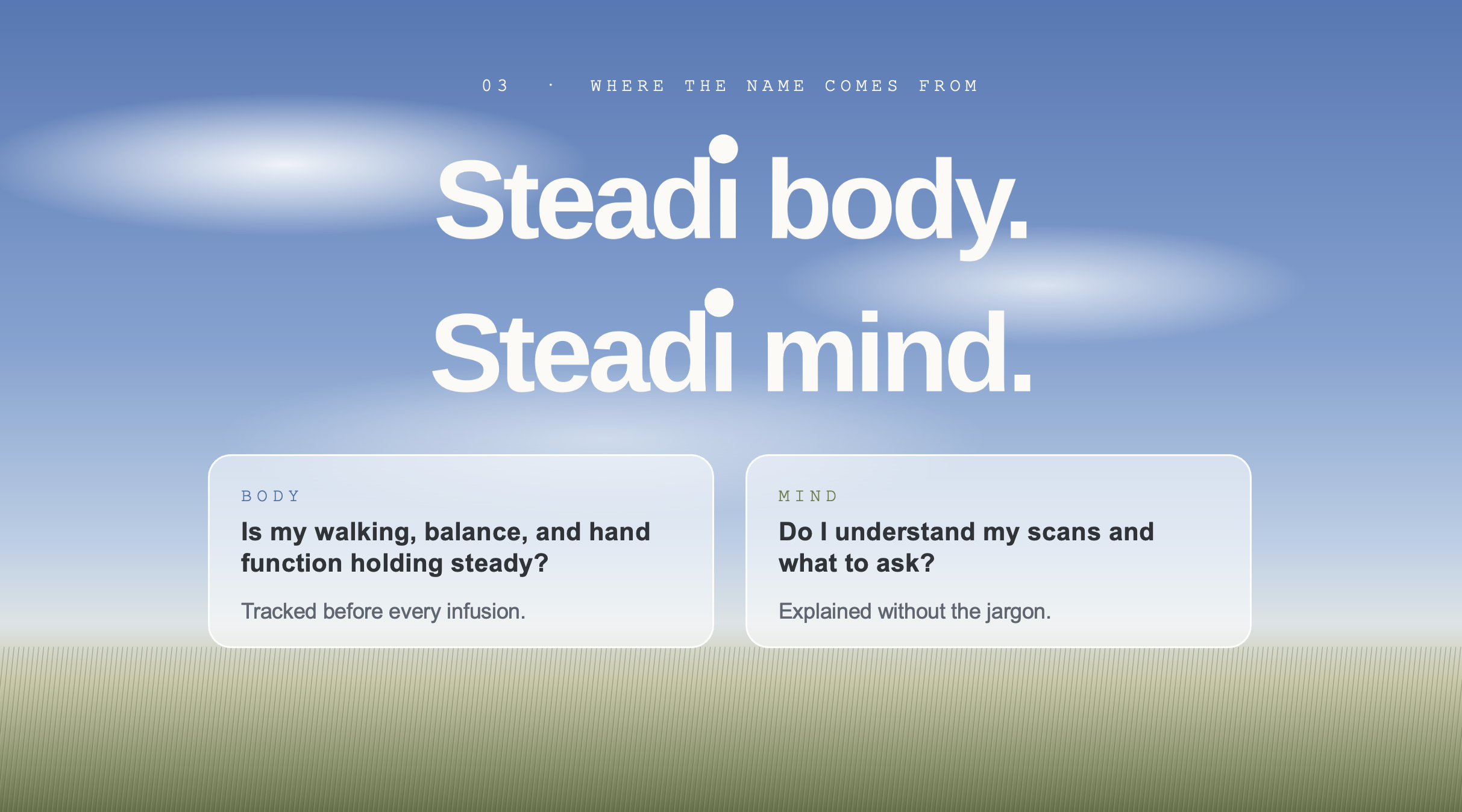
The goal was to help the patient directly. Steadi gives patients a simple way to notice what's changing and to understand their own healthcare. The name reflects that aim: a steadi body and a steadi mind. The tagline sums it up: Know what's changing. Understand what it means.
What it does
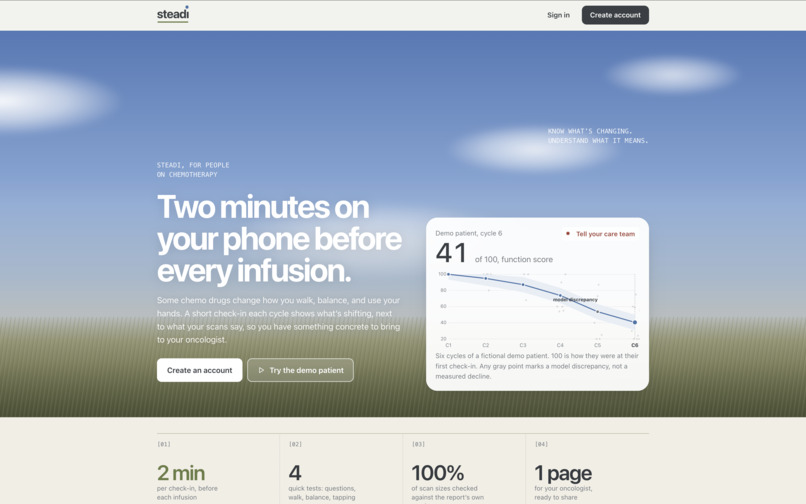
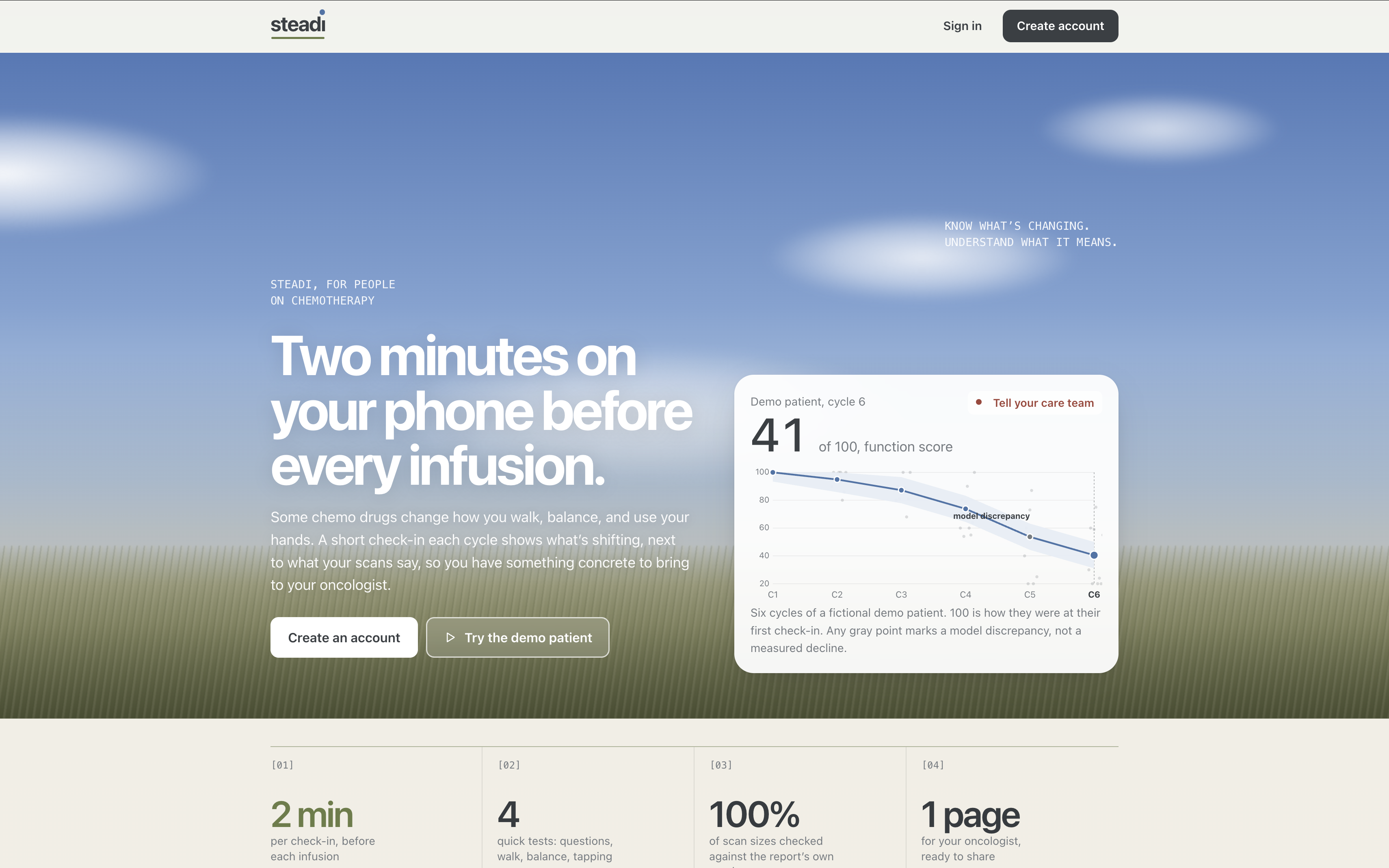
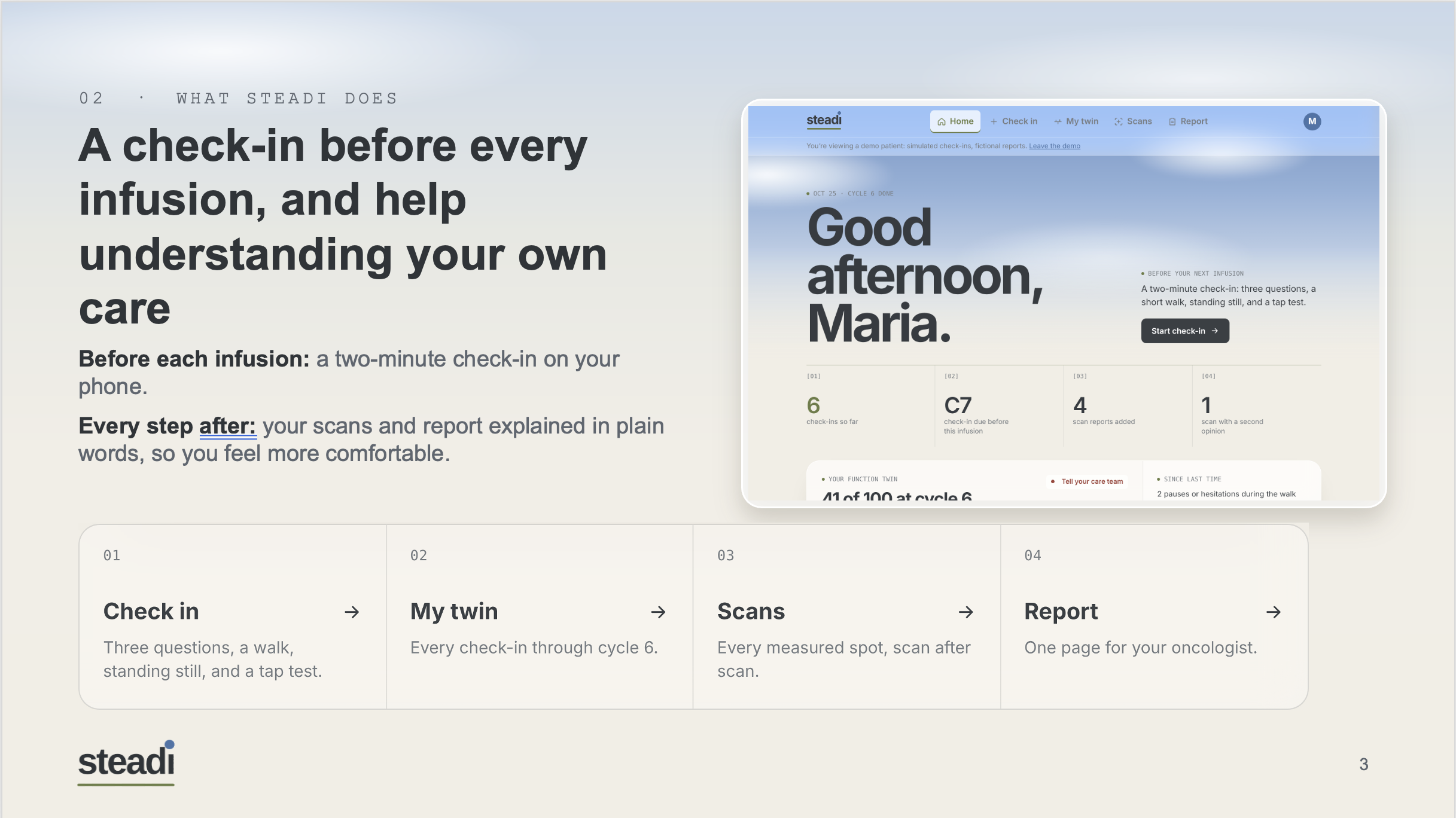
Steadi is a check-in and assistant for people on chemotherapy.
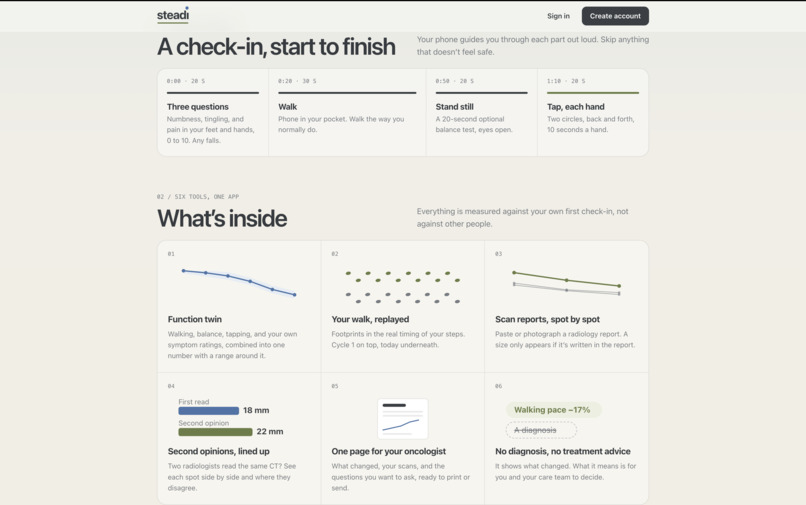
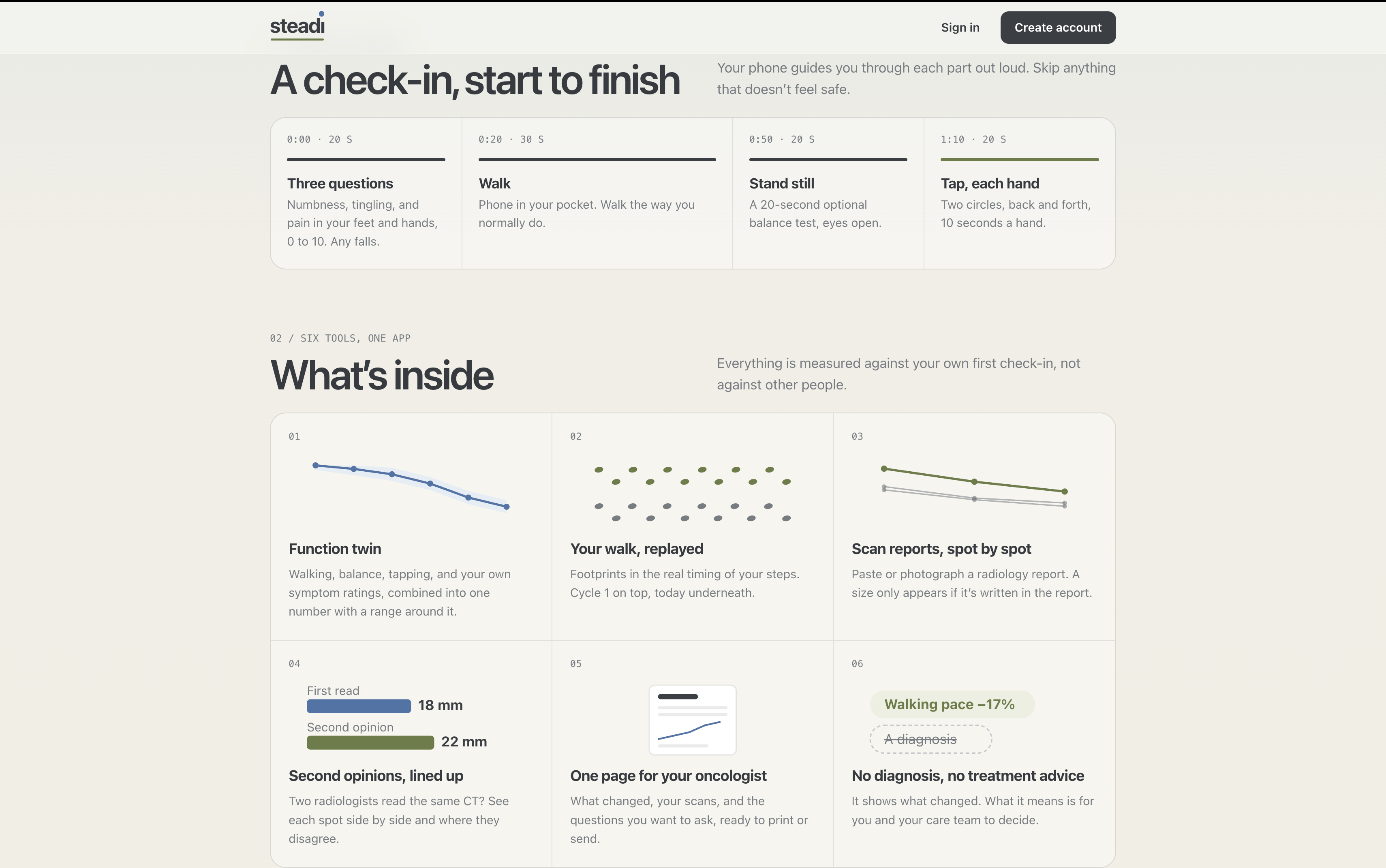
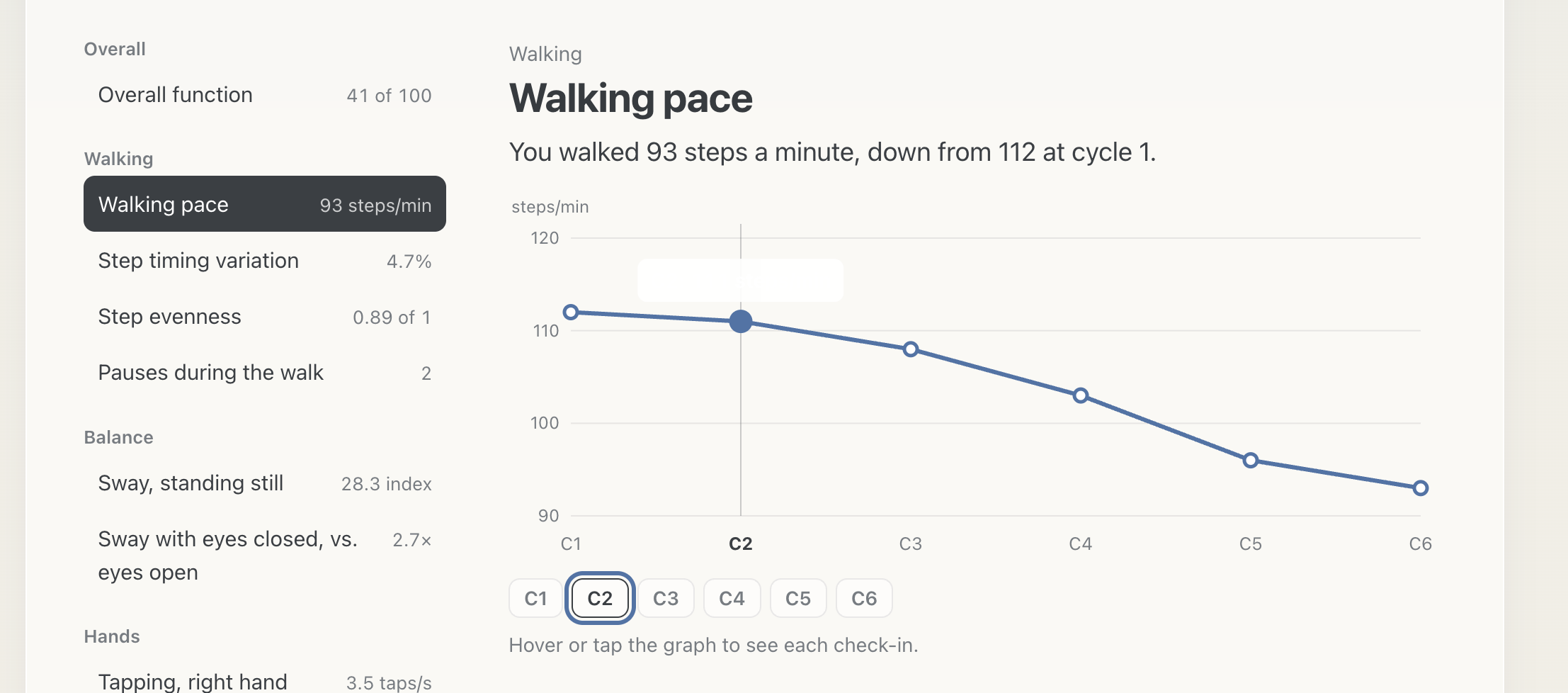
- Check-in before every infusion. A two-minute check-in with five symptom questions, plus optional walking, balance, and tapping tests using the phone's sensors. Skipped tests are marked as not measured, never guessed.
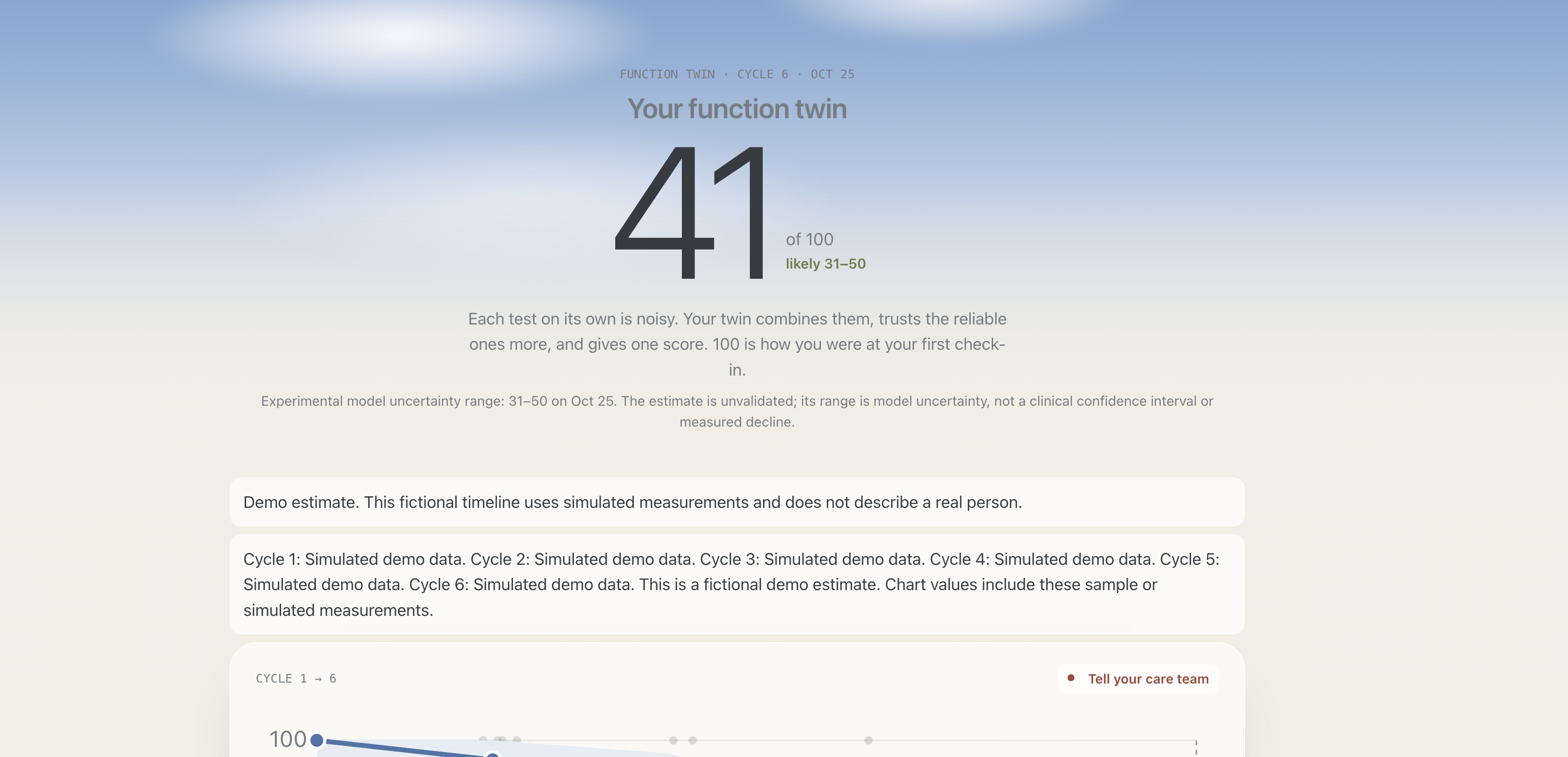
- Function twin. An experimental model combines every signal into one function score with an uncertainty range, where 100 means the same as the patient's first check-in. Charts, a symptom body map, and walking animations show how things change cycle to cycle.
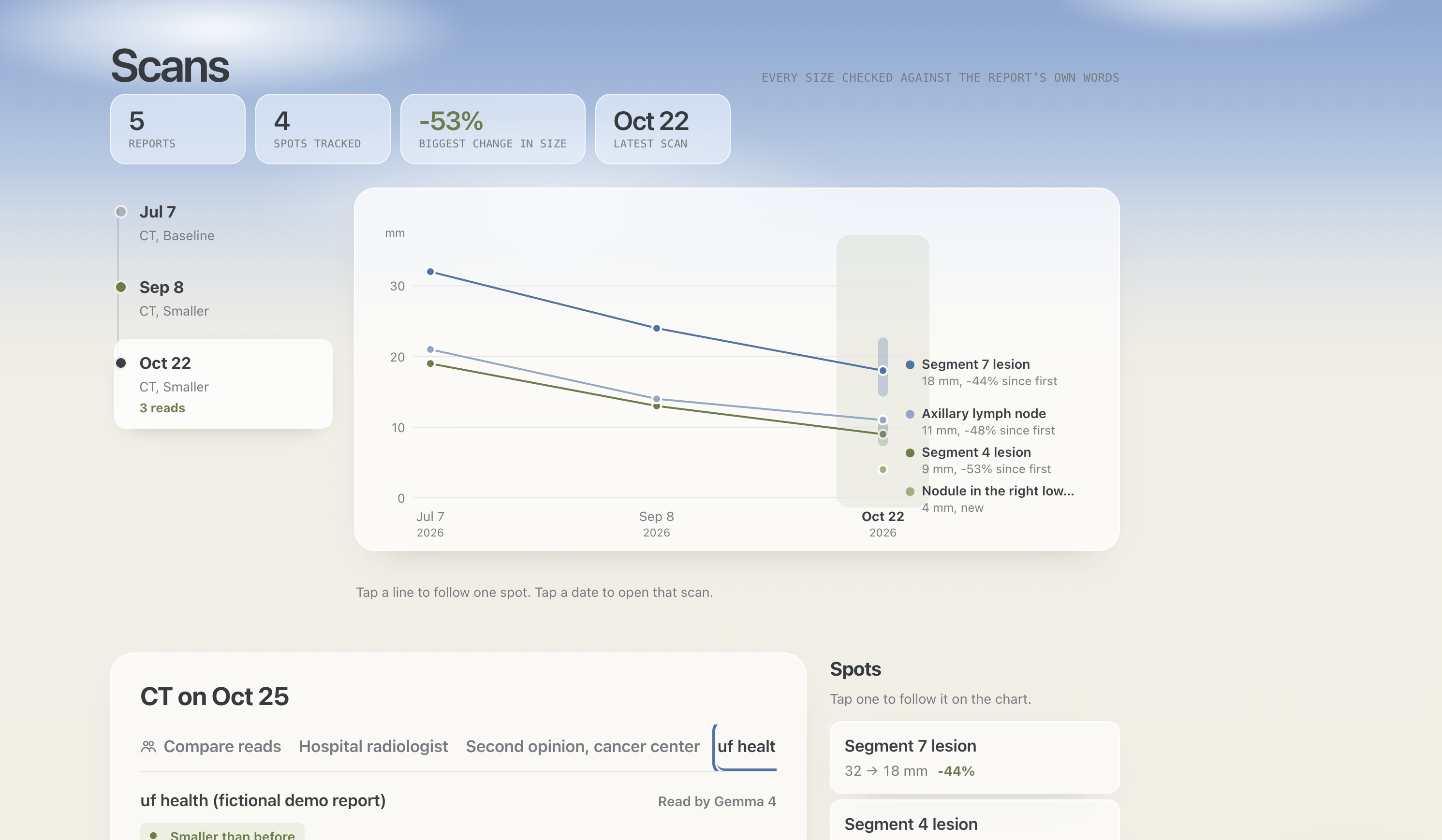
- Scans, explained. Patients upload the radiology report PDF from their patient portal. Steadi pulls out each measurement, tracks every spot across scans, explains medical terms in plain language, and links every size to the sentence it came from.
- Second opinions, side by side. When two radiologists read the same scan, Steadi lines up where they agree and differ, and Gemma explains the differences in plain words, with questions to ask, without deciding which doctor is right.
- One page for the oncologist. A report of what changed and questions for the next visit. The patient doesn't have to read it; they can copy it or bring it to the appointment.
Steadi never diagnoses or recommends treatment. It shows what changed, and the meaning is for the patient and their care team to decide together.
How the team worked
The two backgrounds shaped every part of Steadi. The health perspective defined what patients need and how results are worded; the computer science side built the sensor tests, the model, and the Gemma integration. Every feature had to meet two standards: technically sound, and clear to a patient who is already anxious.
How it was built
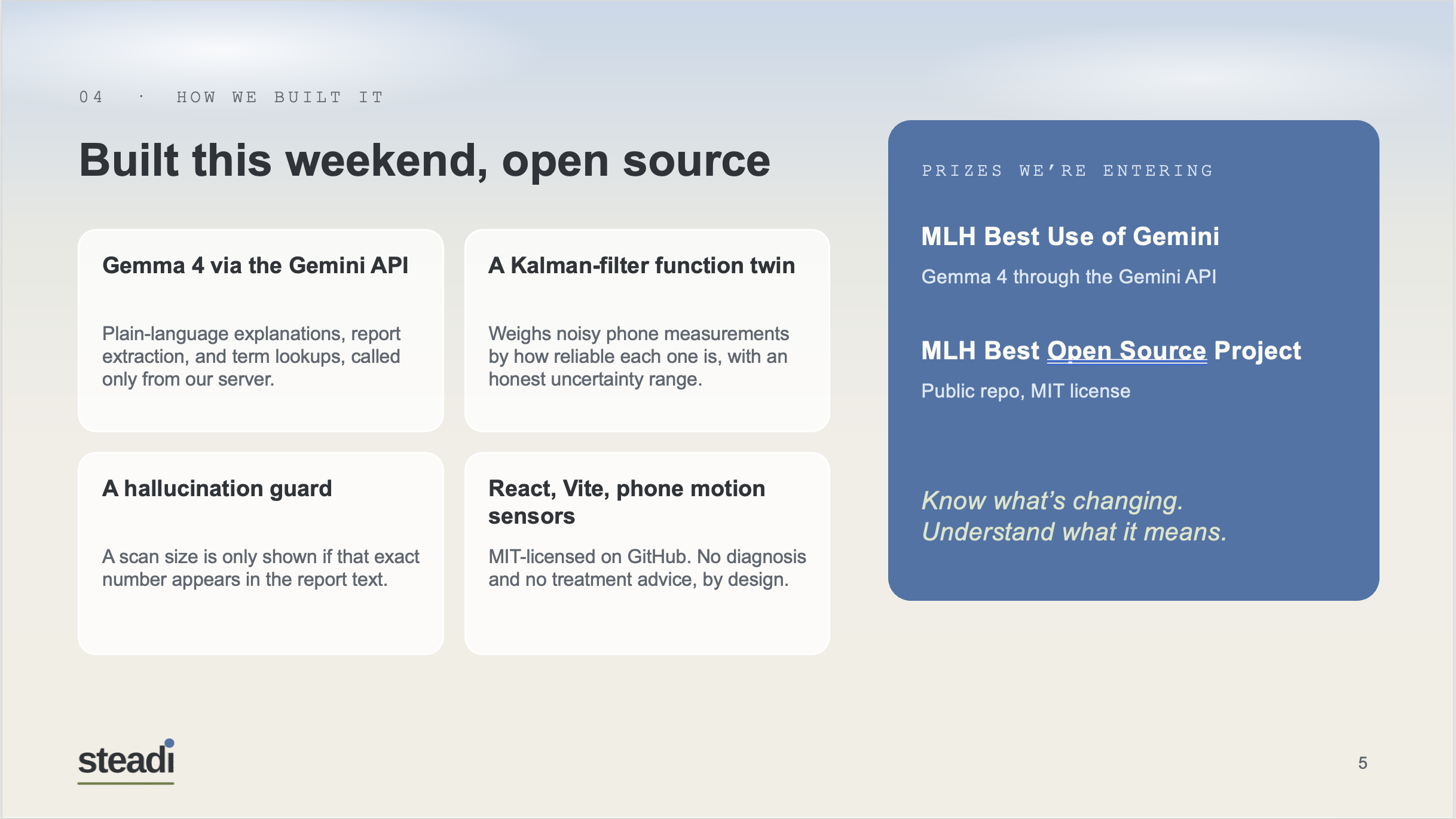
- App: React and Vite, with phone motion sensors for the walking and balance tests and touchscreen input for the tapping test.
- Function twin: A Kalman filter tracks a hidden quantity, the change in function since the first check-in. Each cycle adds a small expected change, and each phone measurement is a noisy observation of it:
$$N_k = N_{k-1} + \alpha\, e_k + w_k, \qquad z_i = N_k + v_i$$
Each signal updates the estimate in proportion to how reliable it is, using the Kalman gain:
$$K = \frac{P}{P + R_i}, \qquad \hat{N} \leftarrow \hat{N} + K\,(z_i - \hat{N})$$
Noisier signals (larger $R_i$) count for less. The function score shown to patients is $100 - \hat{N}$, with a likely range of $\pm 1.64\sigma$. Walking-pace settings come from published research; the other settings are placeholders that have not yet been clinically calibrated.
- Gemma 4 (gemma-4-26b-a4b-it) through the Gemini API, server-side only: reads uploaded reports, explains medical terms, compares two doctors' reads, and writes plain-language summaries. The app's code handles measurements and change flags; Gemma turns them into words patients can understand.
- Guard against made-up numbers: a scan measurement only appears if that exact number is in the original report text.
- Honest labels: sample measurements are labeled and kept out of personal estimates, and the fictional demo patient uses simulated data.
Challenges
- Phone motion data: sensor permissions, phone placement, and device differences all affect results, and skipped or incomplete tests had to be handled.
- Wording: walking and balance can change for many reasons, so results describe what was observed without implying a diagnosis, and without discouraging patients with a falling number.
- Keeping Gemma grounded: summaries had to stick to the data provided, handle missing measurements, and never present sample data as real results.
- Bridging two fields: turning clinical needs into engineering requirements, and engineering limits into patient-friendly design, took constant back-and-forth.
Accomplishments
- Symptom tracking, movement tests, a function twin, report explanations, and second-opinion comparisons brought together in one calm app.
- A design focused on helping patients feel steadier, not more anxious: plain language, an optional detailed view, and a report that does the explaining for them.
- Uncertainty and missing information built into the experience, so Steadi never claims more than the data shows.
- A product that is both technically grounded and patient-centered, because health insight and engineering shaped it together.
What the team learned
- How to work with phone sensors, combine signals in a mathematical model, and connect an AI model safely to a web app.
- That a health app needs careful wording: every result should say what was recorded, what changed, and what is still uncertain, in words a patient understands.
- That combining fields builds a better health product: health insight defined what to build, and engineering showed what was possible.
- How to divide responsibilities under a tight deadline, test together, and confirm every part works in the full app.
What's next for Steadi
- Make the movement tests reliable across phones and easier for people with different mobility and comfort with technology.
- Gather feedback from patients and oncology professionals on which measurements, explanations, and report sections help most.
- Calibrate the function twin with a test-retest study and a study alongside standard clinical neuropathy grading, and add stronger privacy and security before any clinical use.
The goal stays the same: help patients know what's changing and understand what it means.
Built With
- css
- gemma4
- google-gemini-api
- javascript
- node.js
- react
- vercel
- vite


Log in or sign up for Devpost to join the conversation.