-
-

StaX logo
-
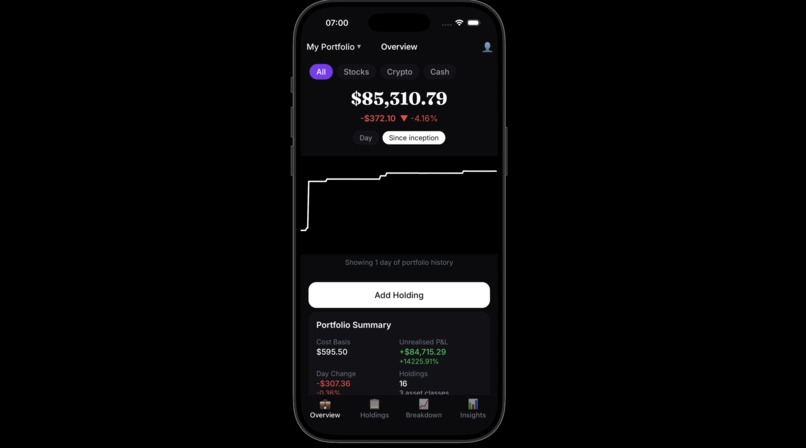
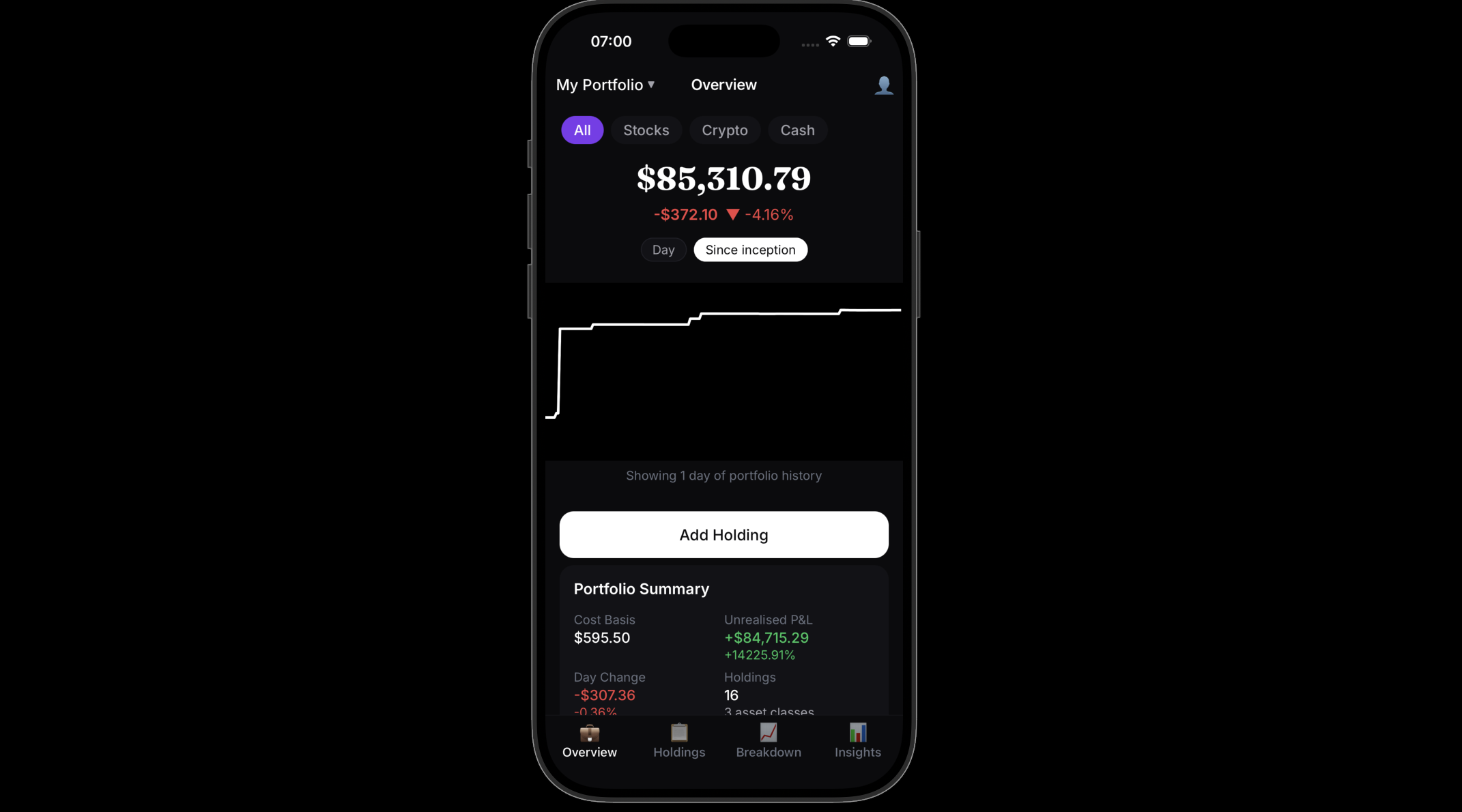
Overview page
-
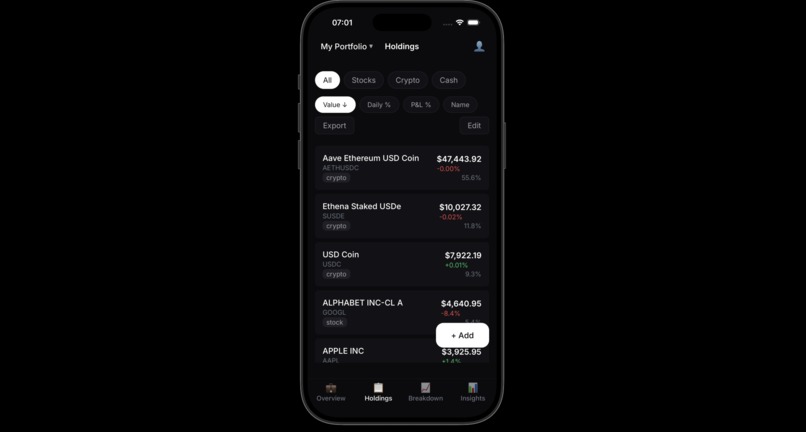
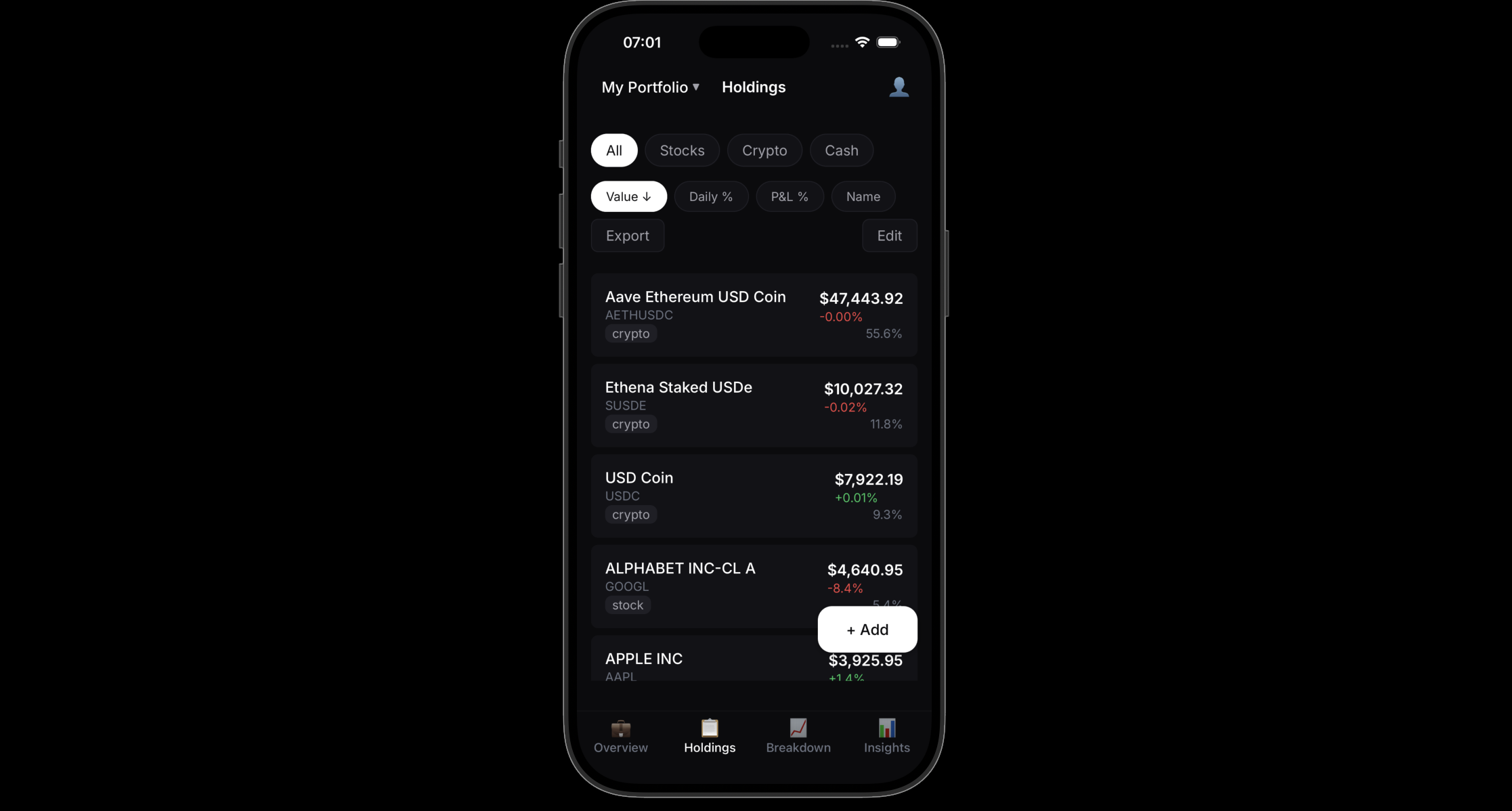
Holdings page
-
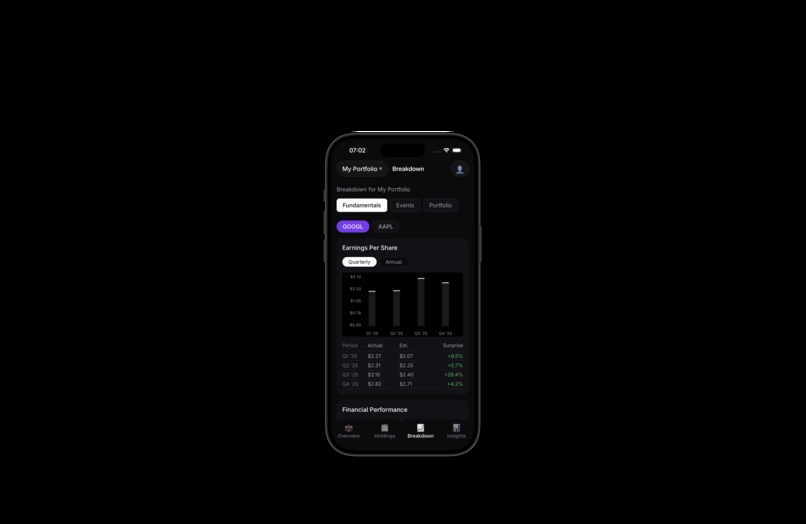
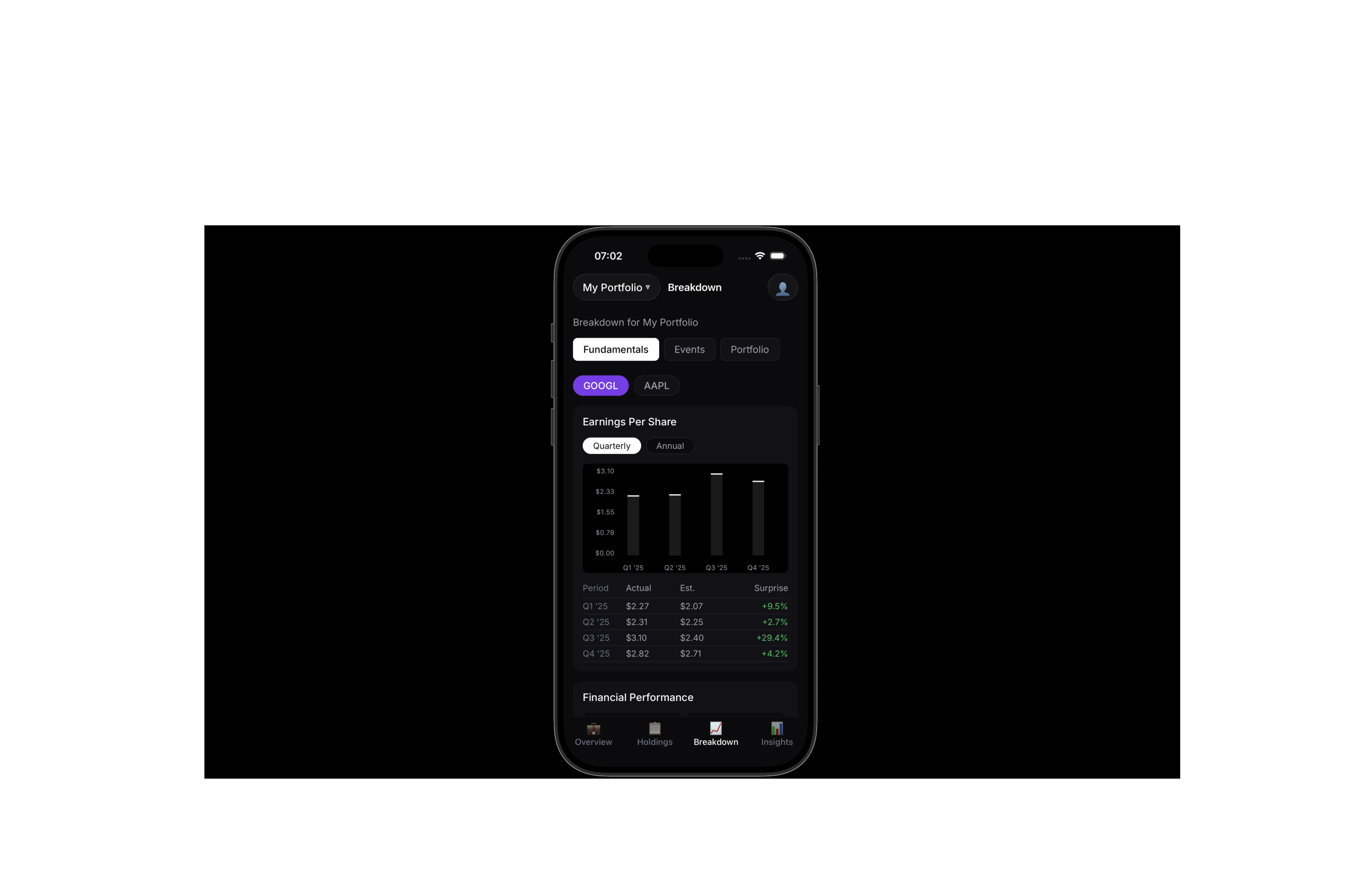
Breakdown - Fundamentals
-
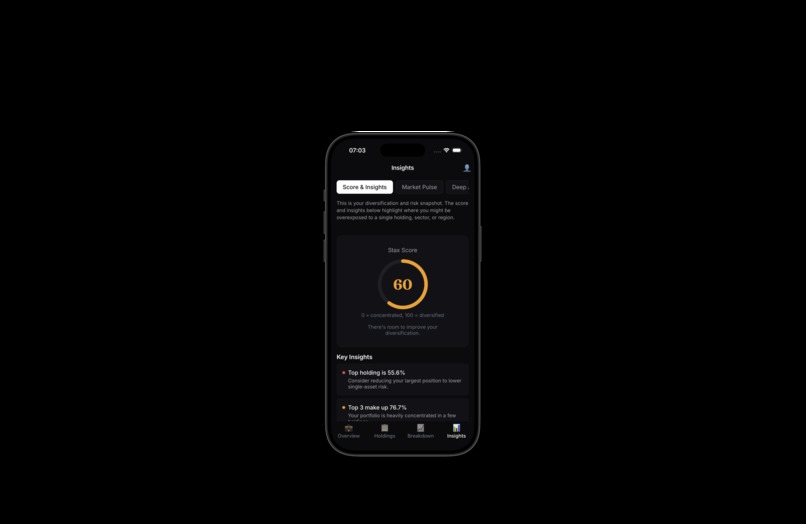
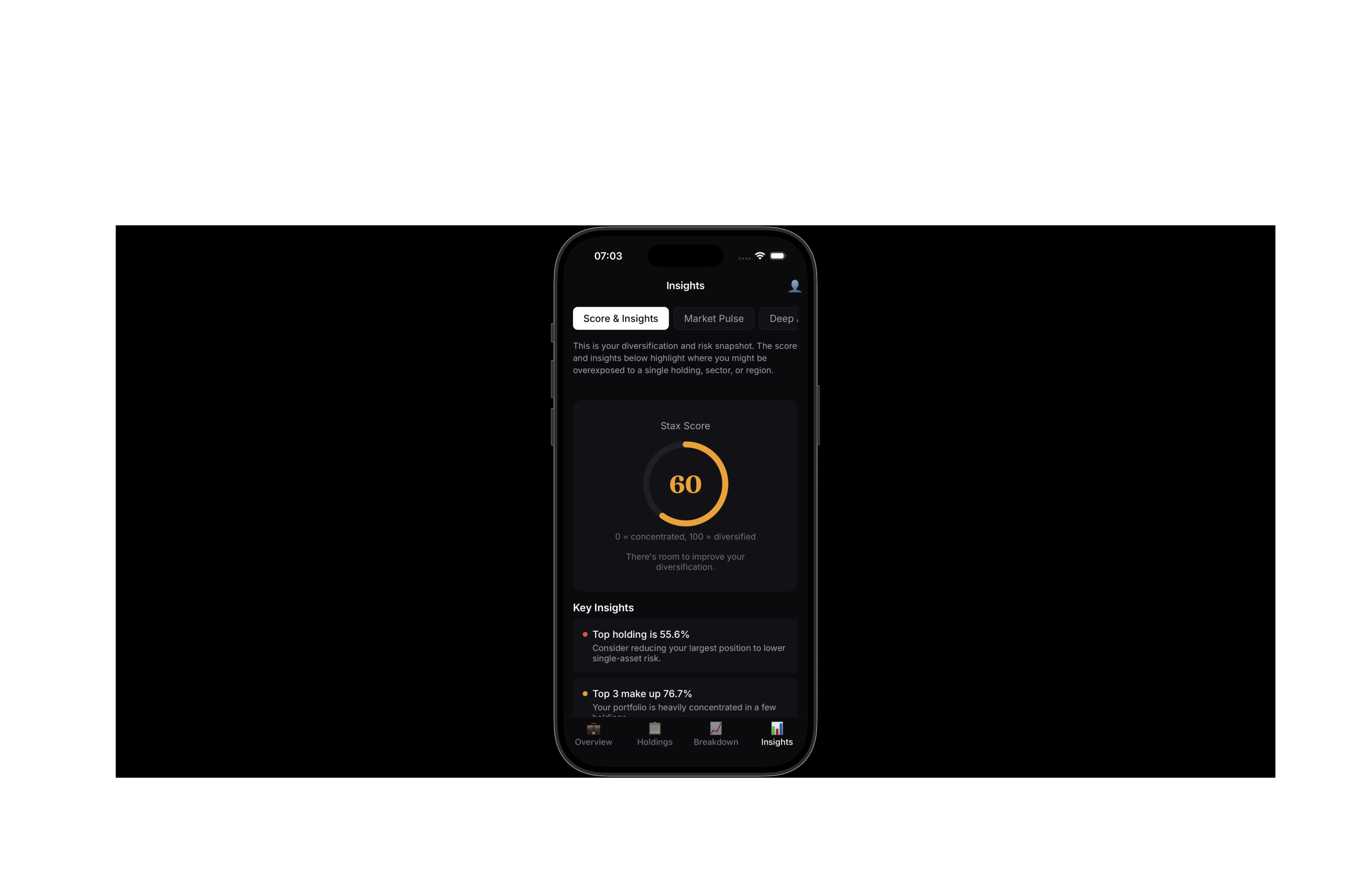
Insights - StaX score
-
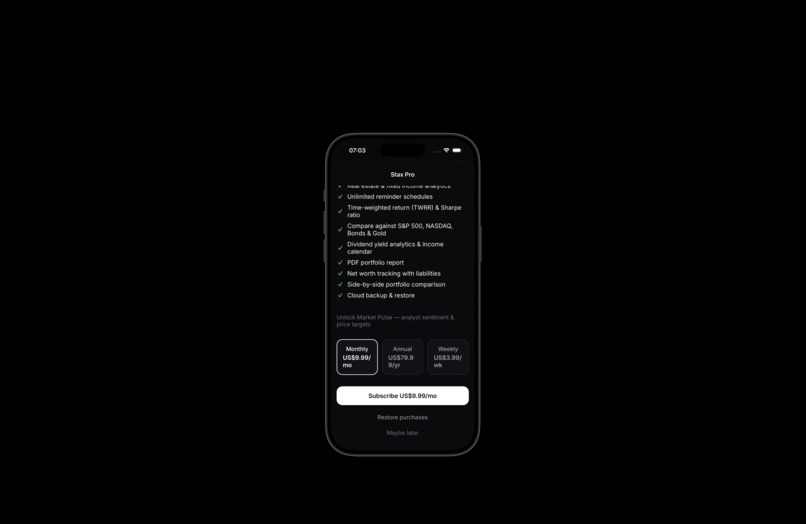
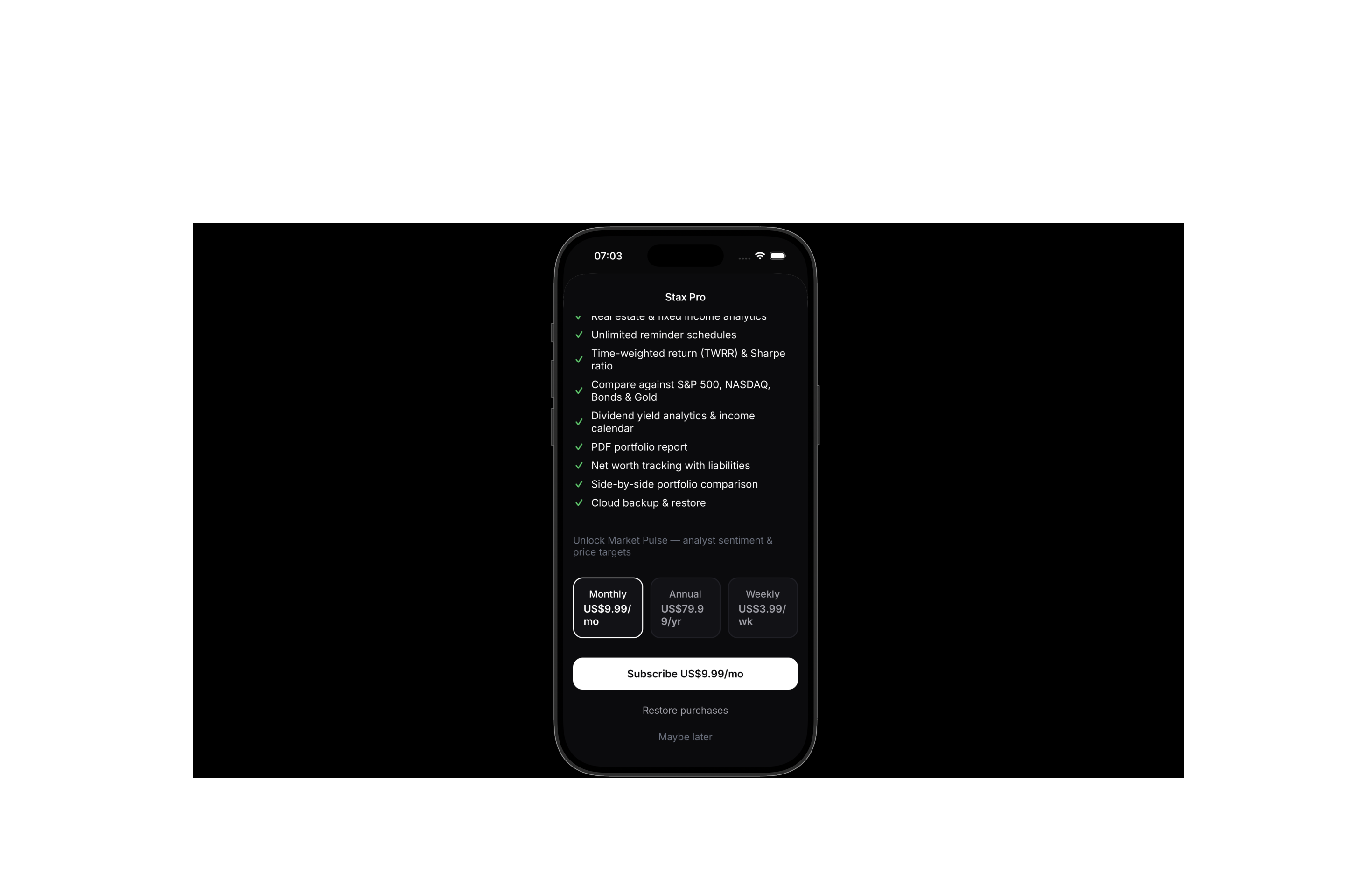
Revenue Cat subscription flow
-
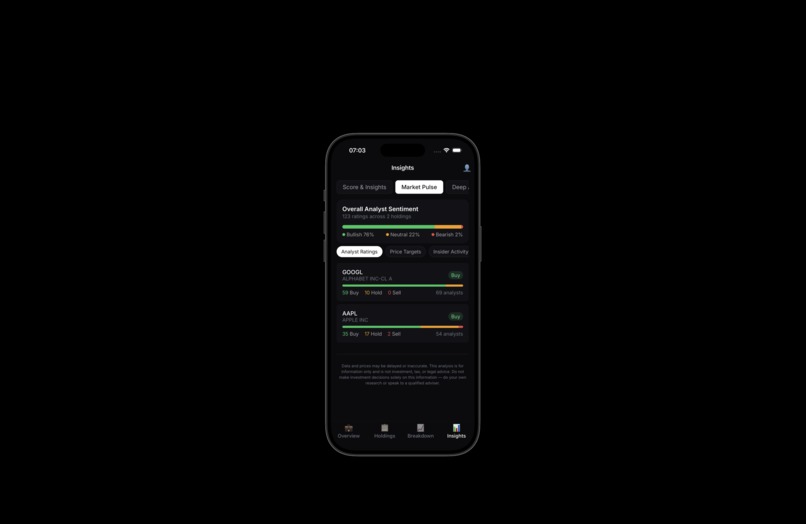
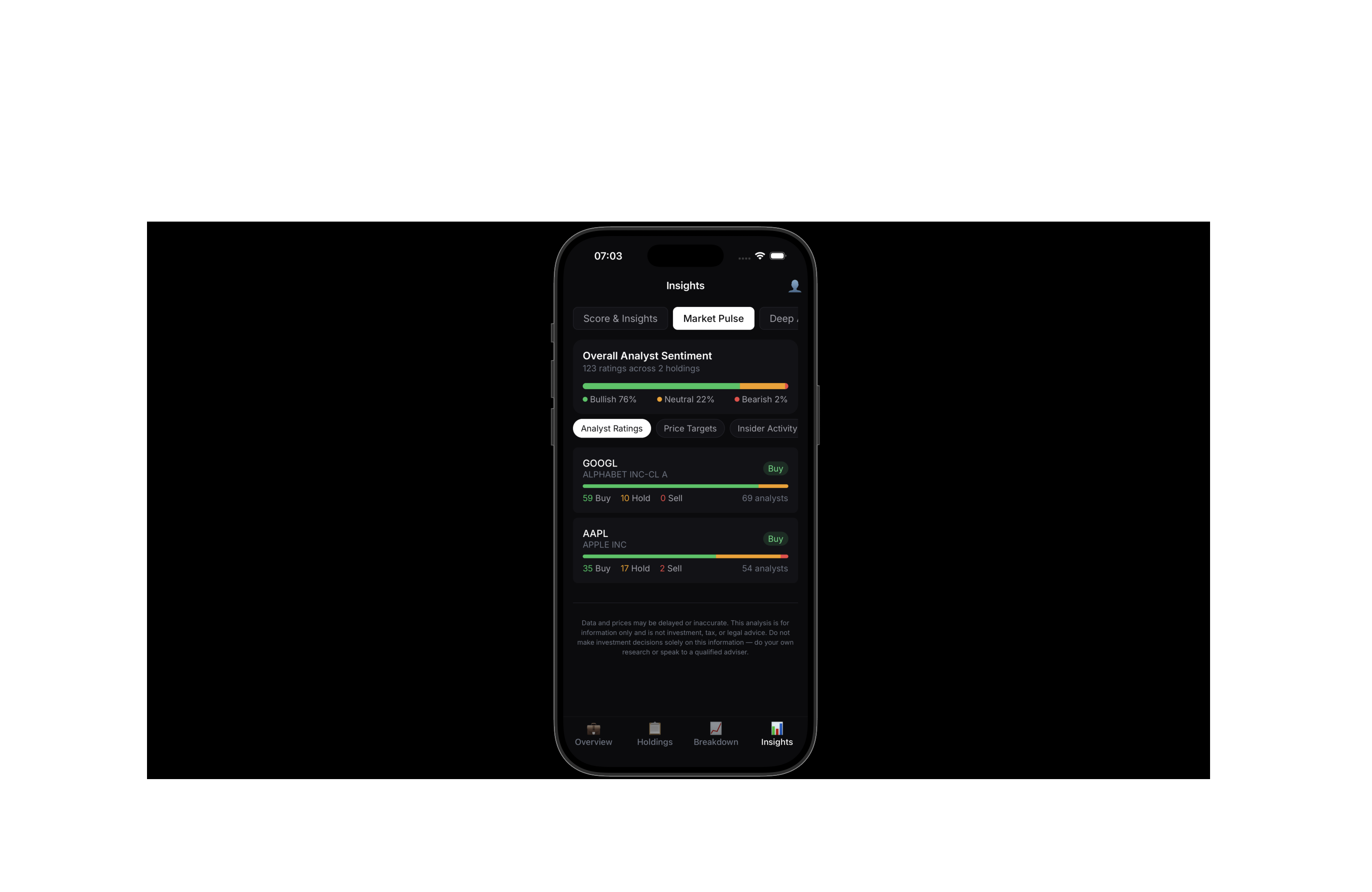
Market Pulse Insights
-
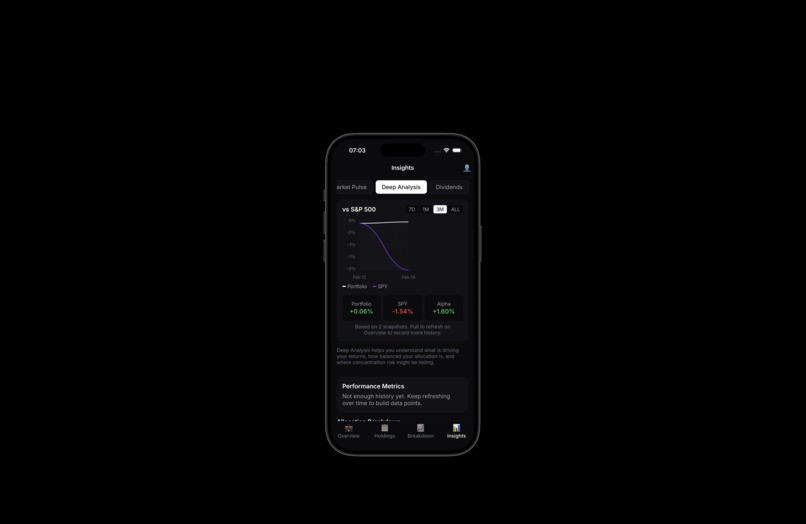
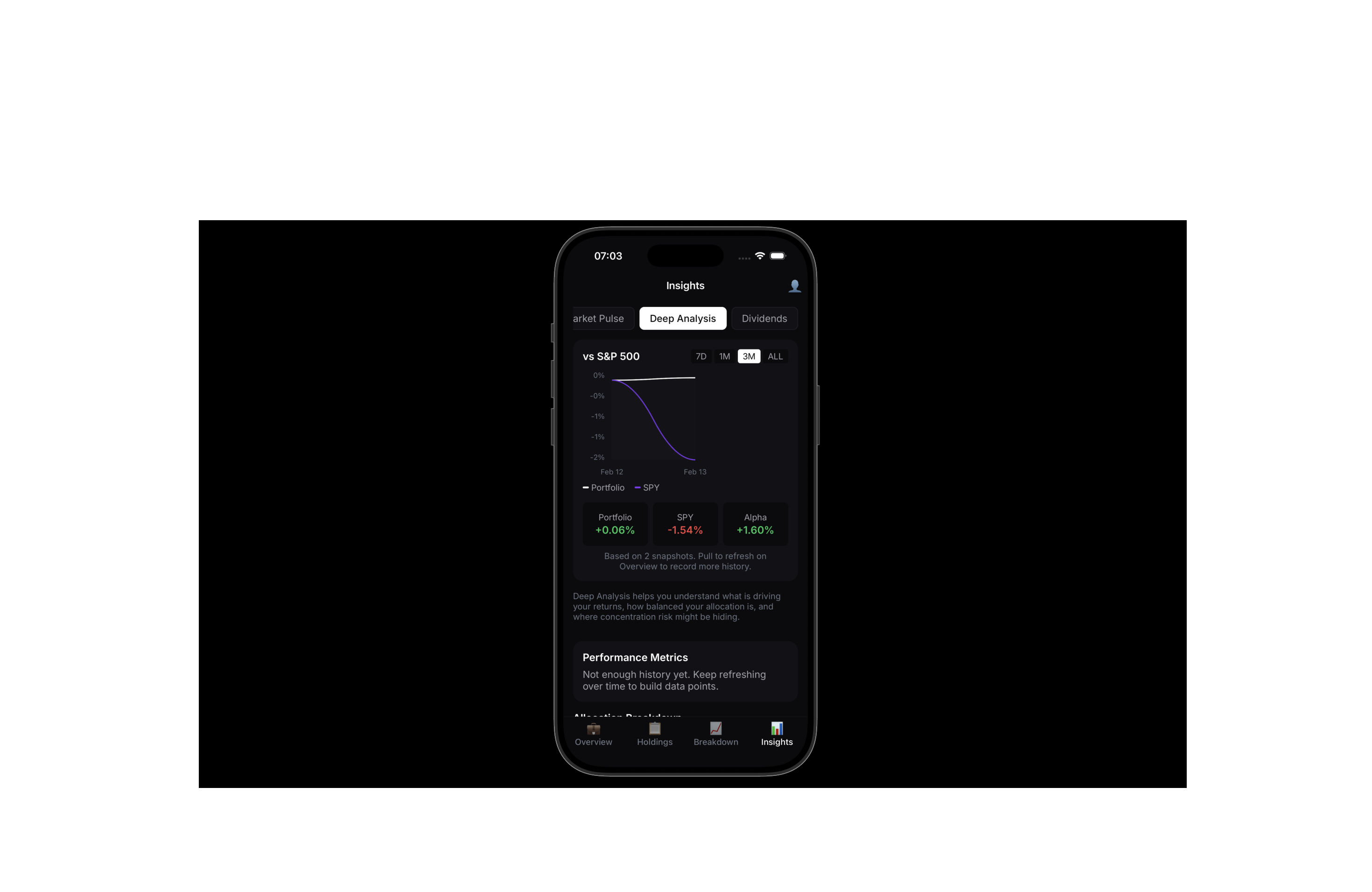
Deep Analysis
-
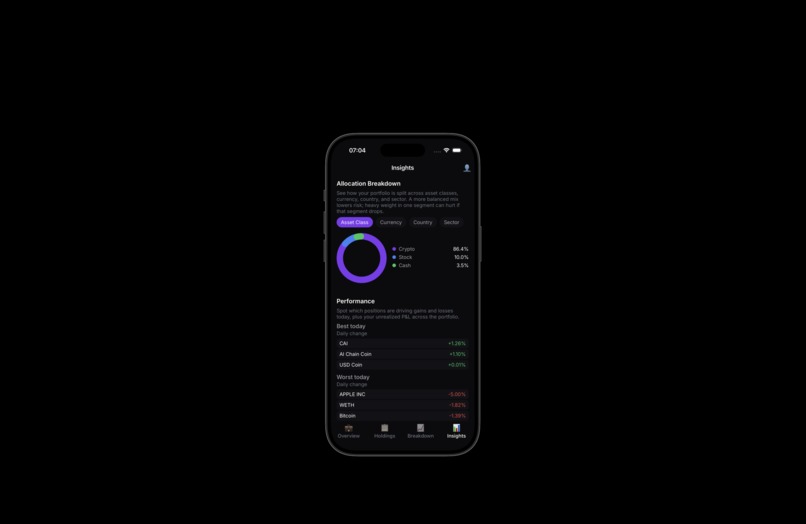
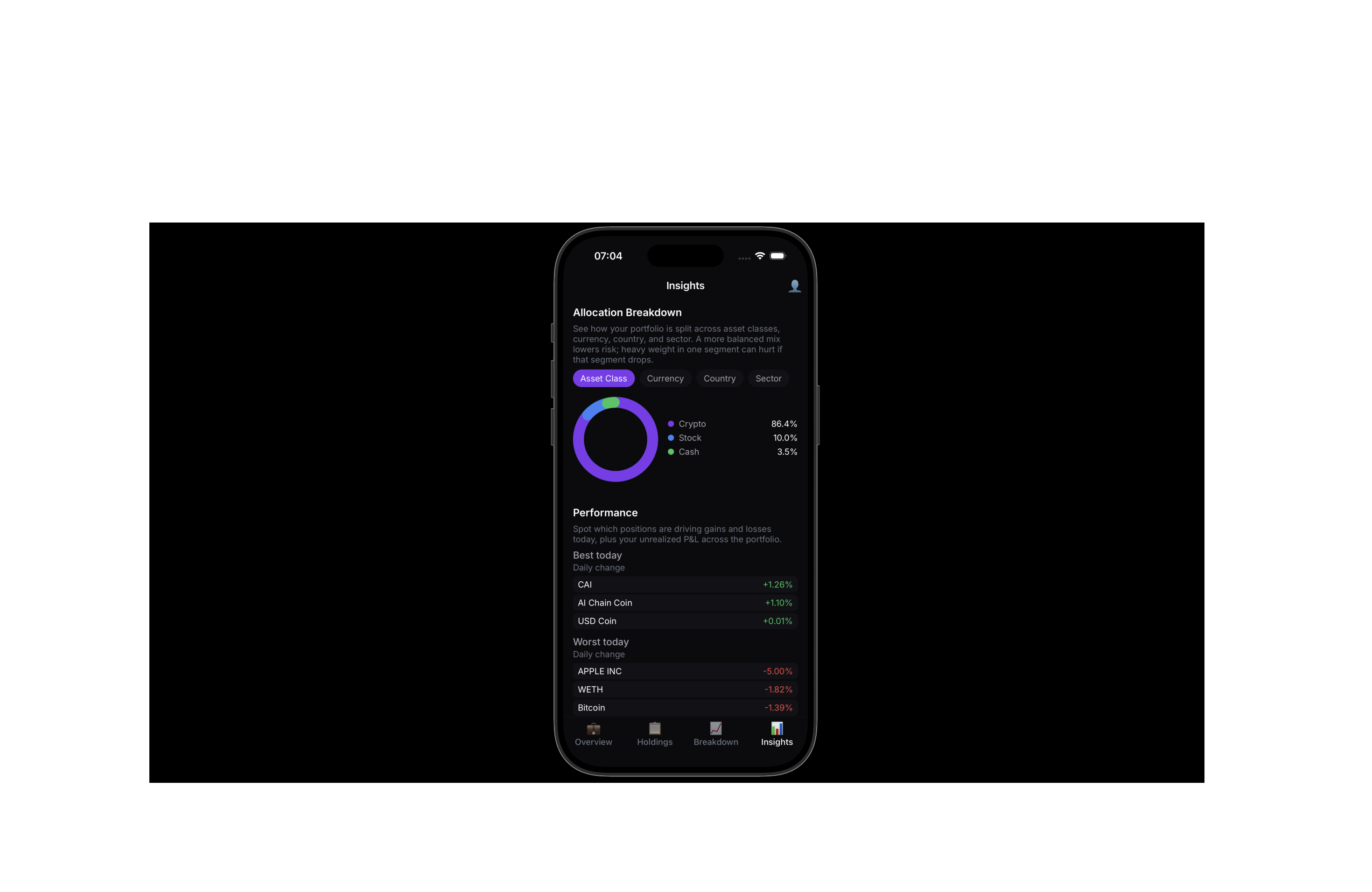
Diversification

Stax – Submission Story
About the project: what inspired you, what you learned, how you built it, and the challenges you faced.
Inspiration
I’ve I started investing at a young age, and I've worked on several fintech startups—it's an area I'm really passionate about. I've always wanted a single place to track all my investments—especially as someone who holds both traditional assets and crypto. Net worth was scattered across brokerages, DeFi wallets, and spreadsheets, and I kept seeing the same frustration on Reddit: “I have five brokerages and a spreadsheet and it’s a mess,” “Wish there was one app for stocks, crypto, and my property.” So I built Stax: one app for your whole net worth, stocks, ETFs, crypto, metals, real estate, fixed income, and cash, with a single total, live (or cached) prices, and proper diversification insight.
What it does
Stax is a mobile portfolio tracker that puts your whole net worth in one place. You add holdings manually (or via CSV import and Ethereum wallet import for crypto), stocks, ETFs, crypto, metals, real estate, fixed income, and cash—in any currency. The app converts everything to a base currency so you see one total and get live or cached prices where available. Overview shows your total value, how it’s changed, a 7-day chart, top holdings, and what’s coming up (dividends, maturities). Holdings is your full list with filters and sort; tap any holding for detail, cost basis, fundamentals, and to log dividends or events. Breakdown gives you fundamentals per holding and an events timeline so all your reminders and maturities are in one place. Insights is where diversification lives: the Stax Score (a single view of how your portfolio stacks up), allocation by sector and country, concentration risk, benchmark comparison, time-weighted return, Sharpe ratio, and dividend analytics. You can set alerts for maturities, dividends, and custom events so the app notifies you before key dates. All portfolio data stays on your device (local-first, private); optional Pro unlocks PDF export, net worth with liabilities, and deeper analysis.
What I learned
I learned a lot about portfolio theory and diversification in practice: how to think about allocation by sector and country, concentration risk, and how to surface it in a simple “Stax Score.” I dove into metrics like time-weighted return (TWRR), Sharpe ratio (\displaystyle \frac{E[R_p - R_f]}{\sigma_p}), and benchmark comparison so the app could answer “how am I really doing?” and “am I too exposed to one sector?” I also got deep on indexes and market data: what’s available for free, what’s rate-limited, and how to combine equities (Alpha Vantage, Finnhub), crypto (CoinGecko), and metals into one coherent pricing layer.
Challenges I faced
- Real-time data is hard. Free tiers are tight (e.g. Alpha Vantage 25 req/day), and every provider has different rate limits, symbols, and conventions. I had to design a caching layer (Supabase
price_cache+ Edge Function + pg_cron) so the app could scale without blowing API quotas. Staleness rules differ by asset type (e.g. 15 min for stocks when the market is open, 30 min for crypto 24/7), so the logic had to be explicit and maintainable. - Open Banking has a million hurdles. Letting users “connect my broker” would be ideal, but it means dealing with region-specific providers (Plaid, Tink, Yodlee), consent flows (PSD2, GDPR), and a backend to store and refresh tokens and normalize data. I chose to ship manual + CSV + crypto wallet import first and documented Open Banking as a clear roadmap item so the app could launch without that complexity.
- Unifying many asset types and currencies. Supporting stocks, ETFs, crypto, metals, real estate, fixed income, and cash in one schema and one UI meant careful Zod schemas, a single “holding” model with a type discriminator, and consistent base-currency conversion and formatting (e.g. with a shared money utility) so the Overview and Insights tabs always show a coherent picture.
How I built it
- Stack: Stax is a React Native (Expo) mobile app with TypeScript, SQLite (Expo SQLite) for all portfolio data on-device, and Supabase for auth and an optional server-side price cache.
- Data & privacy: Holdings, events, and reminders live only on the device (local-first). No server ever stores your positions, so the app is private by design. Manual entry is a feature: you control cost basis, dates, and currencies.
- Pricing: I use Alpha Vantage (and optionally Finnhub) for stocks/ETFs, CoinGecko for crypto and gold, and a Supabase Edge Function (
refresh-prices) that runs on a schedule (e.g. every 6 hours) to fill aprice_cachetable. The app reads from the cache first to avoid per-user rate limits, then falls back to direct API calls when needed. A local SQLiteprice_pointtable keeps last-known prices for offline use. - Features: Users add assets by type (stock, ETF, crypto, metal, real estate, fixed income, cash), in any currency; the app converts everything to a base currency for one total. There’s a Breakdown tab (fundamentals, events timeline), an Insights tab (Stax Score, allocation donut, concentration, TWRR, Sharpe, benchmark comparison, dividend analytics), and alerts for maturities, dividends, and custom events via expo-notifications. RevenueCat powers the Pro paywall (deeper analysis, PDF export, net worth with liabilities).
- Import: Besides manual entry, there’s CSV import for bulk holdings and Ethereum wallet import (Ethplorer) for crypto. Open Banking (e.g. Plaid, Tink) would be a next step but requires a dedicated backend and compliance work, I documented the options in
docs/DATA_IMPORT_OPTIONS.md.
Accomplishments that I'm proud of
- One app for every asset type: I searched and searched and added as many opensourced APIs and reputable data sources (without costing a fortune) to ensure 90% of user holding are captured.
- Privacy by design: All portfolio data lives on the device (SQLite). We never store your positions on a server; manual entry is a feature, not a limitation. Finding features within limitations.
- Real pricing without breaking the bank: A server-side price cache (Supabase Edge Function + pg_cron) so we can scale to many users without blowing free-tier API limits, plus offline fallback so the app works without a connection.
- Putting together all the diversification metrics : Stax Score, allocation by sector and country, concentration risk, time-weighted return, Sharpe ratio, and benchmark comparison so you can see “how am I really doing?” and “am I too exposed?”
Built With
- alpha-vantage
- coingecko
- coinmarketcap
- ethplorer
- finnhub-api
- react-native
- supabase
- yahoo-finance


Log in or sign up for Devpost to join the conversation.