-
-
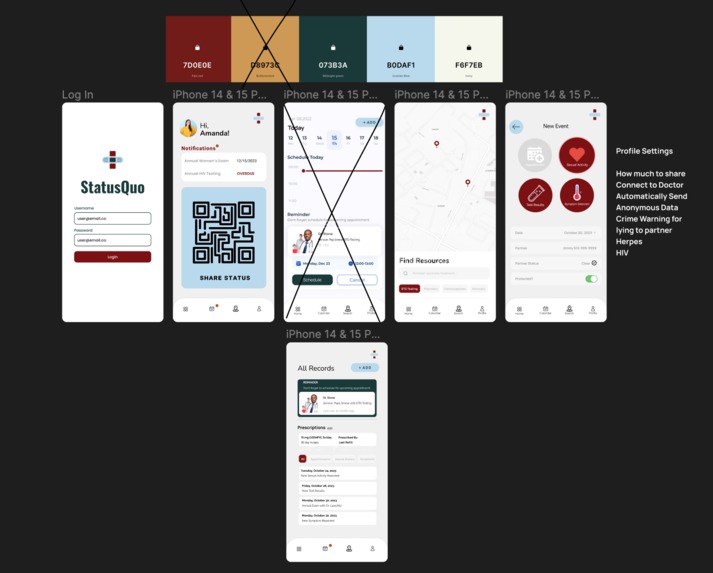
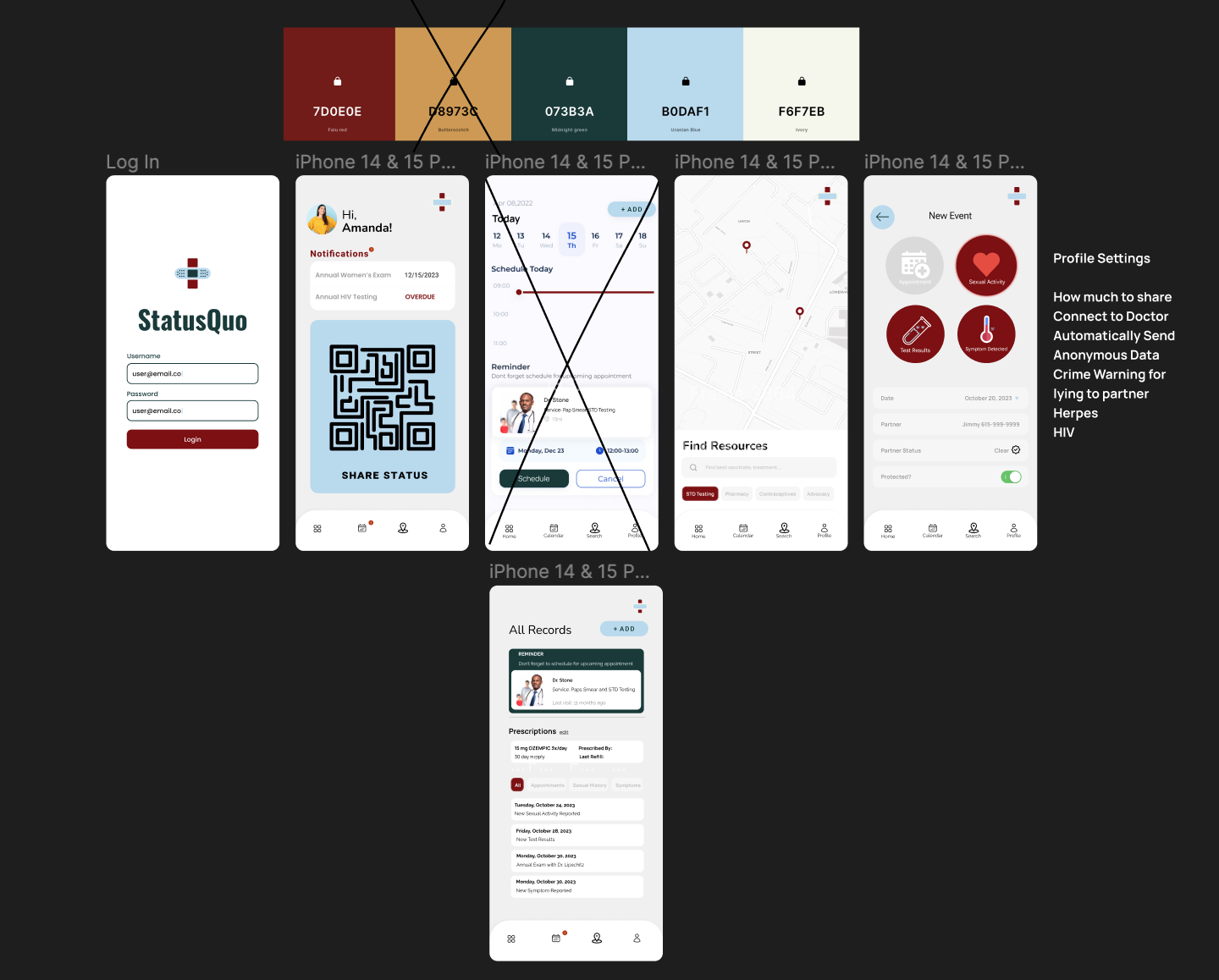
This is my figma design process.
-
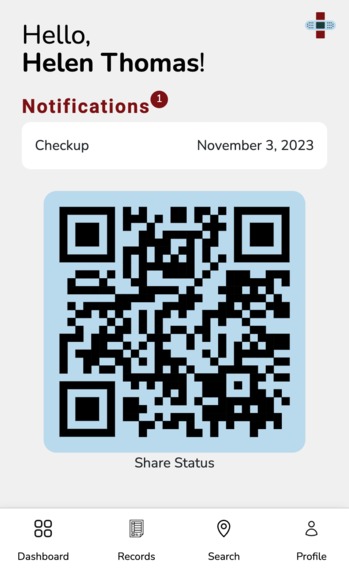
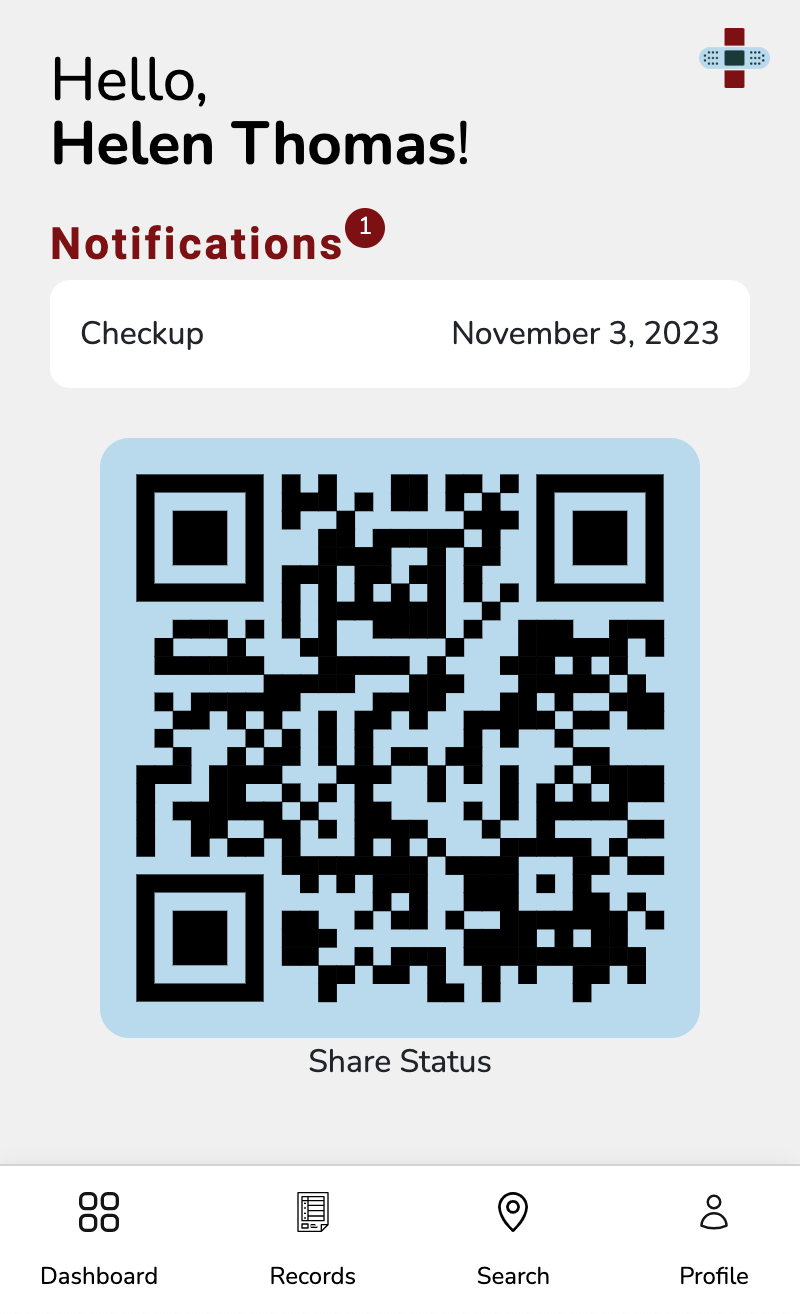
This is the dashboard view when you log in! Your QR code is ready for scanning and upcoming appts are featured
-
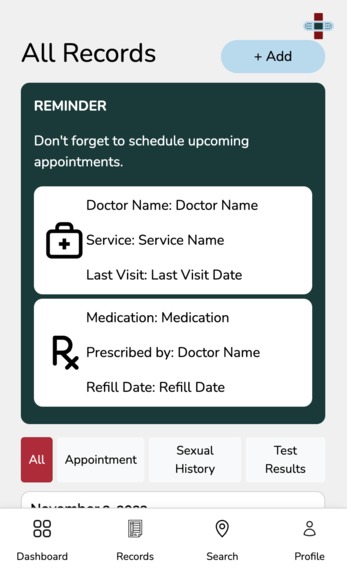
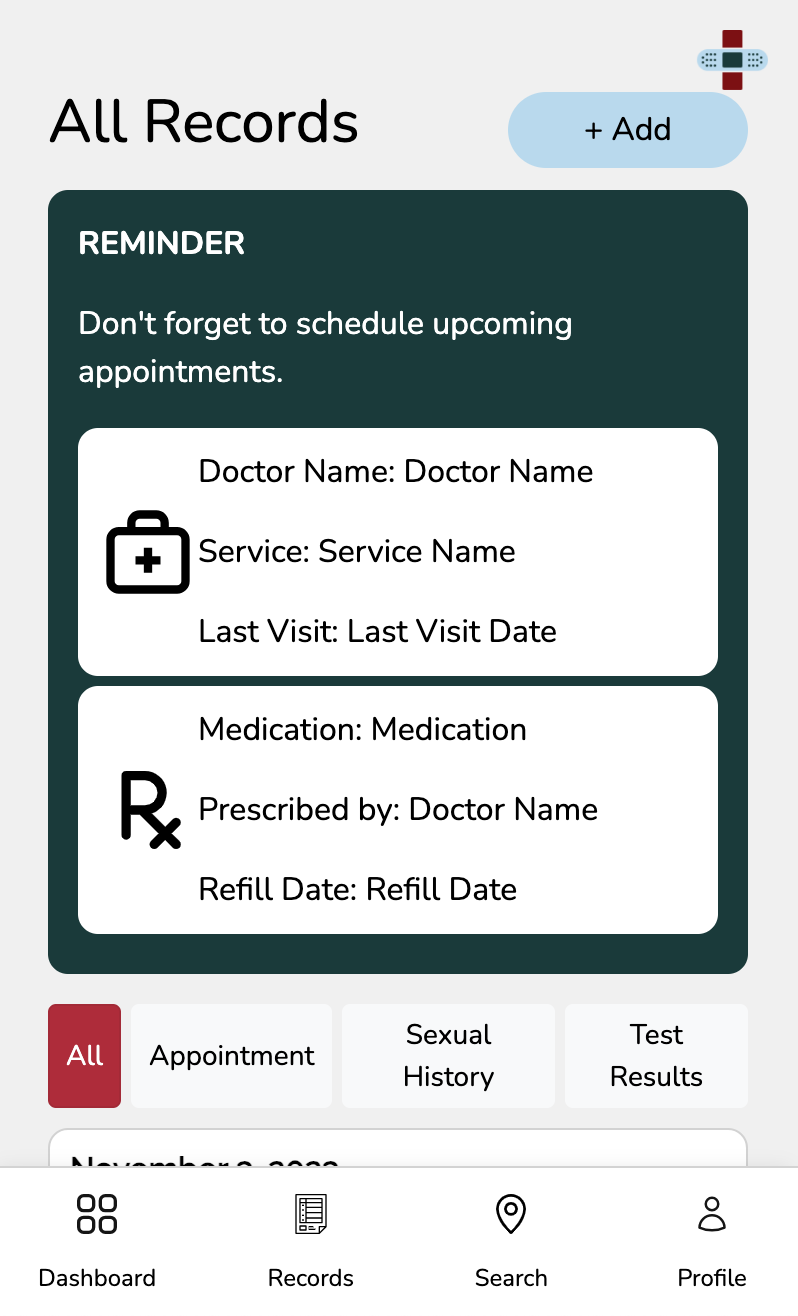
This is your screen for all of your records. You can see photos you've uploaded, partners you've added recently, and more
-
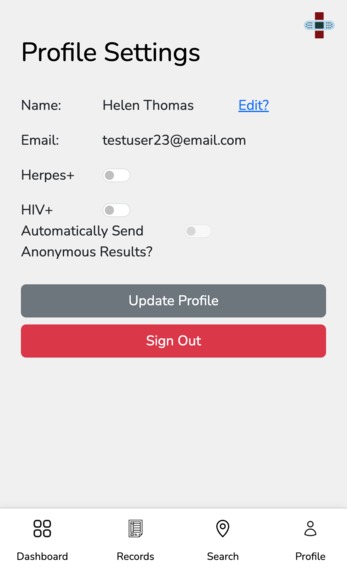
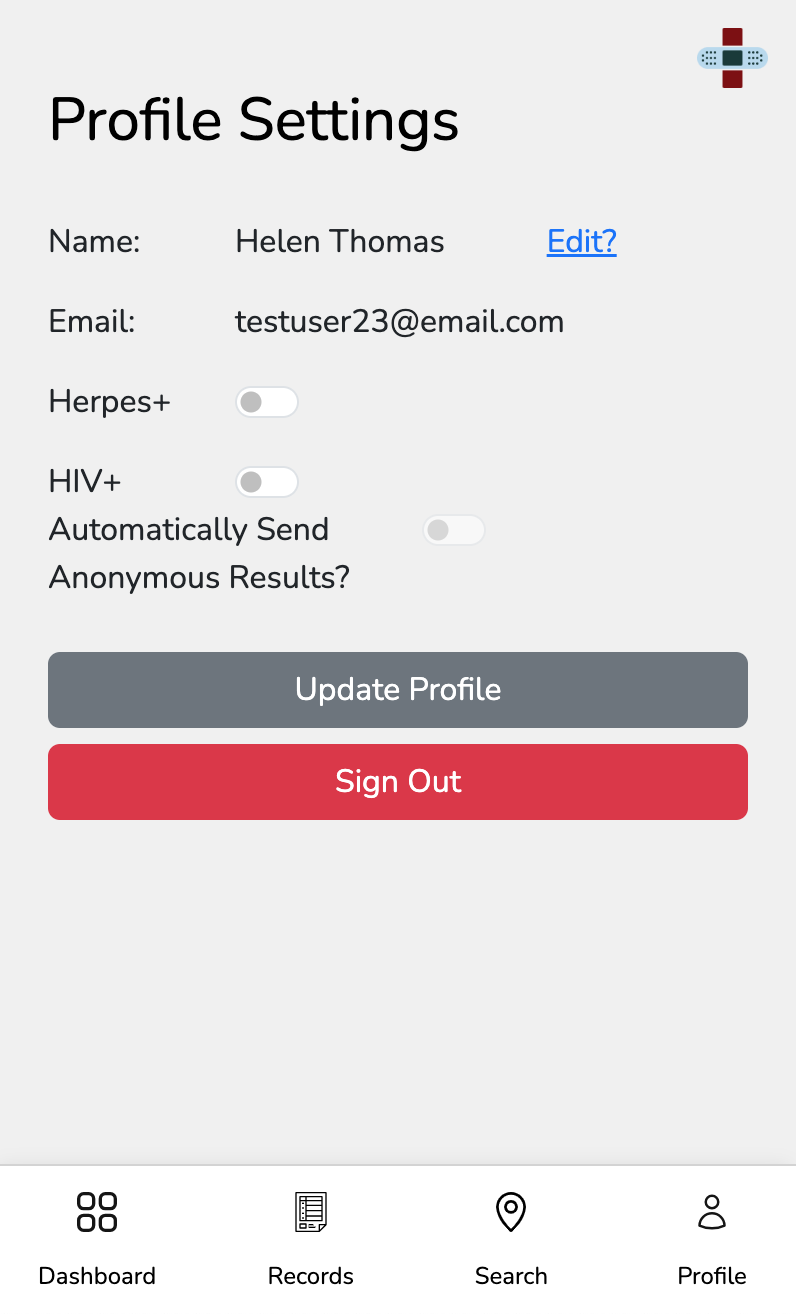
This is your profile portal. You are able to update your name and if you already know you have herpes or are HIV+ you can toggle on features
-
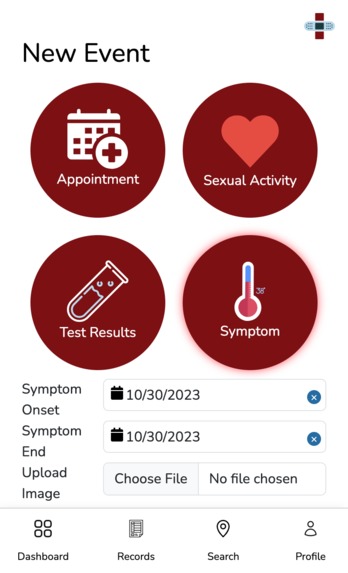
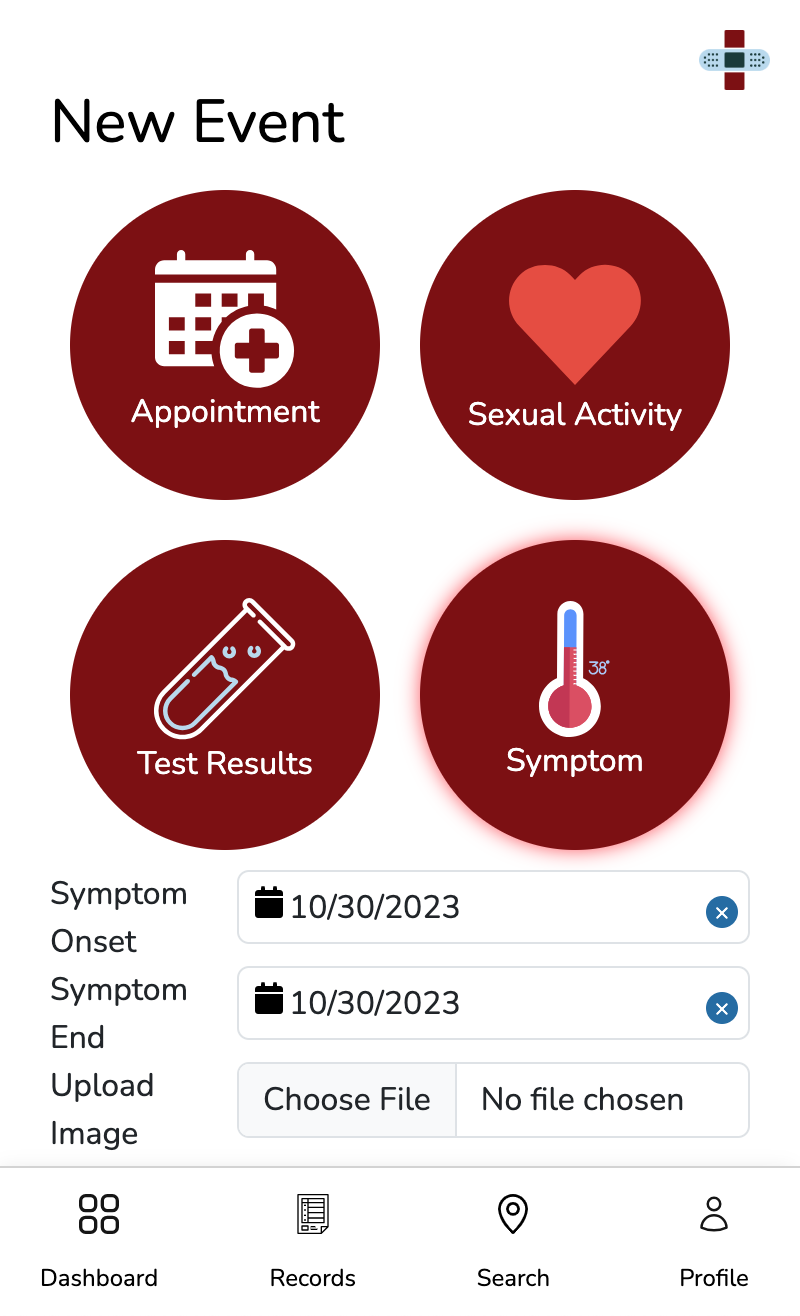
This is how you add new data to your secure portal
-
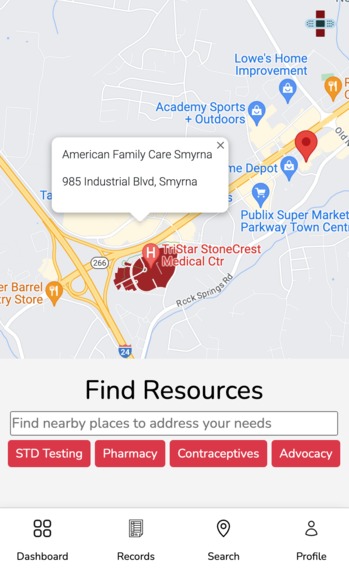
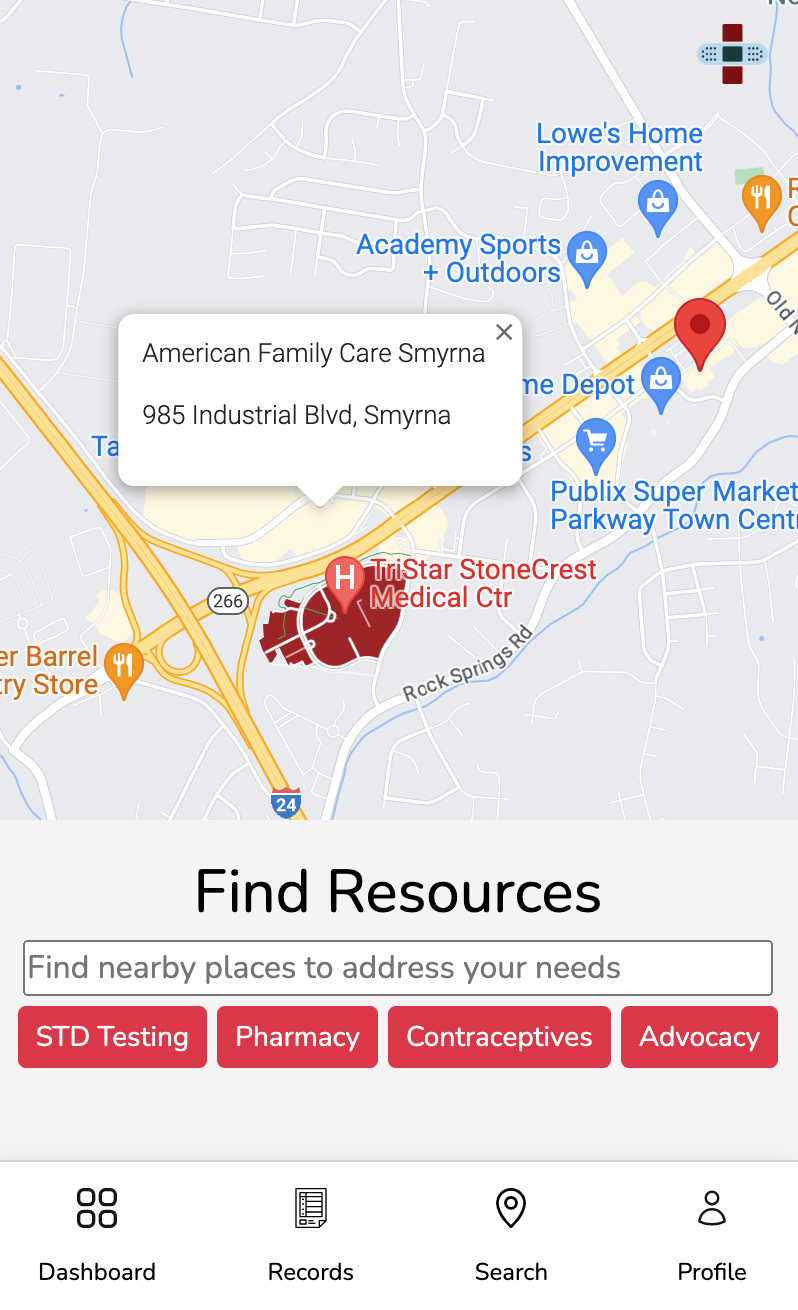
This search features shows you resources in your area related to sexual health!
Status Quo
Inspiration
I embarked on this project alone, driven by the inspiration to address sexual health disparities and empower individuals from all walks of life. I recognized that socioeconomic backgrounds could significantly impact access to sexual health resources, information, and care. The importance of this project lies in its potential to bridge these disparities and provide a comprehensive solution for tracking, reducing, and avoiding sexually transmitted infections (STIs) using a free application.
People living with lifelong illnesses like HIV or herpes often require efficient tools to monitor their condition, track outbreaks, and have relevant information ready to share with healthcare providers. By providing a user-friendly and inclusive platform, I aimed to reduce the stigma around STIs and encourage open conversations about sexual health.
What I Learned
I learned so much working on this project! Most of what I learned was about STIs; I learned more about how often people should get tested, how there are laws in specific states that criminalize knowingly transmitting STIs, and how certain illnesses manifest with no symptoms. Technologically, I learned more about Google Maps and how involved it is to use a map, especially trying to generate specific categories of data within a radius. Personally, I learned about the value of teamwork! I have participated in 4 different hackathons (this being #4), and I have always had a team! This time, I did it alone, and I feel like every waking moment of my time this past week has been dedicated to this project. The old saying is definitely true: Alone, you go faster, but together you go further. There are so many more things I'd like to implement into this application that I just did NOT have time for alone.
How I Built My Project
Technologies and Tools:
Next.js: Next.js, a popular React framework, served as the foundation of my project. It enabled server-side rendering, improved performance, and simplified routing.
React: Using React, I built the user interface, allowing for a dynamic and responsive experience.
Firebase: Firebase was used for backend services, including real-time database management, authentication, and cloud storage for handling user data and image uploads.
Google Maps API: The Google Maps API integration enabled users to search for nearby sexual health resources, clinics, and testing centers.
Firebase Authentication: For user registration and authentication, I implemented Firebase Authentication, ensuring secure access to user-specific data and features.
Firestore: Firestore was employed as the database solution to store user data, such as appointments, symptoms, sexual history, and test results.
Project Architecture:
The architecture of my Next.js project followed a client-server model with a React frontend and Firebase backend. A high-level overview:
Frontend: The Next.js framework facilitated the creation of a dynamic and responsive user interface, which included components for recording symptoms, managing appointments, and more.
Backend: Firebase played a central role in handling the backend operations. Firebase Authentication managed user registration and login. Firestore, a NoSQL database, stored user-specific data, such as appointments, medications, symptoms, and sexual history.
Real-Time Database: Firebase's real-time database capabilities ensured that users could access and update their data in real-time, providing a seamless experience.
Google Maps API Integration: The integration of the Google Maps API allowed users to search for nearby sexual health resources, which was a crucial part of the project's mission to improve accessibility.
User Authentication: Firebase Authentication ensured user data privacy and secure access to the platform's features.
Challenges I Faced
As I mentioned before in the Things I Learned section, I worked on this project alone, which was a struggle in itself. Working to pack in so many features as a team of one was my second biggest challenge. My biggest hurdle was a lack of time! I learned about this hackathon very late in the game and only had about 12 days to produce an application. One of those days was devoted to ideating and designing the application. Additionally, I faced struggles with integrating some of my APIs. I could not get my pins to appear on the map when searching initially. I also wanted to have a medication scanner that could read a user's pill bottle and add a history of the medication for refill warning. I could not get my Google Cloud Vision API to work properly and had to nix the whole idea.
Features
Confidential and Secure Hub: My platform prioritizes privacy and security, following HIPAA compliance standards to safeguard your personal information.
QR Code Verification: When you update your test results, you receive a "clear-verified" status via a unique QR code. This allows other users to quickly verify your STI status by scanning the code, promoting transparency in sexual health.
Appointment Alerts: My system shows reminders for upcoming appointments. The app also notifies you when it's time for your next test, enhancing regular testing and disease prevention.
Comprehensive Record Keeping: Users can maintain a digital record, including images of any suspected outbreaks, personal notes, and essential medical information. This data is easily shareable with healthcare professionals for accurate diagnosis and treatment.
Transparent Sexual Partners: My platform tracks your sexual history, allowing you to see a list of partners since your last STI check. This feature promotes informed decision-making and encourages responsible sexual behavior.
Future Improvements
Integration with Health Portals: I plan to allow users to link their health portals to receive test results directly within the app, making it even more convenient and seamless to manage their health.
Enhanced User Verification: To ensure a high level of user authenticity, I intend to implement stricter sign-up procedures, requiring users to verify their identity by providing appropriate identification.
Anonymous Partner Notifications: Users will receive automatic anonymous messages if any sexual partners have been added since their last test, and the user tests positive for an STI. These messages will serve as a reminder for them and their partners to get tested for a safer sexual environment.
Favorite Locations on Maps: For users dealing with HIV and Herpes, I plan to introduce the ability to star their preferred pharmacies or healthcare providers on the maps, making it easy to locate their chosen healthcare resources.
Pill Bottle Reader: To aid users with medication management, I'm working on a feature that can read information directly from pill bottle labels, ensuring users take the right medication at the right time.
Symptom Recommendations: When a user selects symptoms associated with a specific STD, the app will provide them with information about the potential STD related to those symptoms. It will also recommend a full panel test for comprehensive health screening.
Acknowledgments
- PedroTech and Leigh Halliday on YouTube provided the most thorough tutorials that helped me get my images upload working and my Google Maps API up and running!
- The Next.js team for creating such a wonderful framework.
- Firebase team for creating such an easy to use product.


Log in or sign up for Devpost to join the conversation.