-
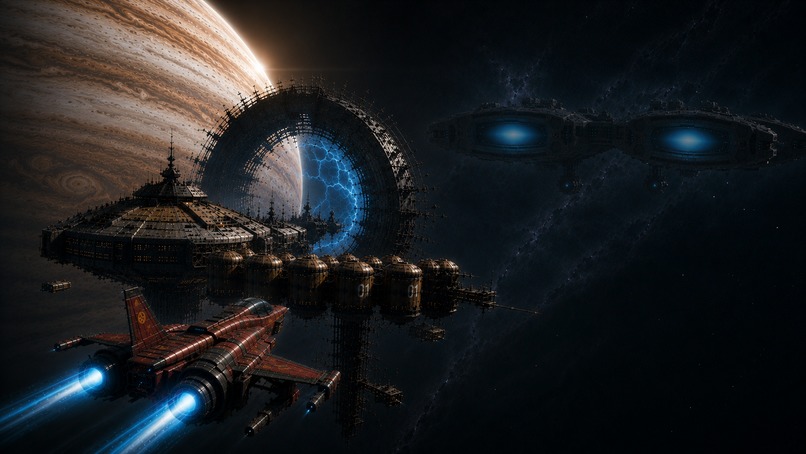
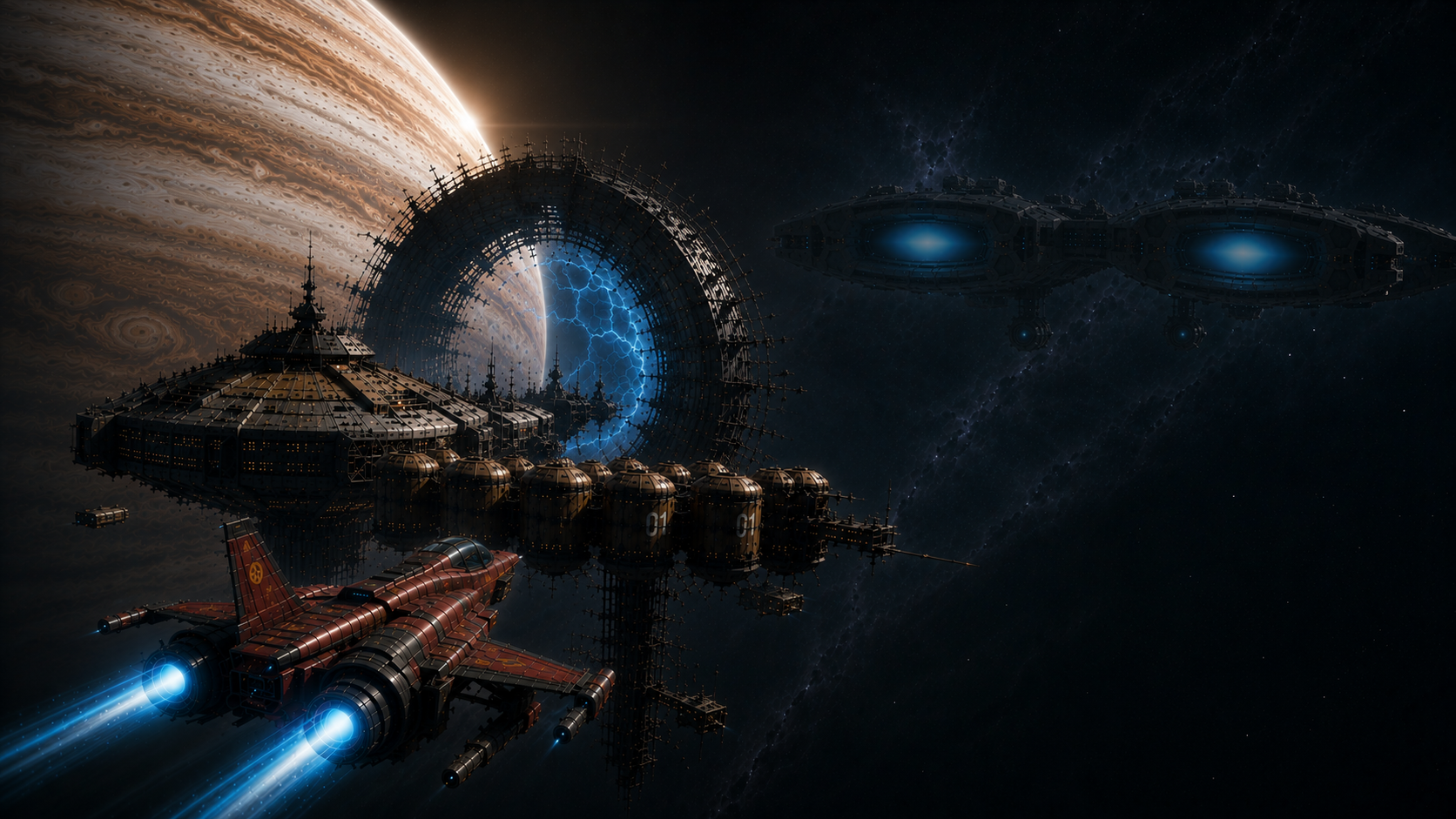
The Varkesh void whale capital ship approaching dangerously close to Station Zero.
-
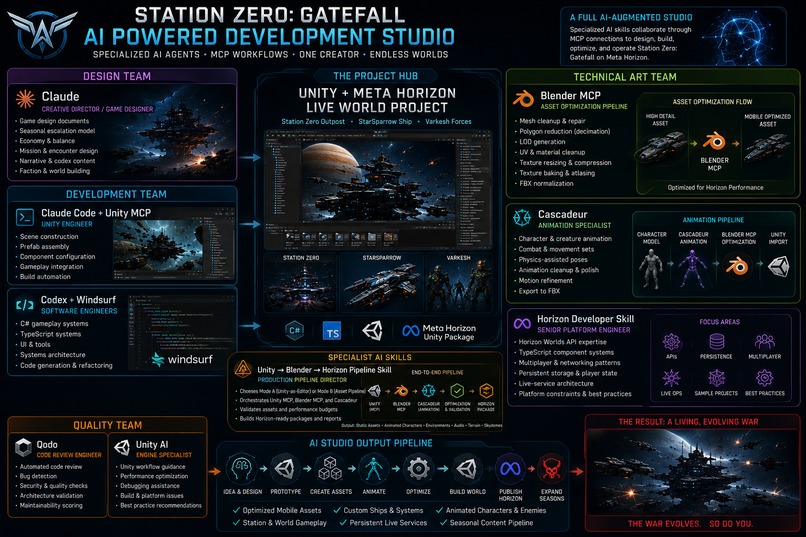
A.I. powered agents and procedural development tools allows small teams to create large games.
-
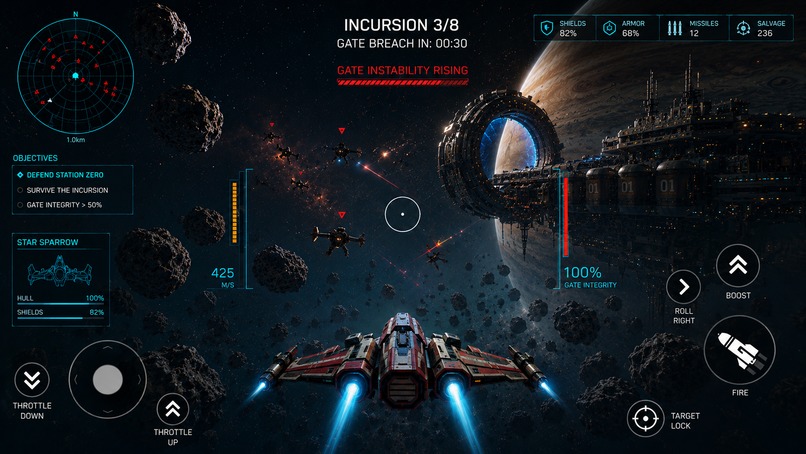
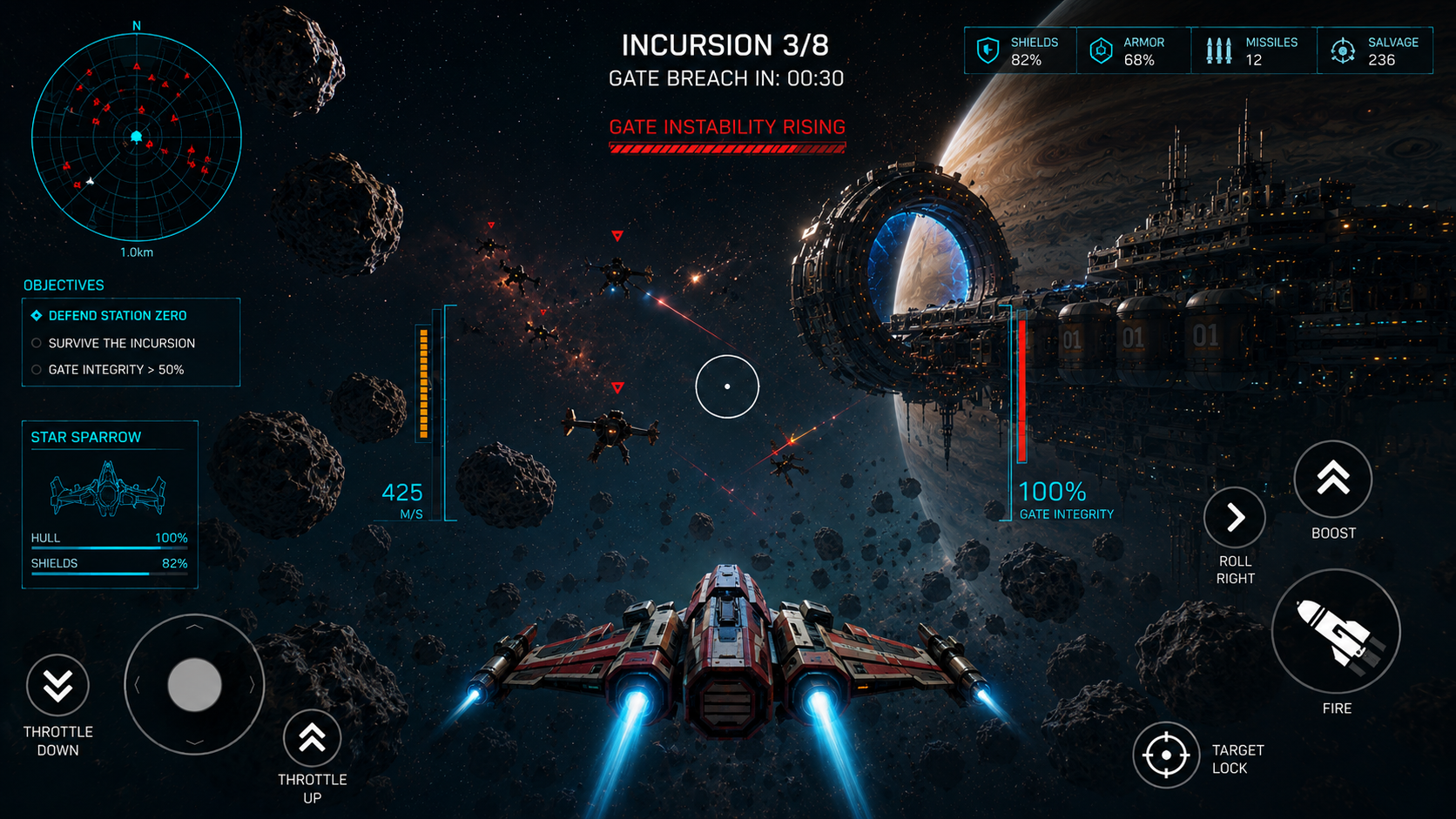
Pilot the star sparrow, defend the station, find a way to stop the endless incursions
-
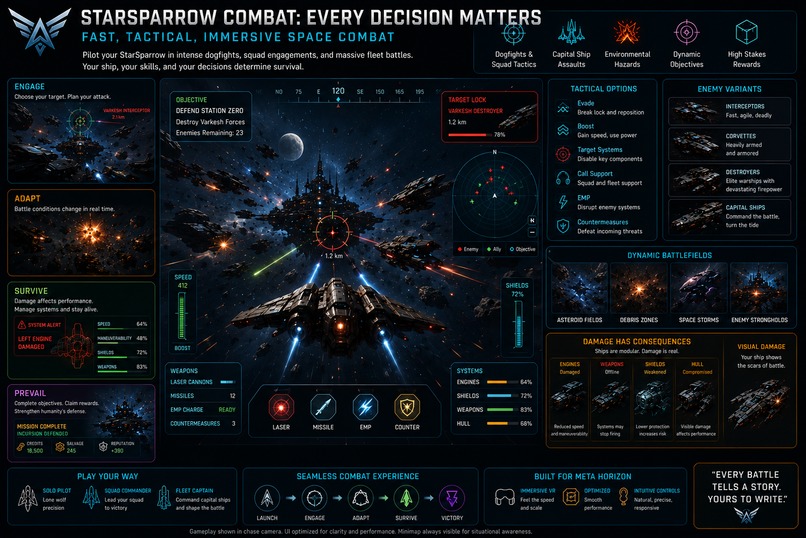
Manage encounters carefully. Protect your ship from destruction, but allies will remember if you leave mid-battle to dock for repairs.
-
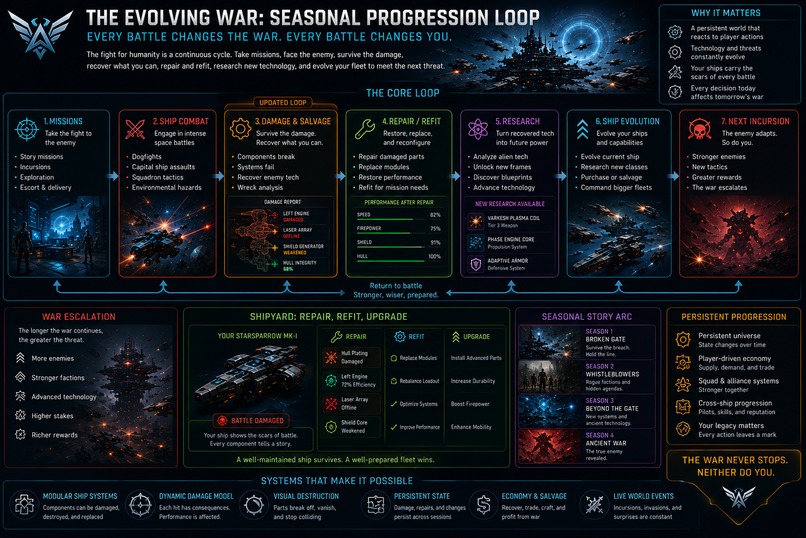
Captains face increasing pressure as the seasons unfold. The Varkesh send stronger forces. New allies' demands could cause new enmity.
-
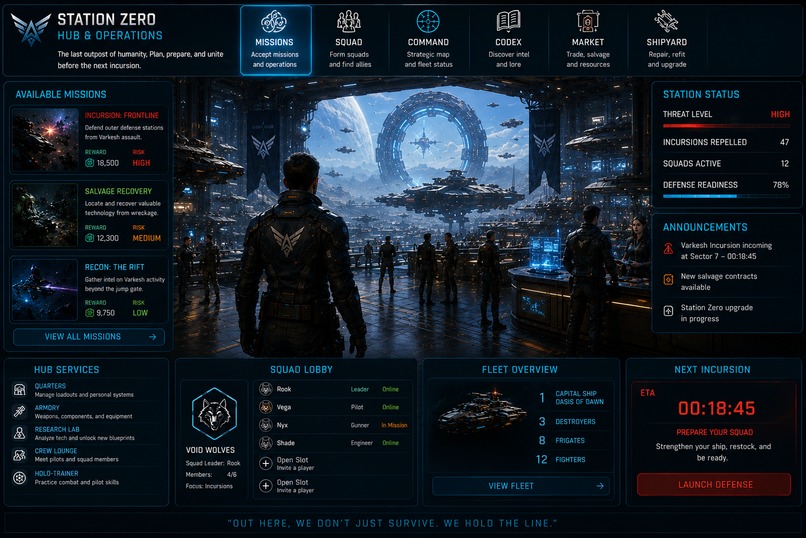
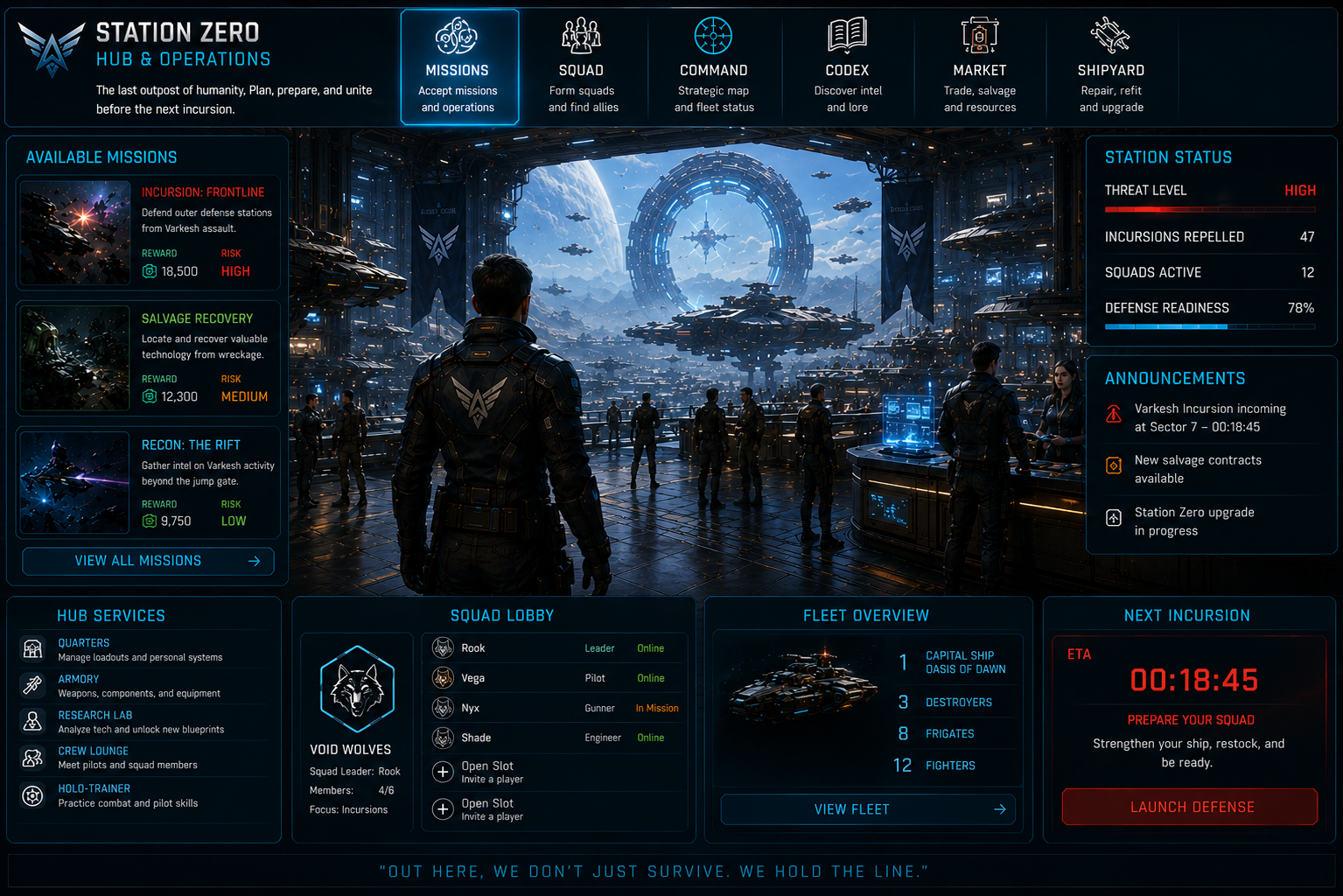
The station is the social hub, discuss strategies, recruit squad members, and monitor station safety.
-
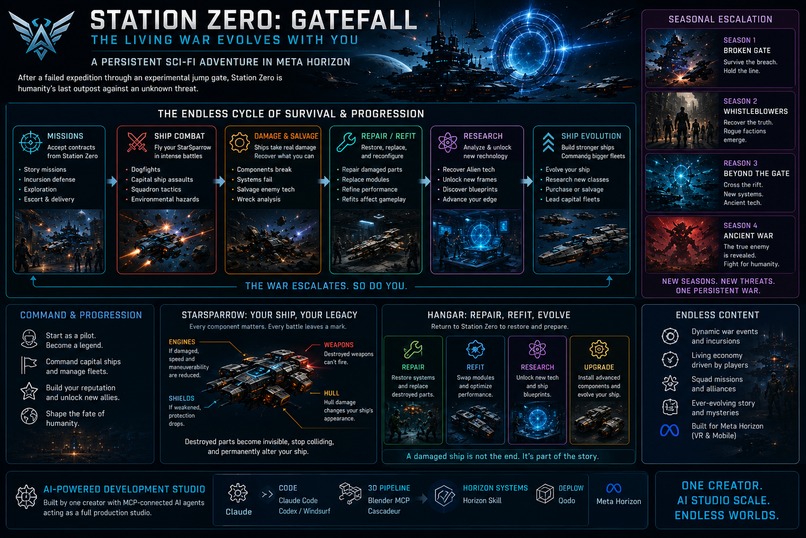
As the season progresses, the story unfolds and the pressure mounts as new factions and enemies get drawn into the encounter.
-
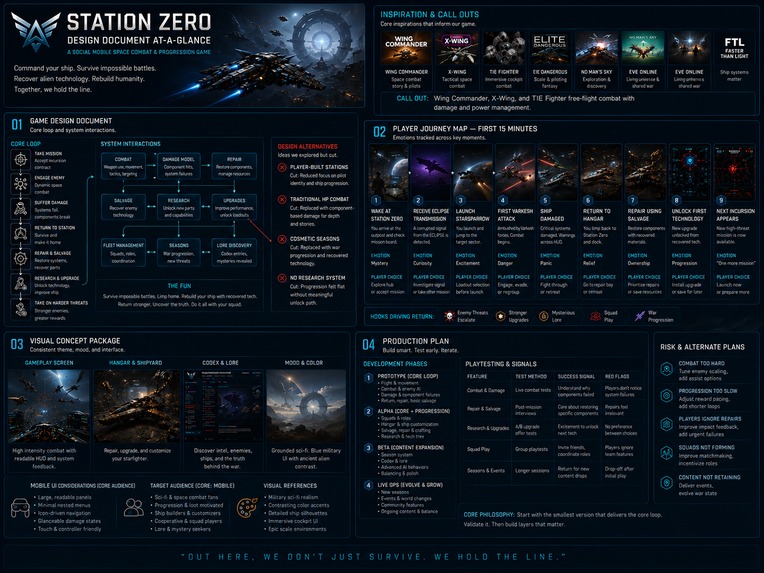
The game design was intended to accomodate a wide range of play styles. Create the perfect fleet of ships to interdict the Varkesh.
-
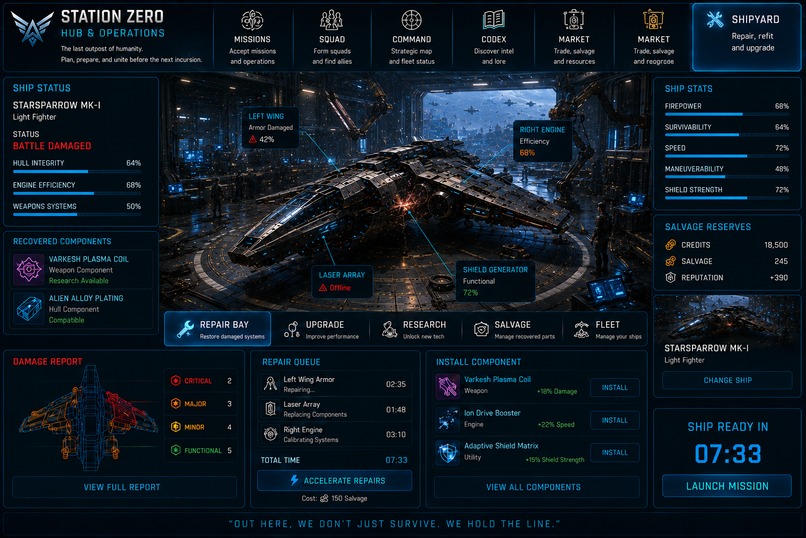
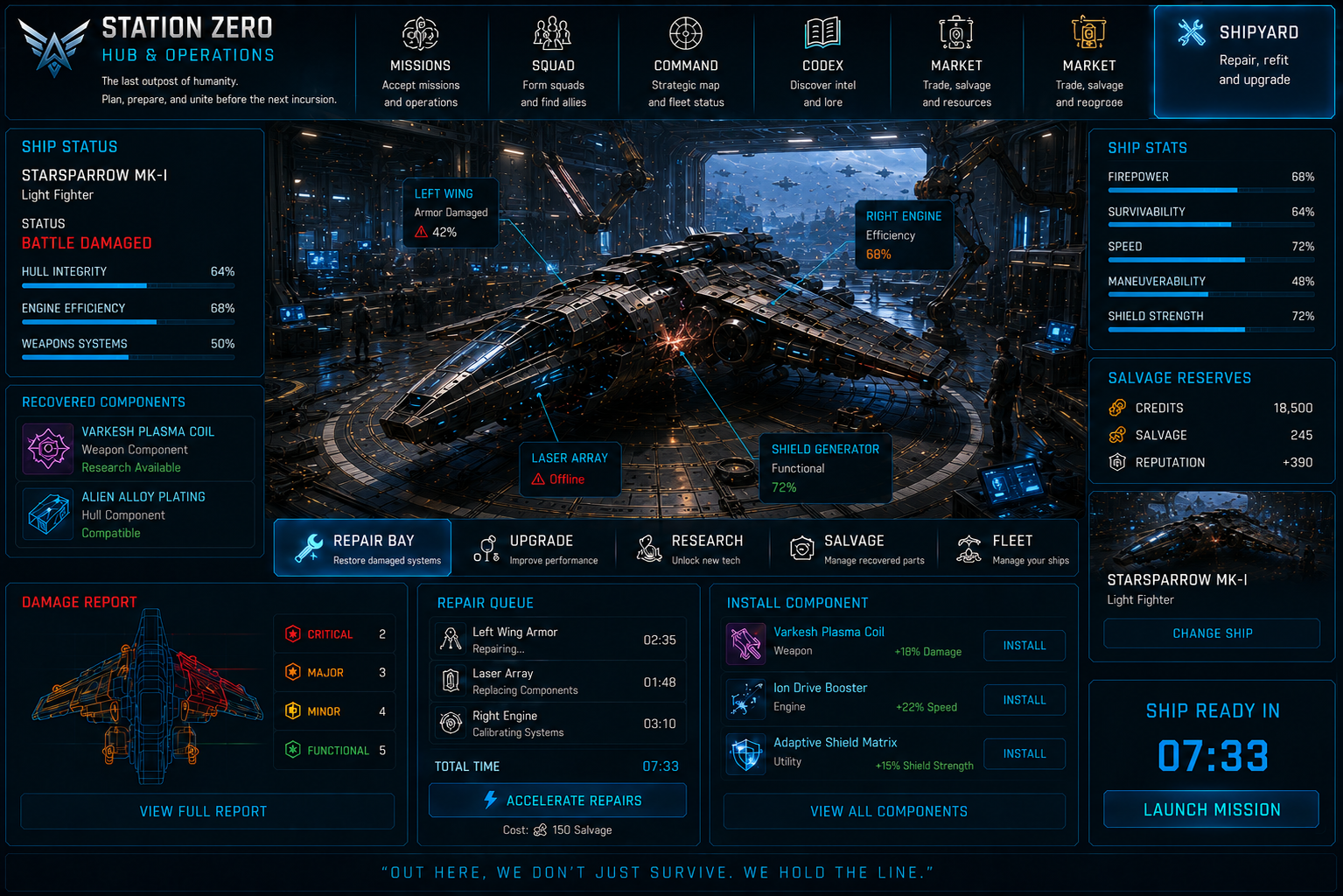
Ship Hangar provides repair services for damages ships, labs to research upgrades, and a workshop to craft new parts from salvage.
-
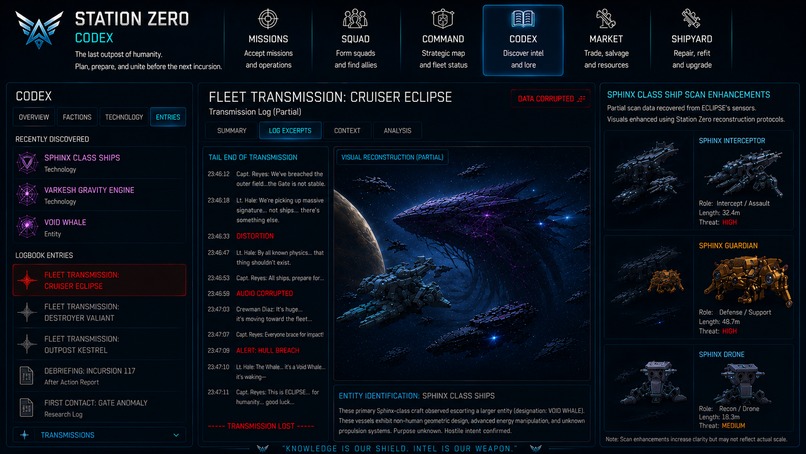
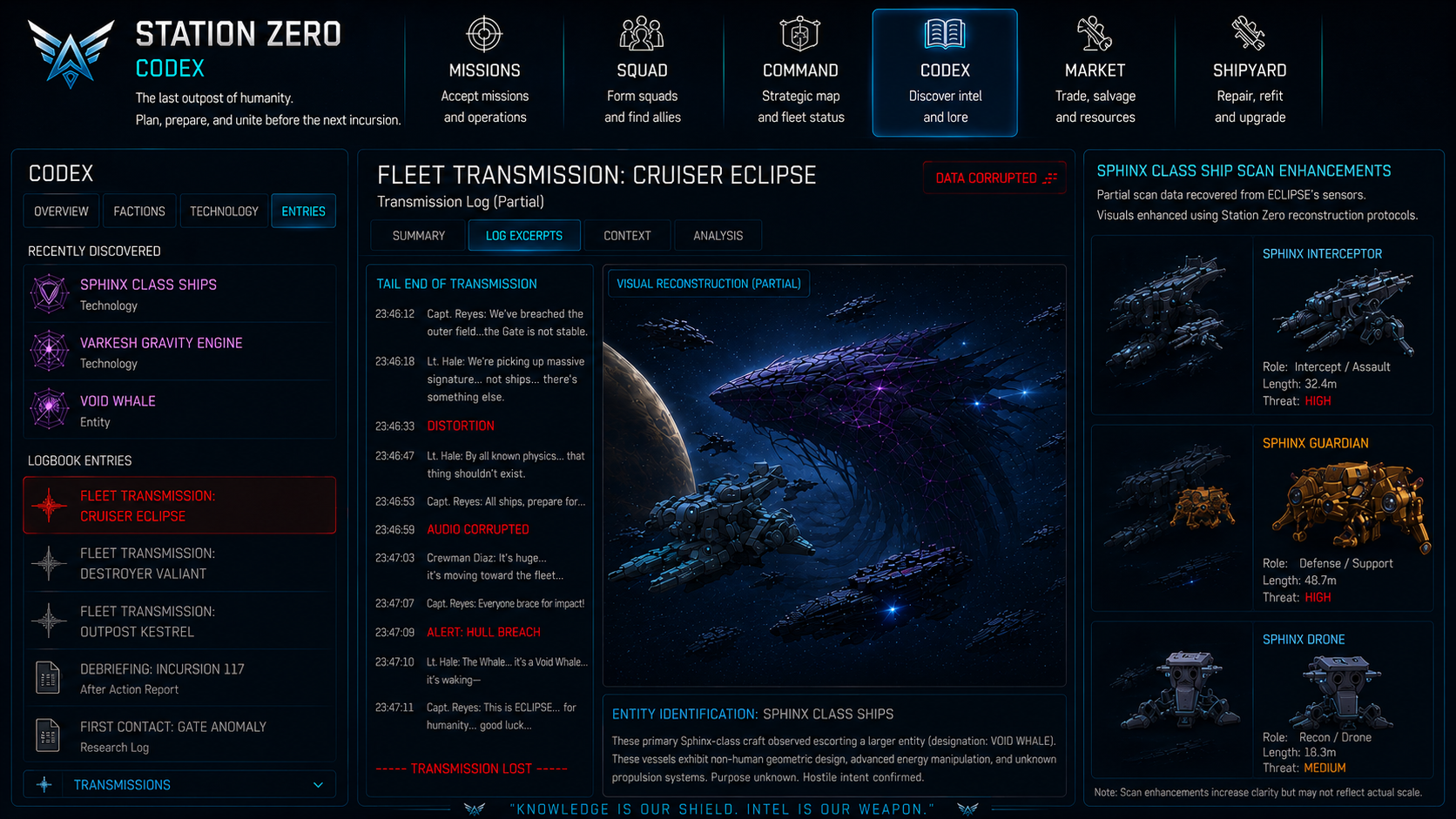
The codex becomes a key source of knowledge, scans and research can reveal weaknesses or hint at new strategies. Intel is invaluable.
-
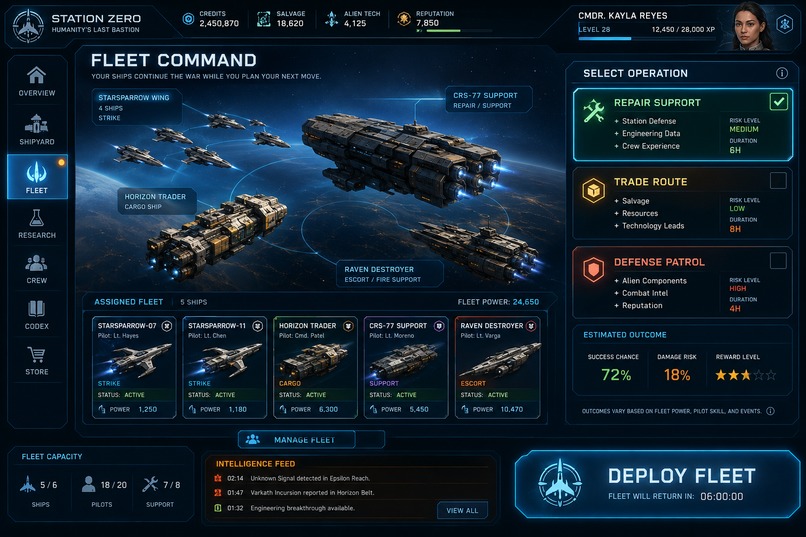
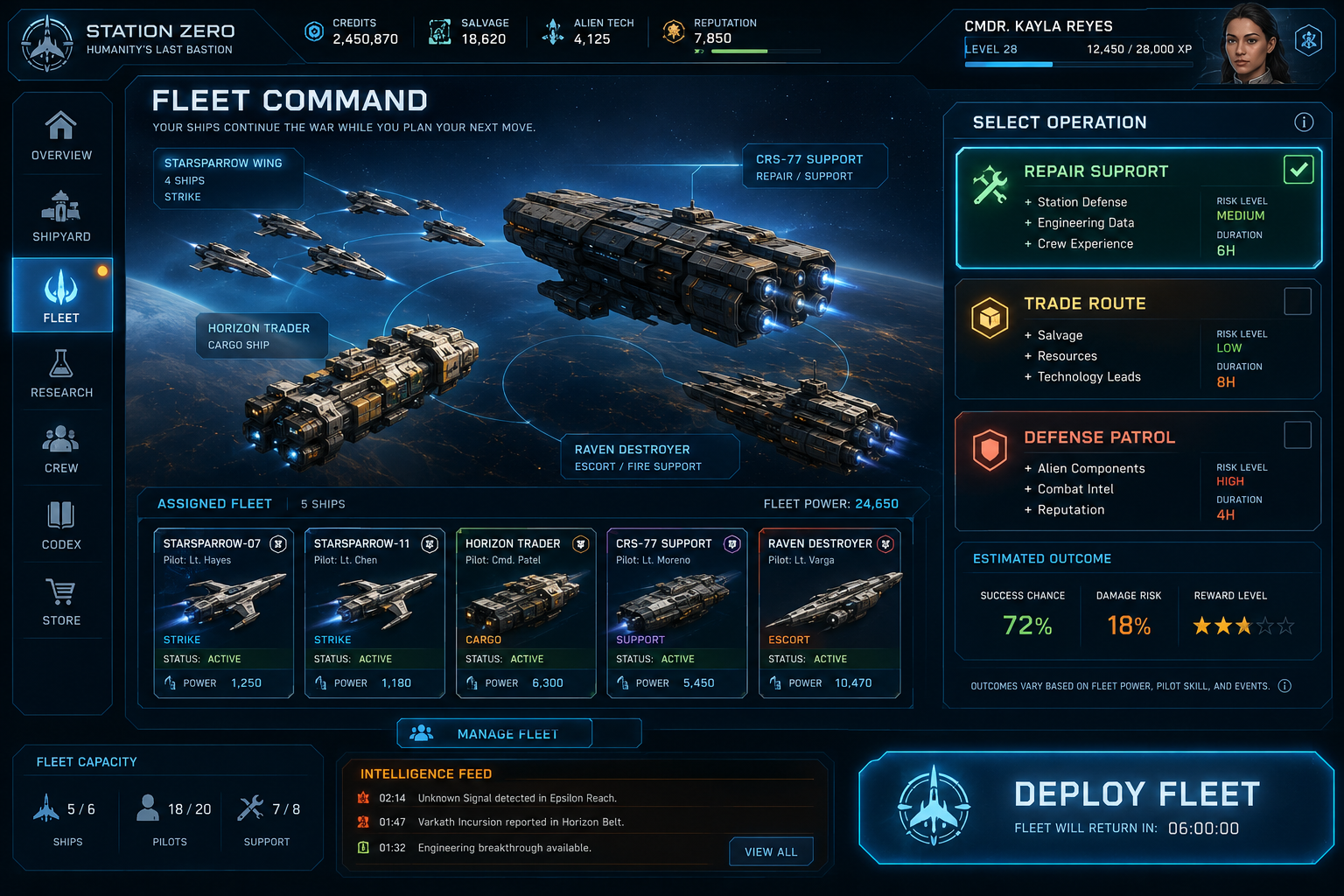
Fleet Command allows players to send their personal ships on tactical, diplomatic, or reseach missions. Will the reward match the risk?
-
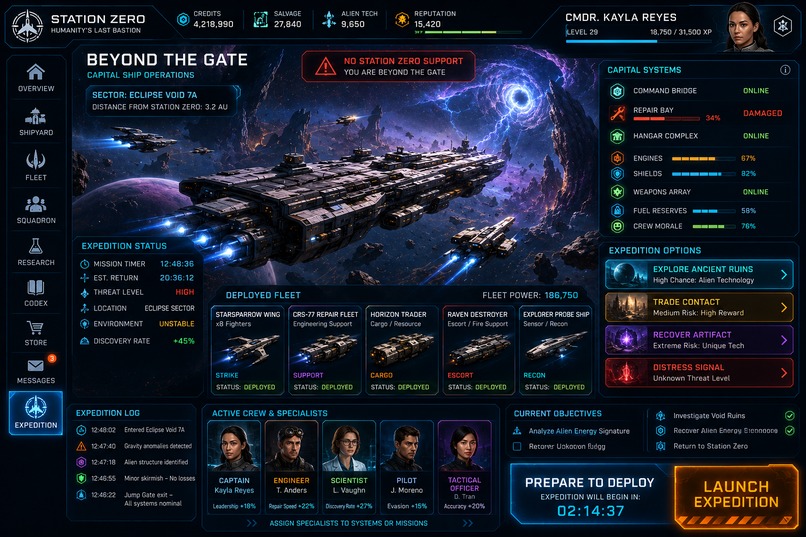
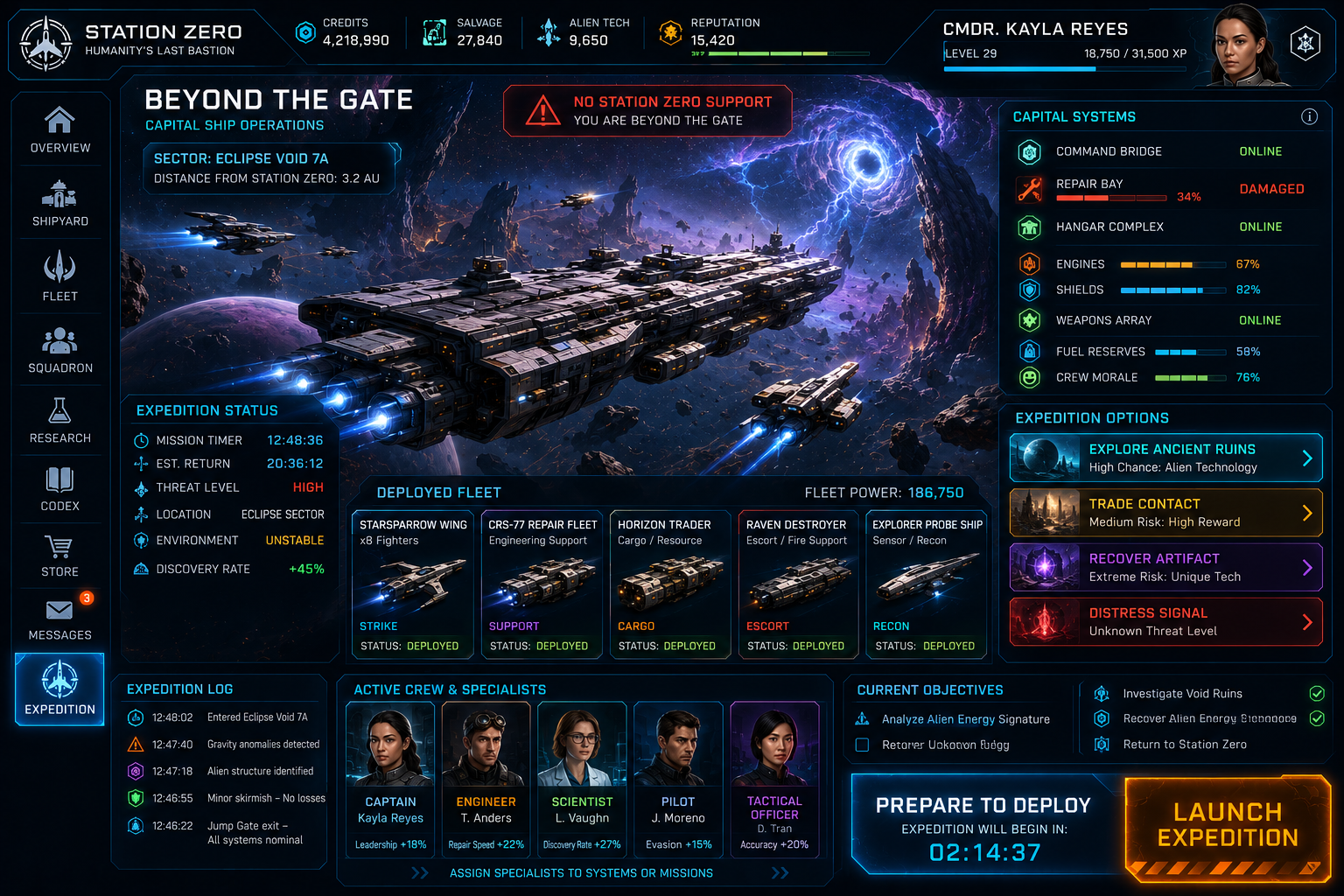
Using the Expeditions screen, players form large squads and take the fight to the enemy. Plan well. There is no backup coming.
-
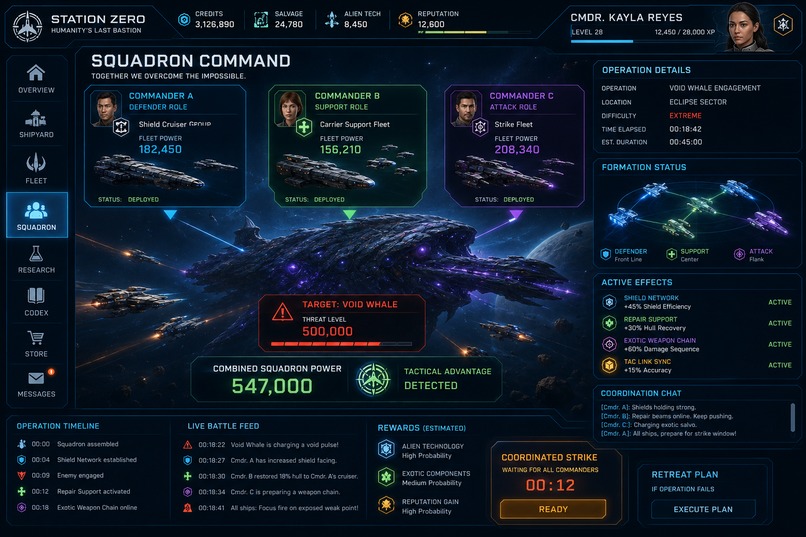
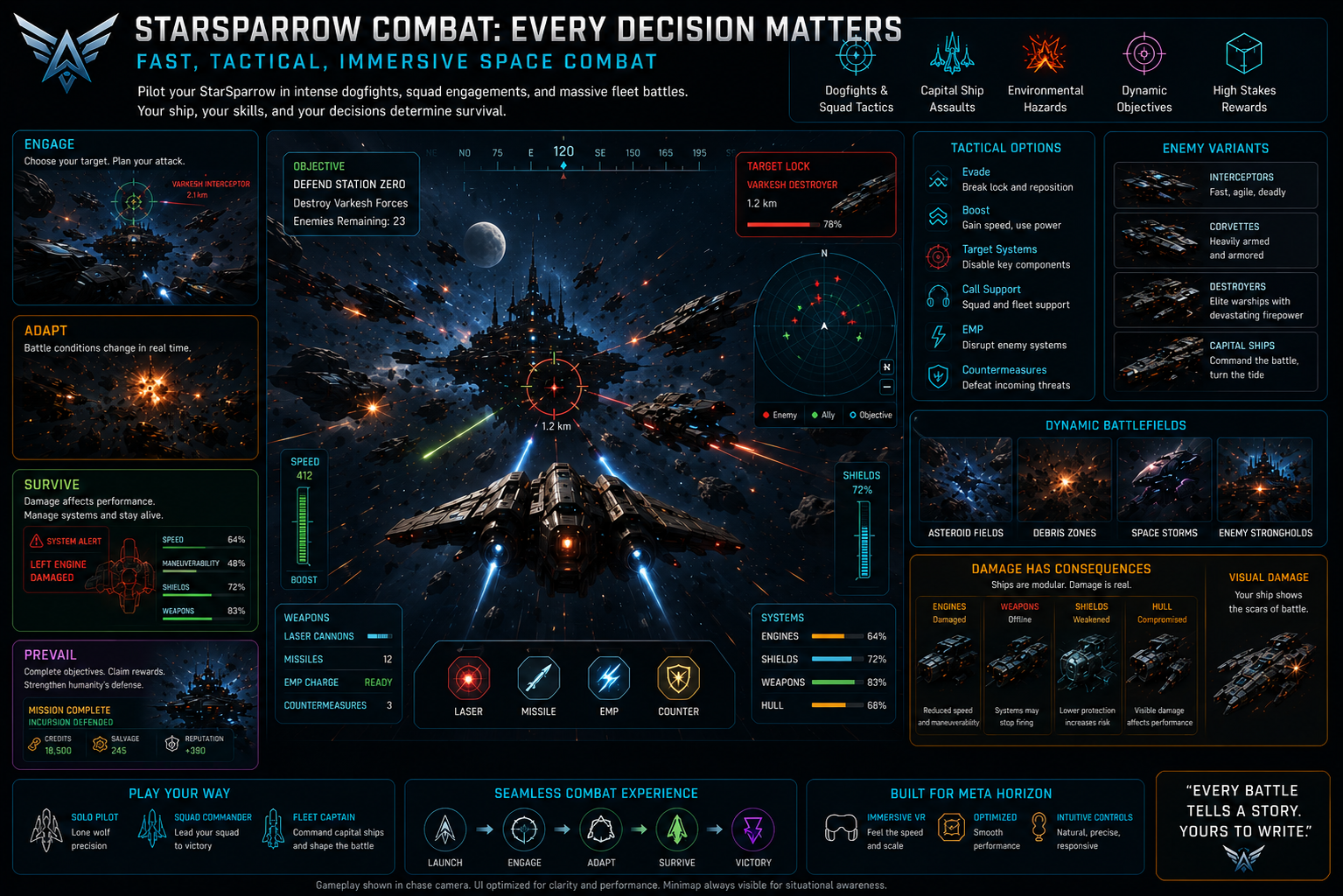
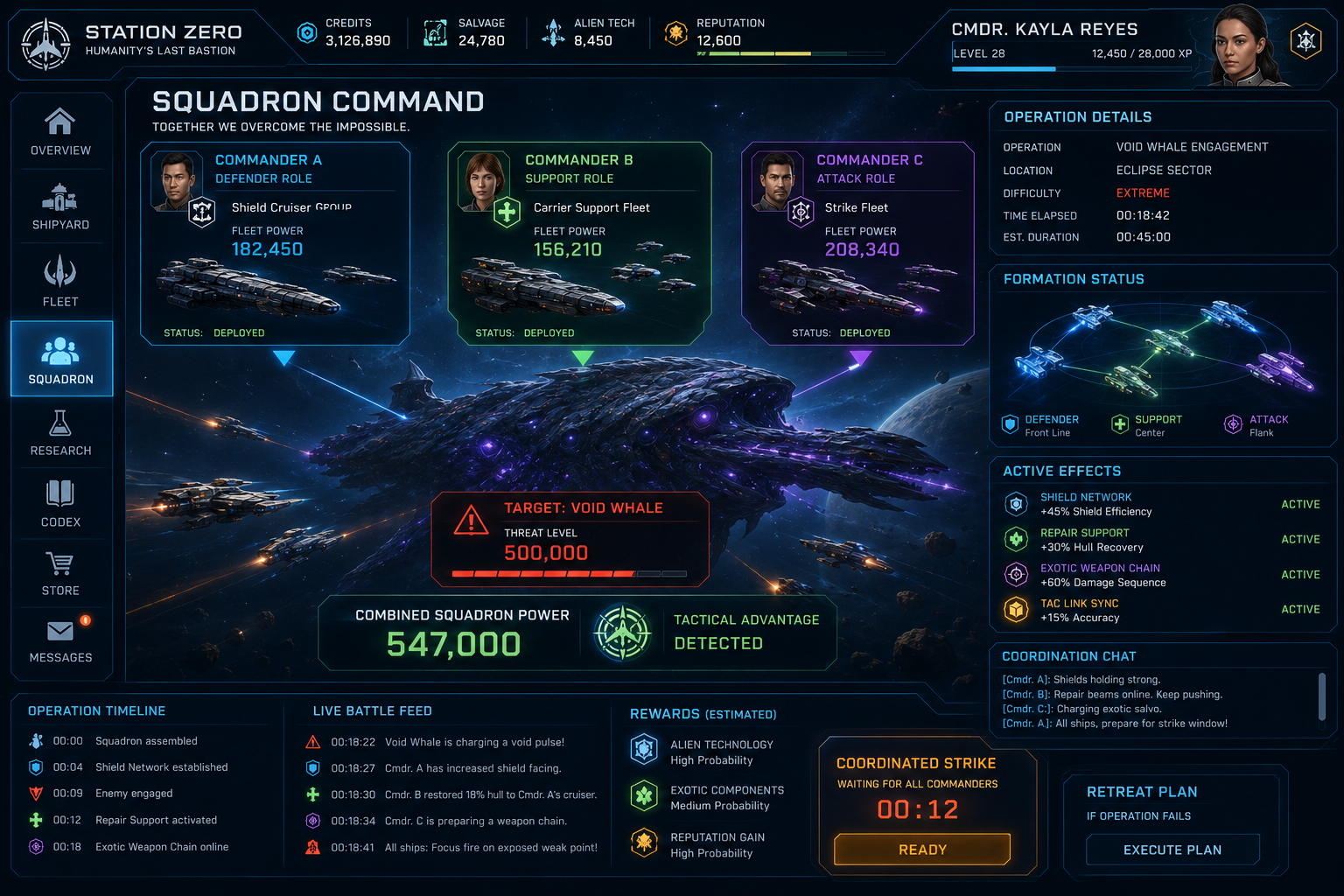
When the expedition encounters a foe, Squadron Command lets players coordinate formations and attacks against powerful foes.
-
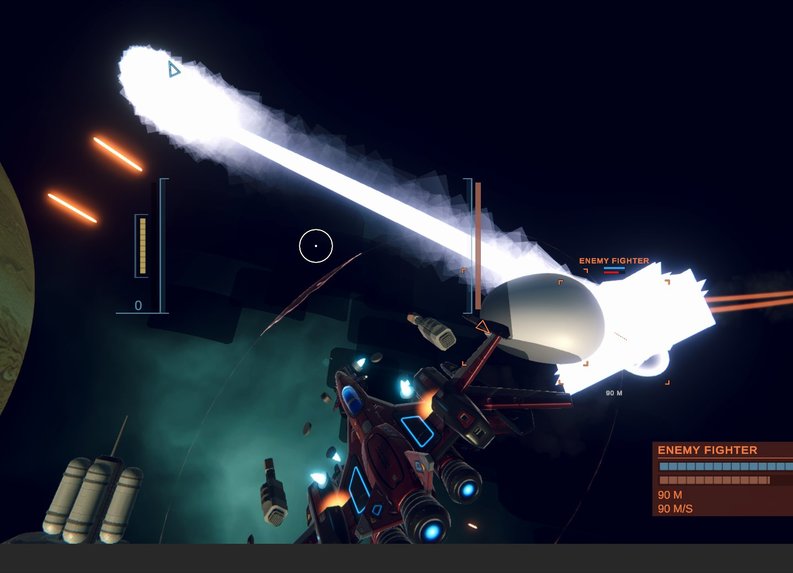
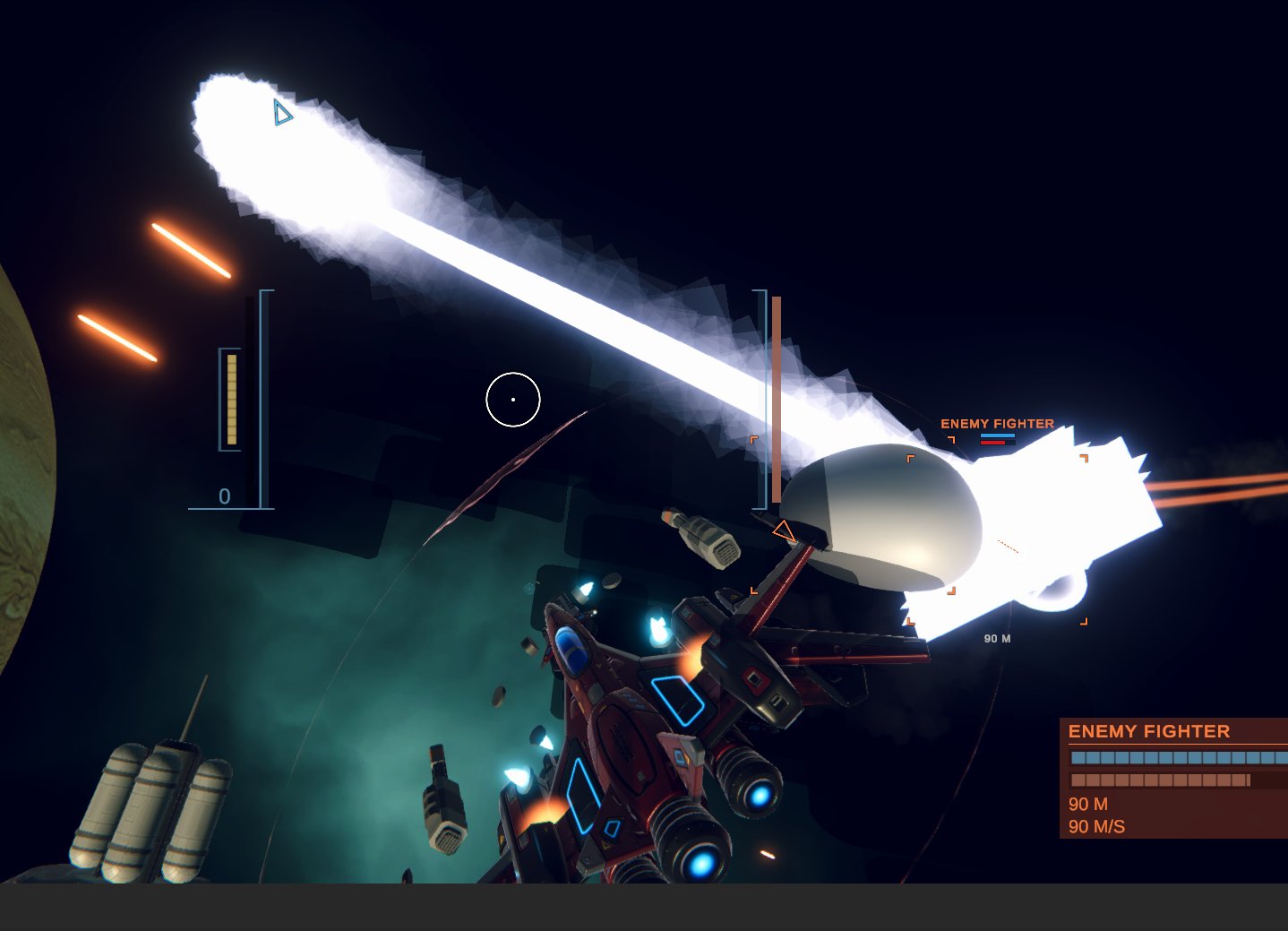
Prototype flight + combat with the targeting HUD. The beam/VFX are placeholder — the hand-built kinematic flight MODEL is what this proved.
-
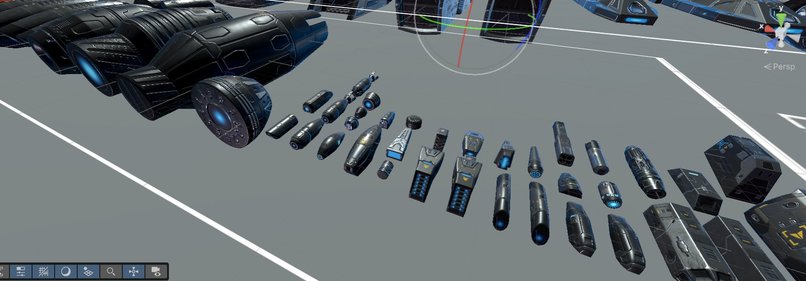
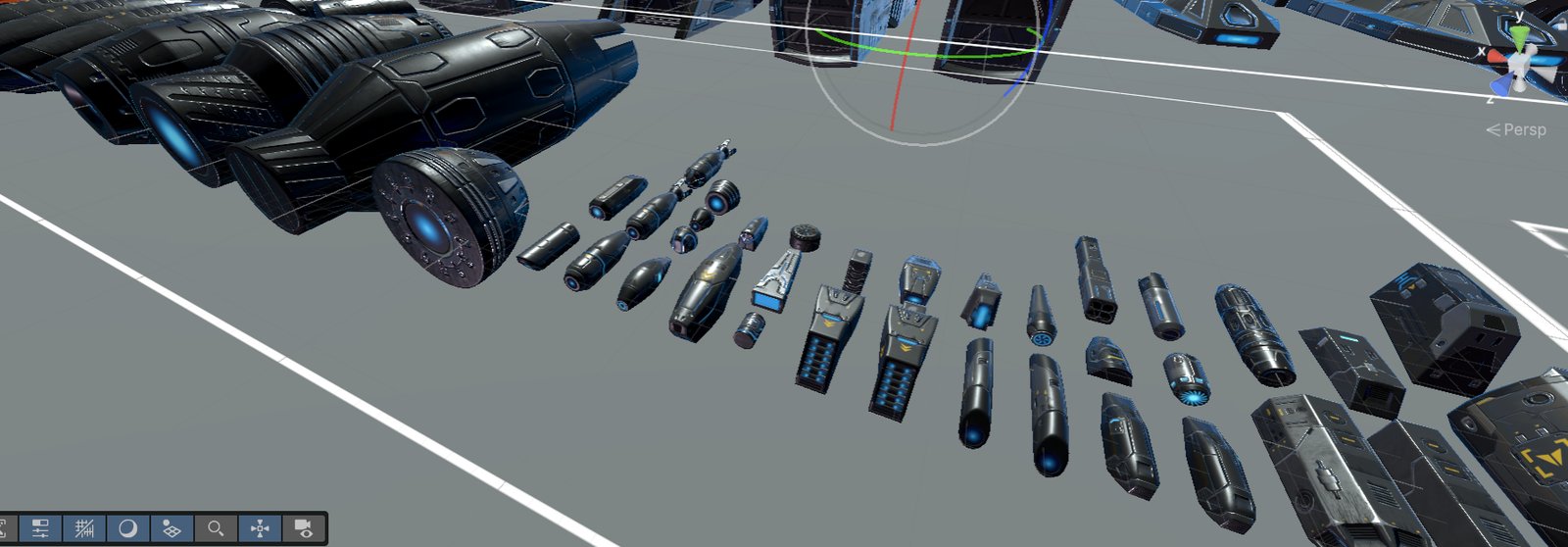
Ship Engineering (kitbash): the pre-cut module catalog in Unity — cockpits, engines, thrusters, wings, weapon mounts.
-
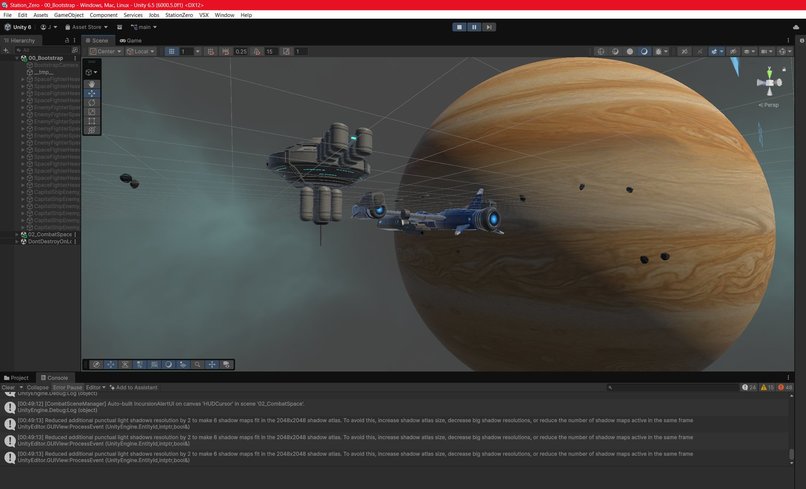
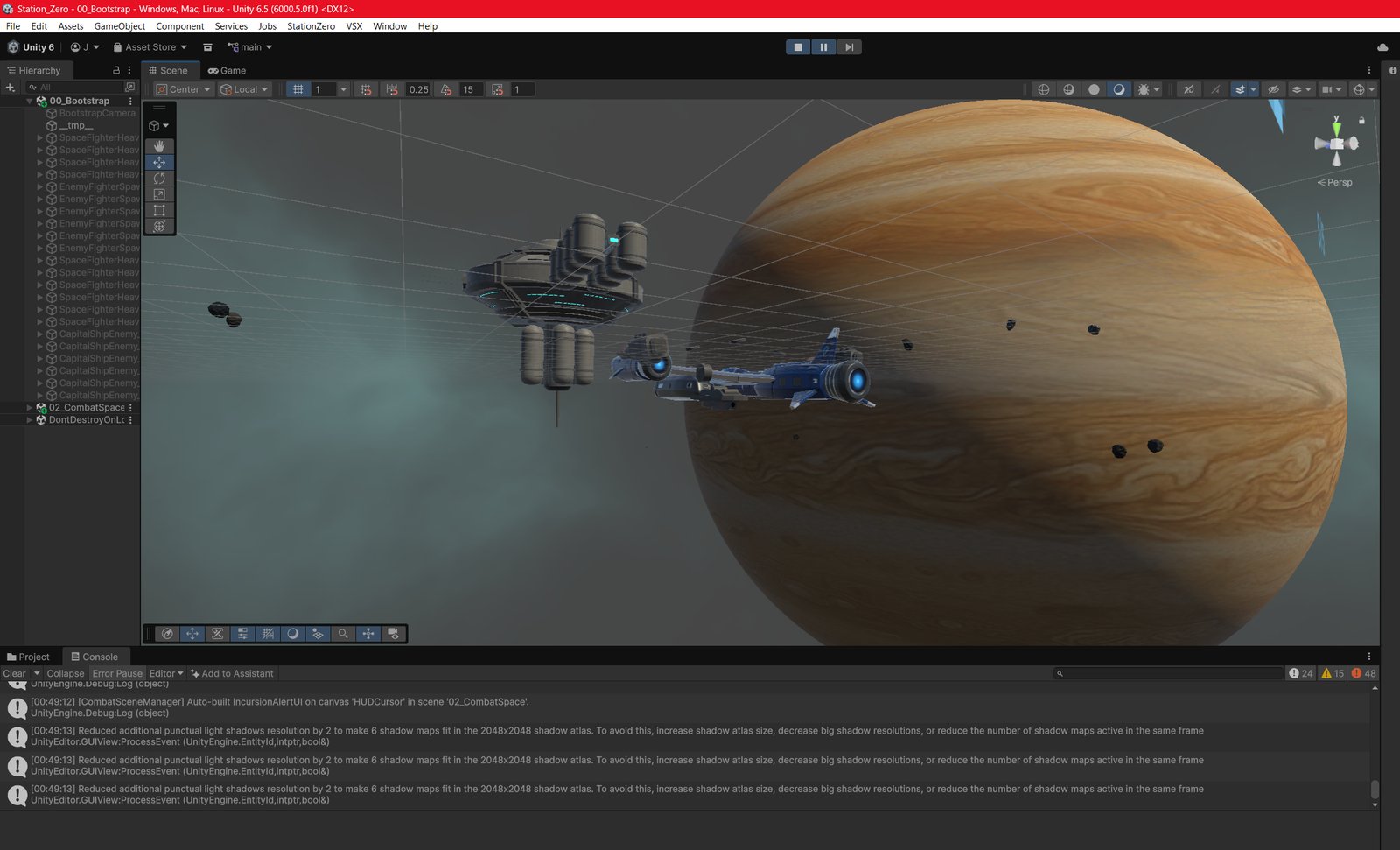
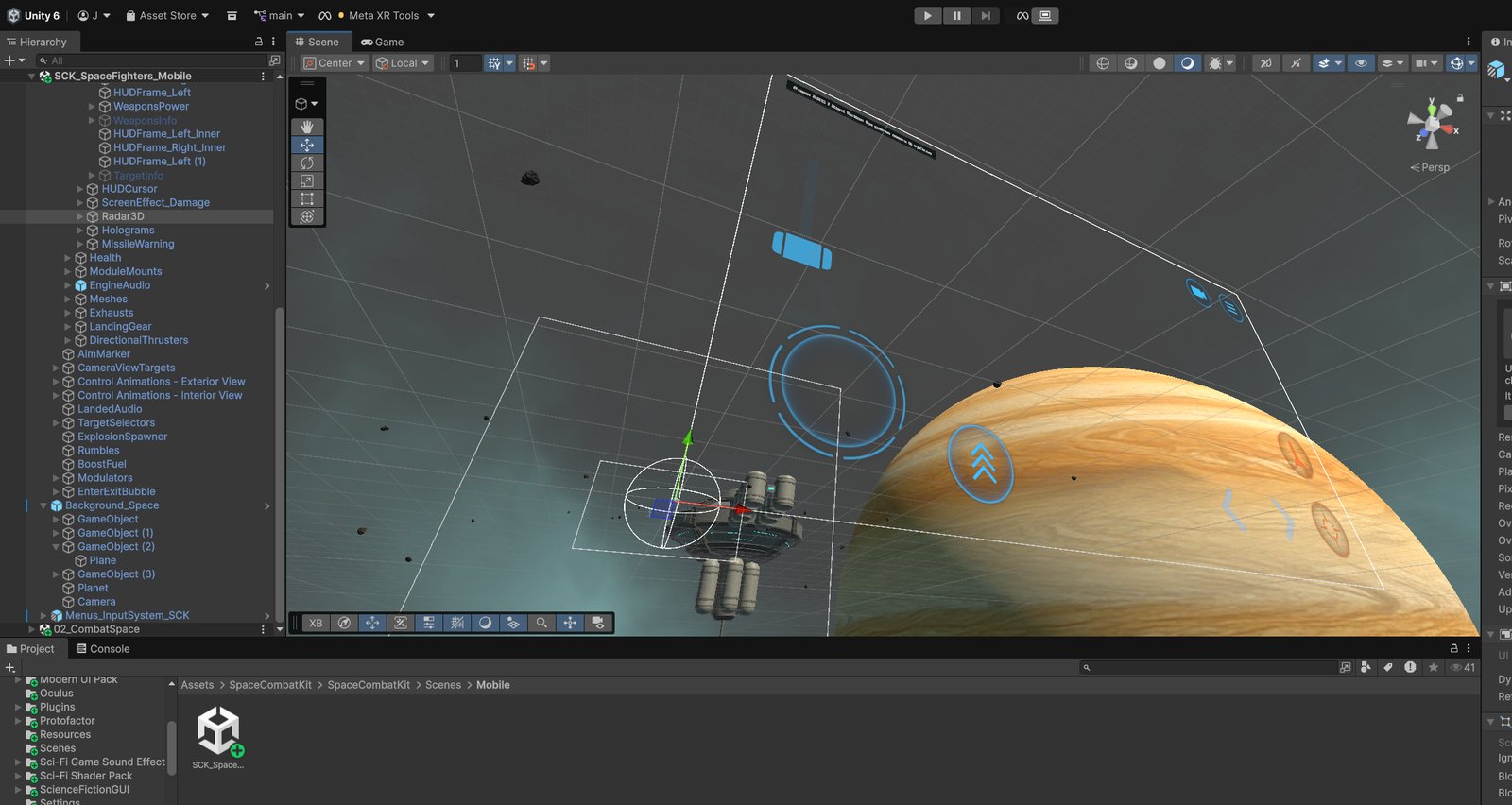
The Unity prototyping lab: Station Zero project — station, kitbashed fighter, Jupiter, and incursion systems near the combat HUD.
-
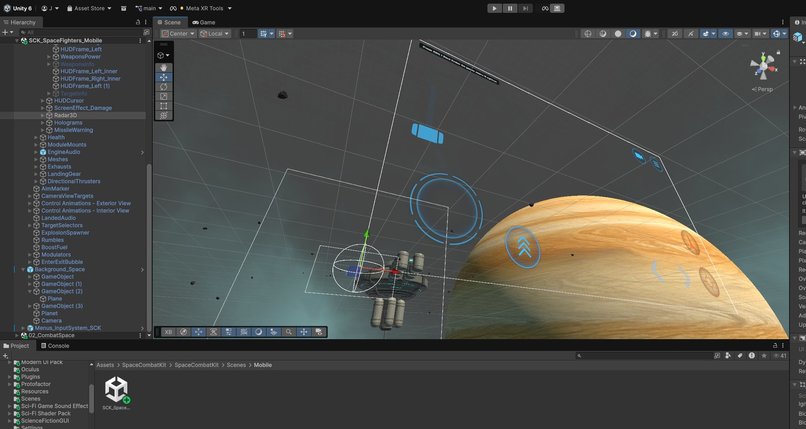
Staying in spec: the Space Combat Kit ship rig in the Mobile scene under Meta XR Tools — inside Horizon's URP/mobile envelope from day one.
-
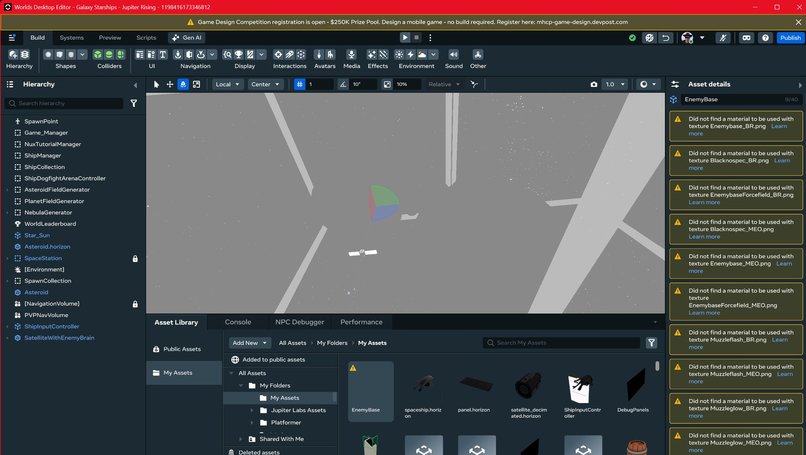
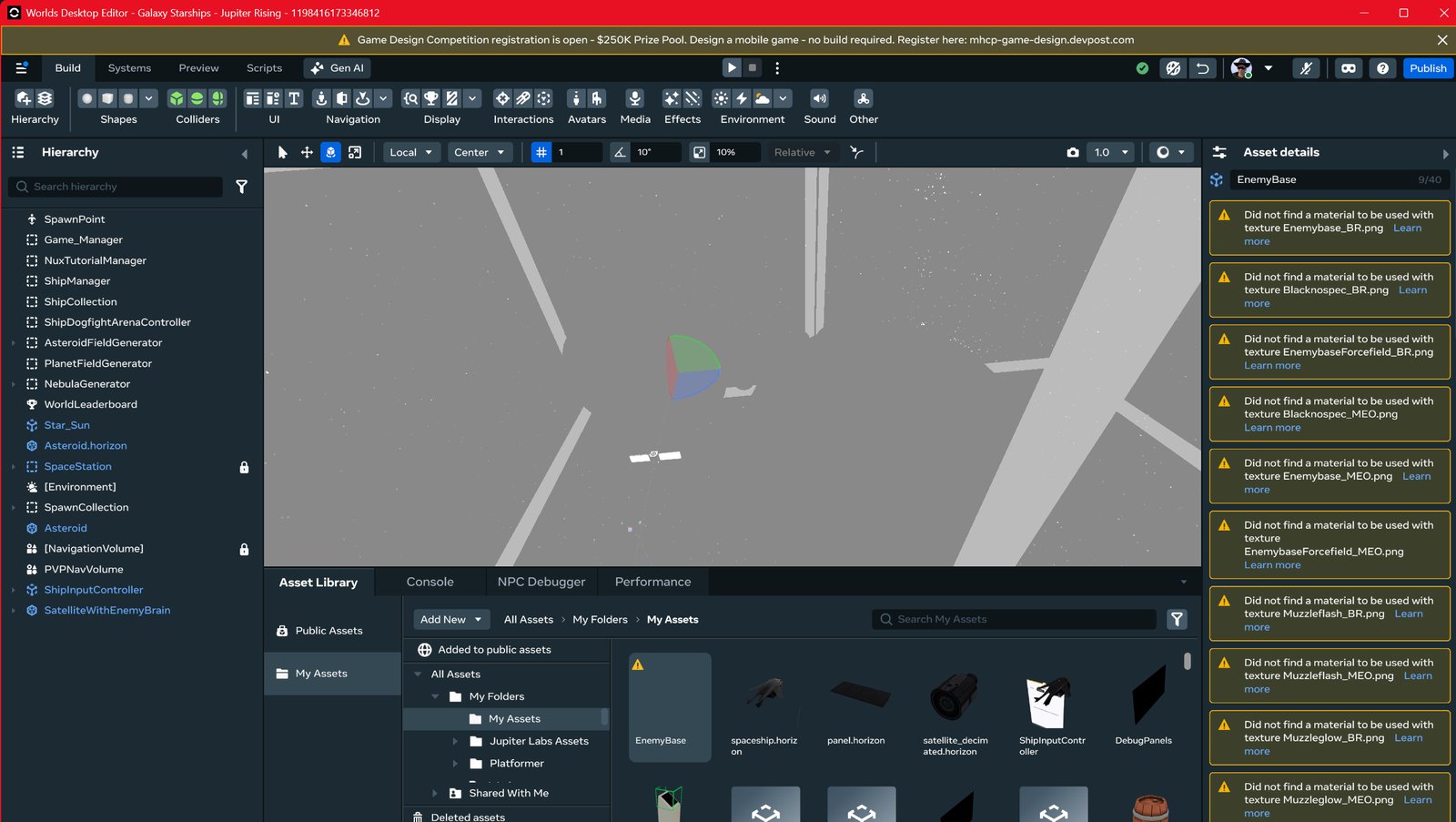
Converting to Horizon: importing meshes with the _BR/_MEO texture convention and resolving material matches in the Desktop Editor.
-
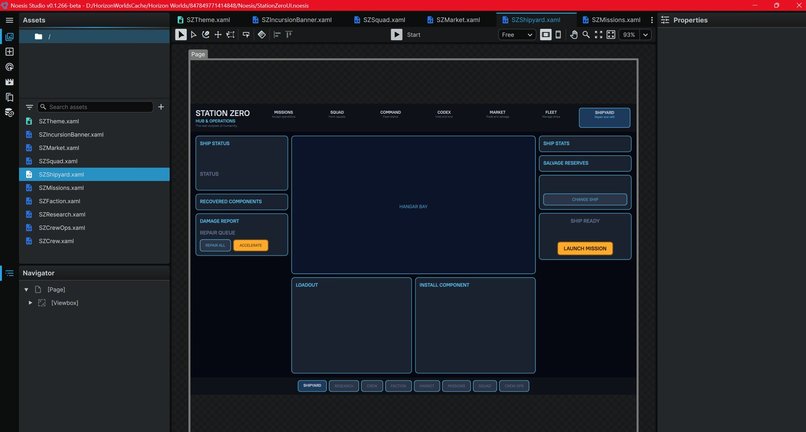
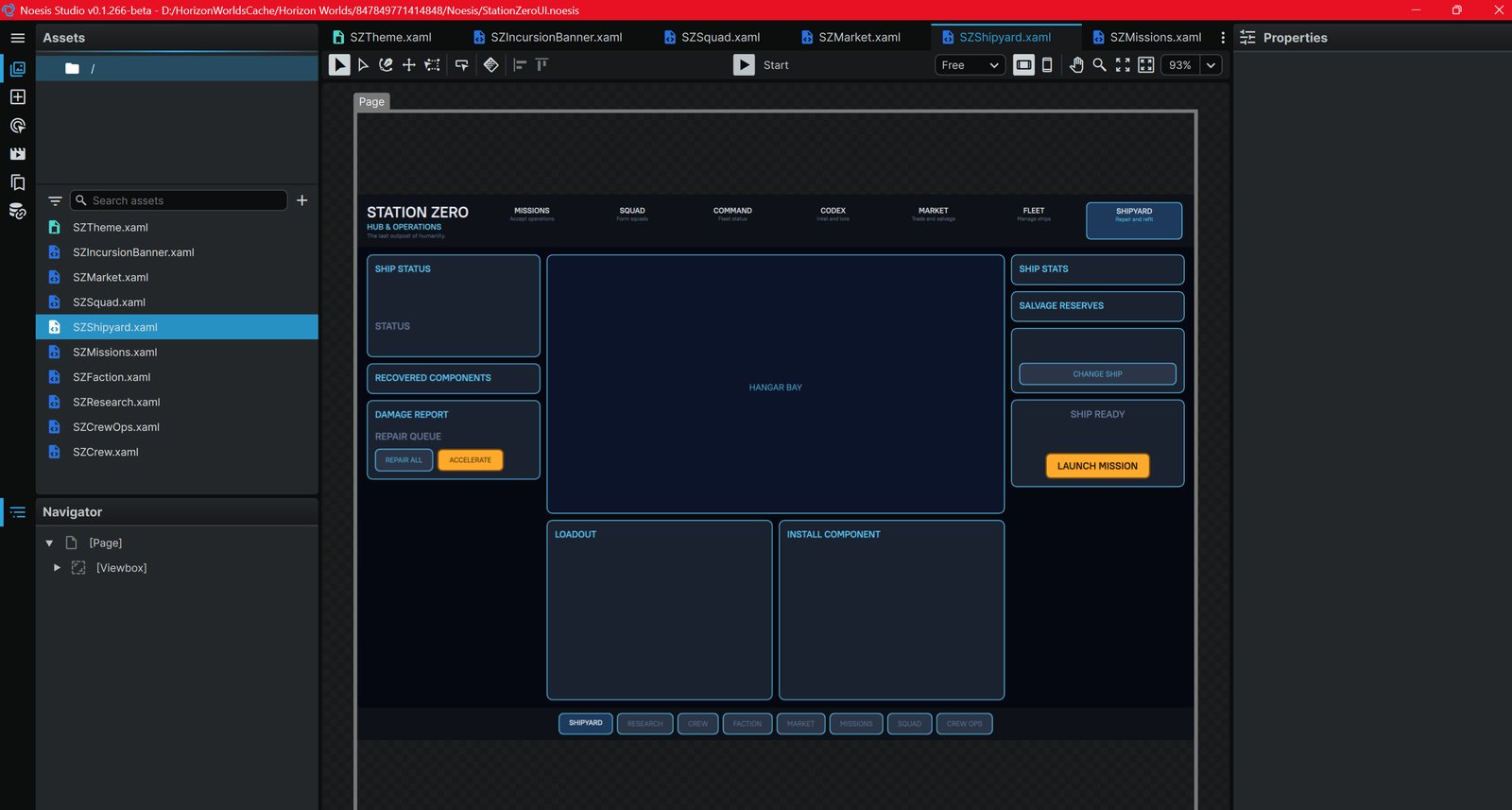
The Horizon-side rebuild: Shipyard hub in Noesis — ship status, hangar, salvage, loadout, install-component, repair queue, 8-screen tab nav.
-
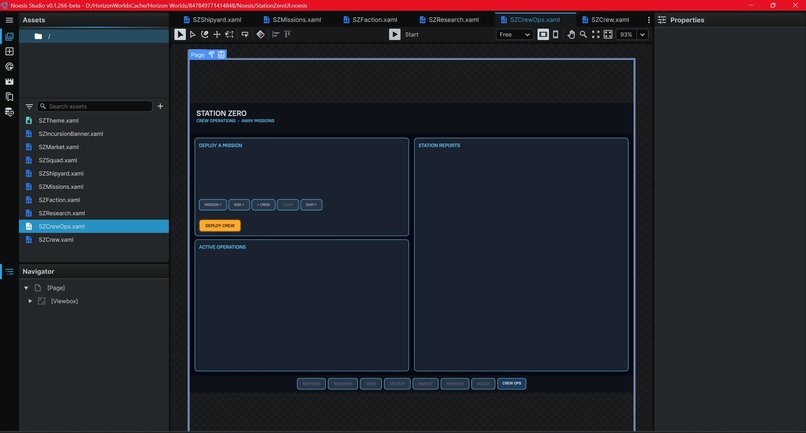
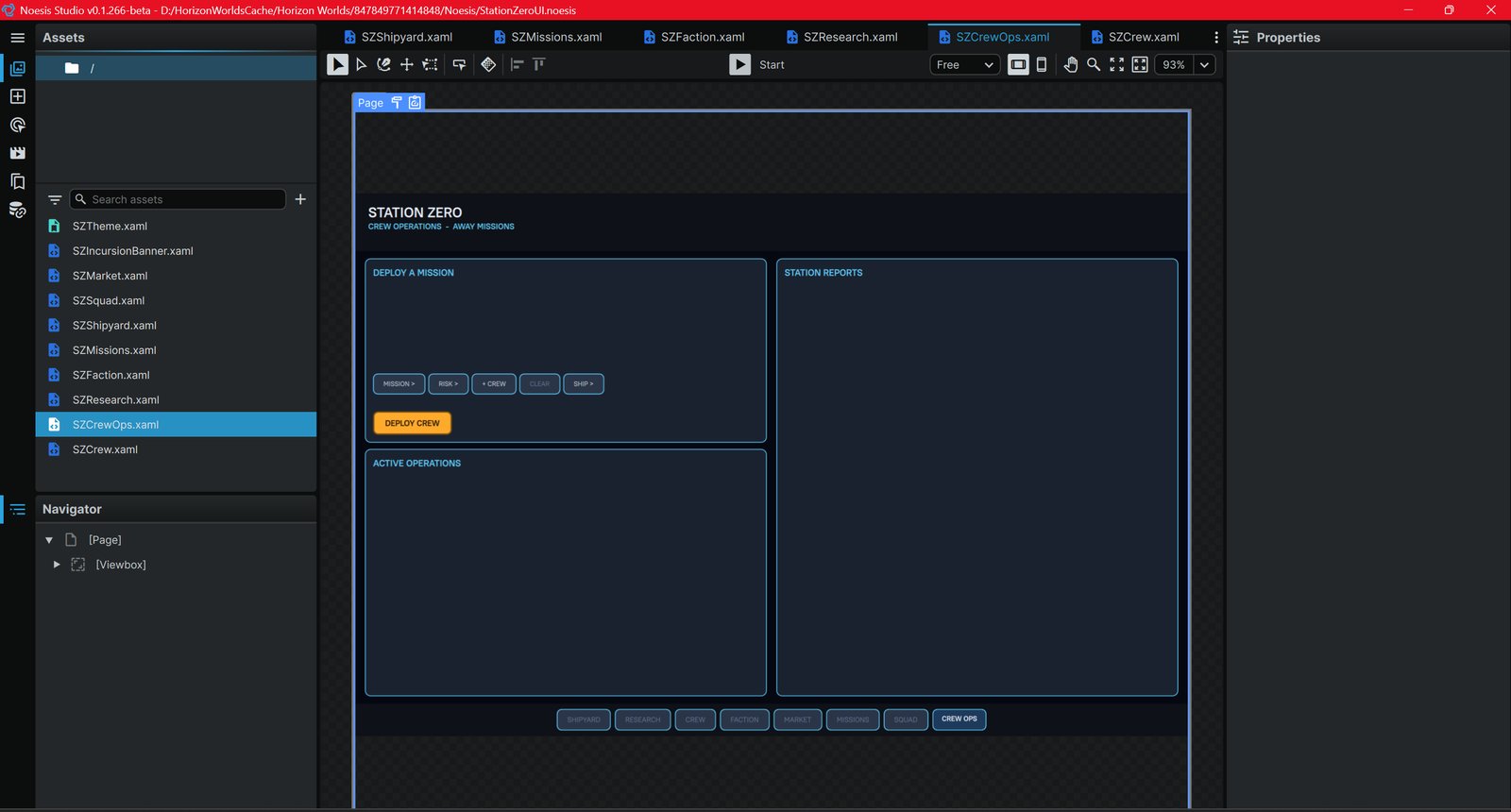
Crew Operations / Away Missions in Noesis: deploy crew (flavor/risk/crew/ship), track active operations, read Station Reports on return.
Inspiration
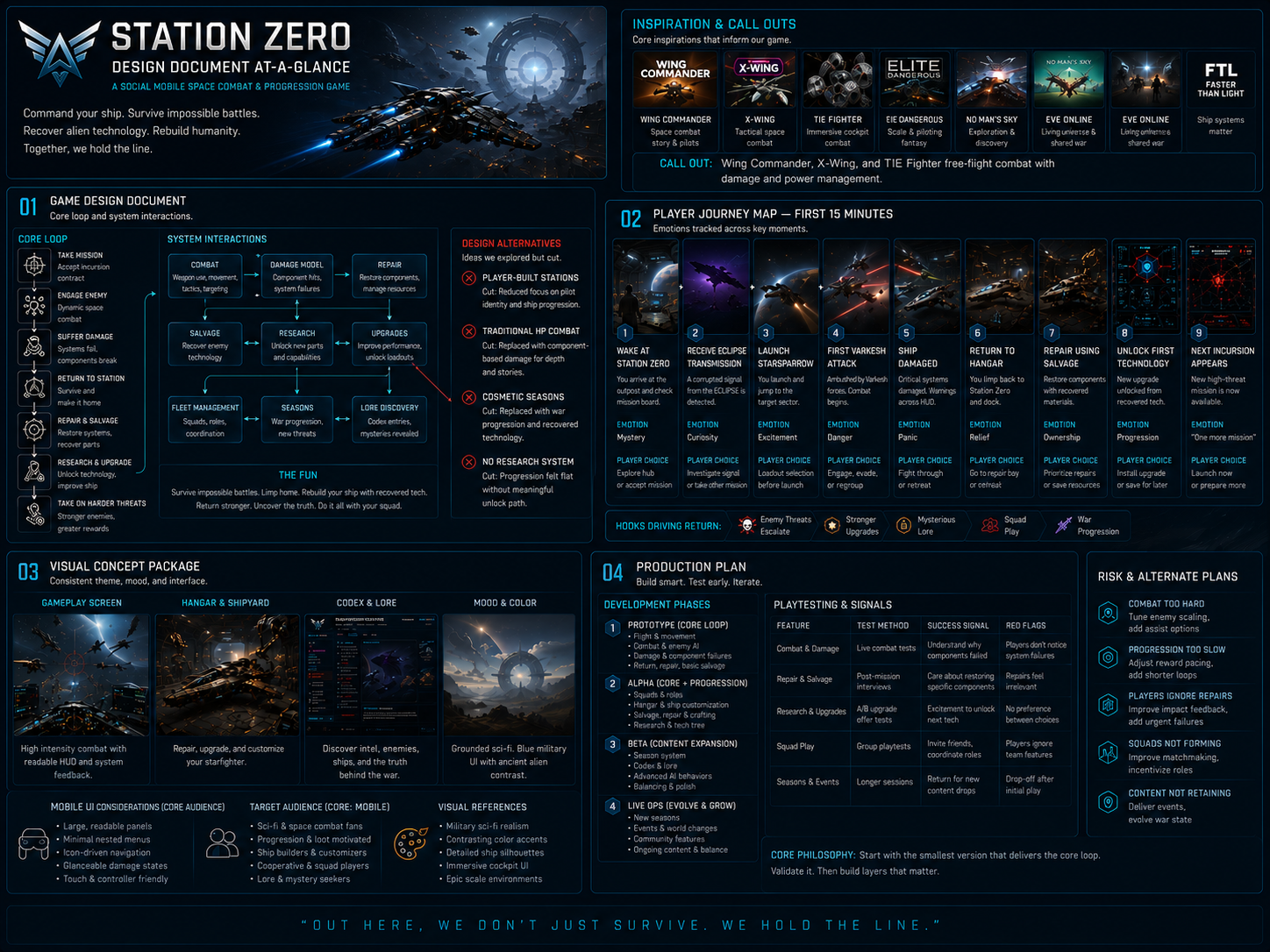
We kept coming back to the same question: why hasn't anyone built a genuinely consequential strategy game inside a social, persistent platform? The games that hit hardest weren't the ones with the best graphics — they were the ones where losing something meant something. FTL: Faster Than Light proved that decisions under pressure create emotional attachment faster than any cutscene. XCOM demonstrated that a named soldier who doesn't come home from a mission creates grief no scripted narrative can manufacture. Homeworld showed that a fleet carrying its history visually — the scars, the salvage, the mismatched plating — builds investment no single-session game can replicate. We asked: what if those emotional mechanisms lived inside a persistent, social, mobile-native world where the war keeps moving whether you log in or not? What if the fleet you built was visible to your community, your faction relationships had real political weight, and the gap between what you want to protect and what the war forces you to sacrifice was where the game actually lived? That question became Station Zero: Gatefall.
What it does
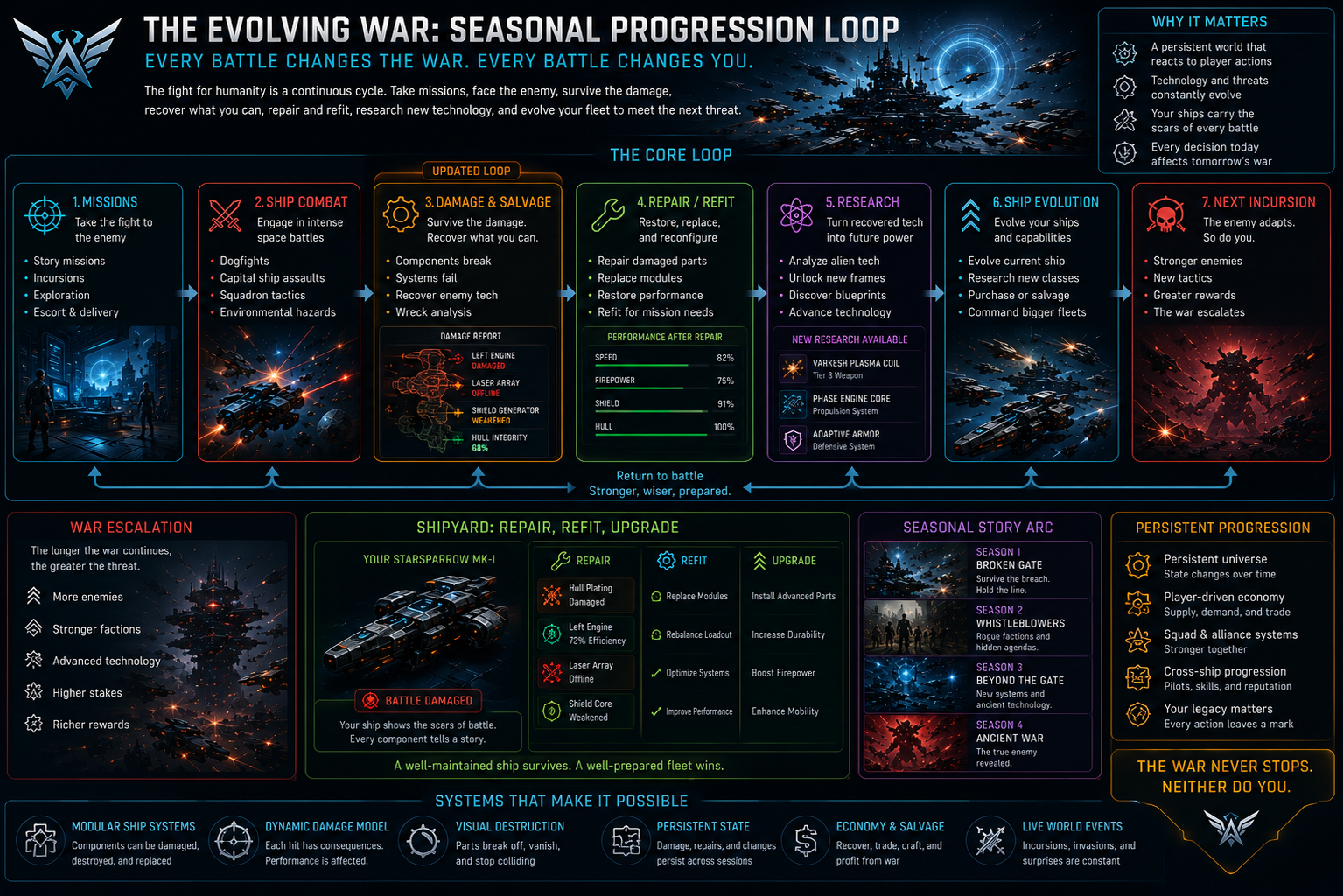
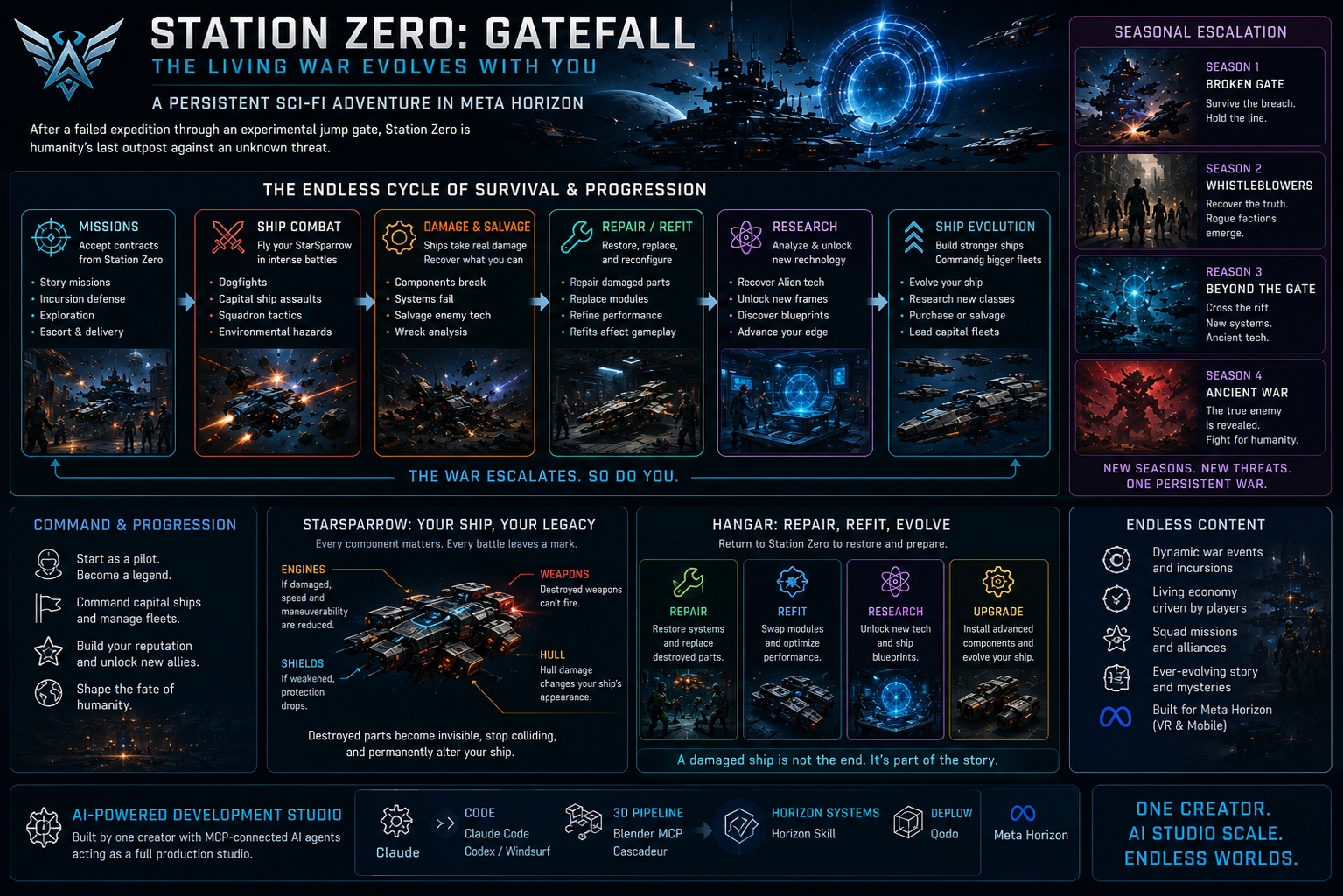
Station Zero is a fleet-building management game for Meta Horizon Worlds. You are not the commander of the station — you are a surviving pilot who became a fleet captain because the people who were supposed to be in charge didn't make it. Every ship in your fleet was salvaged or rescued. Every captain serving under you survived at least one mission that could have ended differently.
The core tension is permanent: Station Zero needs resources from trade routes and protection from Varkesh incursions. You cannot staff both at full strength simultaneously. Every shift is a decision cycle where the cost of each choice is visible in what is left undefended.
The Varkesh are adaptive. They are not a conventional military force — they consume territory rather than hold it, communicate through behavior rather than language, and remember what worked against them. A player who runs defensive patrols on a fixed schedule will find that schedule anticipated. A player who has used the same ship configuration for three sessions will find it countered. The war learns.
The fleet is a biography. Ships carry visible damage from past missions — patch-welded hull sections, repurposed components from different factions, markings that identify their origins. Captains accumulate histories. When a ship is lost, the player loses the story attached to it, not just a stat block. No two players who have run the same number of sessions will have the same fleet, because no two players made the same calls under pressure.
The station is alive between sessions. The Varkesh operate on a pressure schedule that advances whether the player is logged in or not. A player who checks in regularly gets a manageable war. A player who returns after two days gets a crisis — a faction relationship degraded from an undefended corridor, a ship that needed repair and didn't get it, a front that moved. This is not punishment. It is consequence. The station reflects what you left behind.
How we built it
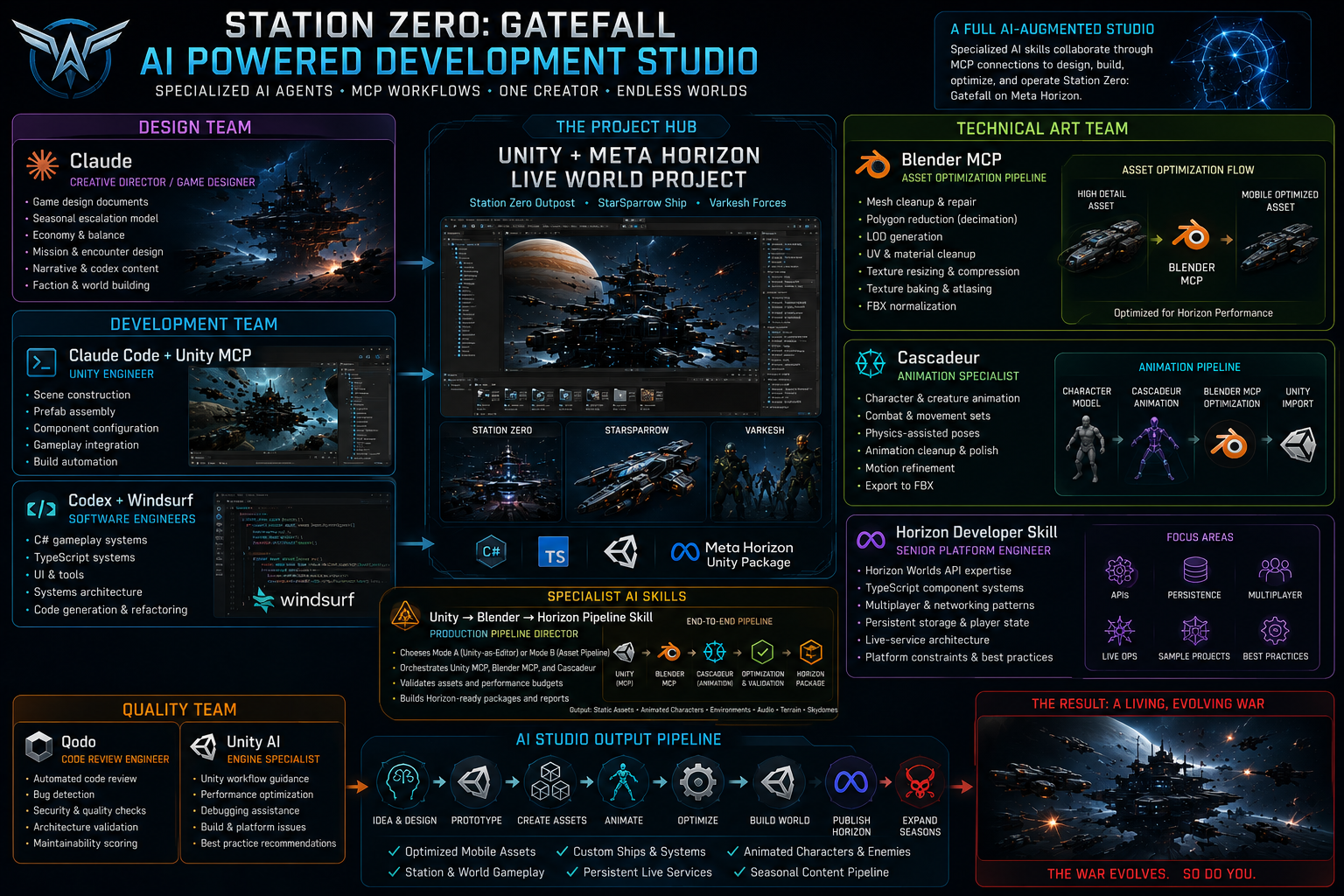
Station Zero is built by a small group of collaborators with a fully integrated AI development studio — specialized AI agents collaborating through MCP connections to design, build, optimize, and operate the game in parallel.
Design Team
BearKingLeo — Creative director managing high level planning and design. Claude (Game Designer) — game design documents, seasonal escalation model, economy & balance, mission & encounter design, narrative & codex content, faction & world-building
Development Team & SME
Claude Code + Unity MCP (Unity Engineer) — scene construction, prefab assembly, component configuration, gameplay integration, build automation Codex + Windsurf (Software Engineers) — C# and TypeScript gameplay systems, UI & tools, systems architecture, code generation & refactoring
Unity AI (Engine Specialist) — workflow guidance, performance optimization, debugging assistance, best practice recommendations
A Claude skill trained a Horizon Developer acts as the Senior Platform Engineer and architects using Horizon Worlds API, TypeScript component systems, multiplayer & networking patterns, persistent storage & player state, and live-service architecture.
Technical Art Team
Claude Skill running Blender MCP (Asset Optimization Pipeline) — mesh cleanup, polygon reduction, LOD generation, UV & material cleanup, texture baking & atlasing, FBX normalization for Horizon's mobile performance budgets Cascadeur (Animation Specialist) — character & creature animation, combat & movement sets, physics-assisted poses, export to FBX
Quality Team
Qodo (Code Review Engineer) — automated code review, bug detection, security & quality checks, architecture validation
The production pipeline runs: Idea & Design → Prototype → Create Assets → Animate → Optimize → Build World → Publish Horizon → Expand Seasons. Every stage is augmented — not replaced. The AI handles generation velocity; the human handles creative judgment and player experience decisions.
Assets use a modular build system: ship hulls, module slots, damage states, faction markings, and repair patches are separate layers. This produces the visual variety of dozens of distinct ships with a fraction of the traditional asset count. A new ship class is a new hull and a set of module configurations — the damage and repair vocabulary is already built.
Challenges we ran into
Building a living war that isn't punishing. The line between "consequence" and "punishment" is razor thin in persistent games. A session gap that makes the game harder must feel earned — the player must believe the station moved on because the war moves, not because the game is penalizing absence. Getting that tone right in the mission briefing text and the faction response timing required many iterations.
Adaptive enemy design without a custom ML backend. The Varkesh need to remember player patterns and change behavior between sessions — on Horizon's infrastructure, without a dedicated server running opponent AI between play sessions. The solution is a deterministic behavioral fingerprint: the Varkesh response is computed from a hash of the player's last NNN tactical decisions stored in persistentStorage, producing an adaptive response on session load without any live inference.
Mobile performance with meaningful visual variety. Each ship needs to look like it has a history — different damage states, mixed faction components, repair patches — while staying within Horizon's mobile polygon budgets. The Blender MCP pipeline handles per-asset decimation and LOD generation, but designing the modular system so that visual variety didn't overwhelm the asset count and texture limitations required rethinking the entire ship component architecture.
Emotional hooks that work without audio cues. Mobile play is often silent. The fleet attachment system — naming ships, captain histories, visible damage — had to carry emotional weight through interface design and text alone. A captain shown as available-but-low-loyalty needs to read differently from one who is trusted, without a narrator explaining it.
One creator, one designer, and a full studio pipeline. Coordinating AI agents that each own a domain — and ensuring their outputs are consistent with each other — is a new kind of production challenge. The designer provides requirements and Abobe Firefly or Blender MCP produce assets that Claude Code then imports; Cascadeur exports models and animations; the Horizon Developer Skill plans all features to optimize look and performance using the Horizon API. Keeping the pipeline coherent is a human coordination problem the tools don't yet solve automatically.
Built With
- adobe-firefly
- chatgpt
- claude
- claude-skill
- horizon-api
- photon-networking
- photoshop
- typescript
- unity
- unity-mcp
- visual-studio


 The Unity prototyping lab — the Station Zero project: station, a kitbashed fighter, Jupiter, and the incursion systems auto-building the combat HUD.
 Squad command — coordinating multiple ships against a Varkesh raid group.
Log in or sign up for Devpost to join the conversation.