-
-

01-stateside-landing
-
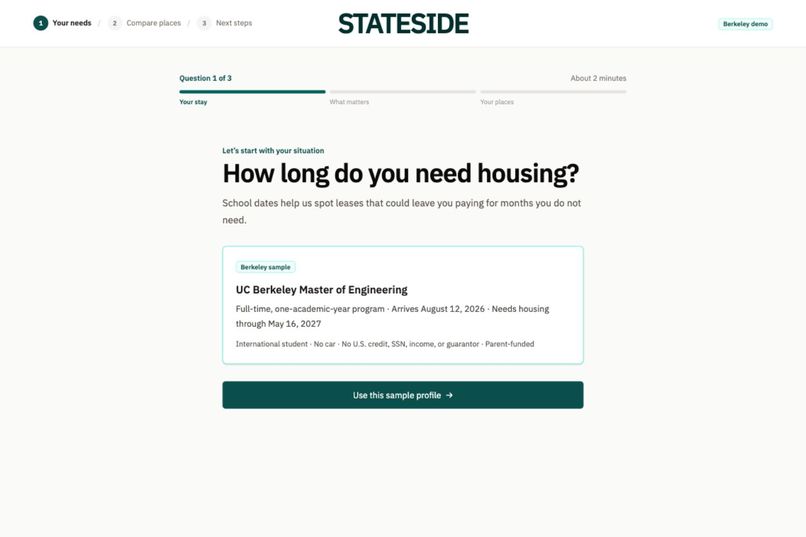
02-guided-setup
-
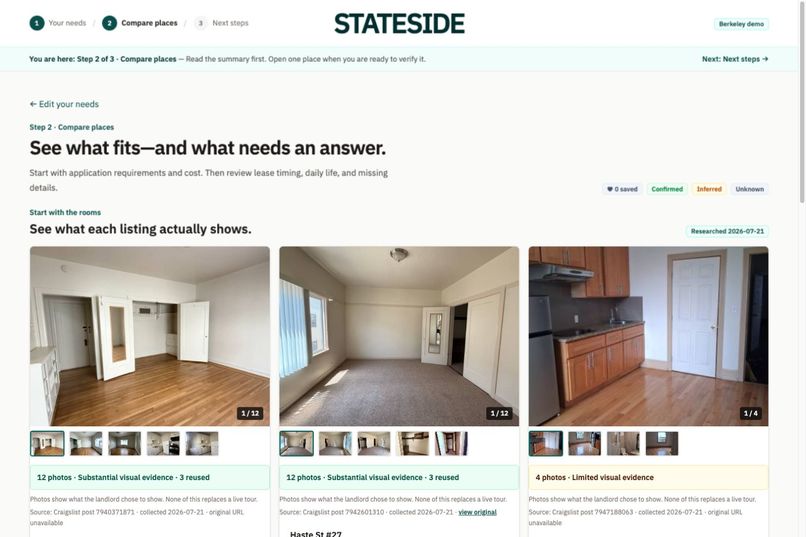
03-visual-comparison
-
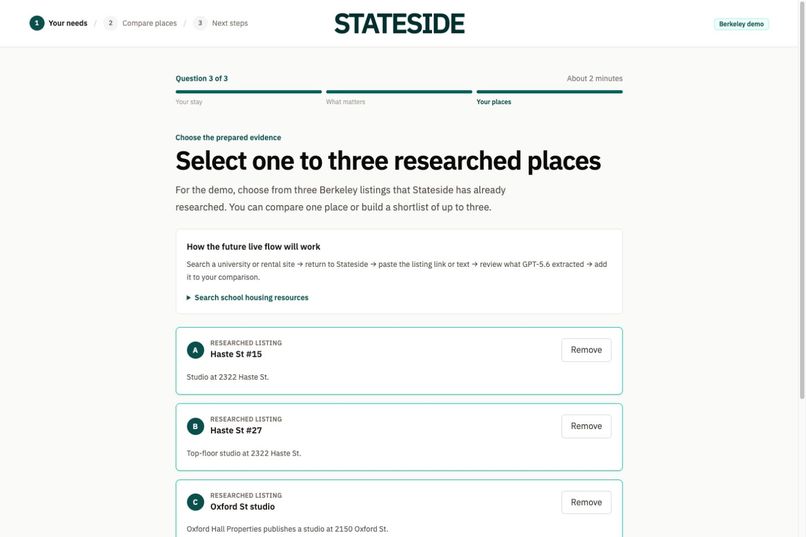
04-listing-selection
-
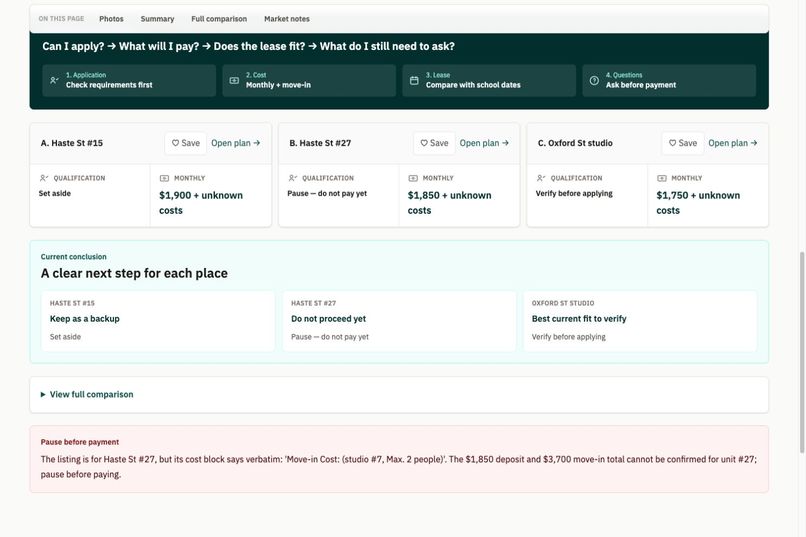
05-decision-summary
-
07-student-priorities
-
09-qualification-guide
-
06-verification-plan
-
08-school-resource-directory
-
13-landlord-message
-
14-oxford-decision-plan
-
11-market-research
-
10-full-comparison-table
-
12-photos-and-location

About the project
Stateside is a housing comparison and preparation tool for international students renting in the United States. It brings information from rental listings, landlord messages, university resources, and lease terms into one clear view.
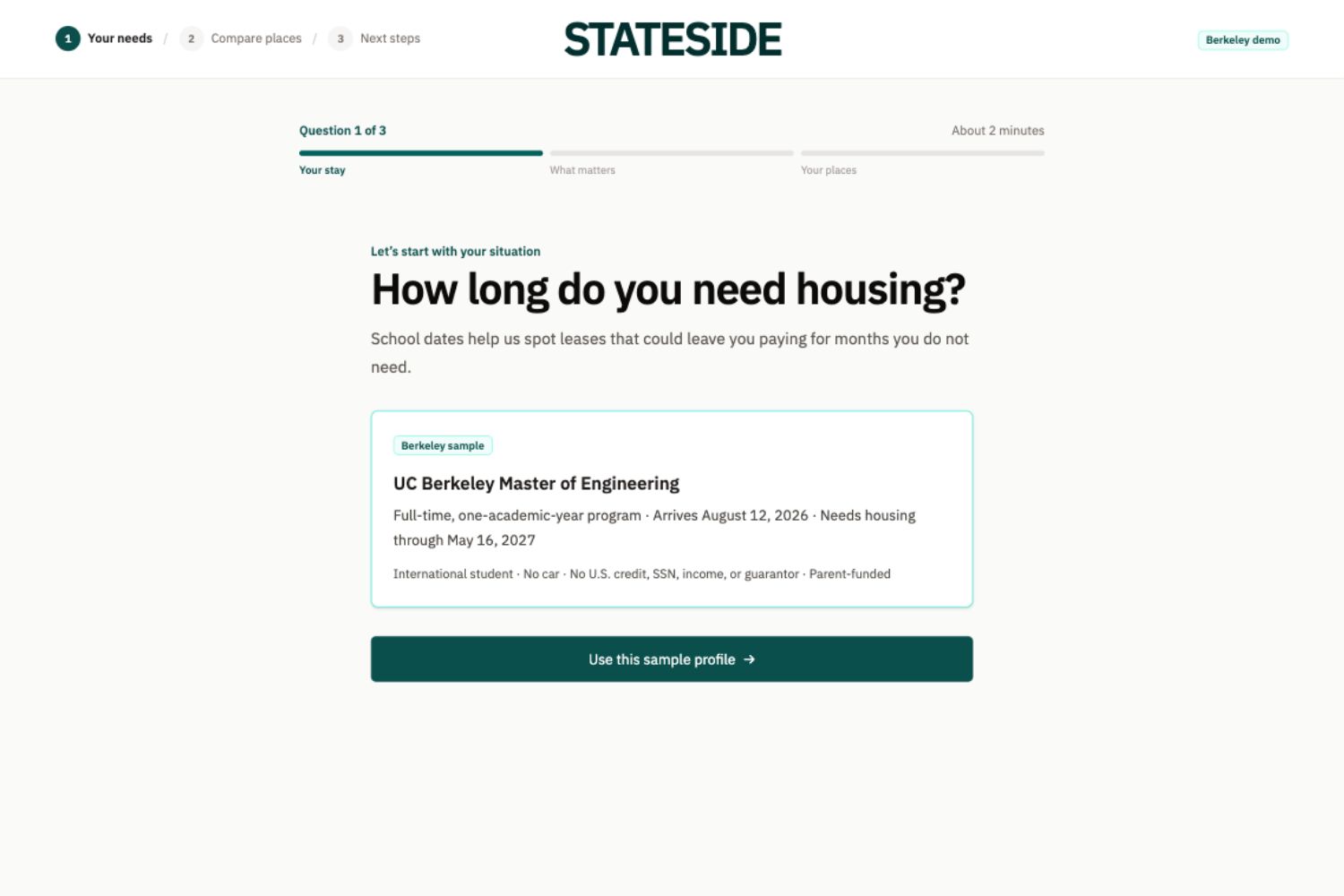
Students can compare costs, qualification requirements, lease dates, photos, transportation, and missing information before applying or paying. Stateside then explains the tradeoffs, identifies what still needs to be verified, and provides practical next steps and questions to ask.
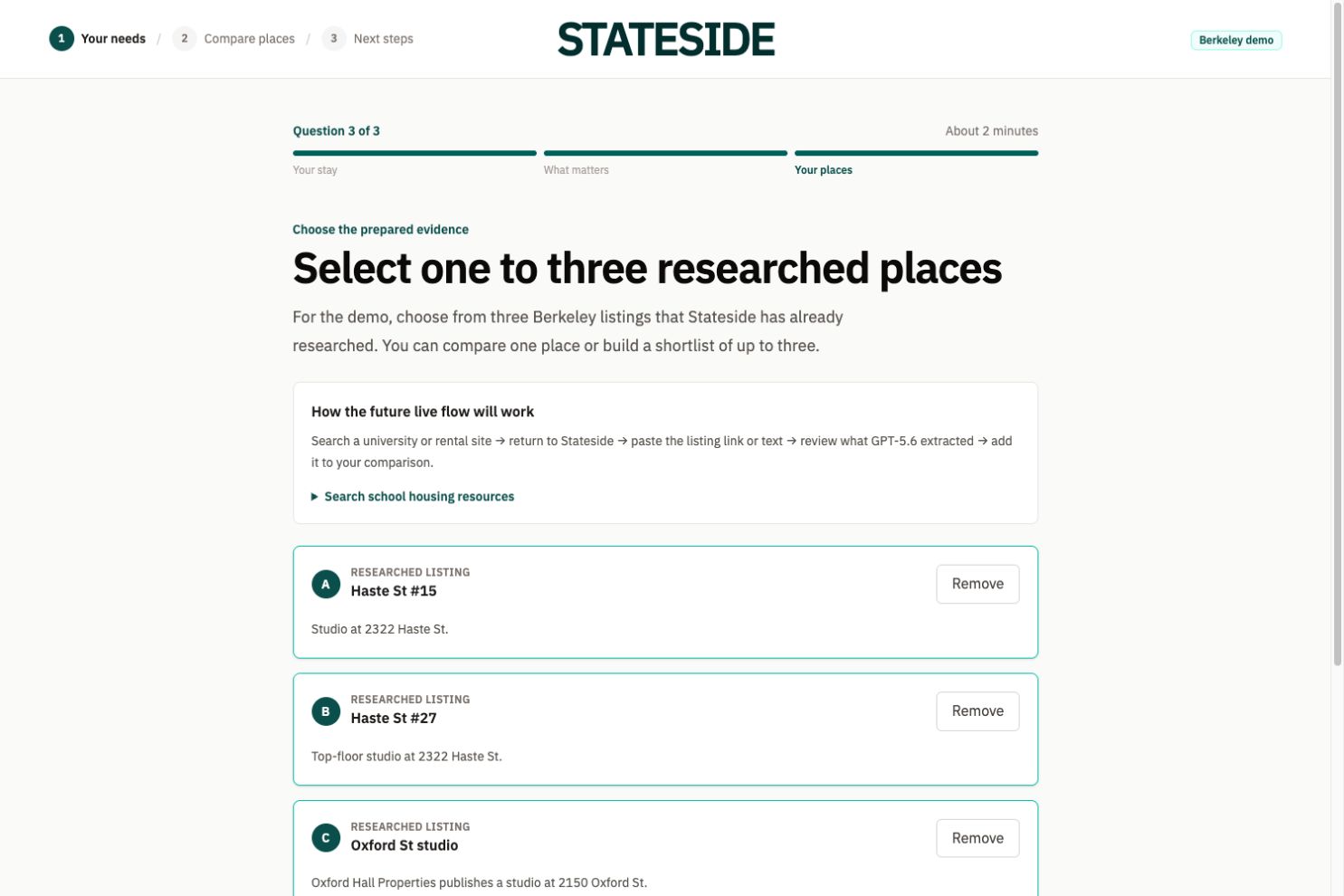
The current demo uses a researched UC Berkeley graduate student scenario with three public rental listings. It demonstrates how Stateside can help a student move from scattered housing information to a more informed and confident decision.
Inspiration
Stateside was inspired by my experience searching for private housing as an international student. Finding a listing was only the beginning. Important information about rental qualifications, lease dates, deposits, transportation, furnishings, and application requirements was scattered across university resources, rental websites, landlord messages, and maps.
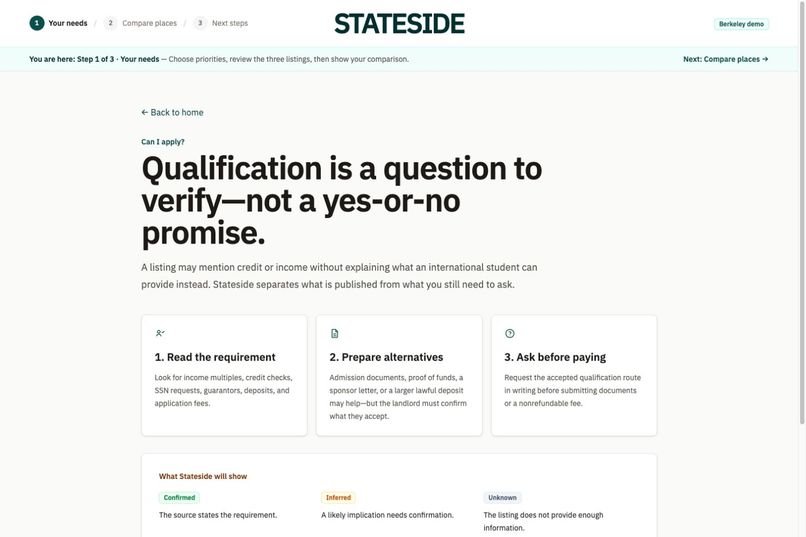
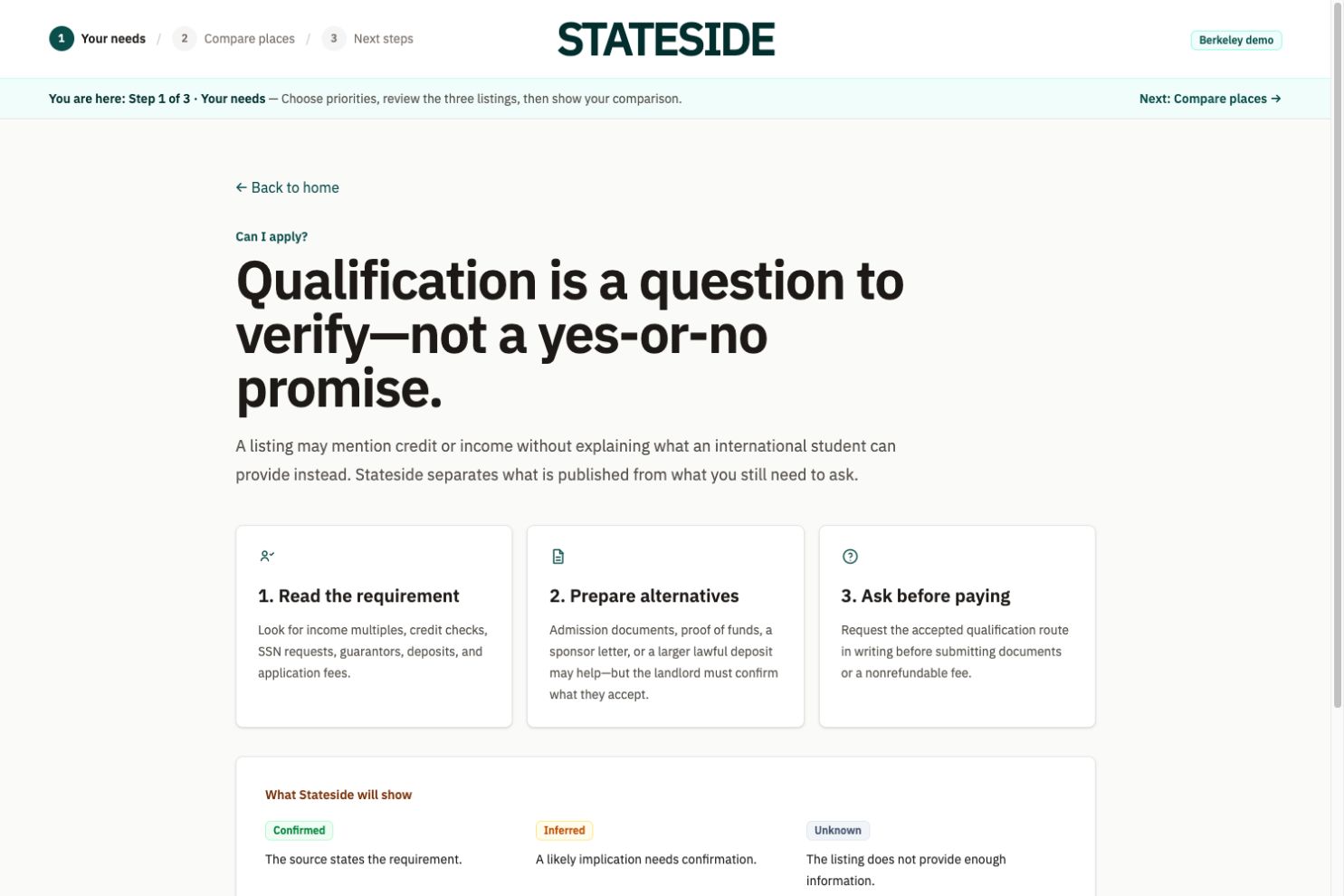
International students may also be unfamiliar with United States rental practices. Some arrive without United States credit, an SSN, local income, rental history, or a domestic guarantor. A listing can look promising while still leaving important questions unanswered.
I wanted to create a tool that helps students slow down, organize the evidence, and understand what they should verify before applying, sharing documents, signing a lease, or sending money.
What it does
Stateside helps international students compare rental options they have already found.
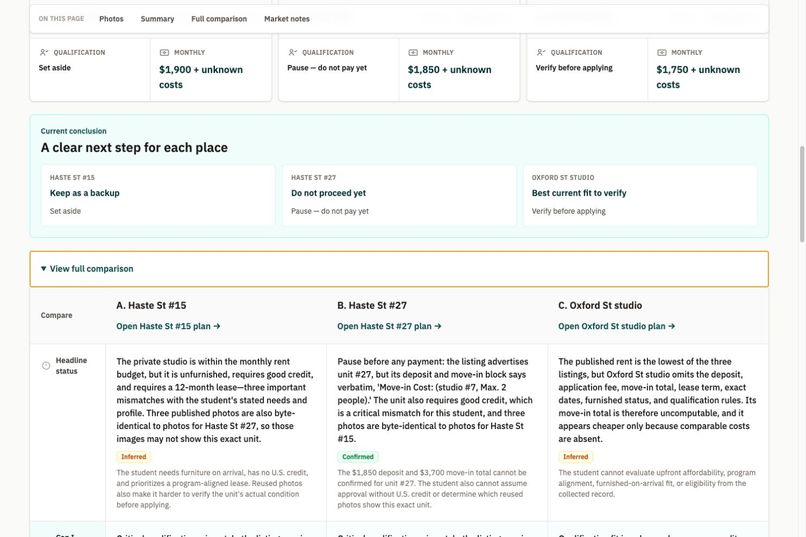
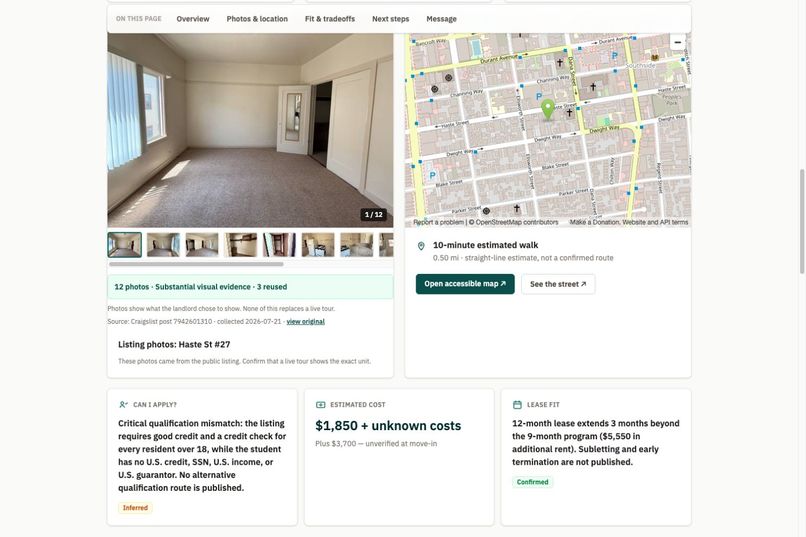
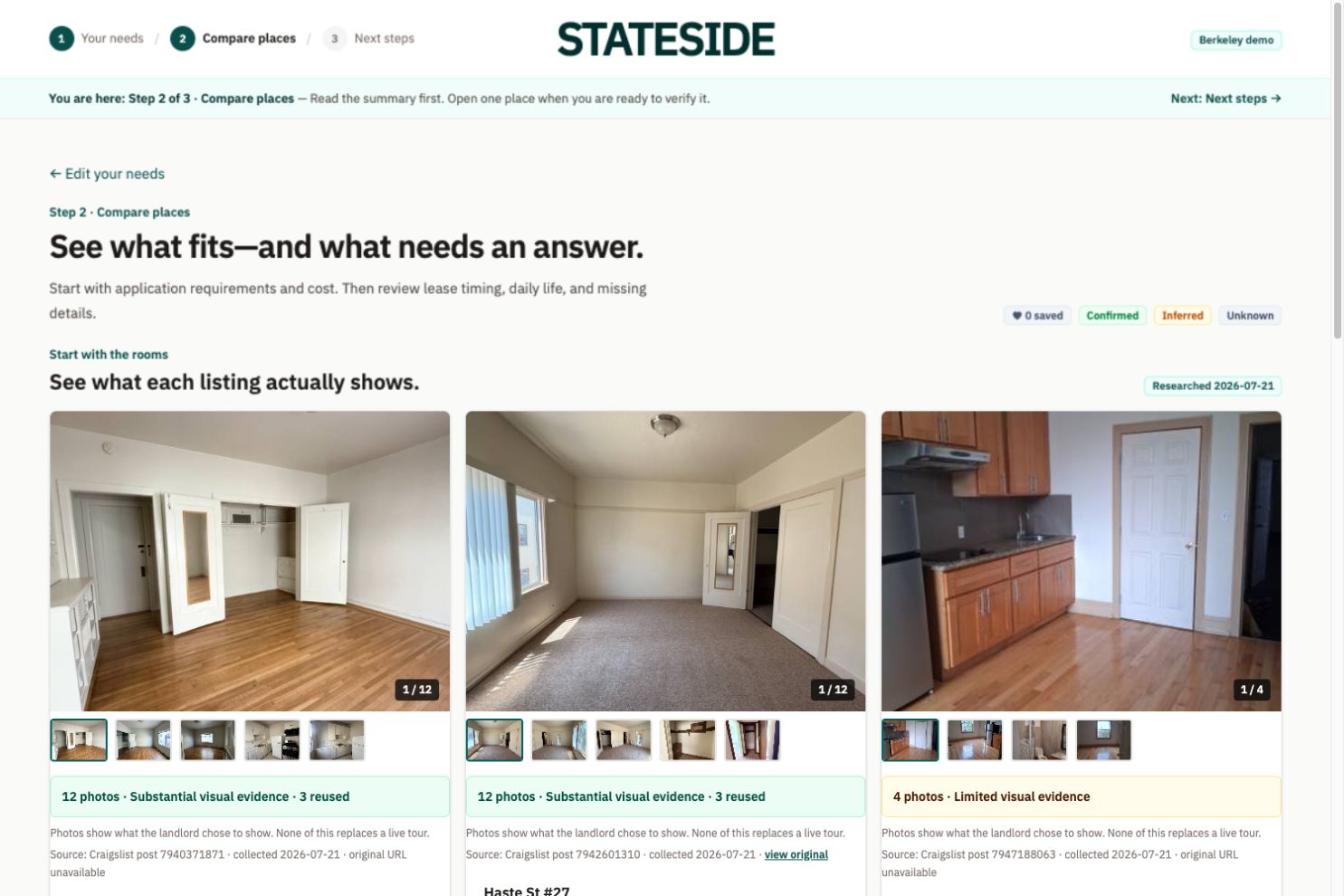
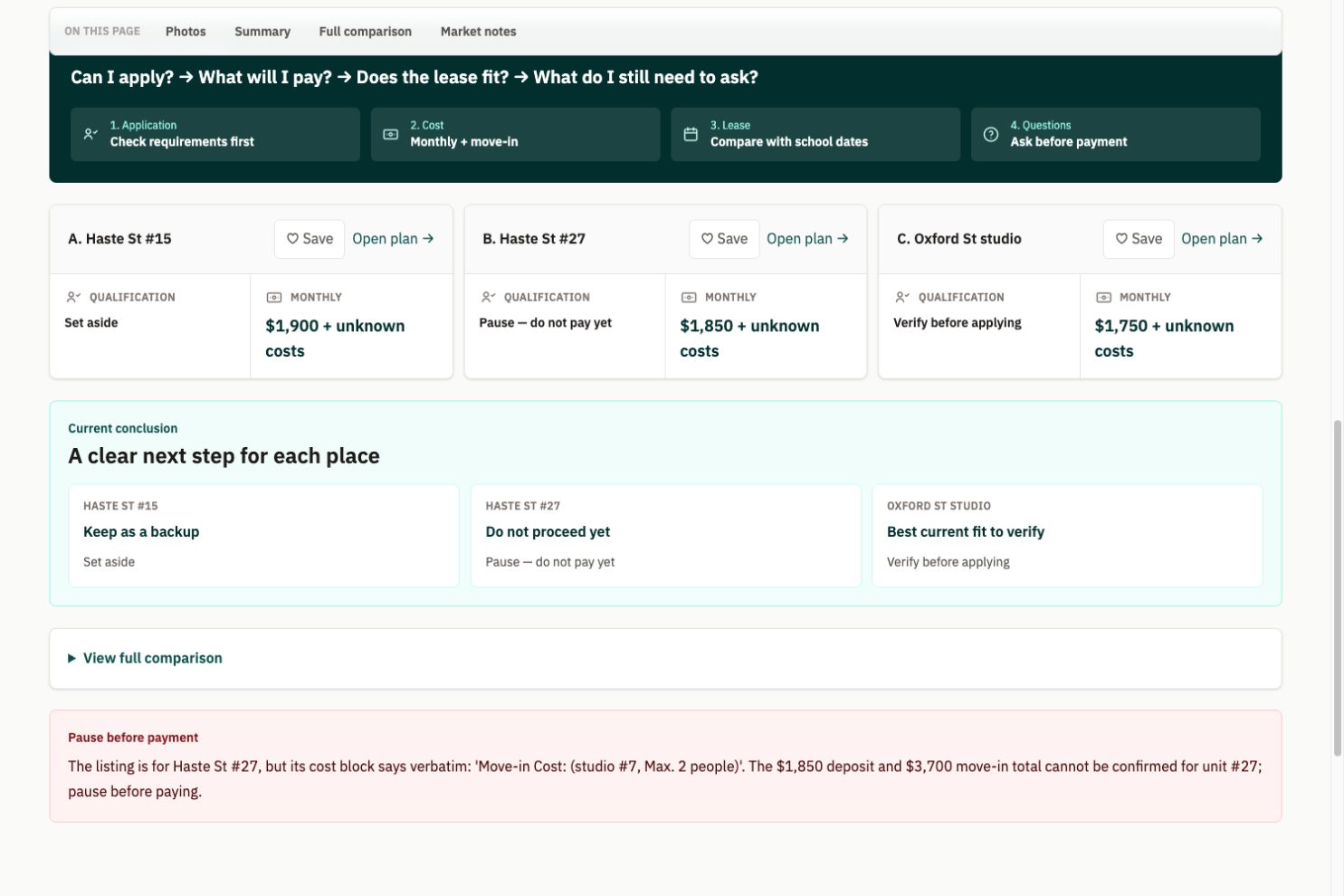
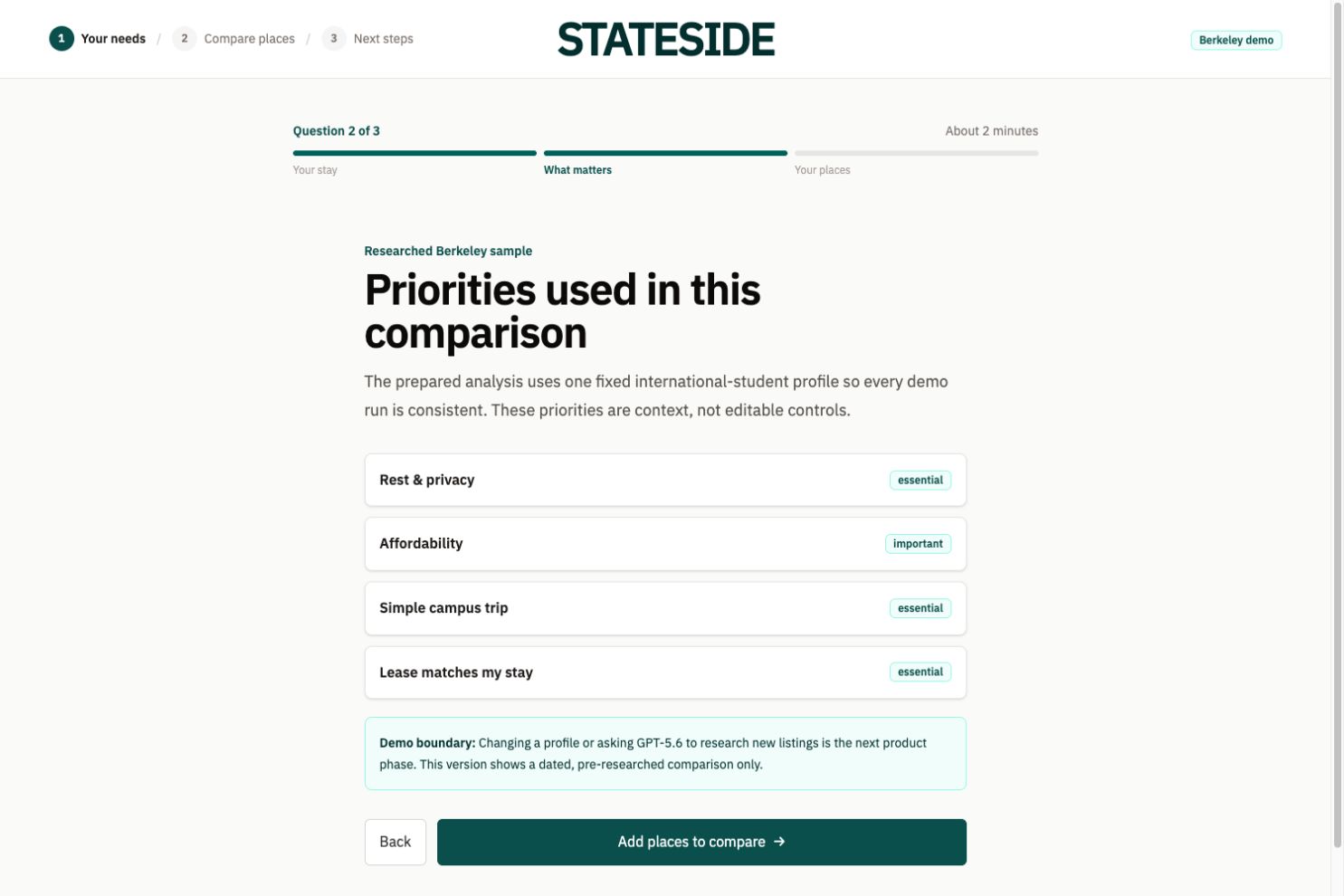
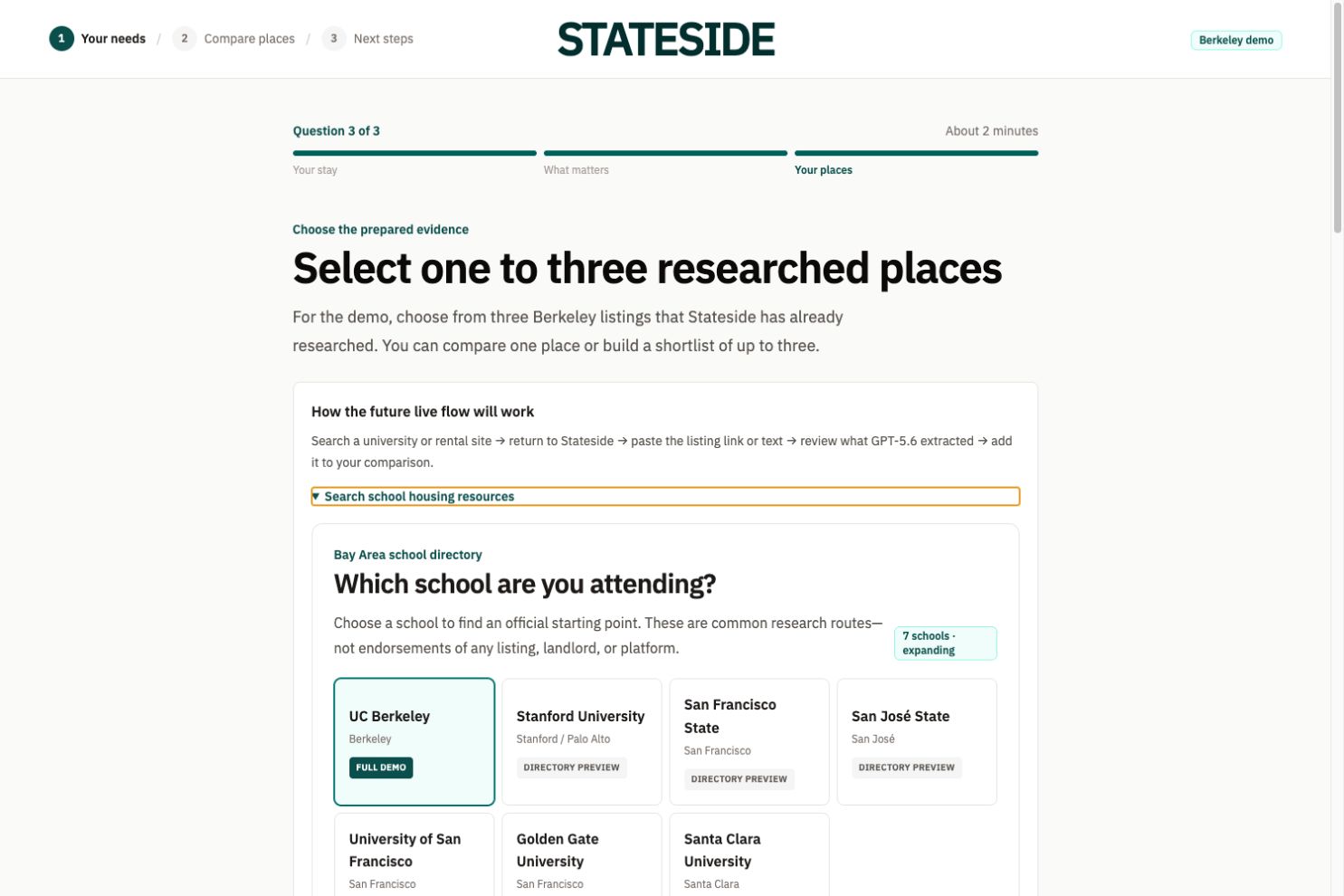
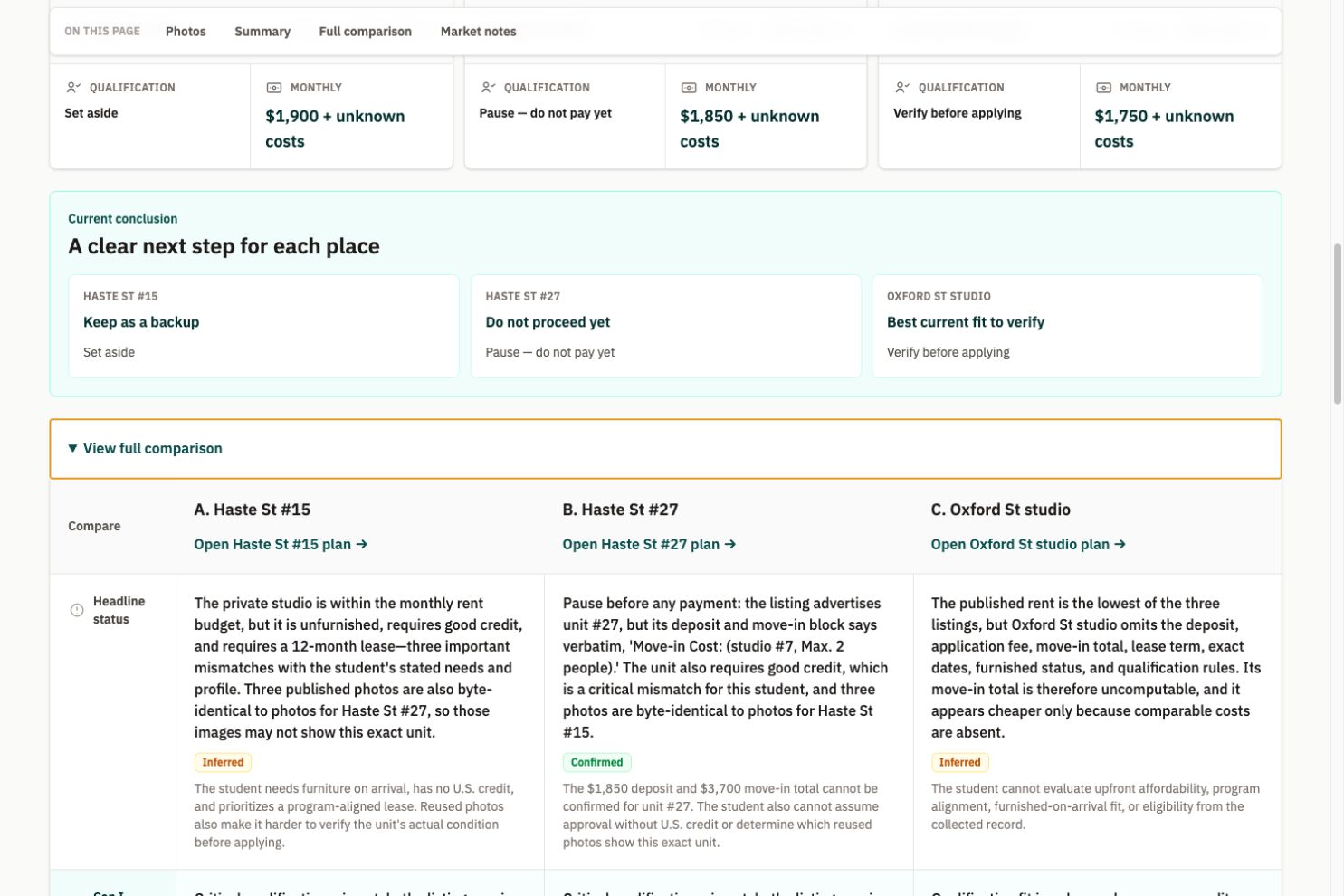
The current demo follows a researched UC Berkeley graduate student scenario. It compares three real public rental listings and brings their photos, rent, move in costs, lease dates, qualification requirements, commute estimates, and missing information into one clear experience.
Instead of producing a mysterious score or declaring one property universally best, Stateside explains the tradeoffs. It separates confirmed information from reasonable inferences and facts that remain unverified.
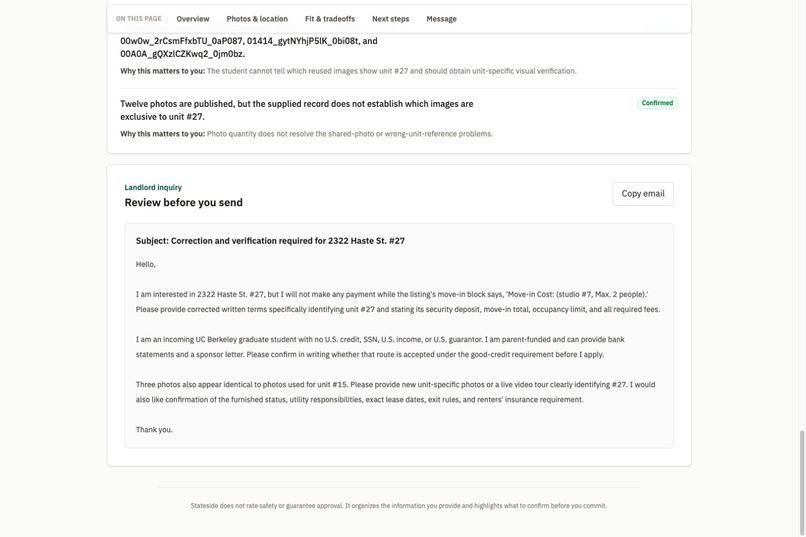
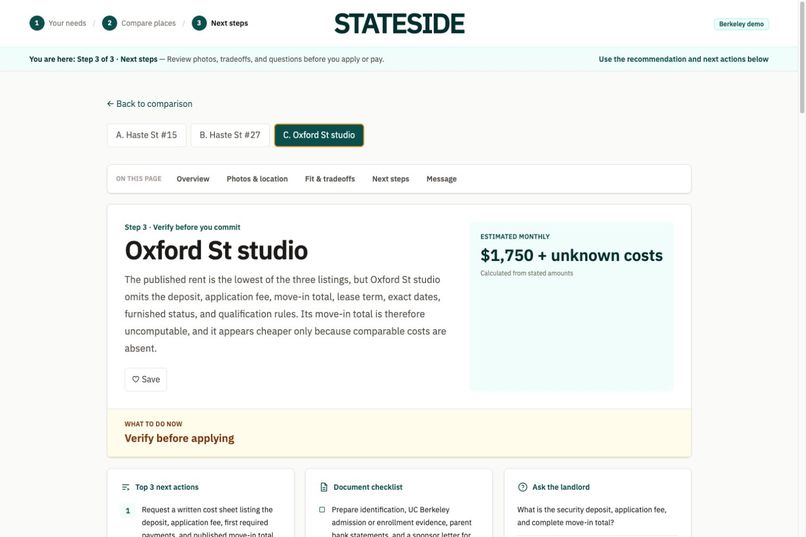
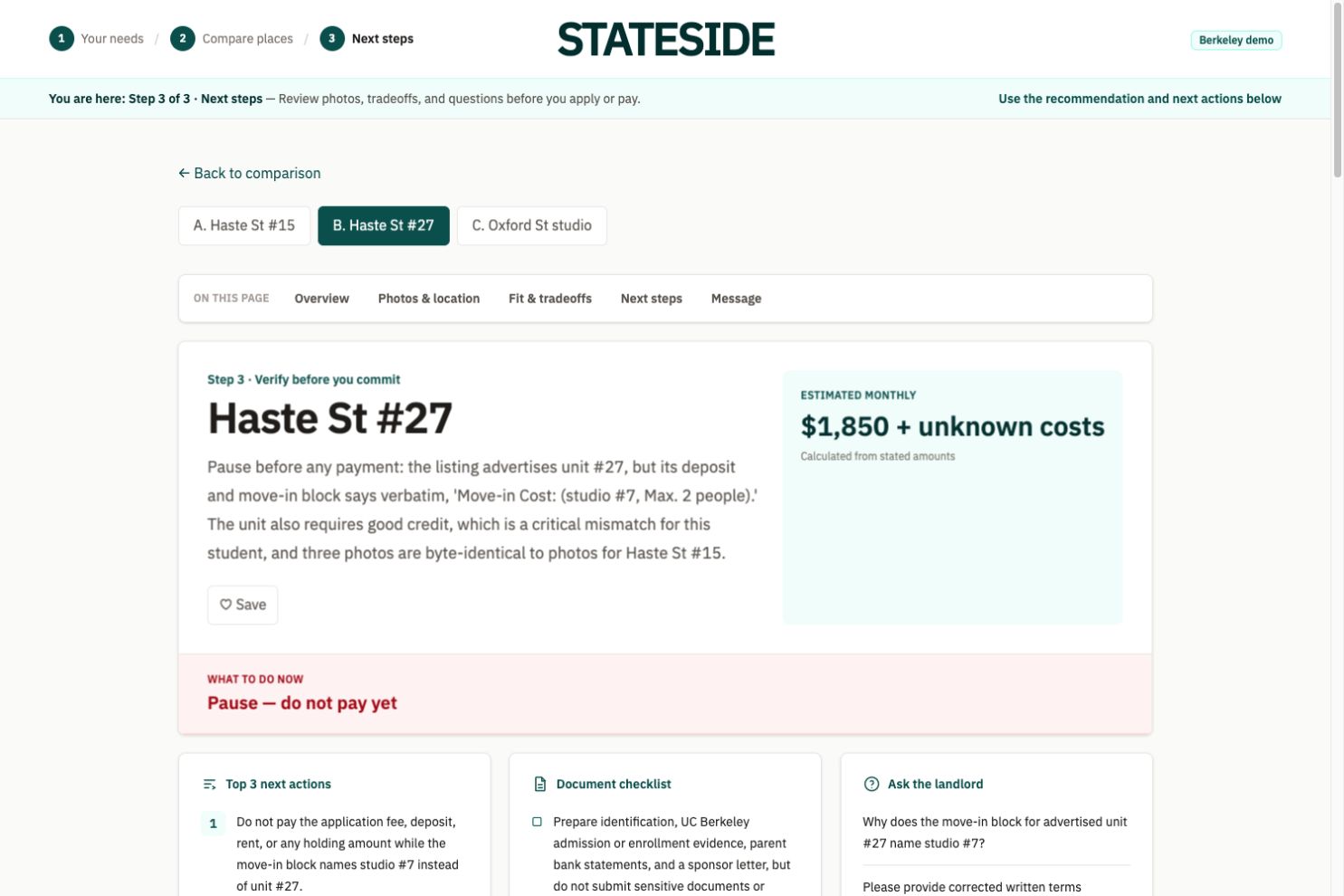
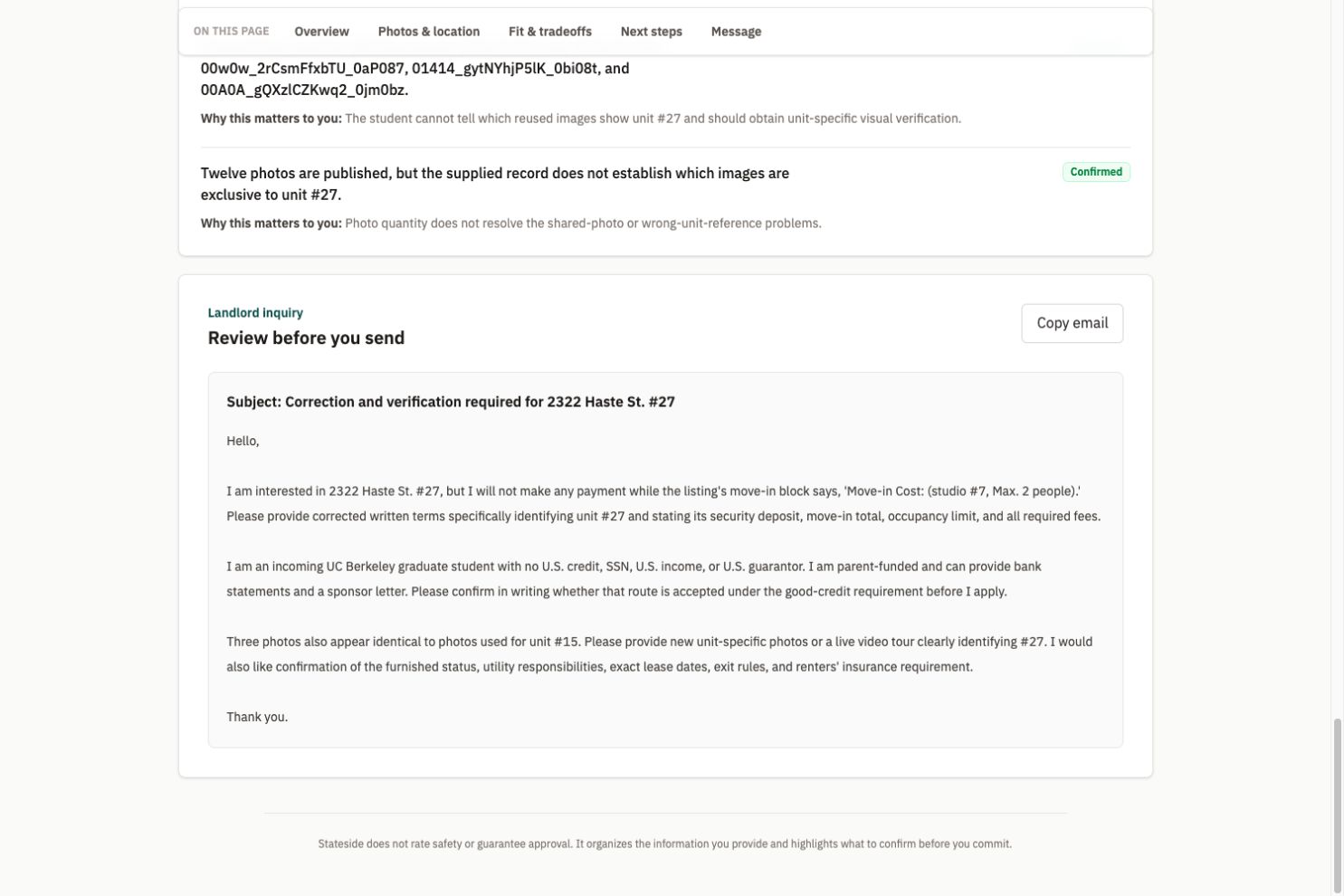
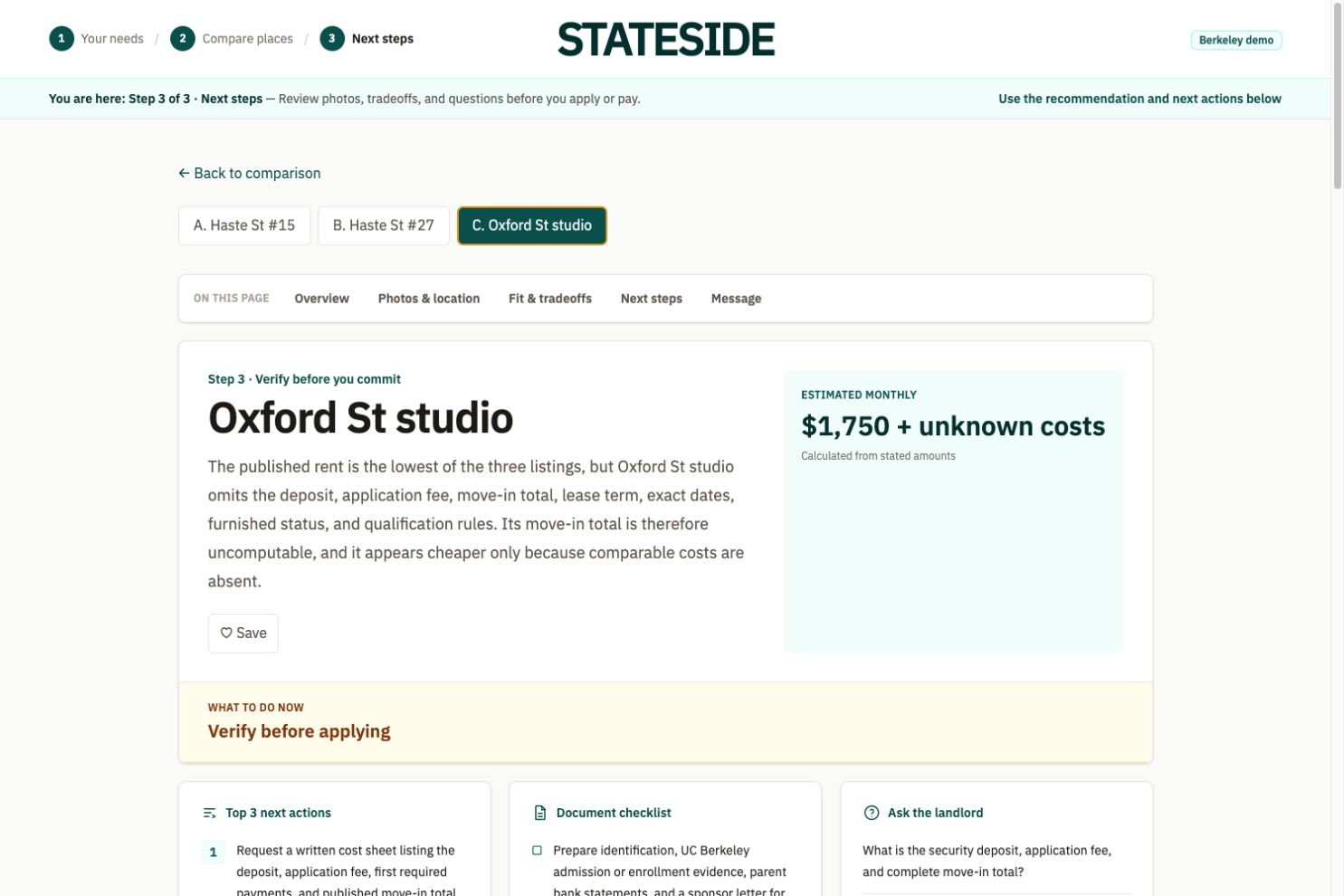
Students can see which options may fit their needs, which questions require answers, and when they should pause before paying. Each property includes prioritized next steps, documents to prepare, questions for the landlord, and a ready to copy inquiry message.
Stateside is not a rental marketplace and does not guarantee approval, legitimacy, or safety. It is a decision and preparation layer that students can use after finding listings and before making a commitment.
How we built it
We built Stateside as a responsive web application using Next.js, React, TypeScript, and a small component system designed around calm, accessible decision making.
GPT 5.6 interprets messy listing descriptions, landlord messages, and lease information through a strict structured output schema. It identifies qualification routes, contradictions, missing details, important cautions, and questions the student should ask.
The application handles exact calculations such as total monthly cost, move in cash, and differences between program and lease dates. Keeping arithmetic in application code makes these results reproducible and testable.
For the competition demo, we generated a complete structured analysis from researched Berkeley listing records and saved the result as a fixture. This gives judges a reliable experience without depending on a live network request during the presentation.
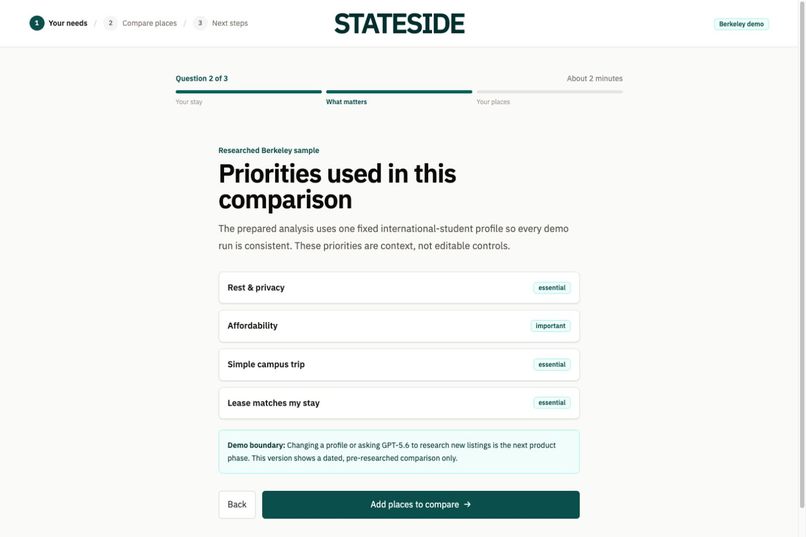
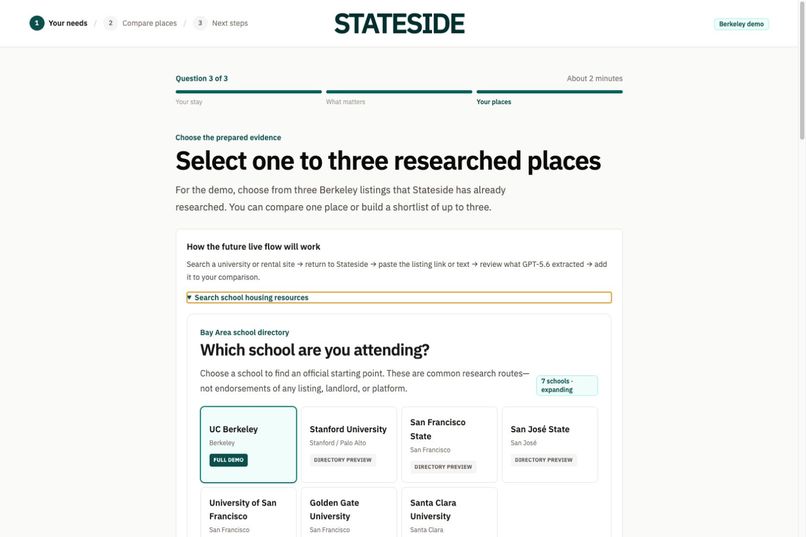
The interface leads users through three stages: understanding their needs, comparing places, and reviewing next steps. It also includes a directory of official housing resources for seven Bay Area schools, while clearly identifying UC Berkeley as the fully researched demo.
Challenges we ran into
One major challenge was deciding where Stateside should fit within the existing housing ecosystem. Rental marketplaces are already effective at helping people discover inventory. We learned that the more valuable opportunity was helping students evaluate listings gathered from different sources.
Another challenge was maintaining consistency between listing descriptions, photographs, property identifiers, and analysis results. We created a shared source of truth and added automated checks so that every visible claim and image refers to the correct listing.
Housing decisions also involve sensitive questions about legitimacy, approval, neighborhoods, and personal circumstances. We needed to provide useful guidance without making unsupported safety claims, legal conclusions, or guarantees. This led us to make uncertainty visible and reserve strong warnings for specific unresolved evidence.
Finally, the amount of housing information could easily overwhelm the user. We repeatedly simplified the experience, moved photos and urgent actions higher, collapsed detailed evidence behind optional controls, and replaced technical language with clear next steps.
Accomplishments that we're proud of
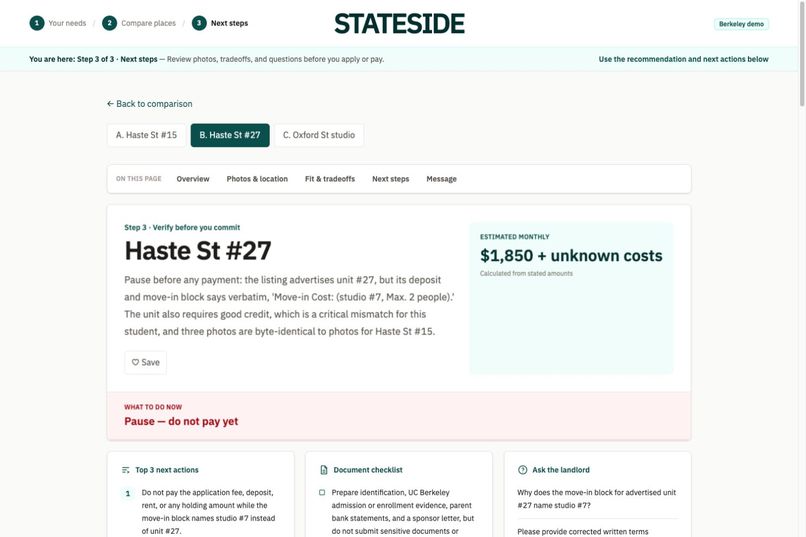
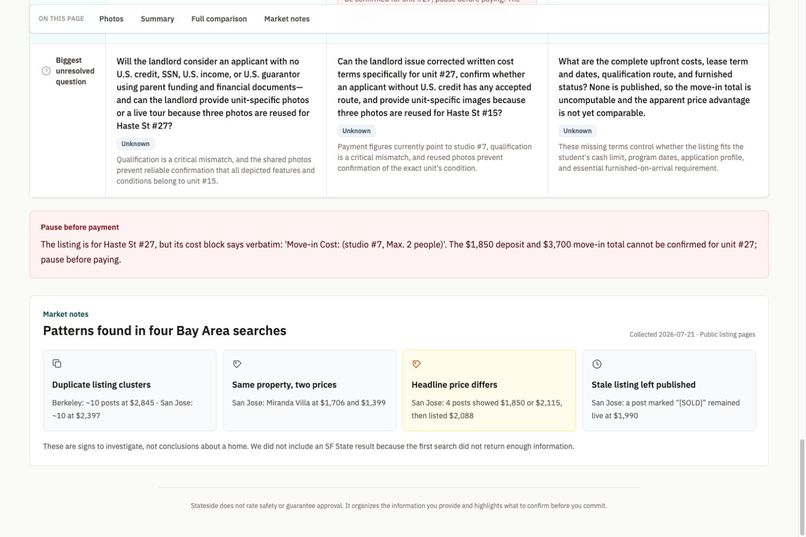
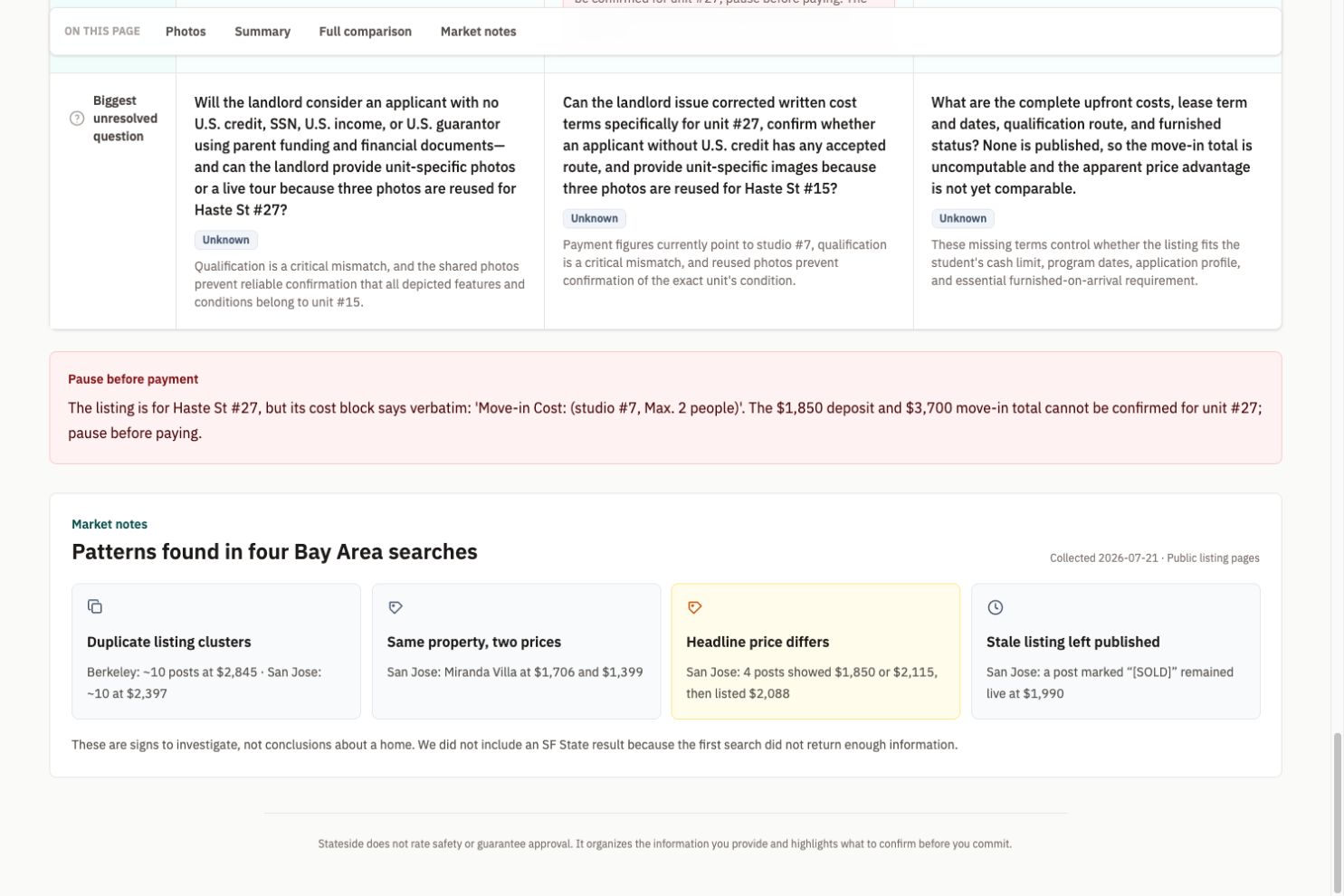
We are proud that Stateside can recommend pausing instead of encouraging a transaction. Because it does not earn revenue from bookings, it can tell a student not to pay when important information remains unresolved.
In the Berkeley sample, Stateside detects that a published move in cost for one listing references a different unit number. Rather than silently accepting the amount, the product marks it as unverified and places the listing in a pause state.
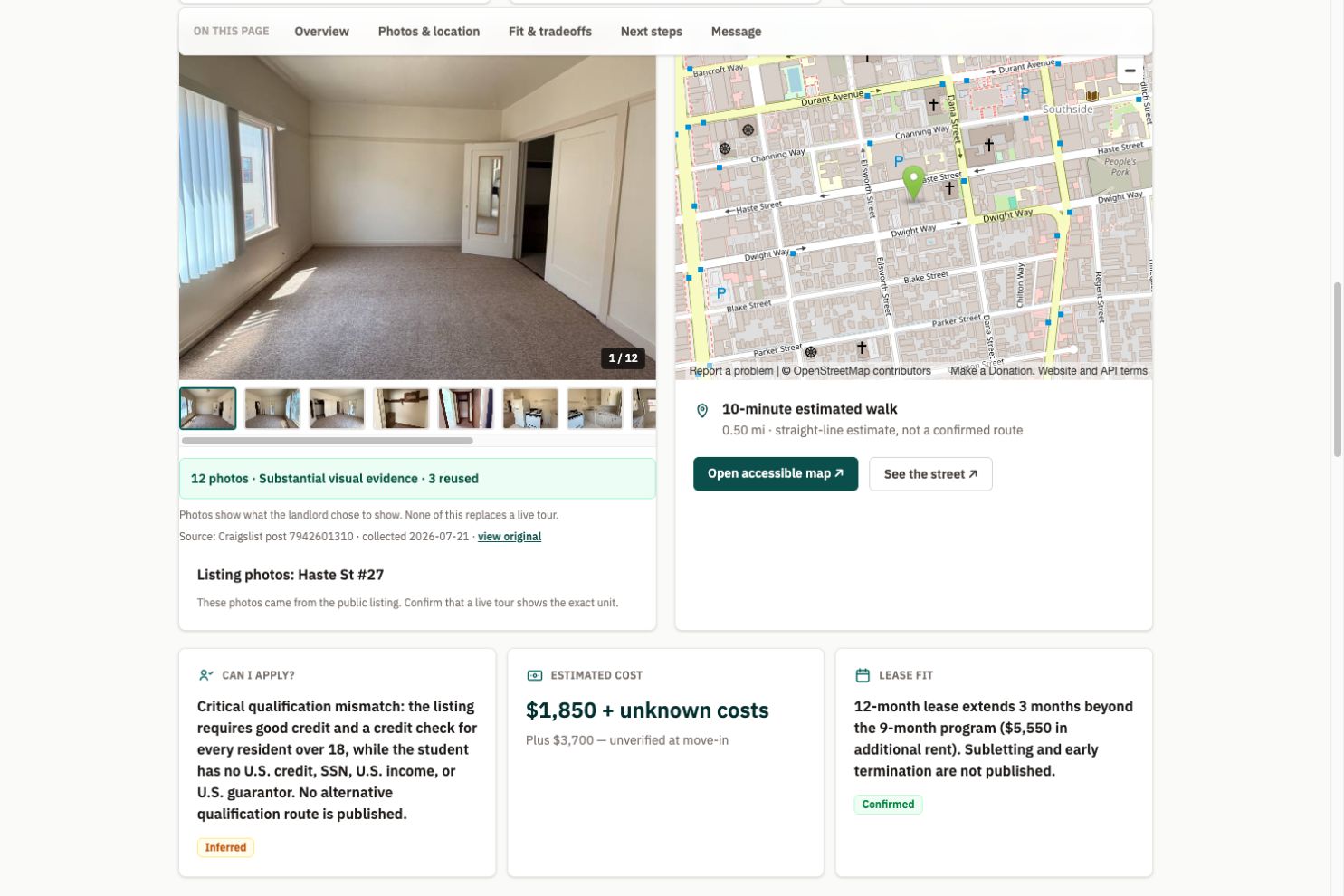
We are also proud of the product's evidence focused visual design. Listing photographs are shown prominently, but the interface explains that photos represent what the landlord chose to publish and do not replace a live tour. Reused images and limited photo coverage are treated as information the student should consider.
The complete demo works without an account, payment information, personal documents, or live inventory access. It is responsive, tested, and designed to give judges a clear path from discovery to comparison and action.
What we learned
We learned that students do not necessarily need more listings. They often need help understanding the listings they already have.
We also learned that unknown information is part of the result. A missing qualification requirement, unclear deposit, inconsistent unit number, or unexplained lease term should not disappear from a recommendation simply because the available information looks appealing.
The project reinforced the importance of separating interpretation from calculation. GPT 5.6 is effective at organizing unstructured housing information and explaining why a concern matters, while deterministic application code is better suited for financial and date calculations.
Most importantly, we learned that trust comes from showing evidence, limitations, and next actions rather than presenting certainty that the product does not have.
What's next for Stateside
The next step is to let students bring their own rental links, listing text, landlord messages, and lease excerpts into Stateside for live analysis.
We also plan to build complete experiences for more universities, beginning with additional Bay Area schools. Each campus experience could include official housing resources, relevant transportation information, common rental qualification routes, and school specific dates.
Future versions could support document and screenshot review, saved comparisons across devices, adjustable student profiles, and recommendations that respond directly to program dates, budget, transportation needs, privacy preferences, and qualification circumstances.
The long term goal is for Stateside to become a trusted preparation companion for international students navigating housing in an unfamiliar country.
Built With
- chatgpt
- gpt-5.6
- next.js
- node.js
- openai-responses-api
- react
- structured-outputs
- tailwind-css
- typescript


Log in or sign up for Devpost to join the conversation.