-
-
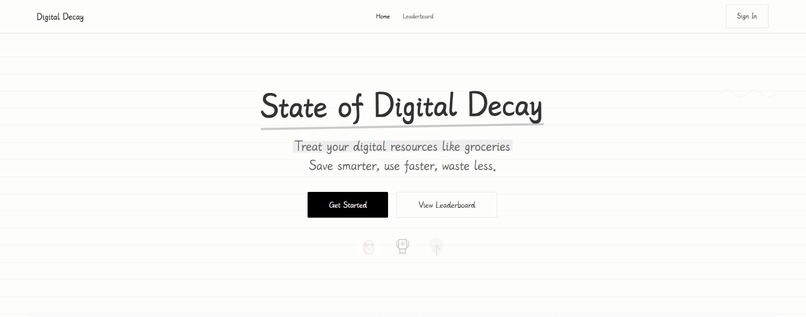
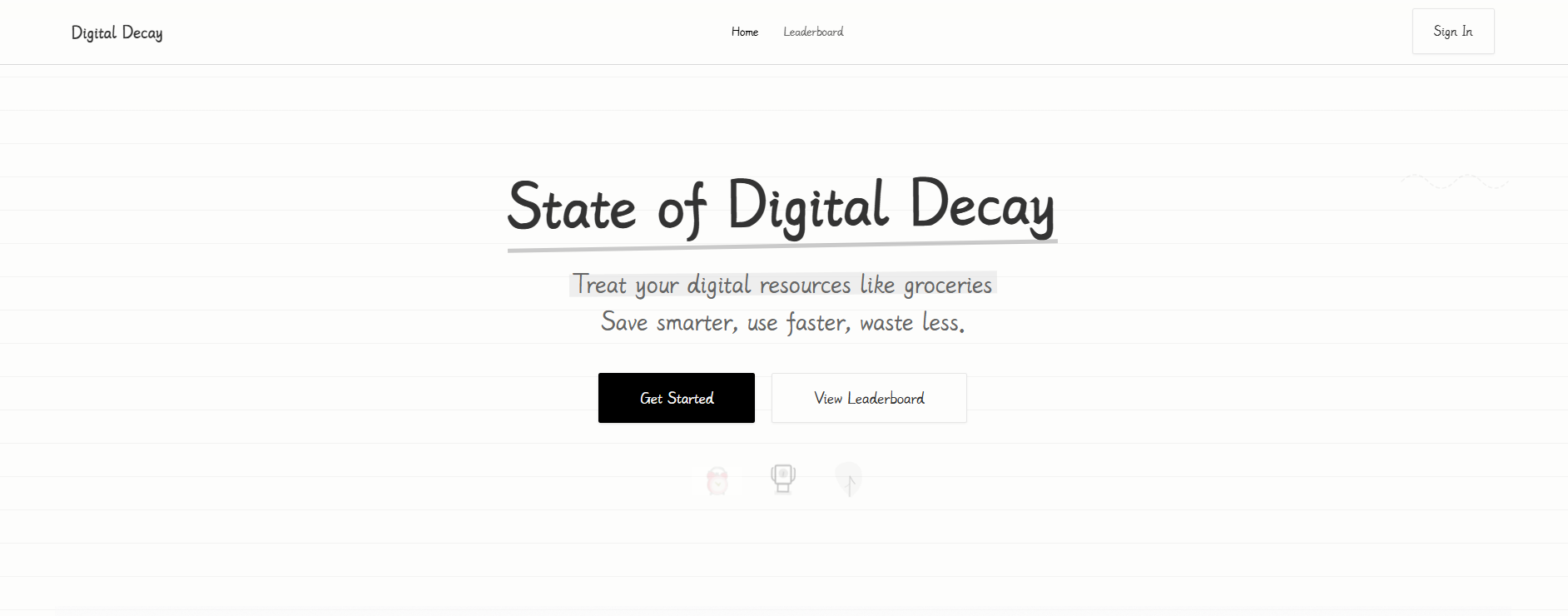
Home Page
-
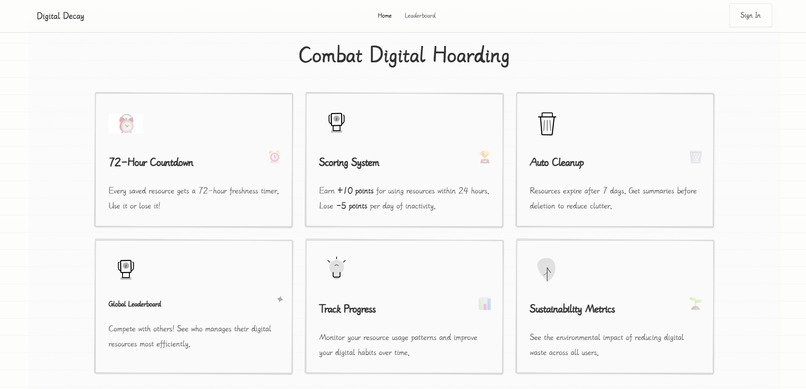
About Page
-
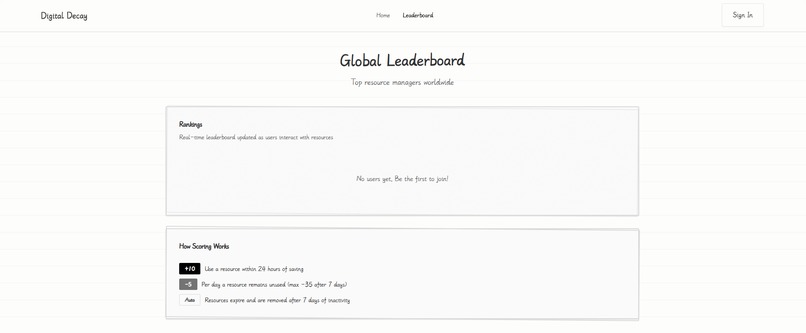
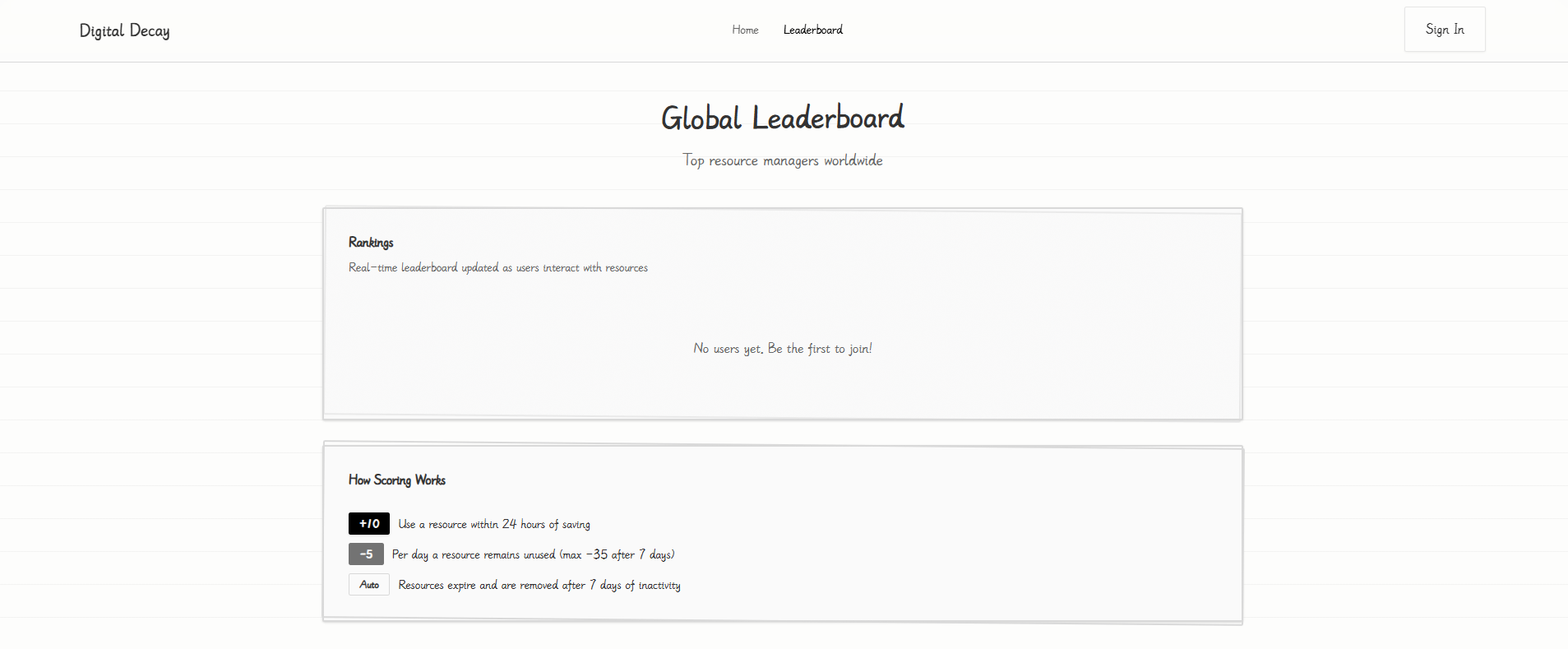
Global Leaderboard Page
-
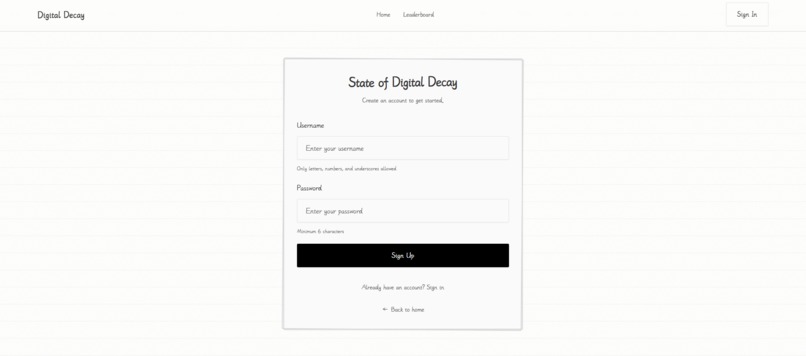
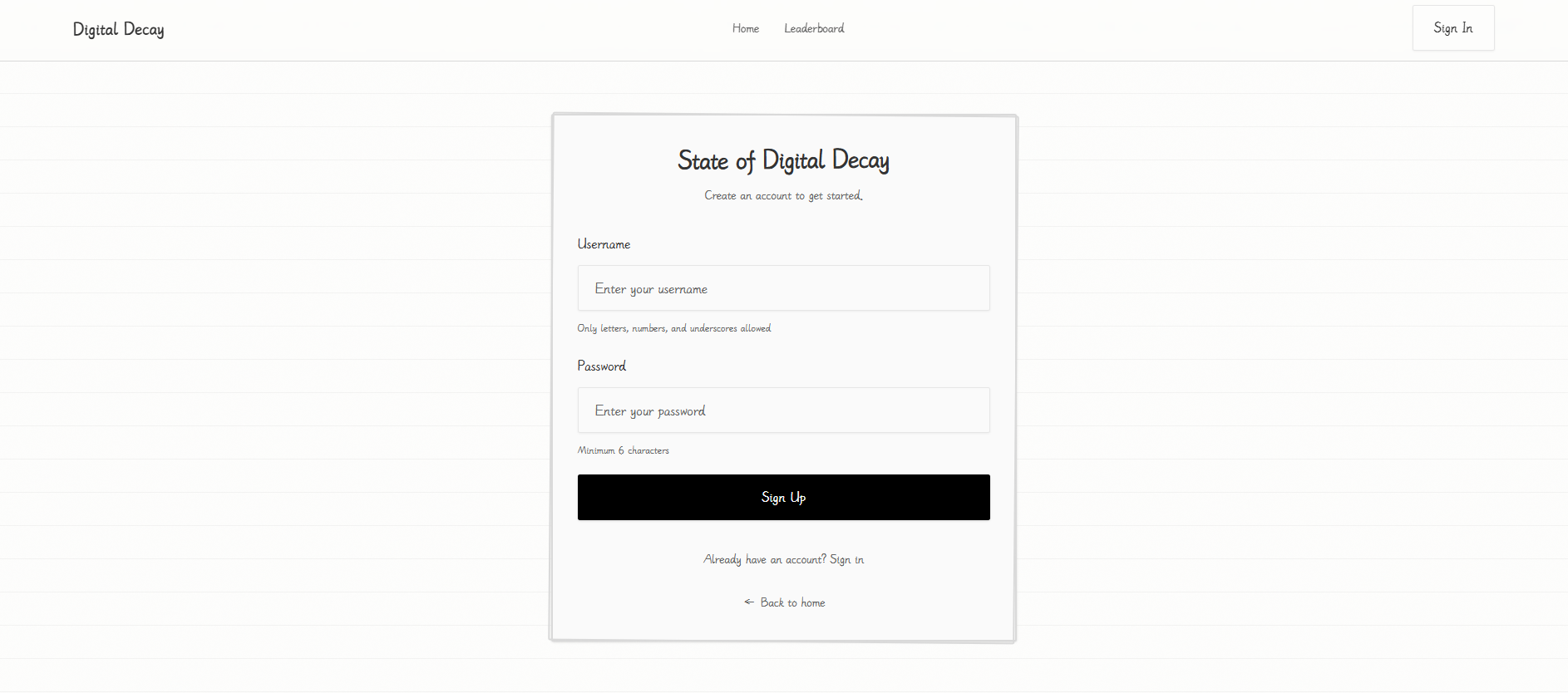
Sign Up Page
-
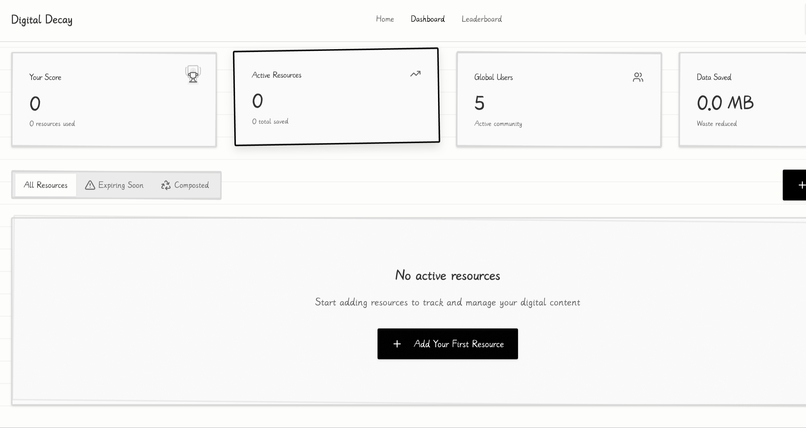
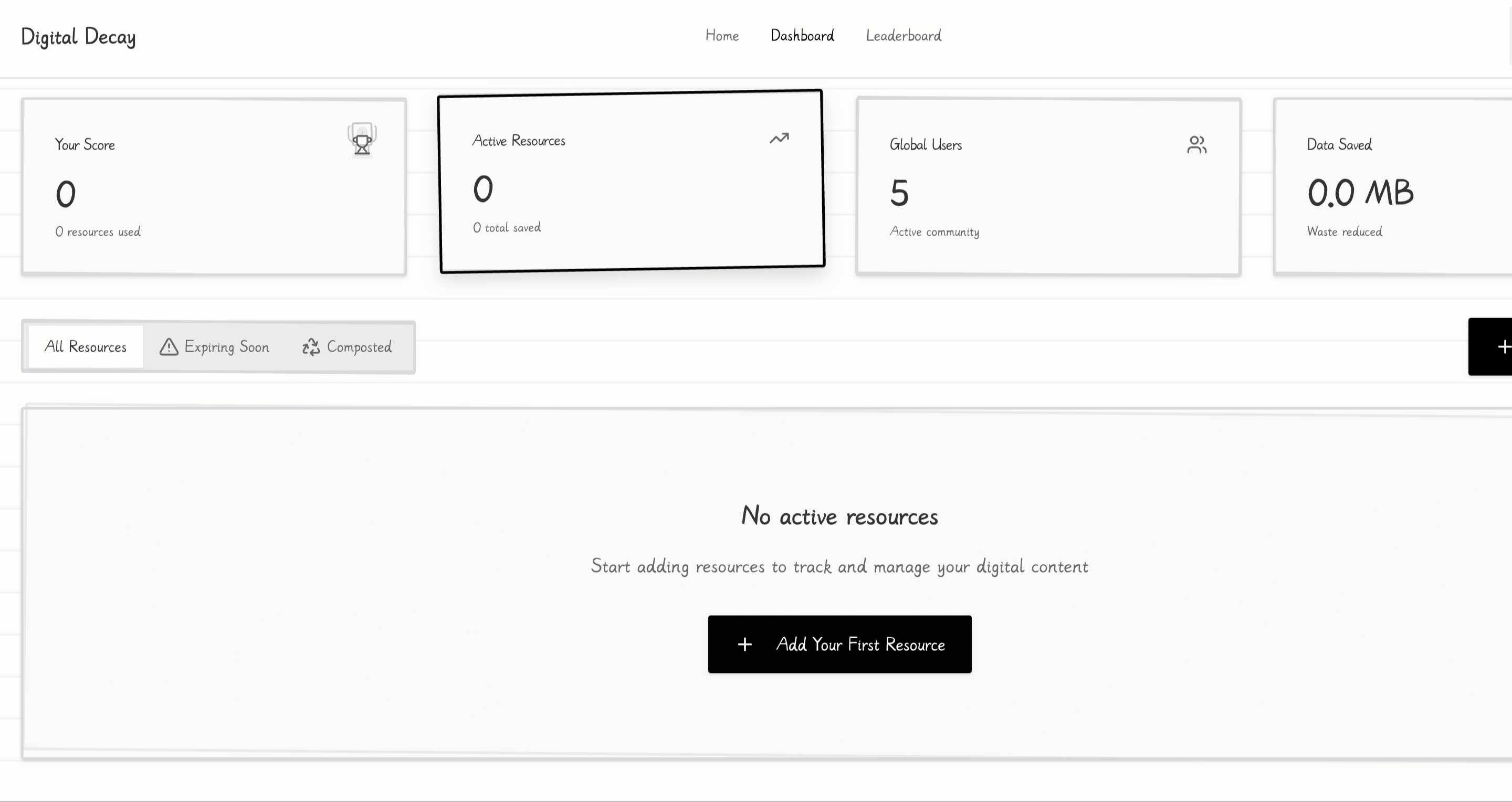
Dashboard Page
DIGITAL DECAY
OVERVIEW Everyone is depressed with a lot of links, pdfs, and documents not knowing how to manage these when we’re busy. Busy searching for jobs or studying for exams. It becomes a nightmare for everyone. These take a lot of space and slow the process. In the modern digital age, students and job seekers frequently collect online learning materials such as Articles, YouTube videos, PDFs, Job listings, Online courses, Research papers. However, most of these resources are saved with the intention of being accessed later but are rarely revisited. This leads to the accumulation of unused digital resources which creates mental overload and unnecessary digital clutter. This phenomenon is commonly referred to as the “I'll Do This Later” Trap.
PROBLEM STATEMENT Individuals often save multiple digital resources for future use but fail to revisit them due to Procrastination, poor time management, information overload, lack of structured follow-up. As a result, the digital resources remain unused, tasks feel overwhelming, important information is forgotten, storage of unused data increases. Additionally, storing unnecessary digital content contributes to increased cloud storage usage, higher data server demand, environmental impact due to data centers. There is currently no system that tracks unused digital resources.
PROPOSED SOLUTION Digital Decay is a web-based dashboard that manages saved digital resources by treating them like perishable groceries that expire over time. This system introduces a freshness timer, a sustainability score and a usage tracking system. Each saved resource (link or PDF) is assigned a limited time period within which the user is encouraged to use it before it becomes “Digital Waste”.
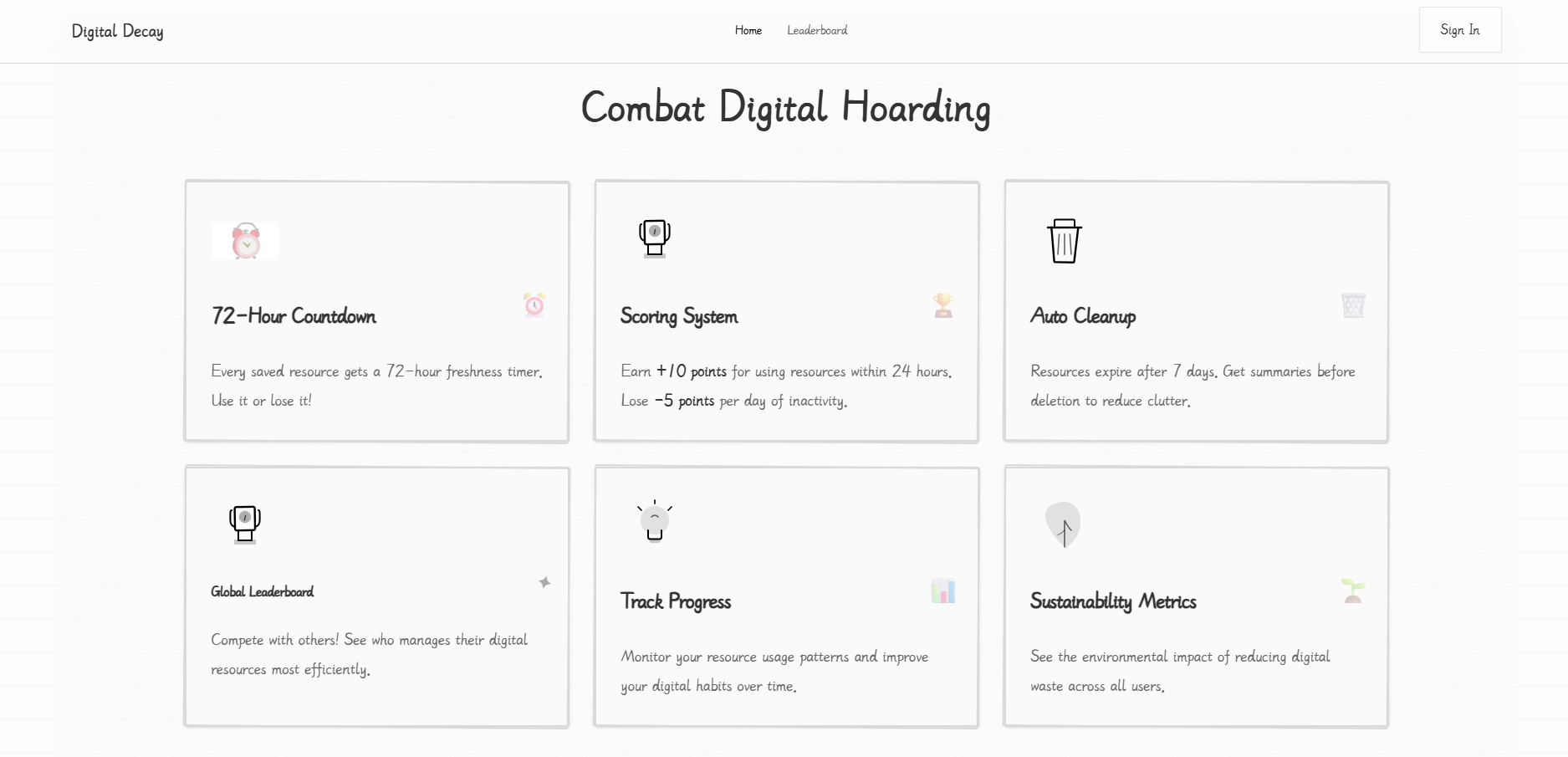
WORKING PRINCIPLE Users can add resources such as pdfs or articles by uploading files or paste links into the dashboard. Each resource is automatically assigned to the expiry timer of 72 hours. The saved resource enters the fresh phase. If the resource is accessed within 24 hours, it gets +10 points. If the resource remains unused, deduction of -5 points per day will be given to the particular task. Resources that are not opened within 72 hours move into an aging state, indicating that they are likely to be forgotten or become irrelevant. If the resource is inactive for 7 days continuously, it is marked as Digital Waste. The system automatically removes it from the active dashboard and moves it to the expired list. The content is summarized before removal to retain key information. The system maintains a score based on user behavior. If the created task is used within 24 hours, it gets +10 score. If it is used within 3 days, the task gets +5 score. If it is unused for 1 day.
DEVELOPMENT APPROACH Digital Decay was developed using MEDO software, which served as the primary platform for designing and building the website interface and system structure. The entire development process was powered by AI-assisted tools, enabling rapid prototyping, smart workflow design, and efficient implementation of features such as the expiry timer, behavioral scoring system, and automated summarization model. By leveraging AI throughout the development cycle, we were able to streamline coding, optimize system logic, and enhance user experience with minimal manual complexity. The project demonstrates how artificial intelligence can be used not only as a feature within a product but also as a powerful development partner in building innovative, sustainability-driven digital solutions. Scoring & Sustainability Model The system maintains a behavioral sustainability score based on user actions, where early usage of saved resources increases the productivity score, delayed or ignored tasks reduce the sustainability score, and consistent completion improves digital discipline. This structured scoring mechanism gamifies productivity in a positive and motivating manner, encouraging users to develop responsible digital habits and take timely action on saved resources instead of postponing them indefinitely.
KEY FEATURES Digital Decay includes expiry-based resource management, behavioral tracking and scoring, automatic digital clutter detection, and AI-powered summarization before expiration to retain essential insights. The platform is designed with a minimal and stress-free interface to avoid overwhelming users, while promoting a sustainability-focused digital consumption model that transforms passive saving into intentional usage.
INNOVATION & IMPACT Digital Decay reframes digital clutter as both a sustainability and mental wellness issue rather than just a productivity concern. It promotes intentional learning, reduces procrastination, improves time management, lowers unnecessary digital storage waste, and enhances cognitive clarity. By treating digital resources like perishable goods, the system builds accountability and significantly reduces the emotional burden associated with unfinished tasks.
CONCLUSION Digital Decay addresses a modern productivity crisis — not the lack of information, but the lack of structured usage. The project introduces a behavioral, technological, and sustainability-driven approach to managing digital resources, helping students and job seekers transition from endless saving to meaningful action. Ultimately, productivity is not about collecting more; it is about consuming with purpose.


Log in or sign up for Devpost to join the conversation.