-
-
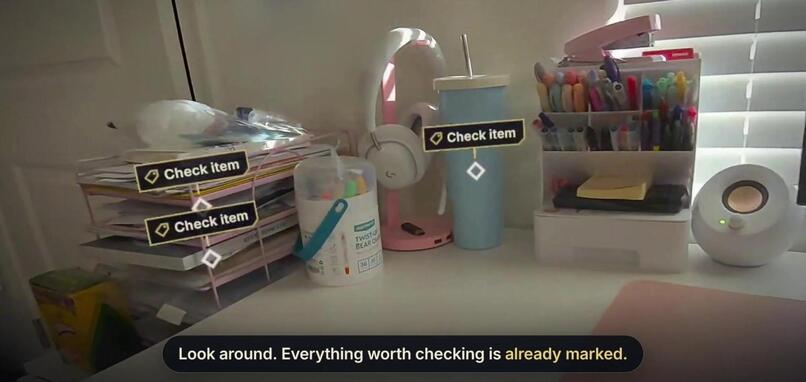
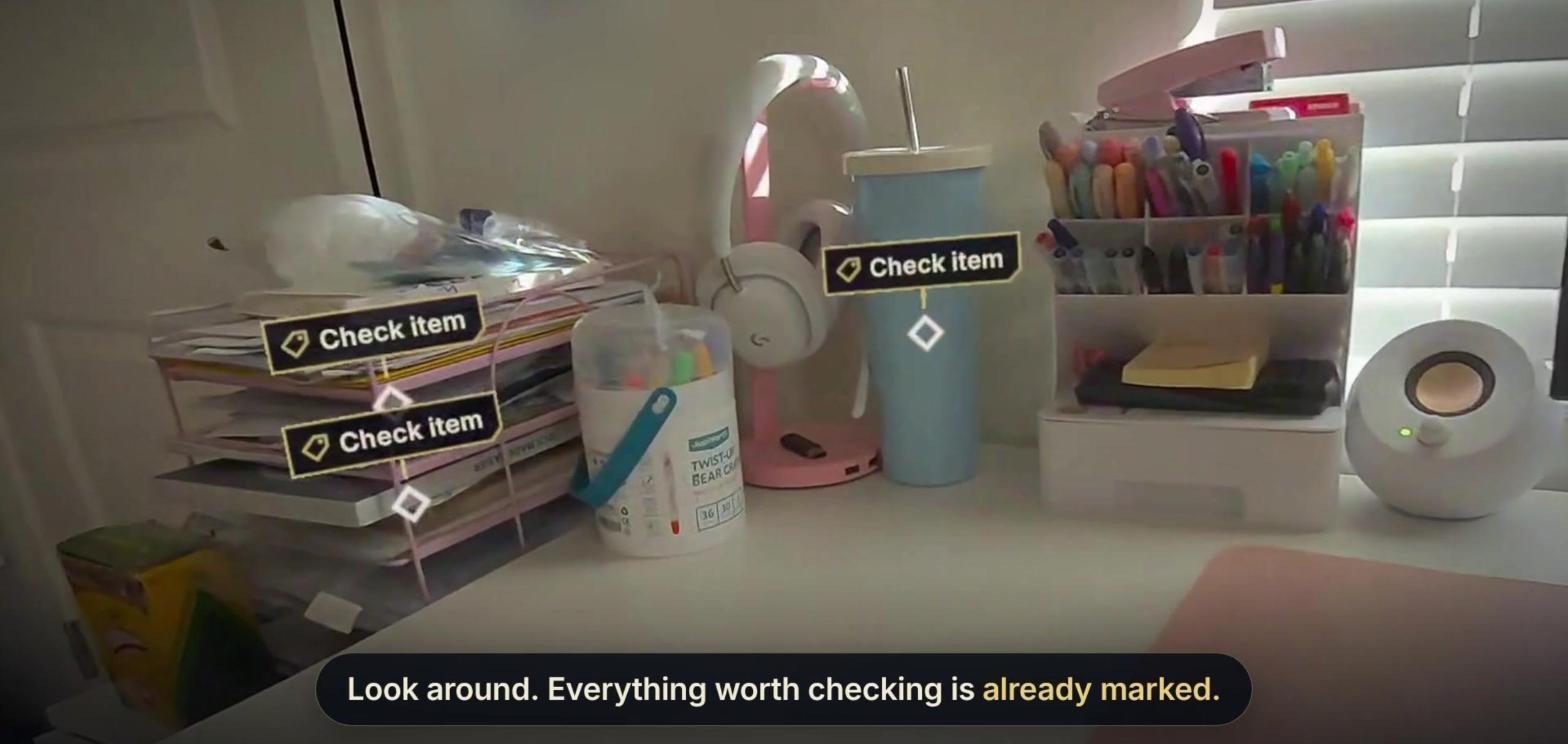
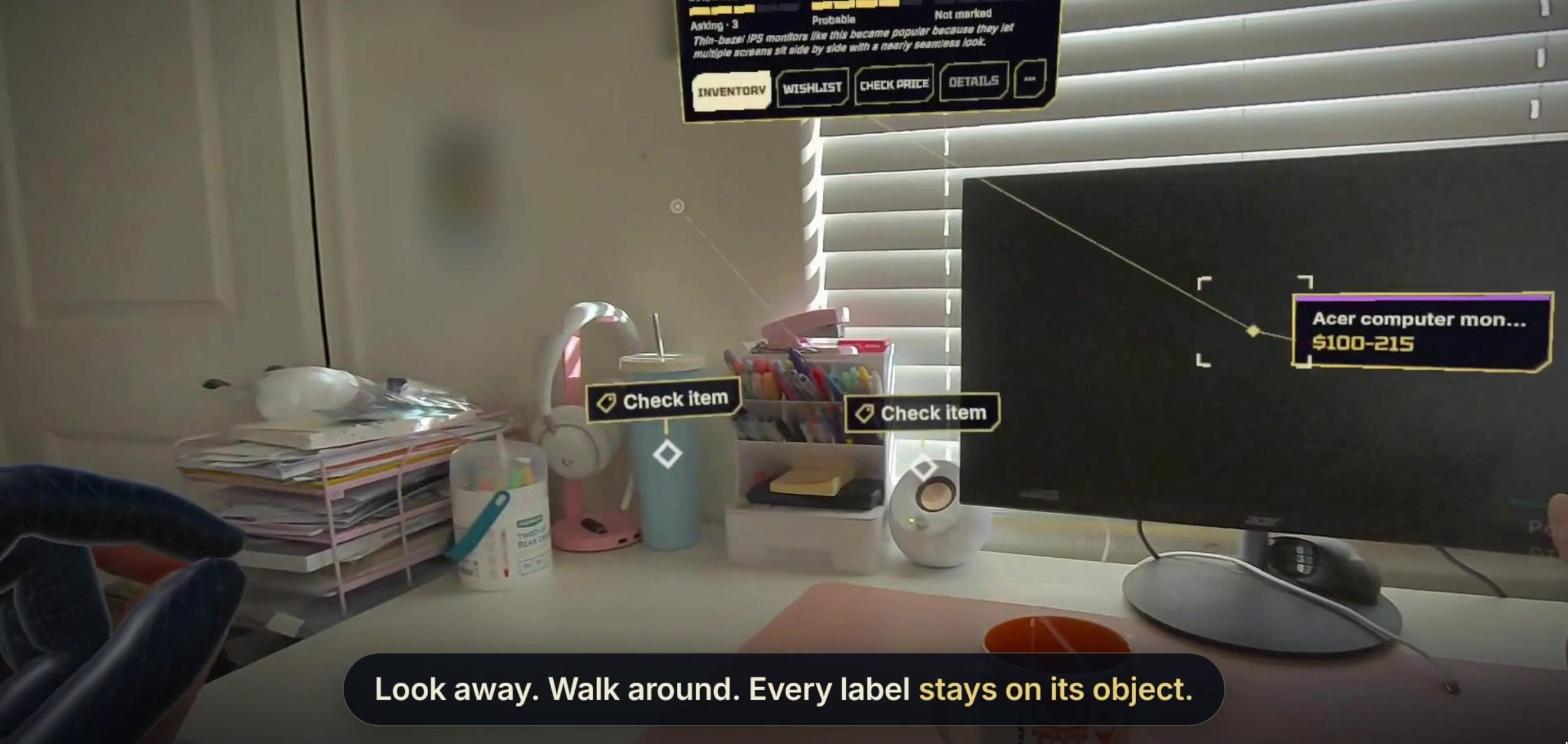
Look around: items worth checking are already marked by on-device detection
-
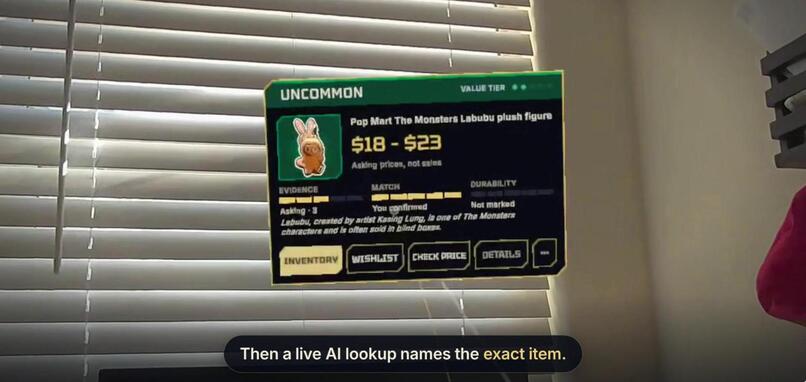
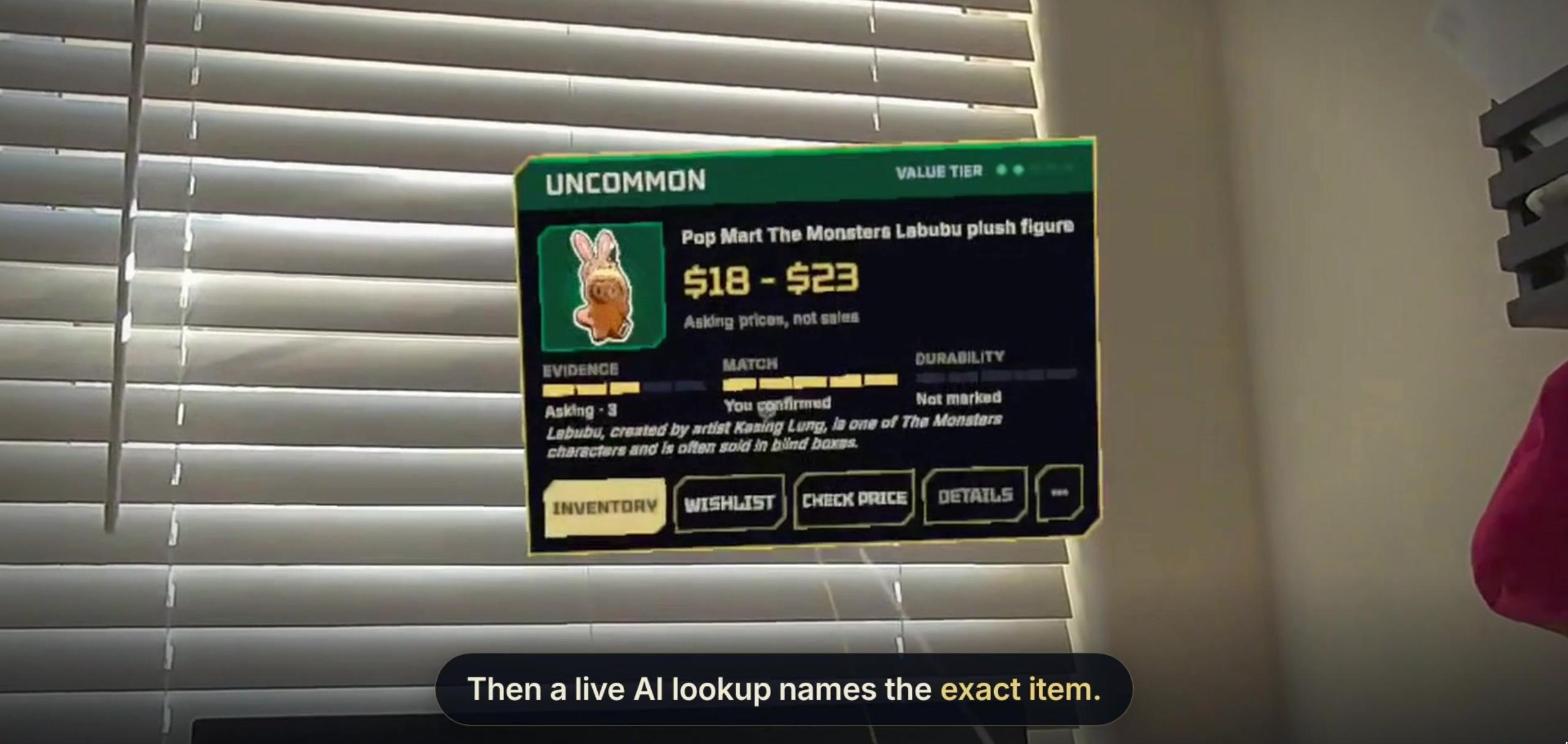
Pinch: a live AI lookup names the exact item, with a value tier and asking-price range
-
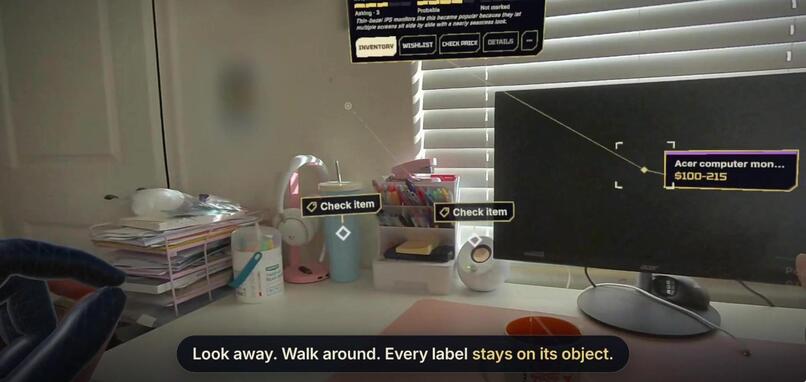
Labels stay on their objects as you walk around
-
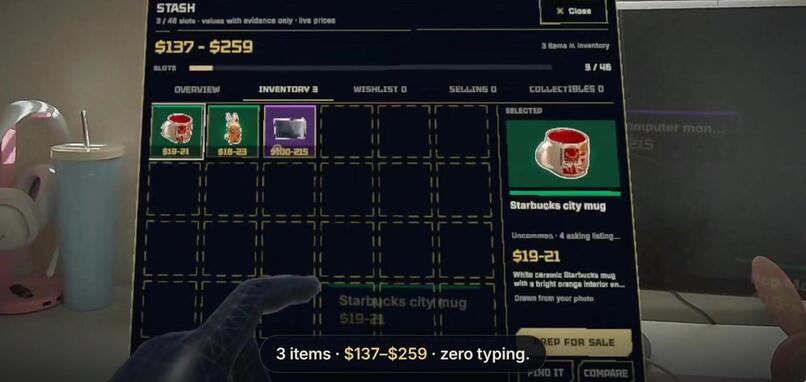
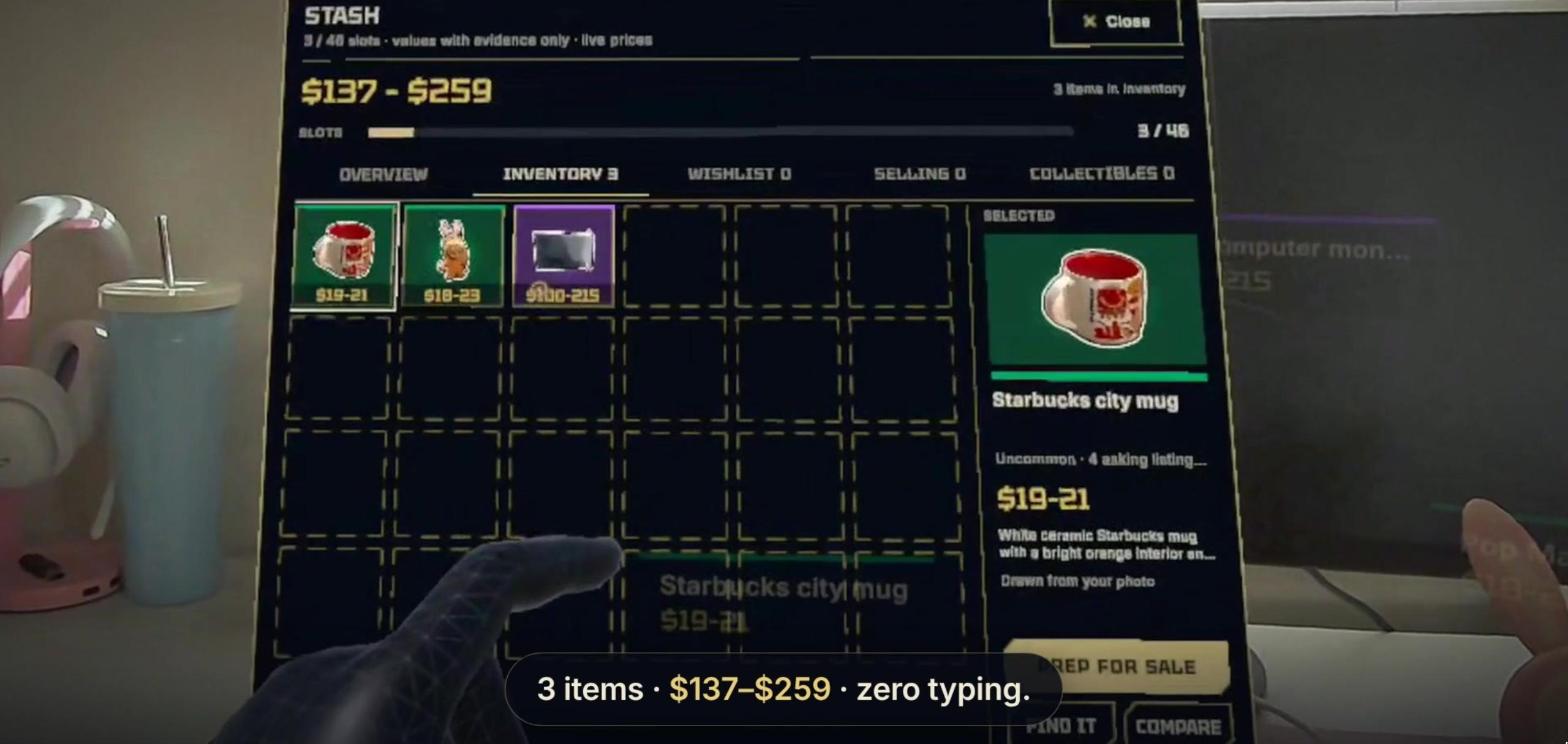
Your stash: 3 items, $137–$259, zero typing
-
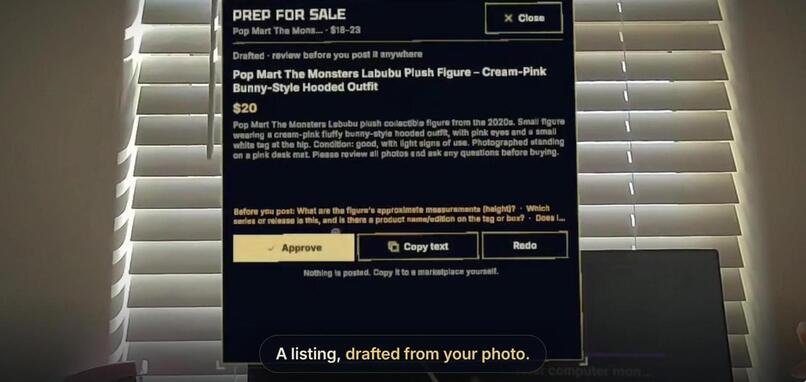
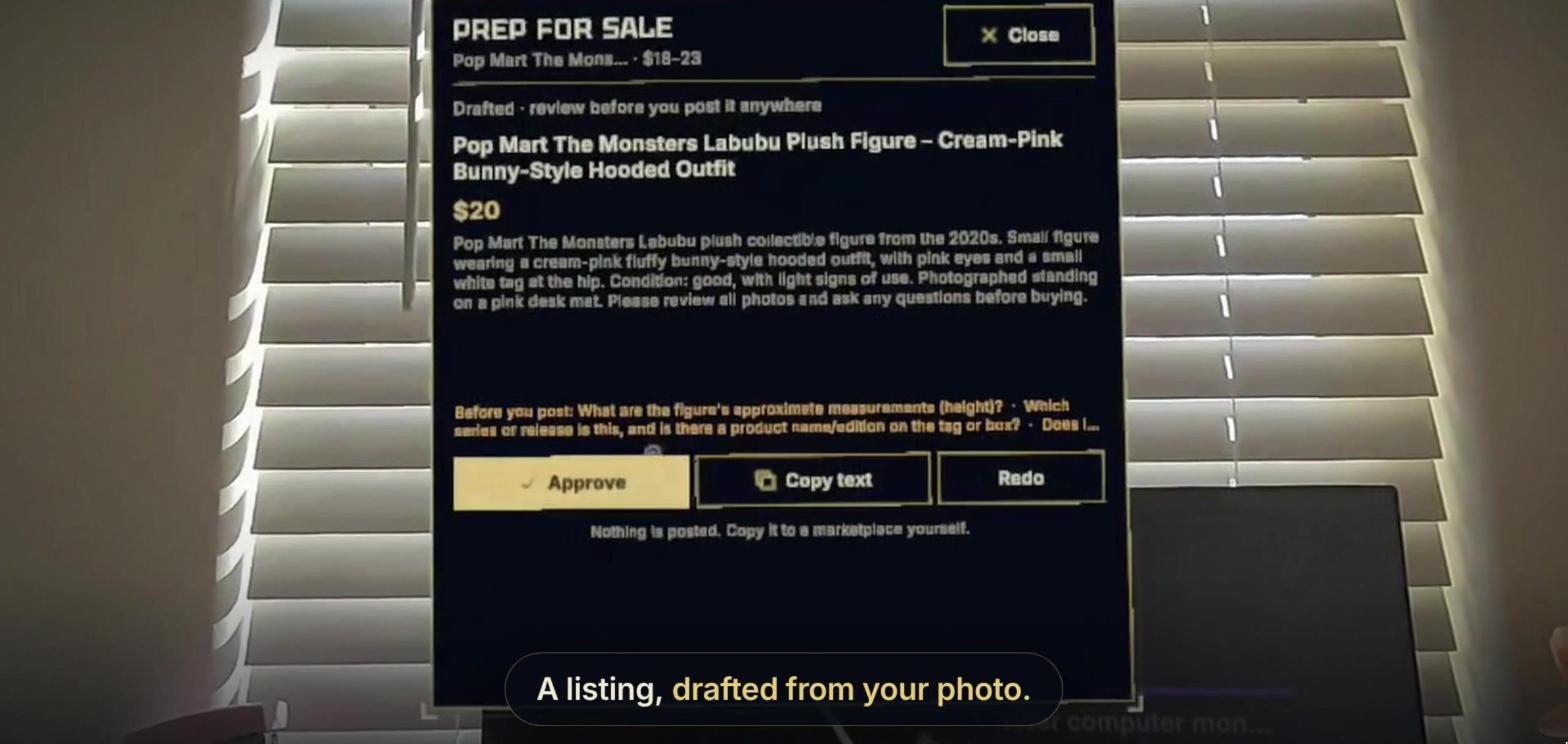
Prep for sale: a listing drafted from your photo. Nothing posts until you approve.
-
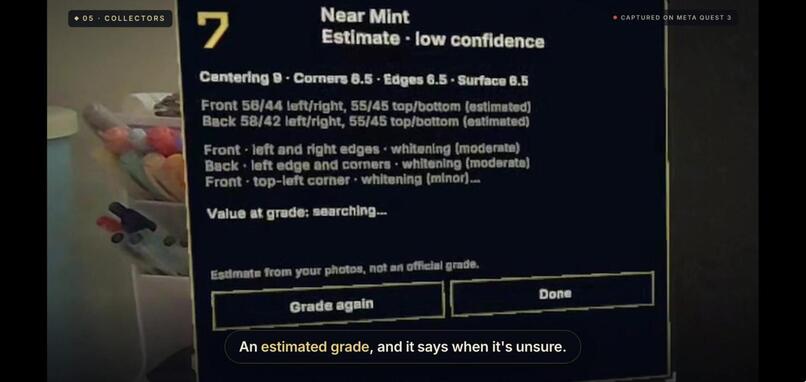
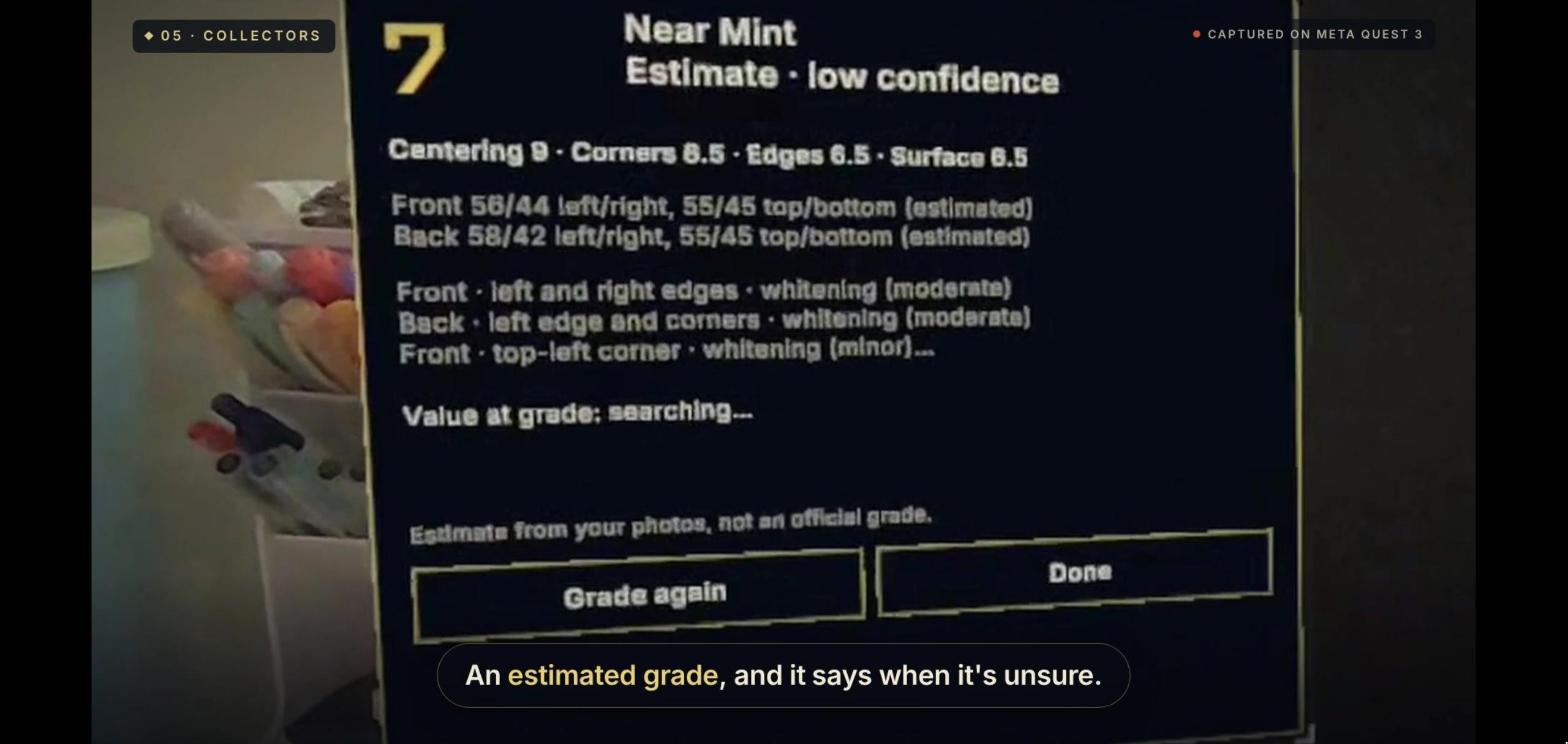
Trading cards: an estimated grade that says when confidence is low
Inspiration
People who resell secondhand repeat the same loop after every sourcing run: photograph each item on a phone, search for comparable prices, decide what to keep, write a listing. A phone handles one item at a time and forgets the room. A headset can see the whole desk, put a label on each real object and keep it there. Stashlight takes the inventory screen from a game and lays it over a real desk.
What it does
Your room is the inventory.
- Look around. An on-device detector marks the objects worth checking with a "Check item" tag.
- Pinch one. A label lands on the object in under half a second, on the headset. Then a live AI lookup with web search names the exact item, and the card shows a value tier (Common to Legendary), a price range and what the price is based on, for example "Asking prices, not sales".
- It asks when it isn't sure. "Which one is it?" offers the closest matches and you pick.
- Labels stay on your things. Look away, walk around, come back: every label is still on its object. Pick an item up and its label moves with it.
- Check price shows the lowest and typical prices and the listings found, and sets a price watch with one pinch.
- The stash is a game-style slot grid. Each slot shows the item cut out of your own photo, with a total value range and Inventory, Wishlist, Selling and Collectibles tabs. It exports to a spreadsheet (CSV).
- Prep for sale asks two questions, then drafts a title, description and price from your photo. You approve, copy or redo it. Nothing is ever posted for you.
- A Quest Log ranks what to do next from your own stash.
- Trading cards get an estimated grade. Lay the card on the table and look at it: a frame follows your gaze and the photo takes itself, front and back. The result gives centering, corners, edges and surface scores, and says when its confidence is low.
How it uses the headset
- Passthrough and the Passthrough Camera API. Each crop is taken with the camera pose at capture time, so the card lands on the right object even after your head has moved.
- Hand tracking with the Interaction SDK. Everything is point and pinch, finger taps on panels, and picking things up with one or two hands.
- Spatial anchors. Each label is anchored where its item is, and re-anchored when you move the item.
- MR Utility Kit loads the room from Space Setup.
- On-device ML. A YOLOX-Tiny detector (Apache 2.0) runs in Unity Inference Engine for the instant labels, and blurs any person in view before a photo leaves the headset. People are never identified.
How it was built
Unity 6 (6000.6.4f1) with Meta XR SDK 207 (Core, Interaction SDK, MR Utility Kit) on OpenXR. A small FastAPI service on AWS App Runner identifies the item from a cropped photo and gathers price evidence with live web search. Every model answer is validated against a JSON schema. The API key stays on the server and the app uses short-lived session tokens. Built from scratch for this competition: the first commit is October 8, 2026.
Measured on a Quest 3
- Under 0.5 s from pinch to a label on the object (measured frame by frame from the demo capture).
- 0.16 to 0.19 s per on-device detection pass (headset log, November 8, 2026).
- 408 automated tests passing: 281 Unity EditMode tests and 127 backend tests (November 9, 2026).
- 0 listings posted without approval. The app drafts; it cannot post.
Challenges
- Keeping an AI answer on the right real object after the head moves. Using the camera pose from the moment of capture solved it.
- Card grading went through three designs before it felt natural with hands: the card now lies flat on the table, the frame follows your gaze, and the photo takes itself.
- Being honest about prices. When only asking prices exist, the card says so instead of presenting them as sales.
Honest scope
- Grades are estimates from photos, not official grades. In the demo the photos were dim, and the result says "low confidence".
- The prices in the demo are asking prices from live listings.
- Built, tested and filmed on a Meta Quest 3. All footage is real headset capture; waits are cut and marked, and the narration is an AI voice.
- Identification and pricing need a network connection.
What's next
Saving an approved draft to the seller's own marketplace account, always with their confirmation; support for more marketplaces; and shared stashes for two-person reselling businesses.
Built With
- amazon-web-services
- c#
- fastapi
- meta-xr-sdk
- openxr
- python
- unity
- yolox


