Inspiration
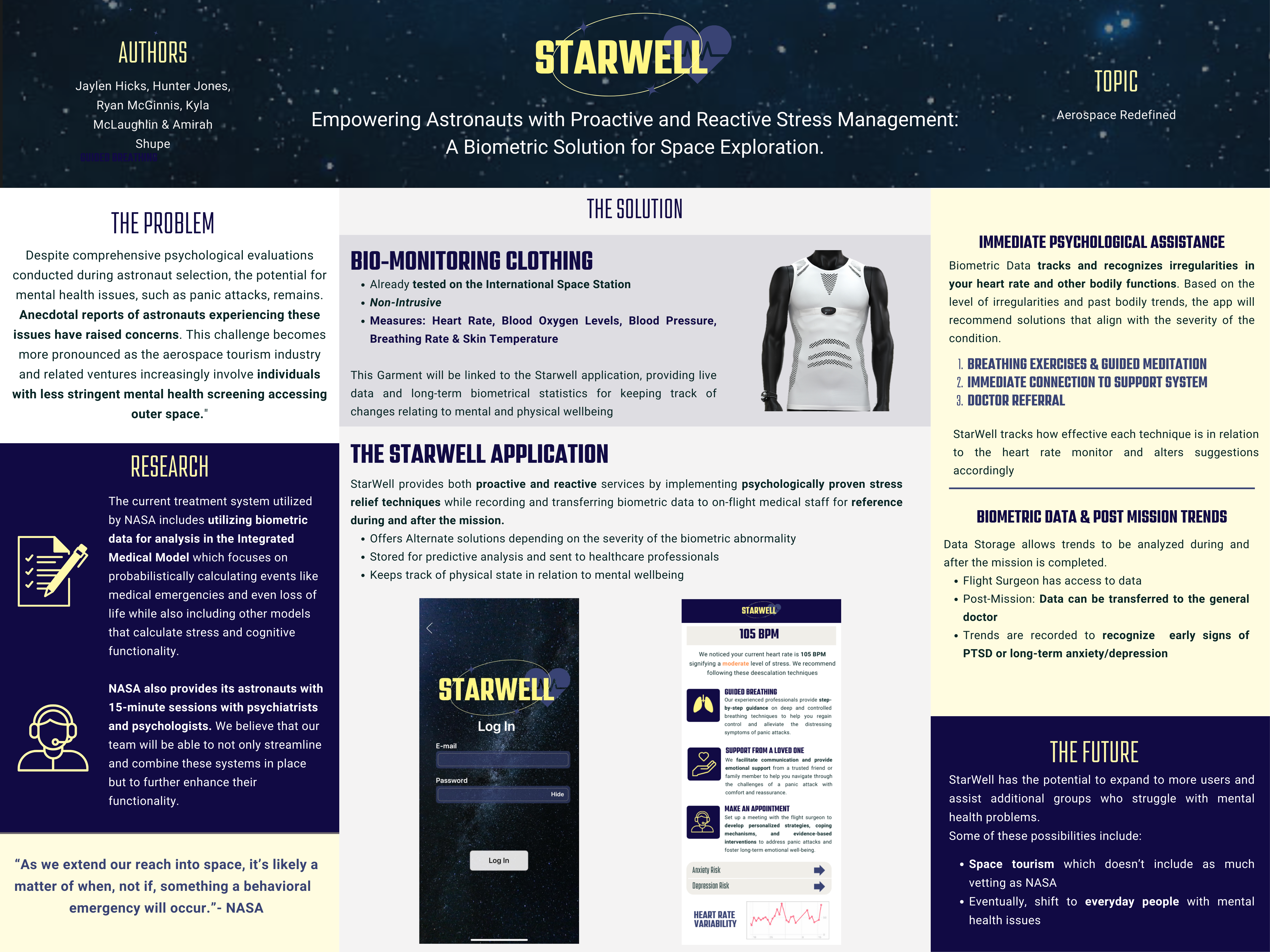
StarWell was inspired by the recognition that the current support system for astronauts primarily focuses on pre-and post-mission care, with limited provisions for in-flight support. With the evolving landscape of space travel and the inclusion of individuals with varying degrees of training and experience, the inevitability of severe mental health crises during spaceflight became apparent. This inspired the creation of StarWell as a software-based program to address the mental well-being of astronauts during missions.
What it does
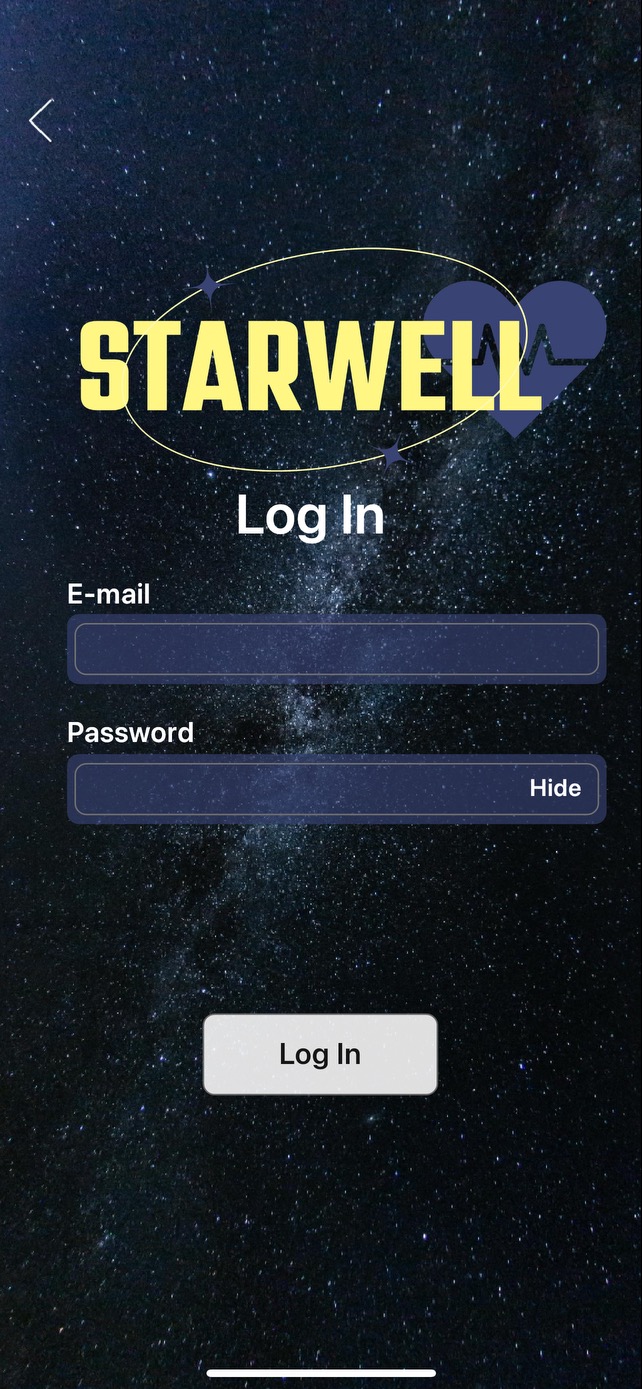
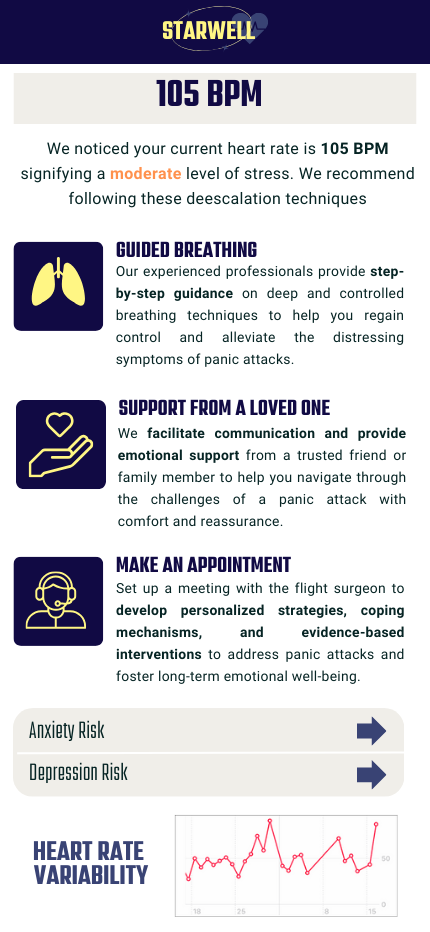
StarWell is a comprehensive system that combines wearable biometric sensors, psychological research, and statistical modeling to revolutionize mental health support in space. The system includes the Bio-monitoring vest, which continuously tracks vital biometrics such as heart rate, breathing rate, and skin temperature. The synchronized StarWell application processes the collected data and delivers tailored, on-demand support to users. It offers various forms of support, including breathing exercises, professional consultation with psychologists specially trained for space travel challenges, and personal connections through pre-recorded videos from loved ones. Additionally, StarWell compiles and stores the data collected from the Bio-Monitoring vest to create predictive models for future well-being and shares it with medical professionals to detect and mitigate long-term risks.
How we built it
StarWell was built by leveraging a combination of wearable biometric sensors, psychological research, and advanced statistical modeling. The Bio-monitoring vest is at the core of the system, continuously monitoring key biometrics. The synchronized application processes this data to offer real-time support, including exercises and professional consultation. The technology was designed to empower individuals with the resources they need to manage the psychological challenges of space travel effectively.
Challenges we ran into
We had trouble cumulating all of our thoughts into a singular cohesive project and spent a lot of time thinking about how different we were instead of what we had in common.
Accomplishments that we're proud of
We're proud that we were able to persevere through the rough patches and that each person had a significant role played in the making of the project.
What we learned
Because of our combined strength in humanities-based issues, our group was interested in finding ways to improve mental health in the problem domains. Throughout extensive research, we discovered shortcomings in the aerospace industry in regards to mental health and the lack of support for astronauts. We then began researching ways we can apply our knowledge and decided upon designing an app to integrate with biometric vests. Furthermore we learned how to combine our different strengths while also playing into our similarities.
What's next for StarWell
The next steps for StarWell involve providing ongoing support and enhancing the system's capabilities. The program not only offers immediate support but also creates predictive models for future well-being. This valuable information can be shared with on-board flight surgeons and post-mission general doctors for consultation, helping to detect and mitigate long-term risks such as post-traumatic stress disorder and depression. Additionally, StarWell can be reevaluated to better suit other target demographics such as those with flight anxiety on commercial planes or even every day anxiety/panic attacks.
Built With
- adobe
- psychology
- textiles


Log in or sign up for Devpost to join the conversation.