-
-
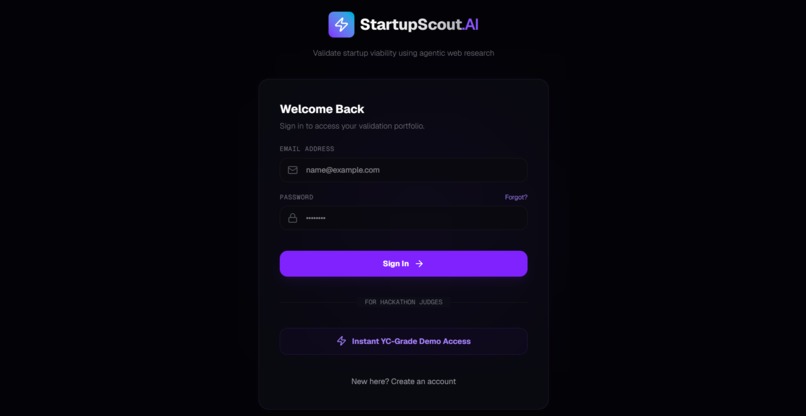
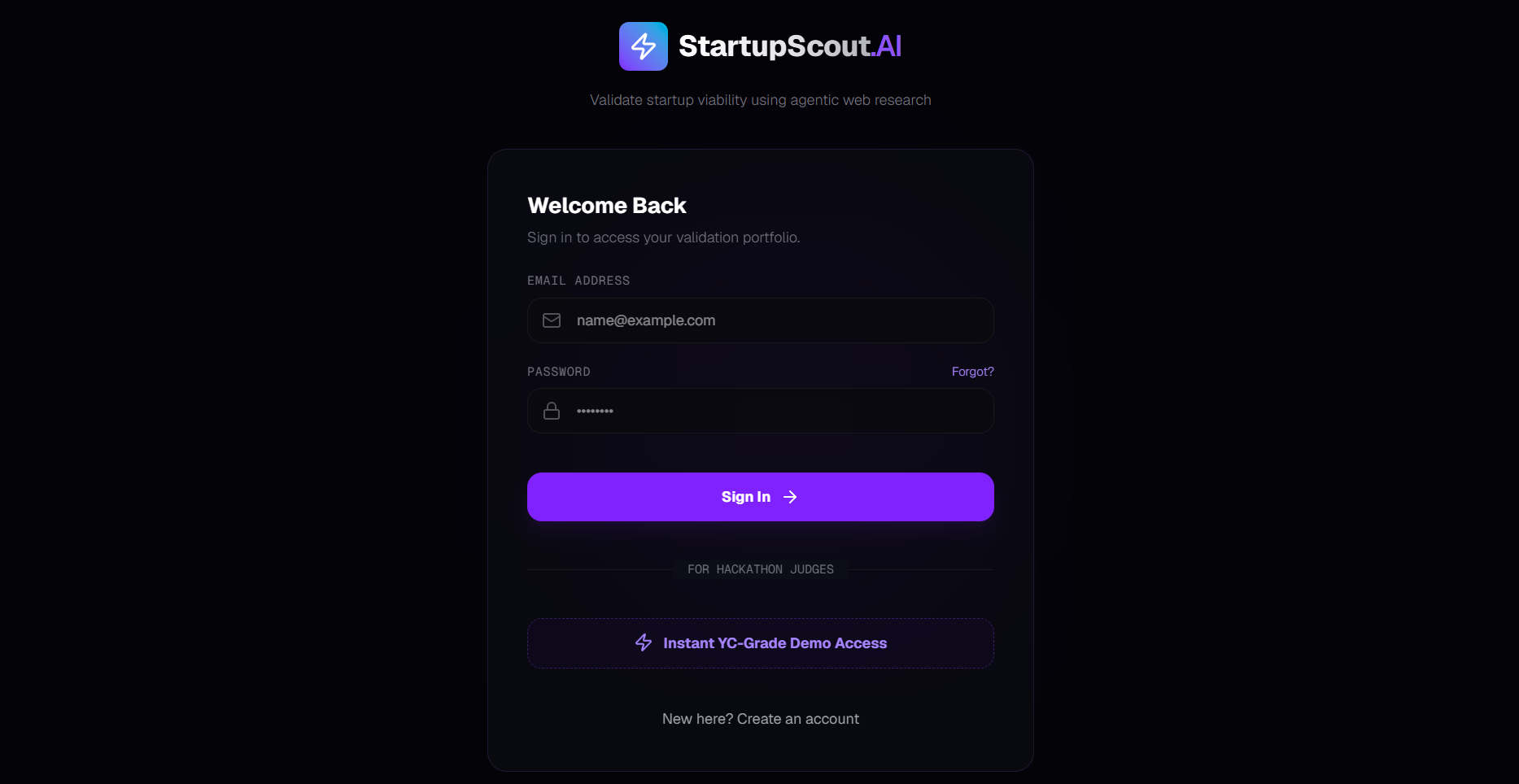
Secure founder authentication and project workspace access with persistent cloud-based storage.
-
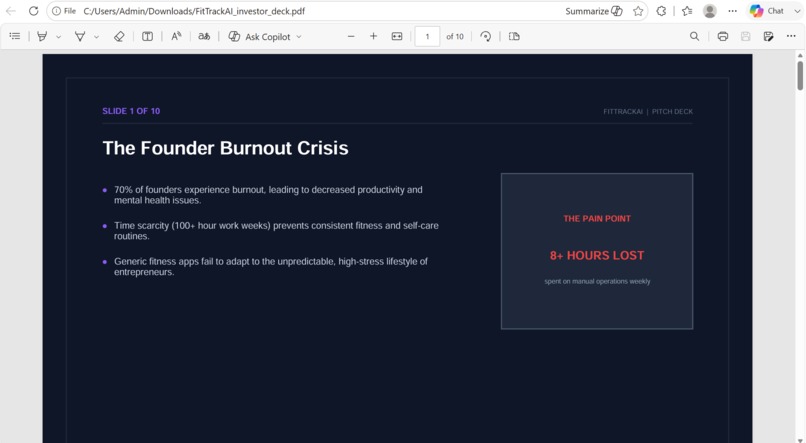
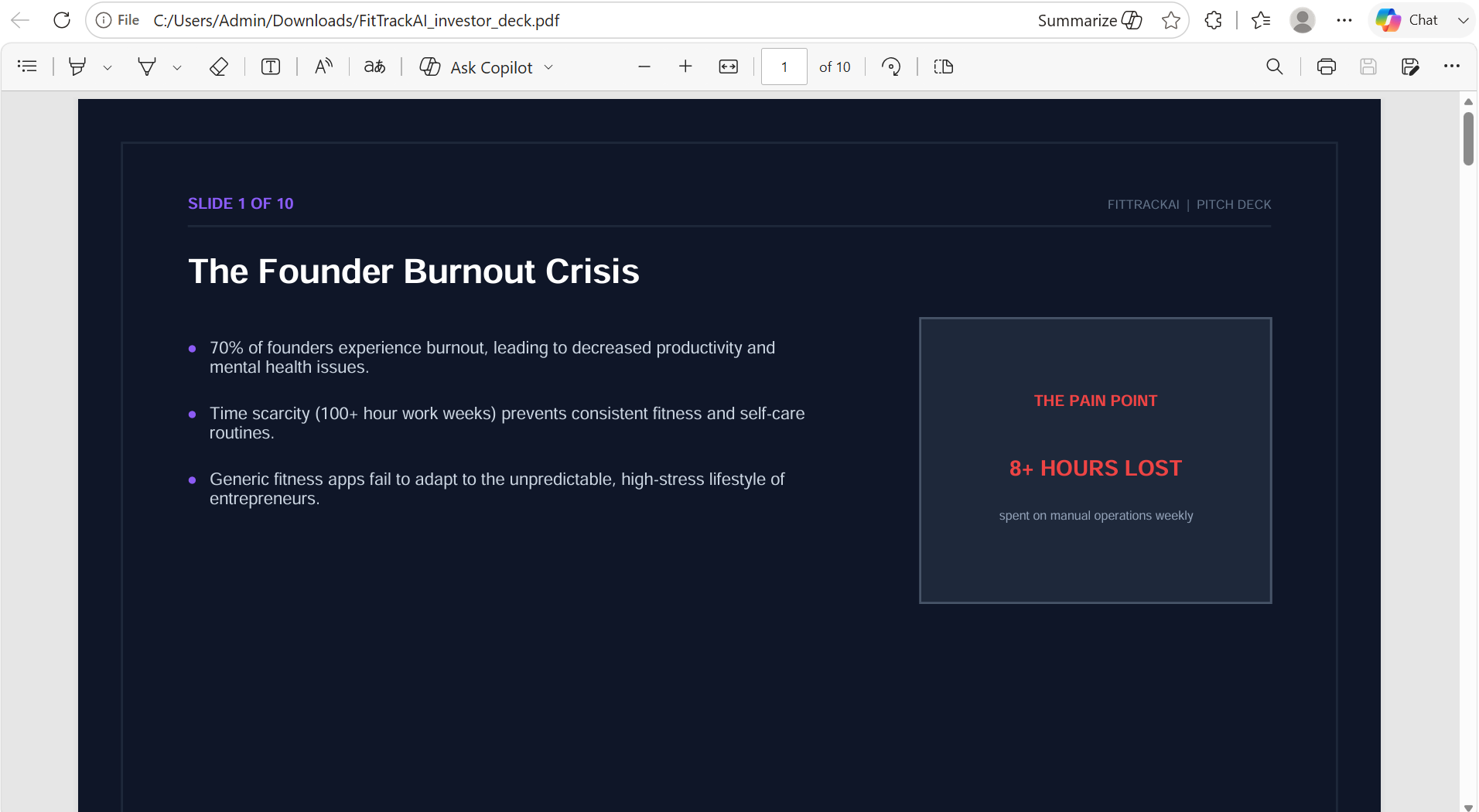
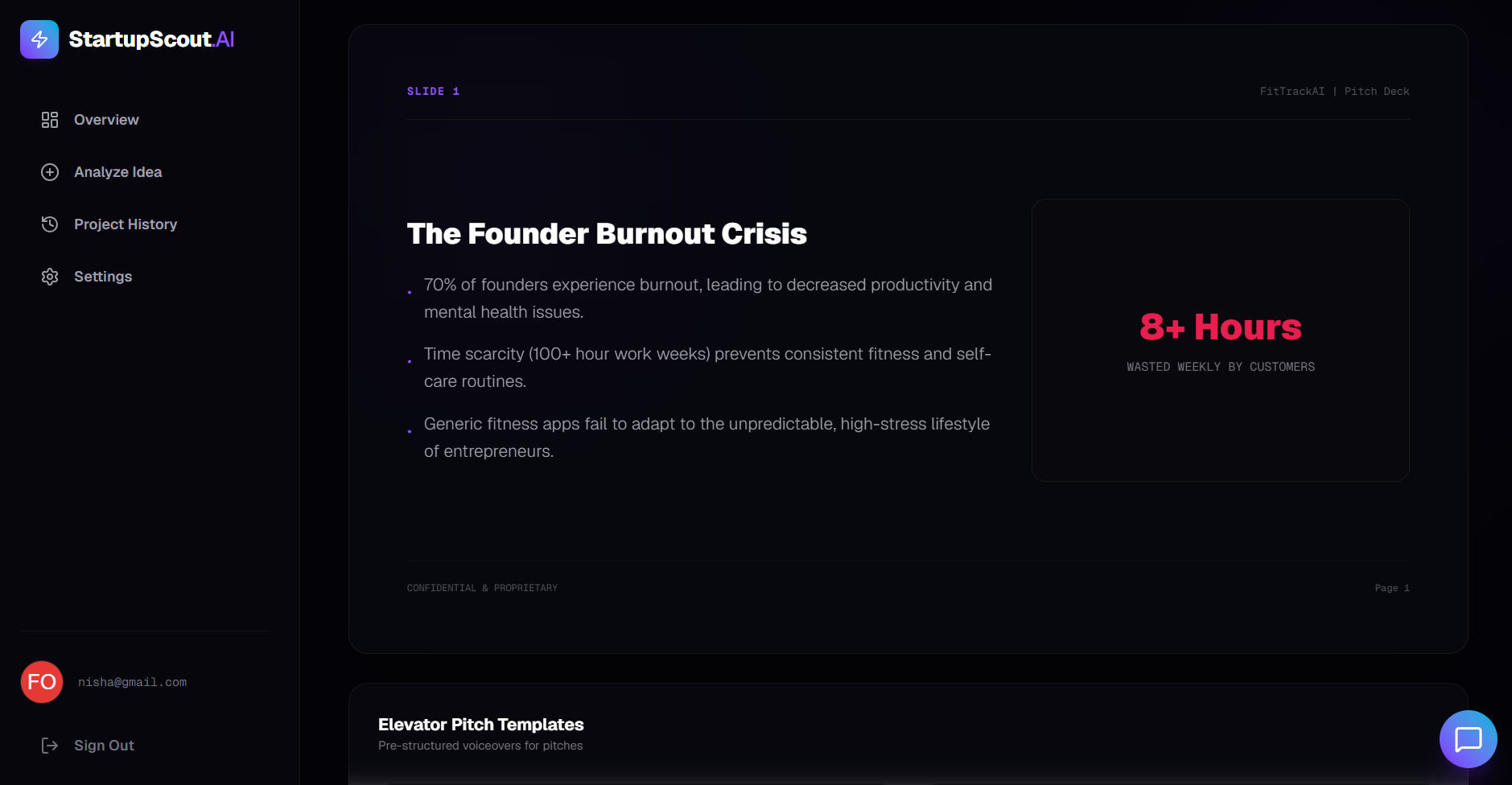
AI-generated founder risk assessment highlighting workload, execution challenges, and operational bottlenecks.
-
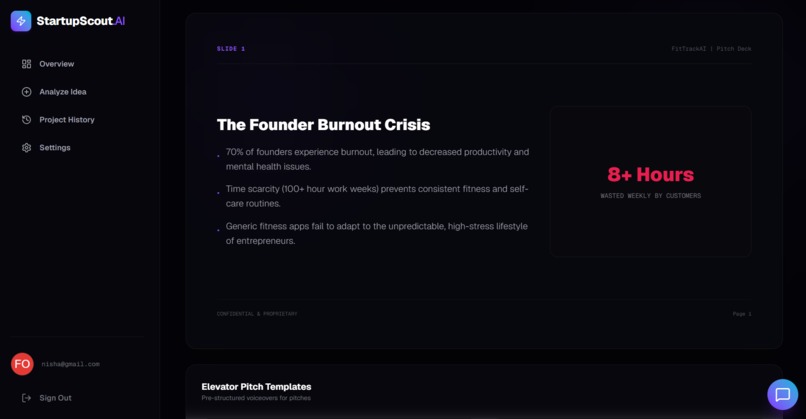
Interactive dashboard presenting founder burnout insights, risk indicators, and actionable recommendations.
-
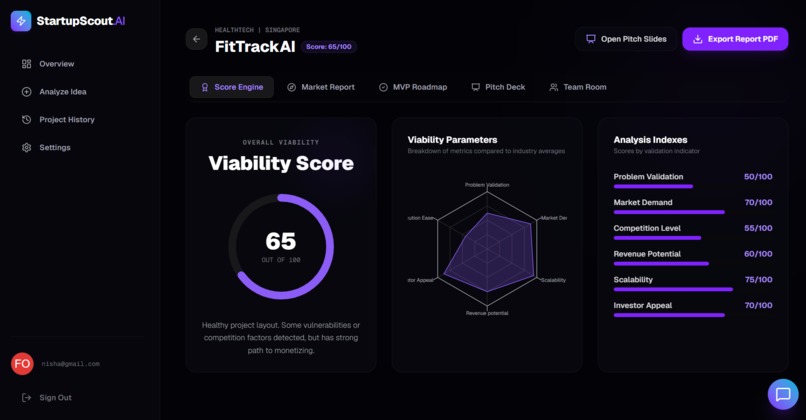
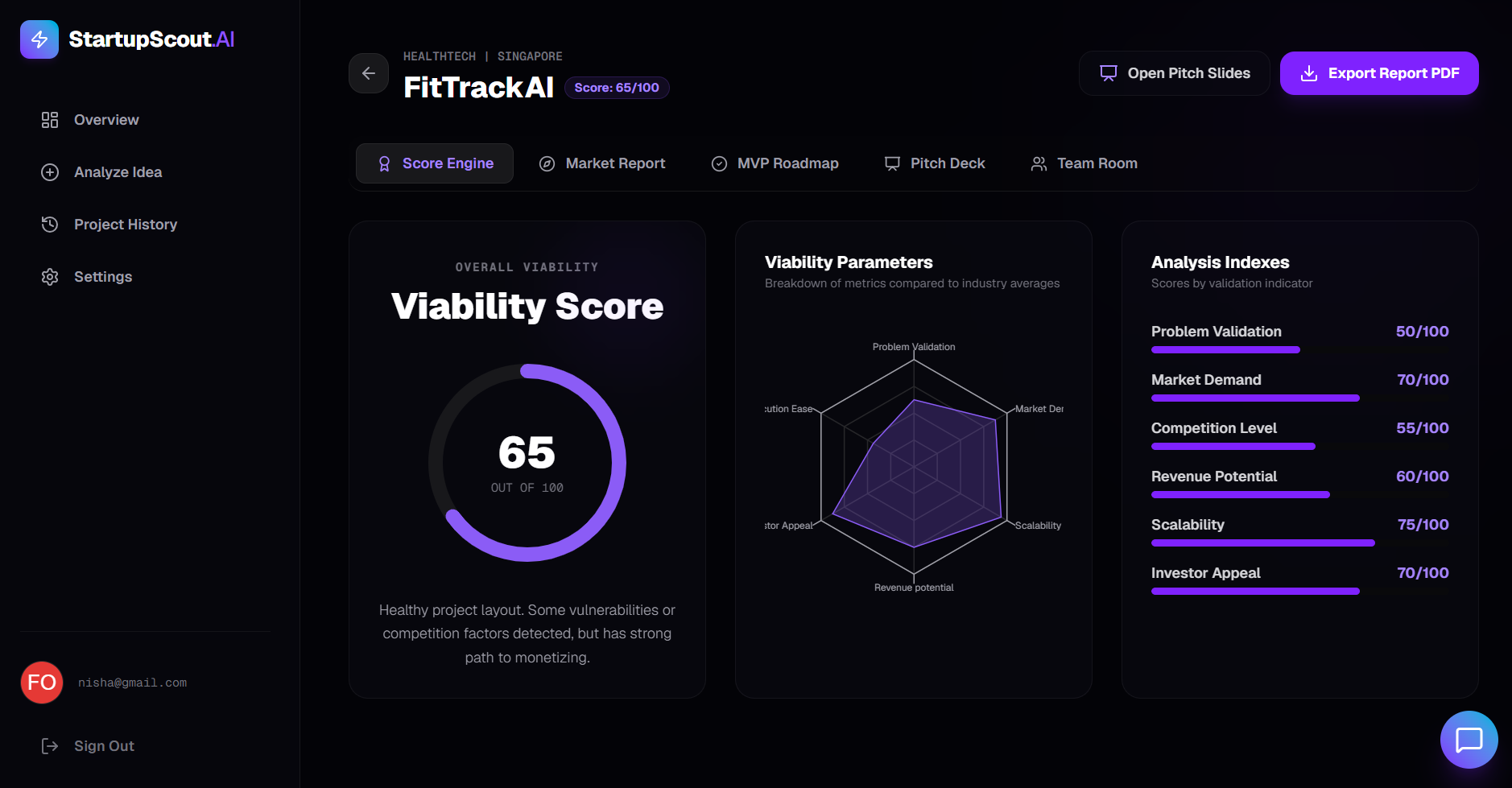
Comprehensive startup viability scoring with market, competition, execution, and scalability analysis.
-
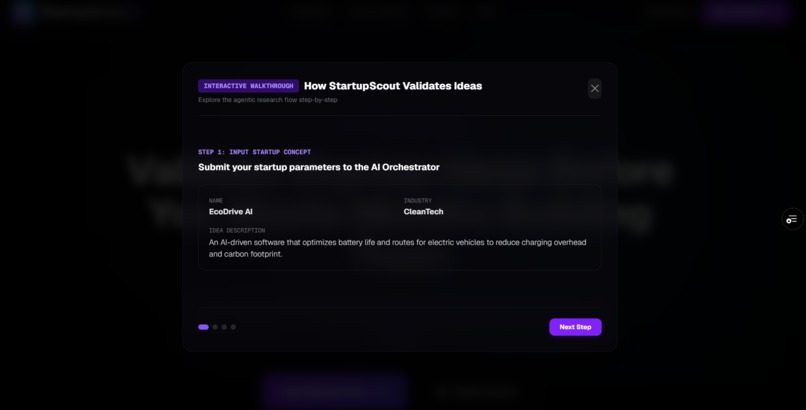
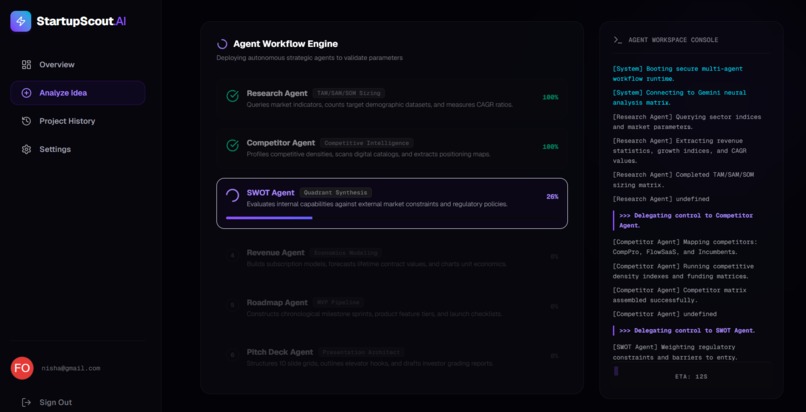
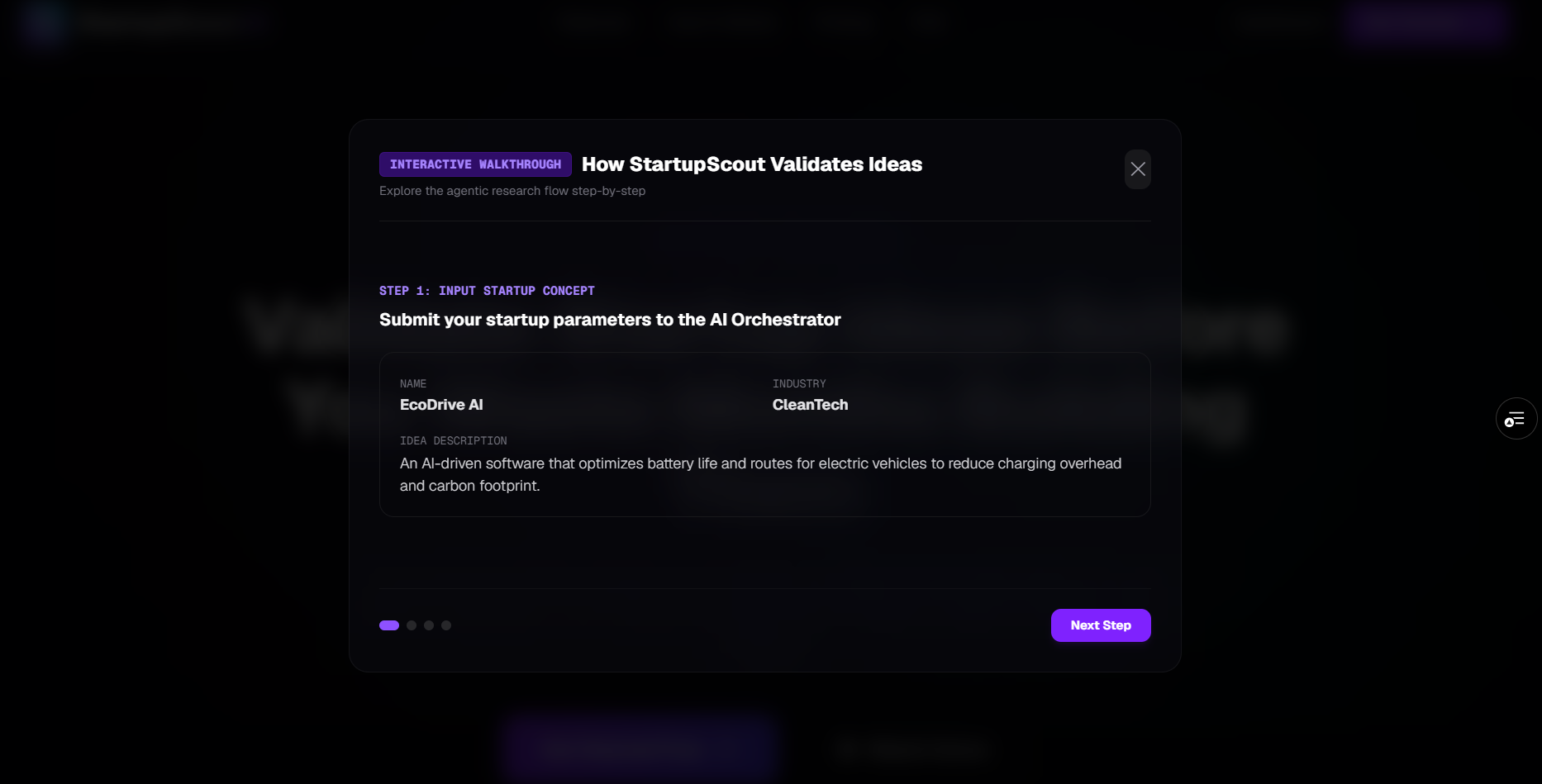
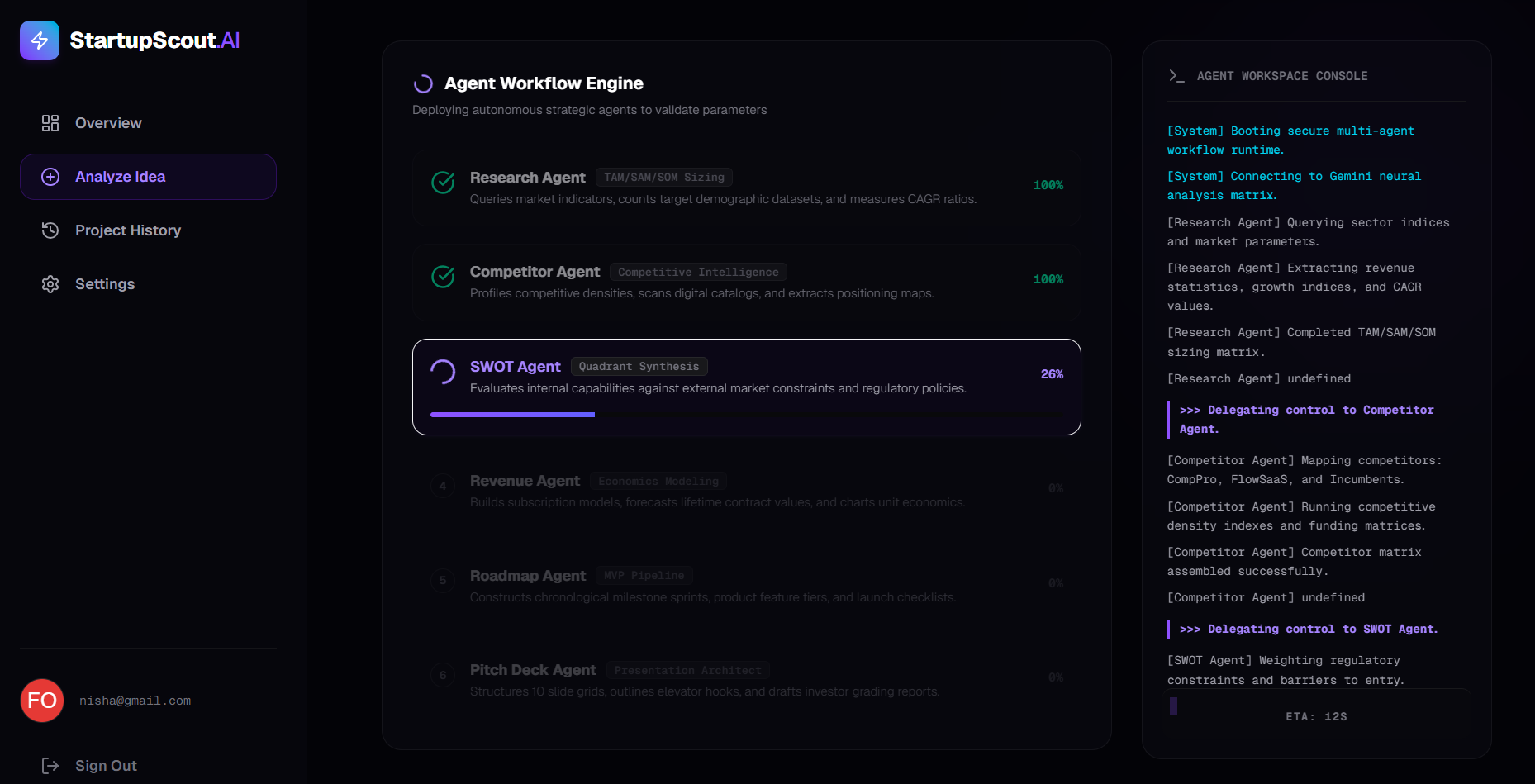
Autonomous AI research agents gathering market intelligence, competitor insights, and validation signals.
-
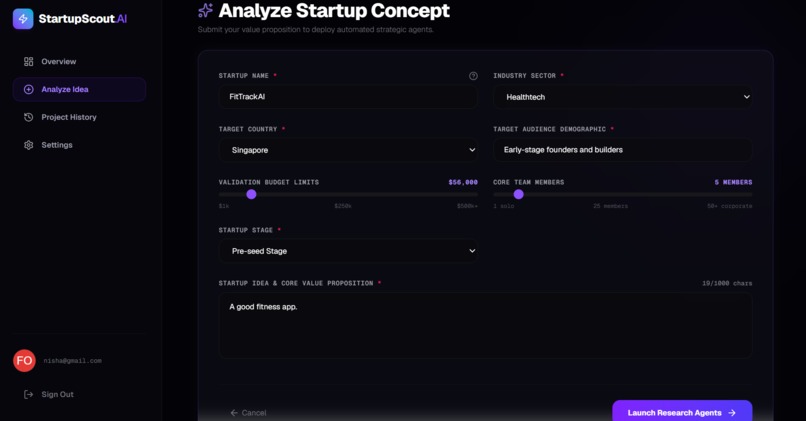
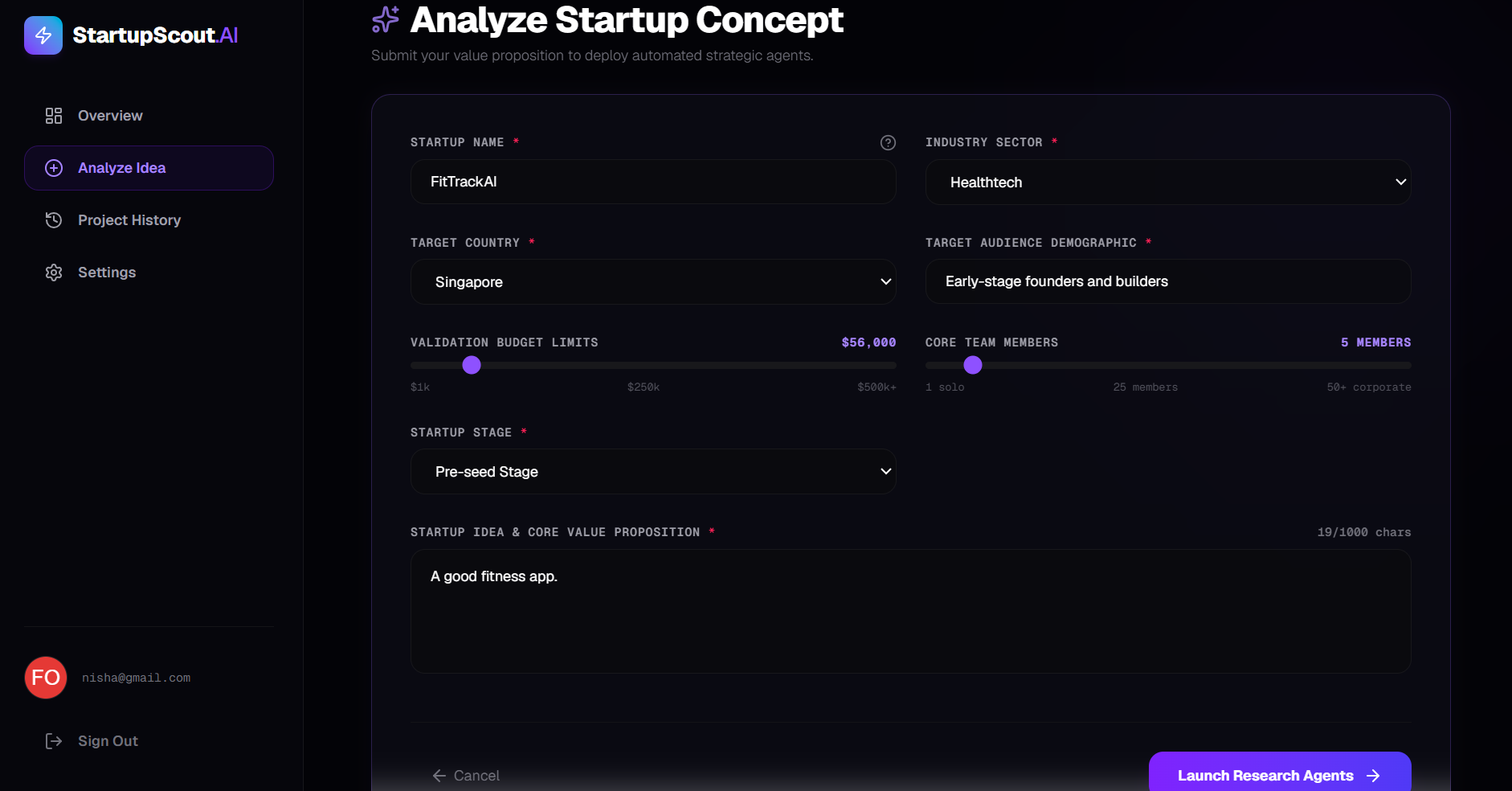
Structured startup evaluation workflow capturing industry, audience, budget, geography, and growth-stage inputs.
-
Modern authentication experience designed for founders to access validation reports and startup portfolios.
-
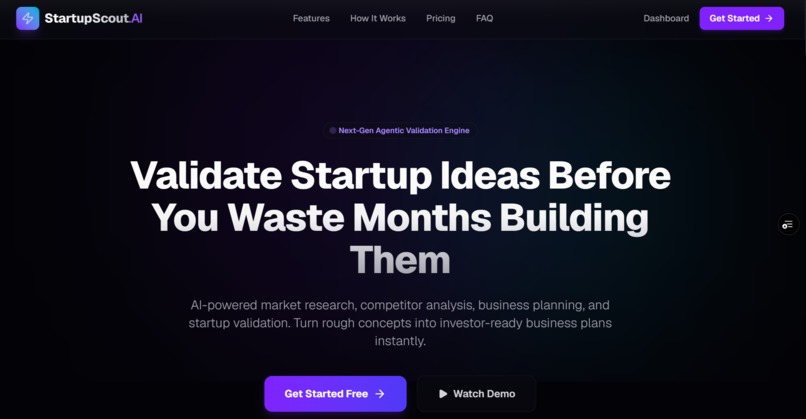
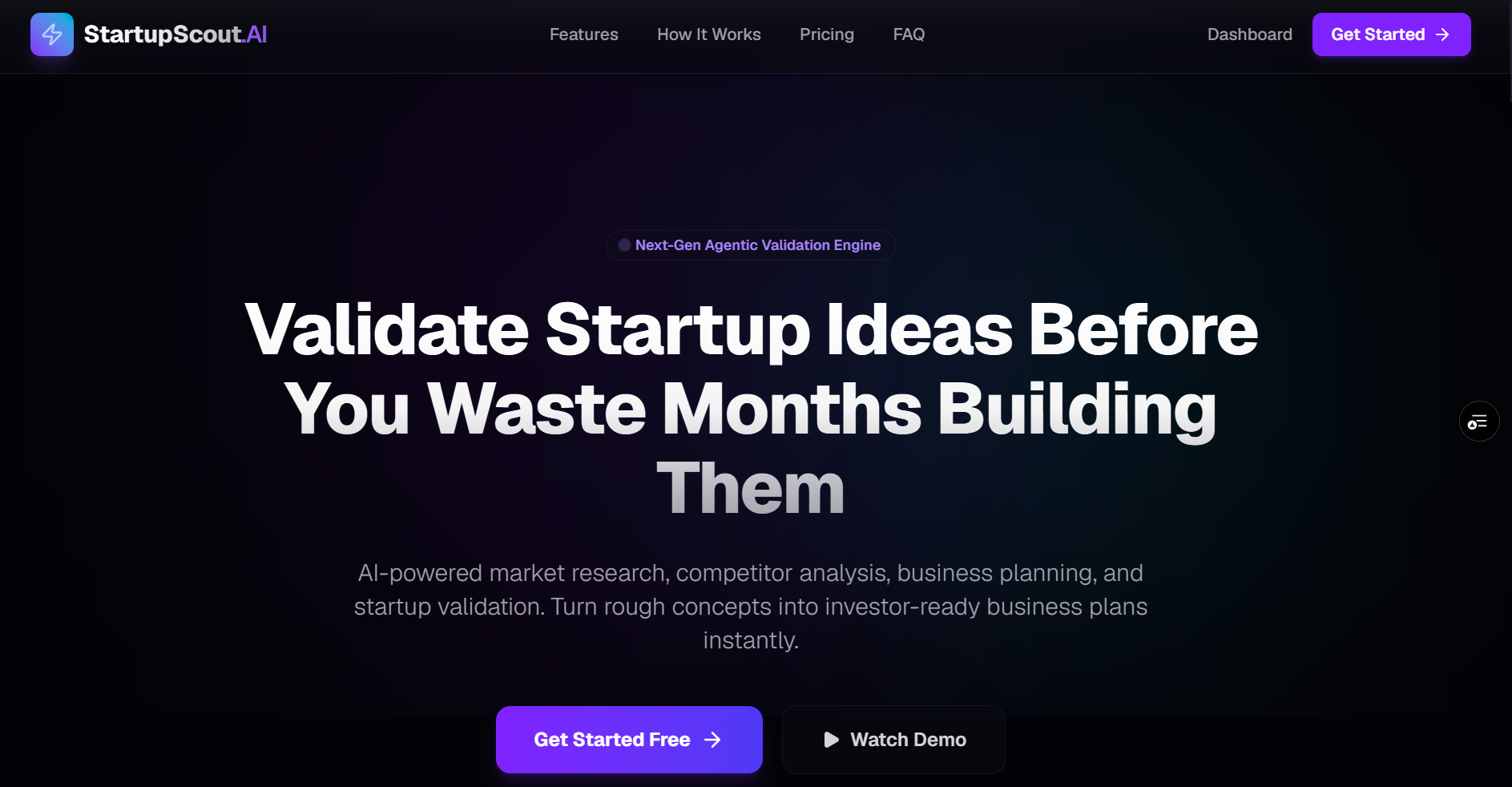
StartupScout.AI enables founders to validate startup ideas before investing months into development.
Inspiration
Many aspiring founders spend months building products before validating whether there is a real market need. Market research, competitor analysis, and business planning are often expensive, time-consuming, and inaccessible to students and first-time entrepreneurs.
StartupScout AI was built to help founders validate startup ideas before investing significant time and resources. The goal was to create an AI-powered platform that transforms a raw idea into actionable business intelligence within minutes.
What it does
StartupScout AI analyzes startup ideas and generates comprehensive strategic reports including:
- Market opportunity analysis
- Competitor research
- Business model evaluation
- Risk assessment
- Feasibility scoring
- Growth recommendations
- Investor-oriented strategic insights
Users can create accounts, manage projects, track analyses, and export reports from a centralized dashboard.
How we built it
The platform was developed using:
- Next.js
- TypeScript
- Tailwind CSS
- Google Gemini API
- Supabase
- PostgreSQL
- Vercel
The frontend provides a modern SaaS experience, while the backend handles authentication, project management, AI report generation, and persistent storage.
To support production deployment, the application was migrated from local file-based storage to a PostgreSQL database hosted on Supabase.
Challenges we ran into
One of the biggest challenges was deploying the application to production.
Initially, user data and projects were stored in local JSON files. During deployment on Vercel, the application encountered EROFS (Read-Only File System) errors because serverless environments do not allow persistent local file writes.
To solve this, the persistence layer was redesigned and migrated to Supabase PostgreSQL. This required:
- Database schema design
- Authentication persistence
- Session management
- Environment variable configuration
- Row Level Security setup
- Production deployment debugging
This migration significantly improved scalability and reliability.
Accomplishments that we're proud of
- Built a complete AI-powered SaaS platform
- Successfully integrated Gemini AI
- Implemented authentication and session management
- Migrated to a production-grade PostgreSQL database
- Deployed successfully on Vercel
- Created an end-to-end startup validation workflow
What we learned
Through this project we gained hands-on experience with:
- Full-stack SaaS architecture
- Cloud deployment with Vercel
- PostgreSQL database design
- Supabase integration
- Environment variable management
- Production debugging and monitoring
- AI application development
What's next for StartupScout AI
Future improvements include:
- Advanced startup scoring models
- Multi-agent analysis workflows
- Investor pitch deck generation
- Team collaboration features
- Market trend forecasting
- Enhanced PDF export and reporting capabilities
StartupScout AI aims to become a complete decision-support platform for founders, startups, and innovators.
Built With
- ai-agents
- google-gemini-api
- next.js
- postgresql
- react
- rest-apis
- supabase
- tailwind-css
- typescript
- vercel


Log in or sign up for Devpost to join the conversation.