StartupRecruit — Project Story
Inspiration
Hiring is one of the most important decisions for an early-stage startup, but it is also one of the most time-consuming. Startups usually do not have large HR teams, expensive ATS tools, or enough time to manually screen hundreds of resumes.
While working on this idea, I noticed a common problem: most hiring workflows still depend heavily on resumes, keywords, and surface-level interviews. But for startups, the real question is different:
Can this candidate actually build, solve, and ship in a real startup environment?
That thought inspired StartupRecruit, an AI-powered HR recruitment automation platform that helps startups identify candidates based on their real ability to perform, not just what they write on a resume.
The goal was to build a system that can automate the repetitive parts of hiring while keeping humans involved in important edge cases.
What it does
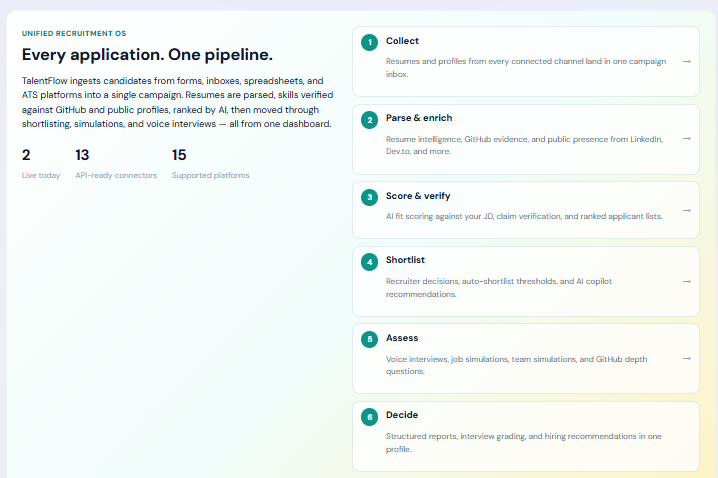
StartupRecruit automates the recruitment workflow from resume intake to candidate assessment.
The platform helps recruiters:
- Collect candidate applications from sources like email or an apply portal.
- Parse and normalize resumes into structured candidate profiles.
- Extract important information such as skills, experience, projects, education, and contact details.
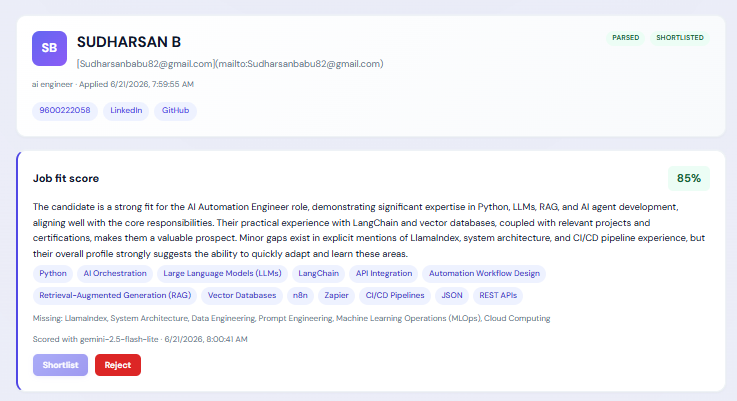
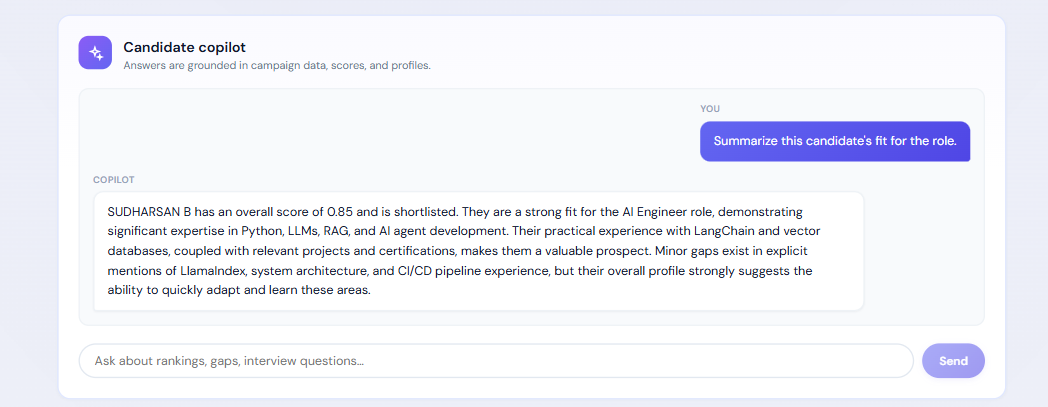
- Match candidates against the job role using AI-based scoring.
- Shortlist candidates based on role fit and evidence from their resume or public work.
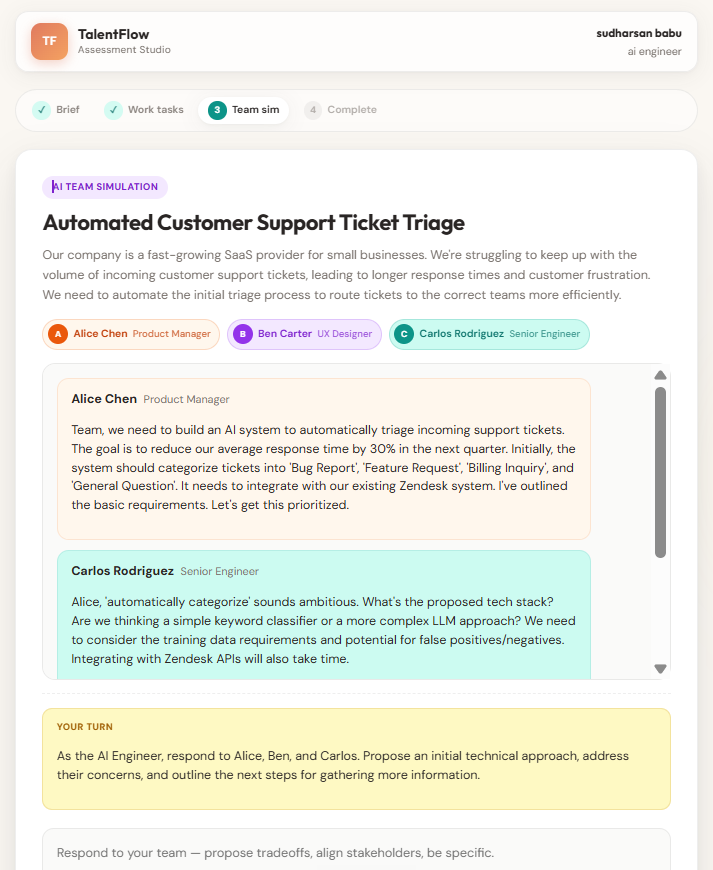
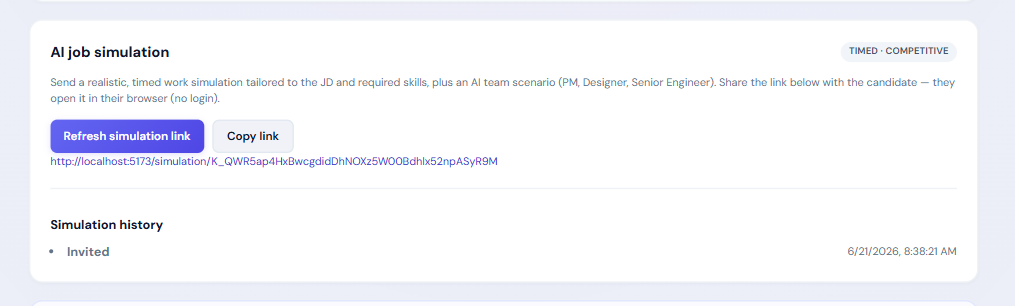
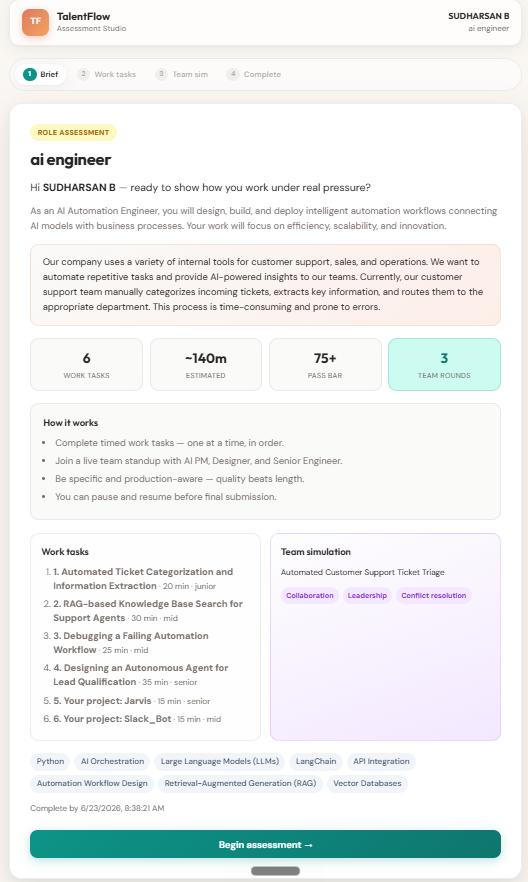
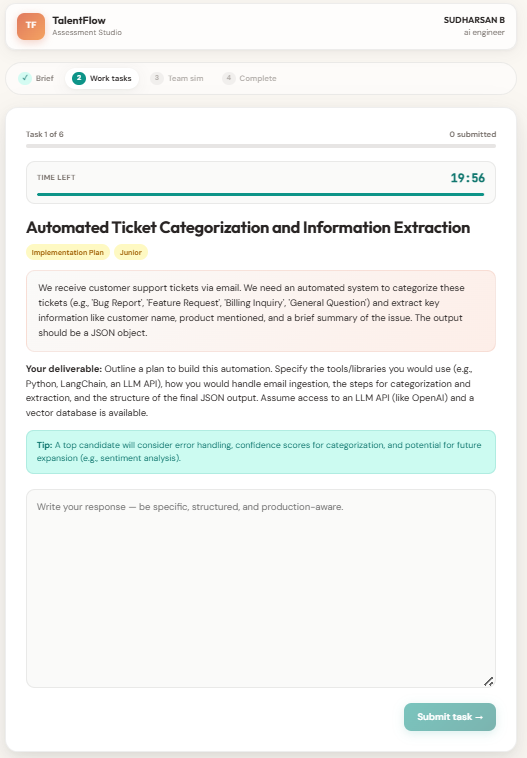
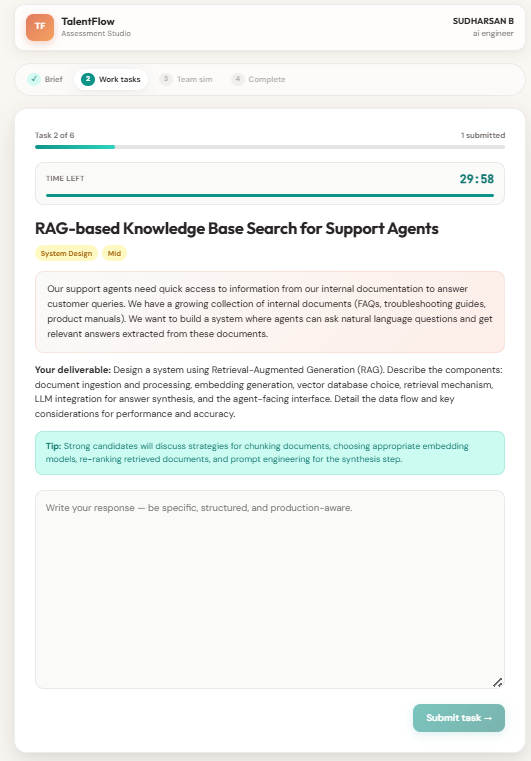
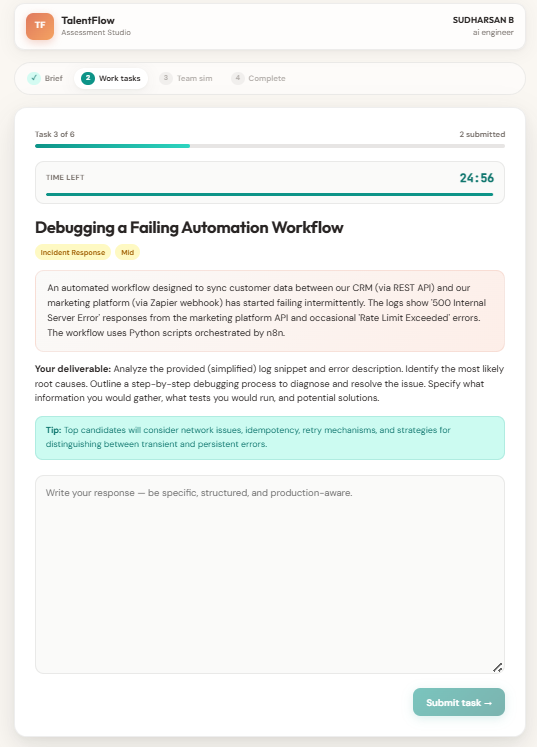
- Generate job-simulation-based assessments depending on the role and the kind of product the startup is building.
- Help recruiters make faster and more reliable hiring decisions.
Instead of only asking, “Does this resume look good?”, StartupRecruit asks:
“Can this candidate prove they can do the work?”
For example, if a startup is hiring a backend intern for a SaaS product, the platform can create a role-specific simulation such as designing an API flow, debugging a service, or explaining database choices. This makes the assessment more practical and closer to real work.
A simplified scoring idea is:
$$ CandidateScore = ResumeFit + SkillMatch + ProjectEvidence + SimulationPerformance $$
This makes the hiring decision more evidence-based instead of depending only on resume keywords.
How we built it
We built StartupRecruit as a modular AI-driven recruitment workflow.
The system is divided into multiple stages:
Application Intake Candidate resumes are collected from email or application sources and stored for processing.
Resume Processing Resumes are converted into clean text and normalized into a common format.
Entity Extraction AI extracts key candidate details such as technical skills, work experience, education, projects, certifications, and links.
Candidate Profile Generation Each candidate is converted into a structured profile that can be searched, compared, and ranked.
Role Matching and Ranking The system compares the candidate profile with the job description and generates a fit score.
Job Simulation Assessment Based on the recruiter’s requirement and the startup’s product context, the system can generate practical tasks to evaluate whether the candidate can actually perform the role.
Human-in-the-Loop Review Recruiters can review edge cases, override decisions, and make the final call when needed.
The project was built with a backend-first approach using Python, FastAPI, PostgreSQL, Redis/Celery-style asynchronous processing, and AI agents for resume intelligence and assessment generation. The workflow is designed to be extendable so that more integrations such as ATS tools, GitHub enrichment, voice interviews, and onboarding automation can be added later.
Challenges we ran into
One of the biggest challenges was designing the system in a way that feels useful for real recruiters, not just technically impressive.
Resume data is messy. Different candidates use different formats, layouts, and wording. Extracting consistent information from resumes was a major challenge.
Another challenge was avoiding over-reliance on AI scoring. Hiring is a sensitive decision, so the system should support recruiters instead of blindly replacing them. That is why we included a human-in-the-loop approach for uncertain or edge-case candidates.
We also had to think deeply about how to make assessments practical. A generic coding test is not enough for startup hiring. The assessment should match the actual product, role, and working environment.
Some technical challenges included:
- Handling different resume formats.
- Creating a clean candidate schema.
- Extracting accurate entities from unstructured resume text.
- Designing a scoring system that is explainable.
- Building the workflow in a modular way so each agent can be improved independently.
- Thinking about fairness, transparency, and recruiter control in AI-based hiring.
Accomplishments that we're proud of
We are proud that StartupRecruit focuses on a real hiring problem faced by early-stage startups.
The biggest accomplishment is shifting the hiring approach from resume-based filtering to evidence-based hiring.
Instead of only ranking candidates by keywords, StartupRecruit tries to understand:
- What the candidate has built.
- What skills they can demonstrate.
- How well they match the role.
- Whether they can perform in a realistic startup task.
- Where the recruiter should focus their attention.
We are also proud of designing the project as an end-to-end workflow rather than a single AI feature. It connects resume intake, parsing, ranking, assessment, and decision support into one pipeline.
Most importantly, the project is built around the idea that AI should reduce repetitive work for recruiters while helping them make better human decisions.
What we learned
Through this project, we learned that recruitment automation is not just about parsing resumes or ranking candidates. It is about designing a trustworthy decision-support system.
We learned how difficult it is to convert messy human documents into structured data. We also learned the importance of explainability in AI systems, especially when the output can affect someone’s career opportunity.
We understood that early-stage startups need a different hiring workflow compared to large companies. They do not just need people with good resumes. They need people who can adapt, build quickly, and take ownership.
We also learned how multi-agent workflows can be used in real-world business processes. Each agent can handle a specific responsibility, such as intake, extraction, scoring, assessment generation, and reporting.
The biggest learning was this:
A good AI hiring system should not replace human judgment. It should make human judgment faster, clearer, and more evidence-based.
What's next for StartupRecruit
The next step for StartupRecruit is to make the platform more complete, reliable, and startup-ready.
Planned improvements include:
- A recruiter dashboard to view ranked candidates.
- GitHub and portfolio-based candidate enrichment.
- AI-generated job simulations based on the startup’s actual product.
- Automated candidate communication.
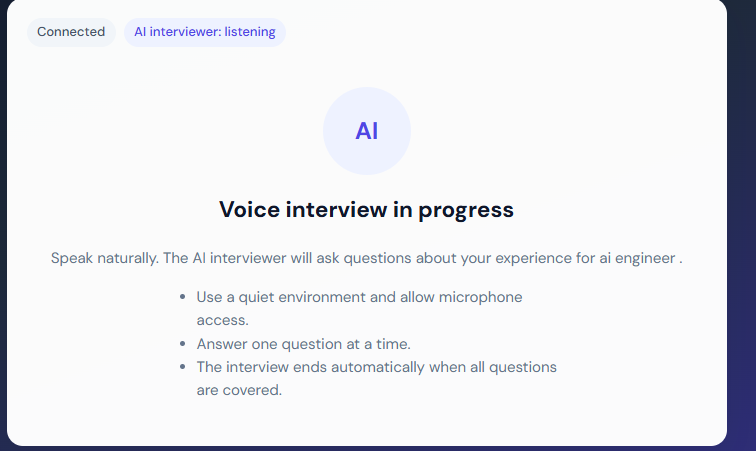
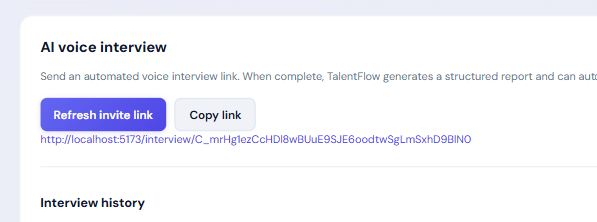
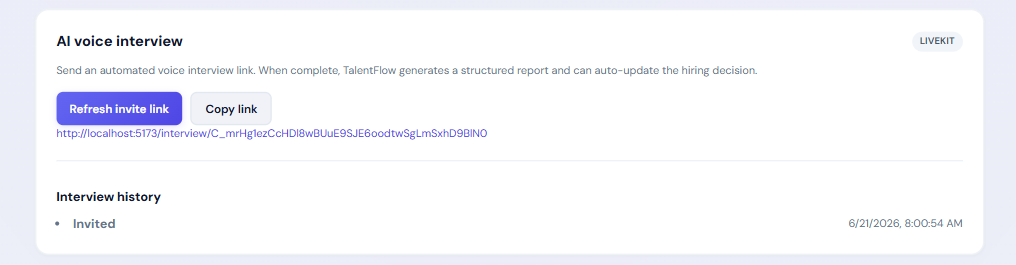
- Voice interview support.
- Assessment reports with strengths, weaknesses, and hiring recommendations.
- Bias and fairness checks in the scoring workflow.
- Integration with Gmail, forms, ATS tools, and onboarding systems.
- A feedback loop where recruiter decisions improve future recommendations.
The long-term vision is to make StartupRecruit a reliable hiring copilot for early-stage startups.
We want to help startups hire people not just because they look good on paper, but because they can actually solve problems, build products, and ship meaningful work.


Log in or sign up for Devpost to join the conversation.