
Inspiration
Technology moves fast enough that a 'new' idea can become old news in a weekend. I kept running into the same problem: I'd get excited about an idea, spend a weekend building it, and then discover three other apps already doing the exact same thing — better. The validation always came too late, after the time was already sunk.
I looked for a tool that could give me an honest, data-backed gut-check before I committed to building — something that would tell me who else was in the space, whether the idea actually held up, and where to pivot if it didn't. I couldn't find one that felt honest rather than just encouraging. So I built it myself.
What it does
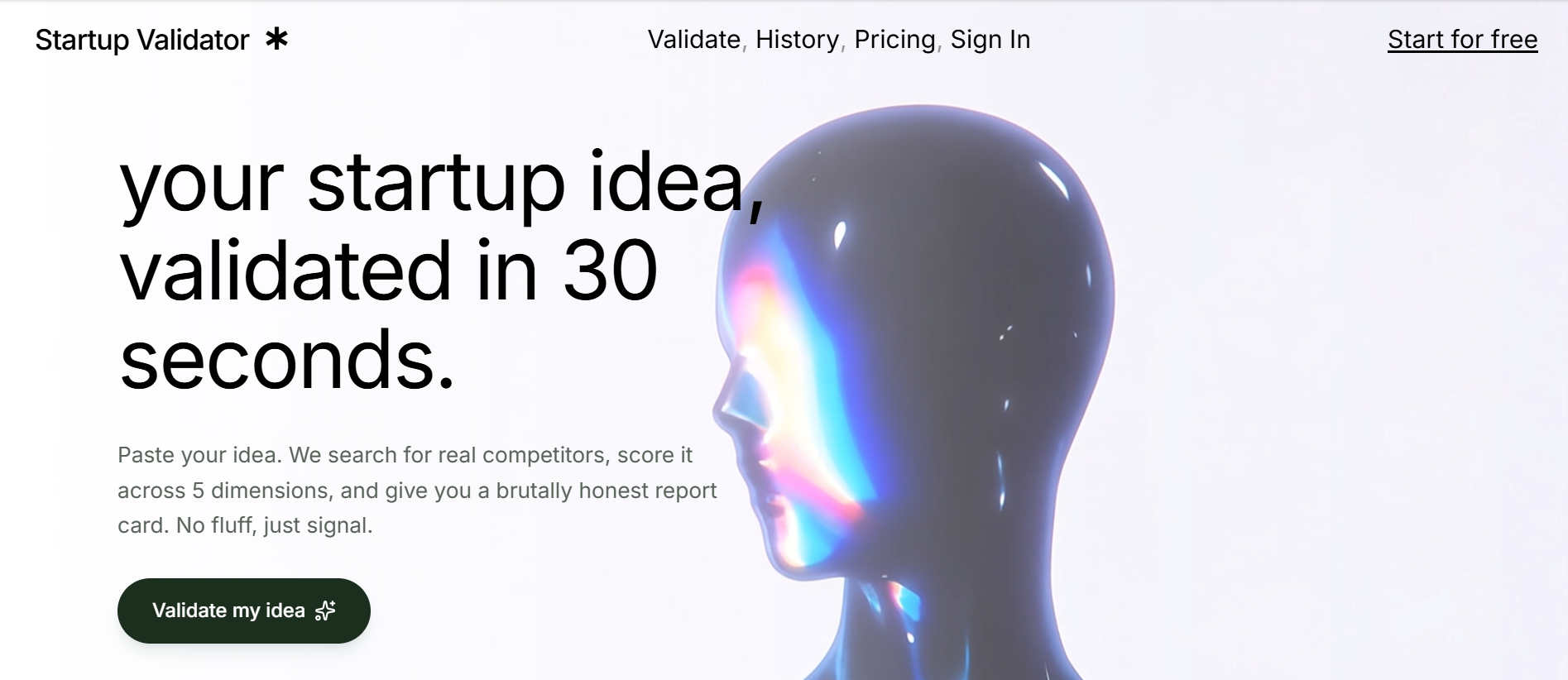
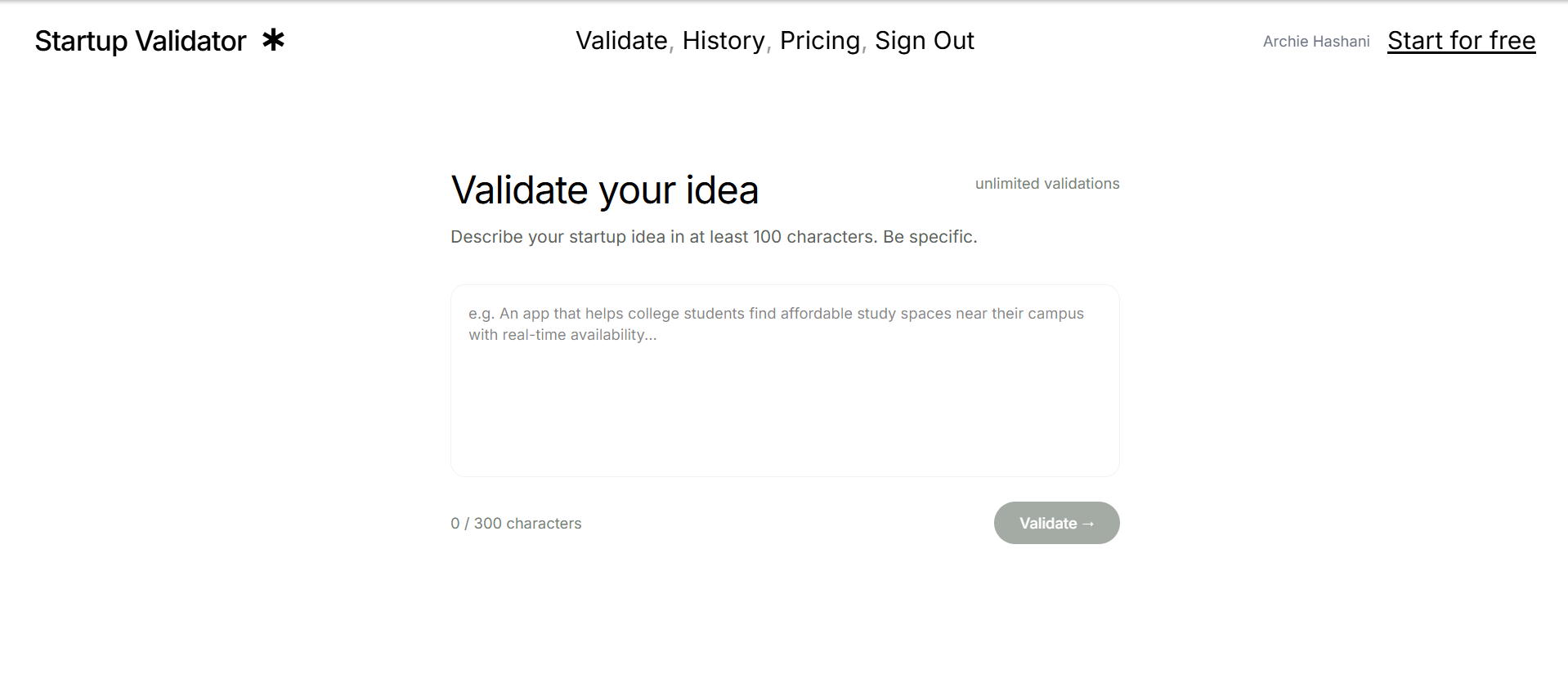
Startup Validator takes any startup idea as input and returns a real validation report in seconds:
- Real competitor search — pulls actual companies and products already operating in that space, not a generic "no competitors found"
- Five-dimension scorecard — scores the idea across the factors that actually determine whether something is worth building
- Pivot suggestions — when the idea is weak as-is, it suggests concrete directions to strengthen or reposition it, instead of just rejecting it
The goal isn't to be a hype machine that tells founders what they want to hear — it's to be the honest co-founder most solo builders don't have.
How we built it
The backend — validation logic, the scoring engine, and the competitor-search pipeline — was built independently, handling the core reasoning that turns a raw idea into a structured report. The frontend was built with AI-assisted development on top of Next.js, which let me move fast on UI while keeping full control over the logic that actually mattered: how the scoring worked and how the competitor data was surfaced. The whole thing was deployed on Vercel so it's live and testable, not just a local demo.
Challenges we ran into
The hardest part wasn't the UI — it was making the validation honest. It's easy to build a tool that just tells people their idea is great; it's much harder to build one that gives a genuinely useful, sometimes uncomfortable, but actionable answer. Getting the competitor search to return relevant, real results (instead of noisy or irrelevant matches) took several iterations, as did tuning the scorecard so it reflected meaningful signal rather than arbitrary numbers.
Accomplishments that we're proud of
Shipping a fully deployed, working product — not a mockup — as a solo first-year student, with the core validation engine built entirely from scratch. Startup Validator isn't a wrapper around a single API call; it's a real pipeline from idea → competitor data → structured scoring → actionable output, live and usable by anyone right now.
What we learned
Honestly, this was the first SaaS product where I built the backend entirely by myself. I've shipped other SaaS products before, but those were vibecoded — this time I actually had to understand what I was building. Along the way I learned a lot about working with APIs and databases, how to actually integrate them properly, and how to get the AI layer to be more accurate and consistent every time, rather than just "working once." After the backend was solid, I wanted to push myself further and build a 3D animated landing page. I'd struggled with this in earlier vibecoded projects and always avoided it, but this time I gave it a real shot — and it actually worked. Ironically, it ended up being the easiest part of the whole build, but I'm still proud I finally pulled it off.
What's next for Startup_Validator
- Expanding competitor search to cover more niche and regional markets, not just the most obvious global players
- Adding an AI confidence signal , which will indicate us how much ai is confident with the answers and how much data it had to work with.
- Adding a "track over time" feature so founders can re-validate an idea as it evolves
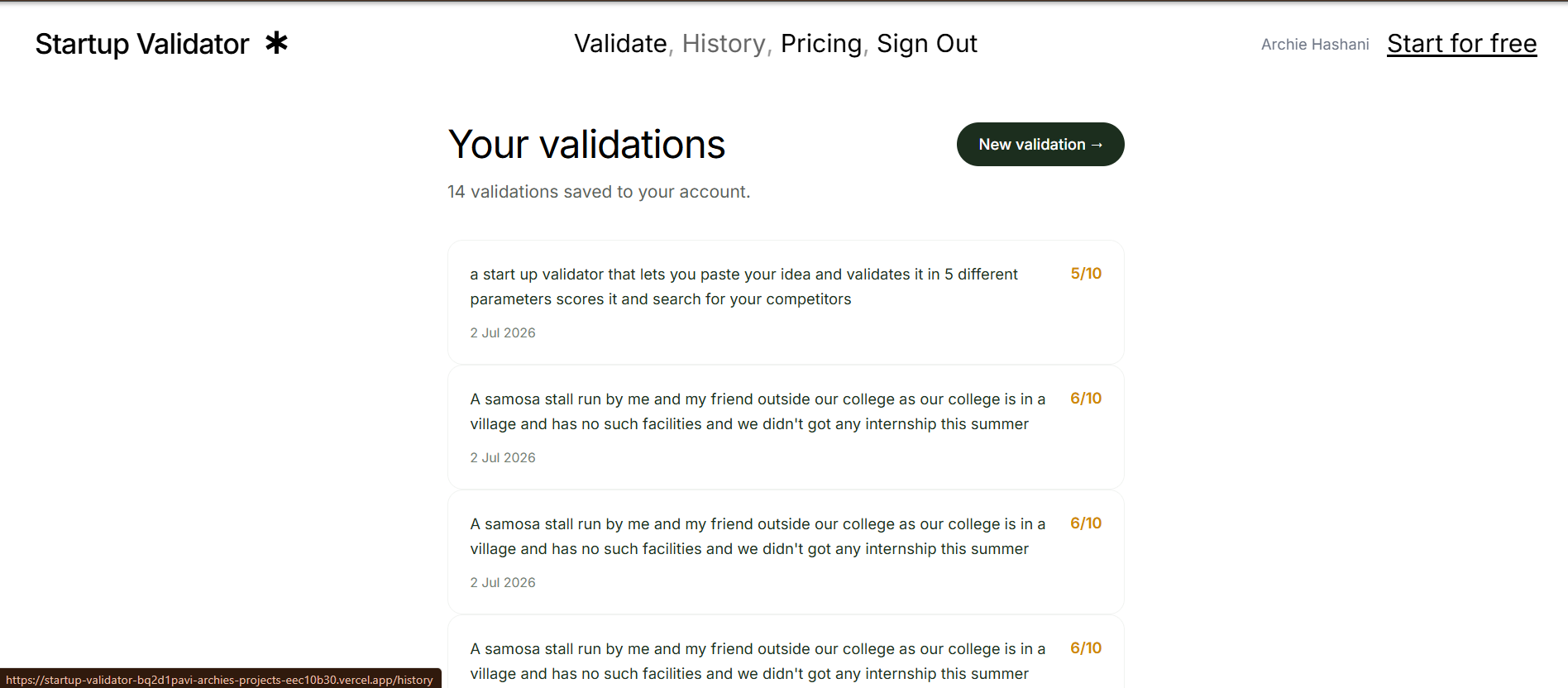
- Building lightweight user accounts so people can save and revisit past validation reports
- Exploring a public leaderboard or gallery of validated ideas to help other builders find inspiration and gaps in the market
Built With
- groq-api-(llama-3.3-70b)
- next.js-15
- nextauth.js
- postgresql-(hosted-on-neon)
- prisma-orm
- react-19
- serper-api-(google-search)
- tailwind-css-v4
- vercel
