-
-
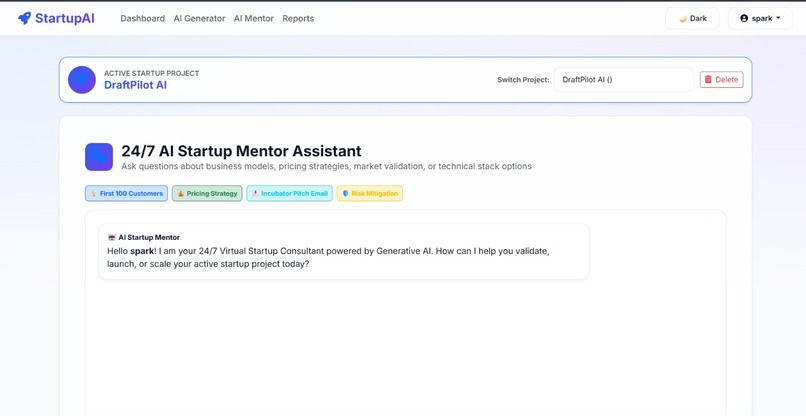
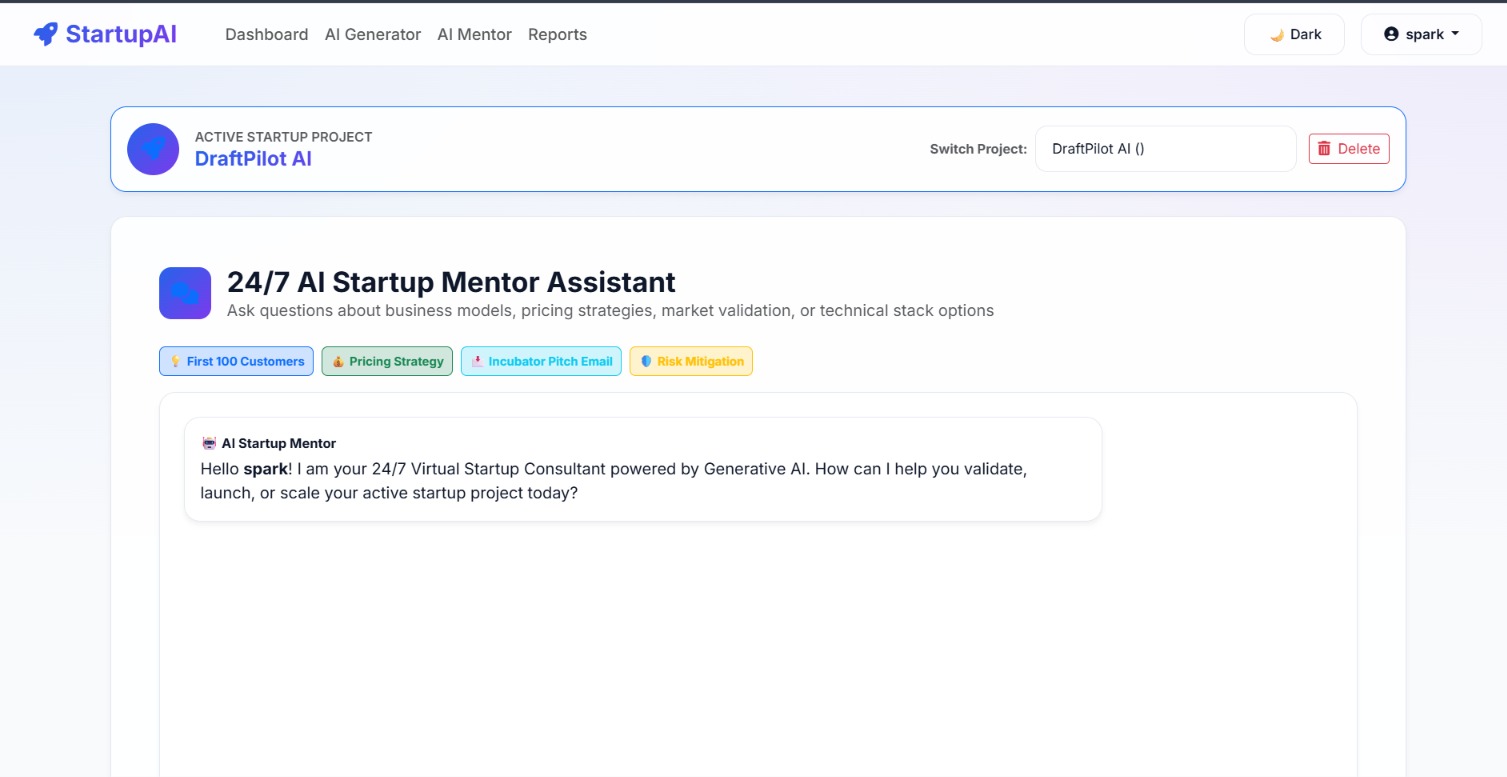
AI assistant to assist in case of any difficulties
-
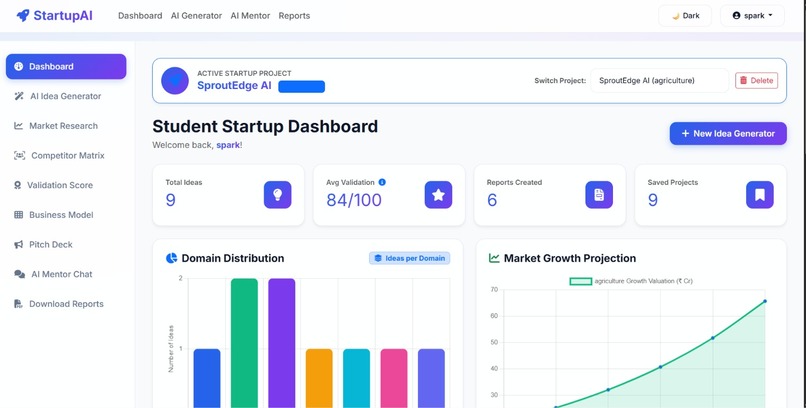
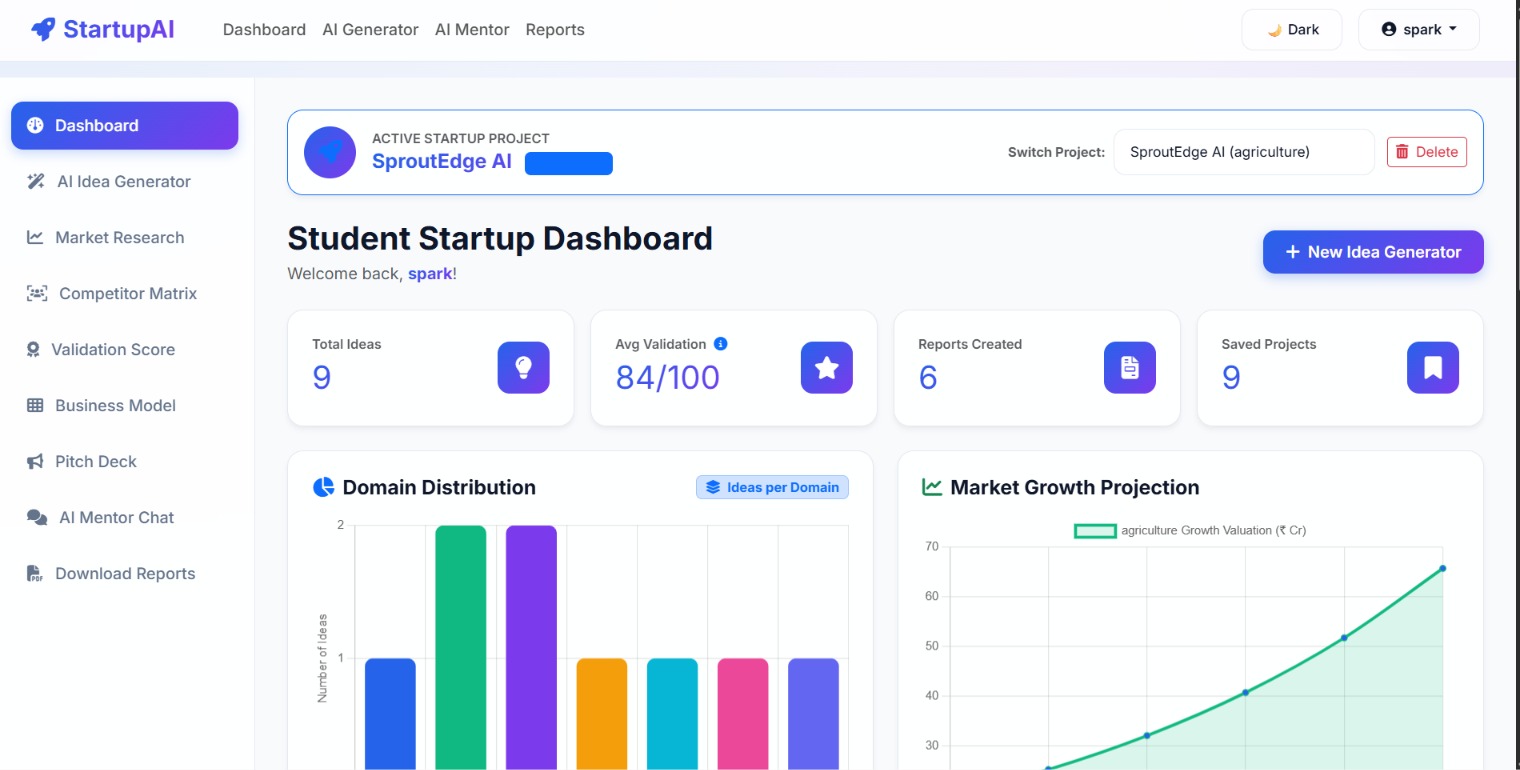
Student Startup Dashboard
-
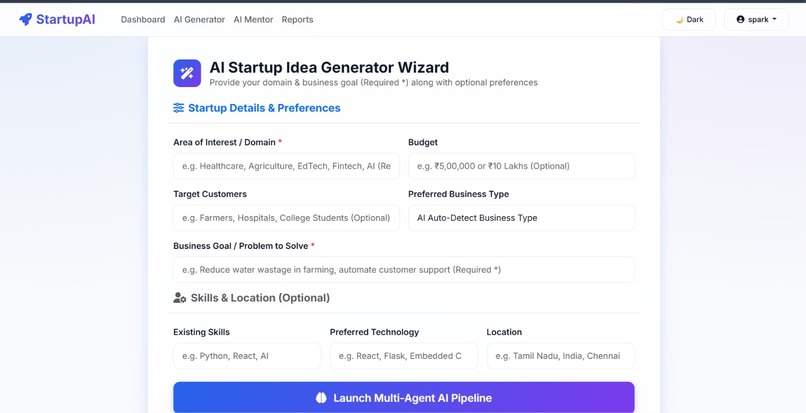
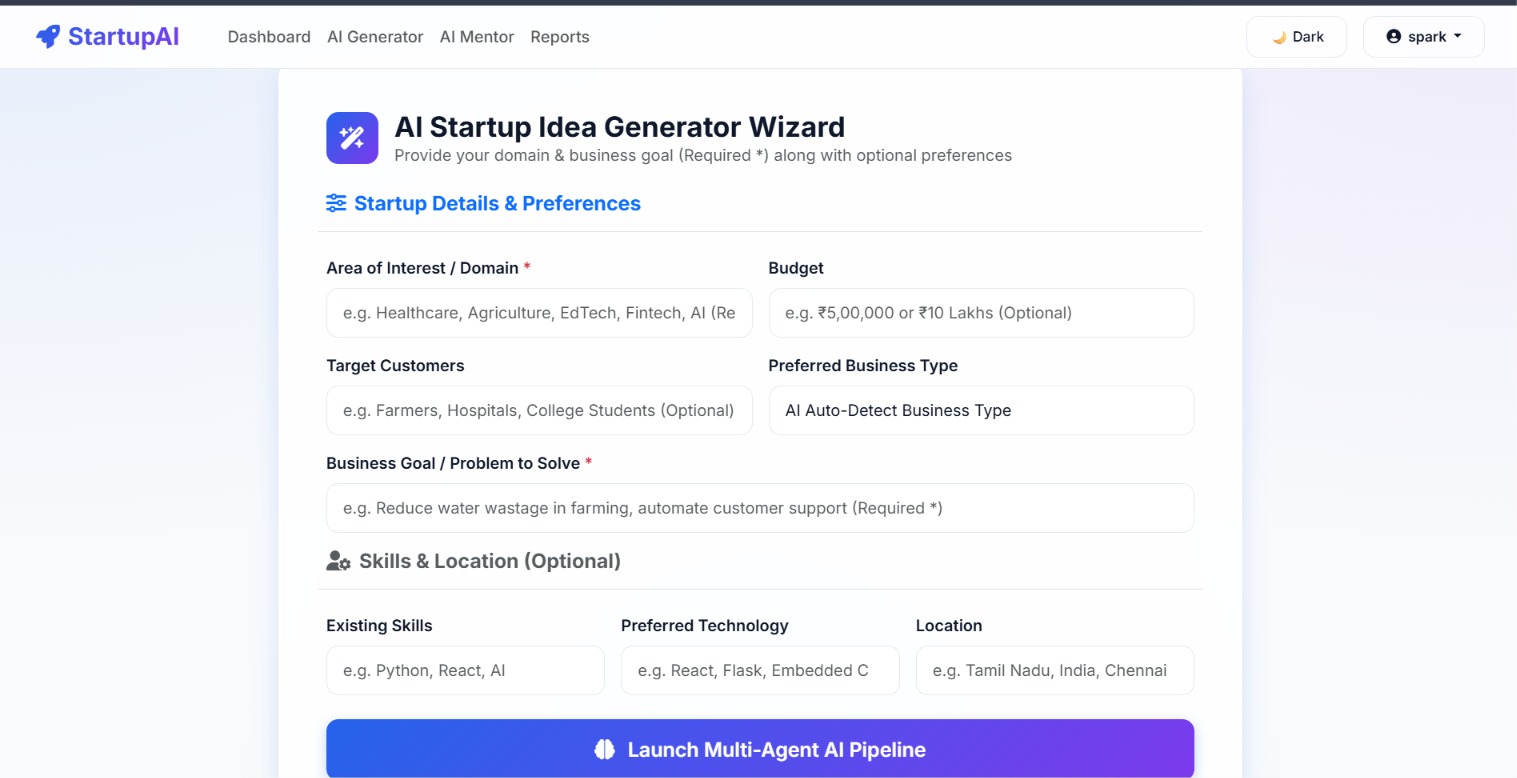
Idea generation window
-
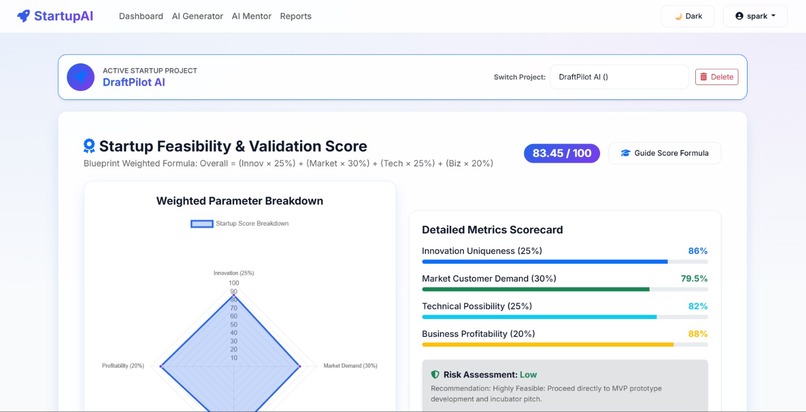
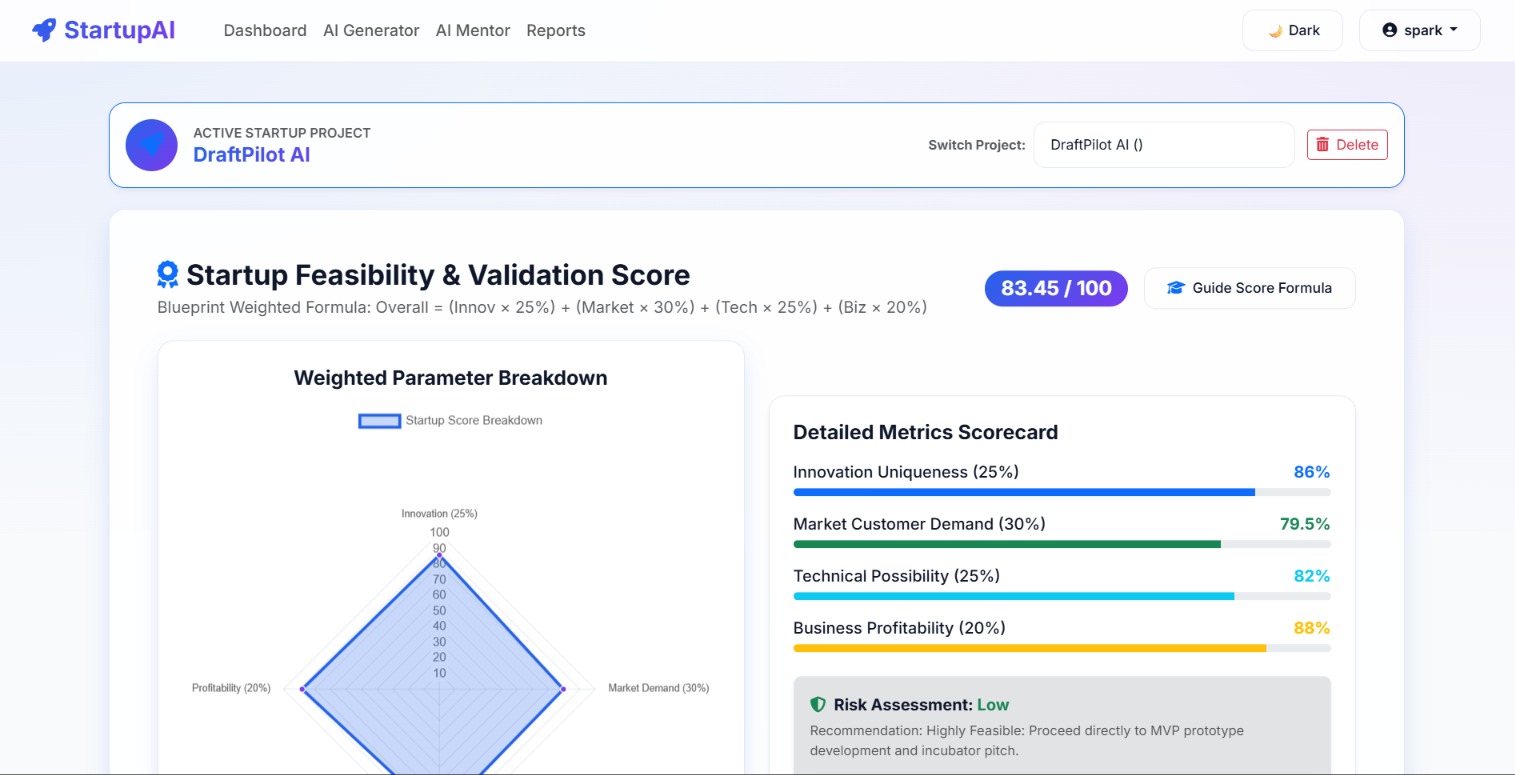
Validation and feasiblity analysis of the idea generated
-
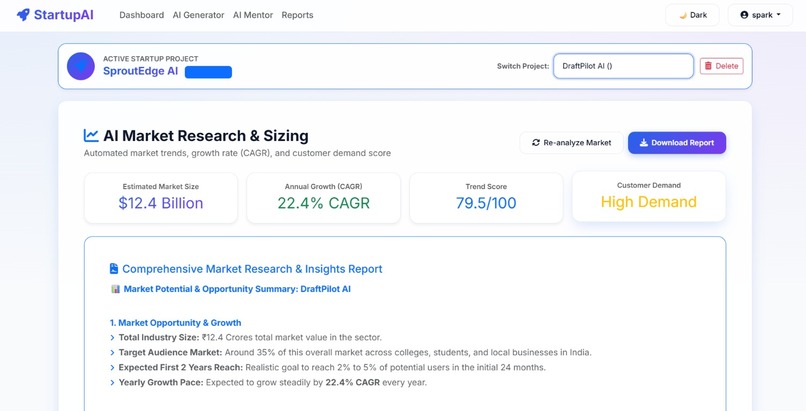
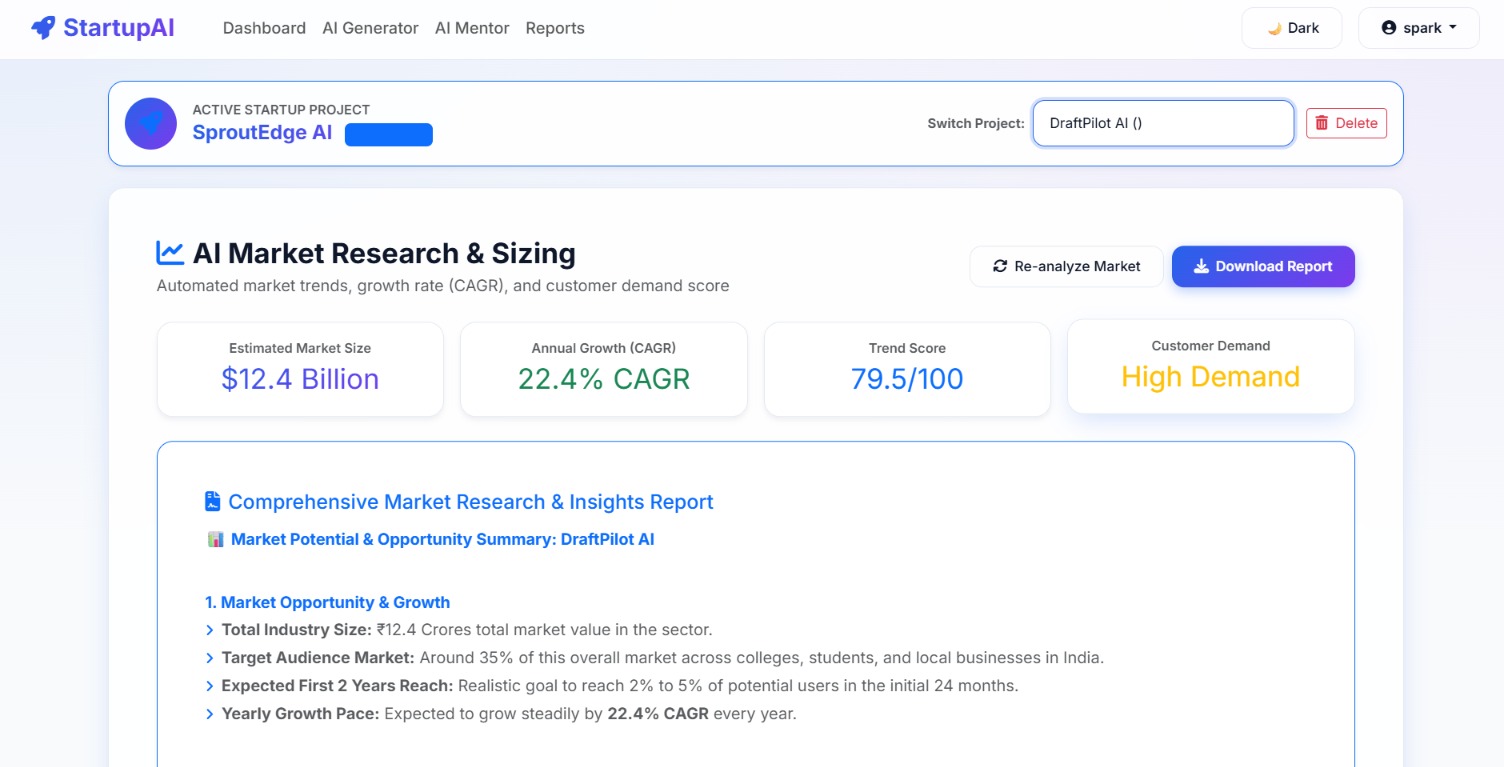
Market analysis based on startup idea generated
-
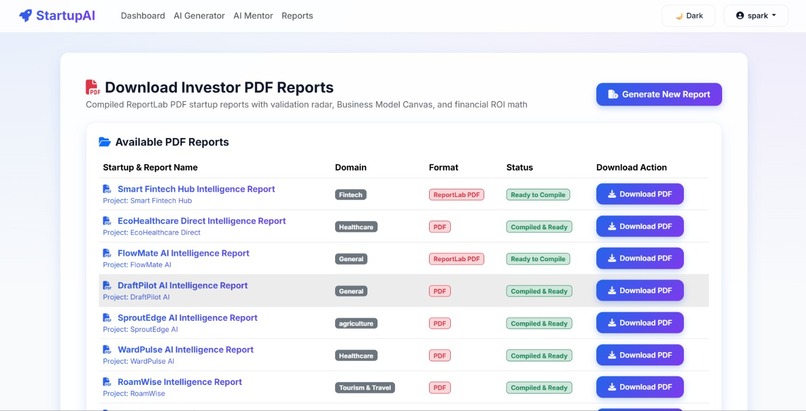
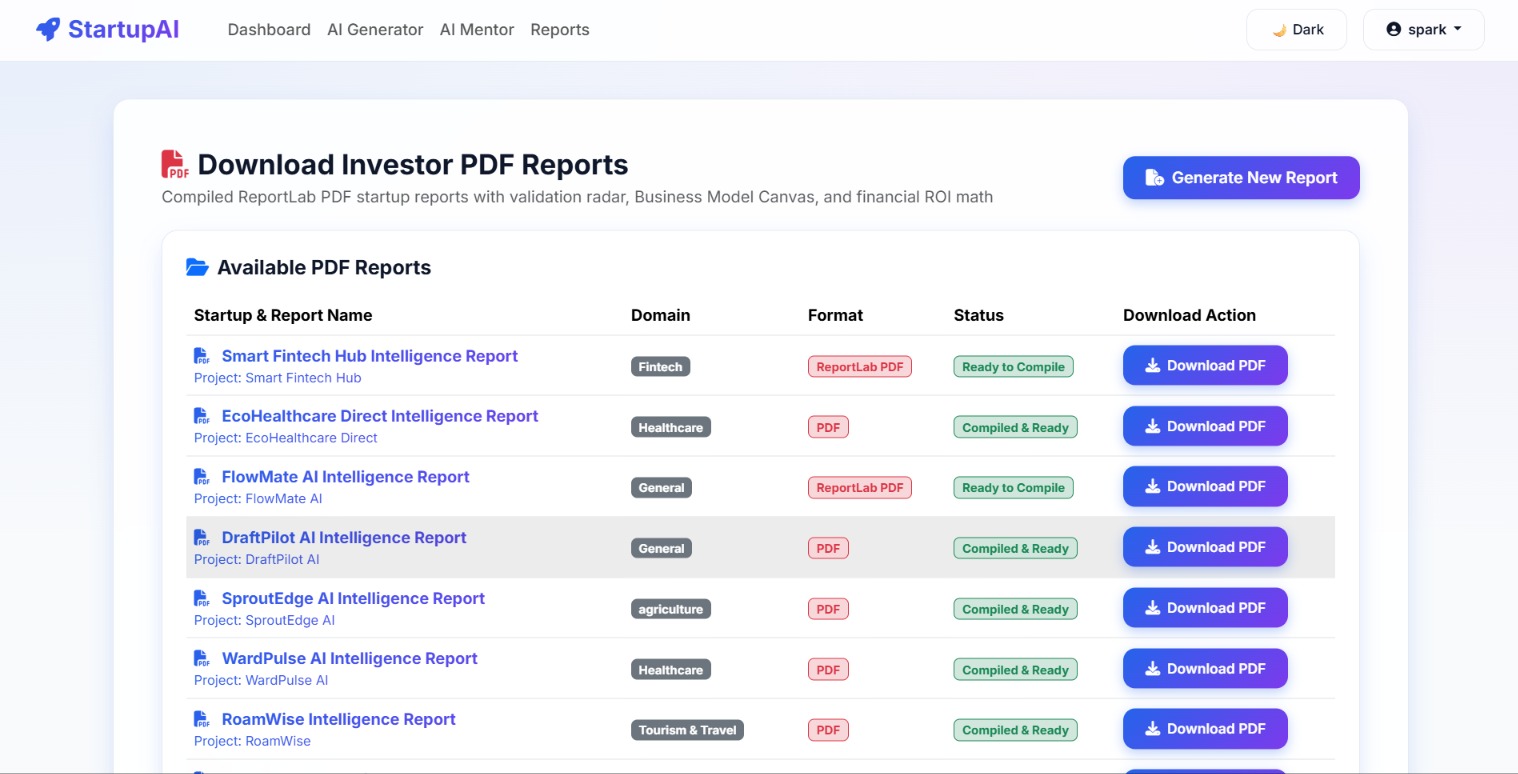
Reports generated in both view and download formats
-
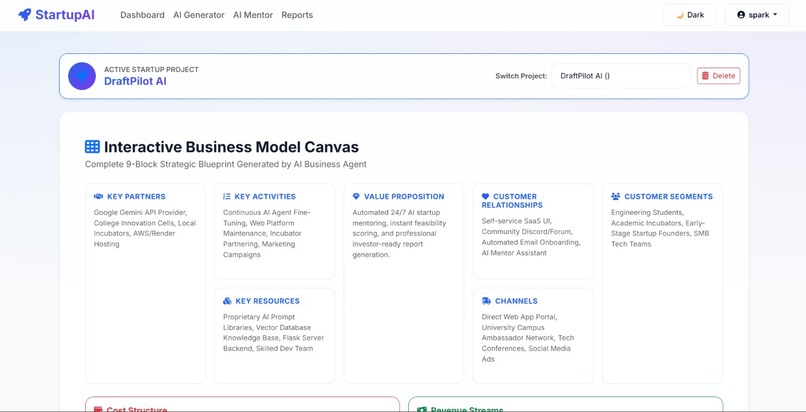
-
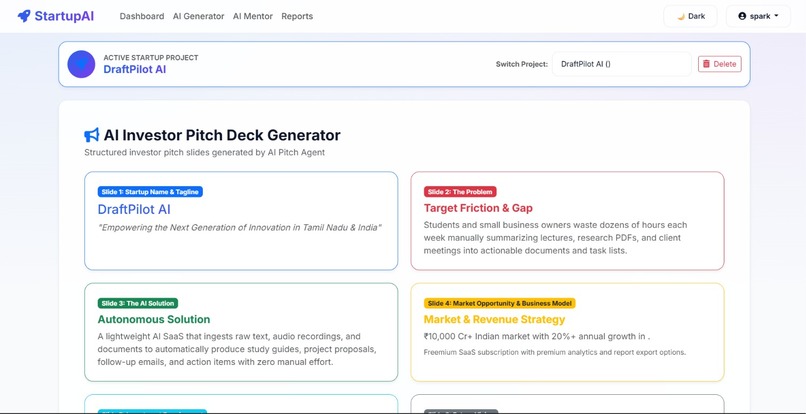
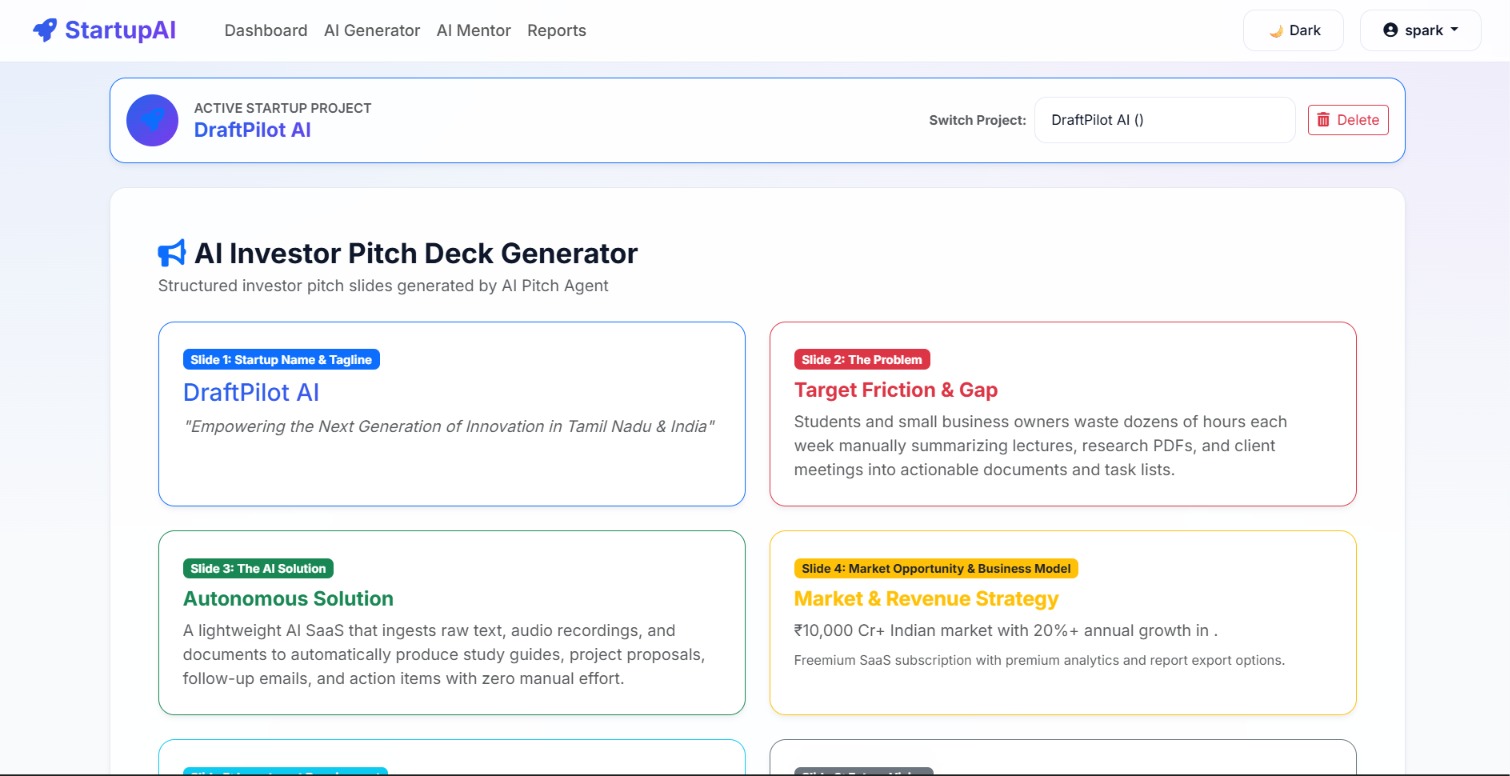
Investor pitch generation window
-
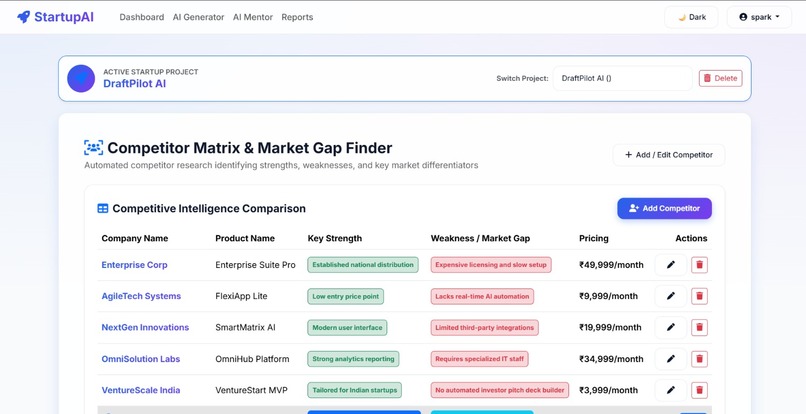
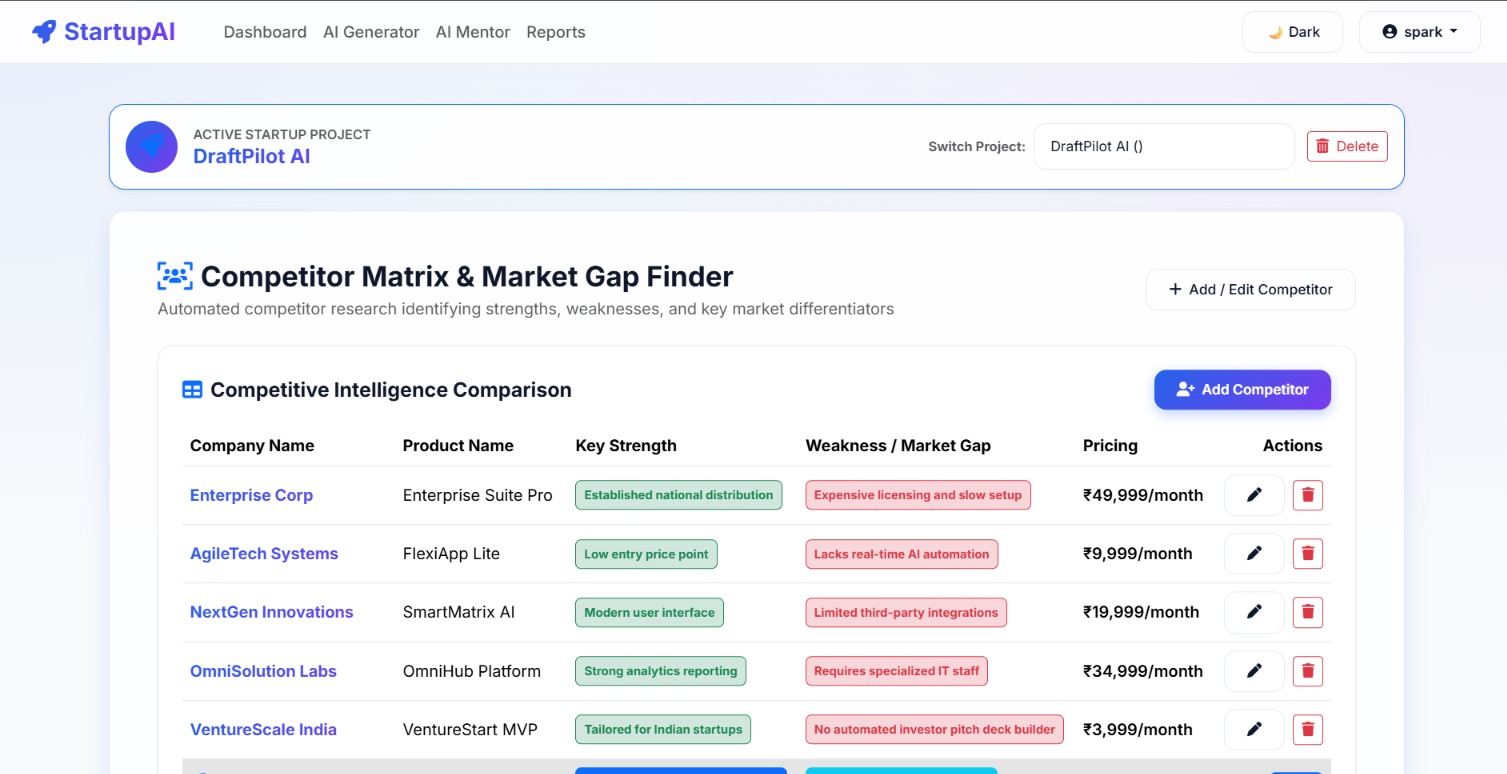
Competitor matrix of the startup idea generated
Inspiration
We noticed that many students have startup ideas, but the difficult part is knowing whether those ideas can actually work. Most students don't have access to business mentors or the time to research customers, competitors, market demand, technical feasibility, and business models separately. That made us think: what if a student could simply enter an idea and get a structured analysis before deciding to build it? This became the motivation behind Startup AI. We wanted to use Generative AI not just to generate ideas, but to actually question, analyze, score, and improve them. Our goal is to make the early startup journey easier for students and first-time entrepreneurs.
What it does
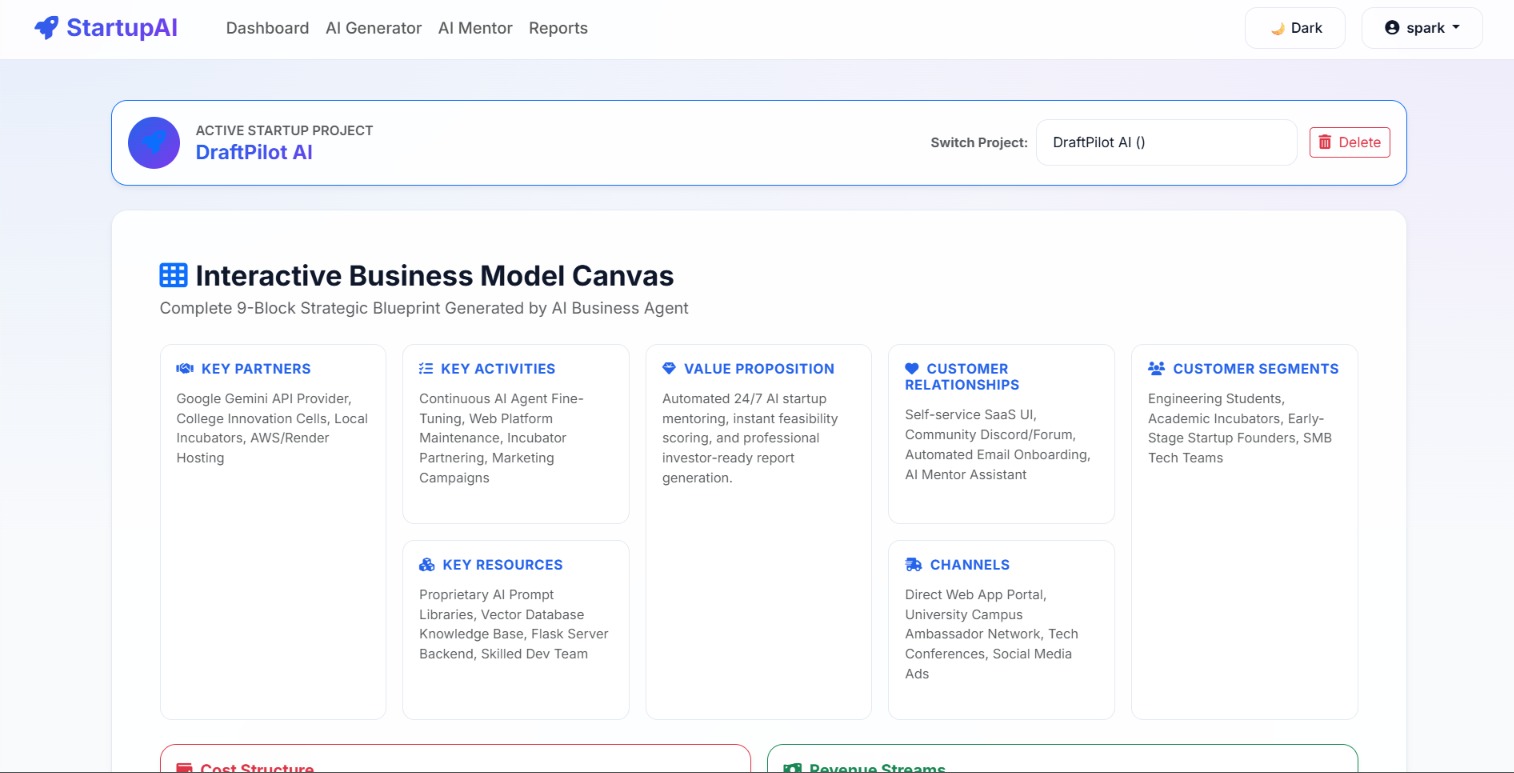
Startup AI helps users go from a basic startup idea to a structured validation report. The platform can generate or refine startup ideas and evaluate them through different AI agents. The system looks at market potential, competition, innovation, technical feasibility, business potential, and risks. The different agents work together through an orchestrator instead of relying on one AI response. The final results are presented through a dashboard along with scores, recommendations, an implementation roadmap, pitch content, and a downloadable PDF report. In simple terms: Idea → Research → Validation → Scoring → Business Guidance → Report
How we built it
We built Startup AI as a web-based platform with a React.js frontend and FastAPI backend. At the core of the system, we use Google Gemini for Generative AI, LangChain for LLM application development, and LangGraph to coordinate our specialized AI agents. The workflow starts with the user's startup idea and passes it through agents responsible for idea generation, market and competitor analysis, scoring and risk analysis, business recommendations, and report generation. We use MongoDB to store users, startup projects, and validation reports, while ReportLab is used to generate downloadable PDF reports. JWT is used for authentication.
Challenges we ran into
One of our biggest challenges was realizing that a single AI prompt is not enough for reliable startup validation. We faced issues such as inconsistent responses, hallucinated information, and difficulty getting the AI to return results in a predictable format. This led us to move toward a multi-agent approach with structured JSON outputs and validation between stages. Another challenge was deciding how to combine different aspects of a startup into one meaningful score. We designed a weighted scoring approach where Market carries 30%, Innovation 25%, Technical Feasibility 25%, and Business 20%. We also had to balance the complexity of the AI workflow with a simple interface that students could actually understand.
Accomplishments that we're proud of
We're proud that we moved beyond the idea of simply creating an AI chatbot. We designed a complete workflow where specialized AI agents work together to analyze a startup idea. The system architecture connects the React UI, FastAPI APIs, LangGraph orchestration, Gemini-powered agents, MongoDB, and PDF report generation into one platform. We're also proud of building a scoring system that looks at multiple dimensions instead of giving users a simple “good idea” or “bad idea” response. Most importantly, we created something that can help students think more critically about their ideas before investing time and effort into building them.
What we learned
This project taught us that building with Generative AI involves much more than simply calling an LLM API. We learned how to design multi-agent workflows, structured prompts, JSON-based outputs, AI scoring systems, API communication, database models, authentication, and report generation. We also learned an important lesson: AI-generated ideas can sound impressive, but that doesn't necessarily mean they are practical. That's why validation, scoring, and critical evaluation are important parts of our system. Working as a team also helped us understand how backend, AI, and frontend components need to fit together rather than being developed independently. Our project divided responsibilities across backend/database, AI & multi-agent development, and frontend/UX.
What's next for Startup AI
Our next step is to make Startup AI more useful with real-world data and stronger validation. We plan to improve the market and competitor analysis, complete the end-to-end multi-agent workflow, enhance the PDF reports with charts and executive summaries, and allow users to save and compare multiple startup ideas. We also want to add real-time market information and eventually connect the platform with mentors, investors, incubators, and funding opportunities. Our long-term vision is to make Startup AI more than an idea validator: Idea → Validation → Business Plan → MVP → Market Launch

Log in or sign up for Devpost to join the conversation.