-
-
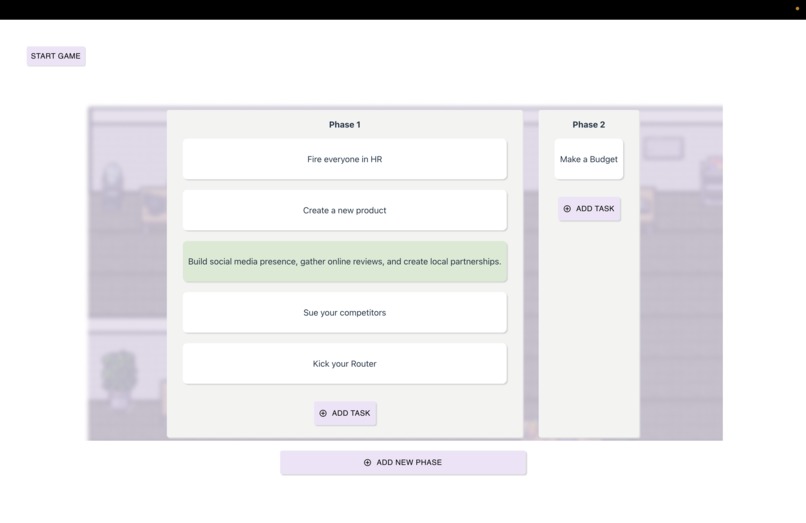
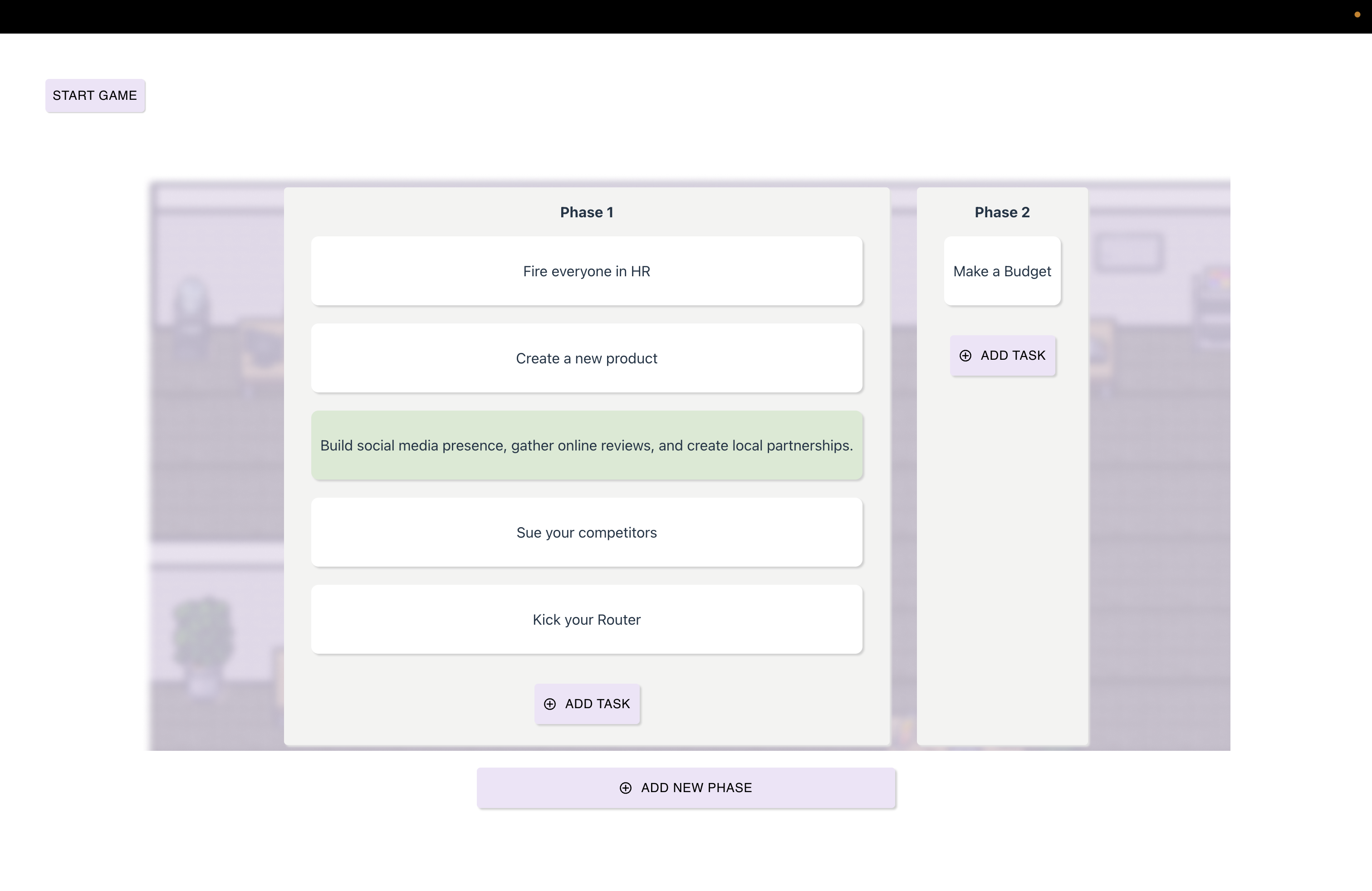
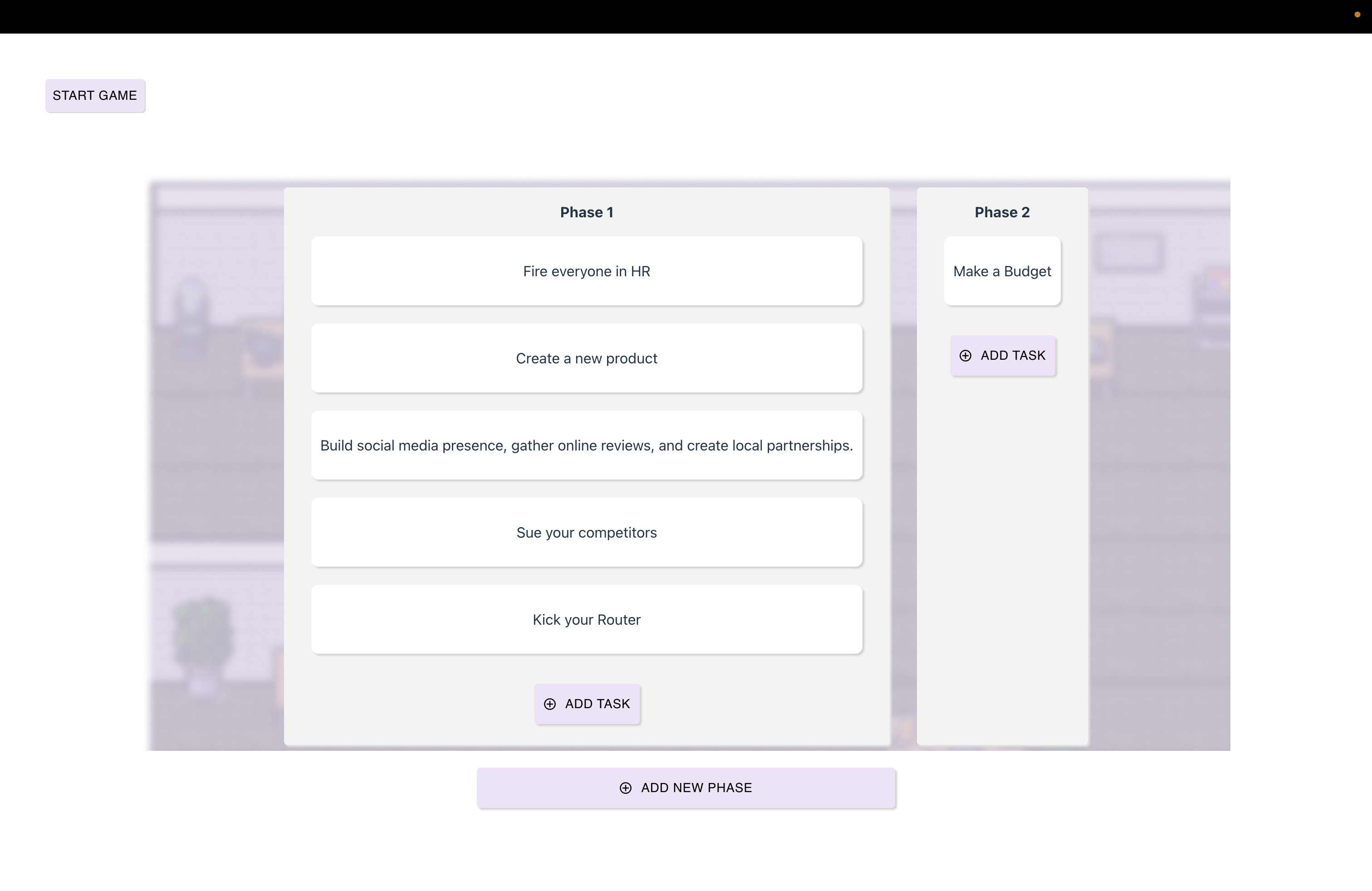
Marking an action item as complete.
-
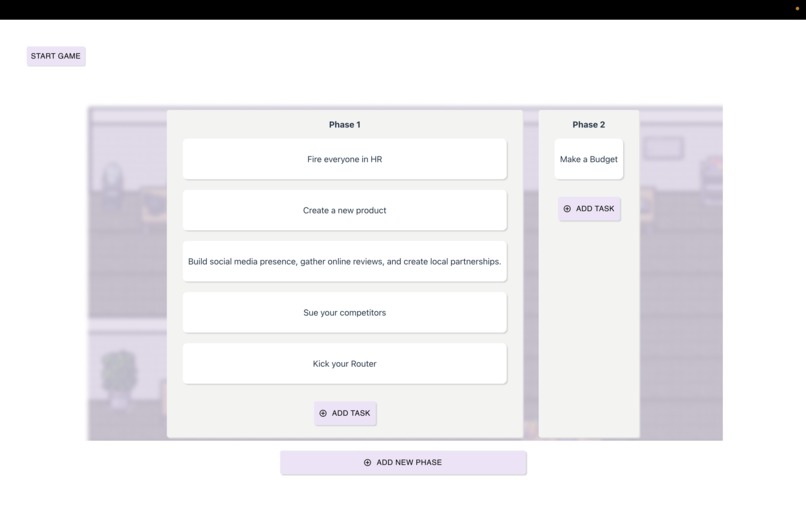
Adding an action item to our kanban flow based on Alice's suggestion response.
-
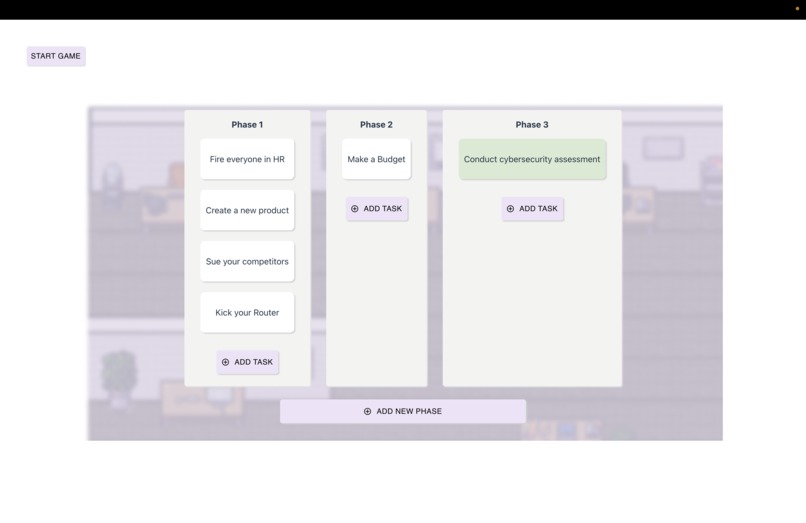
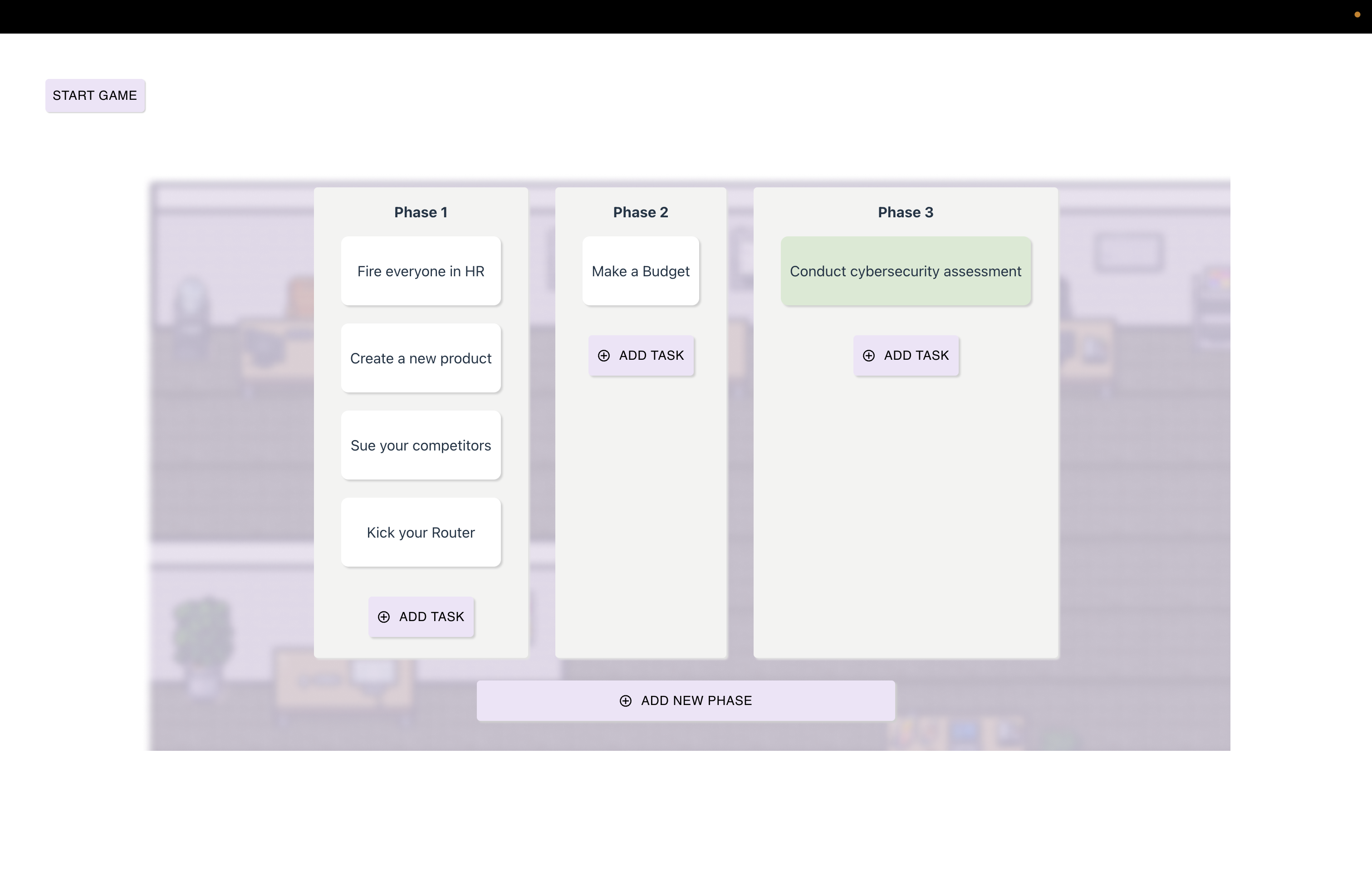
Moving an action item to a new phase.
-
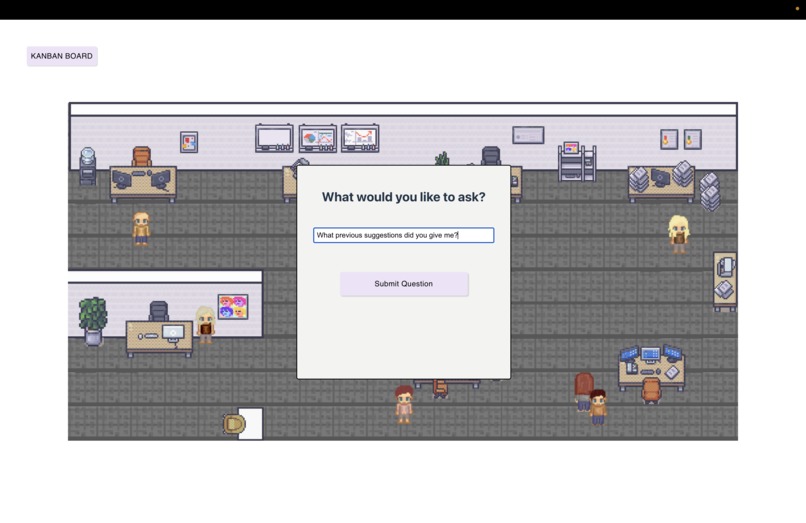
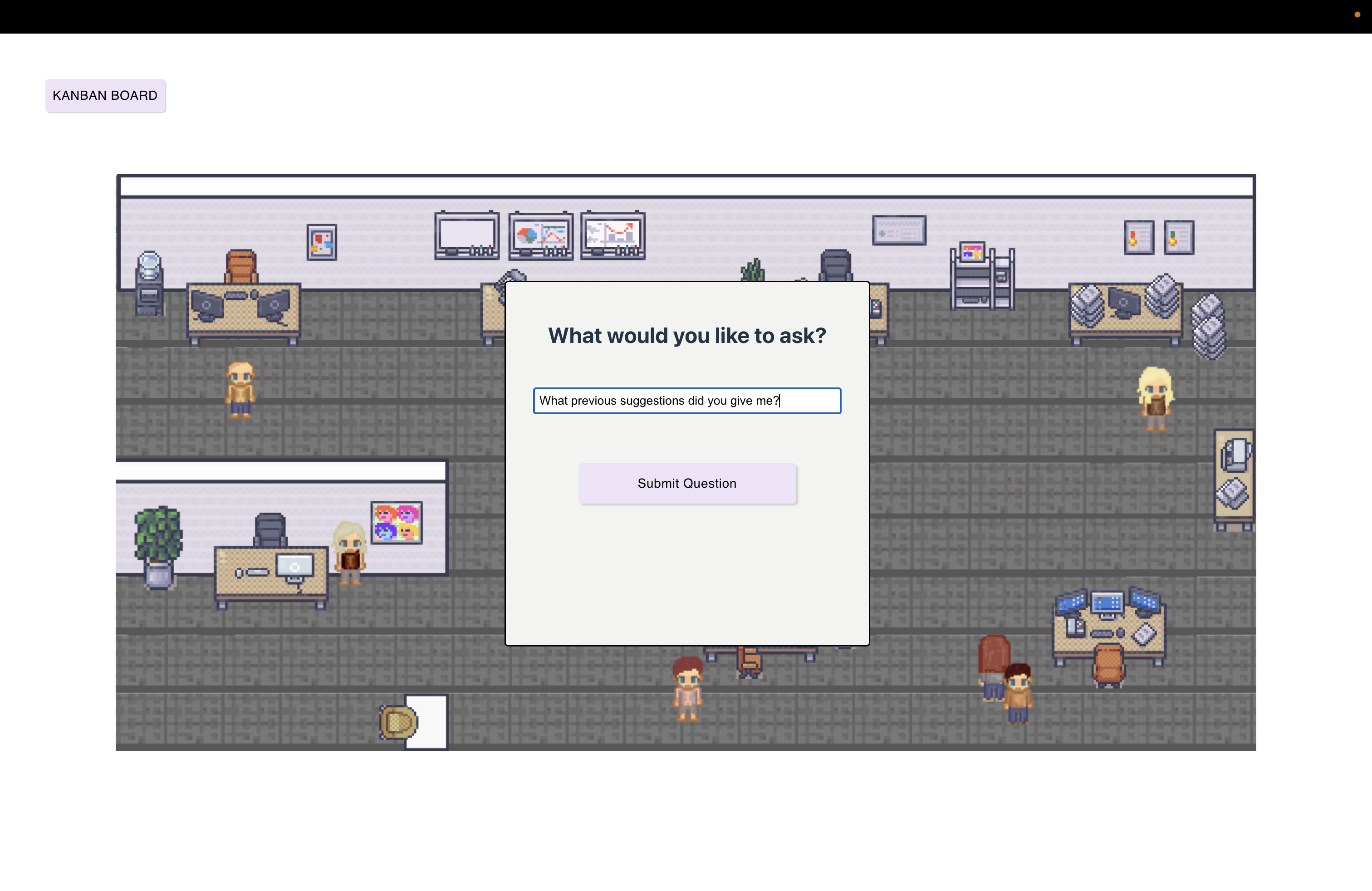
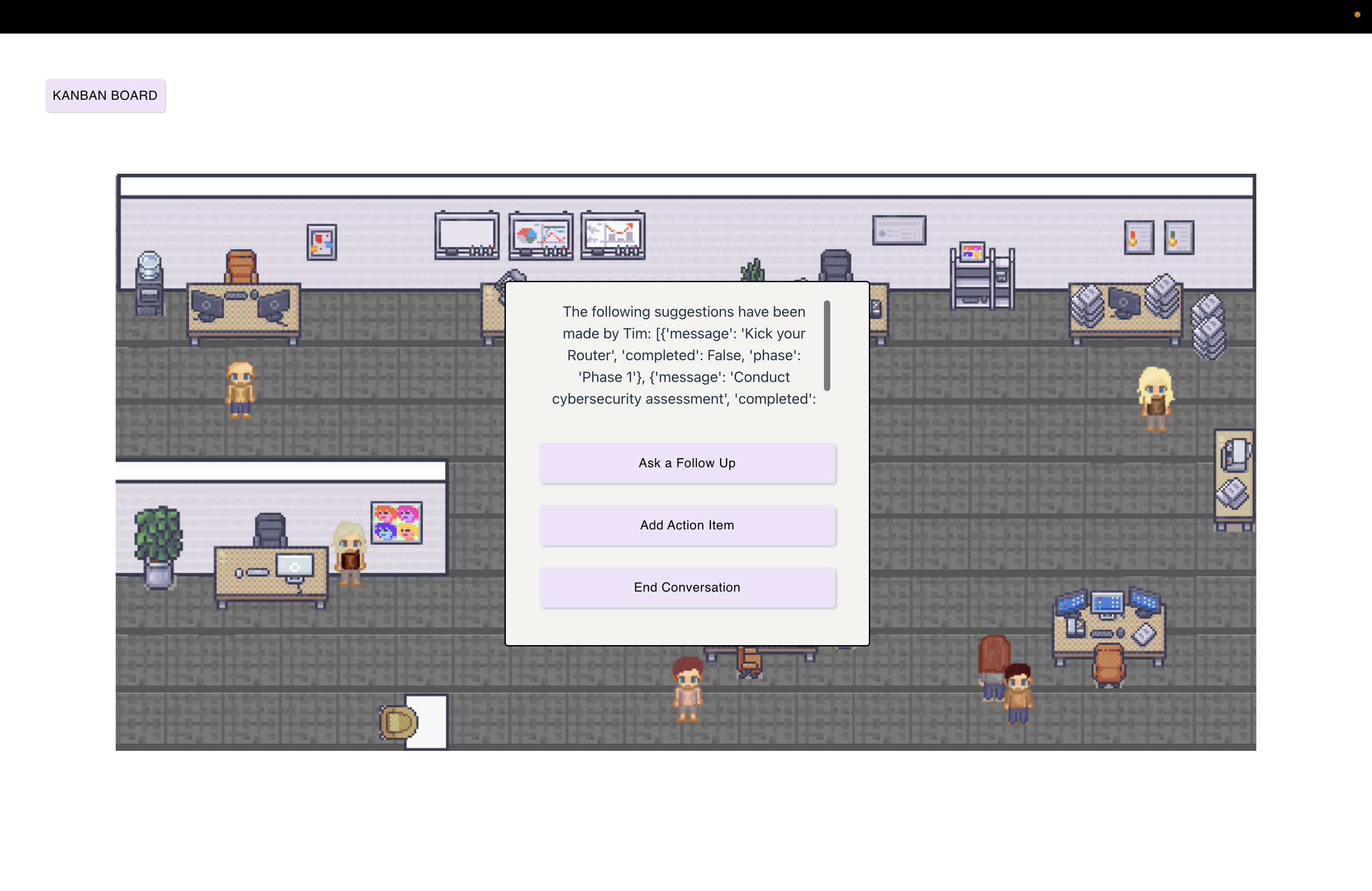
Asking Tim what suggestions he made to us in the past.
-
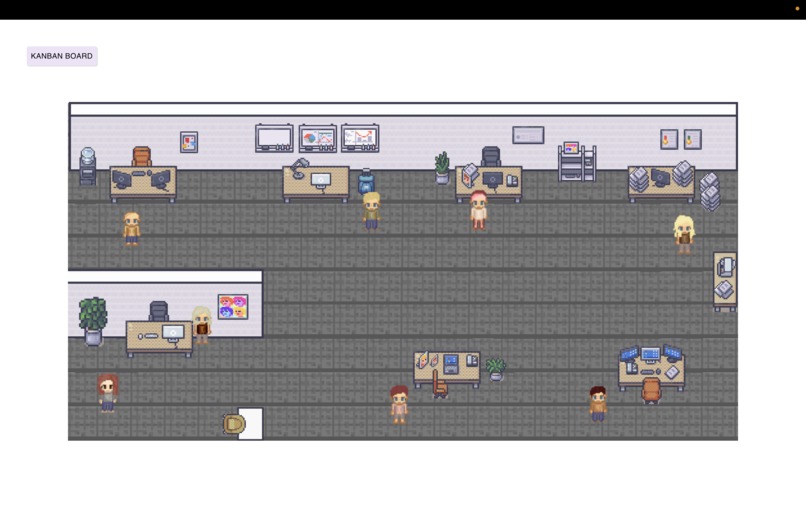
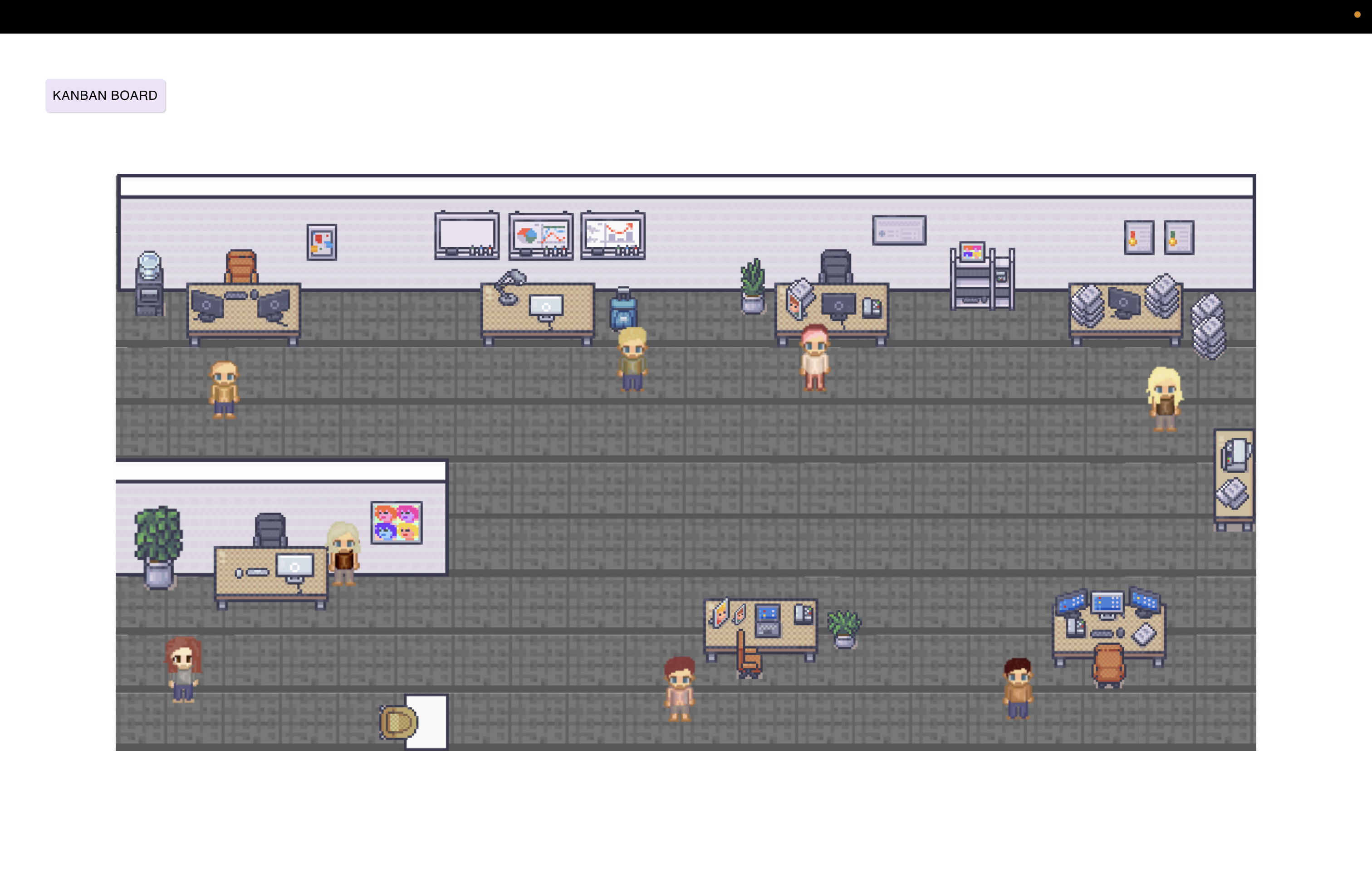
Main Office Space
-
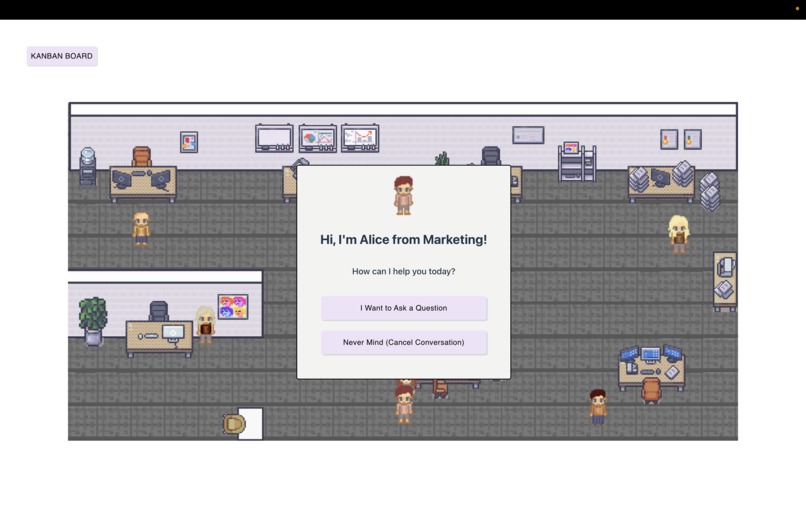
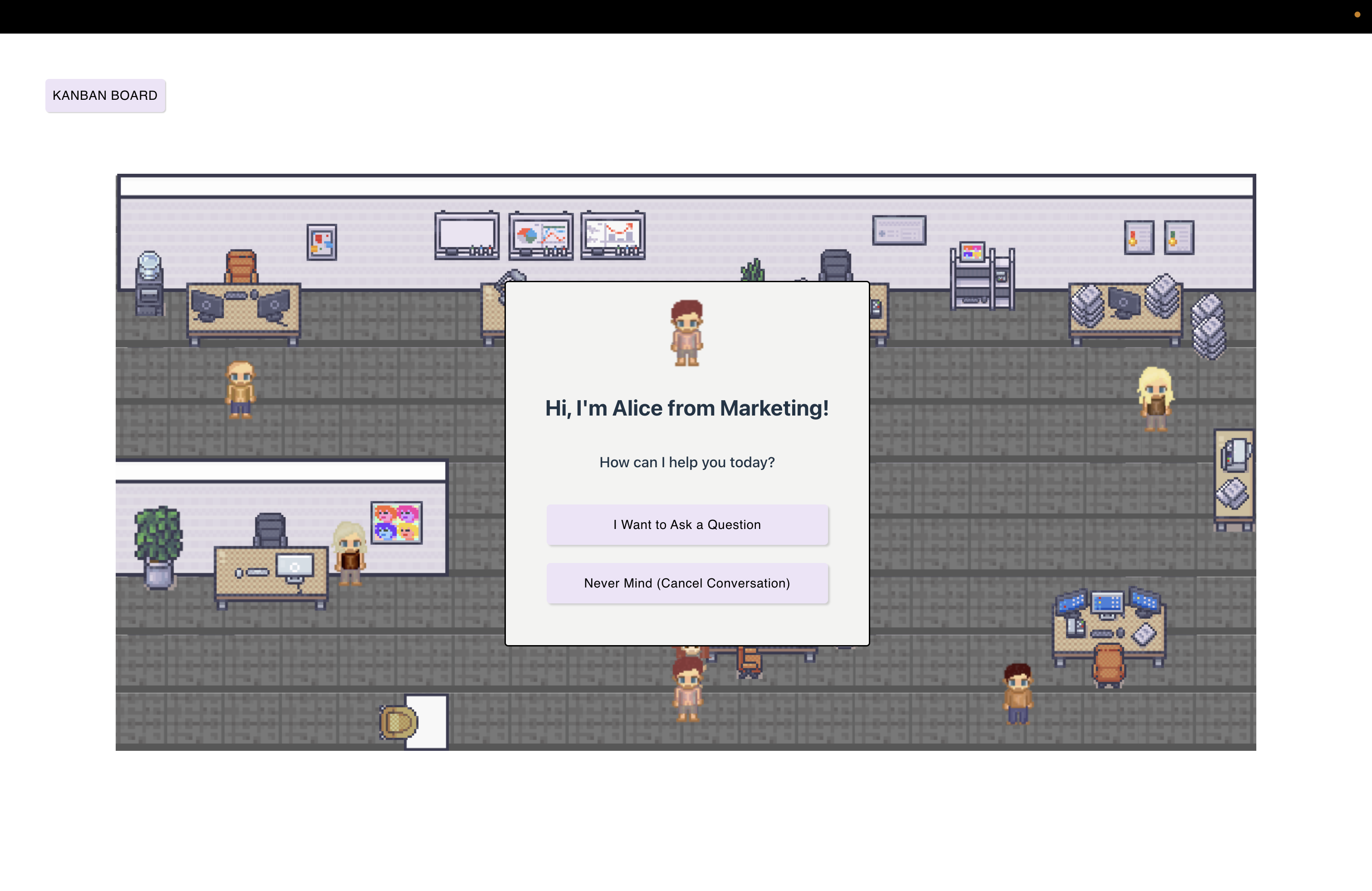
Ask Alice from marketing a question about marketing
-
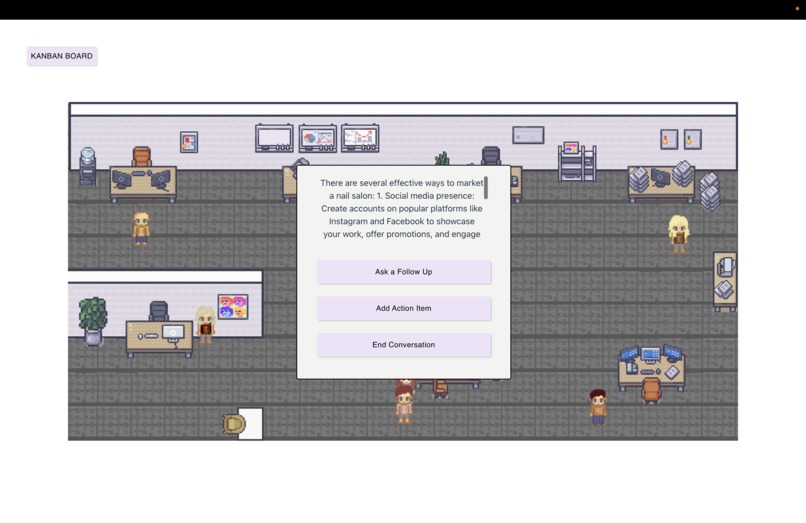
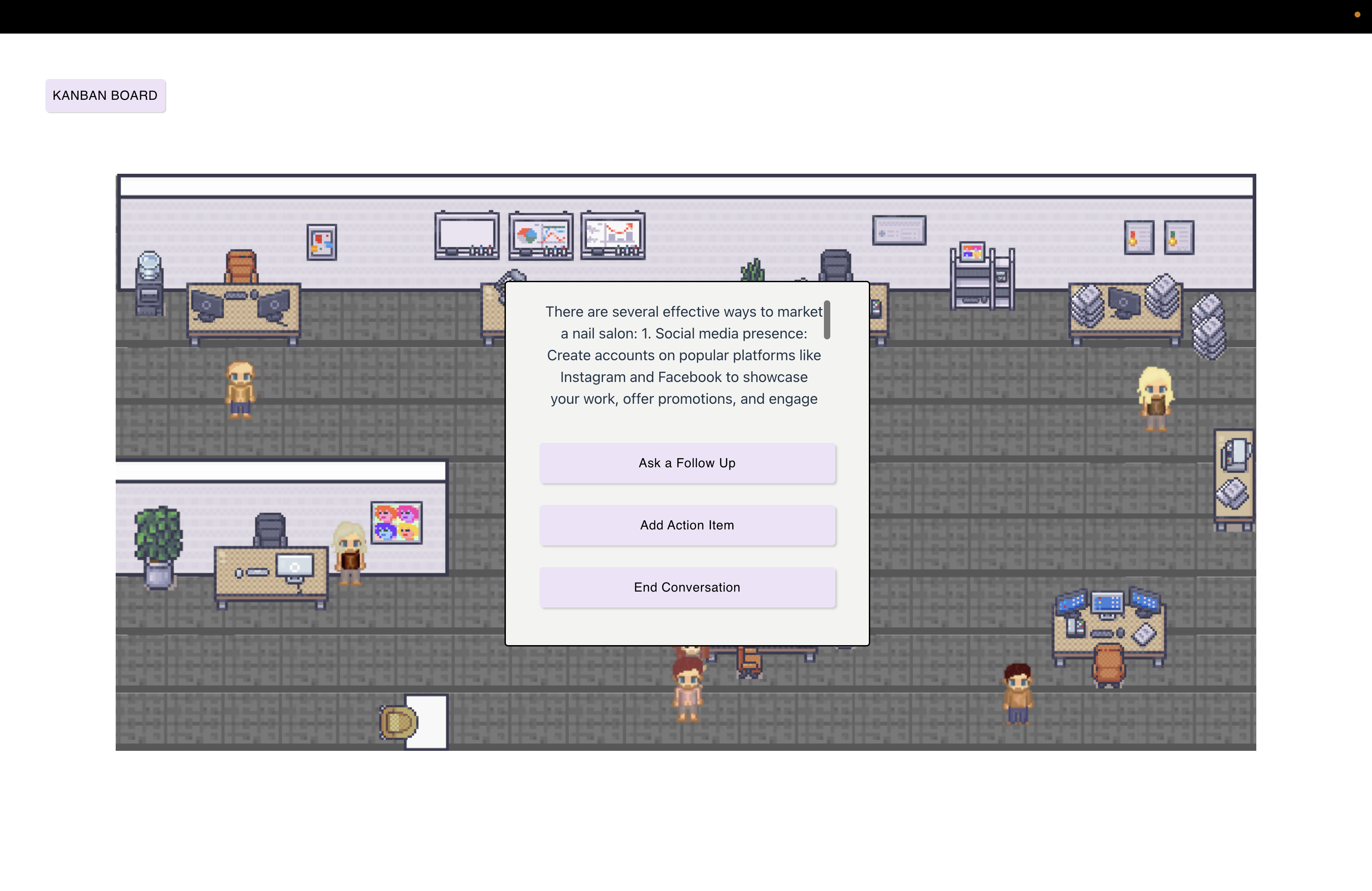
Alice's response to a question.
-
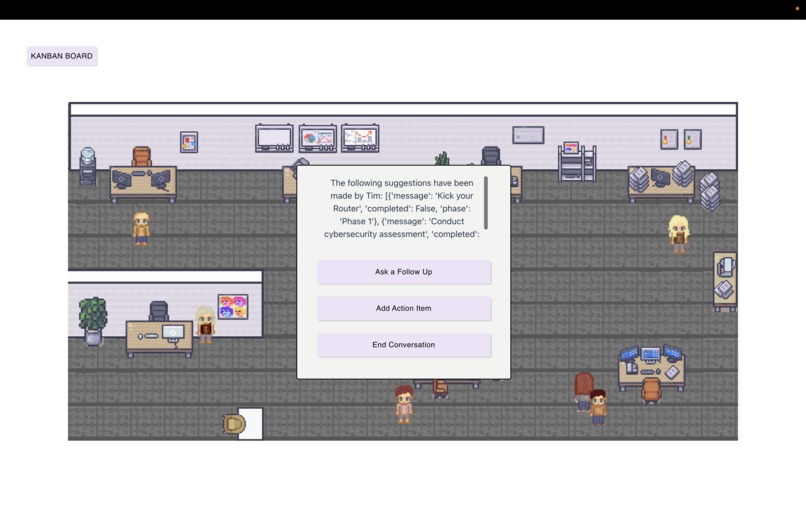
The suggestions Tim made to us in the past.
Inspiration
Our team pulled the inspiration for StartSmart from the millions of people that take a chance to build a company into a thriving pillar of the community. Local business owners start with nothing but an idea and a dream. Unfortunately, even a dream isn't enough as there are hundreds of pitfalls a new business owner can fall in. These range from lacking proper insurance coverage, not choosing a good location through market research, disgruntled employee/customer lawsuits, etc. In a multi-billion dollar company these issues are solved by people that have spent tens of years training in that particular issue. That specialization is just not available to local owners leaving them vulnerable. We wanted to help cover that gap for our users by providing them a custom team ready to grow and support their business.
What it does
Our specialized team is built through a context aware Auto GPT with custom functions to accomplish tasks like looking through business documents using embedding models, retrieval functions to better understand the parameters such as size of a business, and conversation memory to constantly be improving for the user. These Auto GPT agents are specially trained in a particular line of business such as Legal, IT, HR, etc. Each agent has a specialized retrieval function to retrieve data about your company making them aware even as your company grows and prospers. These agents are then displayed on our gamified dashboard where a user can get the feeling of actually working with different departments as you run around to ask questions. At any point during talking with an agent a user can "Add an Action Item" which reduces the conversation to a short actionable item and places it on a kanban style board for users to be able to keep track of the different phases of building their company. Users can then mark items as completed to easily keep track of their goals and accomplishments.
How we built it
The frontend is split into 2 major pieces a Kanban board and the Office Interface and are built in React. The backend is built in Python using Flask to accomplish several goals. It acts as middleware and memory management for our various agents in the office. The backend also sends API calls to Open API functions to retrieve either business or web scraping information to assist the user.
Challenges we ran into
We ran into a couple challenges in both the frontend and backend. In the frontend we have a lot of experience using React, but have never used it to create an interactive gamified experience. We spent a lot of time working on keyboard movement and sprite collision. We chose to build it from scratch which posed a challenge, but made the end result all the more rewarding. For the backend we spent a lot of time making the agents have memory of previous conversations and being able to provide specialized response depending on the division they were representing. In the end we managed to make it so that each agent has a specialized data collection function such as the Research division which can research papers from google and summarize them for any potential owner.
Accomplishments that we're proud of
We are very proud of the artwork and how interactable the end result felt for the user. We spent a lot of time making a full scene to put the user inside of the office. We are also proud of how integrated the entire app was and finishing everything we set out for in our MVP and more. The multi agent framework is also very robust so we can easily configure the environment depending on the what business the user is in.
What we learned
We learned a lot about the html DOM as we needed to interact with it for moving our character around the screen for the frontend. For the backend we learned about using faiss for vector embeddings and how to best use functions to control the output of Open AI in a deterministic fashion.
What's next for StartSmart
Next we want to be able to get the agents to discuss ideas with each other to improve the final output to the user as research shows revisioning Open AI responses increases accuracy by about 80%. We also want to implement more animations in the office interface such as email sending for alerts form the agent. Finally we want to implement service that consumes user files directly in order to scan the files to check if there are any problems with documents the business is using.
Built With
- chatgpt
- flask
- javascript


Log in or sign up for Devpost to join the conversation.