-
-
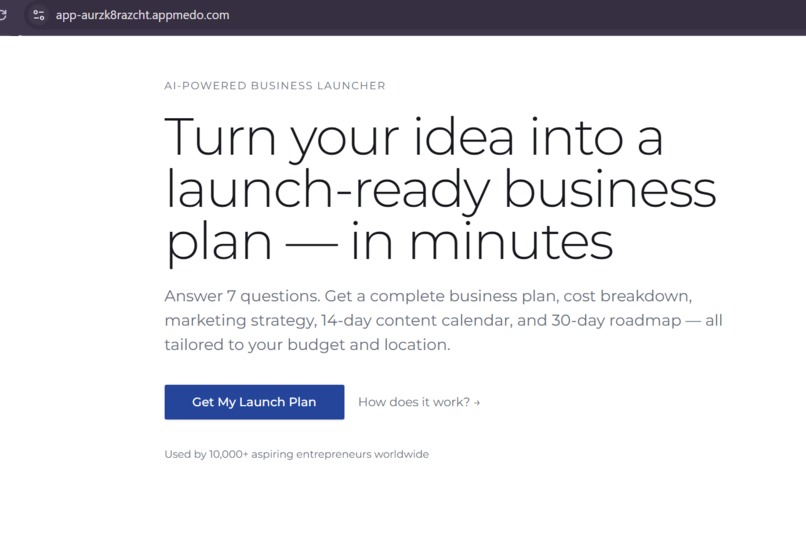
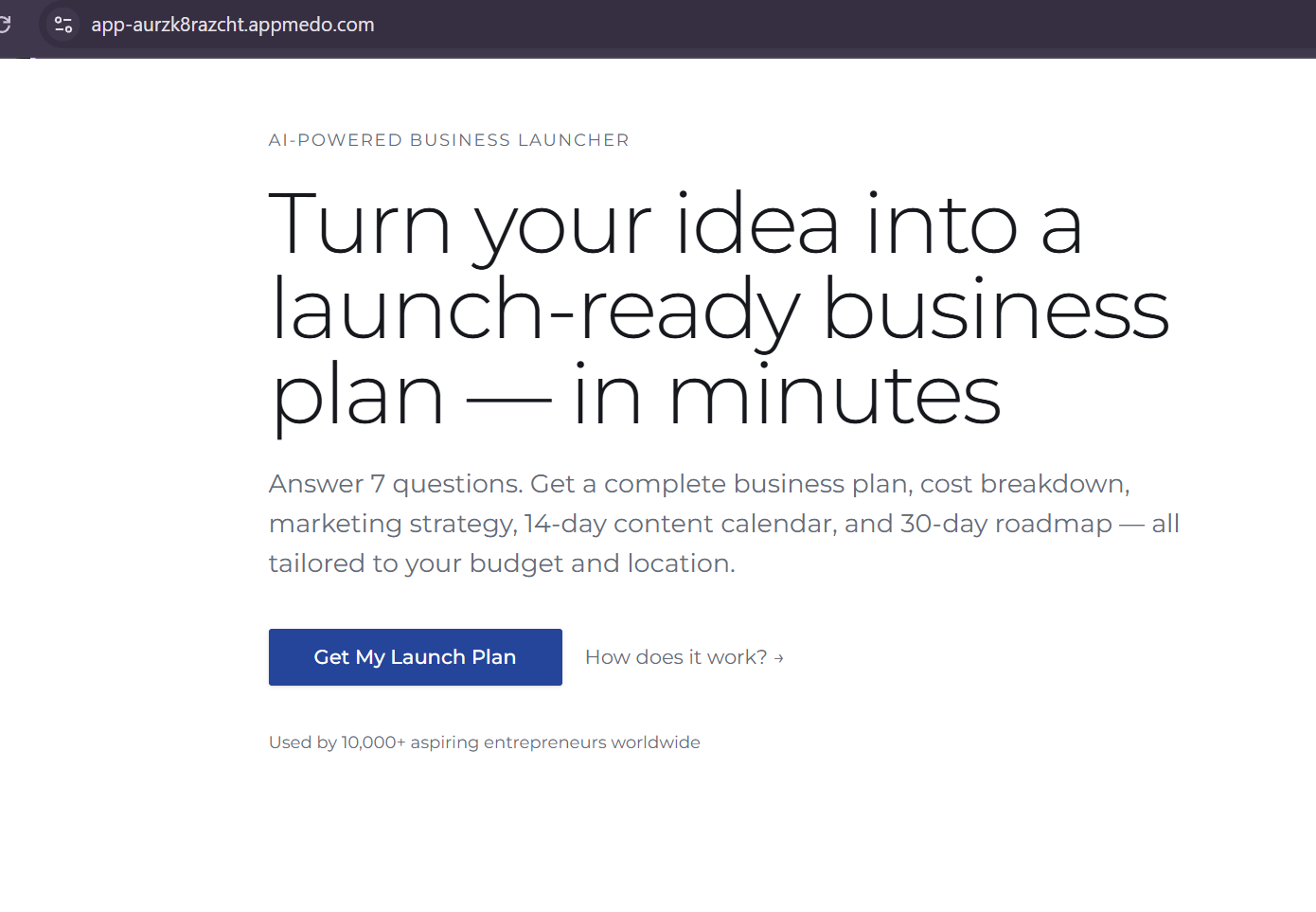
landing page
-
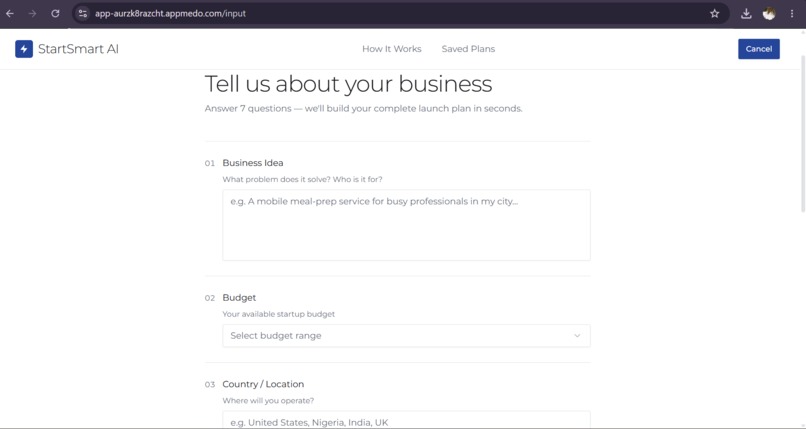
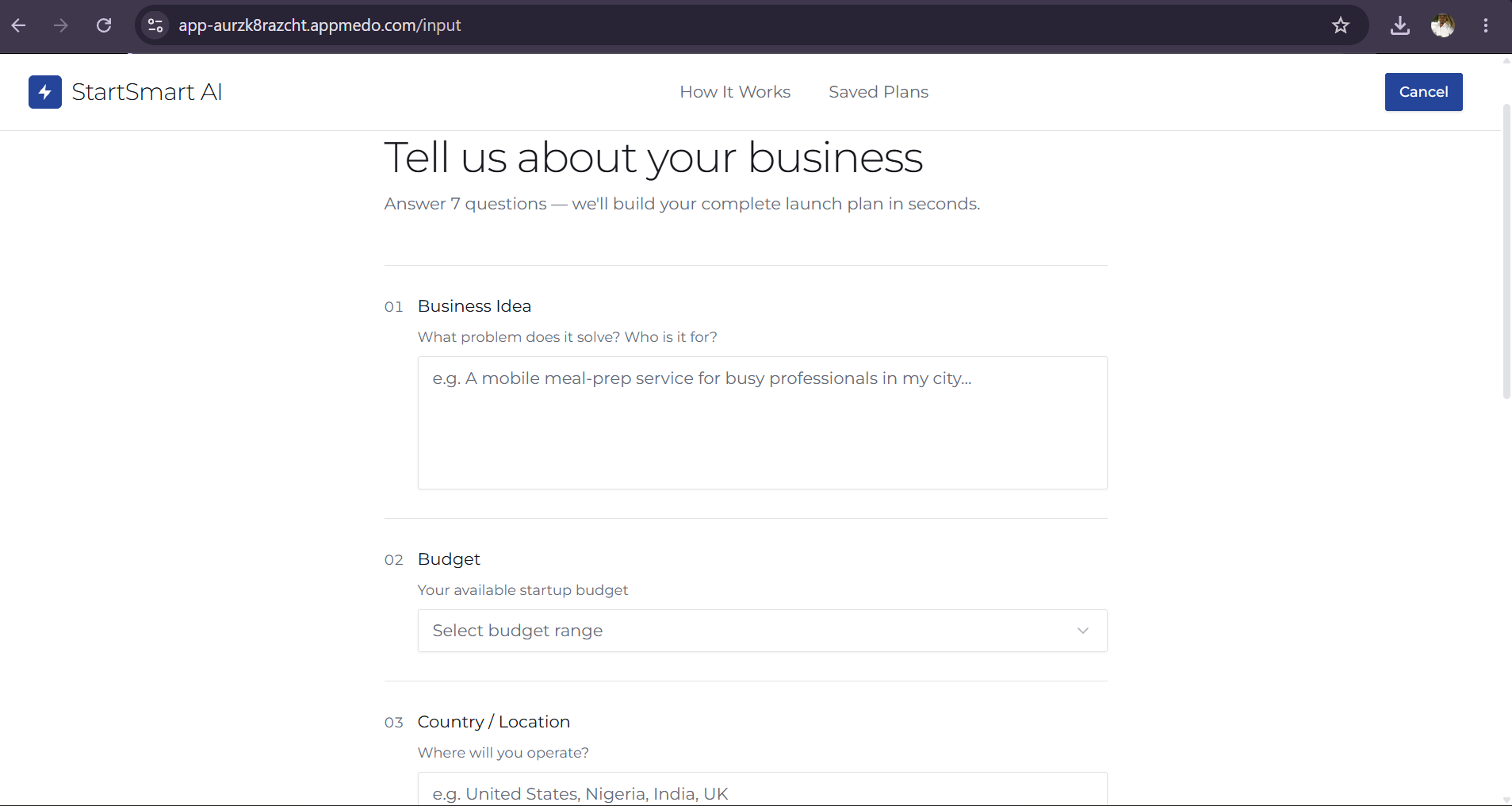
Business Input page
-
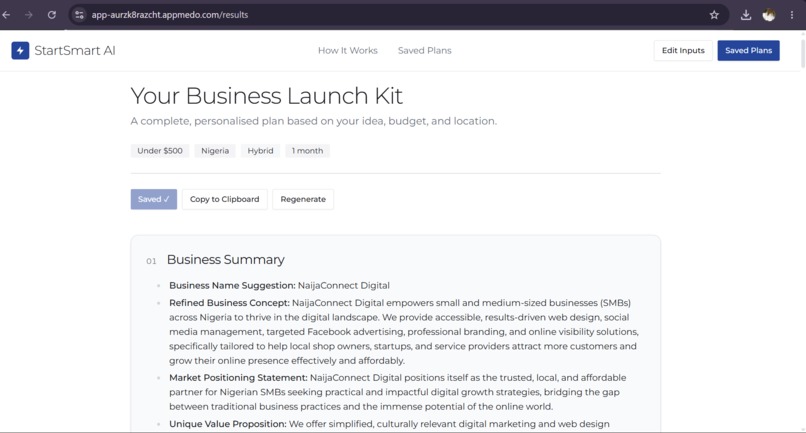
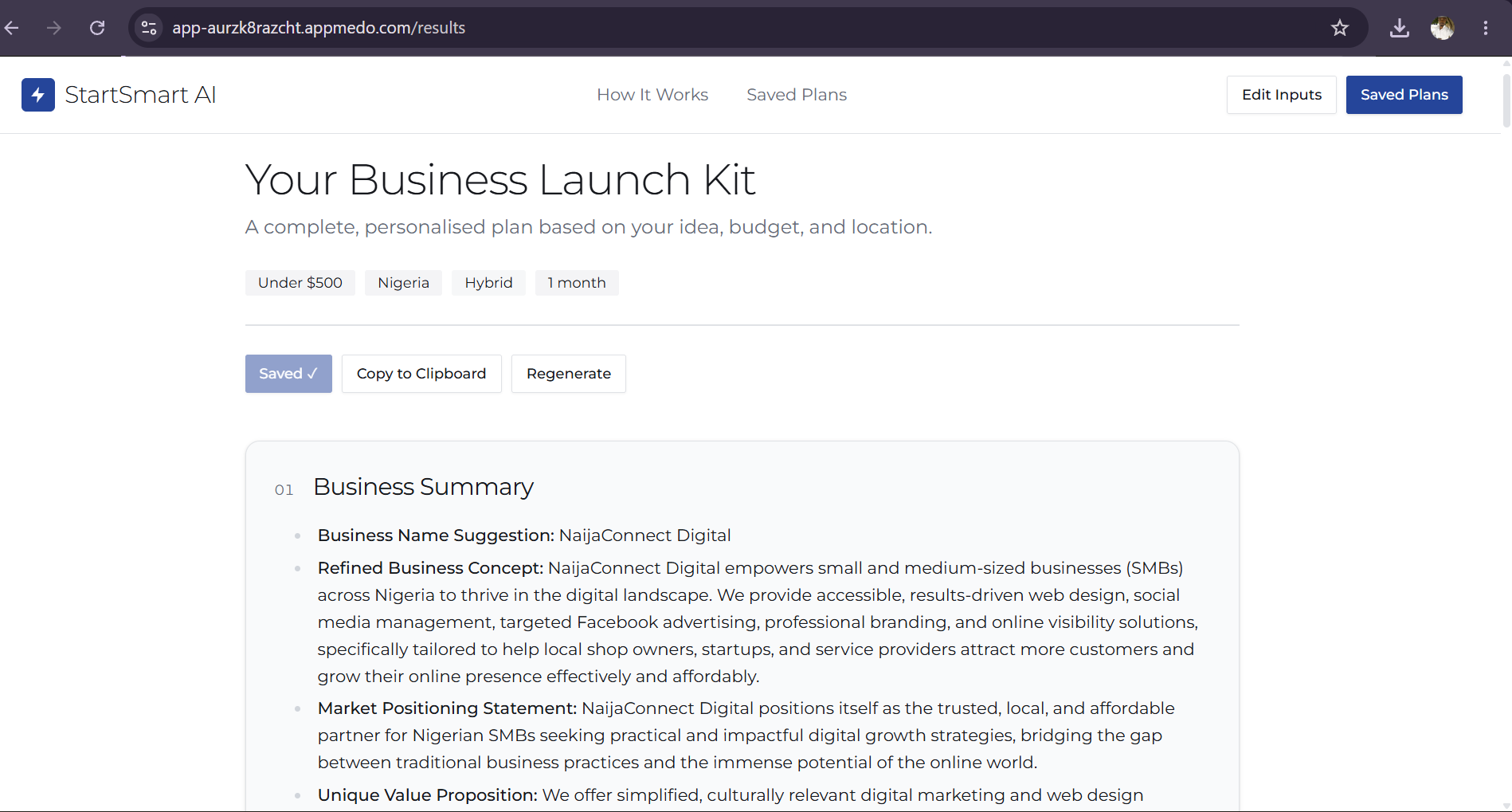
Business Launch Kit page
Inspiration The inspiration behind StartSmart AI came from a simple but widespread problem: millions of people have business ideas, but very few know how to turn those ideas into a practical, structured launch plan.
Many aspiring entrepreneurs especially students, freelancers, side-hustlers, and first-time founders struggle with questions like:
- How much money do I actually need to start?
- Who is my target market?
- How do I market the business with a small budget?
- What should I do in the first 30 days?
- Is this idea even realistic in my location?
Most online business planning tools are either:
- too complicated,
- too generic,
- too expensive,
- or designed for experienced entrepreneurs.
We wanted to build something different: an AI-powered platform that transforms a simple business idea into a complete, actionable launch kit within minutes.
The vision behind StartSmart AI was to democratize entrepreneurship by making business planning accessible, practical, location-aware, and beginner-friendly.
What We Built
StartSmart AI is an AI-powered business launcher that converts a user’s:
- business idea,
- budget,
- experience level,
- target audience,
- preferred business type,
- launch timeline,
- and location
into a fully structured startup execution plan.
The platform generates:
- Business Summary
- Full Business Plan
- Startup Cost Breakdown
- Revenue Projection
- Marketing Strategy
- 14-Day Content Ideas
- 30-Day Execution Roadmap
- Risk Factors & Practical Advice
The application was designed to feel like a real startup command center rather than a basic AI text generator.
How We Built It
We approached the project with both usability and scalability in mind.
Frontend
The frontend was designed as a clean, responsive multi-page application with:
- a professional landing page,
- structured form flow,
- elevated dashboard card system,
- mobile-first responsiveness,
- and local-storage-based saved plans.
The UI architecture focused heavily on:
- visual hierarchy,
- spacing consistency,
- accessibility,
- and frictionless onboarding.
AI Generation System The AI engine follows a structured generation pipeline:
- Analyze user inputs
- Refine the business concept
- Generate positioning and value proposition
- Create localized cost estimates
- Build a marketing strategy
- Generate content ideas
- Produce revenue projections
- Build a 30-day roadmap
- Identify risks and mitigation strategies
We implemented logic layers for: budget awareness, location-aware recommendations, and business-type adaptation.
For example: users in emerging markets receive lean, mobile-first recommendations, while higher-budget users receive scalable infrastructure suggestions.
Challenges We Faced Avoiding Generic AI Output One of the biggest challenges was ensuring the generated plans felt specific and actionable rather than generic AI filler. We solved this by: structuring prompts carefully, separating generation stages, enforcing contextual constraints, and applying location + budget logic before generation.
Designing for Beginner Users Most startup tools assume prior business knowledge. We had to simplify: terminology, workflow, and dashboard structure without making the platform feel “basic.” Balancing simplicity with professional depth became a major UX challenge.
Location-Aware Recommendations Business realities vary significantly between countries. A startup recommendation suitable for the US may not work in Nigeria, Kenya, or India. We introduced adaptive logic to: prioritize WhatsApp and Instagram in emerging markets, recommend lean operational models, and adjust estimated startup costs accordingly.
Information Density The dashboard contains a large amount of information: financial projections, marketing strategy, content plans, execution steps, and risk analysis. Creating a layout that remained readable, visually clean, and mobile-friendly required multiple iterations of: card systems, spacing rules, typography hierarchy, and responsive layouts.
What We Learned This project taught us several important lessons: Product Design Matters as Much as AI A powerful AI system alone is not enough. The way information is structured, presented, and guided dramatically affects user trust and usability.
Contextual AI Is More Valuable Than Generic AI Users care less about “AI-generated content” and more about: relevance, practicality, and execution clarity. Adding budget-aware and location-aware intelligence significantly improved output quality.
Simplicity Creates Adoption Reducing the experience to: 7 inputs, one generation flow, and a clean results dashboard made the platform approachable for users with no business background.
Future Vision Although this MVP focuses on launch planning, the long-term vision for StartSmart AI includes: downloadable investor-ready documents, AI follow-up coaching, multilingual support, startup funding readiness tools, integrated market research, and collaborative planning workspaces. The goal is to evolve StartSmart AI from a business-plan generator into a complete AI startup operating system for first-time entrepreneurs worldwide.
Conclusion StartSmart AI was built to remove the intimidation and uncertainty that prevent many people from starting businesses. Instead of giving users abstract startup theory, the platform provides: practical execution steps, localized recommendations, realistic cost estimates, and actionable launch guidance.
The project represents our belief that entrepreneurship should be accessible to anyone with an idea — regardless of experience, background, or budget.
Built With
- form
- framer-motion
- lucide-icons
- next.js
- node.js
- openai
- react.js
- svg
- tailwind
- toast-notifications
- typescript
- validation

Log in or sign up for Devpost to join the conversation.