-
-
StartHere
Inspiration
This started with a couple in their 90s I cared for. I can't count how many times I walked into their house and found them on the phone with a scammer. Sometimes I think the phone rang and it was simply somebody to talk to. Other times I watched them study an email or a piece of mail, trying to work out whether it was legitimate. I've seen the same thing with my own mother at 84: texts, emails, pictures. People their age are targeted constantly, and it only takes one mistake.
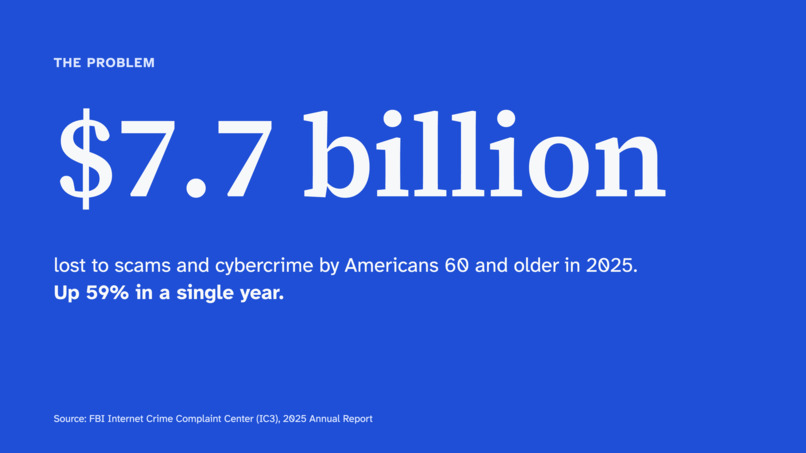
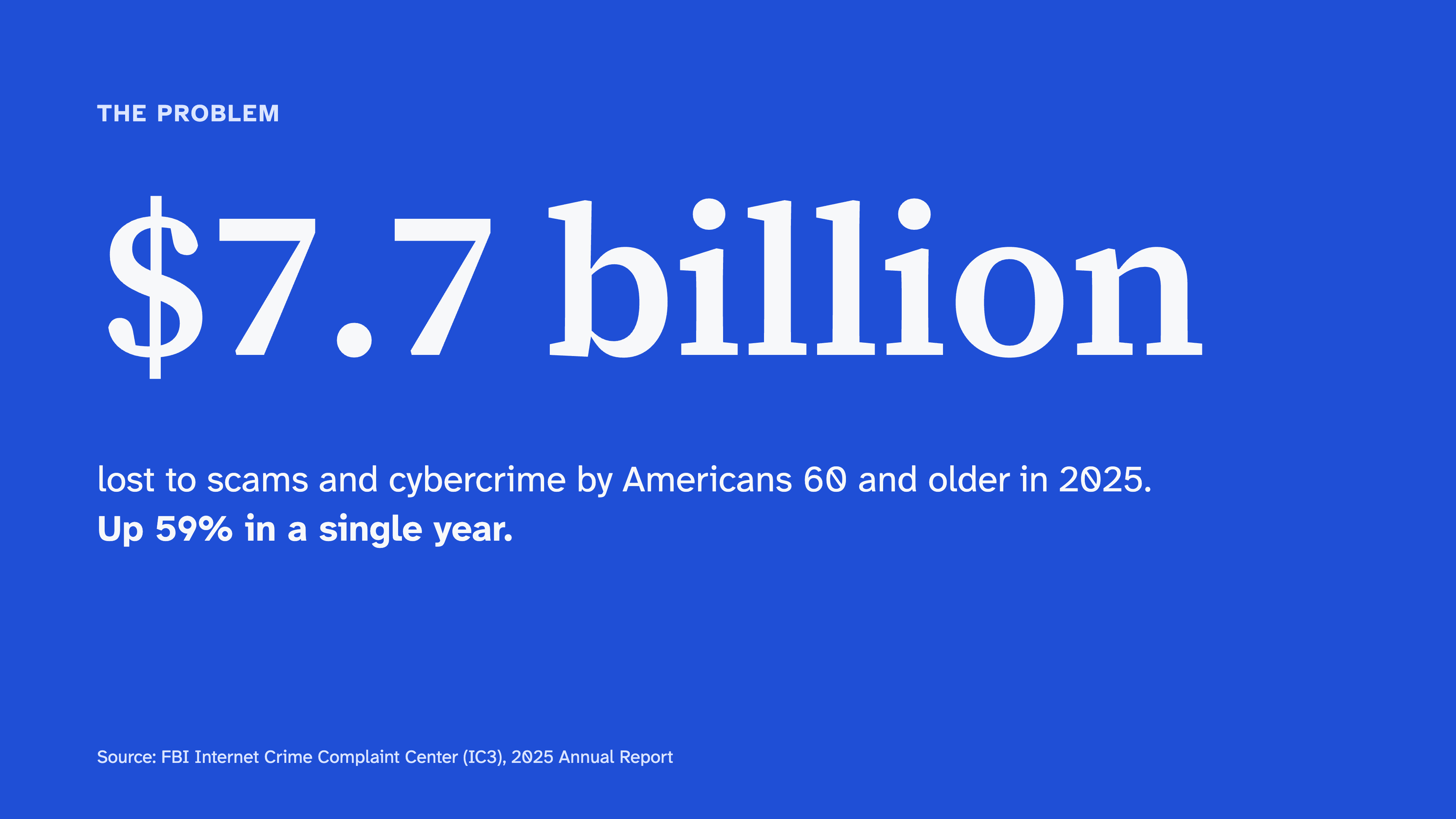
The numbers back it up. According to the FBI's Internet Crime Complaint Center, Americans over 60 lost $7.7 billion to scams and cybercrime in 2025, up 59% in a single year. That means the year before was roughly
$$\frac{7.7\ \text{billion}}{1 + 0.59} \approx 4.8\ \text{billion}$$
so losses grew by about $2.9 billion in twelve months, and those are only the losses people reported.
People with a lifetime of experience aren't short on judgment. What they lack is a patient place to ask first. We wanted to give them some coverage to make decisions that won't devastate their lives.
What it does
StartHere is a patient AI coach and scam checker for people with a lifetime of experience.
- Check: paste a text, take a photo of a letter, or send a file. StartHere looks for the warning signs and gives a plain-language verdict.
- Clear answers: a red Stop screen with three simple steps (don't reply; don't send money, gift cards or codes; call someone you trust), or Be careful when a message isn't black and white. Every result names the trick and gives one next step.
- Recovery: if someone already replied or paid, StartHere walks them through what to do now.
- Coach: five-question practice sessions built on real scam scenes. "We're not trying to build friends. We're trying to build skills."
- Family Circle: add a trusted person once, and every Stop screen shows a one-tap "Call [name]" button.
How we built it
- Mobile app: React Native with Expo, running on a real iPhone for the demo
- Backend API: Python with FastAPI
- Auth: Firebase Authentication handles sign-in and authorizes every call to our backend APIs
- AI: Google's Gemma 4 model, served through Cloudflare, reads each message or photo and returns the verdict, the explanation and the warning signs
- Dev tools: Codex as an AI coding assistant
- Hosting: running locally for the hackathon (not in the cloud yet), tunneled to the phone for the live demo
- Privacy: we never store the user's private information
We designed for the reader first. Our user holds the phone at arm's length and may be a little worried, so onboarding starts with a text-size choice (20, 22 or 24 px), every tap target is large, and there's one main action per screen.
Instead of a yes/no answer, every message gets one of three verdicts:
$$\text{verdict} \in {\text{Stop},\ \text{Be careful},\ \text{No red flags found}}$$
Each one comes with an explanation, the warning signs we found, and exactly one next step.
Challenges we ran into
- Never saying "safe." A false all-clear is the worst mistake a scam checker can make. We had to word results that reassure people without promising what we can't guarantee, which is why "Be careful" exists.
- Gray areas are real. A letter announcing "changed payment details" might be legitimate. Teaching people to verify through another channel beat forcing a yes/no answer.
- Writing for calm, not fear. We rewrote every screen to name the trick and the fix in short, plain sentences, with no jargon and nothing that makes the reader feel slow.
- Naming our audience respectfully. "Seniors" and "over 60" felt clinical, so we went with people with a lifetime of experience, and use ages only when quoting data.
- Securing a local backend. Even running on a laptop, every API call is authorized through Firebase Authentication.
- Hackathon constraints. The whole stack runs locally, so we tunneled it to a real iPhone to demo live, and fixed rough edges as we found them.
Accomplishments that we're proud of
- A working end-to-end flow: a suspicious message goes in, and a clear verdict, next steps and a one-tap call to family come out.
- Photo checks of real paper letters, not just copied text.
- A coach that builds skills, so people get better at spotting scams on their own.
What we learned
- For this audience, trust is the product. Tone, text size and one clear next step matter as much as detection accuracy.
- Families are the buyer and seniors are the user. Family Circle connects the two.
- Explaining the trick ("this is a fake delivery fee") teaches more than a risk score ever could.
What's next for StartHere
- Move the backend to the cloud and publish the Expo app to the App Store and Google Play
- A voice coach: ask out loud, get an answer out loud
- Family alerts, so a trusted contact gets a gentle heads-up when a scam is caught
- Pilots with families, churches and senior centers
- Family-plan pricing, and partnerships with banks and credit unions
Before you click, call, or pay, ask StartHere.
Built at DevFest Florida by the Starters.
Built With
- cloudflare
- codex
- expo.io
- fastapi
- firebase
- gemma
- python
- react-native
