-
-
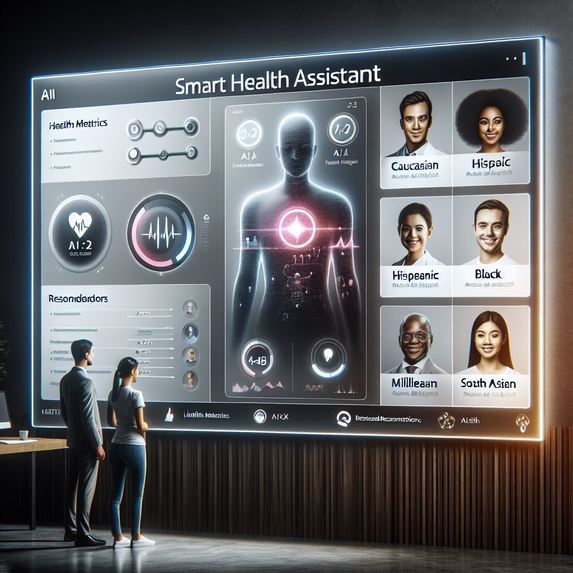
Empowering Health with AI-The Smart Health Assistant provides personalized insights realtime monitoring and virtual support enhance health

Project Title: Smart Health Assistant Overview: The Smart Health Assistant is an AI-powered application designed to provide personalized health recommendations and virtual assistance to users. Leveraging Azure’s robust AI services, this project aims to enhance user health management through intelligent insights and real-time support.
Objectives: Personalized Health Insights: Utilize Azure Machine Learning to analyze user health data and provide tailored recommendations. Virtual Health Assistant: Implement Azure Bot Service to create a conversational agent that can answer health-related queries and provide reminders. Real-time Monitoring: Integrate Azure IoT Hub to collect and monitor health metrics from wearable devices. Key Features: Health Data Analysis: Use Azure Machine Learning to process and analyze user health data, identifying patterns and providing actionable insights. Conversational Agent: Develop a chatbot using Azure Bot Service that can interact with users, answer questions, and provide health tips. Wearable Integration: Connect wearable devices to Azure IoT Hub for real-time health monitoring and alerts. Secure Data Handling: Ensure data privacy and security using Azure’s built-in security features and compliance standards. Diet and Exercise Recommendations: Provide personalized diet and exercise plans based on user health data. Mental Health Support: Include features for mental health tracking and support, such as mood monitoring and stress management tips. Emergency Alerts: Implement an emergency alert system that notifies designated contacts in case of critical health events. Technologies Used: Azure Machine Learning: For data analysis and model training. Azure Bot Service: To create the virtual health assistant. Azure IoT Hub: For integrating and monitoring wearable devices. Azure Cognitive Services: To enhance the chatbot with natural language processing capabilities. Azure Functions: For serverless computing and backend logic. Implementation Plan: Data Collection: Gather health data from users and wearable devices. Model Training: Use Azure Machine Learning to train models on the collected data. Bot Development: Create and deploy the conversational agent using Azure Bot Service. Integration: Connect wearable devices to Azure IoT Hub and integrate with the bot. Testing and Deployment: Test the application thoroughly and deploy it on Azure. Inspiration: The inspiration for this project came from the increasing need for accessible and personalized healthcare solutions. With the rise of wearable technology and AI, there is a tremendous opportunity to leverage these advancements to improve health outcomes and provide support to individuals in managing their health.
Learnings: Throughout the development of this project, we learned a great deal about the capabilities of Azure’s AI services and how they can be integrated to create a comprehensive health management solution. We also gained insights into the importance of data privacy and security in handling sensitive health information.
Building Process: Research and Planning: Conducted extensive research on existing health management solutions and identified key areas for improvement. Data Collection and Preparation: Collected health data from various sources and prepared it for analysis. Model Development: Used Azure Machine Learning to develop predictive models for health insights. Bot Development: Created a conversational agent using Azure Bot Service and integrated it with Azure Cognitive Services for natural language processing. Integration: Connected wearable devices to Azure IoT Hub and integrated the data with the bot and machine learning models. Testing and Deployment: Conducted thorough testing to ensure the application was functioning correctly and deployed it on Azure. Challenges Faced: Data Privacy and Security: Ensuring the privacy and security of user health data was a significant challenge. We had to implement robust security measures and comply with relevant regulations. Integration of Multiple Services: Integrating various Azure services and ensuring seamless communication between them required careful planning and execution. User Engagement: Designing the conversational agent to be engaging and helpful while maintaining accuracy and reliability was a complex task.
Built With
- accessing
- alerts
- analysis
- and
- api.
- api:
- apis:
- application
- application.
- assistant.
- azure
- azure:
- backend
- bot
- building
- capabilities.
- chatbot
- cloud
- cognitive
- collaboration.
- collecting
- computing
- consistent
- containerizing
- control
- cosmos
- create
- creating
- data
- database:
- databases:
- db:
- deploying
- deployment.
- developing
- development
- devices
- devices.
- docker:
- enhance
- ensuring
- exploration
- fit
- flask:
- for
- frameworks:
- from
- frontend
- functions:
- github:
- handling
- health
- hub:
- integrating
- interactions.
- interface.
- iot
- javascript:
- jupyter
- language
- languages:-python:-for-data-analysis
- learning
- learning:
- logic.
- machine
- machine-learning-model-development
- managing
- metrics.
- microsoft
- model
- models.
- monitoring
- natural
- notebooks:
- notifications.
- other
- platform
- platforms:
- primary
- processing
- providing
- react:
- scalability.
- securely.
- sending
- serverless
- service:
- services:
- sms
- sources.
- sql
- storage.
- storing
- structured
- technologies:
- tensorflow:
- the
- to
- training
- training.
- twilio
- unstructured
- used
- user
- various
- version
- virtual
- wearable
- with


Log in or sign up for Devpost to join the conversation.