-
-
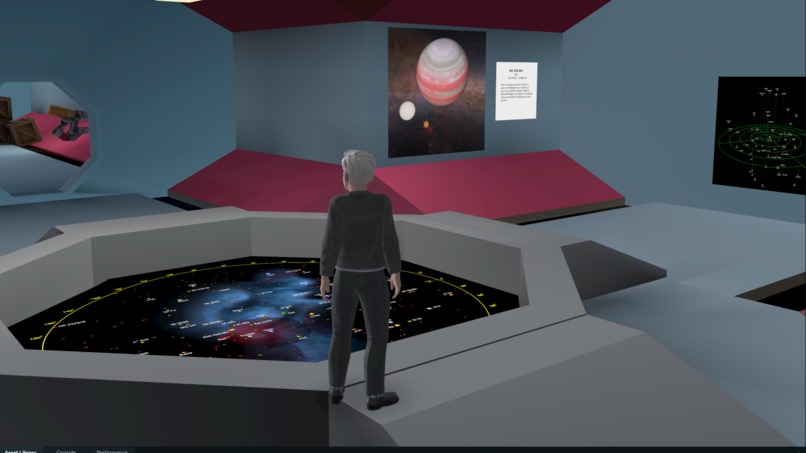
Star station cartography room
-
Title page
-
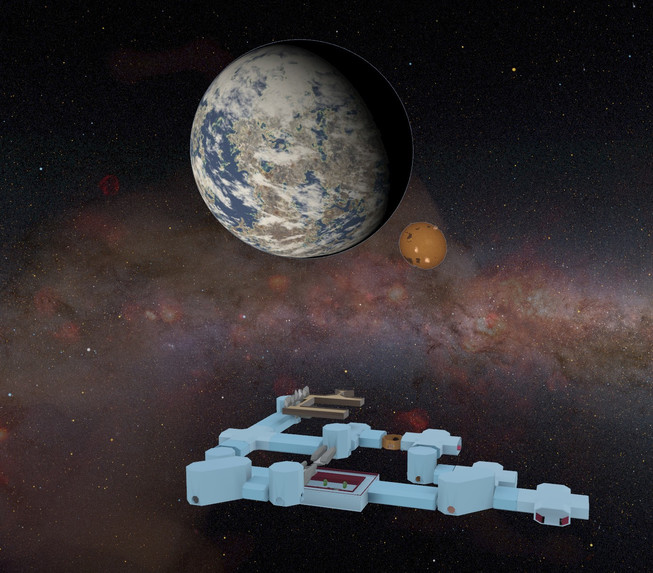
Wolf 1061 star station
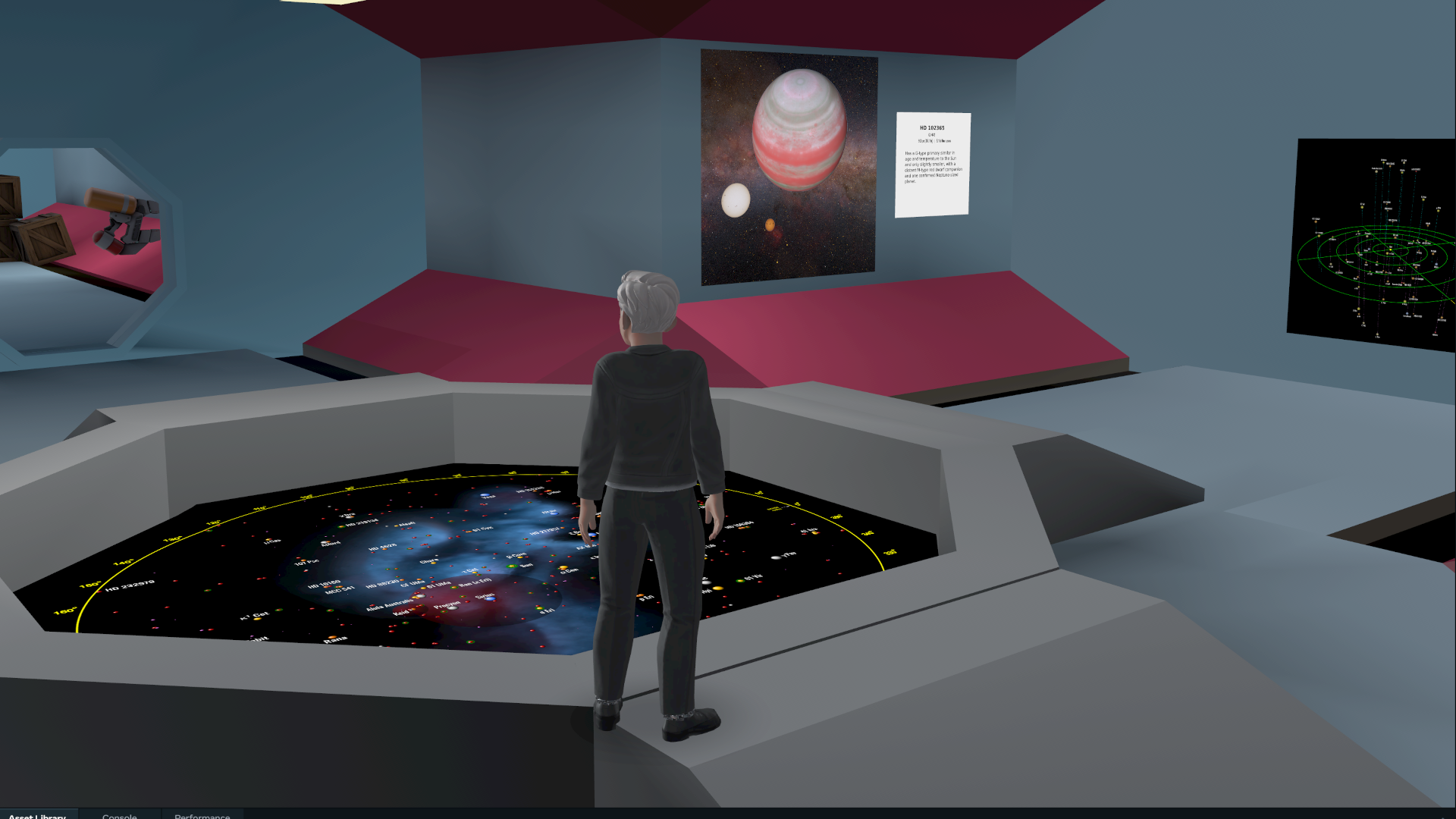
Inspiration
I'm a galactic cartographer (yes really) and a member of the Data Processing and Analysis Consortium of the European Space Agency's Gaia Mission. This revolutionary mission has mapped out our galaxy to a distance of about 6 thousand parsecs or about 20 thousand light years, including distances and detailed data for almost 2 billion stars. I am working on entertaining ways to use this enormous dataset, including board games and now, VR/XR/Mobile.
What it does
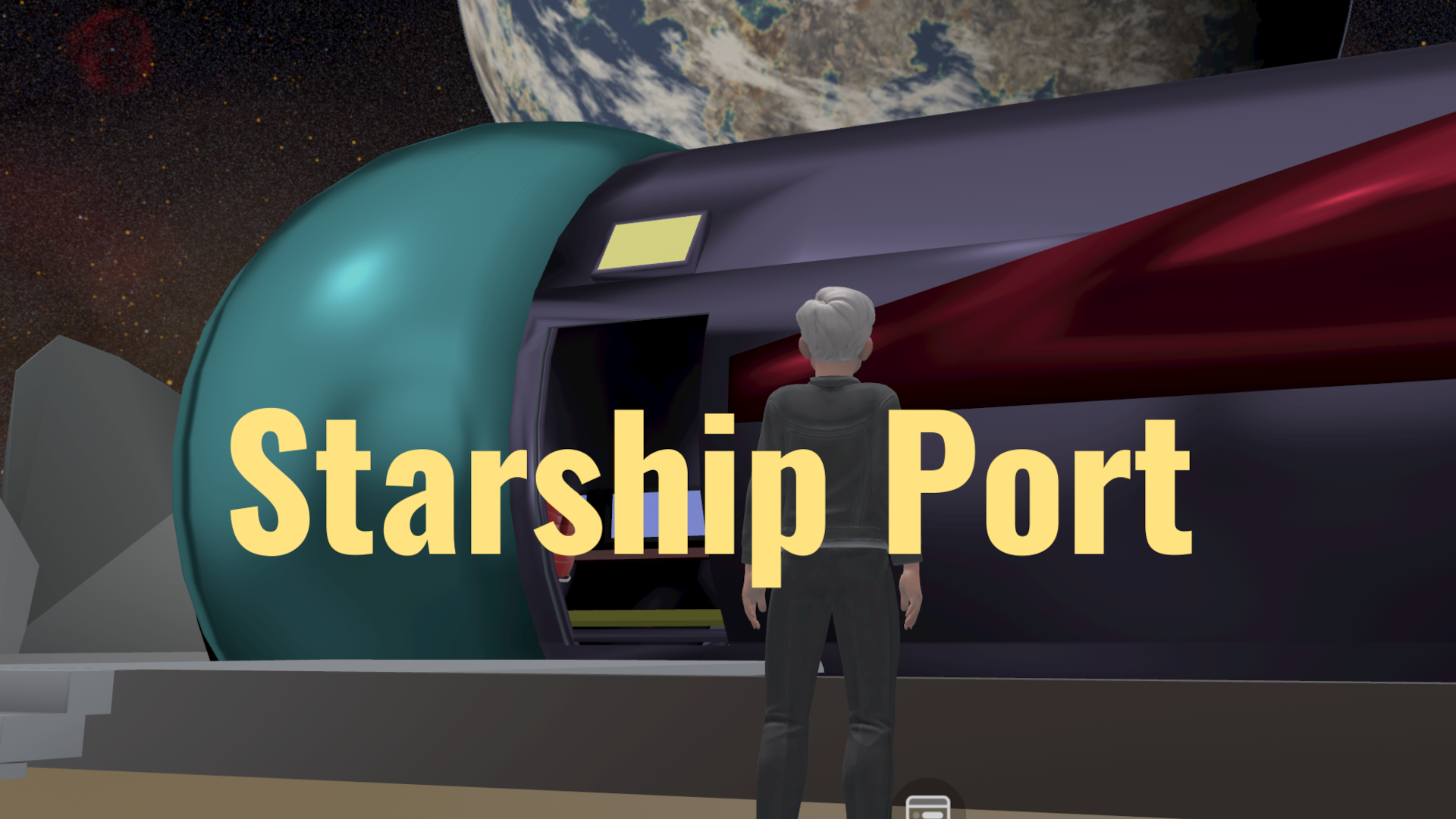
Players build a team, appoint a captain, select one of the four available starships, and travel to (currently) 3 star stations orbiting nearby stars. While there they explore the star stations, collect valuable alien artifacts and find keys to locked sections of the star stations. They then return to the Starship Port and sell their artifacts at the Galactic Bank.
The game uses Custom UIs for starship navigation, banking, unlocking doors and viewing the team's current inventory (the B button in VR or a clickable button on mobile).
How we built it
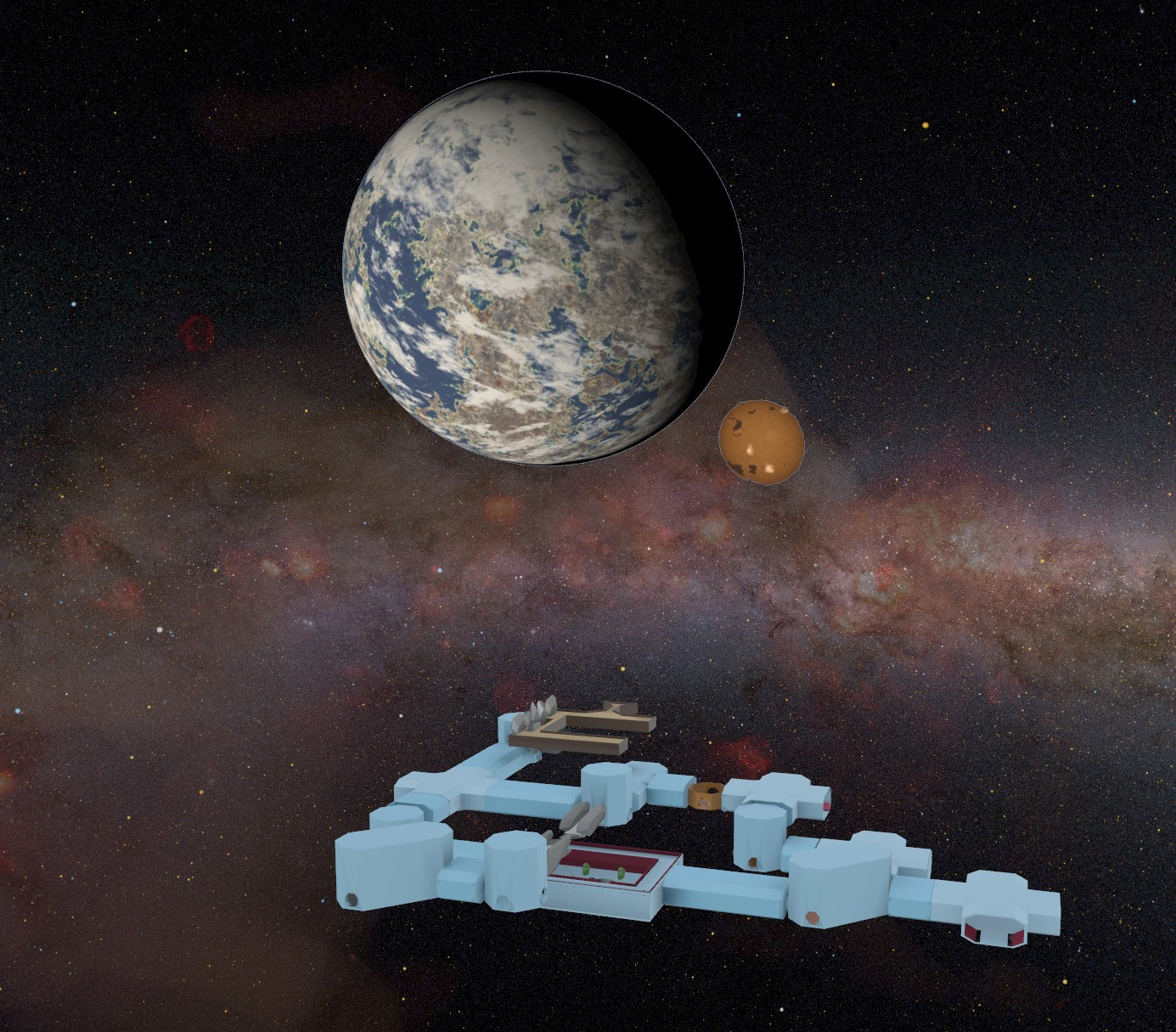
The star stations and starships use sublevels. Each of the four starships has three star stations it can visit, for a total of 12 sublevels, each with its own location in 3D space. This creates a hybrid experience - the Starship Port is public but once they arrive at a star station, each team has the star station to itself.
The starships automatically load and unload star station sublevels as they travel around.
Player persistent variables are used to keep track of items collected, items sold and each player's balance in galactic units.
The Starship Port has a social hub, the Kepler Cafe, and an adjacent garden where potential captains can recruit their teams. The sky boxes are based on real (and spectacular) Gaia Mission star data and the star stations have astronomical posters and maps that players can look at if they choose (but these are not necessary to play the game).
Challenges we ran into
Of course, the main challenge was that there was not enough time to build everything I wanted. Also, the 6 GB memory limit meant that I had to be careful about texture resolution and model detail. The sublevels helped a lot.
There were not enough relevant examples (a common problem with VR) but the discussion board and Discord server turned out to be full of helpful mentors.
The Meta "office hours" system sounded like it had potential but were usually timed to be in the middle of the night European time.
I found the Desktop Editor easier to use in most cases than the general Unity editor, but unfortunately it was quite buggy. Objects randomly resized and movement handles kept disappearing among many other problems. This slowed me down significantly.
Fortunately, the TypeScript API seemed rock solid and as I am an experienced TypeScript developer, that helped a lot.
Accomplishments that we're proud of
Definitely proud to have developed a functioning star game that is easily expandable. If I can acquire funds (by winning a contest prize or through other means) I would be delighted to expand the game. I already have plenty of ideas.
What we learned
Developing for Horizon Worlds is still in early days but has enormous potential, especially if you enjoy TypeScript coding!
What's next for Starship Port
It all depends on funding. If funding becomes available, I'd like to add more star stations, add the ability to travel to the surface of exoplanets, travel more widely in the Milky Way (I already have 50 Gaia Mission based sky boxes I can use!) and use what I've learned to redevelop my other Star Central world and integrate it with the game.
I'd also like to add some way for players to use the galactic units they earn by selling alien artifacts and perhaps integrate that with the Horizon Worlds monetization system.

Log in or sign up for Devpost to join the conversation.