-
-
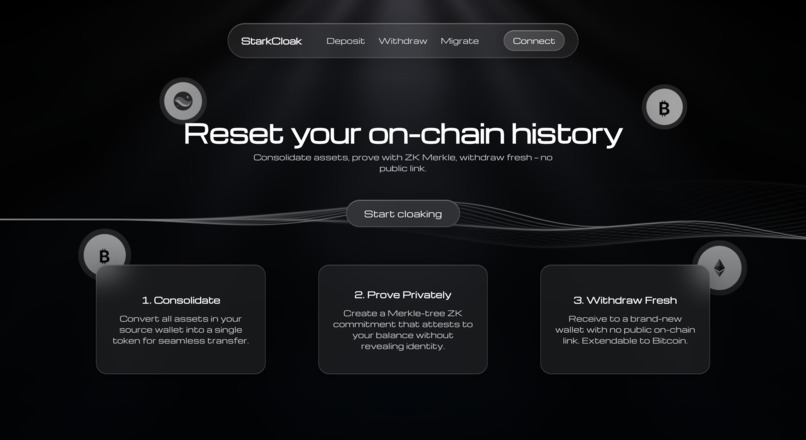
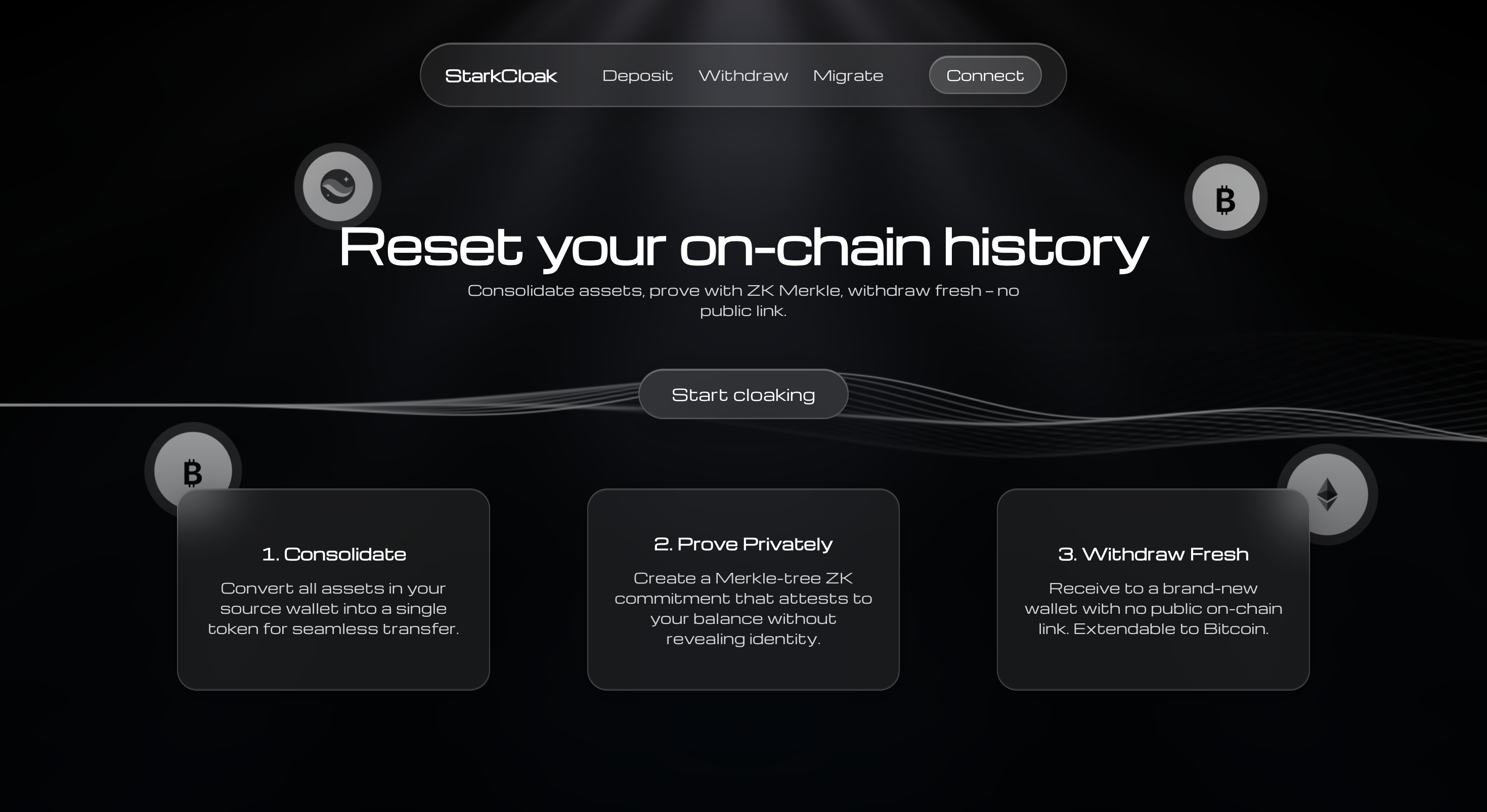
Landing
-
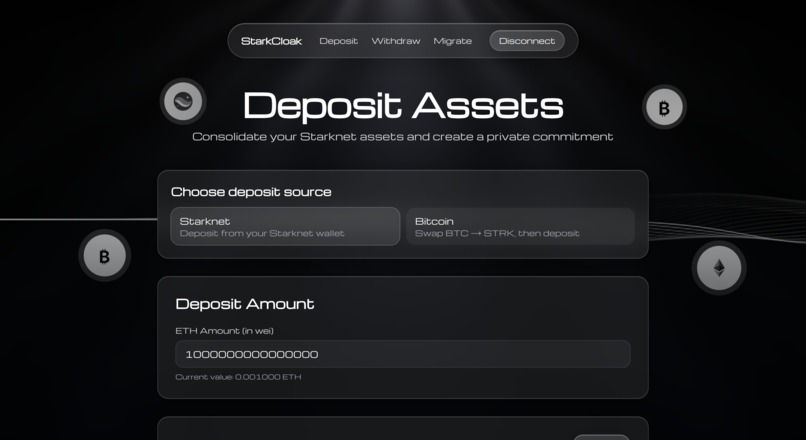
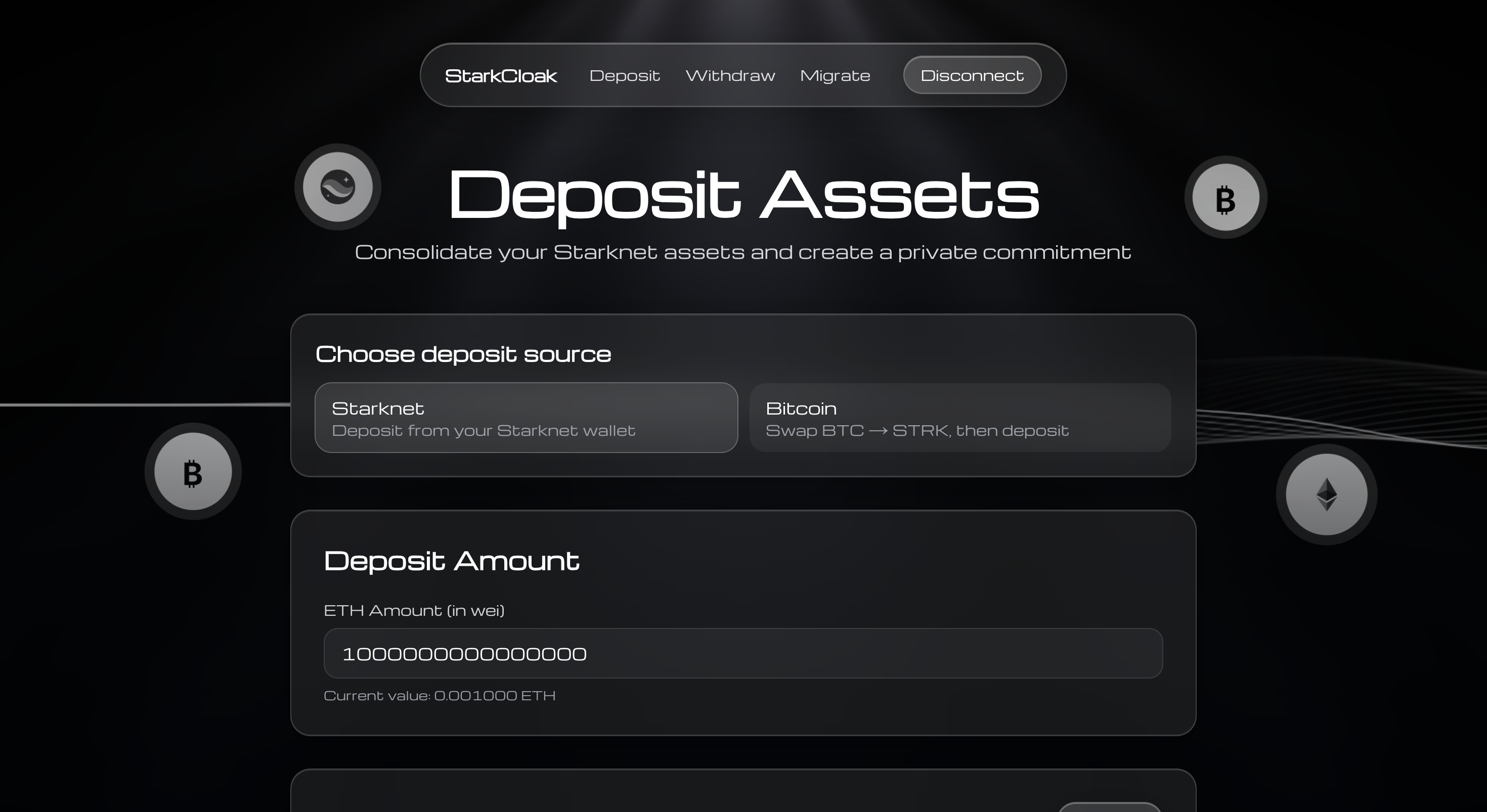
Deposit
-
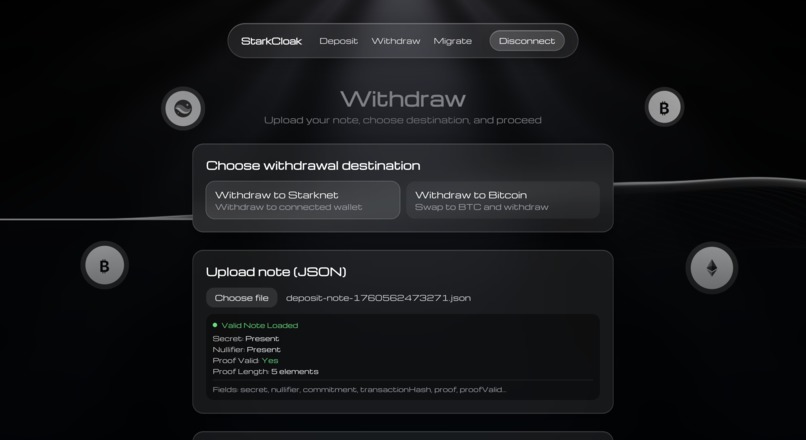
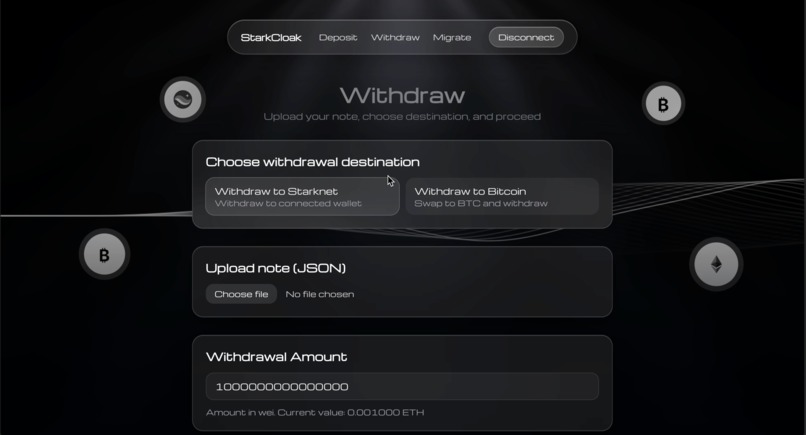
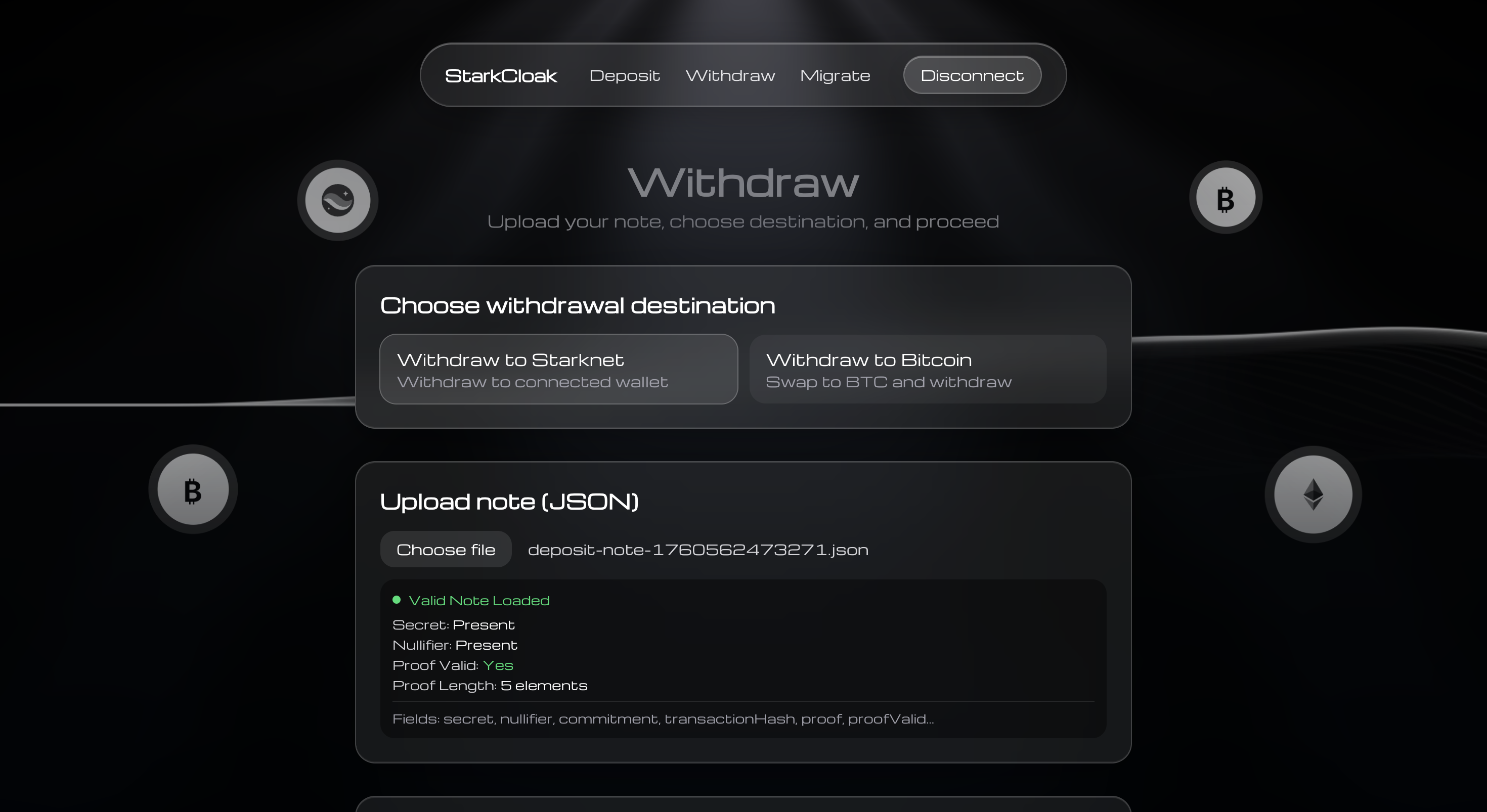
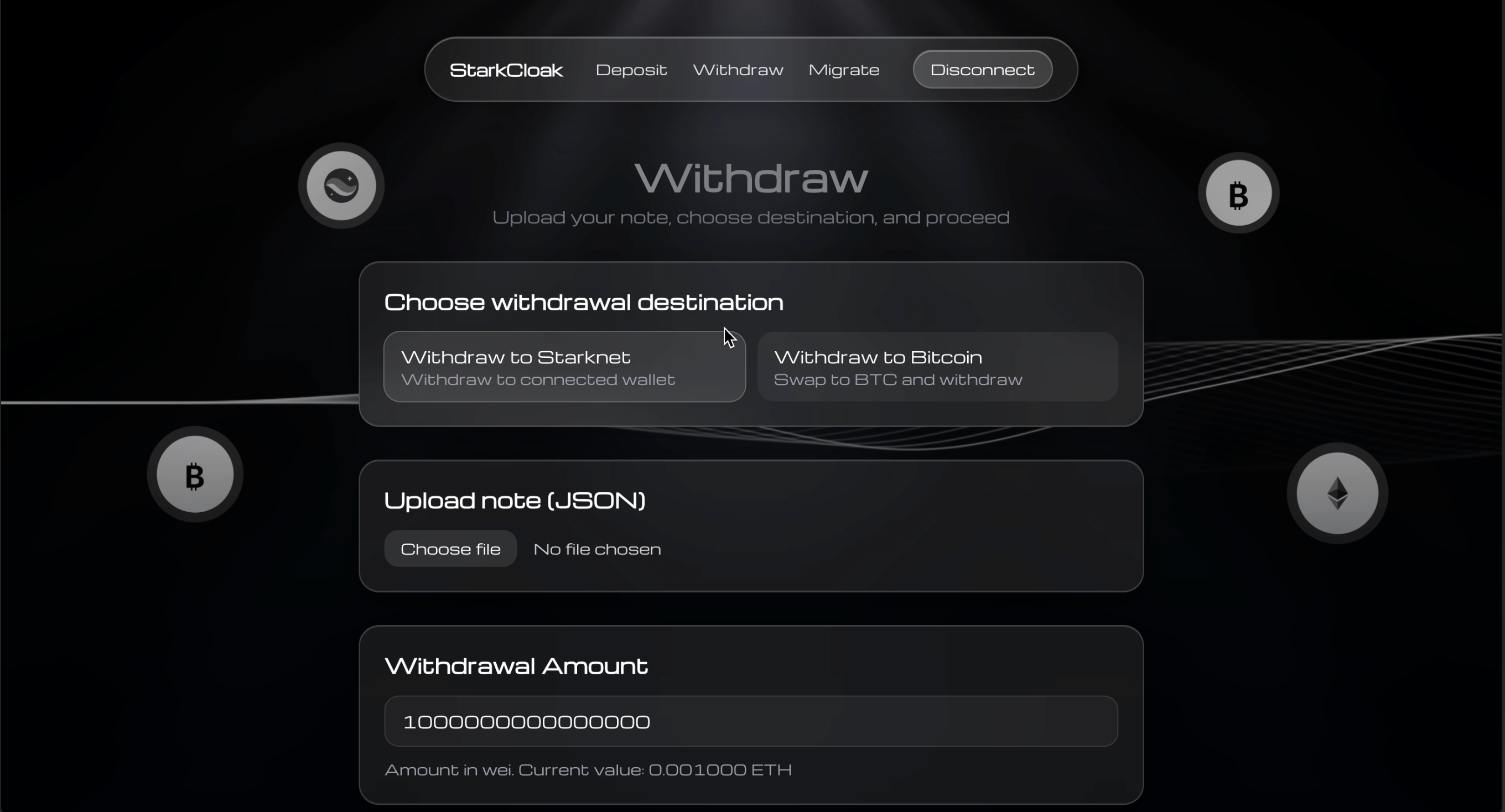
Withdraw
-
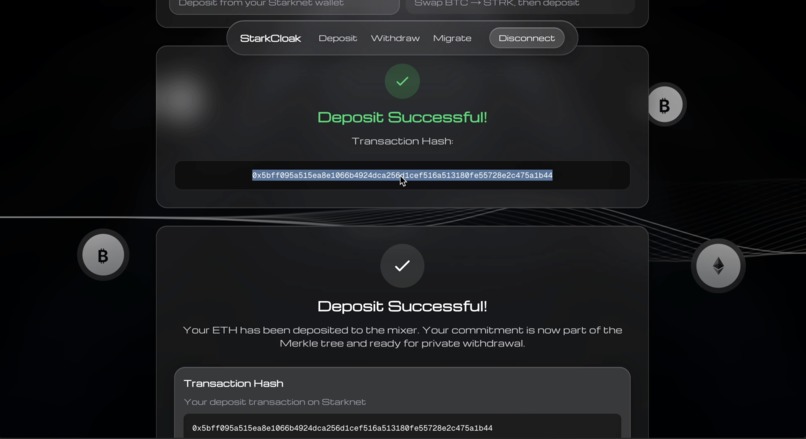
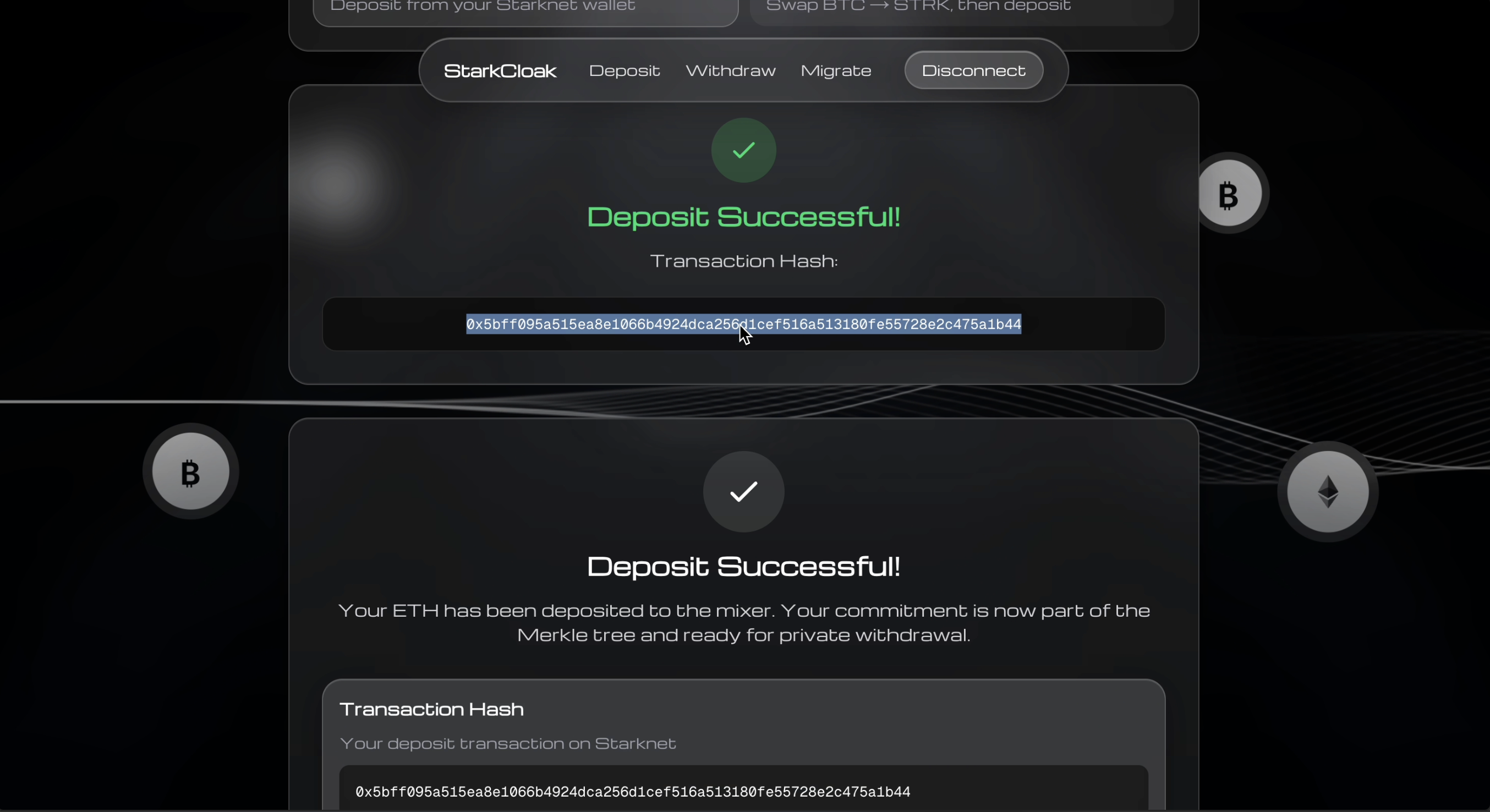
hash
-
hash
-
pitch 1
-
pitch 2
-
pitch 3
StarkCloak: Make wallets private again!
Inspiration
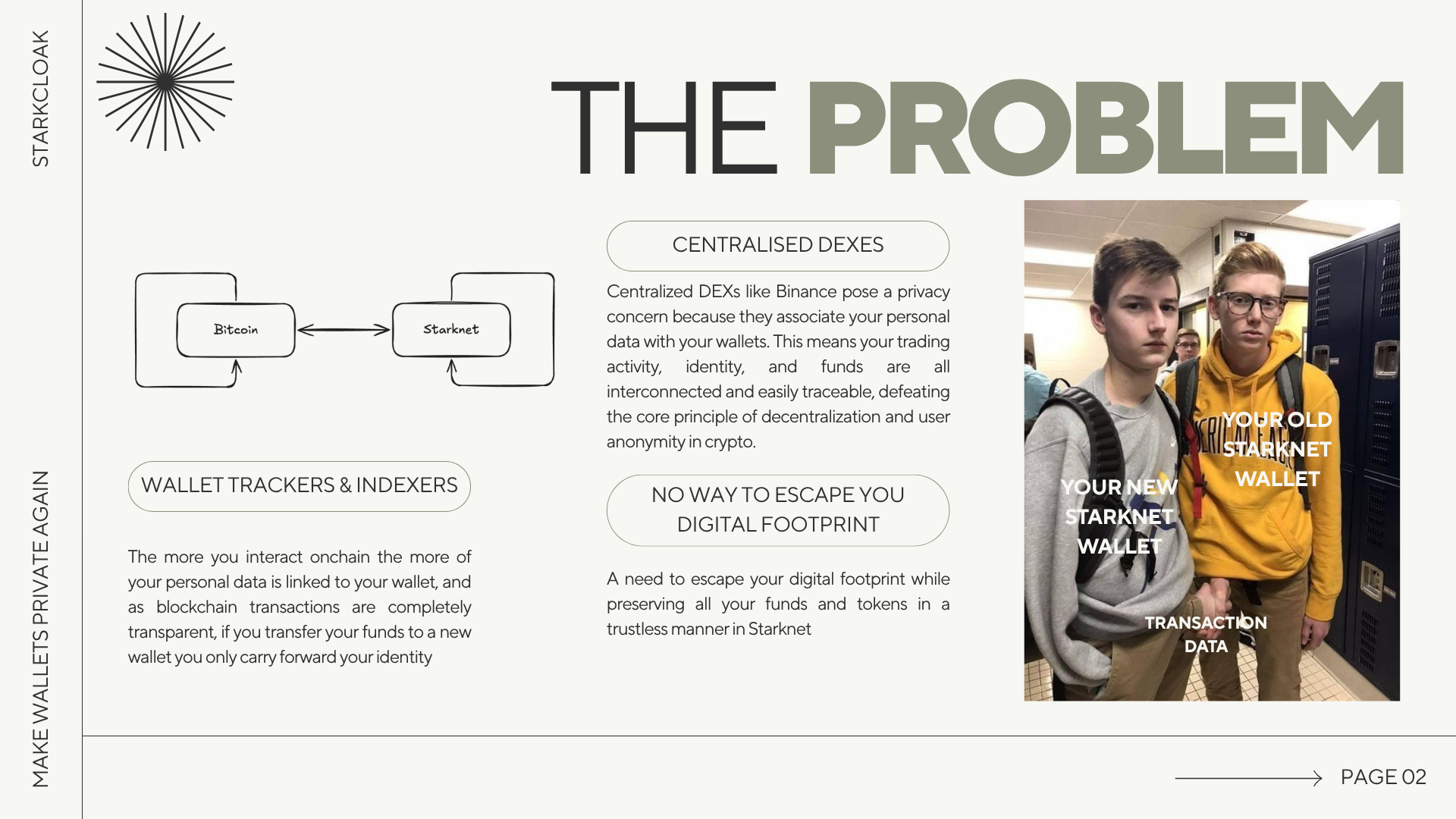
In the world of blockchain, transparency is a double-edged sword. Every on-chain interaction — every swap, bridge, and transfer — adds a traceable layer to your digital identity.
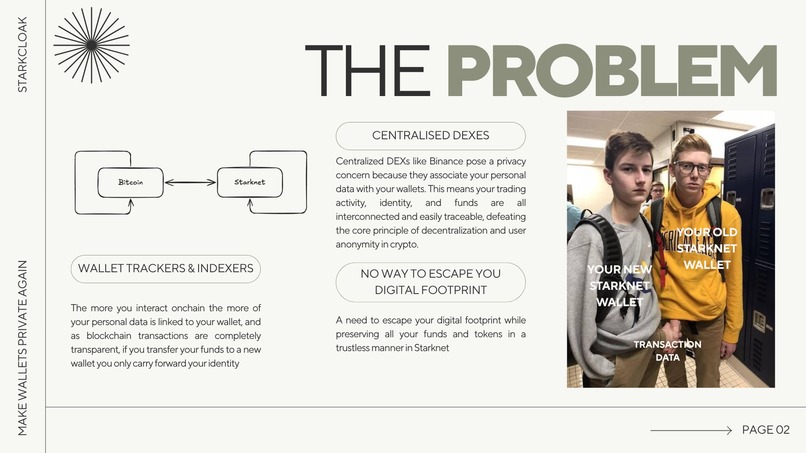
When we explored the ecosystem of wallet trackers and indexers, it became clear how exposed users really are. Even if you move to a new wallet, your transaction graph can be reconstructed — revealing links between your old and new addresses.
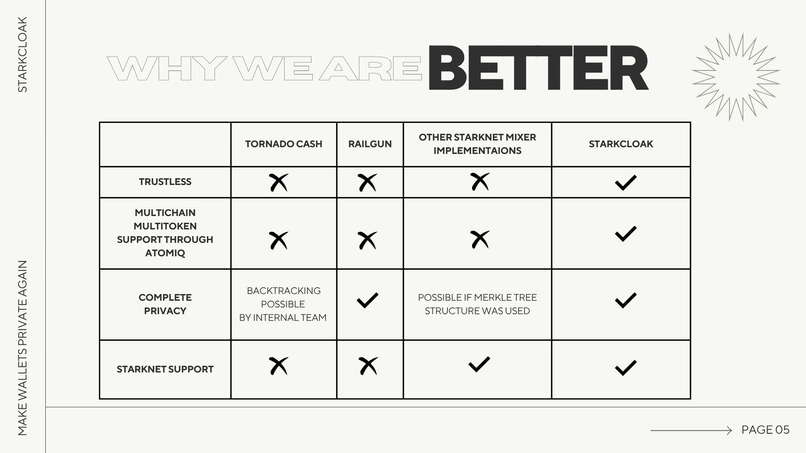
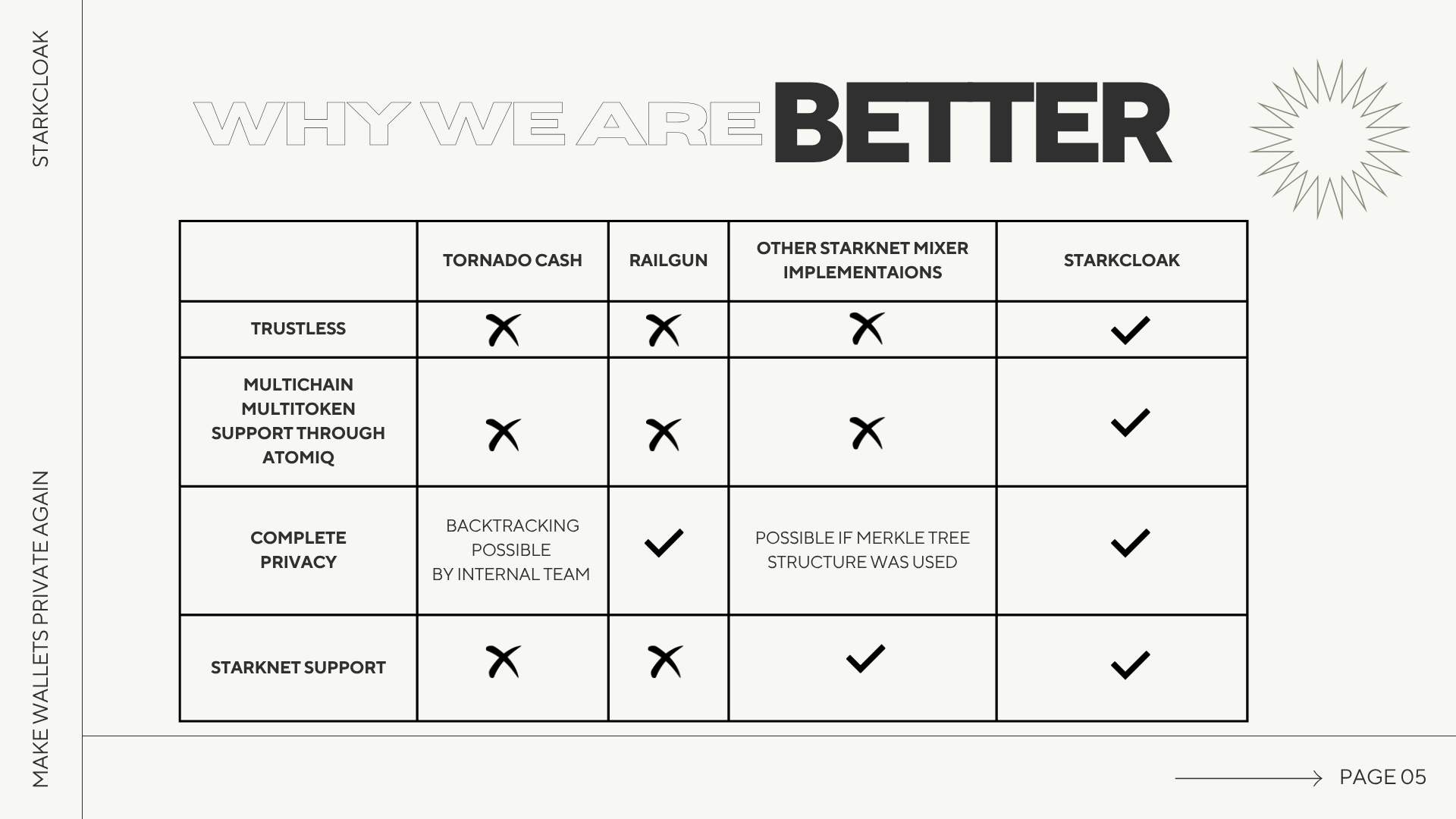
We drew inspiration from projects like RailGun, which pioneered privacy on Ethereum, but found that existing mixers on Starknet were either incomplete, lacked full decentralization, or relied on trusted setups.
So we asked ourselves:
Can we design a trustless privacy layer native to Starknet — one that allows users to truly escape their digital footprint while preserving their tokens, identity, and value?
That question led to StarkCloak.
Problem
- Centralized DEXs like Binance link your KYC data directly to your wallets.
- Wallet trackers and indexers reveal your holdings, transfers, and interactions in real time.
- On-chain transparency means your wallet graph can be easily deanonymized.
- Even moving to a “new” wallet doesn’t help — your transfer path betrays your identity.
There was no way to escape your digital footprint within Starknet while remaining on-chain and trustless.
Solution — StarkCloak
StarkCloak is a trustless, privacy-preserving mixer for Starknet that lets users break their on-chain linkages.
It allows any wallet to:
- Deposit tokens (ERC20) with a hidden commitment.
- Later withdraw to a new wallet — unlinkable to the original depositor.
Our system ensures complete privacy while remaining verifiable, auditable, and fully on-chain.
How We Built It
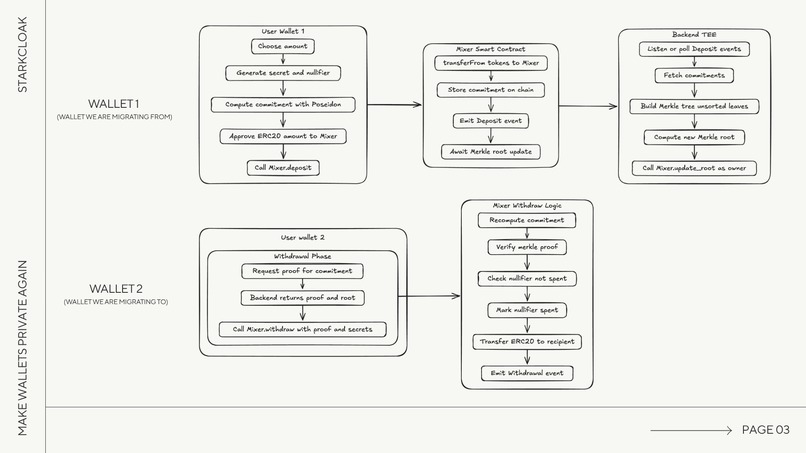
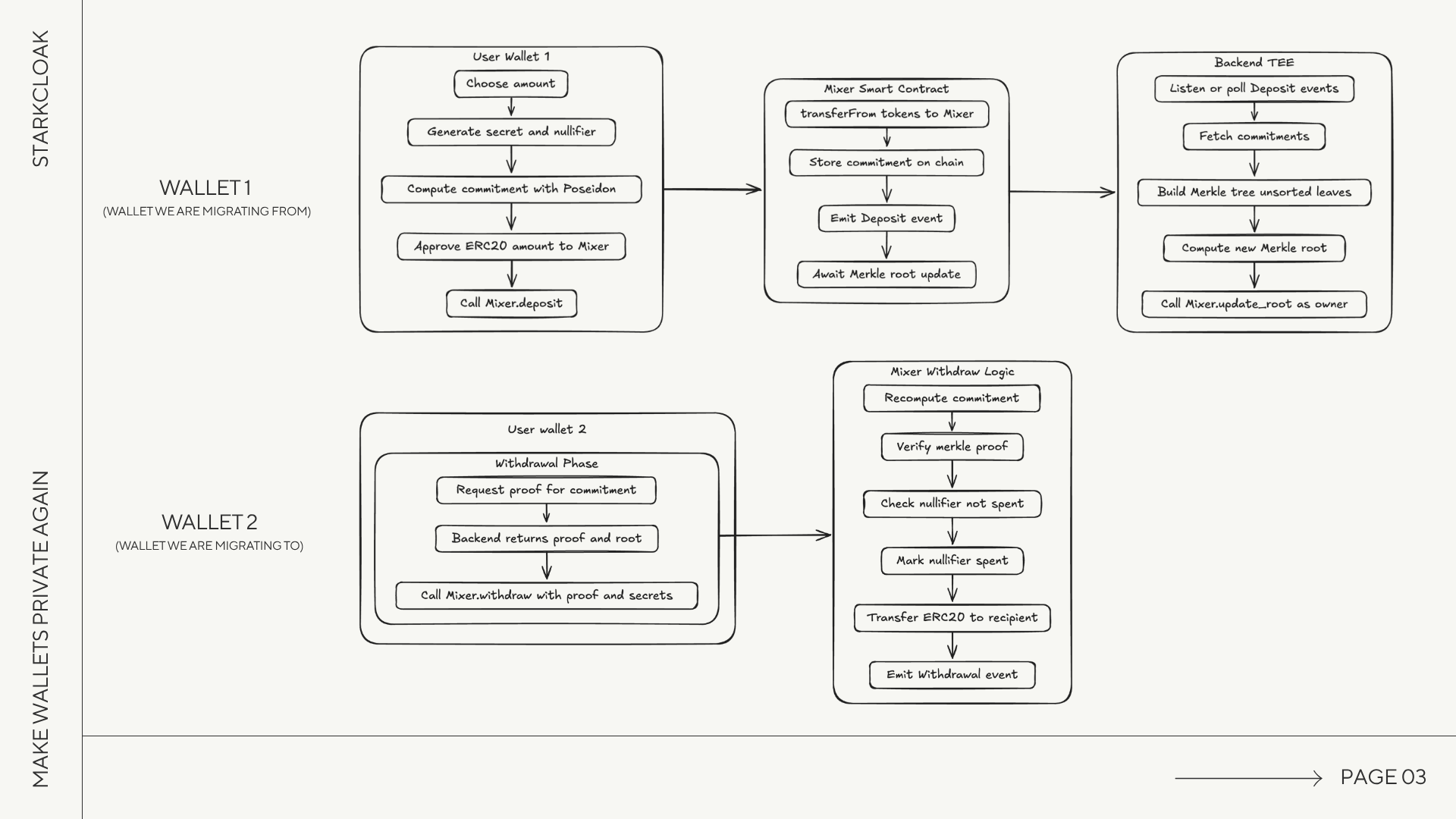
The flow was designed for verifiable privacy without trusted setup:
User generates secrets:
(secret,nullifier)Computes:commitment = Poseidon(secret, nullifier)Deposit phase:
- User approves Mixer to spend ERC20 tokens.
- Calls
deposit(commitment, amount). - Contract pulls tokens, stores the commitment, and emits a
Depositevent.
Merkle tree update:
- Backend / TEE listens for deposits.
- Builds an unsorted-leaf Merkle tree with pairwise-sorted hashing.
- Calls
update_root(new_root)on-chain as the owner.
Withdrawal phase:
- User (or another wallet) requests a Merkle proof for their commitment.
- Calls
withdraw(merkle_proof, secret, nullifier, recipient, amount). - The contract:
- Recomputes ( \text{commitment} = Poseidon(\text{secret}, \text{nullifier}) )
- Verifies the proof.
- Checks nullifier not spent.
- Transfers tokens to the new wallet, ensuring unlinkability.
This architecture ensures no centralized intermediary can link deposits and withdrawals — privacy is enforced by math, not trust.
What We Learned
- How to combine Starknet’s Cairo VM with zero-knowledge-based privacy flows.
- Efficient Merkle tree management using sorted internal hashing to avoid path collisions.
- The intricacies of Poseidon hashing and commitment verification on L2.
- Handling cross-contract ERC20 approvals securely within Starknet’s account abstraction model.
We also gained a deeper appreciation of the trade-offs between off-chain computation (TEE) and on-chain verification for scalability and trustlessness.
Challenges We Faced
- Tree synchronization: Ensuring Merkle roots between backend and on-chain state remain consistent.
- Proof generation latency: Optimizing zk-proof verification time within Starknet’s execution model.
- Cross-contract allowance management: Dealing with non-standard ERC20 implementations on Starknet.
- Frontend anonymity: Designing UX for a privacy app without exposing user identity via API calls.
Conclusion
With StarkCloak, we bring privacy-as-a-right to Starknet — enabling users to transact, trade, and move assets freely without carrying their digital footprint forward.
A future where you can be both visible on-chain and invisible in identity — that’s the world StarkCloak envisions.


Log in or sign up for Devpost to join the conversation.