-
-
Splash
-

Main menu
-

-

Online Game
-

Online Game with peers
-
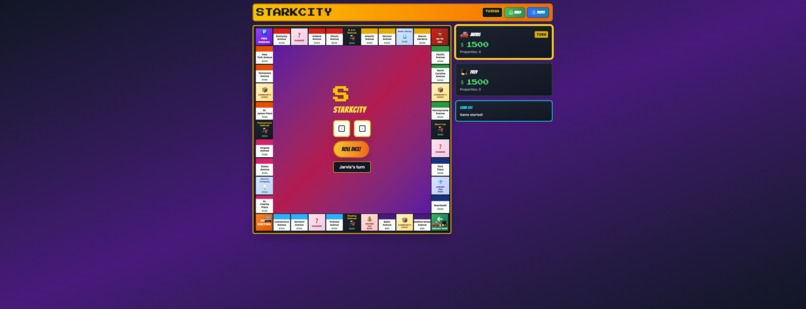
Game
-
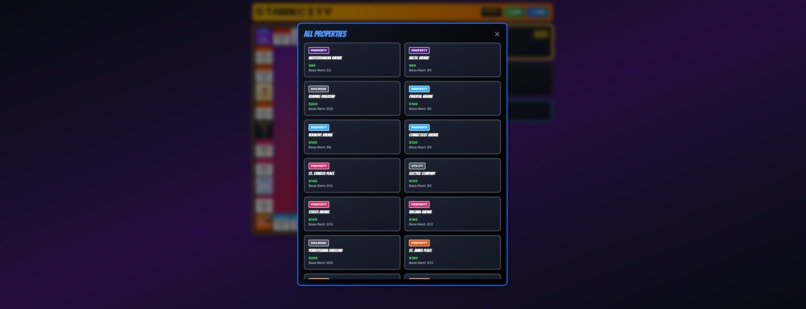
Properties




Inspiration
We wanted to merge the thrill of Monopoly with the transparency of blockchain. The idea of a city where every deal, rent, and property is verifiably onchain inspired StarkCity — a decentralized twist on a classic.
What it does
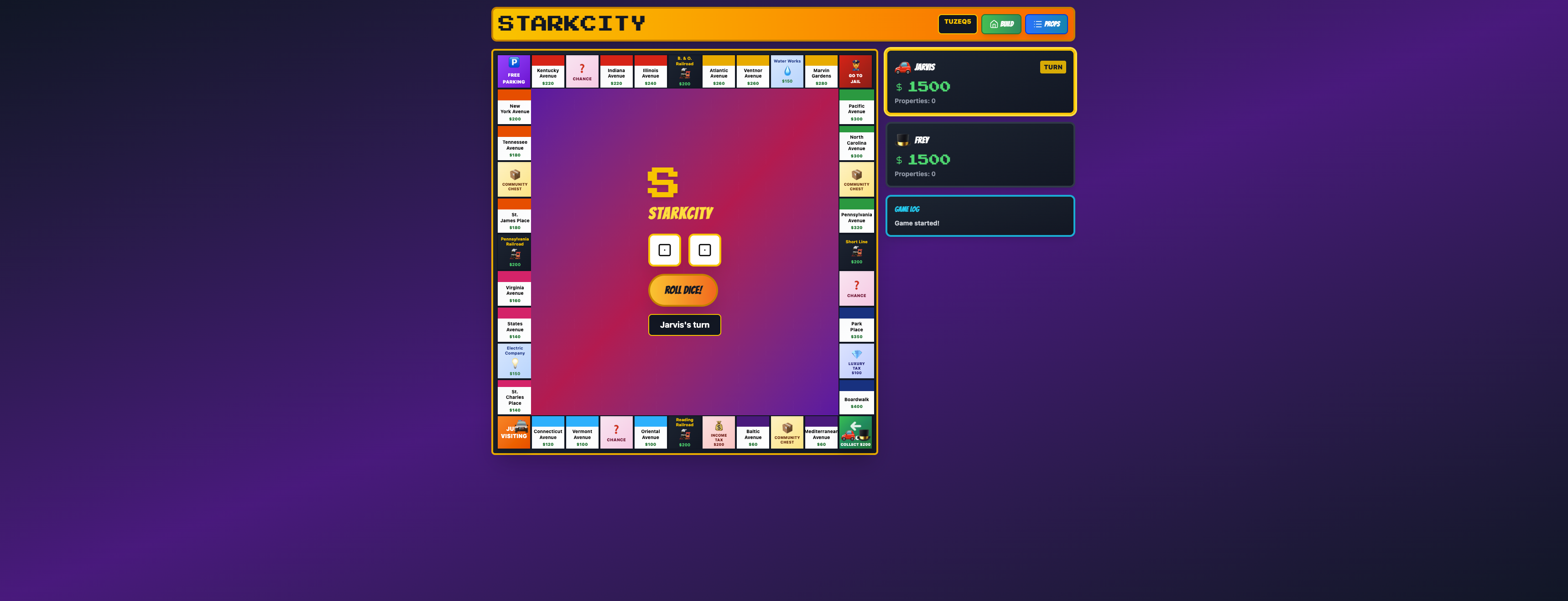
StarkCity lets players roll dice, buy properties, build houses, and collect rent — all powered by Starknet and Dojo.
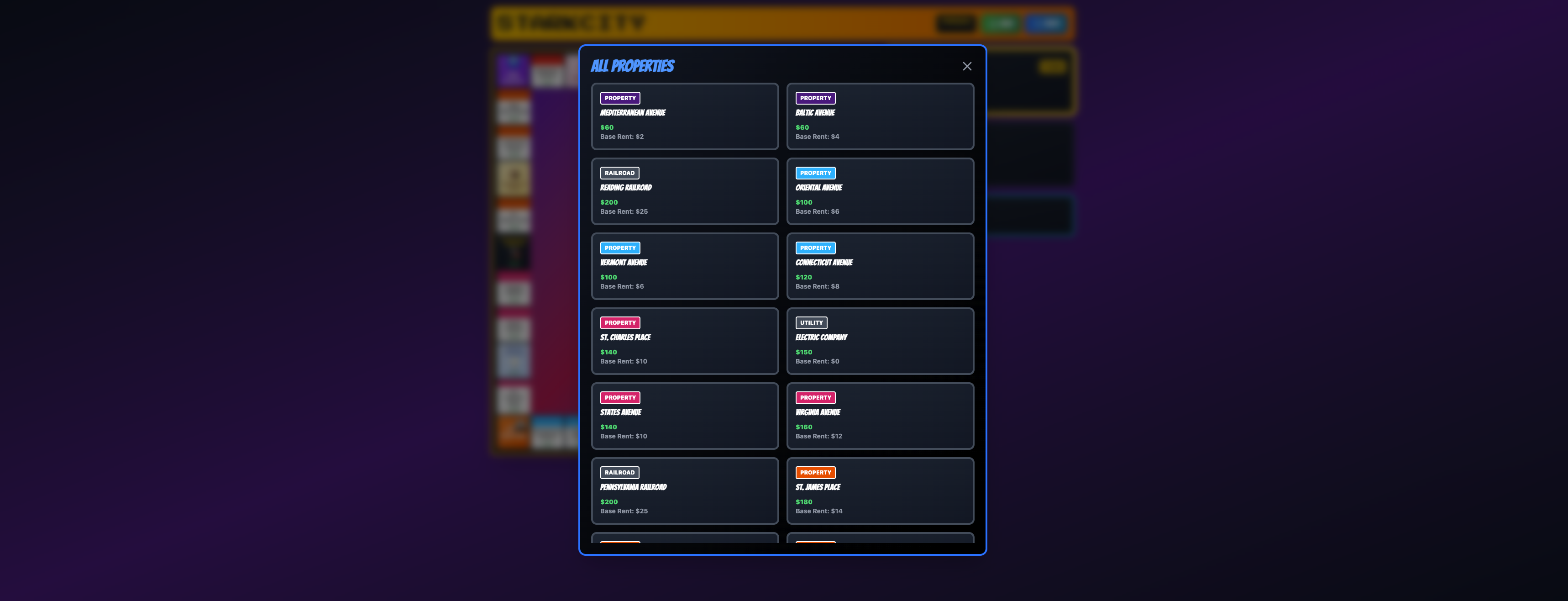
It supports online multiplayer (via sockets) and AI mode where you can play against a computer opponent. Every property, house, and hotel is represented as an ERC-1155 token, ensuring verifiable ownership.
How we built it
We built the core game logic using Dojo’s ECS framework, with:
- ERC-1155 tokens: Properties
1–40, Houses1001–1040, Hotels2001–2040. - Socket.IO server: For real-time multiplayer.
- React frontend: For smooth UI and game updates.
- AI heuristics: For single-player mode decisions.
Dice rolls follow a fair random distribution:
[
P(x) = \frac{1}{36}, \quad x \in [2, 12]
]
Challenges we ran into
- Syncing onchain and offchain states in real-time.
- Balancing speed and decentralization.
- Designing the ERC-1155 ID system to map properties, houses, and hotels efficiently.
- Making the AI play competitively but predictably.
Accomplishments that we’re proud of
- Built a fully onchain Monopoly experience using Dojo.
- Designed a clean, expandable ERC-1155 asset hierarchy.
- Implemented both multiplayer and AI modes in one unified system.
What we learned
- How to model complex game systems in Dojo ECS.
- How to bridge offchain gameplay with onchain verification.
- The importance of UX design when mixing real-time actions with blockchain logic.
What’s next for StarkCity
We’re expanding StarkCity with:
- Starknet leaderboard integration
- Tokenized rewards and staking
- Community tournaments
- And a fully decentralized city economy
Built With
- cairo
- dojo
- node.js
- react
- socket.io
- typescript


Log in or sign up for Devpost to join the conversation.