-
-
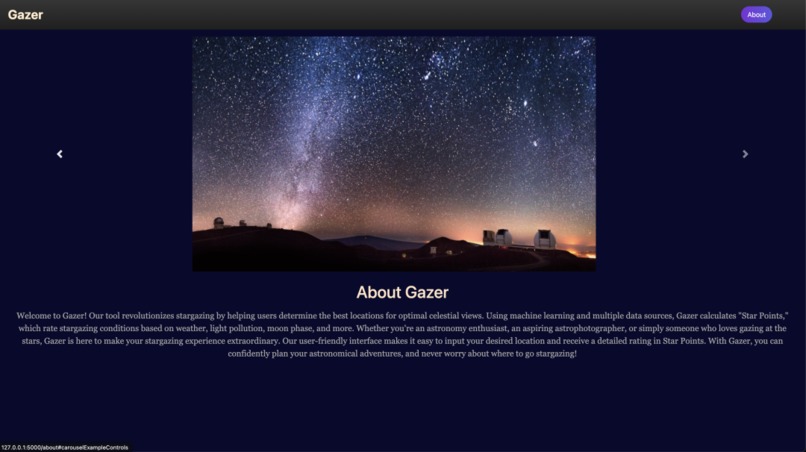
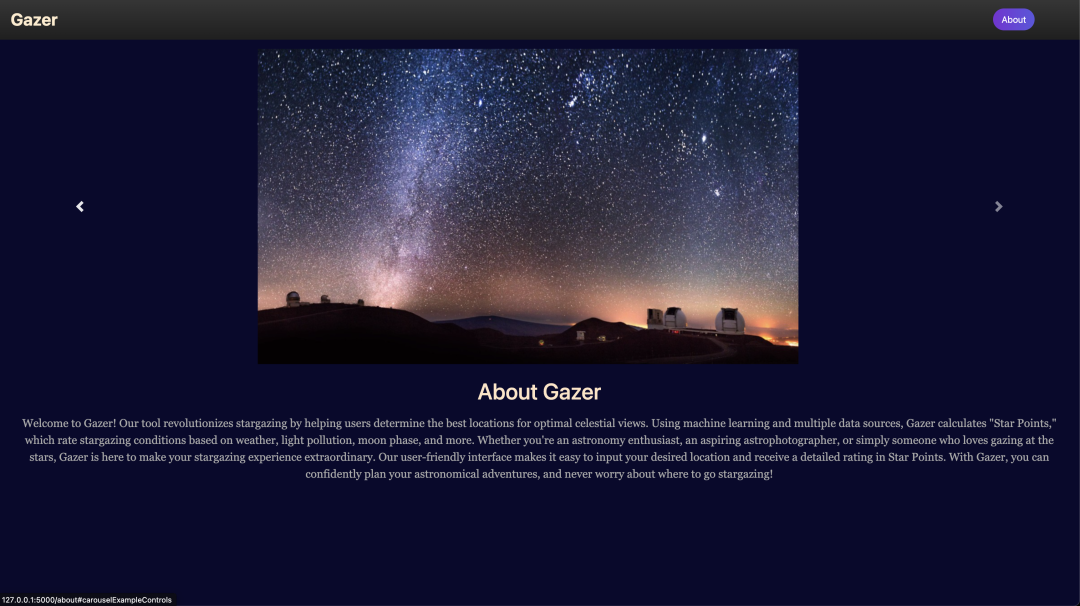
About Page
-
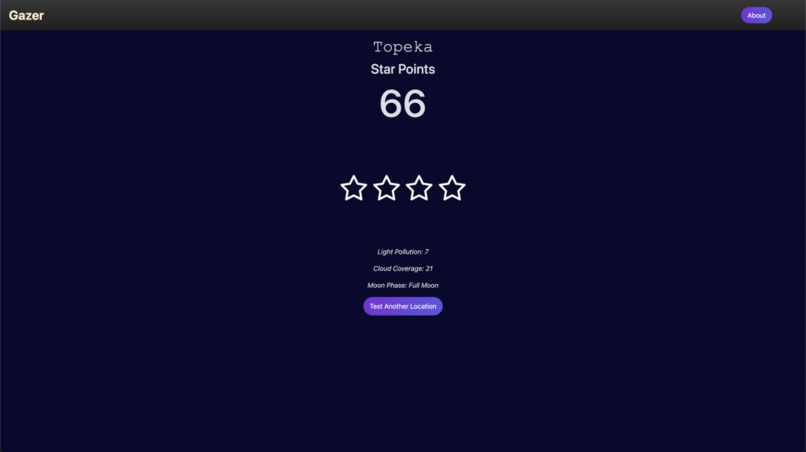
Results Page
-
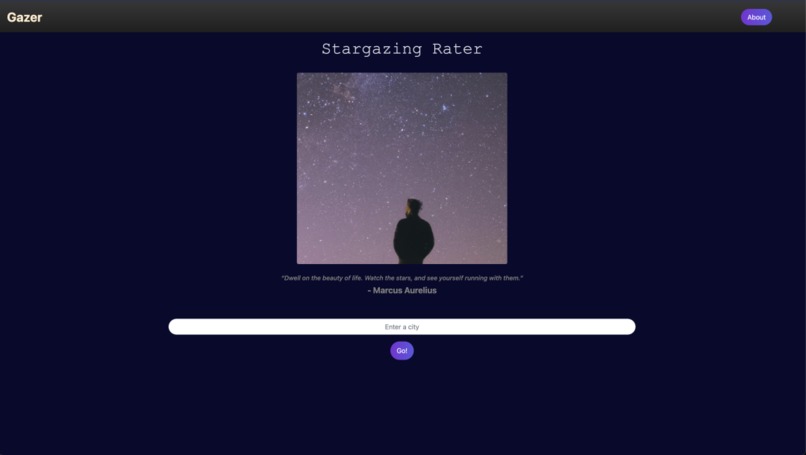
Home Page
Inspiration
One of our team members loves stars. He has a telescope and all. He went to Joshua Tree once but realized it was hard to see stars. He then realized that there should be a place where he can tell if it is an excellent place to see the stars.
What it does
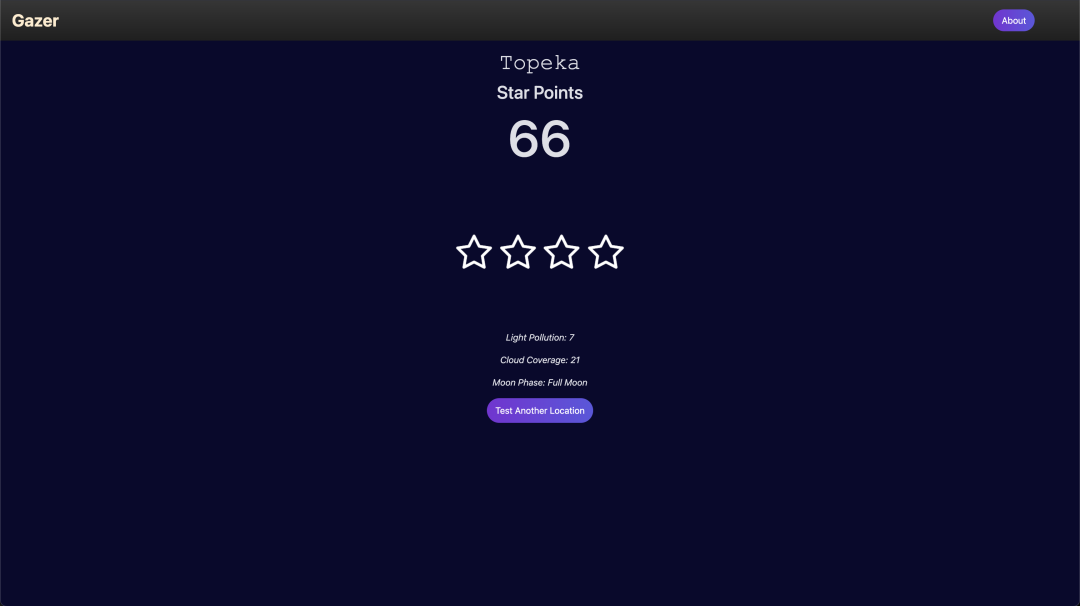
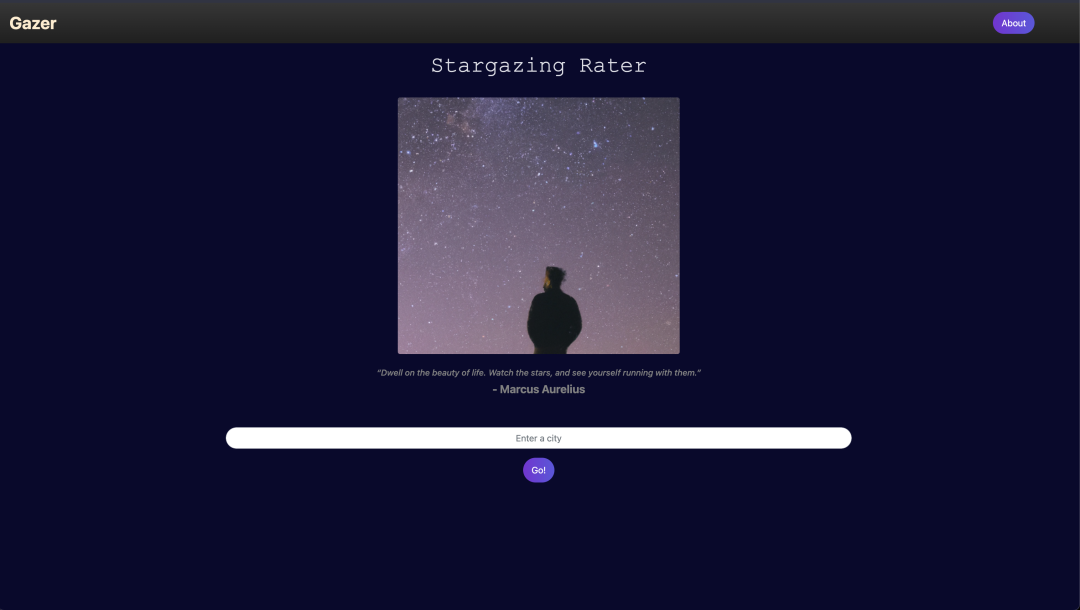
It takes in the user input of the location/city they want to visit. It then prints out a stargazing point value, with the higher value being a better place to watch the stars.
How we built it
We made the website using Flask. We trained an AI learning model with pandas to format large databases, based on current air quality and current light intensity/moon intensity. The results of the machine learning program output the SQM (Sky Quality Meter), a scale to represent the luminosity of the night sky. We got the current values of air quality, moonlight intensity, and cloud coverage through 3 weather-based APIs. Based on the SQM index, we combined that with cloud coverage to provide stargazing points.
Challenges we ran into
It was hard to combine multiple datasets in pandas, but it ended up working. Pandas were not compatible with our version of Python, so we had to move it to a different computer.
Accomplishments that we're proud of
We were able to build a webpage, learn AI with pandas, and make the webpage look good.
What we learned
We learned how to use pandas to manage large datasets, get data from an API, create a webpage, and integrate them all into one big project.
What's next for Stargazers
Constelllations, planets and galaxies, and expand it to be available for the whole globe.

Log in or sign up for Devpost to join the conversation.