-
-
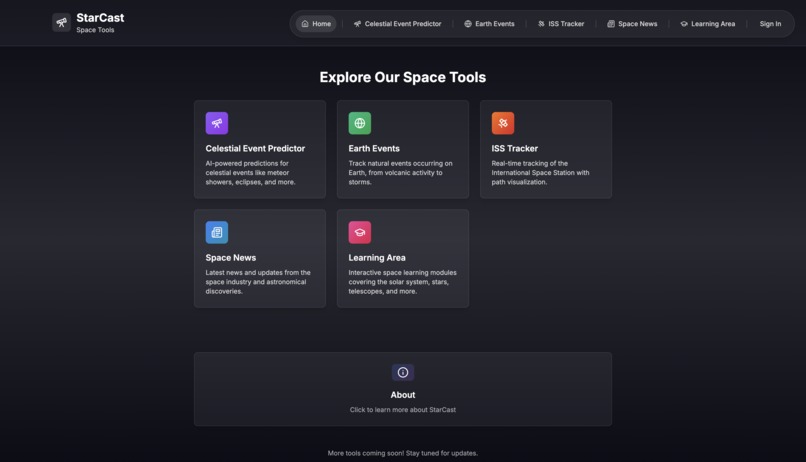
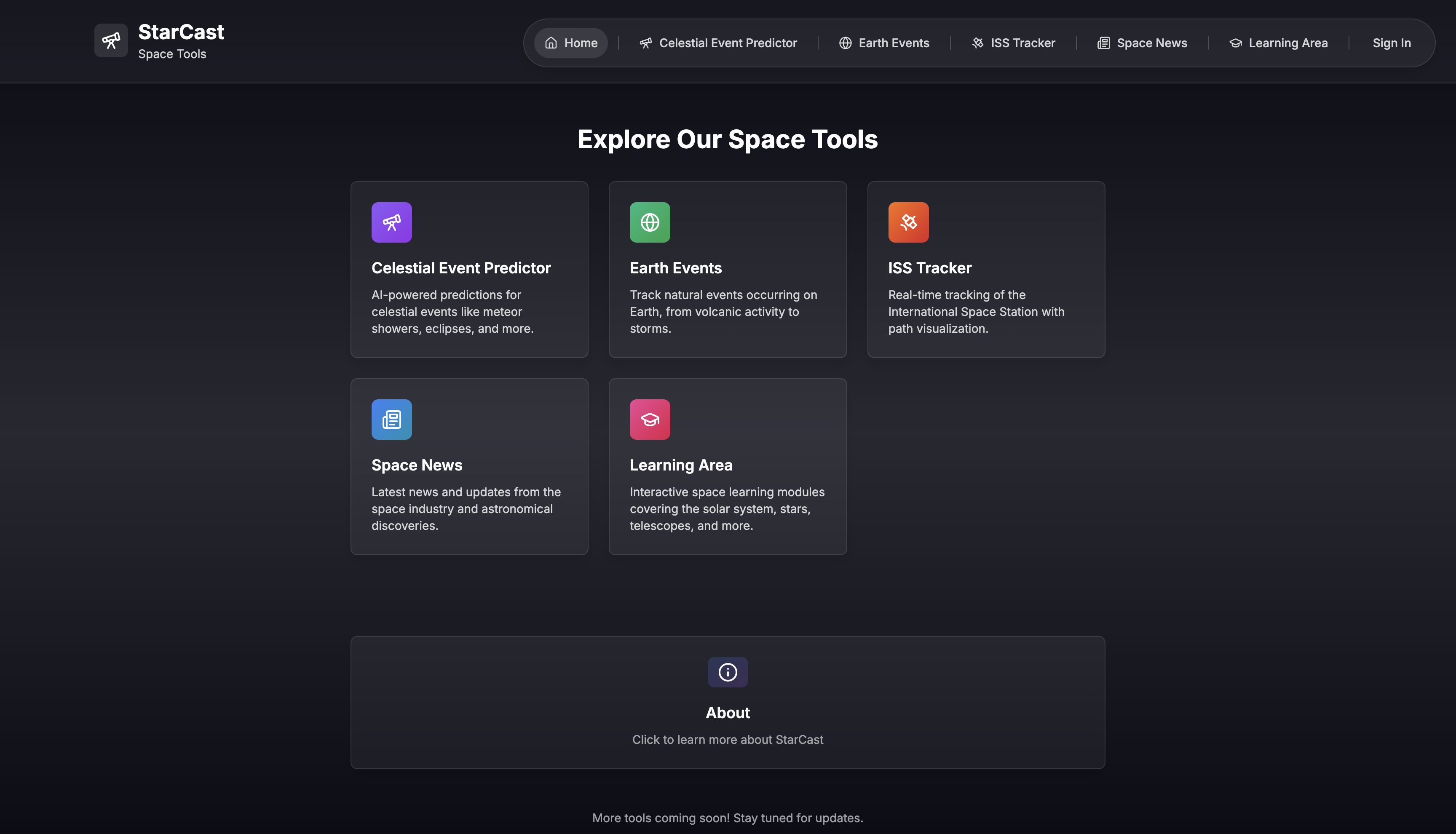
Home Page
-
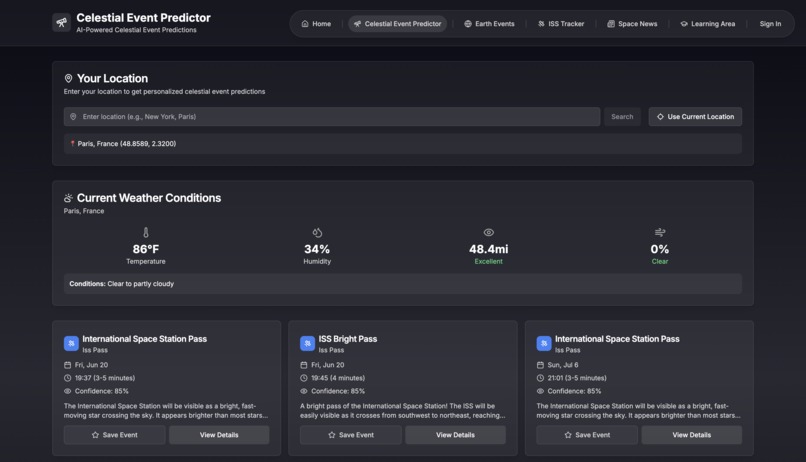
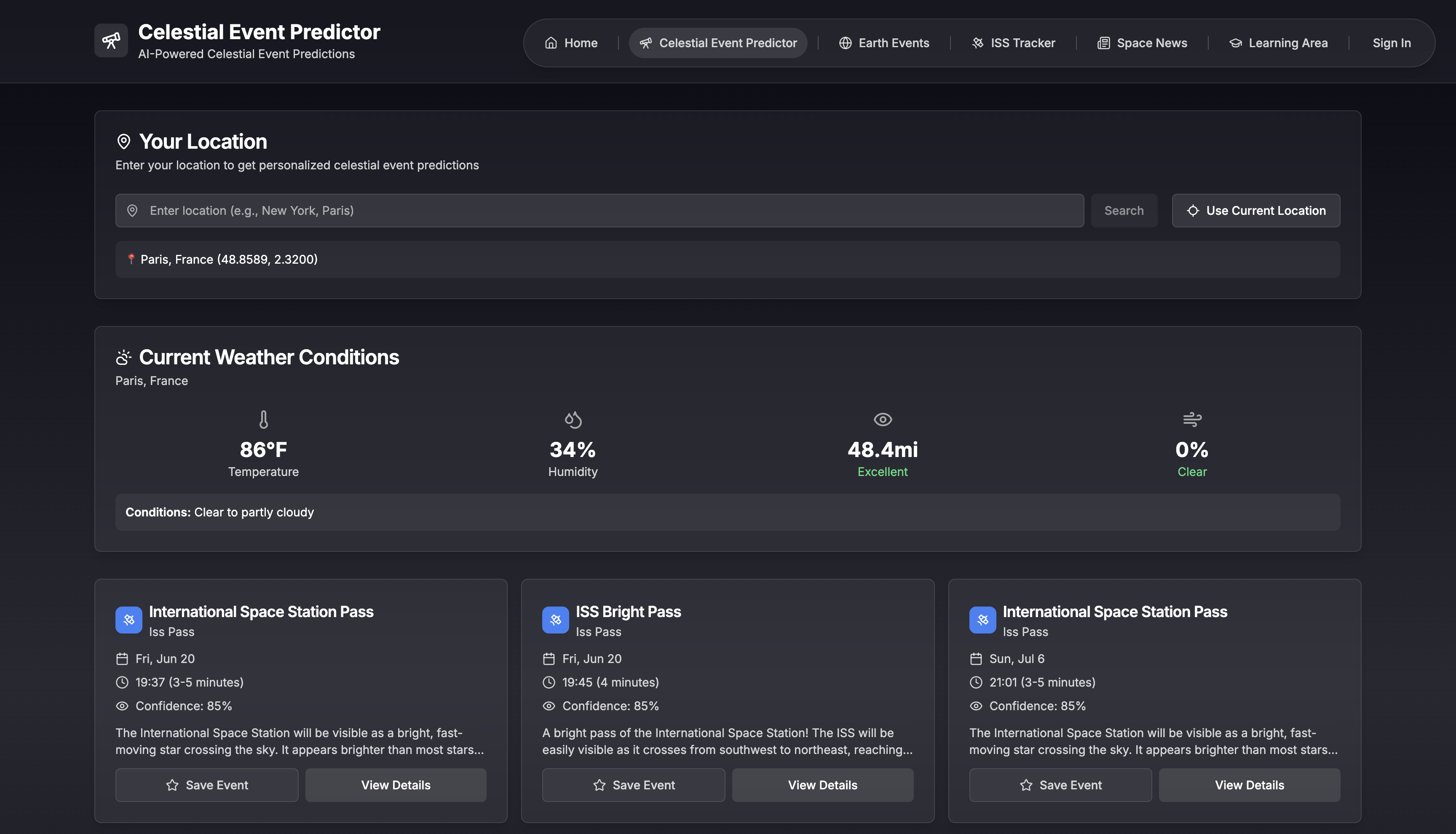
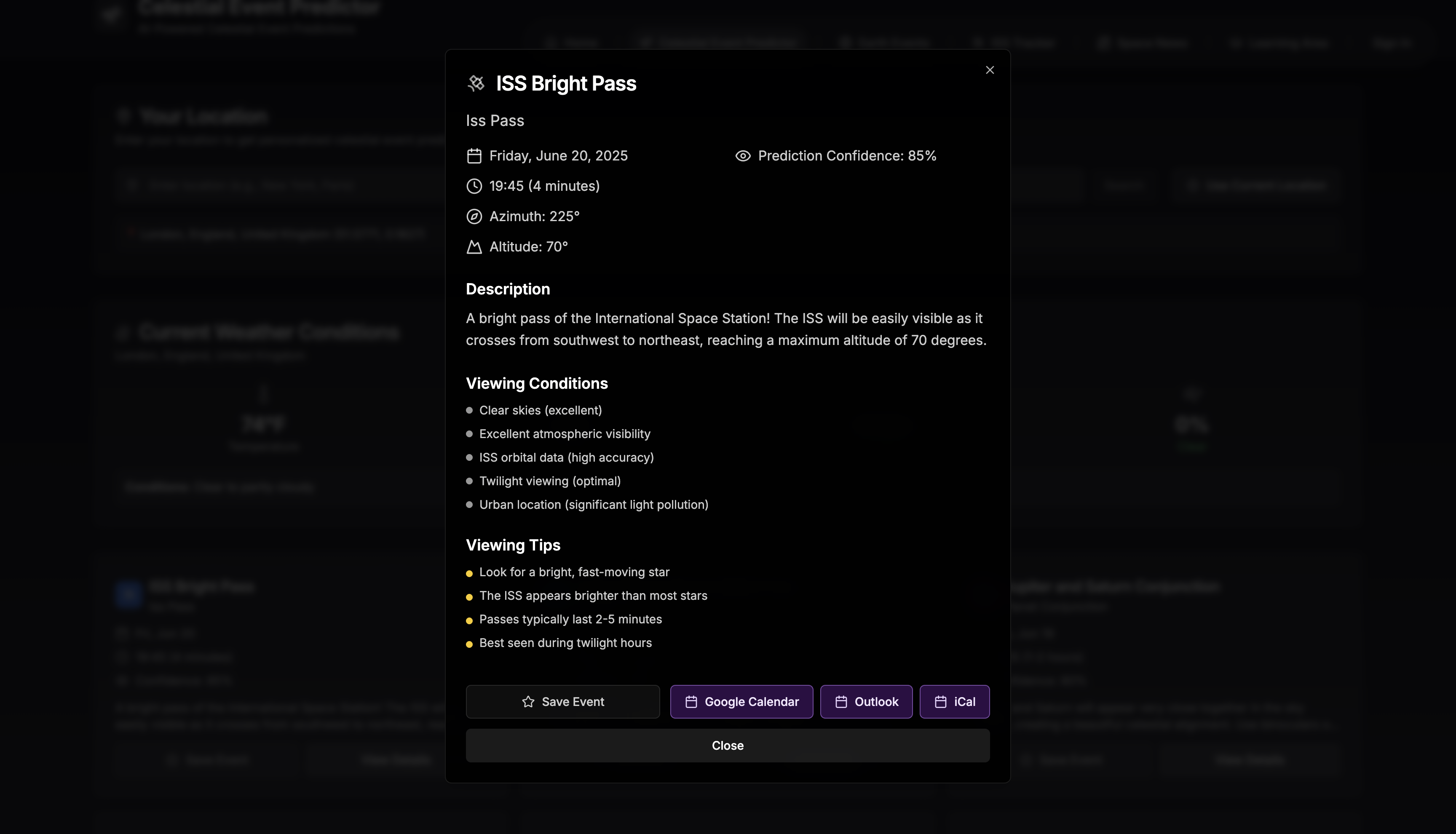
Celestial Event Tracker
-
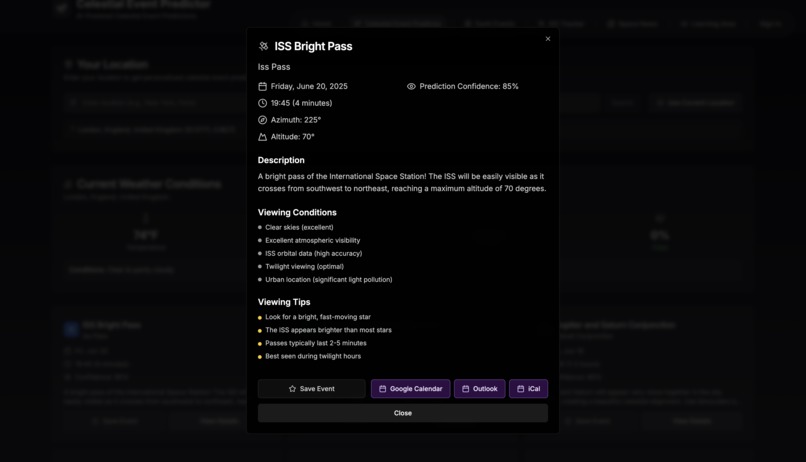
Celestial Event Tracker Selected Event
-
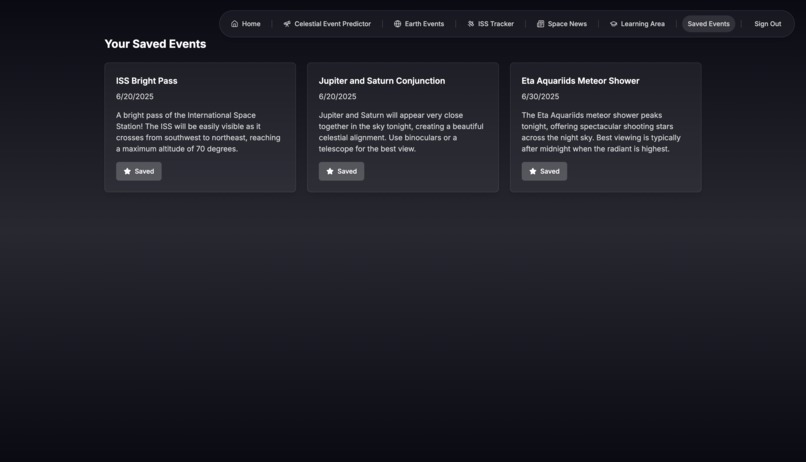
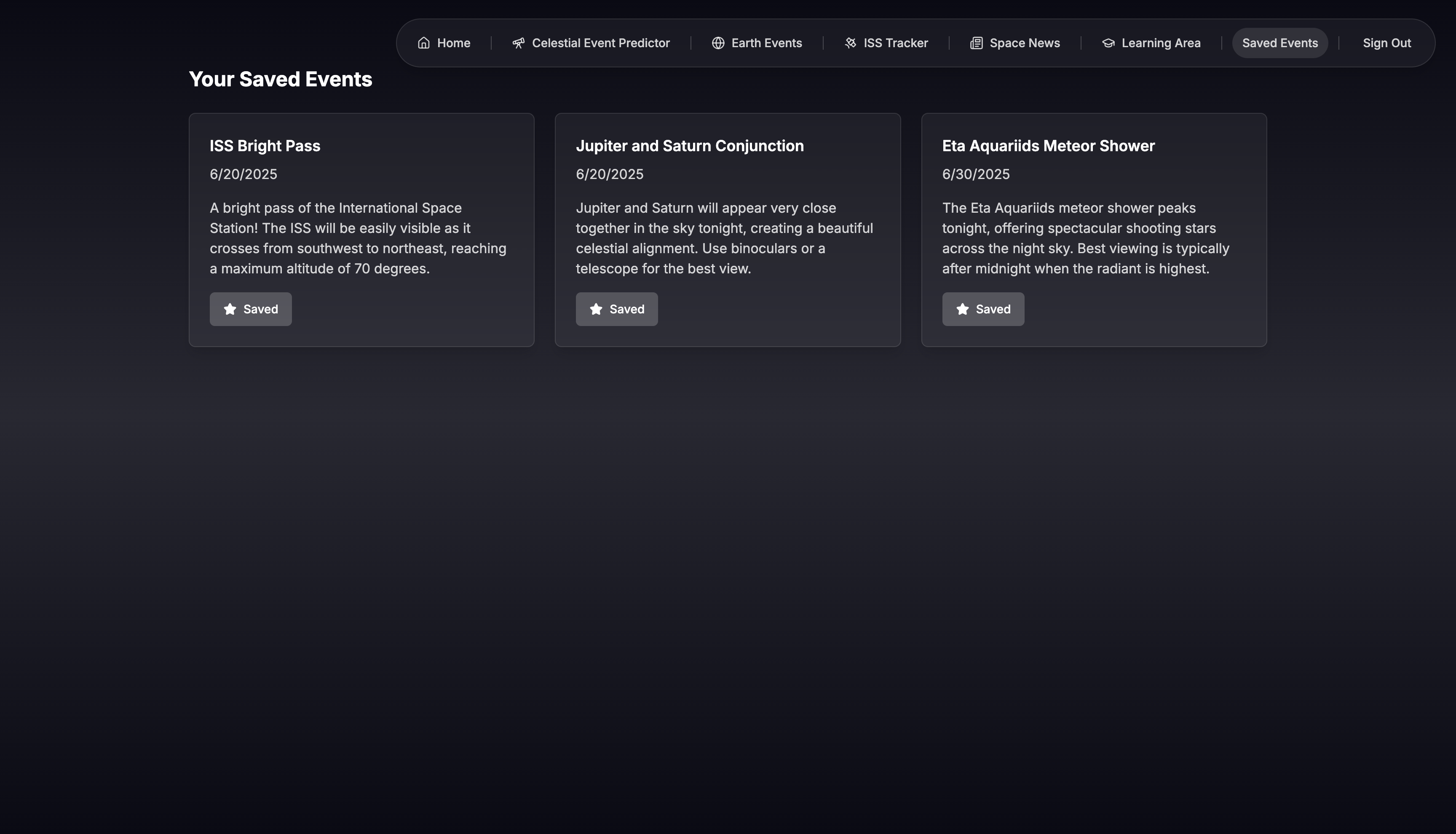
Saved Events (Only visible after logged in)
-
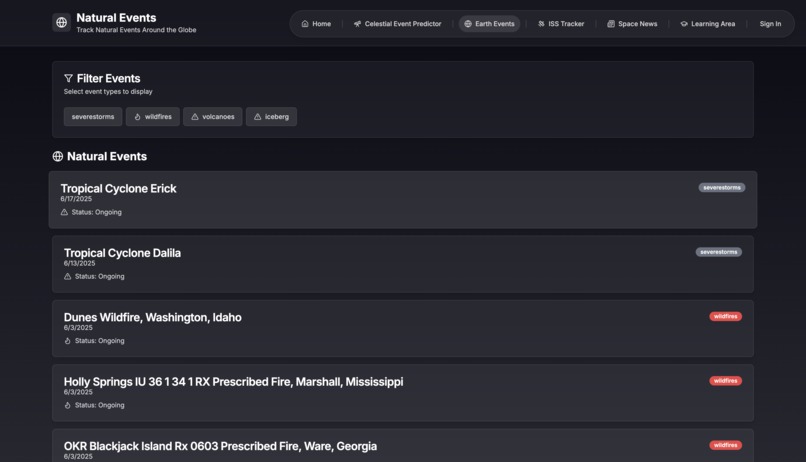
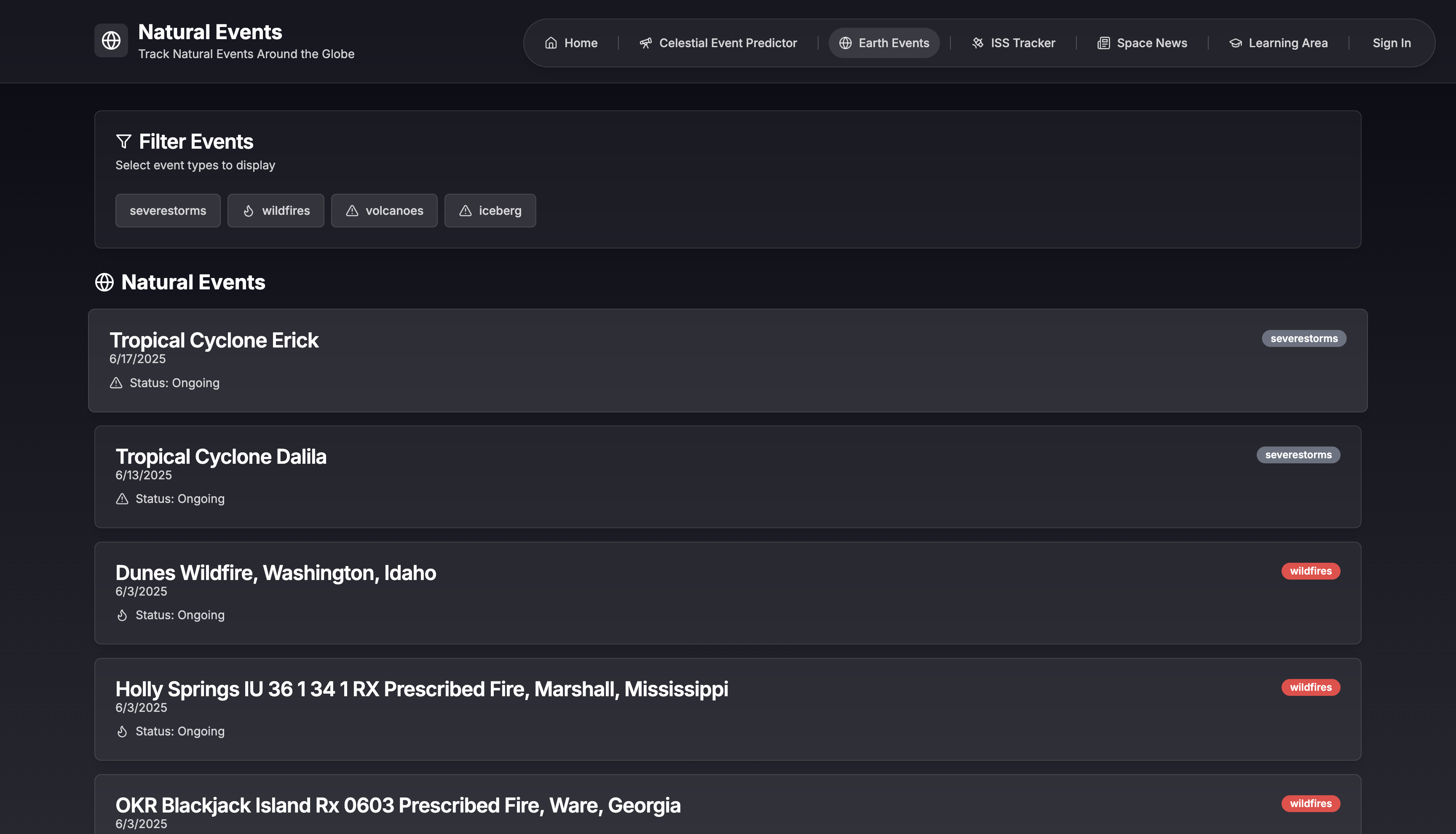
Earth Events
-
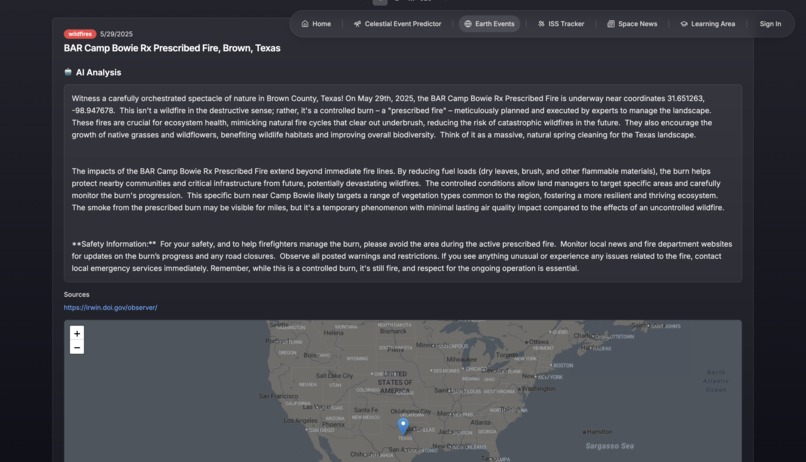
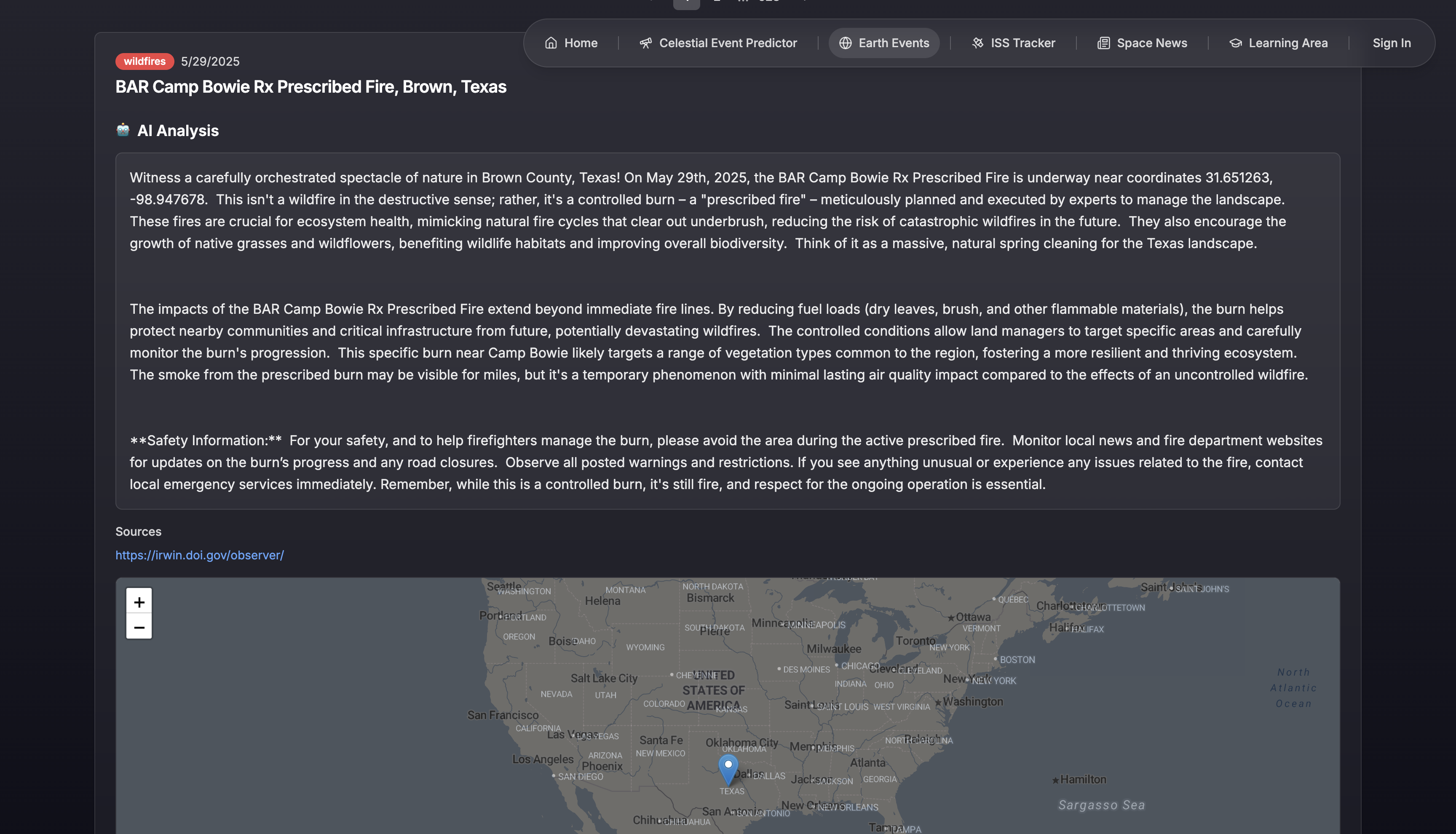
Earth Events Selected Event
-
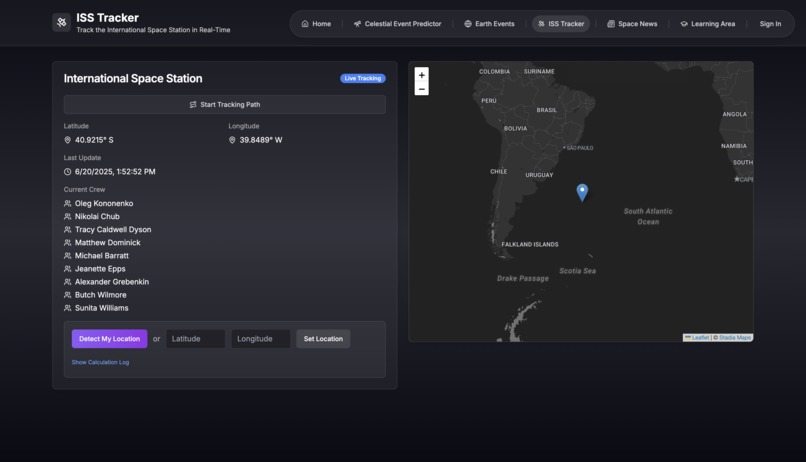
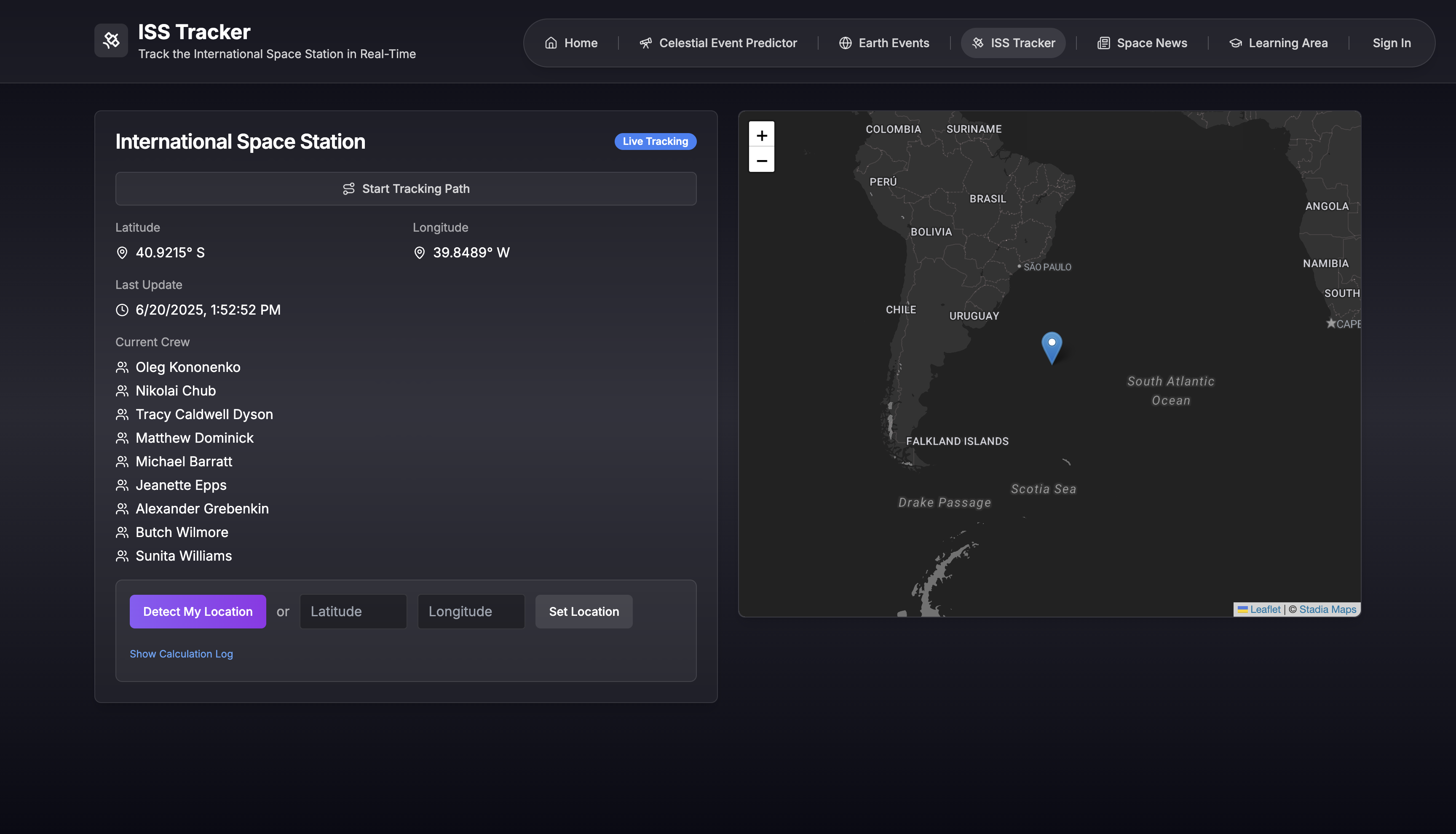
ISS Tracking
-
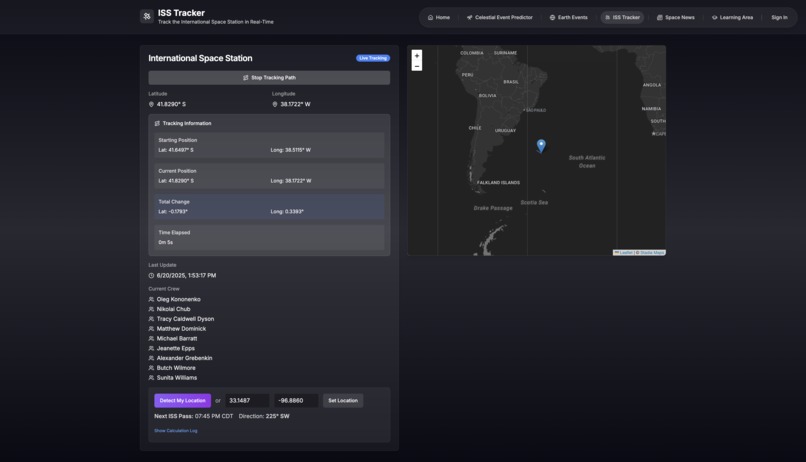
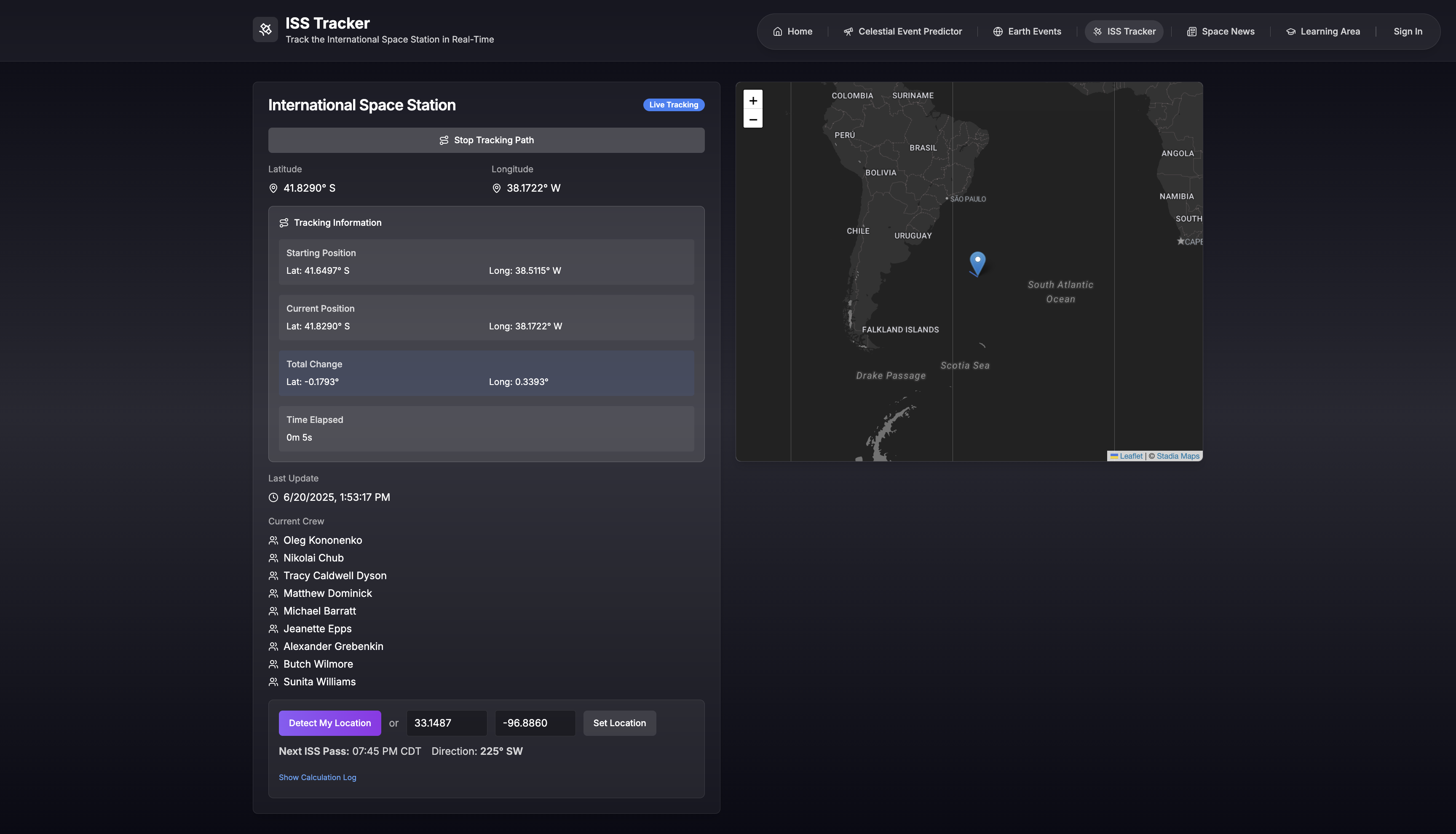
ISS Tracking Zoomed Out with Tracking and PassOver Module on
-
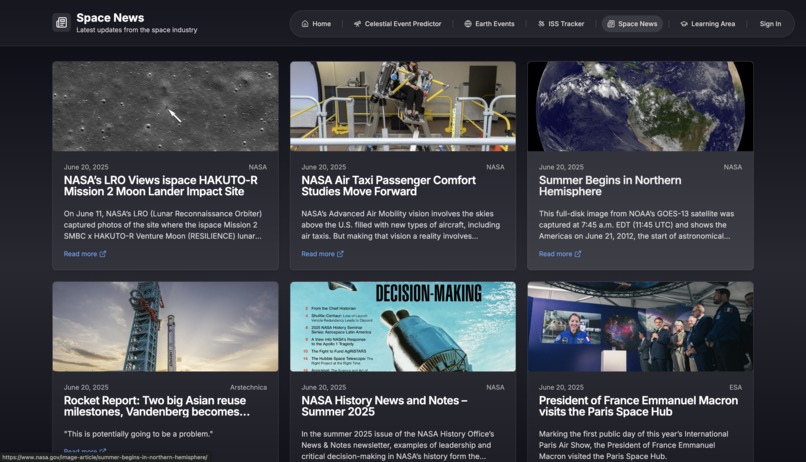
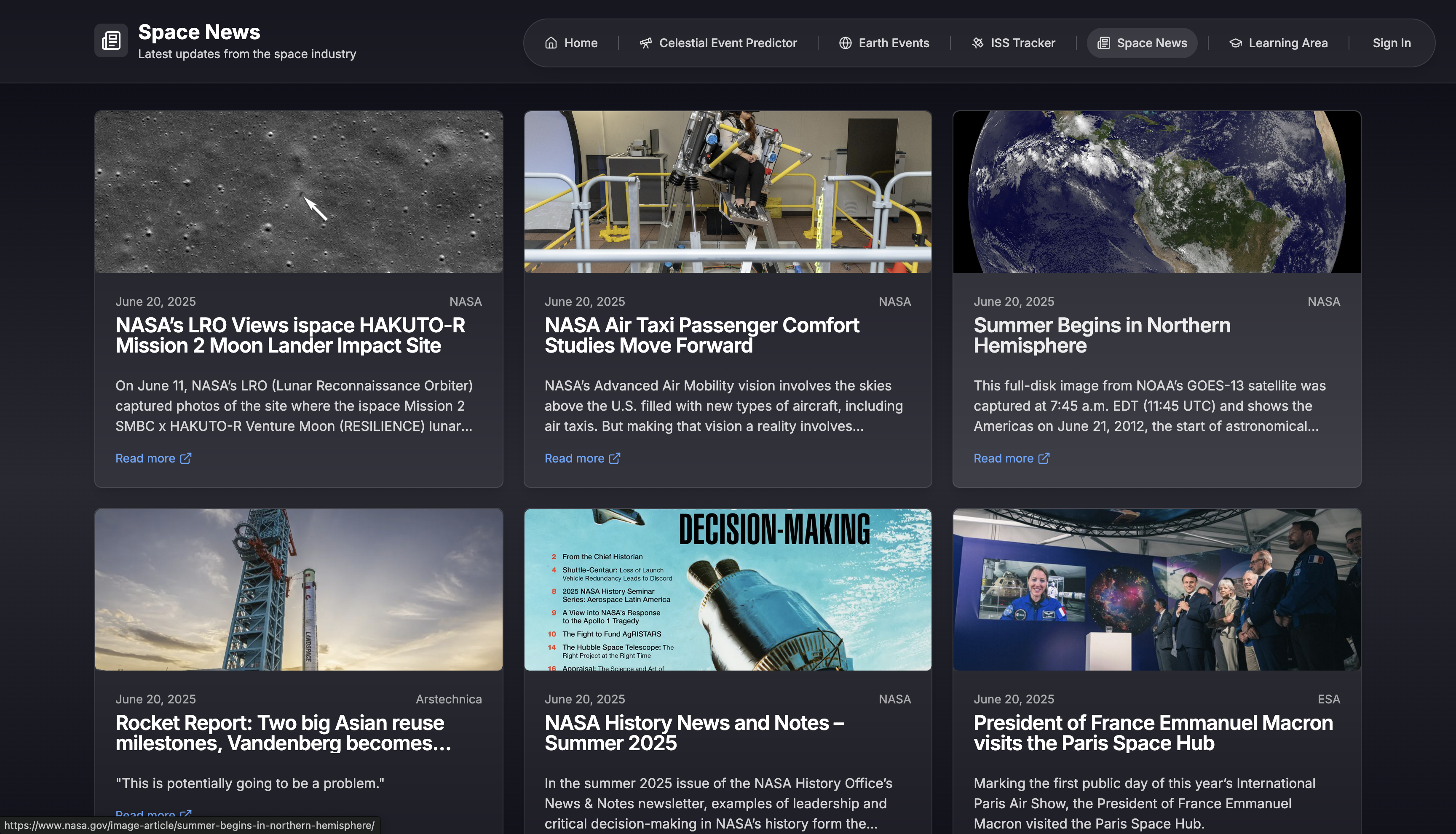
Space News
-
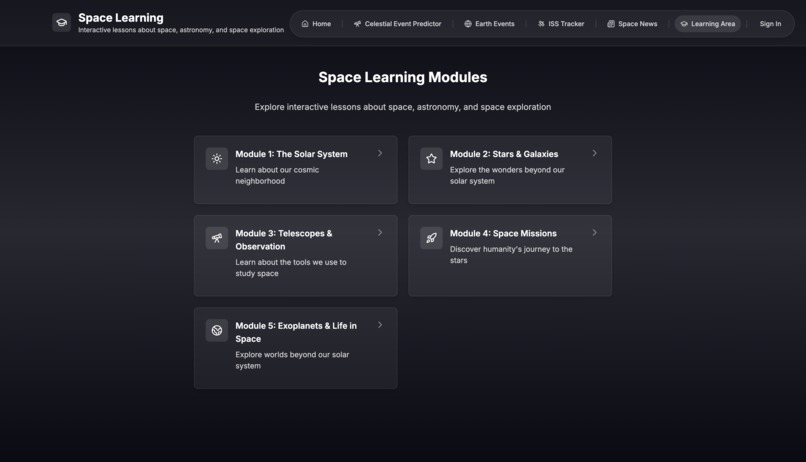
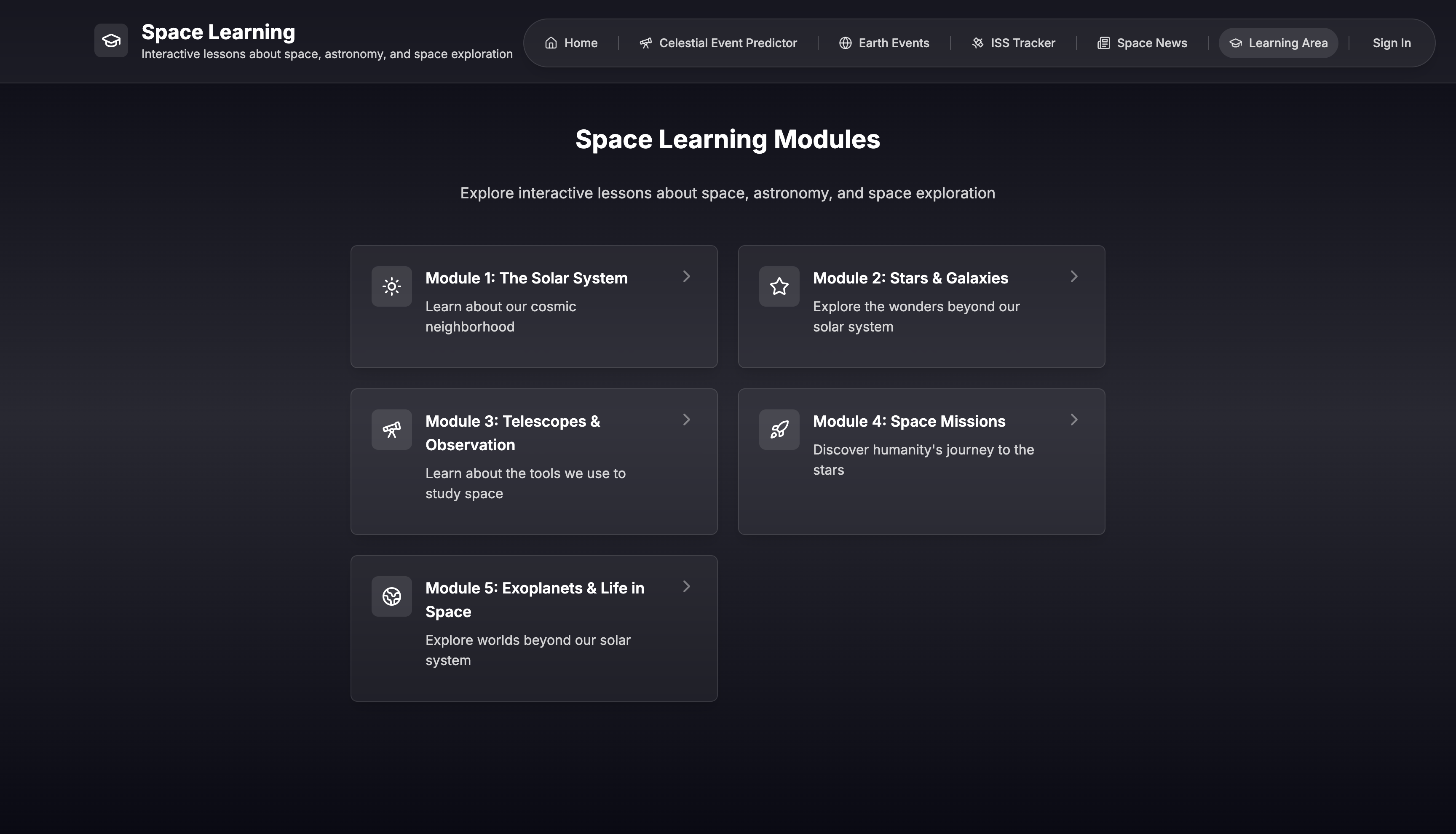
Learning Area
💡 Inspiration
I have always been interested in space science, and I have come to learn that many times it is only available in immobile information, heavy jargon and even older technology. I wanted to do something that would be up to date, engaging, and smart something that is utilizing the real time data and AI to make people relate to the world of astronomy in a new fashion that would feel both familiar and thrilling. The concept of StarCast was born there: the most cohesive place where the universe is reinvented in predictive tools, intelligent images and learning experiences.
🚀 What it does
StarCast is an end to end web based tool which enables the possibility of perusing future astronomical events in the user location like the meteor shower, lunar eclipse, and ISS passing by. It shows visualization data of natural disasters on Earth in real time with NASA EONET API, and real time telemetry data with live map tracking of the International space station. Its app integrates the weather data to assist the user in scheduling the observations, gathers space science news from reliable sources, and has an entire educational module with interactive astronomy lessons and quizzes. StarCast is also using Google Gemini AI to convert raw scientific information into comparable explanations in various sections of the app.
🛠️ How I built it
StarCast was created on the base of Next.js, new App Router and TypeScript to support powerful structure and typing. The UI is designed on the Tailwind CSS and ShadCN UI to be fast and responsive. The database Prisma was used and local development SQLite. NextAuth and Google OAuth are used in a secure way to perform authentication. Regarding the data, I merged a number of outside APIs: contact generator using Google Gemini AI API, weather forecast with OpenWeatherMap, disaster events with NASA EONET, ISS Live Tracker API (space station data), and GeoDB to auto complete city names. The mapping and geospatial visualization was done in React Leaflet.
🧱 Challenges I ran into
A key issue was dealing with several APIs each with their individual data structures, authentication paths, and limits on the number of requests made. Astronomical logic was also needed in the construction of a celestial predictor, with no centralized publicly accessible API. Using Leaflet to manage real time geolocation and telemetry was complex when it came to the interaction between seeking to synchronize it with user interactions. Another thing I spent my time on is the AI prompt tuning—being sure that the Gemini responses are useful rather than generic. Lastly, there was a performance optimization and it took a few iterations to make all these systems mesh together without slowing down the UI.
🏆 Accomplishments that I'm proud of
I am gratified with the richness of features on the one hand and with the ease of use on the other hand which StarCast ended up being. From the real time ISS tracker to the educational modules and AI based explanations, every component of the platform turned out to be well planned and developed as modular, interactive, and extendable. The sky prediction feature was also a big success—given that there was no external forecast API. Another thing I’m proud about is the way the whole project comes together so that one can browse space, discover science and plan their cosmic voyages under the same roof.
📚 What I learned
Thanks to StarCast, I learned how to work with a full stack app with a real time interface and geospatial interface. I further gained insight into the topic of API integration, authentication routines, and best practices that help organize a sizeable Next.js application based on the use of the App Router. My experience in Google Gemini taught me the importance of immediate engineering and the design of AI context. What is most important, I studied how I could arrange complex scientific data in a format that would be interesting and understandable to all types of users.
🔭 What's next for StarCast
In future, I will implement a production ready version of StarCast including persistent cloud storage and stronger authentication. The astral forecaster will be extended to handle bespoke date time forecasts and greater astronomical data. I also would like to implement the personalization bits where the user should have the recommendations of the events according to their desires. The feature roadmap includes push and email notifications about approaching sky events, in real time. In the educational aspect, there will be gamification based on badges, streaks, and interactive simulations of the learning modules. Finally, I am discussing satellite overlays and telescope recommendations to the users with more advanced interest in the tool.
Built With
- cities
- geodb
- google-gemini-ai-api
- google-oauth
- iss-live-tracker-api
- nasa-eonet-api
- next.js
- nextauth.js
- openweathermap-api
- prisma
- react-leaflet
- shadcn-ui
- sqlite
- tailwind-css
- typescript

Log in or sign up for Devpost to join the conversation.