-
-
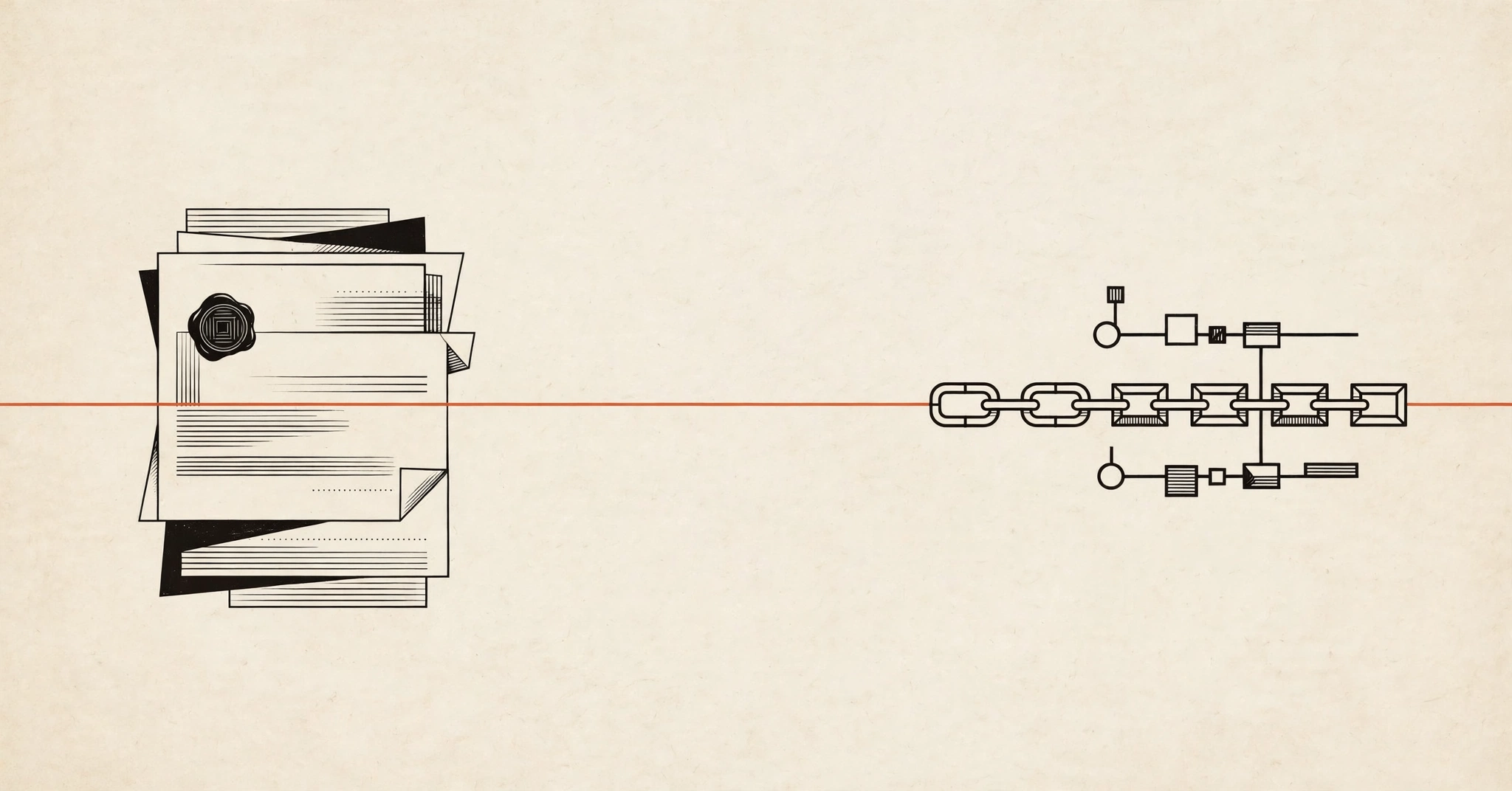
Stanza Cross Chain Cover (AI Generated)
A scholar writes something worth paying for: a new chemo drug, a new public policy, or a threat to public health. A reader wants to pay for it: a tv producer, journalist, or student.
Right now, there is no simple way for that to happen directly: publishers take the terms and the cut. Crypto-only licensing shuts out everyone who just has a PayPal account.
And paying first means trusting a stranger.
So the idea was to flip it:
Let the reader pay with the account they already have, hold the money until an AI checks that the license is real, and then release the license.
STANZA is the name of the licensing system behind it — the thing that records the license on a public ledger once the payment clears, so the buyer can prove they hold it and the writer can prove they were paid.
What it does
A reader picks a manuscript and a license tier — read $1, citation $25, commercial $150 — and pays with PayPal.
PayPal holds the money; nothing is captured yet. An AI attestation agent checks the license: is the work real, does the tier price match the catalog, does the authorized amount match the price exactly, is the buyer address valid.
If the check passes, the payment is released to the scholar and the license is recorded on Base, a public ledger.
If it fails, the hold is voided and the buyer is never charged.
How we built it
Laravel app with a PayPal Sandbox checkout (Orders API v2, intent AUTHORIZE) and a payment-method toggle on the checkout page.
The attestation agent runs deterministic gates plus, when configured, an LLM review of the manuscript record against the license terms.
Settlement uses NEAR Chain Signatures (MPC) to record the license on Base through the LicenseRegistry contract — no EVM private key anywhere in the loop.
Feature tests cover order creation, return → authorize → capture → settle, amount-mismatch void, LLM-hold void, and duplicate-return idempotency (6/6 passing).
Challenges we ran into
PayPal's API base URL came back empty from config and the checkout died with a client error — fixed by falling back to the default sandbox URL.
A live credential pair got pasted where the sandbox pair belonged; testing caught it (the live token worked, the sandbox one 401'd).
Logging into PayPal Sandbox with the merchant account gets refused — the demo needs a Personal buyer test account.
And the on-chain settlement leg fought back hardest: wrong contract selectors and a broken replay check killed every attempt until the morning of the deadline, when the first live $1 license settled on Base: https://basescan.org/tx/0x4c63981c75e071a0bc9c0bc0765dbd750fb28ea37c08f4df775299acc6d33f22
Accomplishments that we're proud of
The sandbox flow works end to end in the live demo: order created, buyer approves, PayPal holds $1, the attestation agent releases it, the capture lands, and the license status flips.
The $1 read tier is verified in the live catalog, and the hold-until-attested flow — the actual trust model — is proven, not just described.
What we learned
Holding money beats chasing it: authorize-then-capture turns a trust problem into a checkable step.
Sandbox account roles matter — merchant and buyer are different accounts, and using the wrong one looks like a broken product.
Config needs a fallback, or one missing variable kills the whole checkout. And an honest "not yet live" in a demo beats a faked settlement every time.
The first live settlement landed: a $1 PayPal license recorded on Base, with the LicenseRecorded event on BaseScan.
What's next for Stanza Cross Chain
Run the settlement leg live: the first real $1 license recorded on Base.
Then live PayPal credentials out of the sandbox, more manuscripts and tiers, and the same hold-until-attested pattern for other payment rails — so a reader can license a work from anywhere, with the payment method they already have.
