-
-
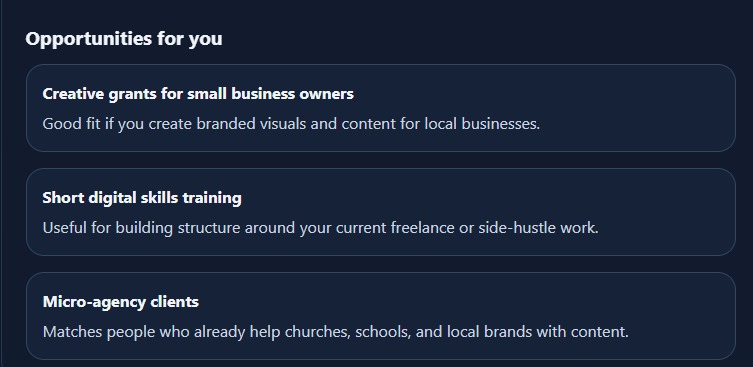
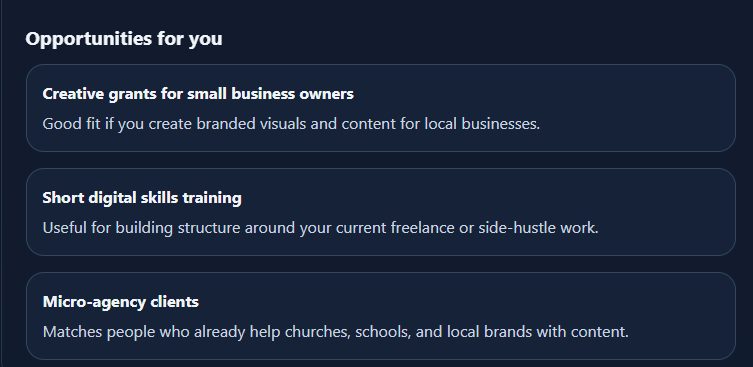
The Opportunities section
-
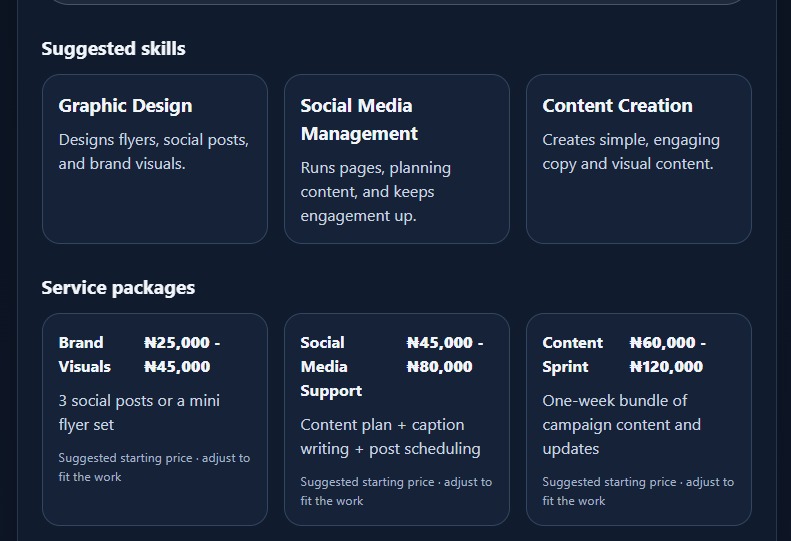
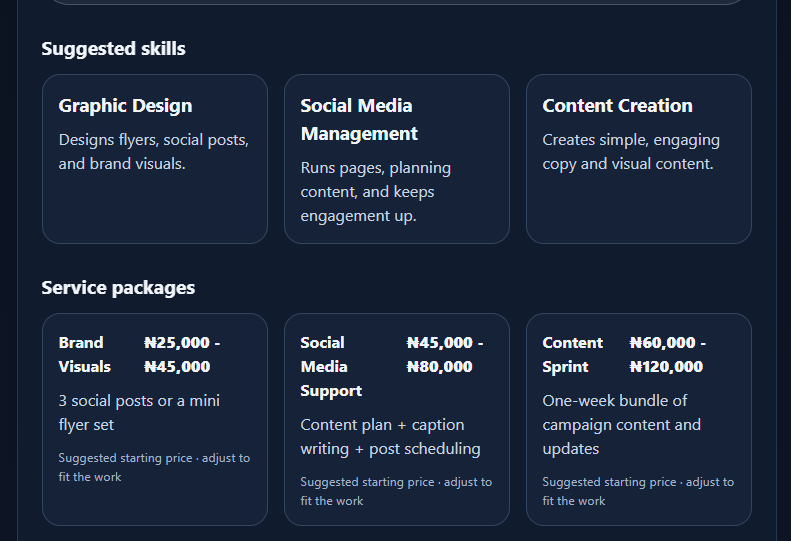
Skills and priced packages
-
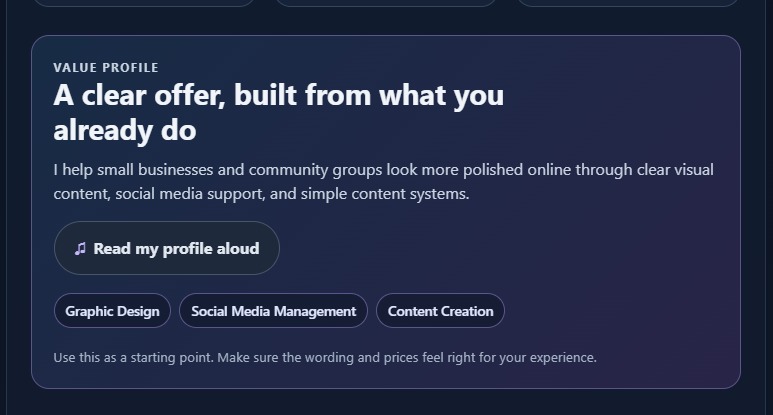
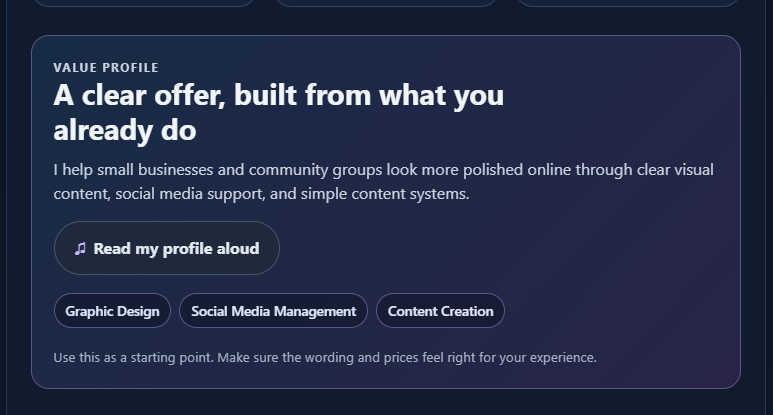
The Value Profile
-
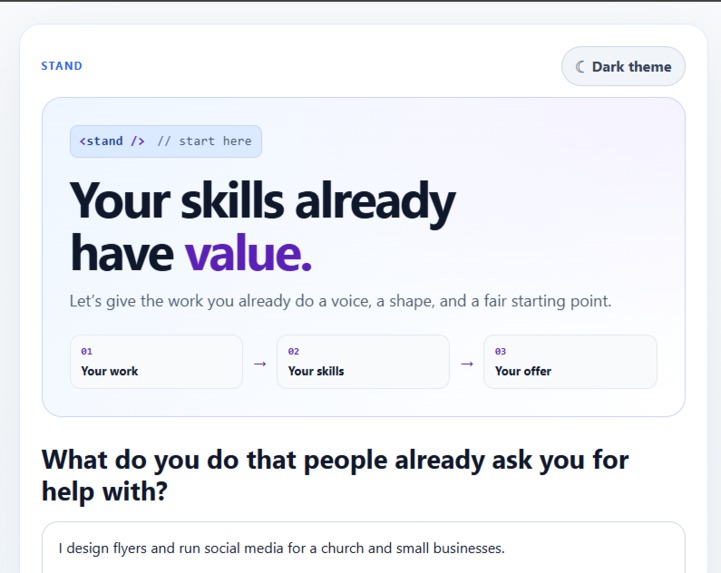
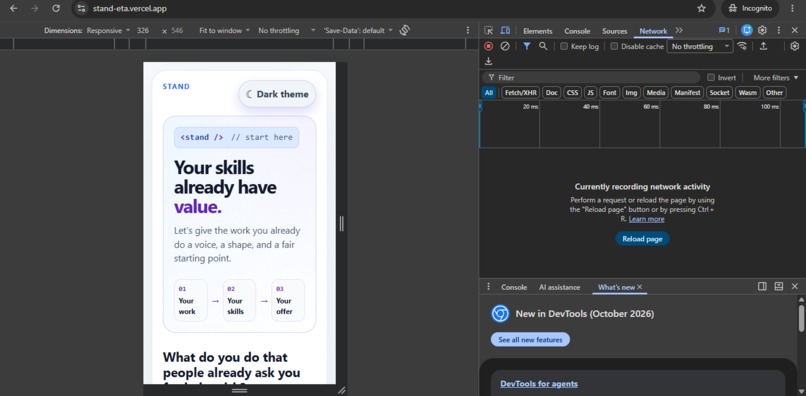
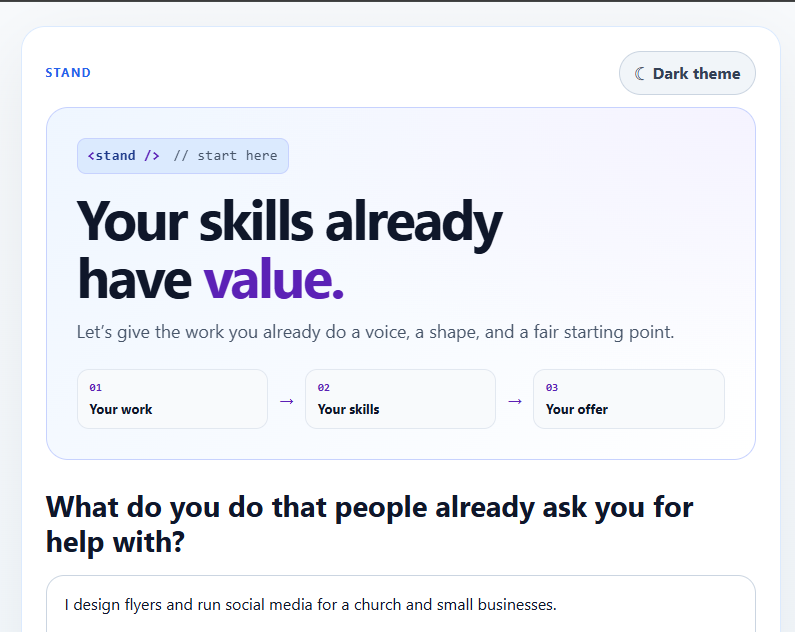
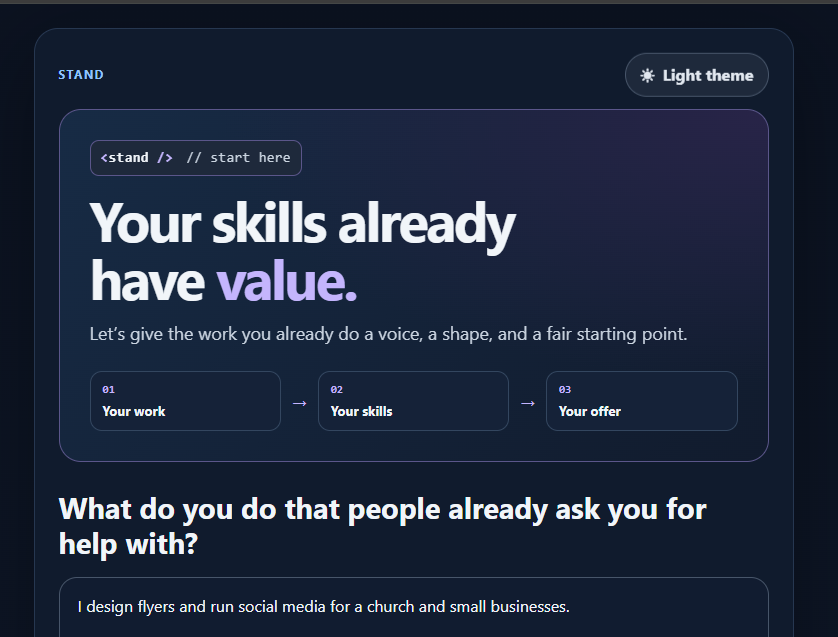
The hero and welcome screen
-
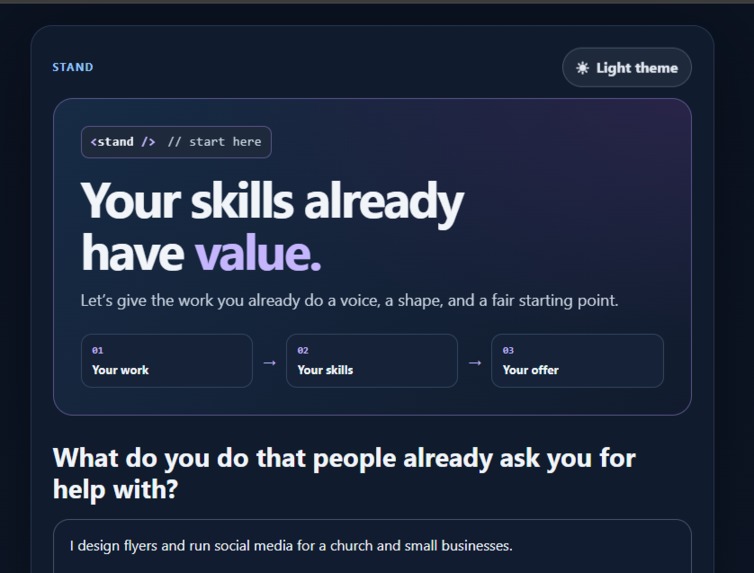
The hero and welcome screen
-
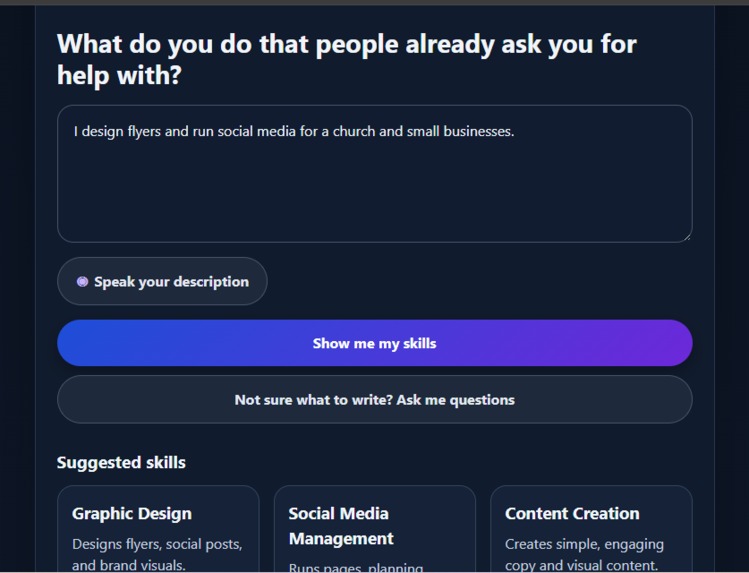
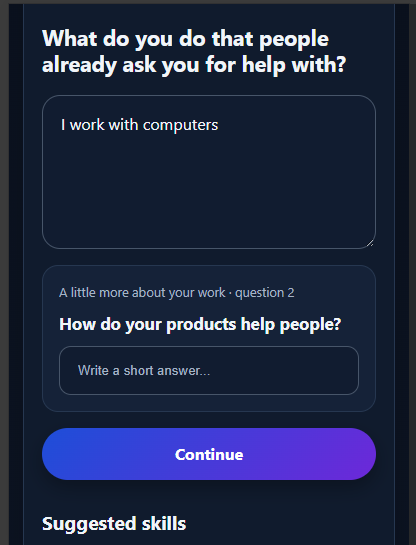
The vague input with a follow-up question
-
-
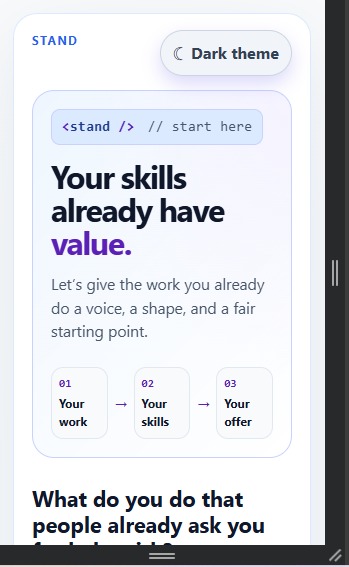
Light Mode Mobile
-
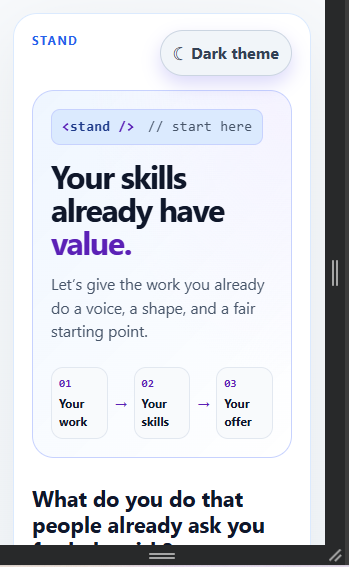
Inspiration
Many skilled people in emerging markets already do valuable work, like running a church's social media, sewing custom outfits, or teaching kids to code, but they struggle to describe it, price it, or present it to clients. As a product designer working in Nigeria, I wanted a tool that helps people see the value they already have.
What it does
Stand turns a plain description of someone's work into a clear starting point for earning.
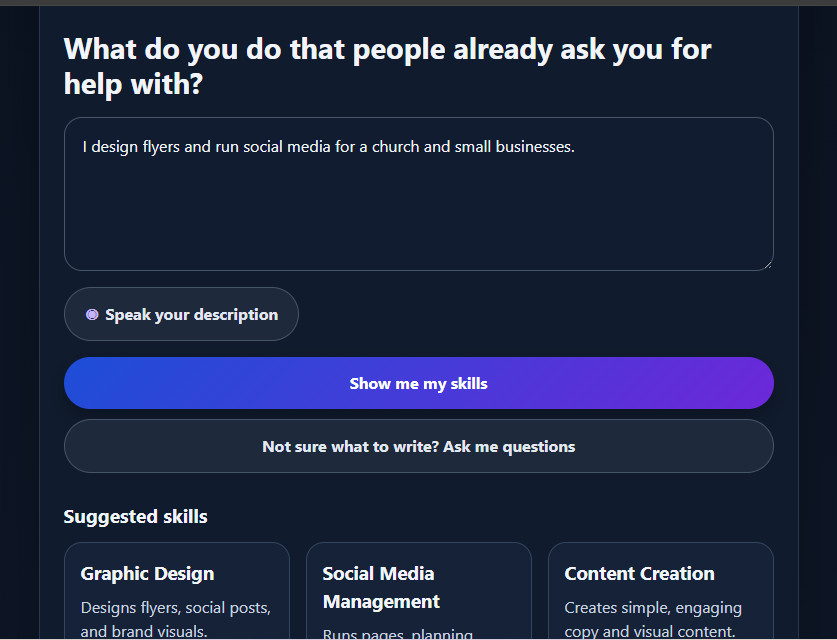
- Discover: the user describes their work, by typing or by voice.
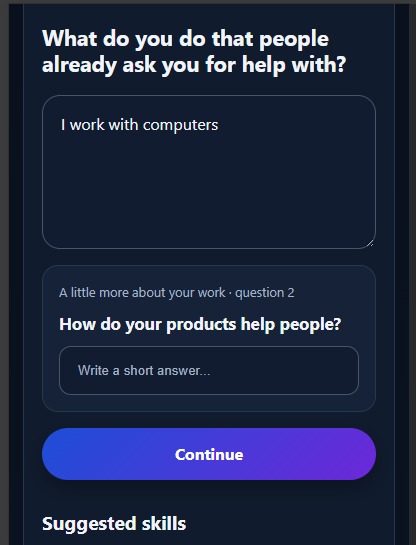
- Flipped interaction: if the description is vague, the AI interviews them with 2-3 short, warm questions instead of demanding a perfect prompt.
- Package: Stand suggests skills and 2-3 service packages with suggested starting prices in naira, which the user adjusts.
- Prove: it generates a shareable Value Profile.
- Connect: it lists opportunities such as grants, training, and client types to explore.
Stand deliberately does not score creditworthiness, broker loans, handle money, or require an account. Data stays in the browser.
How we built it
I followed the Devpost Learn workflow (orient → plan → build → ship), letting the AI interview me to define scope, requirements, and a technical spec before writing code. [Confirm stack with Copilot: Vite, React, TypeScript.] A Vercel serverless function calls OpenRouter's free model router. If the AI call fails, Stand falls back to built-in keyword logic so the experience never breaks. I added a light and dark theme, a code-inspired welcome, and optional browser-native dictation and read-aloud.
Challenges we ran into
- A free model I was using was retired, so the live AI route returned a 404 and silently fell back. I traced the error and switched to OpenRouter's free router.
- Keeping API keys out of the code and git history, and verifying it before making the repo public.
- Making AI output feel trustworthy: prices are labeled as suggestions, and users can edit everything.
Accomplishments that we're proud of
A complete, deployed flow from a vague sentence to a shareable profile.
- Turning the "AI interviews you" pattern into a feature for users, not just a build method.
- A graceful fallback and a design that works on phones and in both themes.
What we learned
Planning with an AI interviewer made the build faster and more focused. I also learned to verify that AI features are really live, since a quiet fallback can hide a failure.
What's next for Stand
- Local-language and voice-first support for lower digital literacy.
- A larger, curated, regularly updated opportunities directory.
- Partnerships with training providers, NGOs, and development agencies.
- A measure of income and opportunities unlocked per user.
Built With
- css
- github-copilot
- largelanguagemodel
- openrouter
- react
- servelessfunctions
- typescript
- vercel
- vite
- webspeechapi


Log in or sign up for Devpost to join the conversation.