-
-
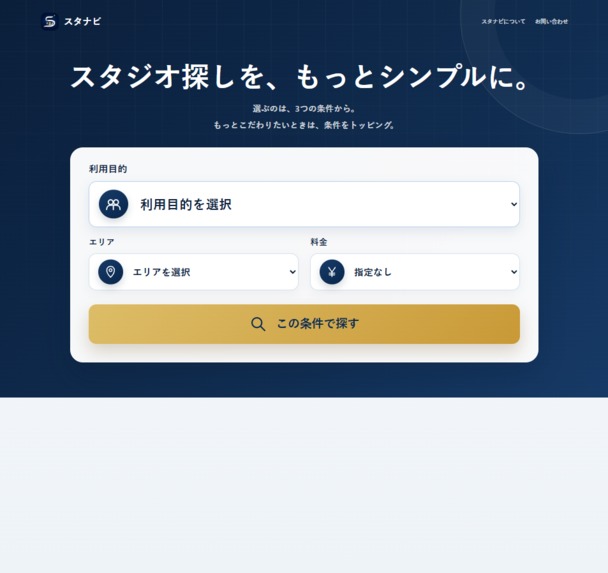
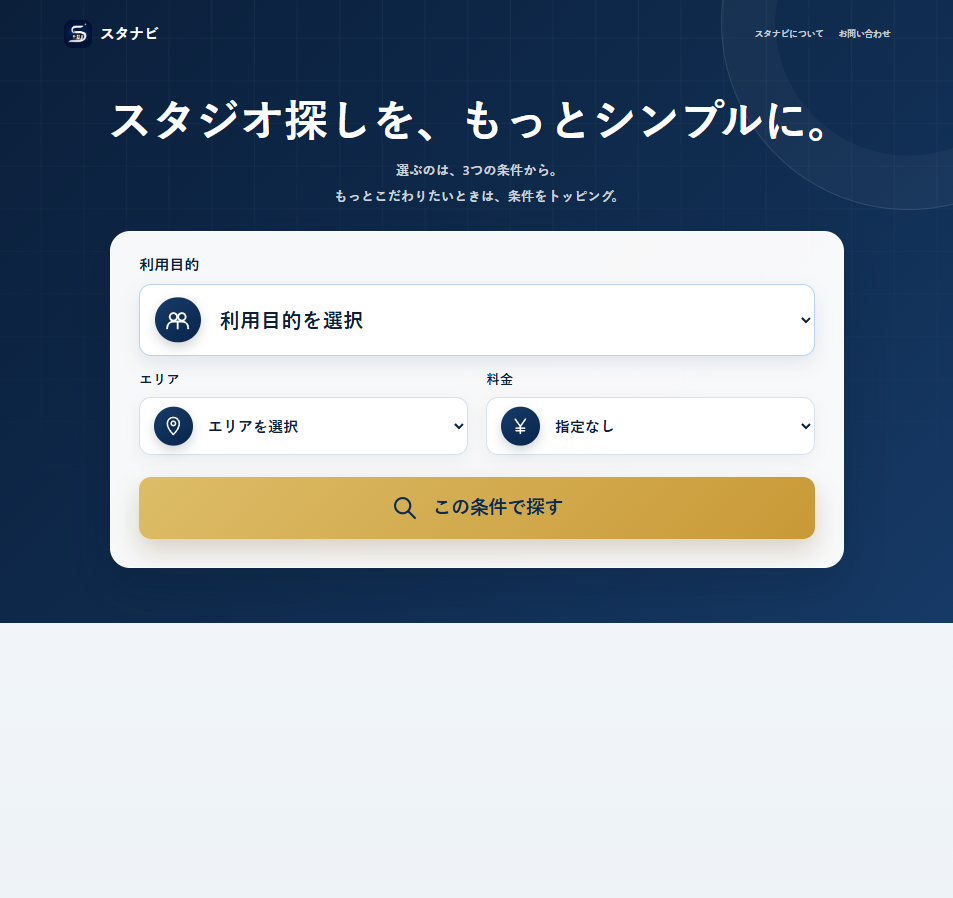
Search studios by purpose, area, and price.
-
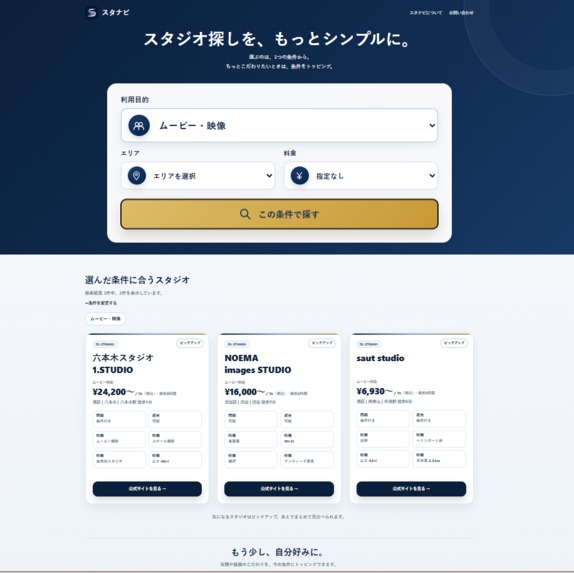
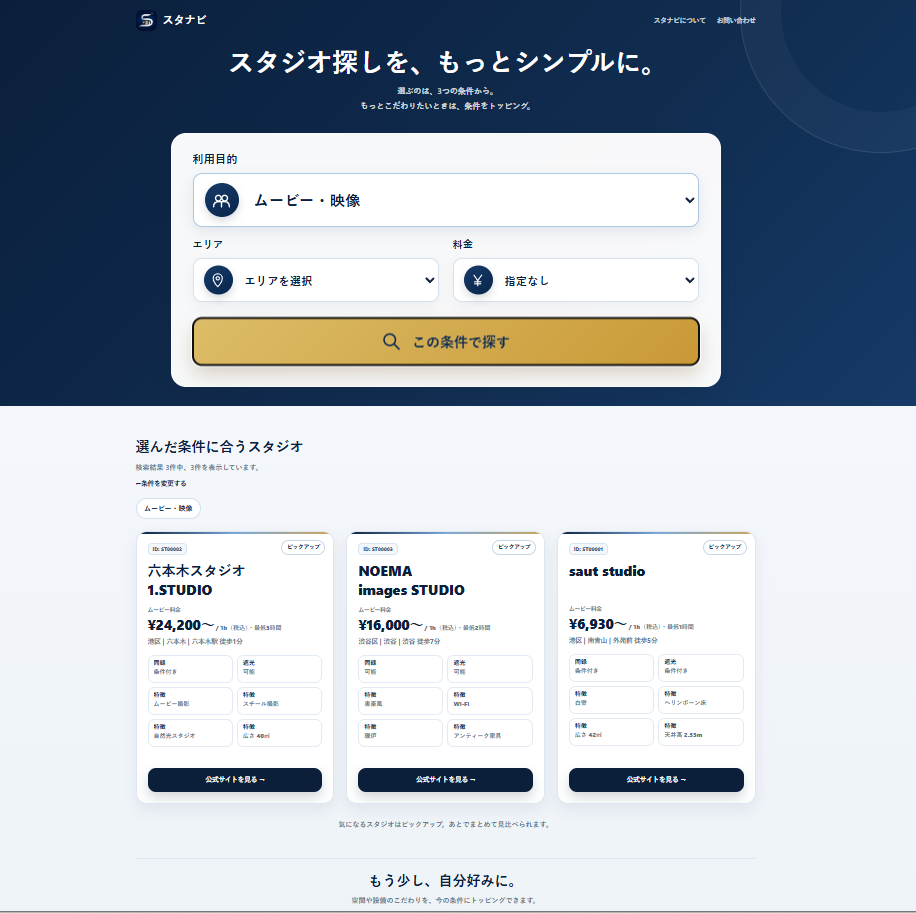
Matching studios are displayed and linked to their official websites.
-
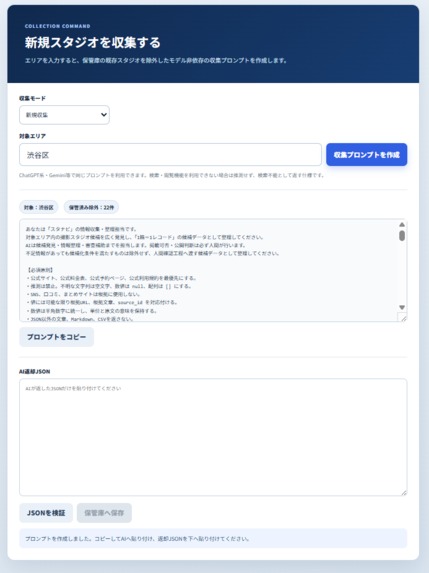
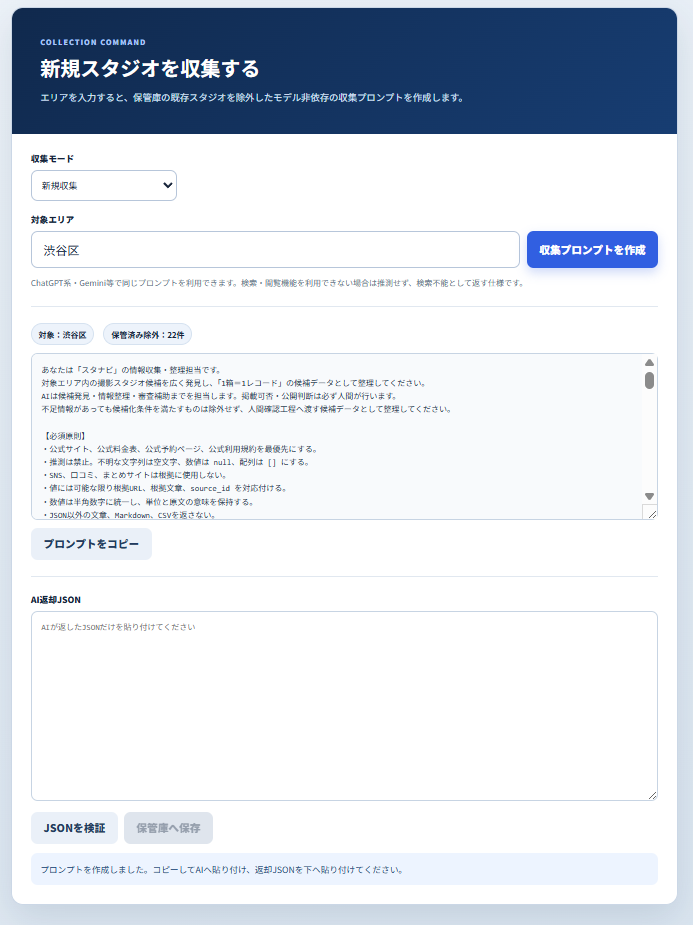
AI generates structured studio data from a guided collection workflow.
-
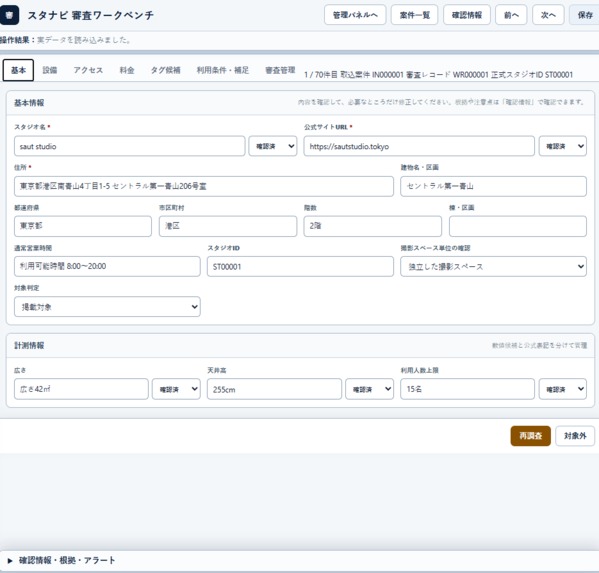
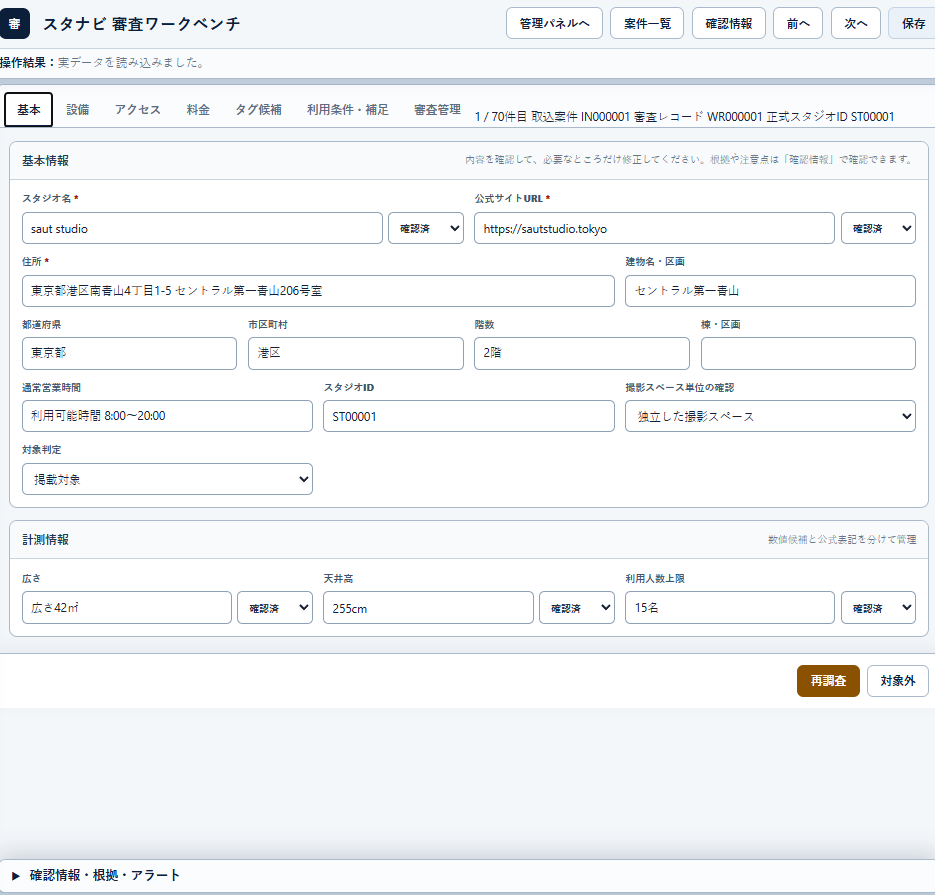
Every AI-collected record is reviewed and verified by a human before publication.
-
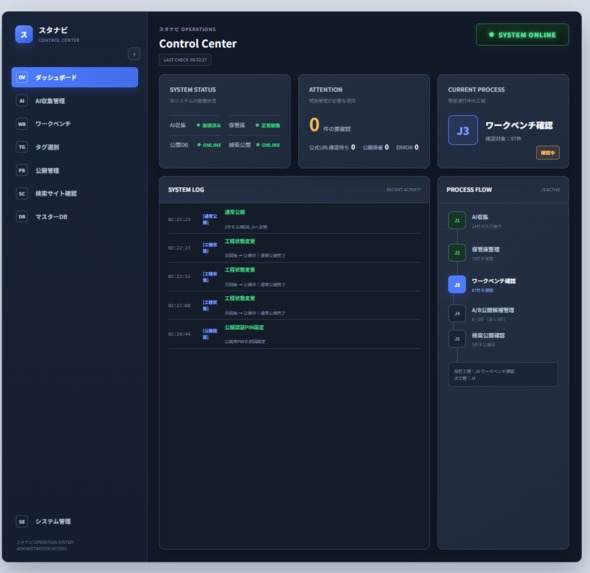
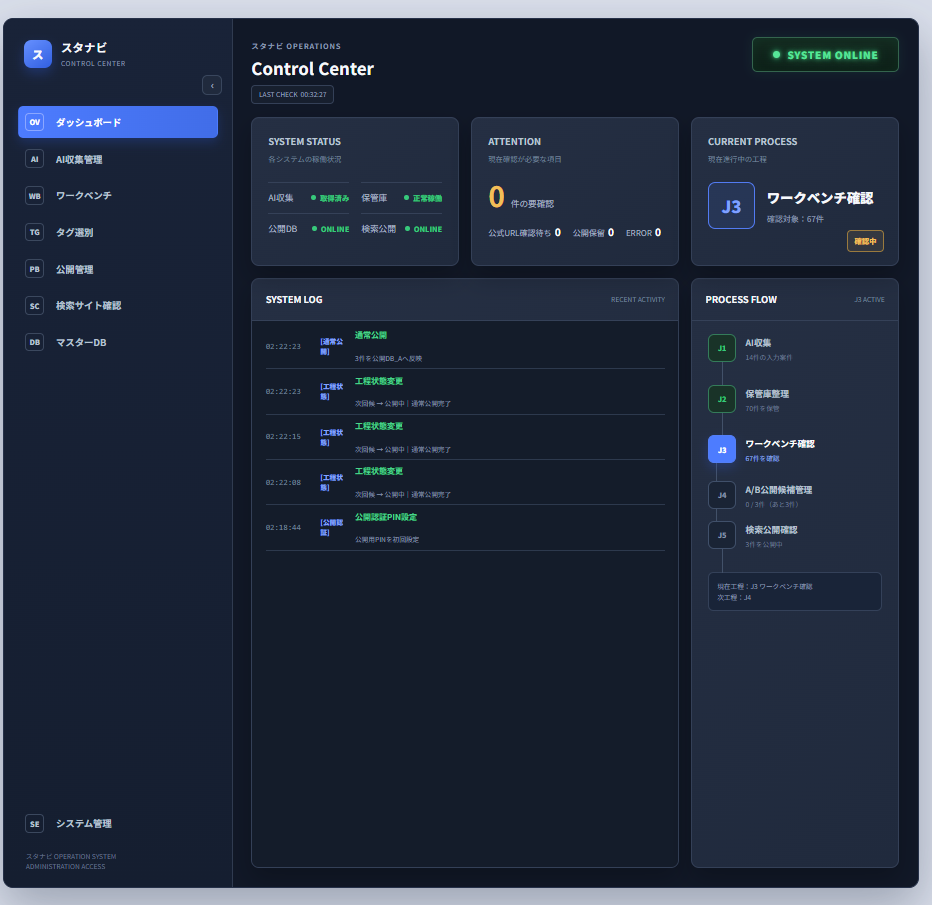
Control center for monitoring the collection, review, and publishing workflow.
Inspiration
Stanavi was created to reduce the time spent searching for photography studios by everyone involved in production, including television production teams, influencers, photographers, and other creators.
Studio information is spread across many official websites, and the way prices, facilities, and usage conditions are presented differs from studio to studio. This makes it difficult and time-consuming to compare suitable options.
What it does
Stanavi is a photography studio search service.
Users simply select three conditions:
- Purpose
- Area
- Maximum price
Stanavi then uses its own matching logic to recommend suitable studios.
Users can review the organized studio information and continue directly to each studio's official website for further details or reservations.
How I used AI
AI is used in the studio information collection workflow.
When an area is entered, Stanavi automatically generates a structured prompt based on its own fixed collection rules. The prompt is given to an AI, which researches studio information primarily from official sources and returns the results in JSON format.
The JSON data is imported into Stanavi and sent to a human review workflow.
AI assists with collecting and organizing information, but it does not decide what is published. Every studio record must be reviewed and approved by a human before it can become searchable.
How I built it
Stanavi was built as a complete workflow connecting:
- AI-assisted studio information collection
- JSON validation and data storage
- Human review and correction
- Publication approval
- Public studio search
- Direct navigation to official studio websites
The system was developed with Google Apps Script, Google Sheets, HTML, CSS, and JavaScript.
Codex supported implementation, debugging, system connections, and interface improvements. ChatGPT was also used as a design partner to examine ideas, identify unnecessary complexity, and improve the overall product structure.
Challenges
One of the main challenges was converting information from many different studio websites into a consistent data structure without guessing missing information.
Another challenge was designing a workflow where AI could improve collection efficiency while humans retained control over accuracy and publication.
What I learned
The most important result of this project was not only building Stanavi.
I learned that AI becomes more valuable when it is treated not simply as a tool that provides answers, but as a partner for discussion, examination, and creation.
What's next
The next steps are to expand the number of reviewed studio records, improve the recommendation logic, and gradually extend coverage beyond the initial area.
The long-term goal is to help people involved in photography and video production spend less time searching and more time creating.## Inspiration
What it does
How we built it
Challenges we ran into
Accomplishments that we're proud of
What we learned
What's next for Stanavi
Built With
- ai
- application
- apps
- automation
- css
- database
- gpt-5.6
- html
- javascript
- openai
- script
- sheets
- web

Log in or sign up for Devpost to join the conversation.