-
-
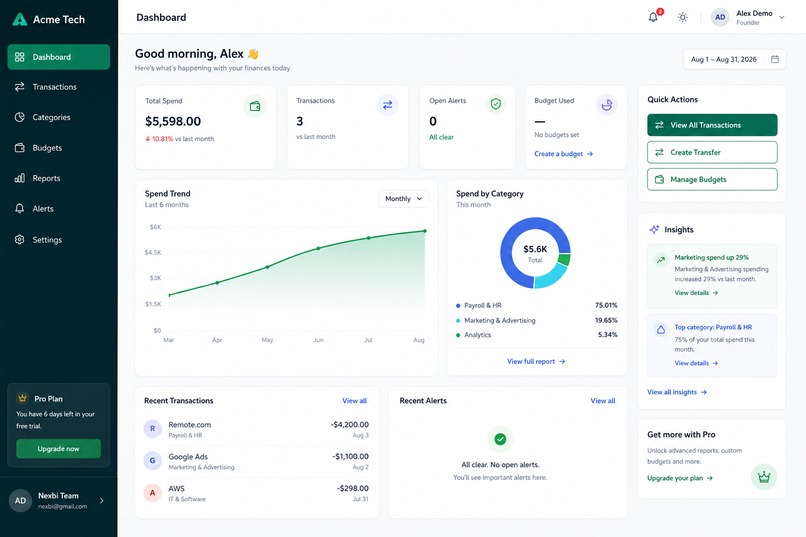
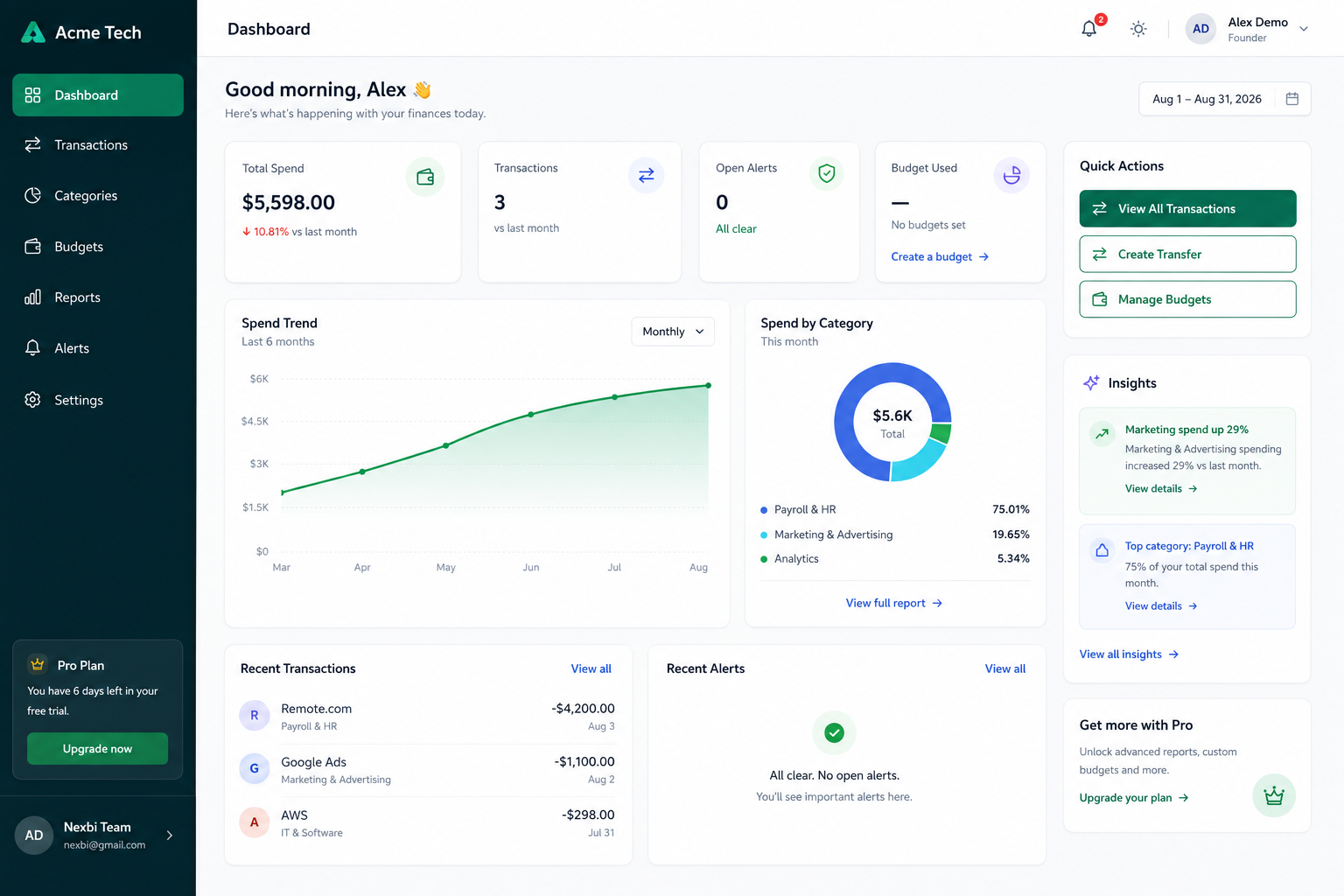
dashboard
-
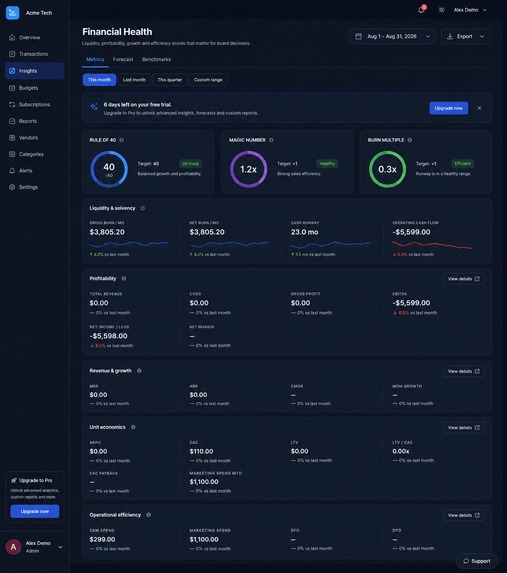
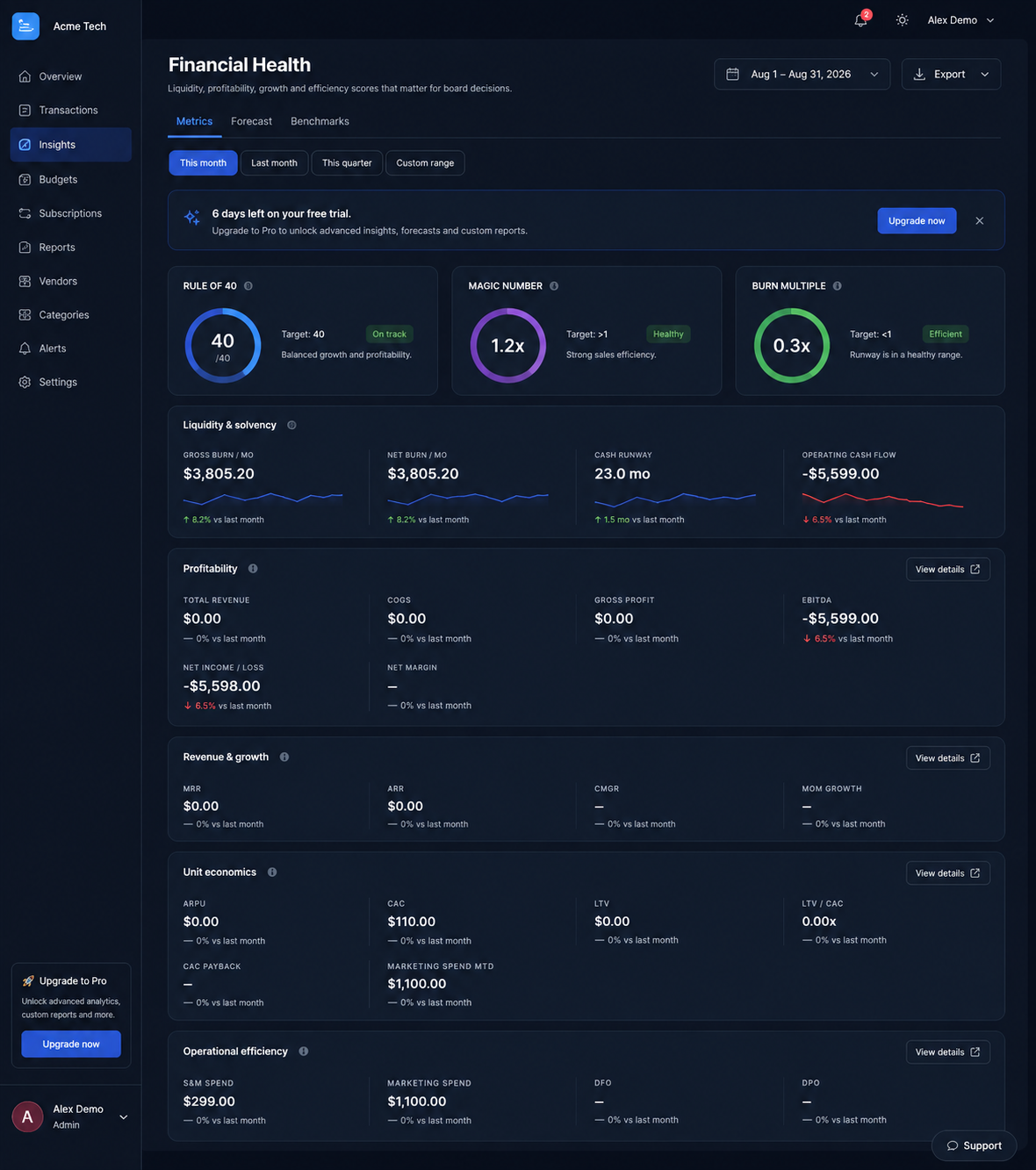
financial health
-
-
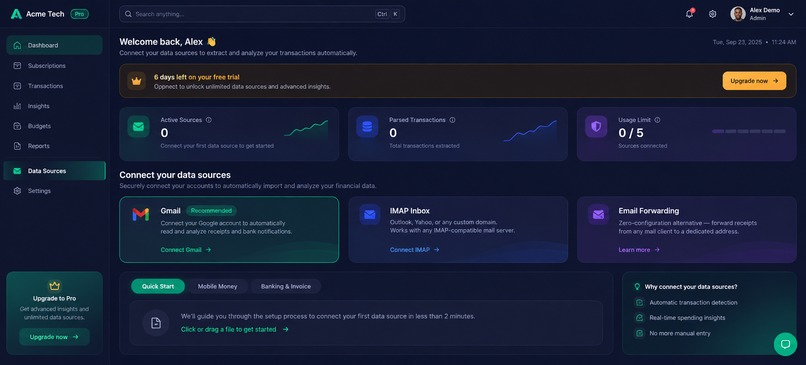
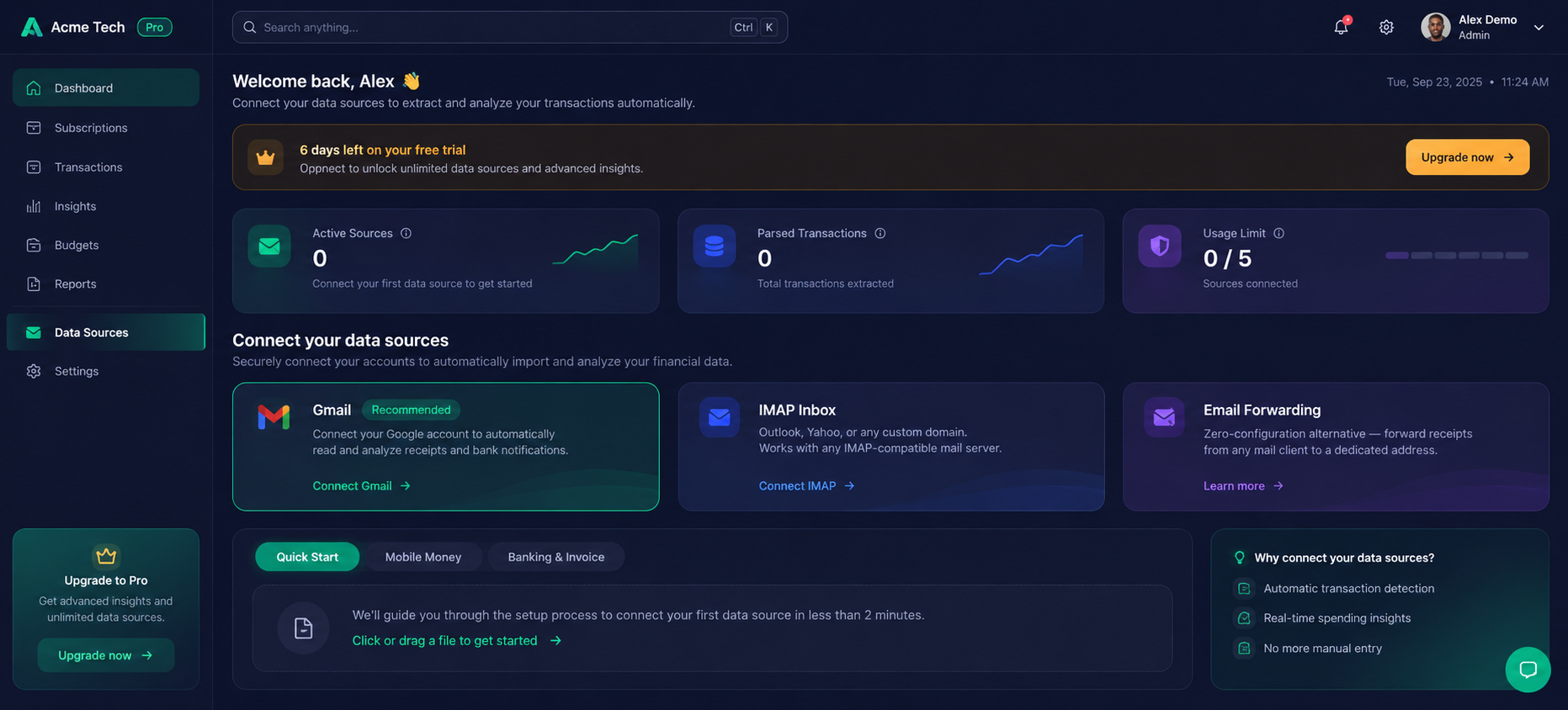
connect sources
Stakari — AI-Native Financial Management for Startups
Inspiration
Most financial tools assume you have a corporate card, a US bank account, and a CFO on payroll. In Africa and most emerging markets, none of that is true.
I was managing finances for my own ventures using spreadsheets and WhatsApp messages. Every month-end was a scramble, digging through mobile money statements, bank alerts, and email receipts, trying to understand where the money went. I looked for a tool to solve this and found only Ramp, Brex, and Cledara, all built on Western banking infrastructure that is completely inaccessible to most African startups.
The tools that exist were built for a world that does not look like ours. Stakari exists because nobody else was going to build it for us.
What it does
Stakari is an AI-native financial management system for startups. It captures every financial activity in your organisation automatically expenses, invoices, subscriptions, and payments and gives you a real-time picture of your financial health.
Core capabilities:
- Automatic capture forward any financial email to your unique Stakari address, and it is captured, parsed, and categorised instantly. No bank connection or corporate card required.
- Subscription intelligence automatically detects every active subscription, flags duplicates, and alerts you before renewals so you never pay for a tool you forgot about.
- Budget management sets budgets by category and receives proactive alerts before you overspend, including a forecast of whether you will exceed your budget before month-end.
- Cash runway calculates your runway across three scenarios (optimistic, base, pessimistic) based on your real burn rate and cash balance.
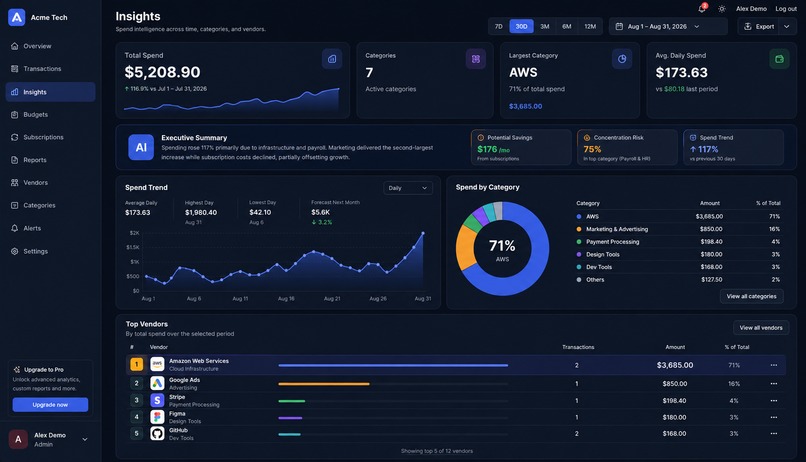
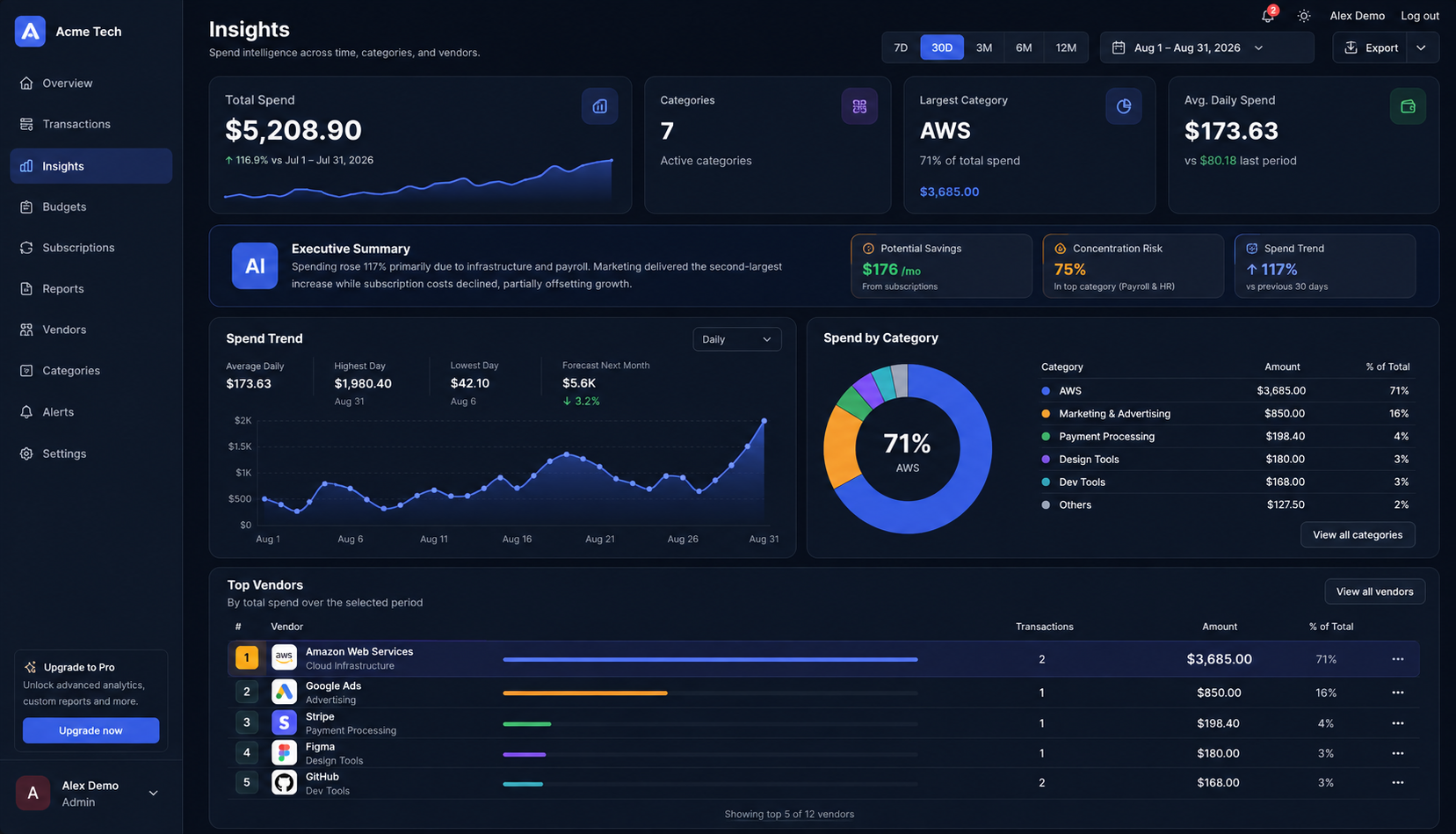
- AI anomaly detection flags unusual charges, price changes, and new vendors the moment they appear.
- Ask Stakari, a conversational AI CFO that answers any financial question about your company in plain language. "What is my runway?" "Which subscription costs the most?" "Am I on track this month?"
- Proactive notifications: weekly briefings, budget alerts, subscription renewals, and anomaly alerts delivered by email and Slack before problems become crises.
No corporate card. No complex setup. No spreadsheets.
How we built it
Stakari is a full-stack platform built from the ground up as a solo technical project.
Backend: Java 21 and Spring Boot with PostgreSQL, Redis, and Flyway for database migrations. The backend is organised into six evaluated modules: email ingestion, AI categorisation, subscription intelligence, budget management, AI CFO intelligence, and notification delivery. Each module scored above 85/100 in a comprehensive QA evaluation before any pilot user touched the system.
Email ingestion: Built on Resend's inbound email infrastructure. Every workspace gets a unique forwarding address (receipts+{workspaceId}@inbound.stakari.net). Resend receives forwarded emails and POSTs them to our webhook, where we fetch the full content via the Resend Receiving API, process attachments, and route to our ingestion pipeline.
AI layer: Powered by Anthropic's Claude API. We use Claude Haiku for transaction categorisation and Claude Sonnet for complex financial reasoning, insight generation, and the conversational AI CFO. A batched insight generation approach reduced cold-path latency from ~14 seconds to ~2 seconds and cut AI costs by 37%.
Frontend: Next.js 14 with TypeScript, Tailwind CSS, and React Query. The dashboard is designed around one question — "am I okay right now?" — with financial health status, runway, budget alerts, and AI insights all visible above the fold.
Infrastructure: Deployed on AWS with Cloudflare for CDN and DNS. Database migrations managed by Flyway (V1–V49). Scheduled jobs protected by ShedLock to prevent duplicate execution across pods.
Challenges we ran into
The Google OAuth wall. We built Stakari's original data ingestion on Gmail OAuth. After submitting for Google's verification, we discovered that gmail.readonly is a Restricted scope requiring a CASA AL1 security assessment costing $2,000–$5,000, far beyond our budget as a pre-revenue startup. Instead of stopping, we redesigned the entire ingestion architecture to use email forwarding. The product is now provider-agnostic and stronger because of the constraint.
Gmail forwarding verification. When a founder sets up Gmail forwarding to their Stakari address, Google sends a verification email containing a confirmation form. We implemented automatic verification using Jsoup to detect the verification email, extract the confirmation URL, simulate the form submission, and mark the workspace as verified, all without the founder taking any action.
Multi-currency financial data. African startups operate in XAF, NGN, KES, GHS, USD, and EUR simultaneously. Summing across currencies produces mathematically invalid totals. We built a dominant-currency resolution system that anchors all aggregations to a single workspace currency while preserving full transaction-level currency data for future FX conversion.
Building solo while finishing a degree. Stakari was built by one person while completing a final-year Computer Engineering degree, serving as CTO at GAD-V Technology Solutions, and maintaining Nexbi AI on the Play Store.
Accomplishments that we're proud of
- Platform average of 87.2/100 across six QA-evaluated modules before any real user touched the product
- 98% gross margin on AI costs — $0.26 to $3.95 per workspace per month after a batched insight generation optimisation
- Accepted into Ignite! Cohort 1 by Catalyst Impact Lab — a competitive accelerator for African founders
- Accepted into Claude for Startups by Anthropic — validating both the technical approach and the market opportunity
- V1 shipped and live at stakari.net with real workspaces onboarded
- Honest about limitations — we ran a full code-grounded audit and fixed three critical bugs (false financial facts on API failure, budget tracking invisible to all real users, hardcoded currency symbols) before opening to pilots
What we learned
The problem is deeper than we thought. We started building a spend tracker. We ended up building a financial management system. The difference is not a feature — it is a philosophy. Founders do not want to track what happened. They want to know what to do before something bad happens. That distinction shaped every product decision from the dashboard layout to the notification timing.
Constraints create better architecture. The Google OAuth rejection forced us to build on email forwarding — which turned out to be a better technical choice. Email forwarding works with every email provider, not just Gmail. It requires no OAuth permissions. It is simpler, more reliable, and more privacy-respecting than reading someone's full inbox. The $4,000 wall made the product better.
Honest QA before users is non-negotiable. We found a bug where a failed API call made the dashboard show "$0.00 spent this month" with a green "All clear" badge — false financial facts presented with full confidence. We found it before any pilot founder did. In a financial product, that kind of bug destroys trust permanently. The QA investment was not optional.
Building from inside the market is an advantage. Every design decision — mobile money as a data channel, XAF as a first-class currency, no corporate card assumption, French language financial keywords — came from living in the market we serve. This is not something that can be researched from San Francisco.
What's next for Stakari
Immediate — next 60 days:
- Onboard 10 paying pilot founders at $29–$79/month
- Validate pricing model and measure retention
- Complete the notification module — weekly briefings, month-end summaries, cash flow alerts
Sprint 1:
- Conversational AI CFO interface with chart rendering
- FX conversion job to enable true multi-currency aggregation
- Bank statement upload for founders who want to capture offline transactions
Sprint 2:
- Mobile money statement import (MTN MoMo, Orange Money)
- WhatsApp notification channel, the primary communication channel for African founders
- Retroactive re-categorisation when vendor hints are learned
6 months:
- Invoice tracking and accounts receivable
- Vendor management
- Public API for integration with African accounting tools
Vision: Every African startup deserves a CFO. Stakari is how we get there — one financial management system built for how African startups actually operate, not how Western ones do.
Built With
- ai
- docker
- hibernate
- java
- javascript
- postgresql
- react
- spring
- vps


Log in or sign up for Devpost to join the conversation.