-
-
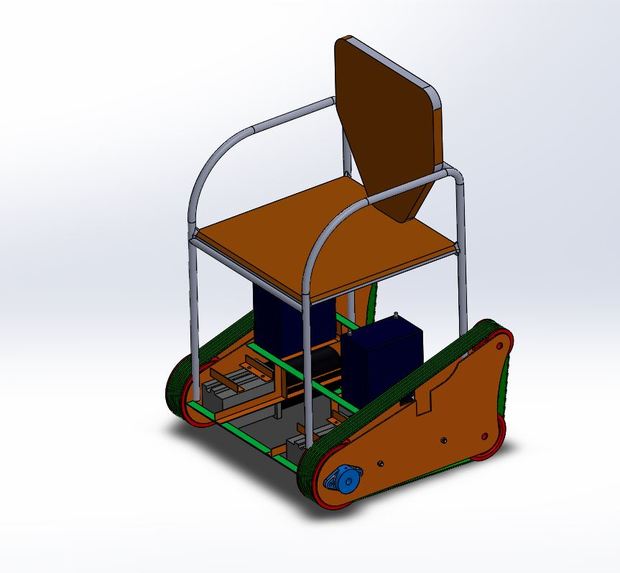
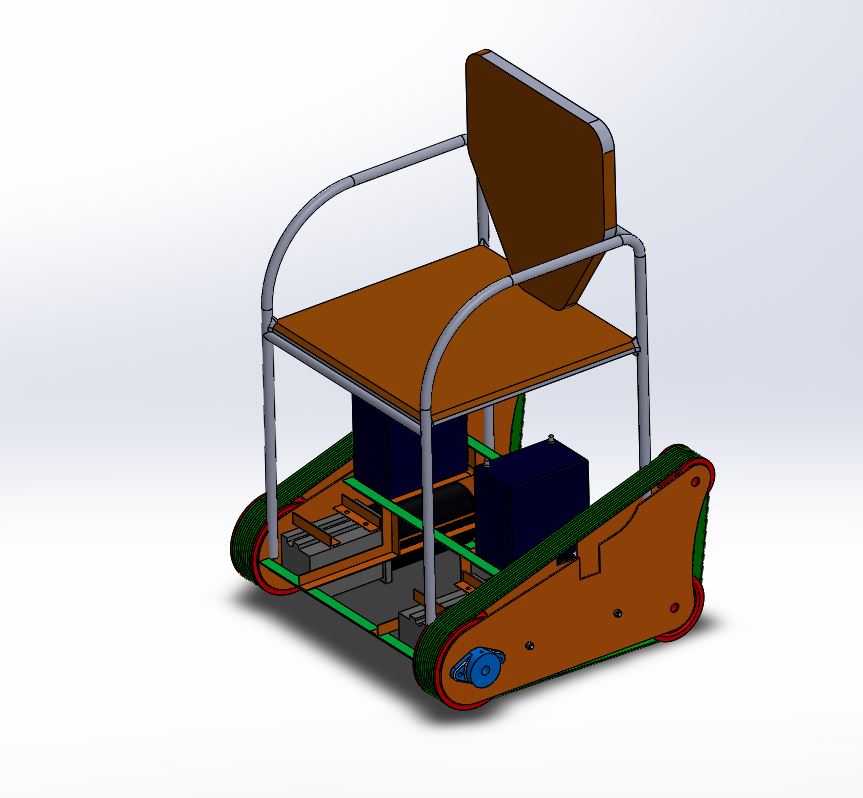
3d modeling of stair climbing wheel chair
It is estimated that around 15% of the global population is living with disabilities. These people are often left at the brink of society to resist discrimination, self-pity, and shame. They are often neglected from access to quality education and dignified labor. This not only rises human rights violations but creates a strong economic argument as well. Pakistan is no such exemption from these issues. According to an official survey of 1998 around 3.2 million people were affected by any form of disability of which 18.93% were crippled. In addition, Pakistan has failed to eradicate poliovirus till now, which swells these numbers further. The developing infrastructure of both urban and rural areas not only makes the daily commute of these people difficult but the architectural barriers in buildings such as many Business centers i.e. (malls, banks, plazas) and Government buildings i.e. (courts, municipal corporations, and public universities) are not designed or modified to cater the needs of disabling population, which creates an issue of socio-economic discrimination in the country.
Products such as manual and electric-assisted wheelchairs do exit in the market for a long time now, but the idea of a stair-climbing wheelchair is relatively new in this domain. This makes this product unique for its ability and expensive as well. Companies such as Caterwill and Scalevo do manufacture wheelchairs of this niche costing around $11,000 - $14,000, which makes this product not viable for the Pakistani market as the average income of a Pakistani household is less than $1,700 annually, along with a lack of development in health insurance and health care sector.
The major objective of this project is to design and manufacture stair-climbing wheelchairs at a viable cost for the Pakistani market. The wheelchair will be manufactured in compliance with the International Organization for Standardization (ISO), known as the ISO 7176 series which specifies the safety, performance, size, strength, and durability of a wheelchair.
A working prototype of the stair-climbing wheelchair which aims to demonstrate the stair climbing capability of experimental stairs. A detailed market analysis of the products of the same niche was studied and analyzed along with the need and desires of disabled people, product specification, and part compatibility were selected. Analytical studies were carried including 3D modeling using Solidworks and structural analysis to predict the rigidity of the chassis was determined using ANSYS simulation. Each part was selected using data obtained from simulation and theoretical calculation. The wheelchair is operated using the Mobile app with the aim to increase mobility. The wheelchair powered by dc-geared motors is aimed to provide a minimum battery-powered backup of around 100 minutes in harsh conditions. The installation of locally sourced parts helped in reducing the cost and interchangeable parts will result in lower maintenance costs in the longer run.
The major challenge that I faced during design is the belt. In Pakistan, the available belts have narrow groves but wider groves are the best option for design. The use of 3d printing not only reduces the cost but also makes the design more feasible for every type of stair. Also, in some places, stairs are not manufactured according to ISO standards.
In government sector colleges and universities there is no elevator mechanism. Disabled students may feel shame and helplessness. This will help them a lot and remove the gap between normal and disabled people.
Mechanical Design mechanism, use of different software including microcontrollers, Solidworks, Ansys, and techniques like welding, cutting using CNC, etc.
The stability of the stair-climbing wheelchair can be increased in the future by installing a tilt-mechanism for the seat of the wheelchair. This will result in a lower center of gravity when the wheelchair is climbing the stairs. This will not only improve the stability but also the user experience.
The belt used in the conveyor mechanism can be improved by creating a special design of the belt that can provide a better grip and more comfort to the user of the wheelchair. As the ISO standards specify a maximum height of 250mm a climbing wheelchair should climb whereas the maximum height at which stable operation was observed was 100mm, meaning there is room for improvements. It was observed that attaching a rubber attachment to increase the teeth sizes resulted in an increase in climbing capability, therefore the author recommends designing a belt with special teeth pattern so that the climbing mechanism can be improved. Lastly, since there are no damping or suspension components in the current version of the stair-climbing wheelchair, in the future it can be redesigned in such a way that the wheelchair can include suspension components so that the ride quality can be smoother and more welcoming.
Built With
- ansys
- english
- literature
- microcontroller
- solidworks


Log in or sign up for Devpost to join the conversation.