-
-

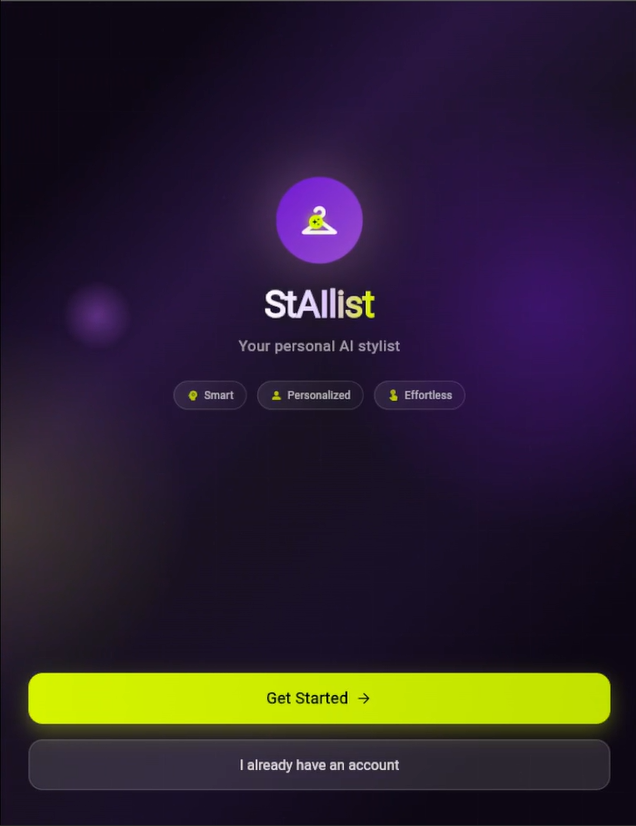
Sign up or Log in
-
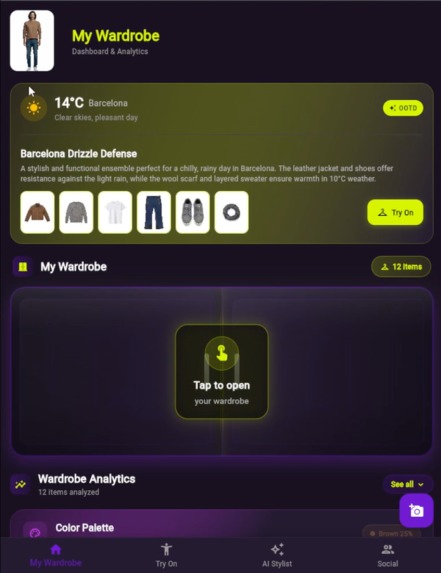
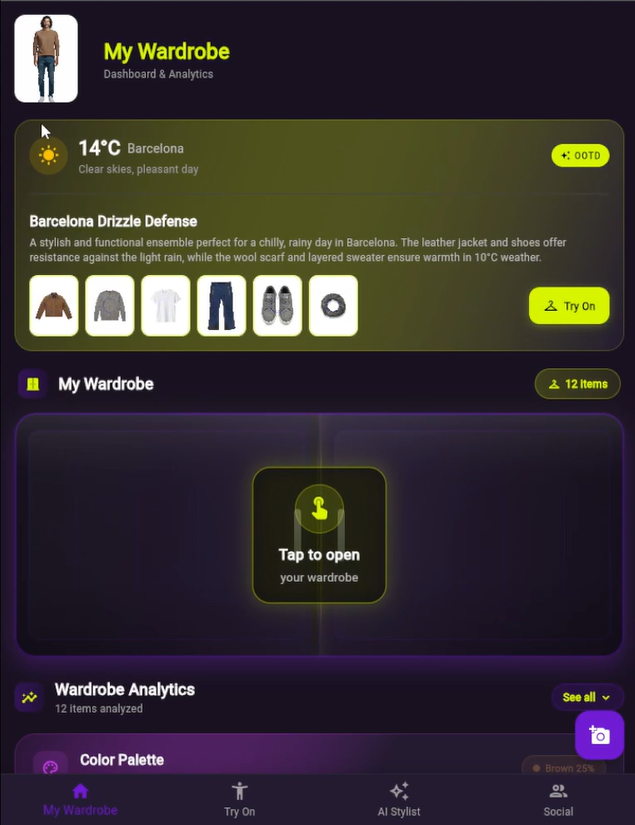
Dashboard view
-
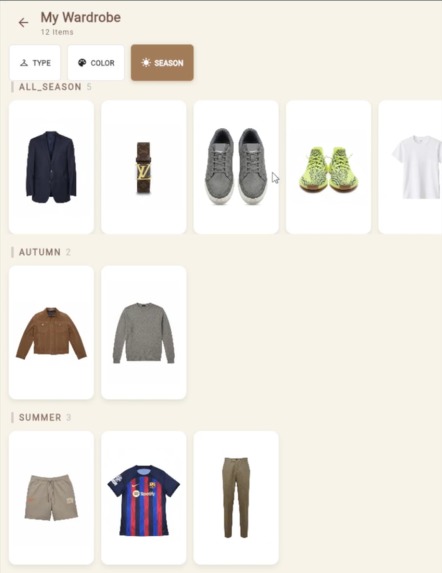
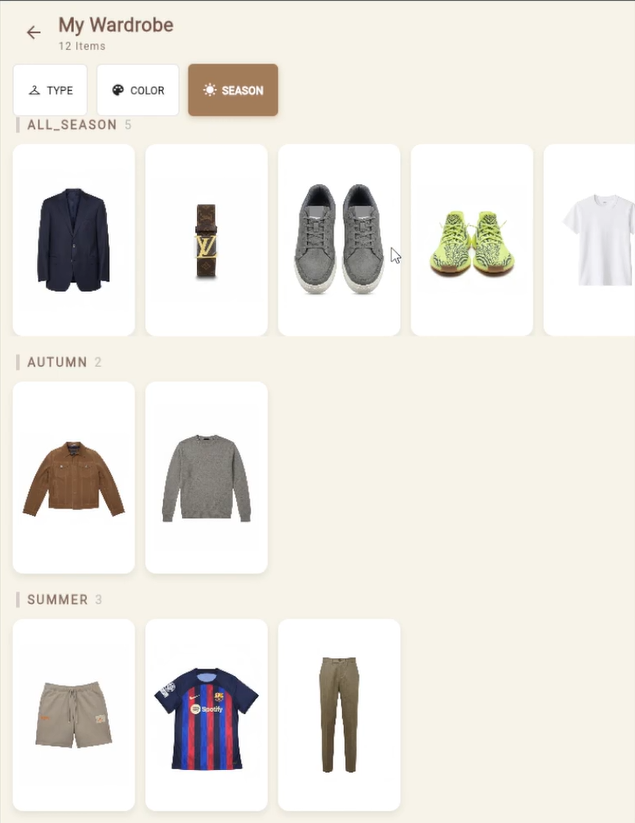
My wardrobe
-
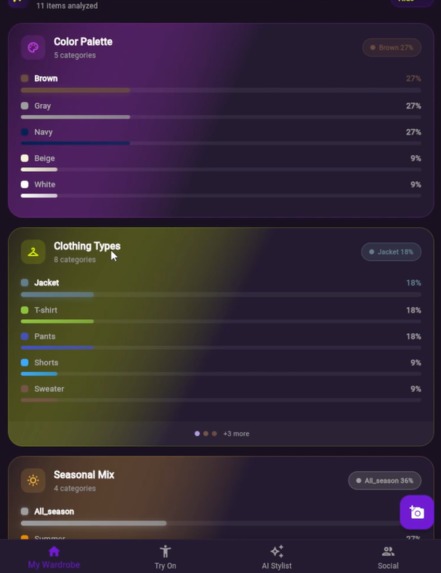
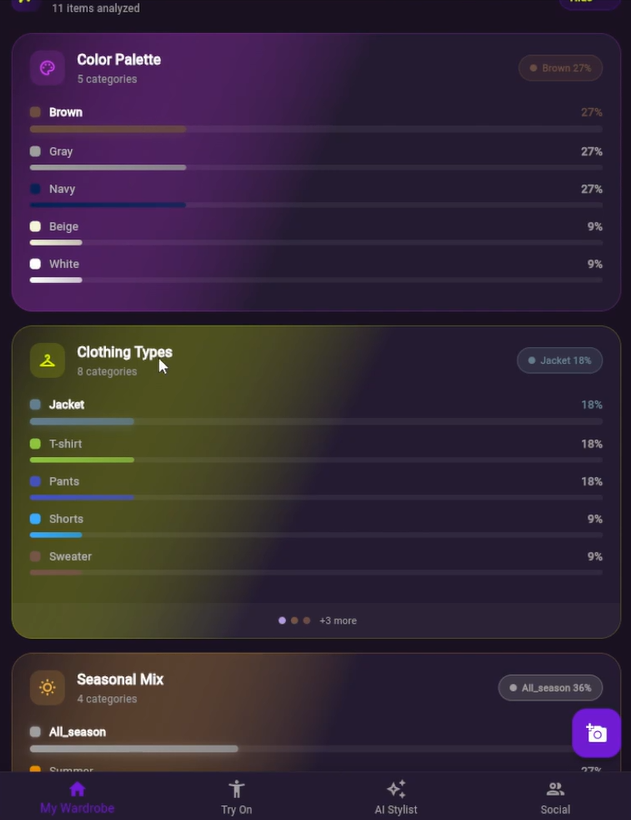
Analytics
-
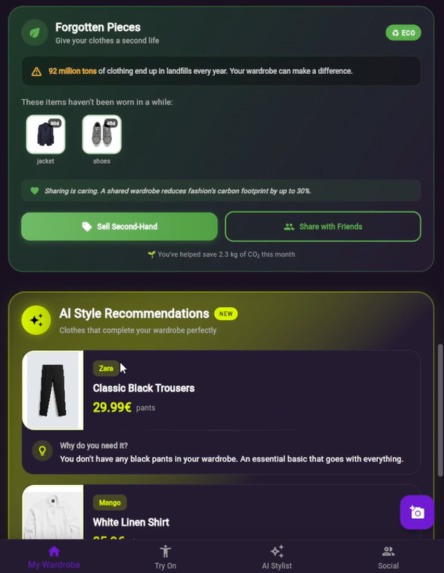
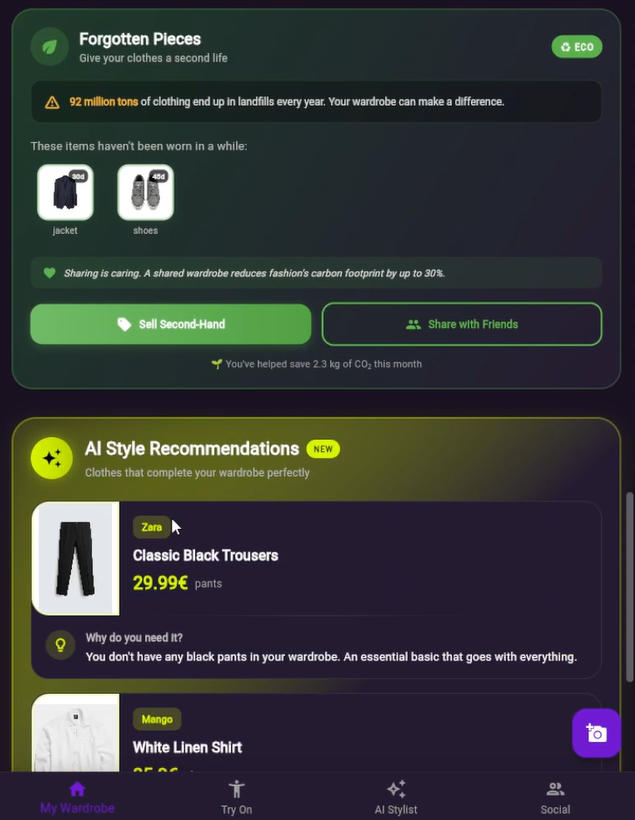
Shopping and non used recommendations
-
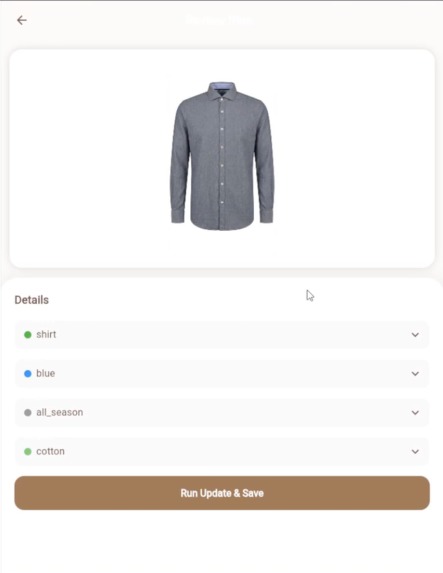
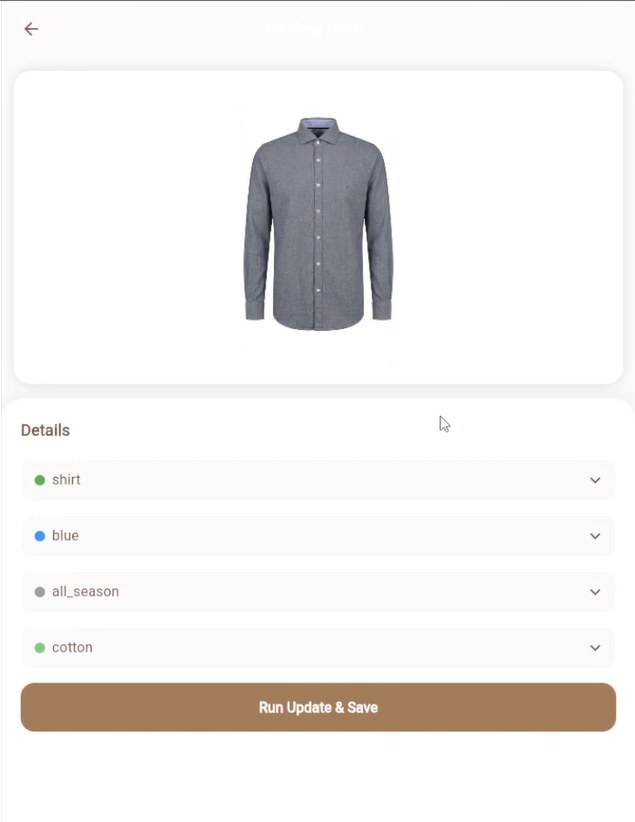
Add new item with Gemini 3
-
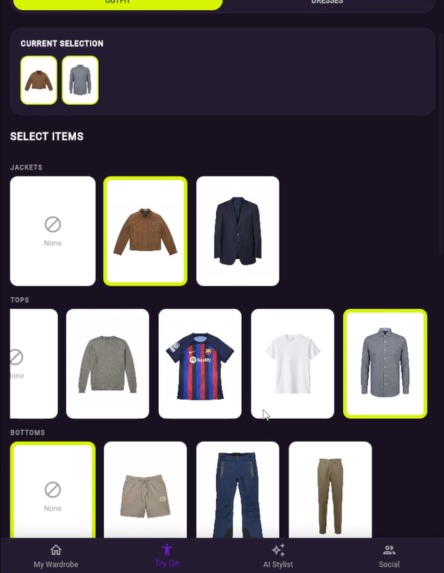
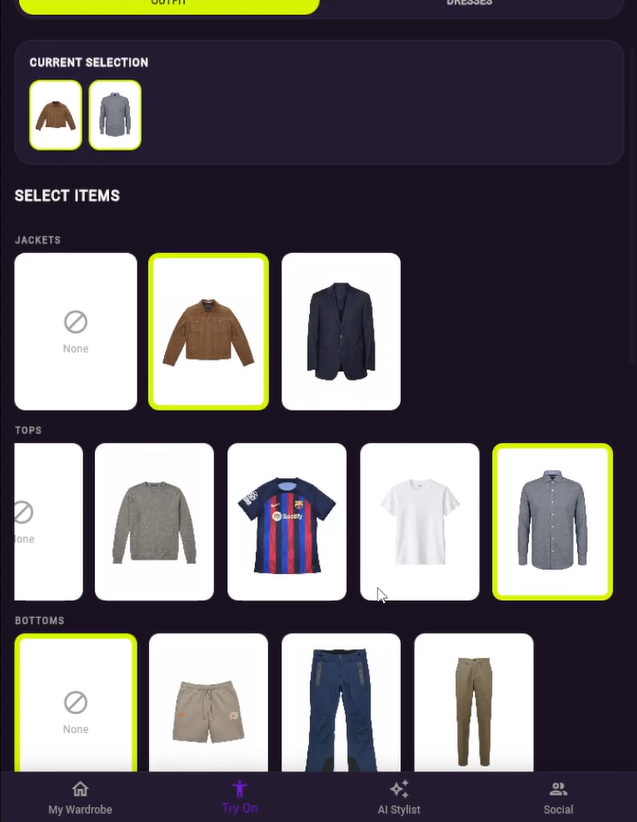
Try on with Gemini 3
-
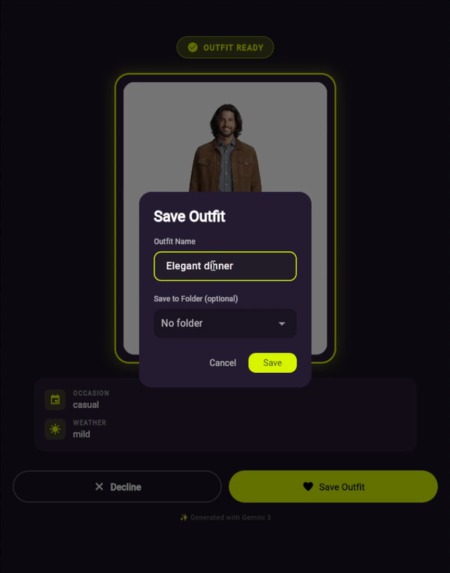
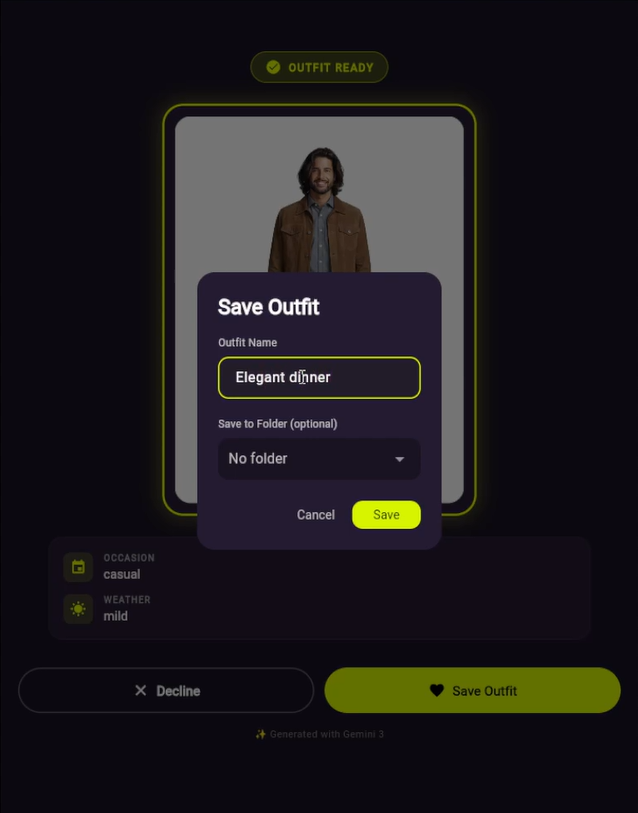
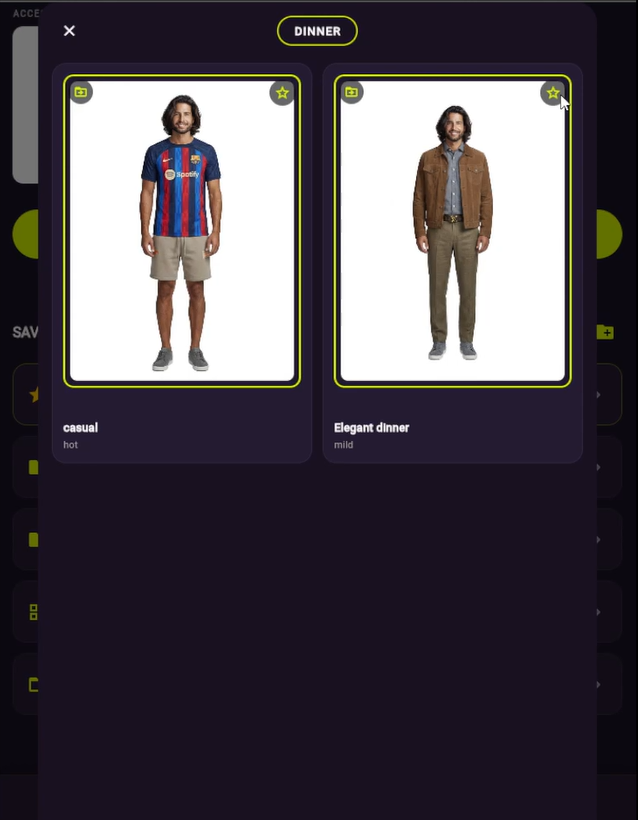
Save your outfits
-
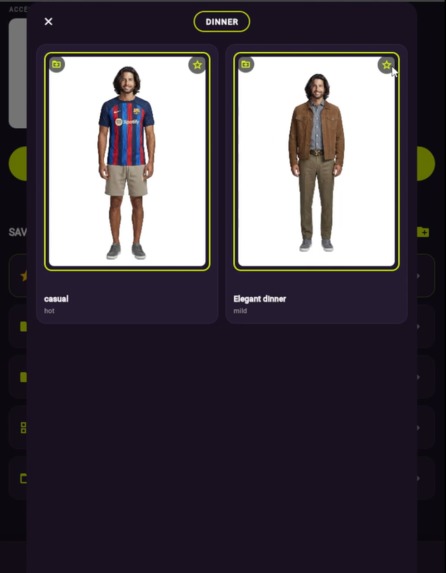
Browse your saved outfits
-
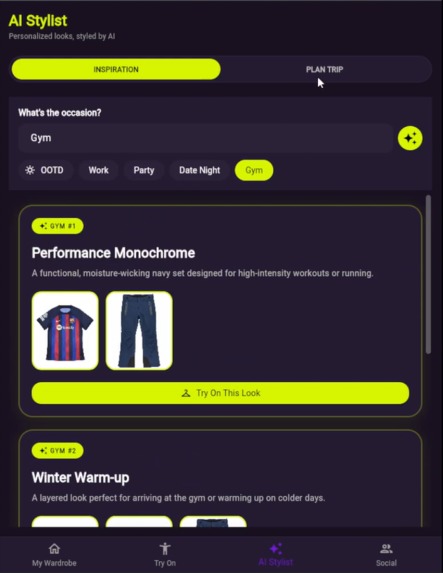
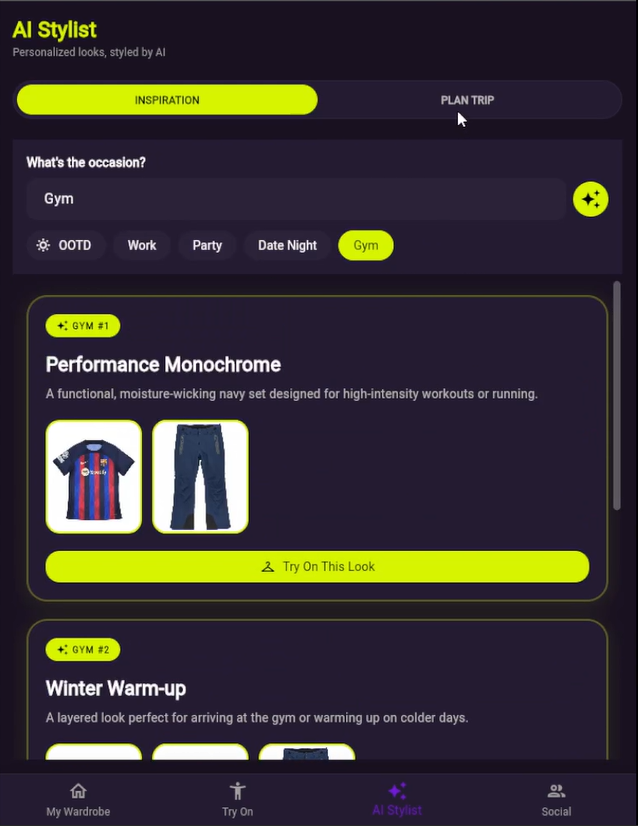
Get inspiration with Gemini 3
-
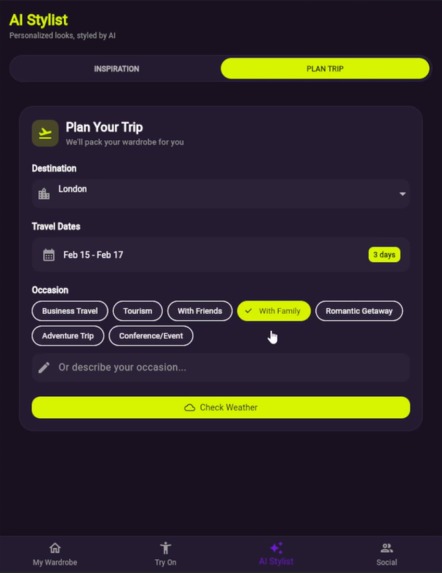
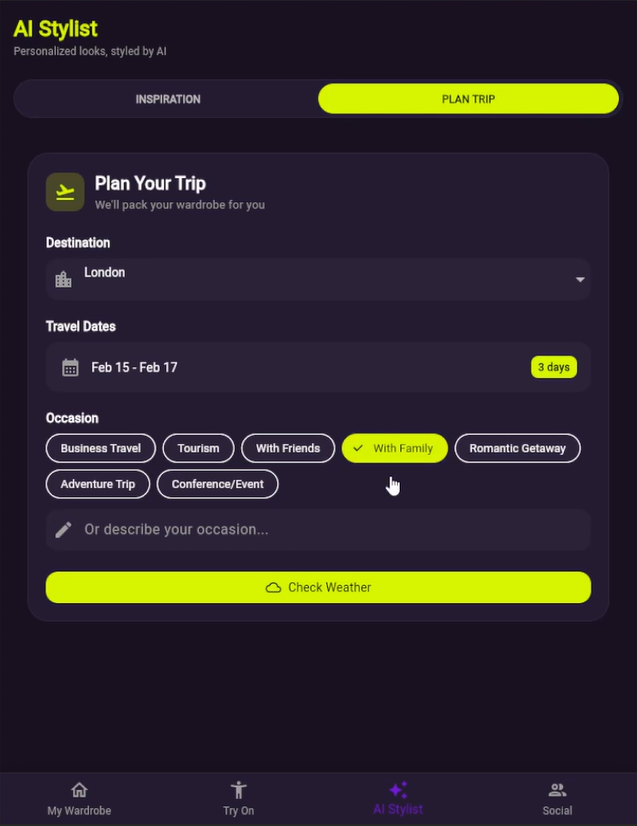
Insert your next trip
-
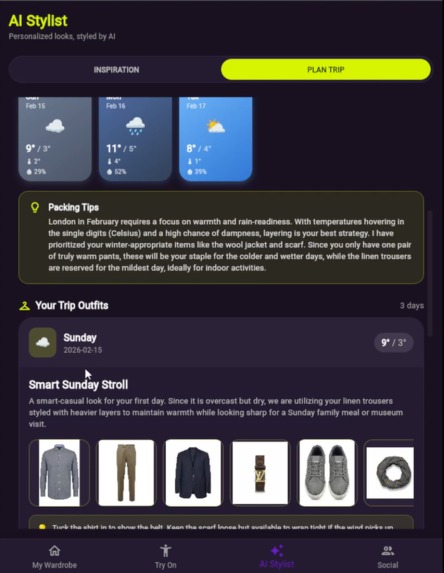
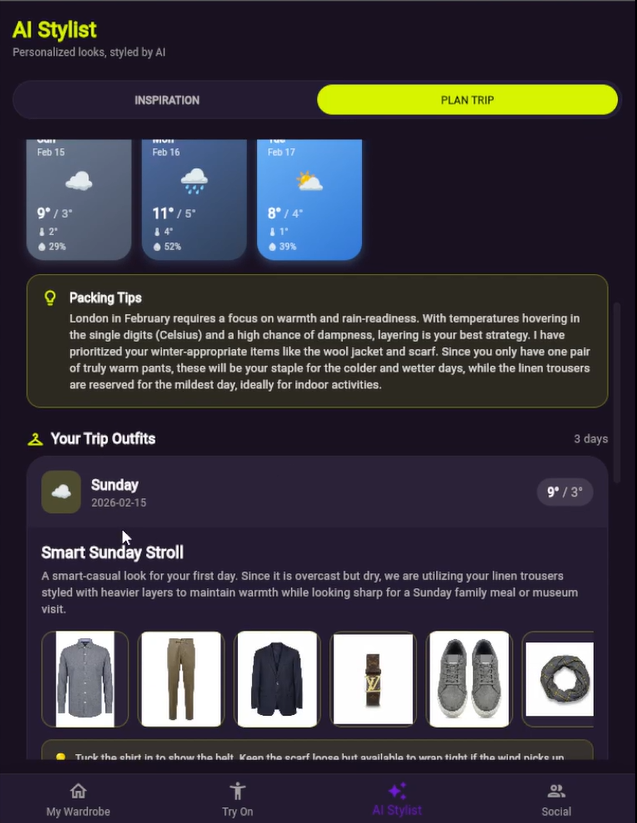
Get outfit recommendations for the trip with Gemini 3
-
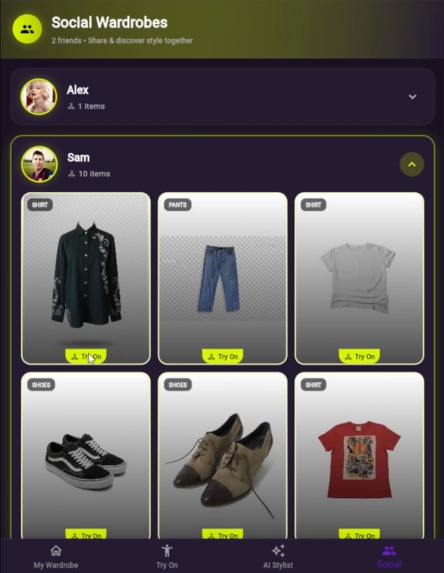
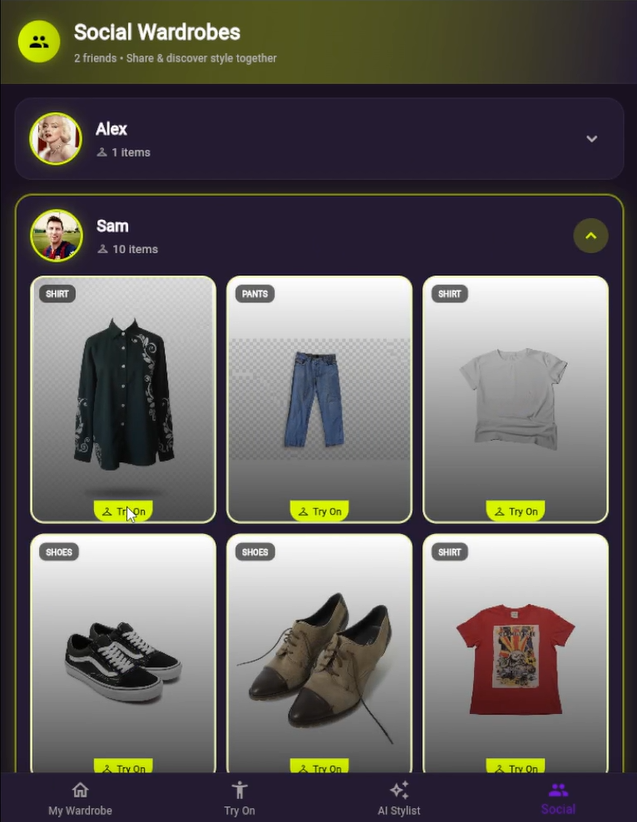
Inspect your friends' wardrobe
Inspiration
It all started on Christmas Eve, when two cousins finally had time to sit down together. One (Lluc) is finishing a Bachelor’s degree in Artificial Intelligence, the other, (Oriol), has a background in Mathematics and a Master’s in Applied Mathematics in AI. Both shared the same obsession: building useful things with technology.
While waiting for dinner to start, our cousin arrived late and apologized — she had spent too long trying to find the perfect outfit. That moment sparked the idea. “Why doesn’t an intelligent wardrobe exist?”
From there, the rest of the dinner turned into a brainstorming session: virtual wardrobes, outfit recommendations, trying clothes digitally, planning outfits for trips, reducing bad purchases. Shortly after, we discovered the Gemini 3 Hackathon and realized it was the perfect opportunity to turn the idea into a real, functional product with a clear deadline.
Although the hackathon was the catalyst, the vision goes far beyond it. StAIlist is meant to be a practical, everyday app — not a one-off demo.
What it does
StAIlist is an intelligent virtual wardrobe powered by an AI Agent built on Google’s Gemini 3 by using its capabilities of image generation from 1 or multiple source images, image processing, text and description generation from images and structured output generation from both text and images.
Users upload photos of their clothes, which the AI automatically analyzes and classifies. From there, StAIlist: -Creates outfits based on your wardrobe, weather, and occasion -Recommends daily looks and multi-day trip outfits -Identifies clothes you rarely wear to give them a second life -Suggests new garments that truly fit your style and existing wardrobe -Lets you virtually try on new items together with clothes you already own before buying
The result is smarter styling, fewer impulse purchases, and a more sustainable relationship with fashion.
How we built it
-Frontend: Flutter (mobile + web) -Backend: Python with FastAPI -Database & Auth: Supabase -AI Layer: Gemini 3 (vision, reasoning, and agentic workflows)
We worked with: -Weekly planning and review calls -A shared task list with clear ownership -Rapid iteration between frontend, backend, and AI logic
The goal was always to build something real, not just something that “looks good”.
Challenges we ran into
At the start of the project we had 0 idea on how to build a mobile app. After a bit of research we decided to develop it with flutter. Choosing Flutter meant committing to learning a completely new framework from scratch. Some of the main challenges were:
- Learning Flutter and its architecture in a very short time
- Designing a clean API contract between frontend and backend
- Handling AI outputs reliably (structured JSON responses, validation, retries)
- Making AI-generated features feel fast and usable in a real app
Each challenge forced us to simplify, iterate, and make pragmatic technical decisions.
Accomplishments that we're proud of
We are very proud that in less than one month, we managed to design, build, and deploy a fully functional application from scratch. Starting with no prior experience in mobile app development, we progressed to a production-ready architecture that includes a real frontend, backend, database, and authentication system.
One of our biggest technical achievements was building an agentic AI system capable of reasoning over multiple inputs such as wardrobe items, weather conditions, and occasions to generate meaningful outfit recommendations. Most importantly, StAIlist is not a mocked concept or a one-off demo — it is a real product designed for daily use, with real users in mind.
What we learned
Throughout the project, we learned how to build and ship a full-stack application end to end. This included gaining hands-on experience with Flutter and mobile-first UI design, as well as understanding how to structure and deploy a scalable backend.
On the AI side, we learned how to effectively work with Gemini 3 for image understanding, reasoning, and structured outputs. We explored techniques for constraining LLM responses using schemas and JSON formats, and how to integrate AI in a way that genuinely improves user experience rather than just adding novelty. Beyond the technical side, we also learned how to collaborate efficiently, divide responsibilities, and make aligned decisions under time pressure.
What's next for StAIlist
- Social and shared wardrobes with friends
- Deeper sustainability features and circular economy integrations
- Smarter outfit memory and personalization over time
- Brand and vendor integrations for shopping
- Improving realism and speed of virtual try-on
StAIlist is just getting started.
Lluc & Oriol
Built With
- dart
- fastapi
- firebase
- flutter
- gemini3
- langgraph
- postgresql
- python
- render.com
- supabase
- uvicorn

Log in or sign up for Devpost to join the conversation.