-
-
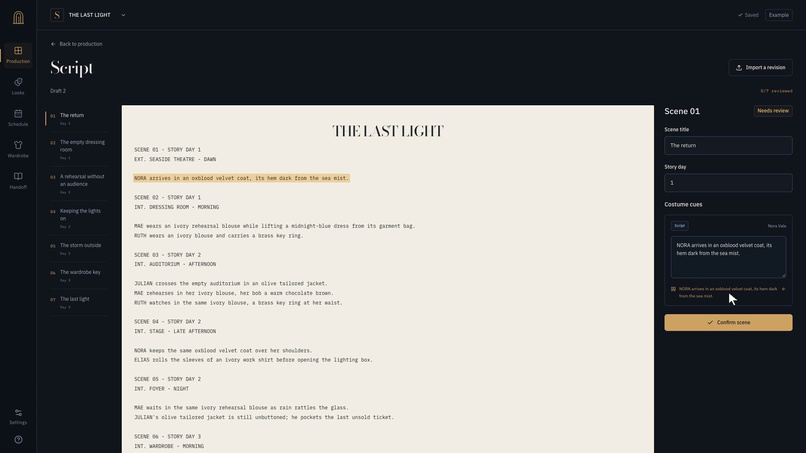
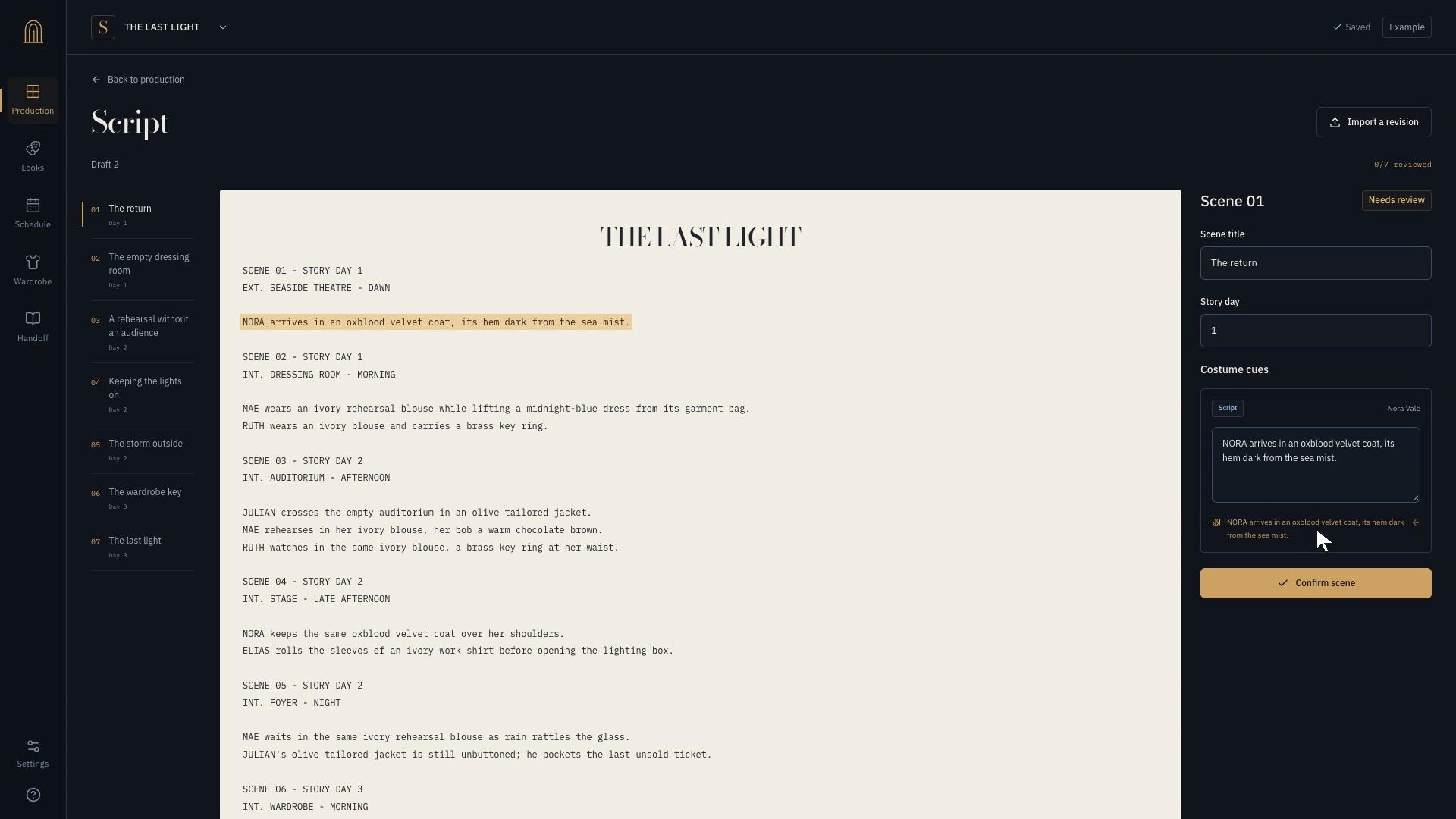
Follow each extracted costume cue back to its exact script passage.
-
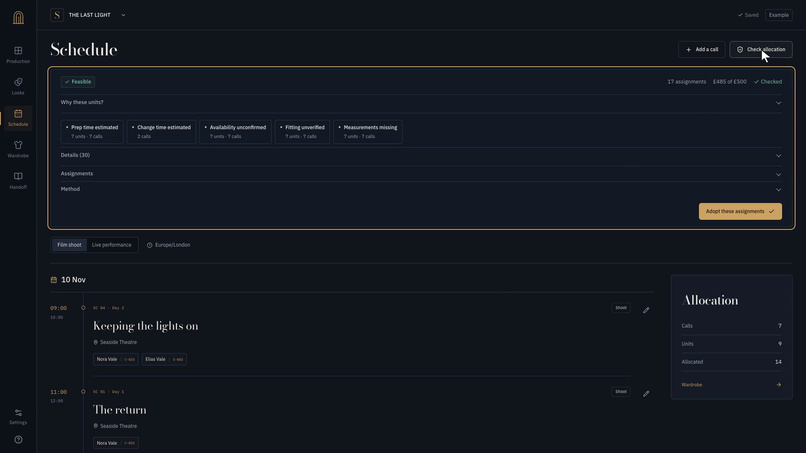
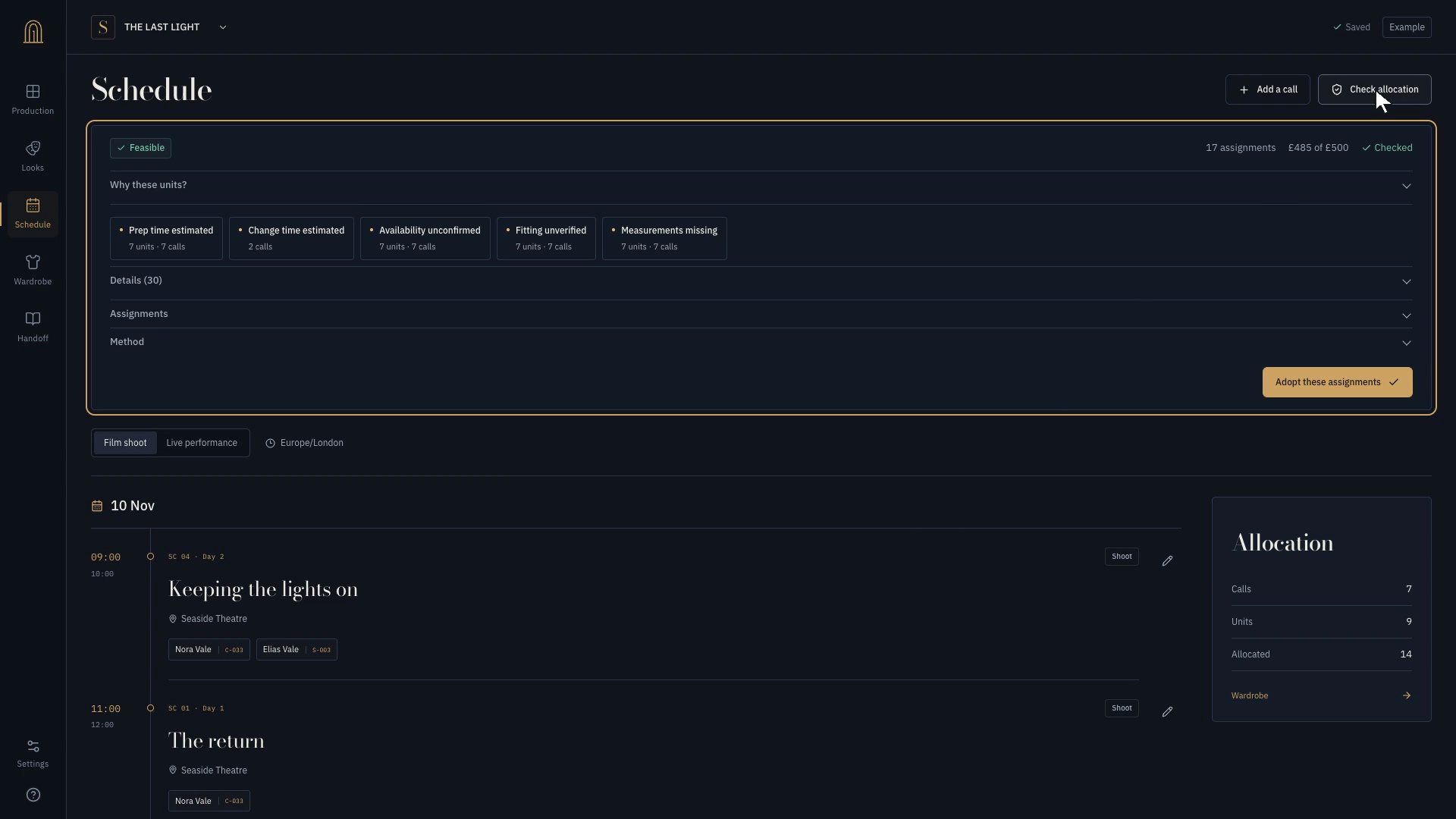
Recheck a Feasible £485 example allocation before crew handoff.
-
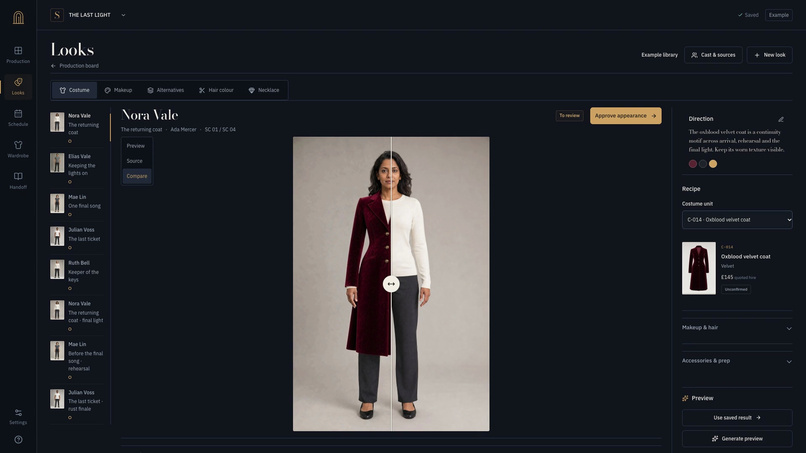
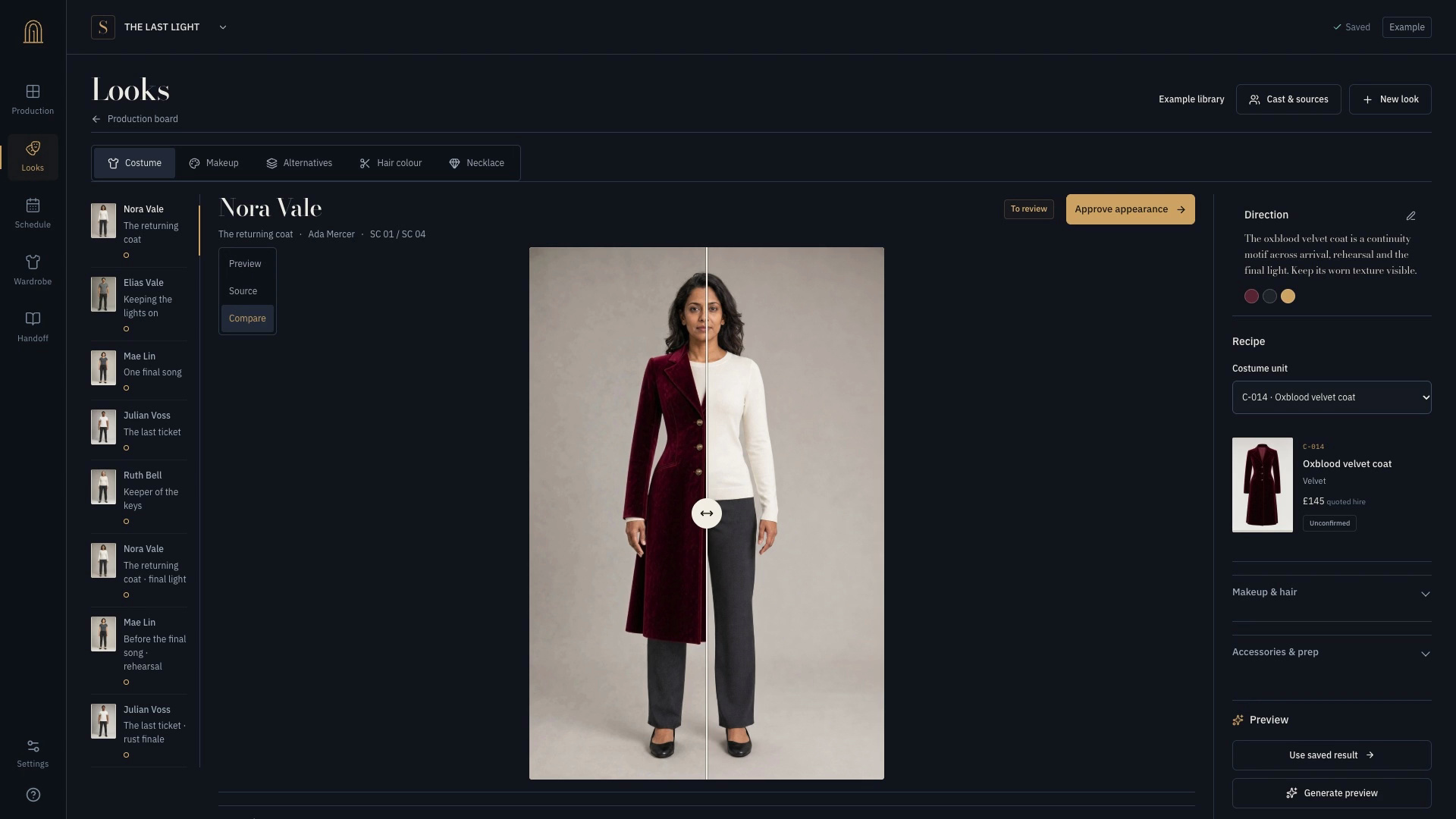
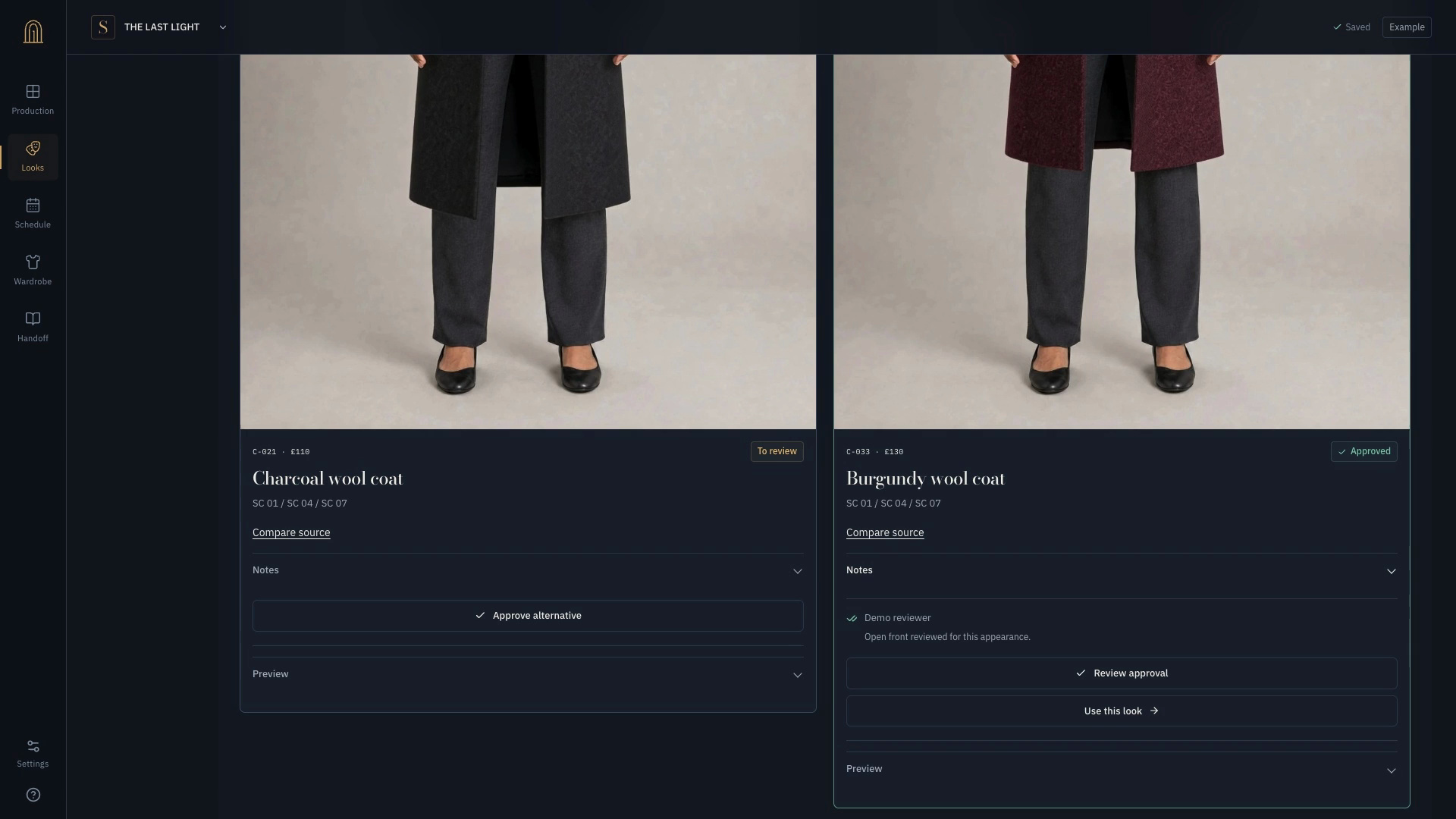
Compare the garment reference and actual YouCam preview on the performer.
-
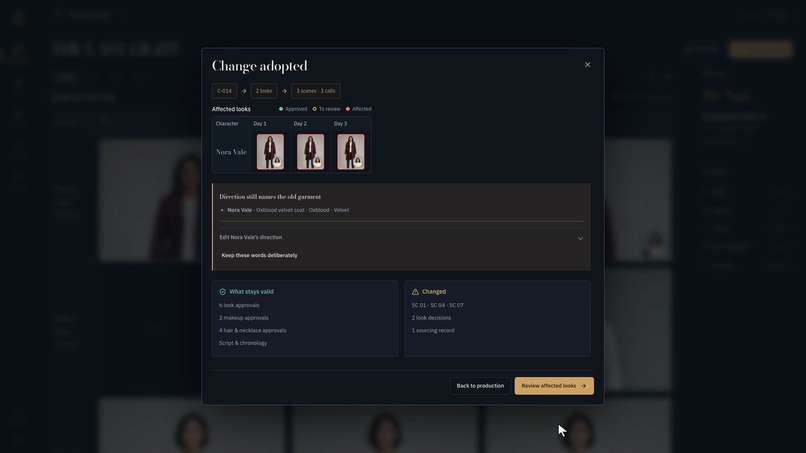
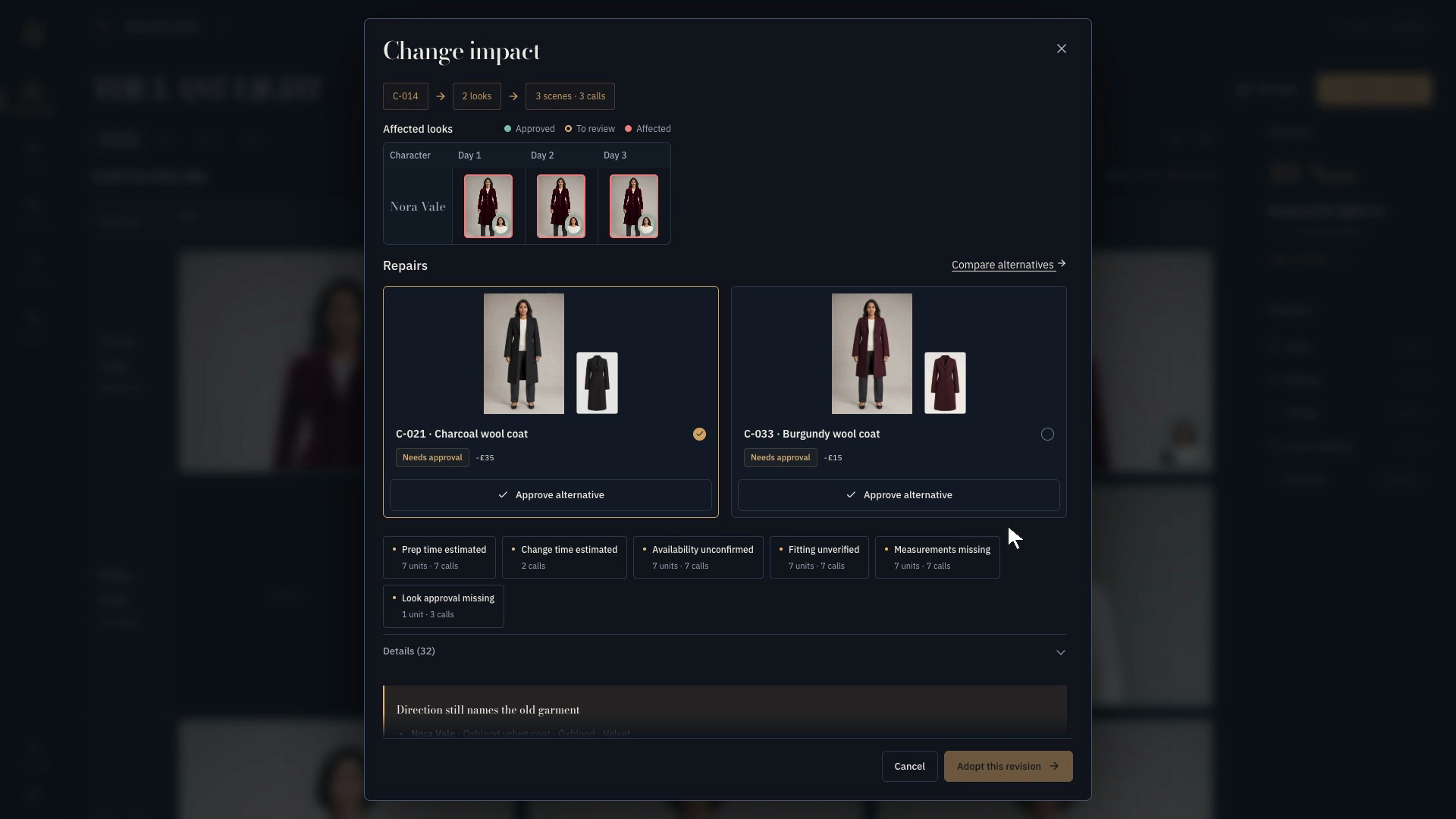
Adopt the replacement while preserving twelve valid approvals.
-
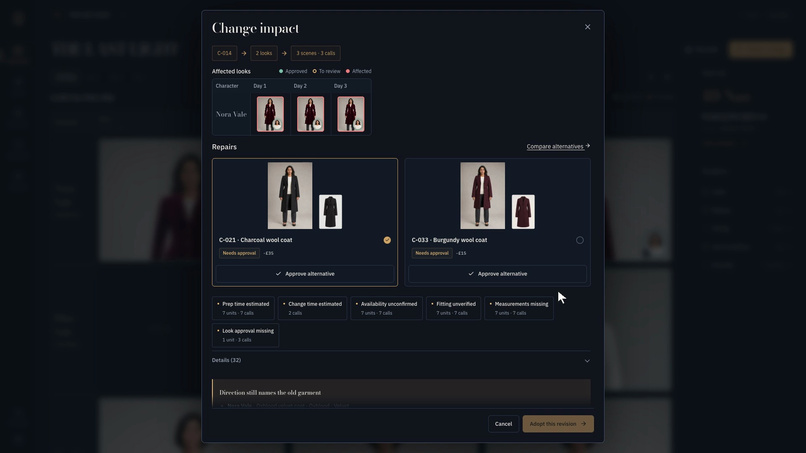
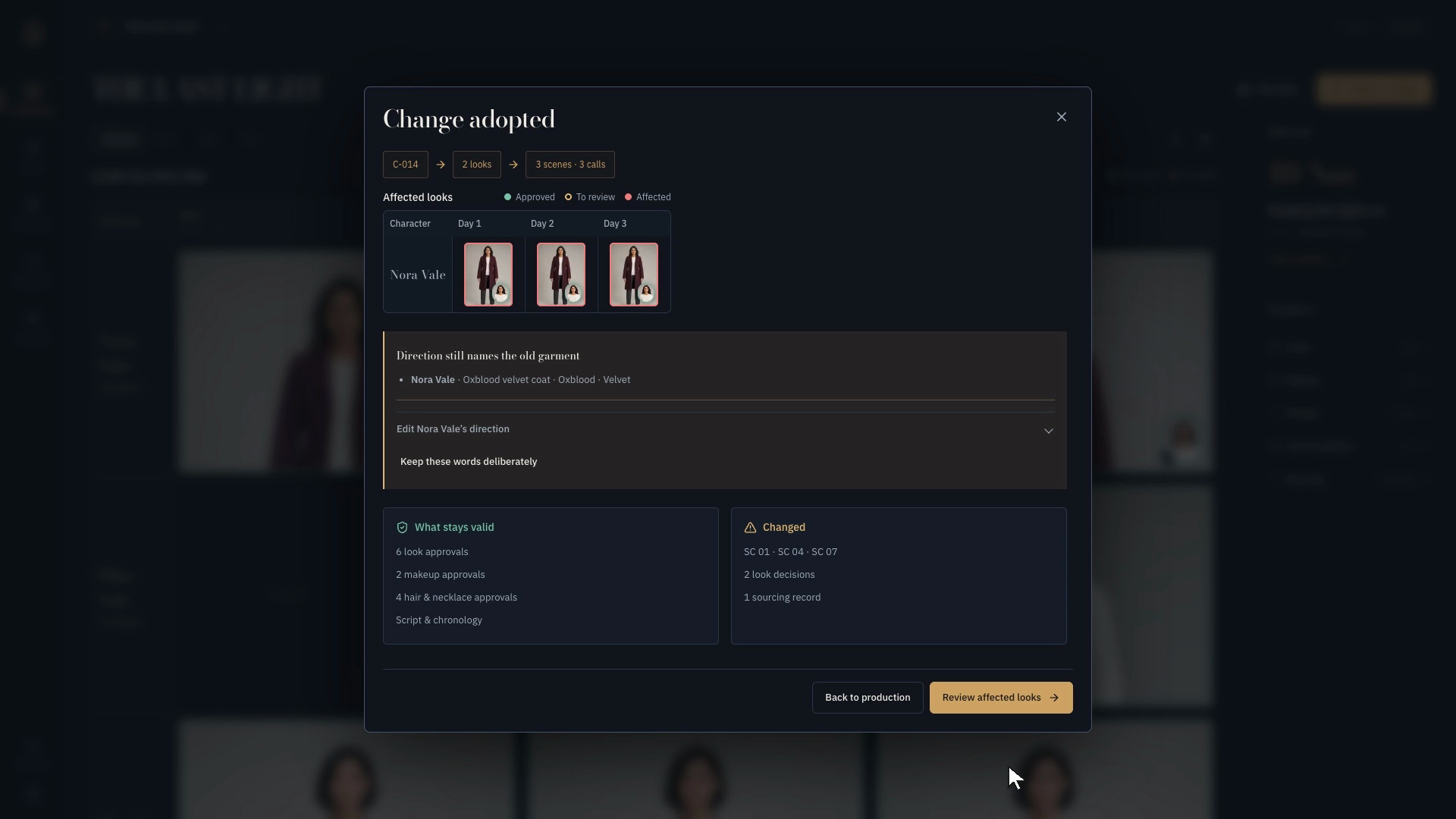
One unavailable coat affects two looks across three scenes.
-
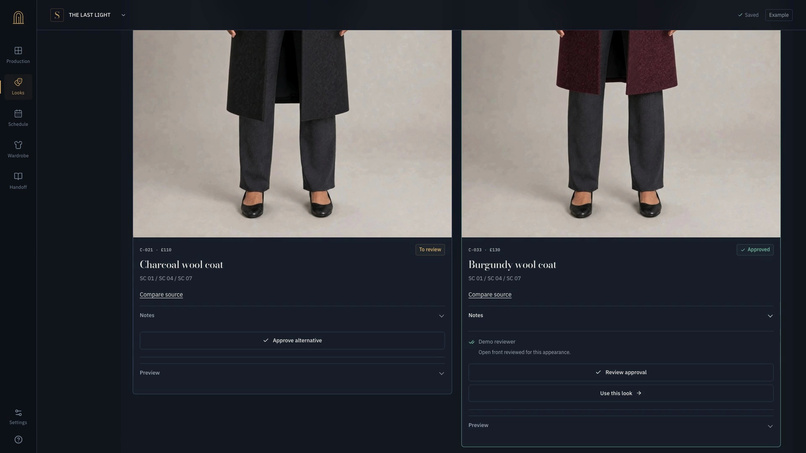
Save an approval tied to the exact performer, garment and output.
-
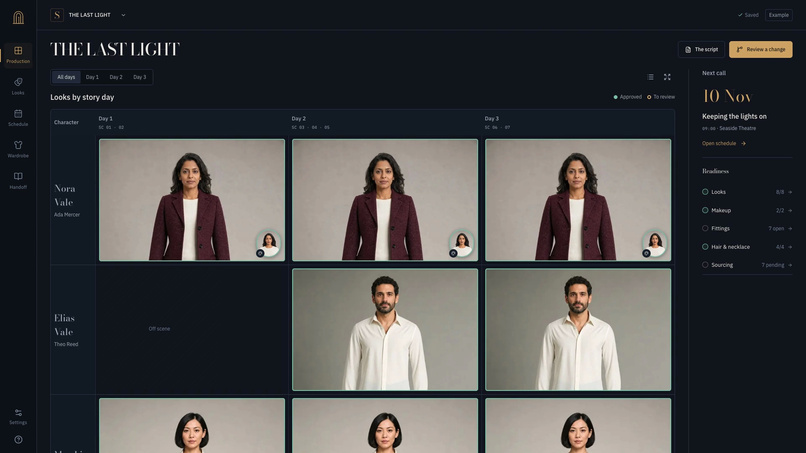
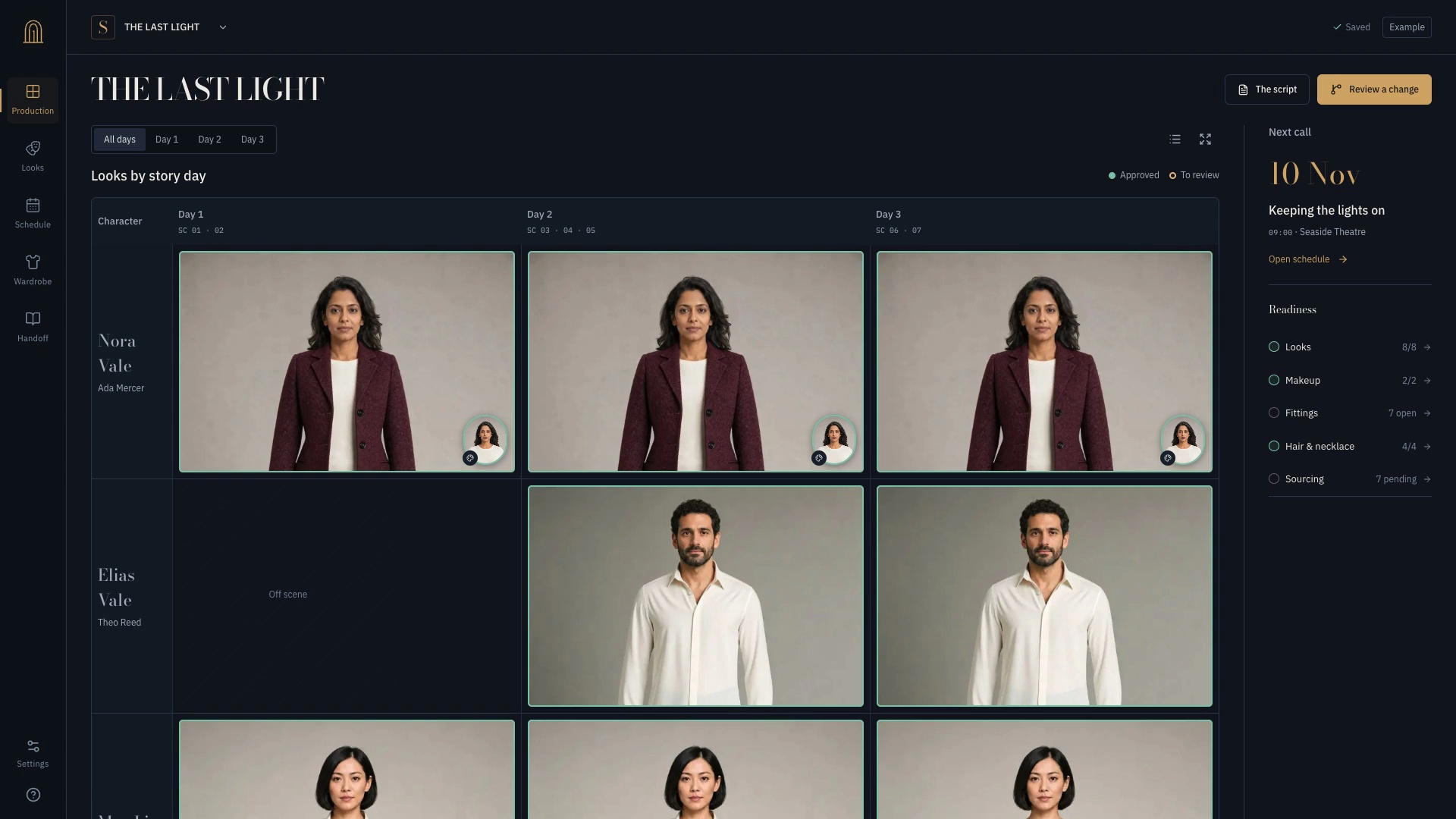
Every character, story day and approved look in one continuity wall.
Inspiration
A coat can be a visual motif, a physical item and a scheduling constraint at the same time. Films shoot scenes out of order, while the audience expects a character's appearance to remain consistent. If that coat becomes unavailable, changing a picture on a mood board does not tell the crew which scenes, approvals, assignments and instructions need attention.
I built STAGECRAFT to bring those decisions into one working production book. It is built for independent film and theatre teams that need to carry an appearance decision all the way to a crew handoff. The central idea is simple: a replacement should have a traceable effect, and work that remains valid should stay valid.
What it does
The demo follows THE LAST LIGHT, a fictional production with five characters, seven scenes and three story days. Its visual continuity wall shows how each character changes across the story. Looks connect to script cues, performers, garment units and separate makeup, hair and necklace studies.
When Nora's recurring coat becomes unavailable, the app identifies two affected looks across three scenes. The user compares real YouCam previews of alternatives on performer Ada Mercer and explicitly approves a replacement. That approval belongs to the exact performer, garment, output and creative scope. It is not a general endorsement of a similar image.
Adopting the burgundy coat preserves twelve valid costume and detail approvals. The app also catches old material words that are still present in the direction. Rechecking allocation produces a Feasible £485 example plan. A crew reference freezes the selected appearance evidence and assignments, with fitting and sourcing requirements still visible. The fictional quotations keep the effect of each choice visible.
How it was built
YouCam provides four independent kinds of appearance evidence: Clothes V4, Makeup Virtual Try-On, Hair Color and 2D necklace try-on. Each keeps its own inputs, recipe, output and approval. Makeup and face details are not pasted into a fabricated full-body result. The public example includes twenty genuine recorded outputs on fictional subjects, with exact-input reuse available without another generation.
Gemini drafts the script breakdown. Every retained cue points back to a validated span of the original script, and the user reviews the draft before adoption. Story chronology remains separate from the shooting schedule.
The allocation engine is bounded exact search written in TypeScript. It checks hard constraints before cost and changeovers, costs each physical unit once, and requires one coherent choice across a continuity look. Coverage, intervals and overlaps are checked before adoption. Missing approvals are shown as Decisions needed rather than disguised as physical conflicts. Feasible and Optimal are distinct outcomes, with the latter requiring an exhausted search under the implemented objective.
Next.js, React and TypeScript provide the workspace. PostgreSQL stores owner-scoped productions, revisions and decisions. Private Vercel Blob holds uploaded assets, while Vercel Workflow carries saved generation jobs across navigation and recovery. An uncertain paid submission is never silently repeated.
Challenges
One difficult boundary was the difference between an image and a decision. A direction edit can require another approval even when the provider pixels have not changed. A recast has the opposite kind of consequence: the old performer's appearance evidence cannot simply transfer to the replacement. The implementation tracks those dependencies explicitly.
Another challenge appeared when two coat alternatives had both been approved. A selected repair needed to be checked on its own terms, while the later allocation search still needed freedom to recommend a cheaper approved option. Those are different questions. The repair check now fixes the selected affected looks, and a later different assignment requires explicit confirmation.
What was learned
A convincing preview is only one part of a useful production decision. The crew also needs to know what was approved, what changed, what remains unresolved and which revision a printed instruction represents. STAGECRAFT keeps those distinctions visible instead of treating a successful render as readiness to shoot.
The result is a working bridge from visual exploration to production decisions the crew can trace. Automated domain and database checks, browser journeys and inspected document exports cover that bridge. The example is fictional and its YouCam results are genuine; physical fit and supplier availability still need checking. Next comes testing the workflow with production practitioners, including how clearly a crew can follow a changed decision and identify a superseded reference.
Built With
- better-auth
- clothes-v4
- gemini
- hair-color
- makeup-virtual-try-on
- necklace-virtual-try-on
- neon
- next.js
- openai
- playwright
- postgresql
- react
- typescript
- vercel
- vercel-blob
- vercel-workflow
- vitest
- youcam-api

Log in or sign up for Devpost to join the conversation.