-
-
Pitch slide
-
App logo, name and team members
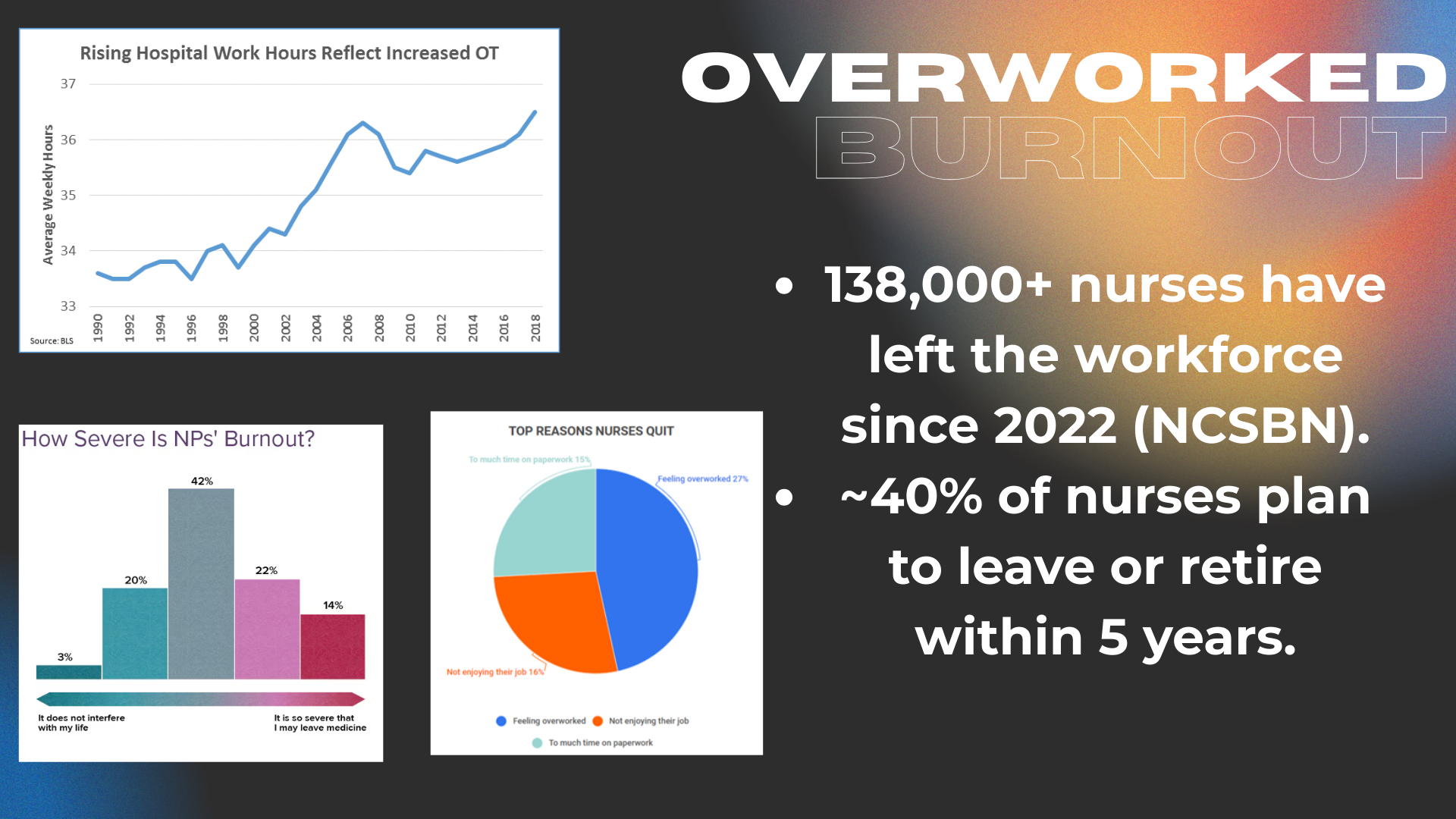
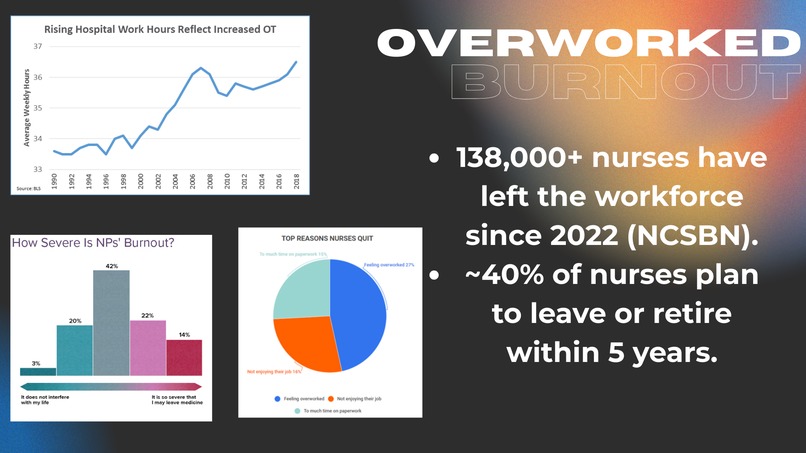
Inspiration
Personal story from relatives and friend that are in the medical industry. They often complain about overworking on some days and underworking on other days.
What it does
The purpose of the App is to optimize the hospital staffing by aligning nursing schedules with actual workload patterns to create an even distribution. The app analyzes operational data (in this case we are using our simulation of data that we made because hospitals do not disclose their information to the public), such as department activity levels, shift assignments, staff qualifications, and staffing constraints to identify understaffed or overstaffed periods. It then generates recommendations to improve shift distribution, balance the team workloads, and reduce scheduling inefficiencies.
How we built it
How we built it: The Staffflow - Real-Time Hospital Staffing Optimization project was created using a full-stack web framework with a modern technical stack focused on simulation, analytics, and AI-driven recommendations:
Frontend:
Built in React.js for highly interactive dashboards, simulation controls, and real-time data visualization.
Uses custom CSS for styling; logo assets and UI elements are designed for clarity and branding.
Implements patient-nurse ratio charts and status indicators.
Supports manual refresh (data sync) and action controls for starting/stopping the simulation and resetting data.
Backend:
Developed with Node.js and TypeScript, organized into client/server folders (evident from file names like staffflow/server/staffflow.test.ts and staffflow/client/src/pages/Home.tsx).
Employs pnpm as a package manager for running scripts and managing dependencies (pnpm dev, pnpm test).
All simulation logic runs in a backend API, which calculates nurse-patient ratios and assigns staff based on their skills, qualifications, and shift times.
Testing & Stability:
25+ automated tests implemented using typical TypeScript/Node.js backend testing patterns (passing tests confirmed).
Patient-to-nurse ratios (IDEAL, SUFFICIENT, INADEQUATE) are calculated on the backend for each simulation tick, and tracked with average, maximum, and standard deviation metrics for clear status updates.
AI/LLM Integration:
The system uses AI (Large Language Model / LLM) integration for generating staffing rebalancing suggestions—optimizing shift assignments and providing recommendations for workload balance.
The recommendation engine makes use of real-time simulation state rather than random or refetched data for reliability and reproducibility.
Challenges we ran into
- How to simulate real time/dynamic data for hospital for staffflow use cases.
- User friendly visualization of correlation between metrics by creating a graph running alongside simulation- #'s ticks: 15-20minutes/tick
Accomplishments that we're proud of
Came up with an idea to solve a real world problem that has positive social impact and possibly economic /mental health impact as well
What we learned
System design-how to better structure and organize data. Learned API's integration and LLM tuning for our use case.
What's next for Staffflow
For now is a prototype but we're looking to continue improving and maintining this project.
Built With
- css
- llm
- manusapi
- node.js
- react
- typescript

Log in or sign up for Devpost to join the conversation.