-
-
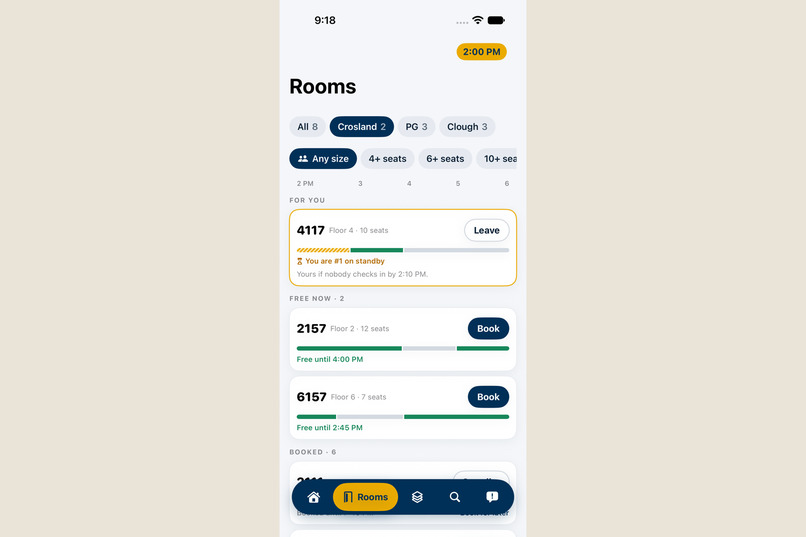
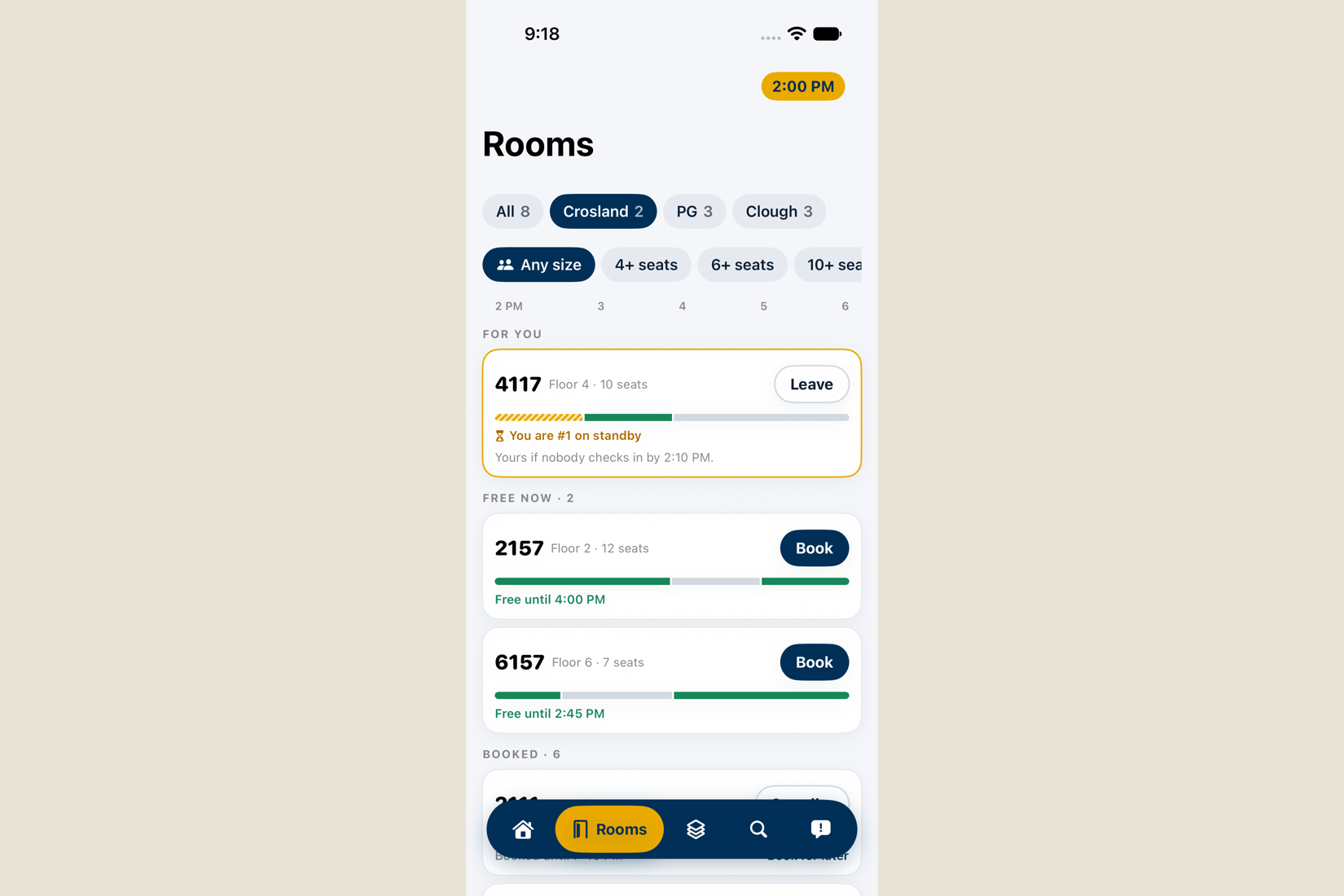
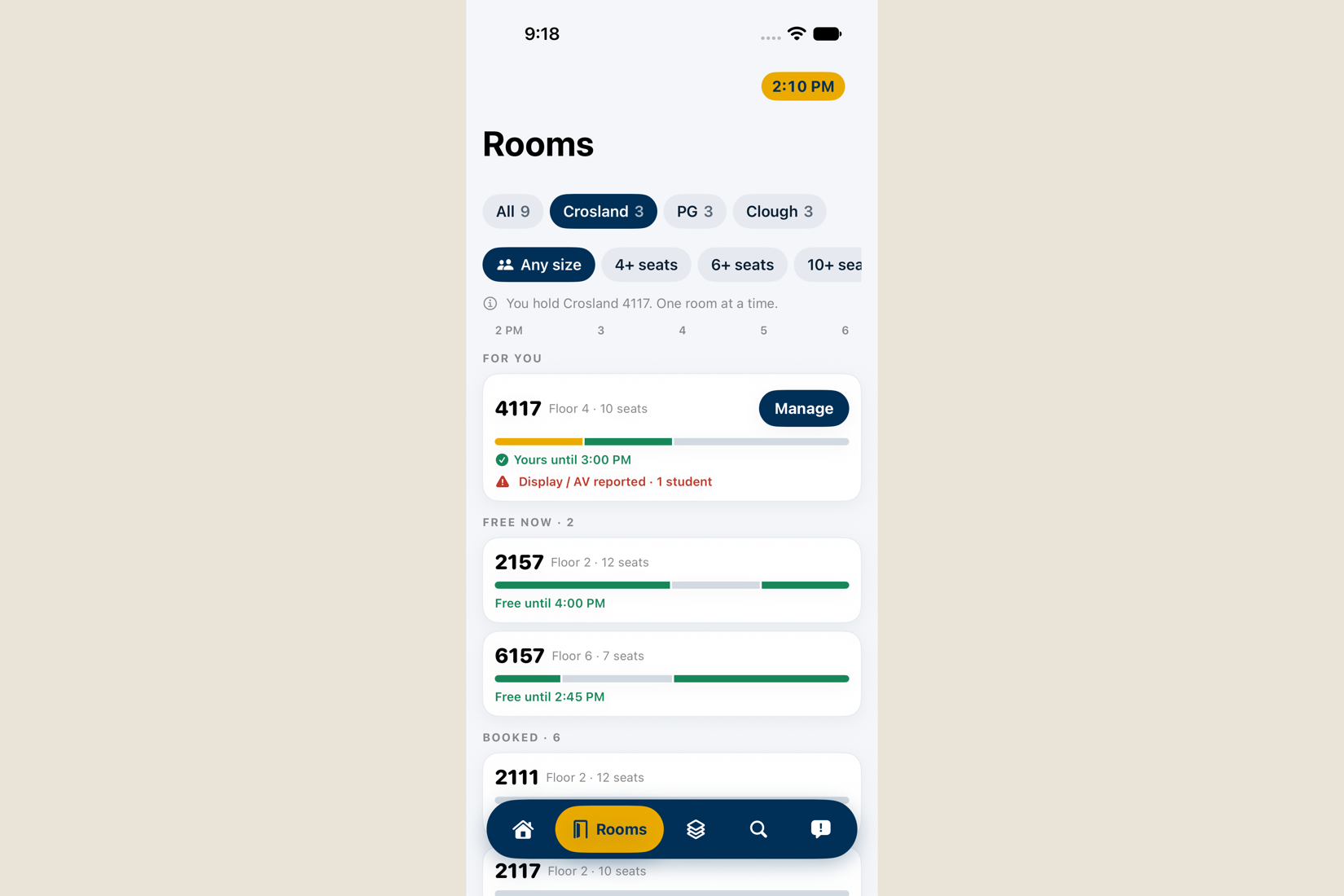
Join standby on a booked room. It's yours if nobody checks in within 10 minutes.
-
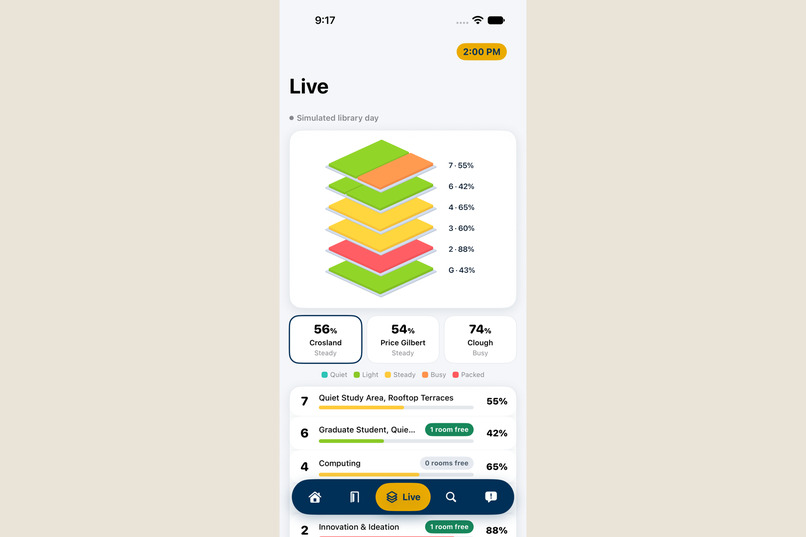
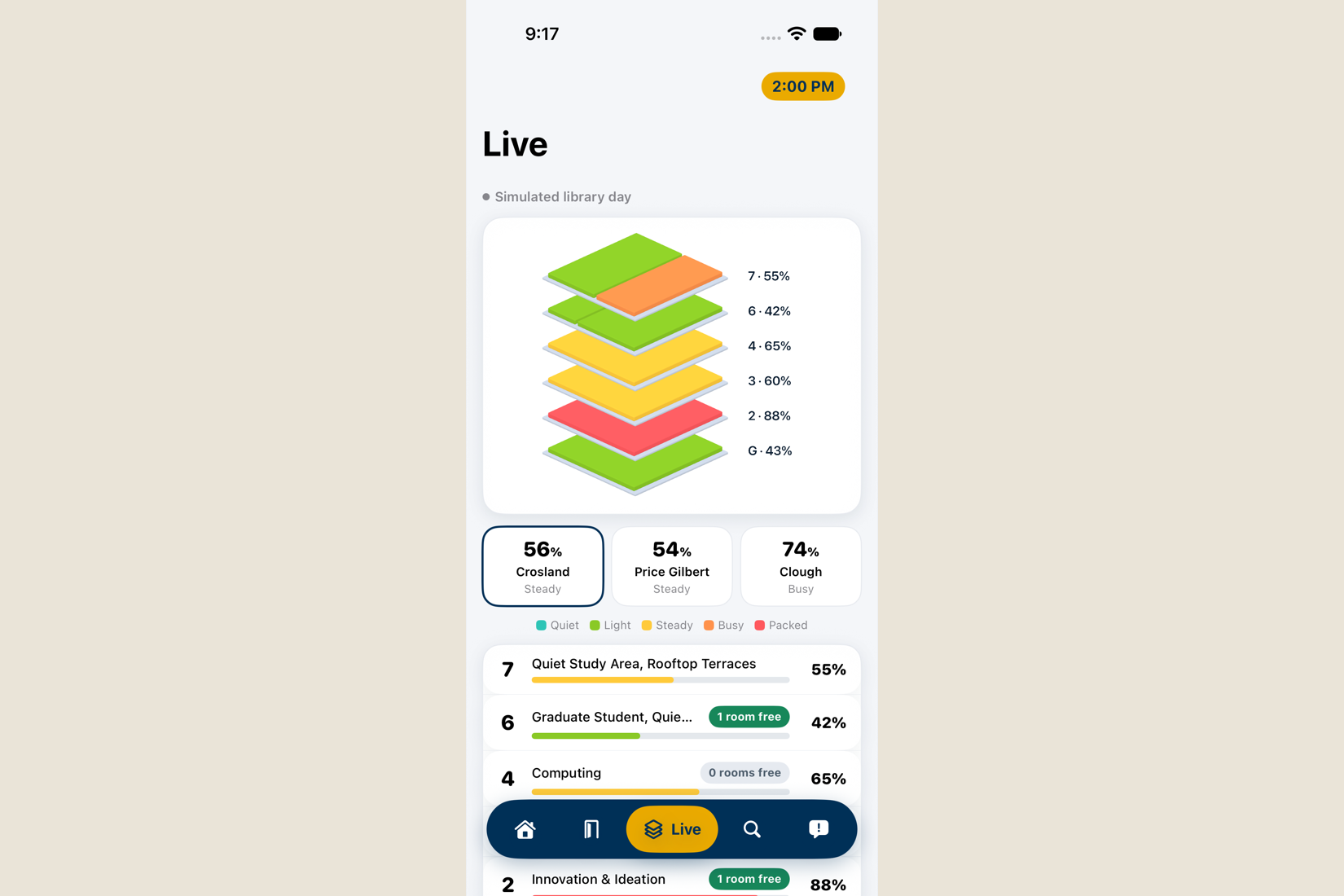
Live busy levels for every floor, plus which floors have a free room.
-
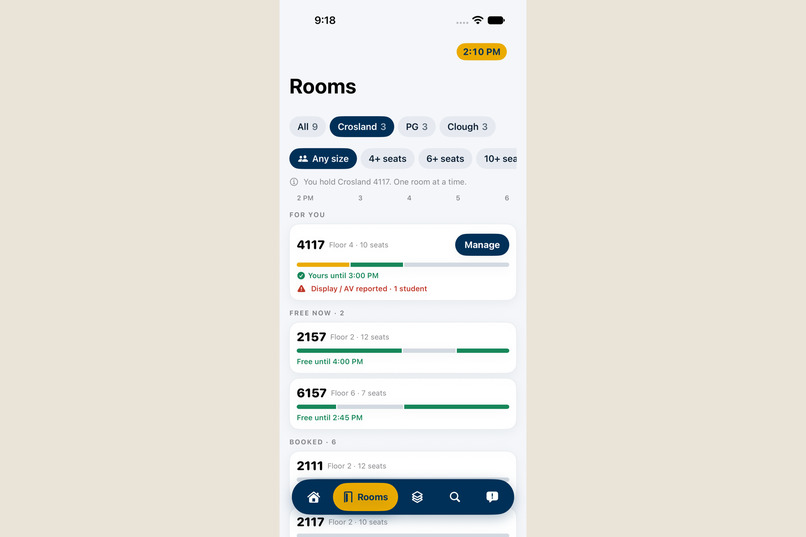
A reported problem shows on the room before the next student books it.
-
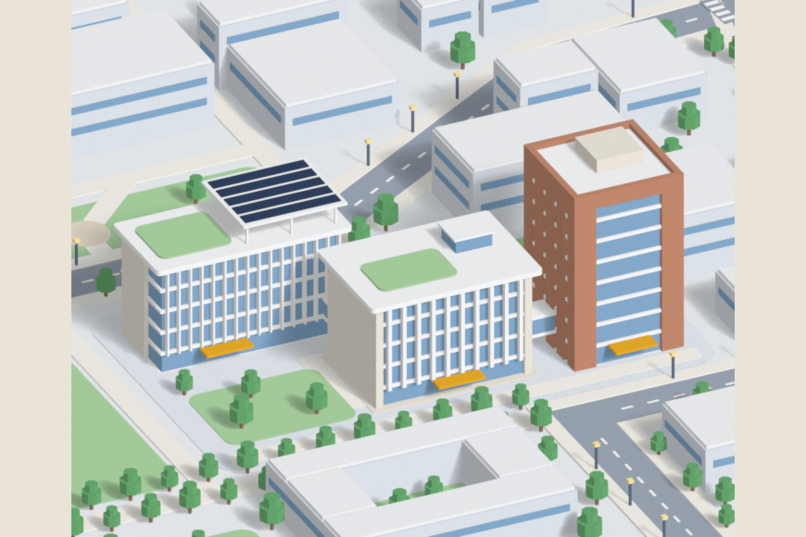
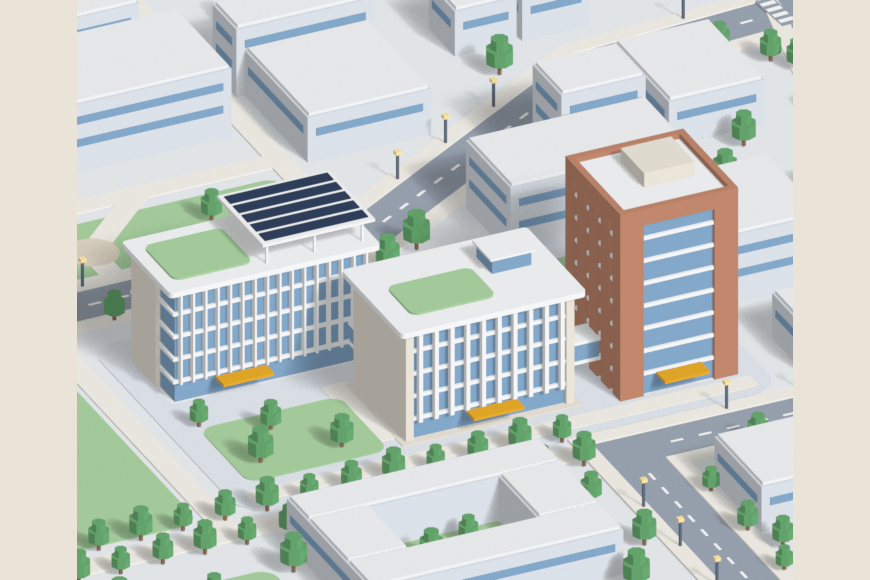
The 3D model of Clough, Price Gilbert and Crosland, made in Blender.
-
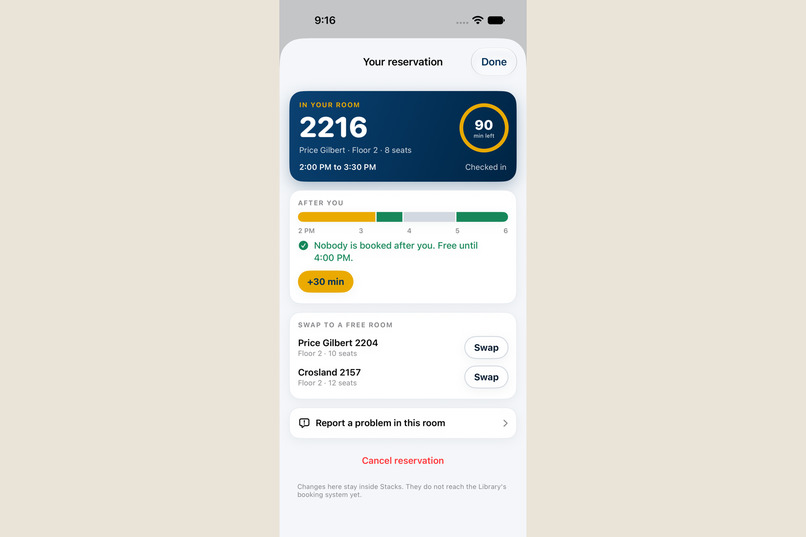
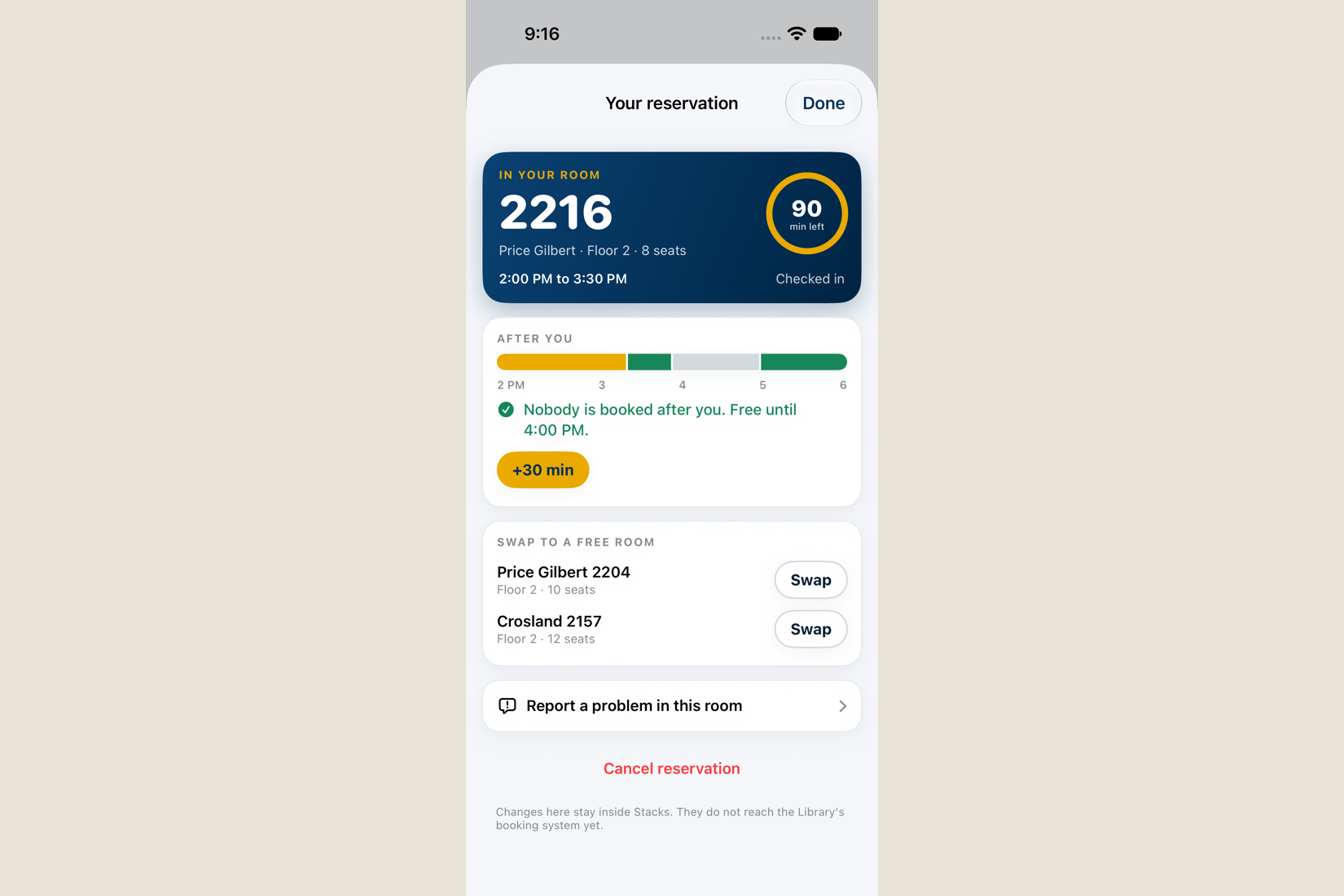
Your reservation, with who's booked after you, add time, swap to a free room, or cancel.
-
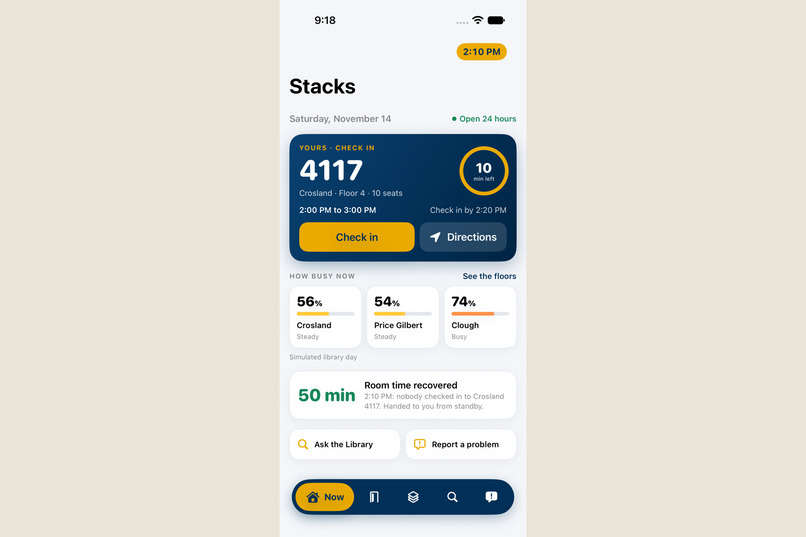
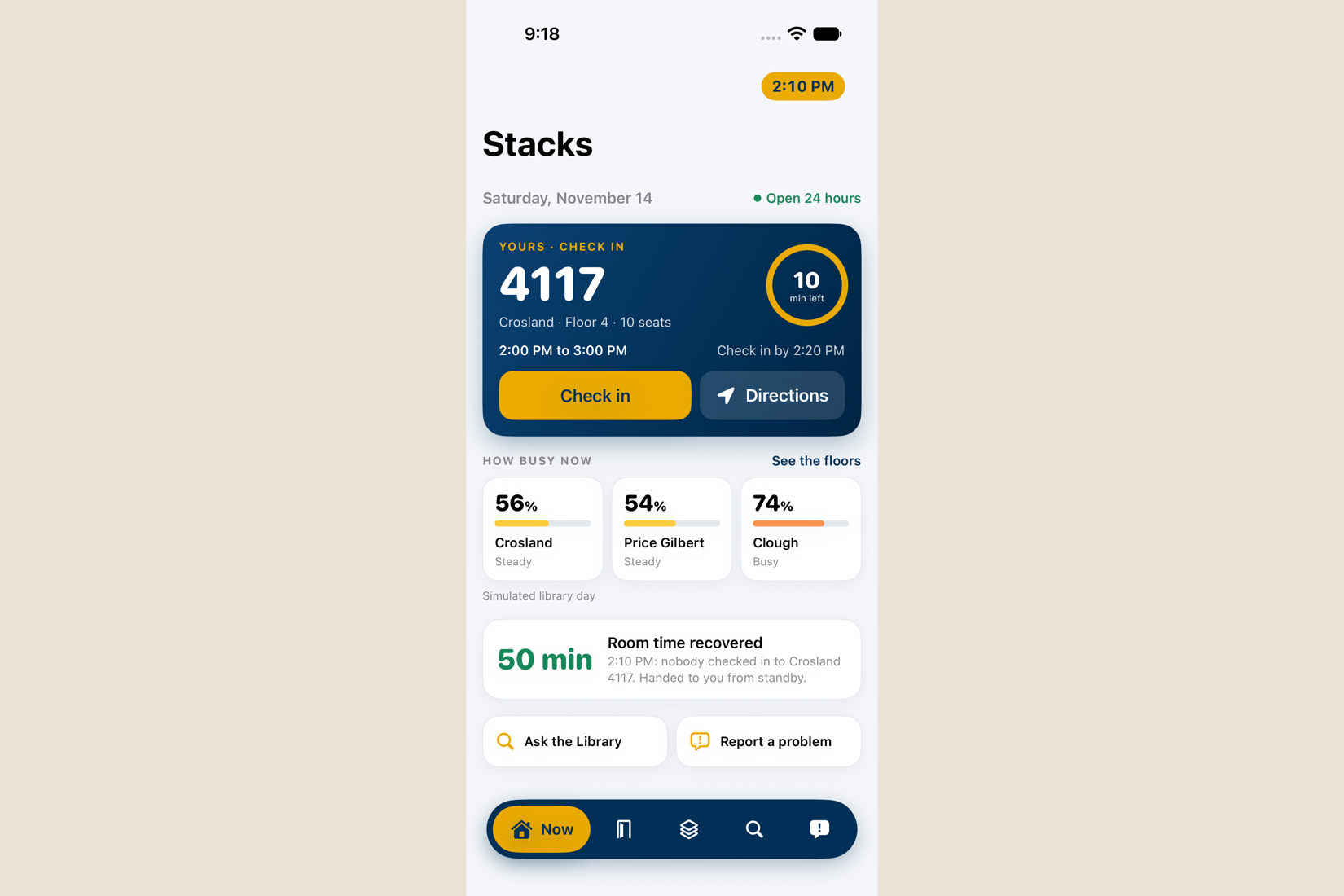
A no-show room handed to the next student on standby. 50 minutes of room time recovered.
Inspiration
Anyone who has walked through Crosland during finals knows the feeling: every study room shows as booked, yet half of them sit empty.
When we looked into it, we found the Library already has a good rule for this. If nobody checks in on the room's display within 10 minutes, the reservation is canceled and the room goes back on the calendar. What we could not find was any way for a student who is waiting to know that a room just came free. The room is released, but it is not handed to anyone. That missing step is what we built.
What it does
Stacks is an iPhone app for the Georgia Tech Library. It shows the Library's real study rooms, their real bookings and live busy levels.
- Now: your room, your check-in countdown, and how busy each building is.
- Rooms: every bookable room in Crosland, Price Gilbert and Clough. Book now or later, or join standby on a booked room. If that booking is dropped, the room is handed to you with a notification.
- Live: a 3D model of the three buildings, every floor colored by how busy it is.
- Find: ask anything in your own words ("record a podcast", "borrow a camera"). Apple Intelligence writes the answer on the phone from the Library's guides, rules, free rooms and busy levels, with each source one tap away.
- Report: scan a room's door tag and report a problem. If it is already reported, tap "Still here" instead of filing a duplicate.
- Live widget: a Lock Screen card and Dynamic Island that count down your room and let you check in or add time without opening the app.
Every hand-off is measured as room time recovered:
$$T_{\text{recovered}} = t_{\text{end}} - t_{\text{handoff}}$$
So a 1-hour booking dropped at 2:10 PM and handed to a standby student gives back 50 minutes that would otherwise sit empty.
How we built it
- iPhone app in Swift and SwiftUI. The 3D view is SceneKit, the widget is a Live Activity (ActivityKit + WidgetKit), door tag scanning uses VisionKit, and Find runs Apple's on-device Foundation Models.
- Rules package: the room and report rules live in a separate Swift package with no UI code, covered by unit tests.
- Data server in Node.js on Railway. It reads the Library's occupancy feed and room availability about once a minute, and falls back to a simulated library day if a source is down.
- Preview website in React and TypeScript that runs the same rules in a browser, so anyone without an iPhone can try the whole flow.
- End-to-end tests that run the full demo day in the iPhone simulator, the way a judge would use it.
Challenges we ran into
The biggest one was learning partway through that the Library already cancels no-shows. Our first idea was to build that rule, so we had to step back and ask what was actually missing: the hand-off to the next student.
We also have no official access to the Library's booking system, so we read its public pages for the real rooms and bookings, and bookings made in Stacks are simulated. We tried to say that clearly everywhere it shows up.
Keeping two versions of the same rules (Swift for the app, TypeScript for the website) in sync was its own challenge, which we handled by testing both against the same seed data.
What we learned
Check what already exists before you build. The most useful thing we did all weekend was read the Library's room policy, because it changed what we built.
We also learned to design for privacy from the start: Stacks stores no names, GT IDs, borrowing history or location, which matters because Georgia law (O.C.G.A. 24-12-30) makes library user records confidential.
What's next
A pilot with the Library and OIT: a read-only key to the booking system and one floor of Crosland Tower for a semester, measuring minutes of room time recovered. Then the rest of the Library, Clough Commons, phone check-in, and the Student Center rooms.
