-
-
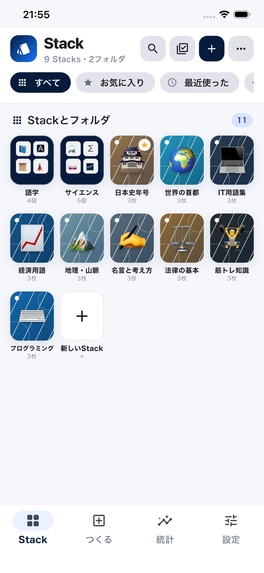
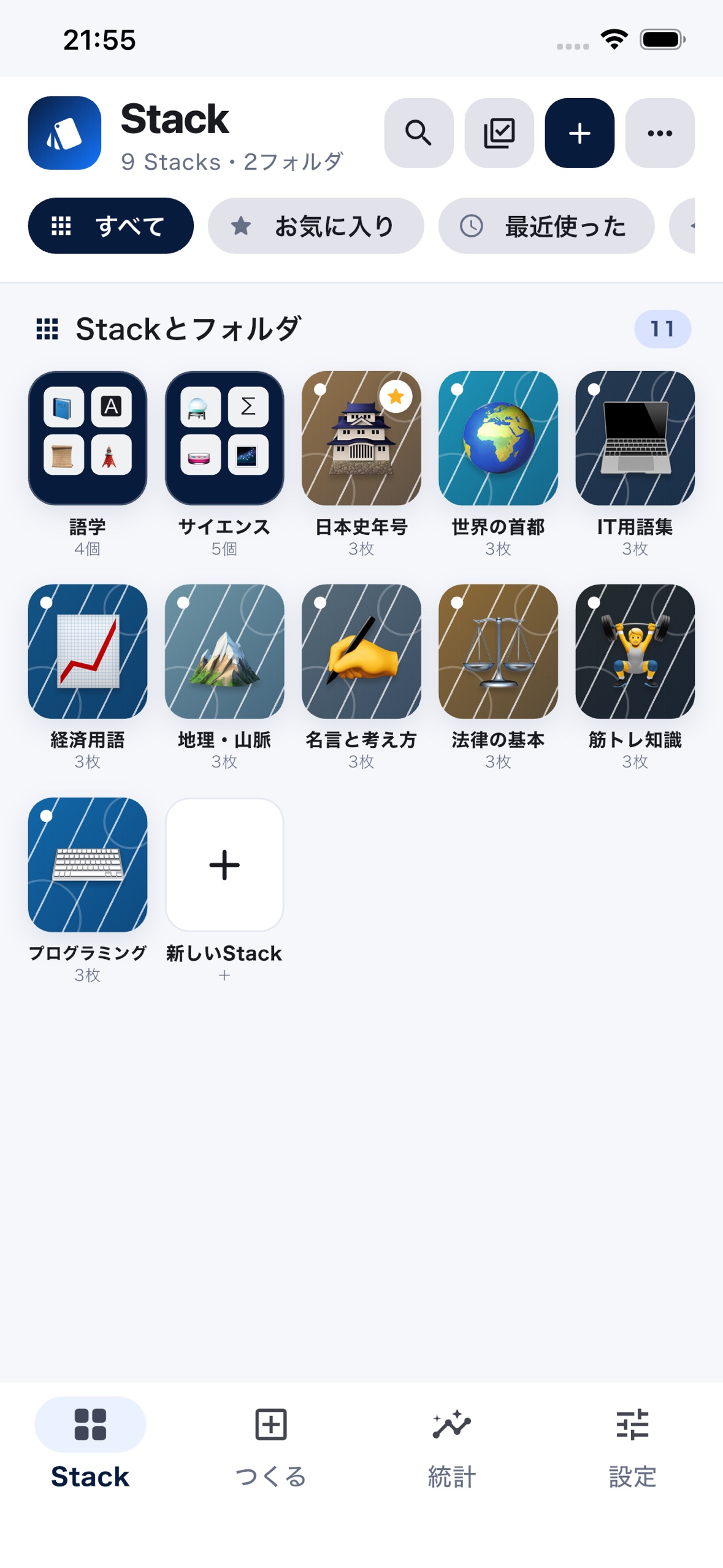
Japanese stack library showing 9 stacks and 2 folders. Browse all, favorite, or recent sets, open study categories, or create a new stack.
-

UI: 9 stacks/2 folders; All/Favorites/Recent; Stack/Create/Stats/Settings; categories: language, science, Japan eras, world capitals.

Inspiration
A fixed flashcard template can be limiting when a useful idea needs a sketch, a note, or a visual example. StackFlipper treats a study card as a small canvas that can hold the way someone thinks about a subject.
What it does
Create visual cards called Flips with text, stickers, shapes, photos, and freehand drawing. Organize cards into Stacks, review with quick swipes, and use focused modes for random or difficult cards. Learning statistics help show how study habits build over time. Flips and Stacks can also be shared with nearby friends without an internet connection.
How we built it
StackFlipper is built with Flutter and uses RevenueCat for in-app purchases. It is local-first: cards stay on the device, with password-protected backup and restore, while nearby sharing uses QR verification and encrypted transfer.
Challenges we ran into
The product needs to support expressive card creation while keeping review fast and focused. Local-first storage and offline sharing also need to stay understandable and reliable without requiring an account or cloud sync.
Accomplishments that we're proud of
StackFlipper combines a freeform visual editor, swipe-based review, study statistics, and nearby offline sharing in one learning tool.
What we learned
People can organize knowledge in more than plain text; giving each card room for a sketch or visual example makes the study material more personal.
What's next for StackFlipper: Visual Flashcards
Continue refining the create-review-share loop while keeping cards easy to carry between devices and study sessions.
Shipaton Awards
Award categories pursued: HAMM Award, RevenueCat Design Award, and RevenueCat Peace Prize.
Built With
- flutter
- revenuecat

Log in or sign up for Devpost to join the conversation.