
Inspiration
Most IT professionals I know use AI tools every day, and almost none of them could explain what happens between the prompt and the answer. The courses on offer don't close that gap. Either they're a quick tour of prompt tips, or they open with linear algebra and lose the room by page three.
I wanted the course in between: one that takes someone from "I use AI tools" to "I understand how they work, and I can build, test, secure and operate a system on top of one." It had to fit a commute, which meant making it something you could listen to. And it had to end. A finite course you can finish, not an endless feed you pay for every month.
What it does
Stackflight is a course on how large language models actually work, for iPhone and iPad:
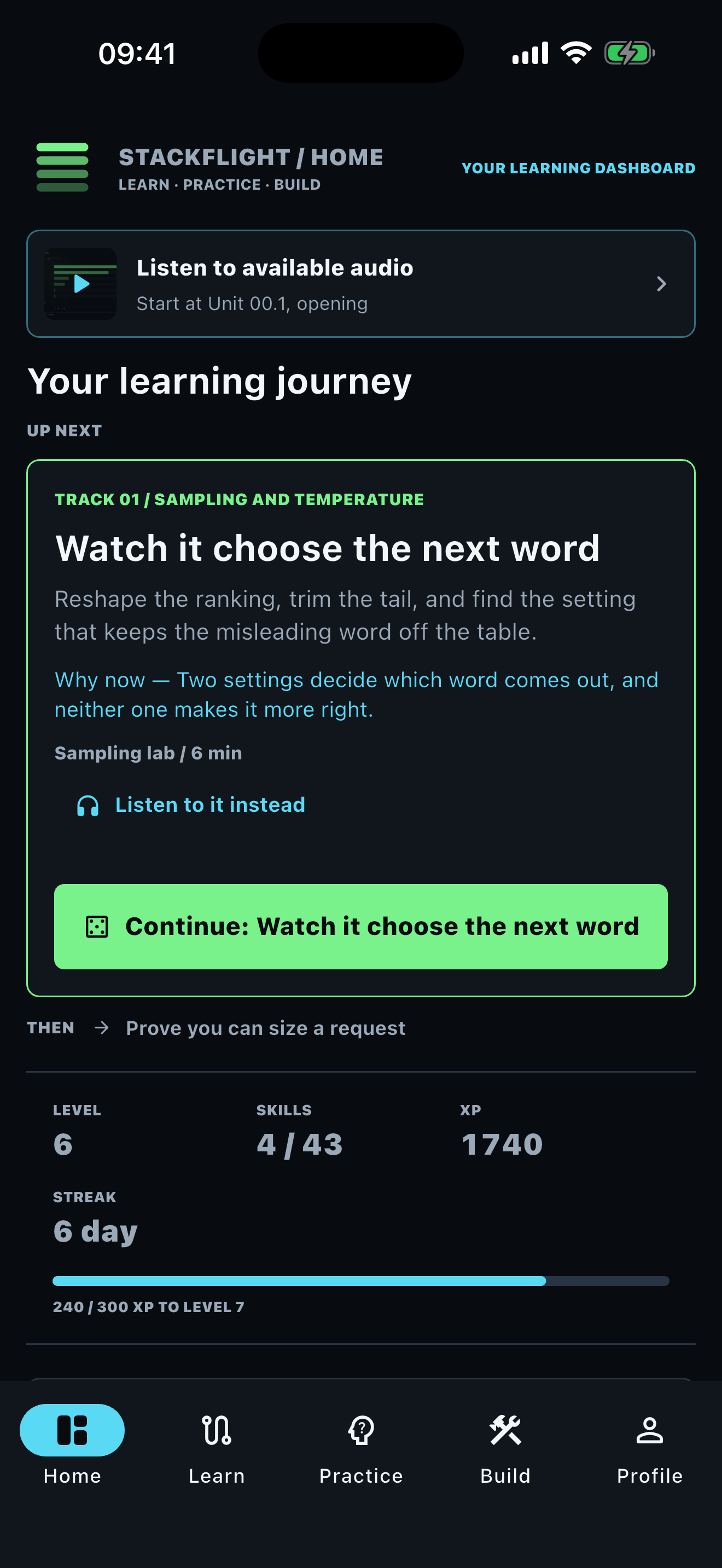
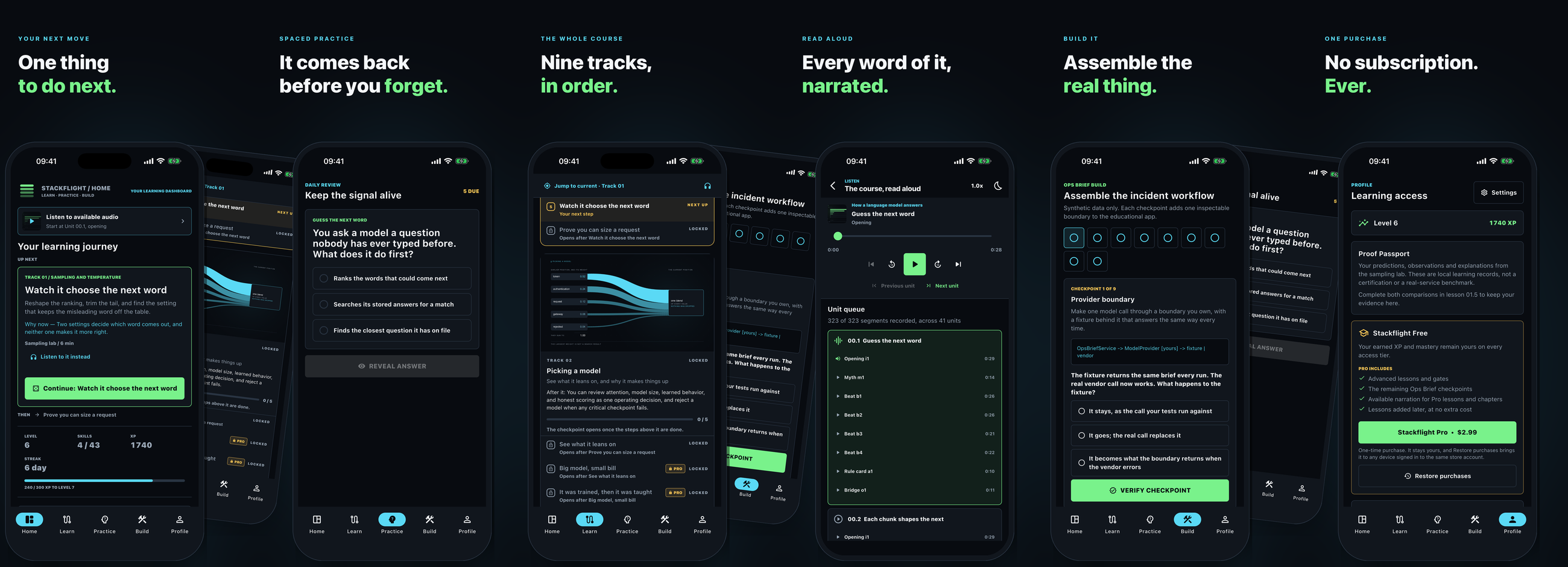
- Nine tracks, fifty units: from how a model answers and what tokens cost, through picking a model, answers you can trust, coding with an assistant, retrieval and tools, agents and their limits, and local models, to shipping and operating one.
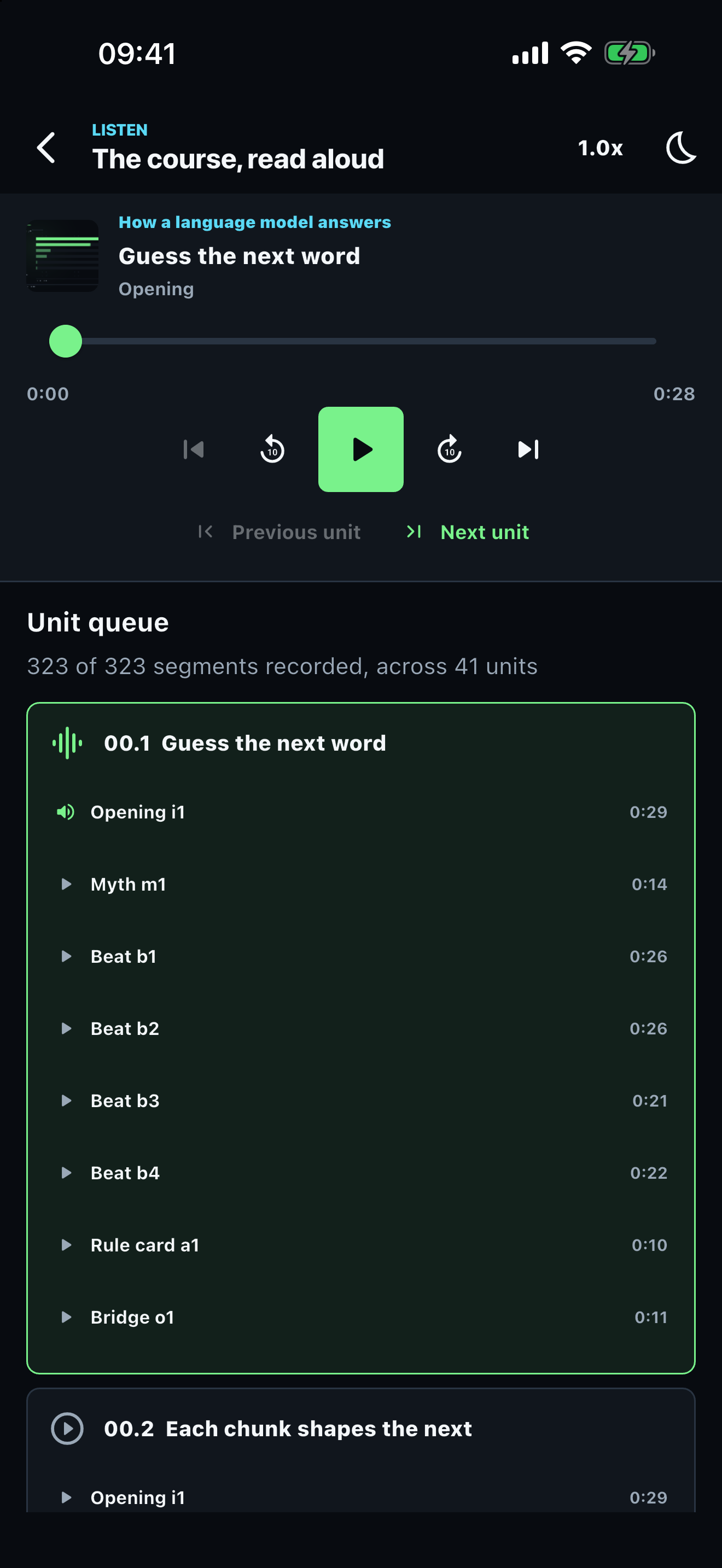
- Three and a half hours of narration. Every unit can be read or listened to, with lock-screen controls and a mini player, so the course works as an audiobook.
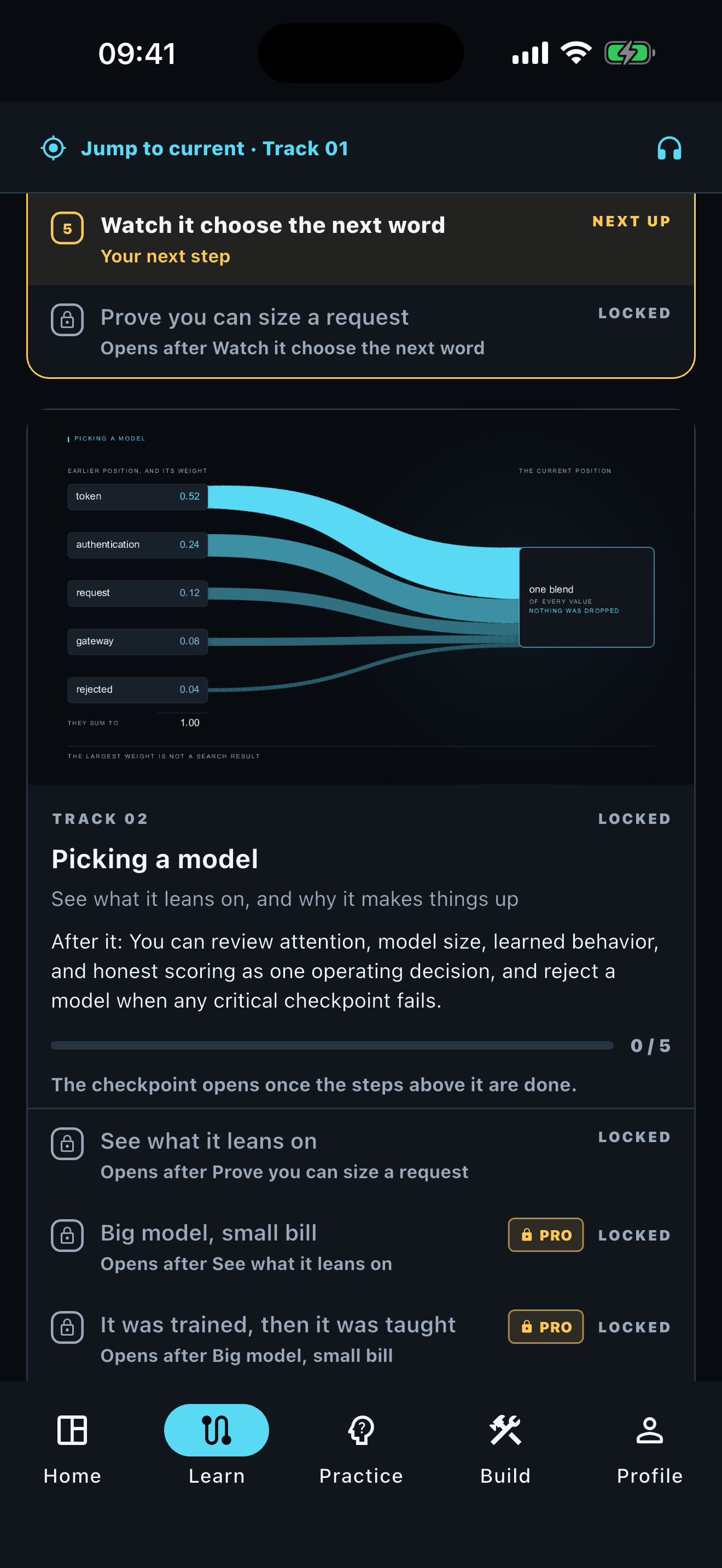
- Hands-on labs. You don't just read about temperature, you drag it and watch the next-word ranking reshape:
$$ P(w_i) = \frac{e^{z_i / T}}{\sum_j e^{z_j / T}} $$
At low \( T \) the top word takes almost everything. At high \( T \) the misleading word gets a real chance of being picked. The lab has you find the setting that keeps it off the table.
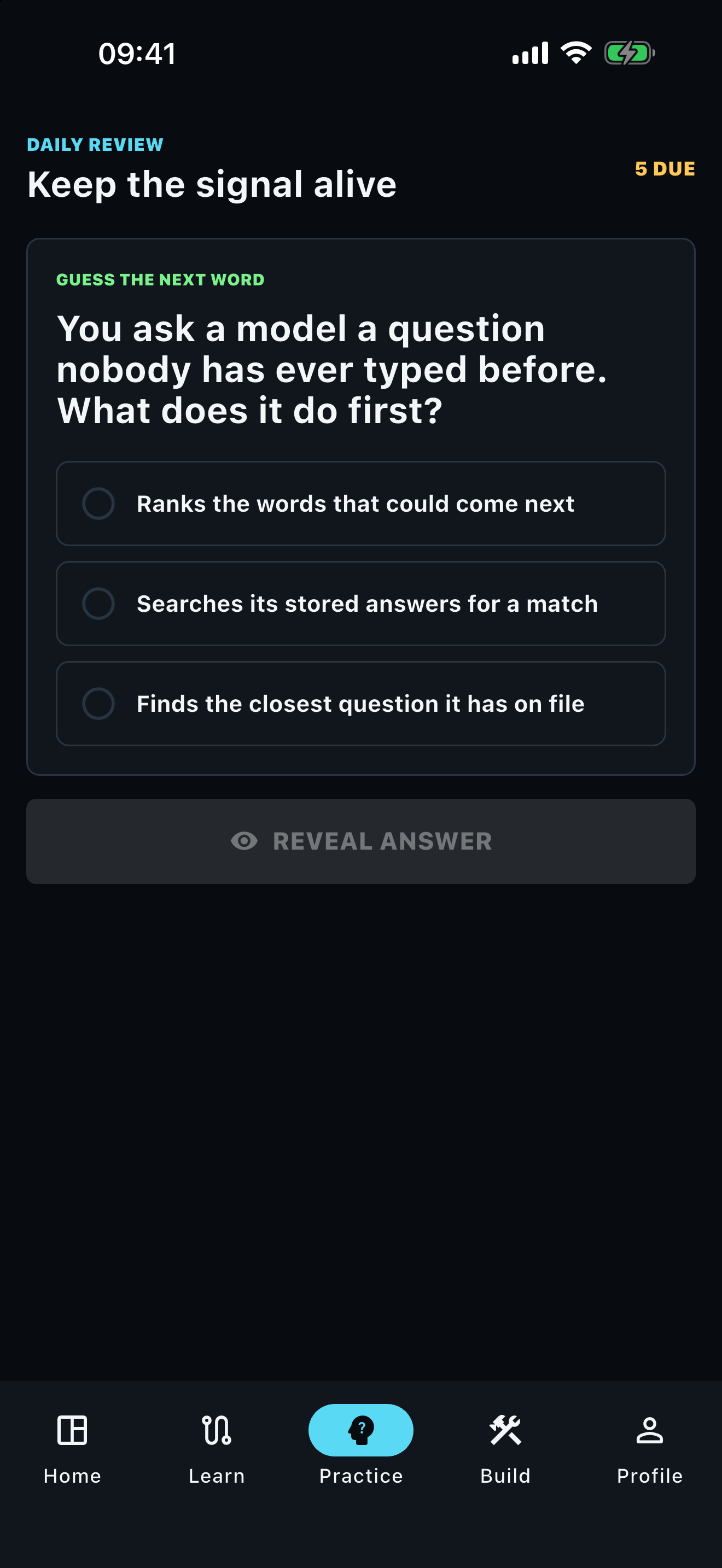
- Checks, spaced practice, XP, streaks and mastery. They all run on the device.
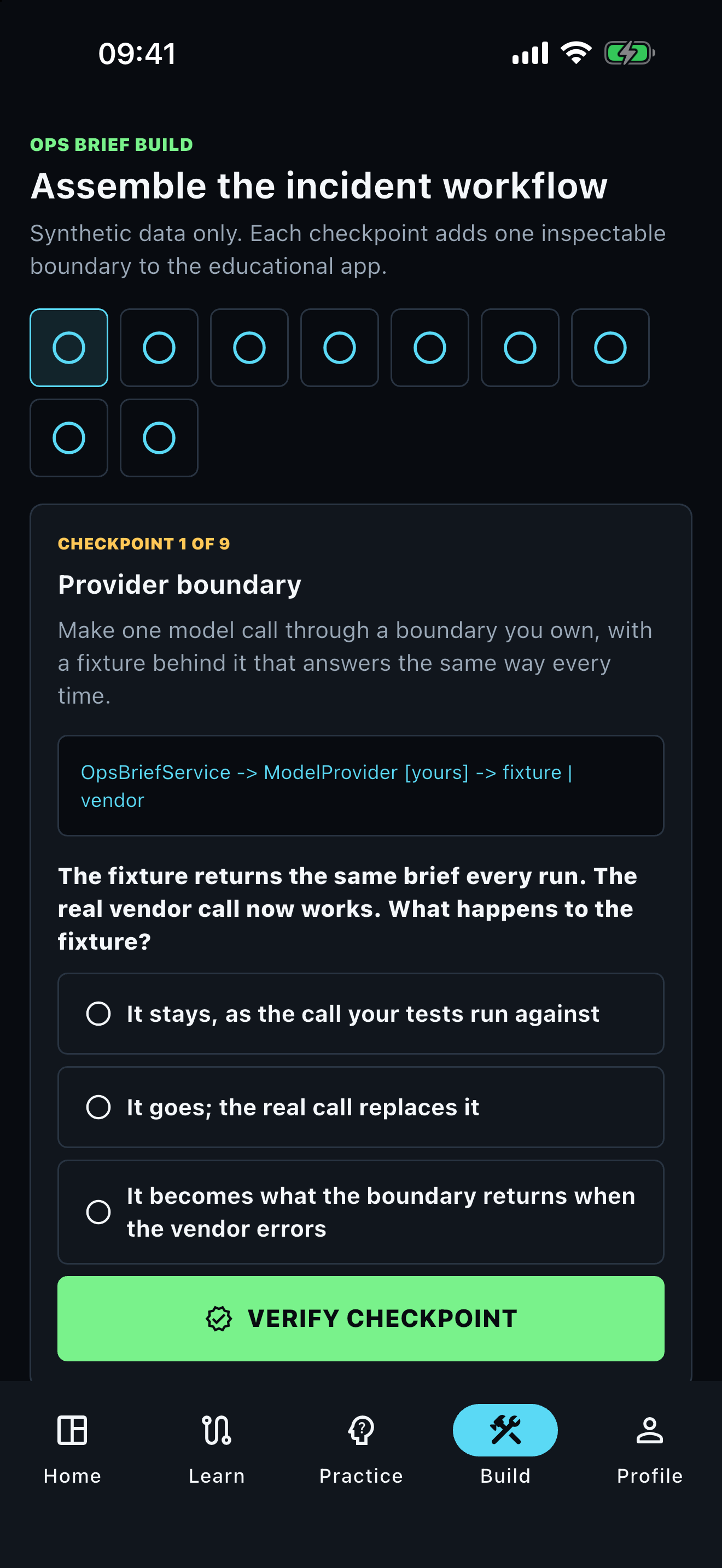
- Ops Brief, a guided build that applies the whole curriculum to one realistic project.
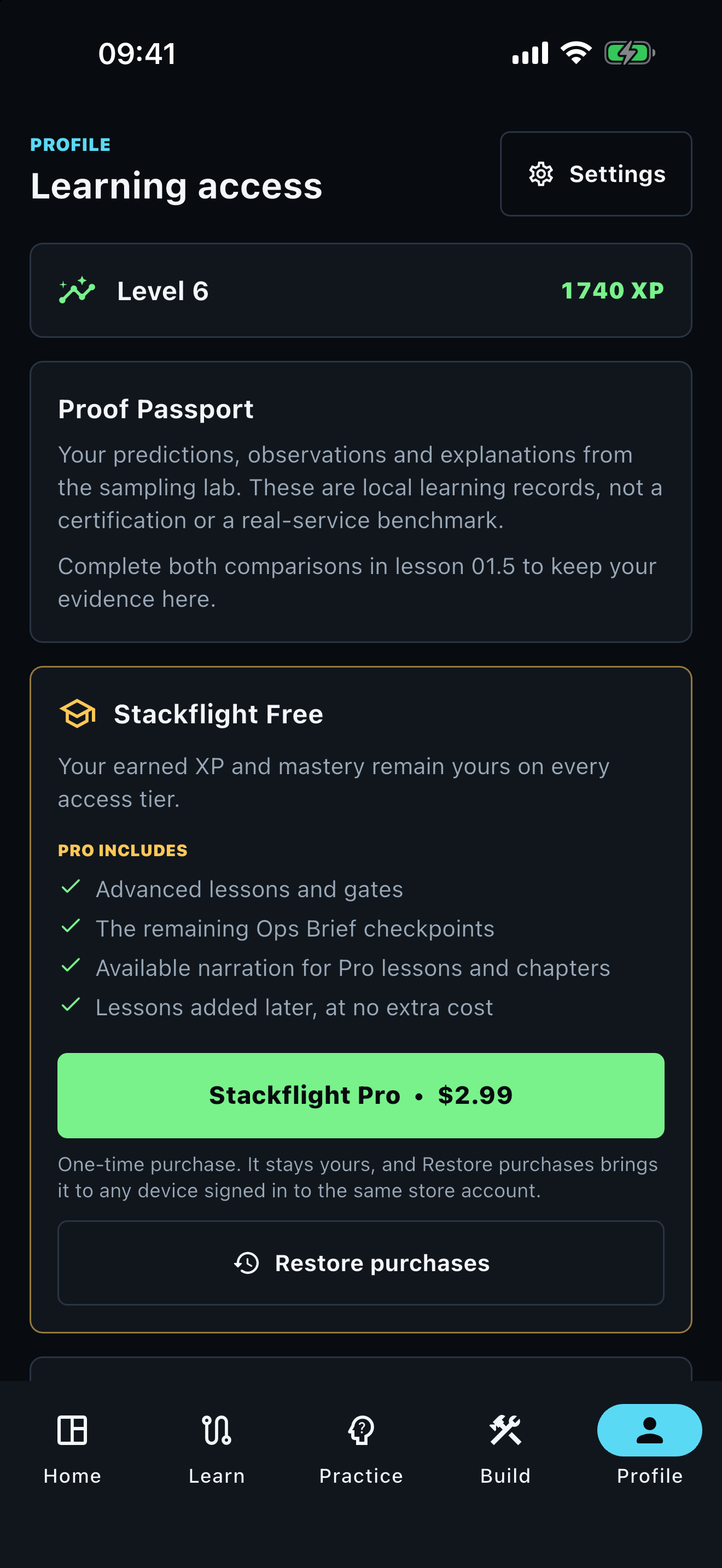
The foundation, all of Track 01 and a taster of later tracks are free forever. Everything else unlocks with one purchase, no subscription. There's no account, and your progress never leaves the phone. Crash reporting is opt-in.
How I built it
- Flutter for iOS and iPadOS (Android is next), with
just_audioandaudio_servicefor background playback. - RevenueCat for the single non-consumable
proentitlement. Lesson code never sees a product ID or a price. It only asks anAccessGate, and earned content can never be locked again at any tier. - The content is written as data: Markdown units with YAML front matter that declare the vocabulary they introduce, their access tier, their lab and their checks.
- Narration voiced with ElevenLabs. It's 848 segments in one voice, and each one records the SHA-256 hash of the text it spoke. If a script is edited after it was voiced, the app flags that clip as stale instead of playing the old words.
- Content CI that treats the curriculum like code. A term ledger fails the build if a unit uses a word that only a later unit defines. A Flesch reading-ease floor of 60 keeps the prose readable. An assessment-integrity rule stops the longest option from quietly being the right answer.
- Firebase Hosting for the English and German landing site. GitHub Actions runs analysis, the full test suite and a build on every push.
It went from the first commit to the App Store in about a month, across 377 commits and 37 builds.
Challenges
- Plain language is harder than technical language. The first drafts scored around Flesch 23. Getting to 60 without dumbing anything down meant rewriting sentence by sentence, turning nouns back into verbs and cutting every sentence that neither named a concrete thing nor took a position.
- Keeping text and audio in sync. With text and narration both editable, drift was inevitable. Hashing the spoken text turned "I think that clip is current" into something the app checks.
- Shipping the first in-app purchase. The first IAP has to go to App Review alongside the app version, and it took a rejected build and a fresh submission to get the pairing right.
- Staying honest about the monetization. It had to be a real paywall that never re-locks something you've earned, never charges for XP or streaks, and never hides what's behind it.
What I learned
- Explaining a system in plain words is the fastest way to find out you don't understand it yet.
- Content deserves the same rigor as code: contracts, CI, and tests that fail loudly.
- One-time pricing is a legitimate RevenueCat model. A lifetime entitlement kept the business model as simple as the promise: buy it once and it's yours.
What's next
The Android release, a hands-on rebuild of the Ops Brief, and measuring real completion times so the minute estimates on each unit are earned rather than guessed.
Built With
- dart
- flutter

Log in or sign up for Devpost to join the conversation.