-
-
-
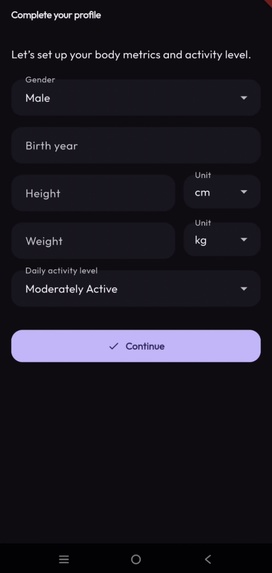
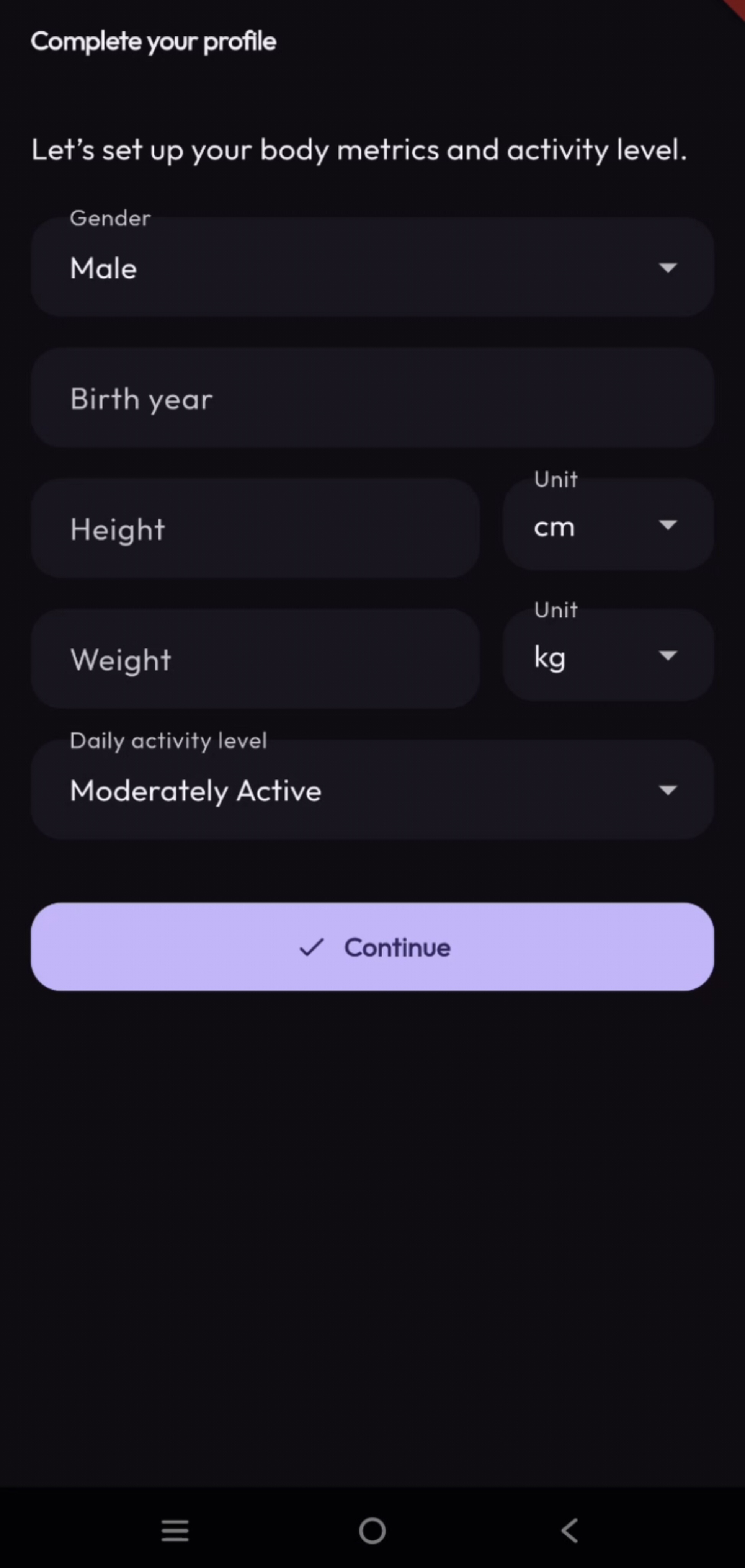
User Onboarding & Body Metrics
-
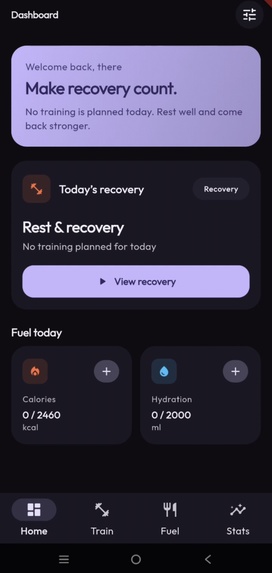
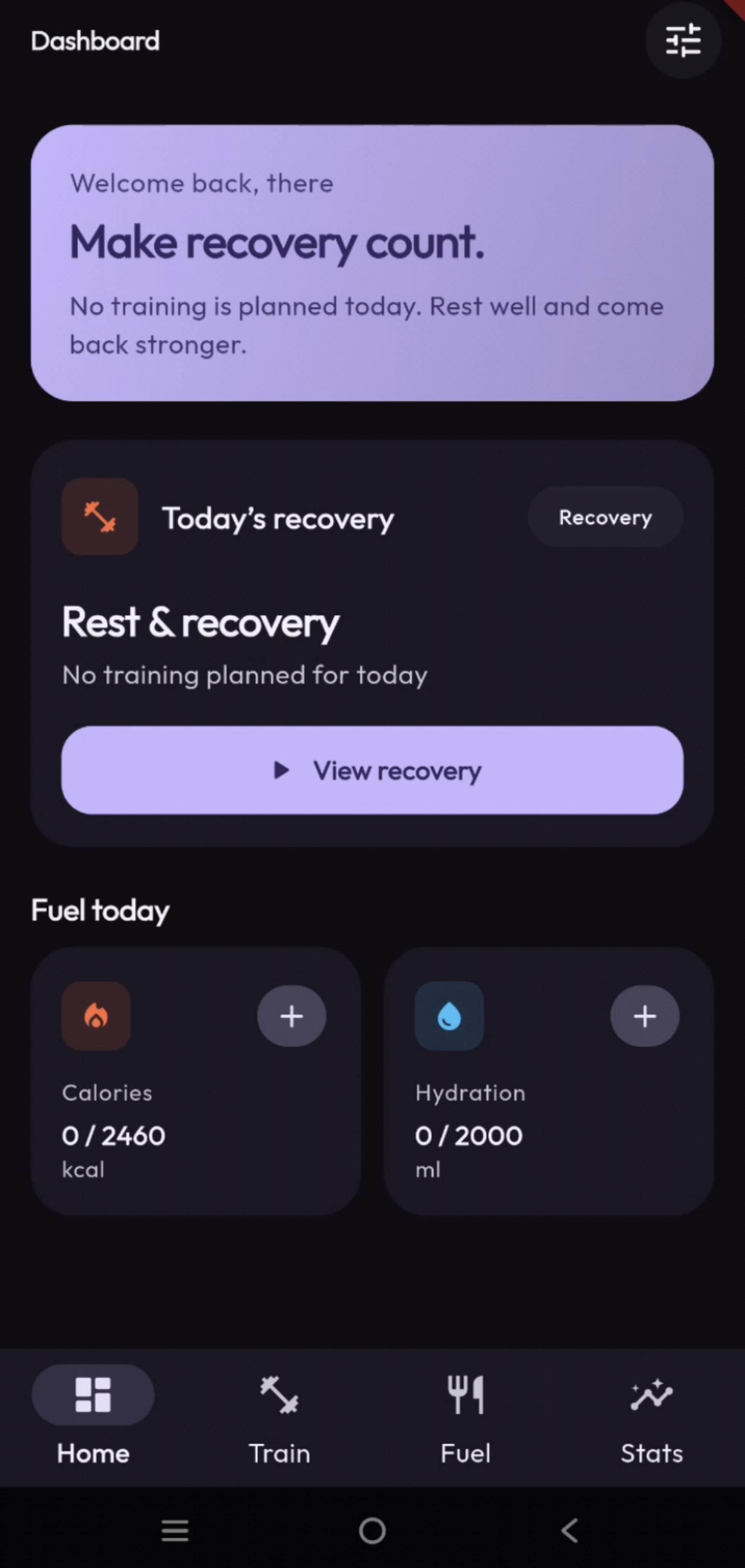
Main Dashboard & Daily Overview
-
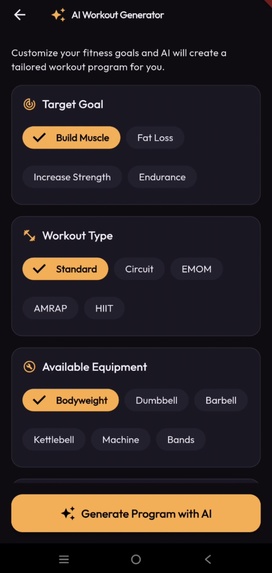
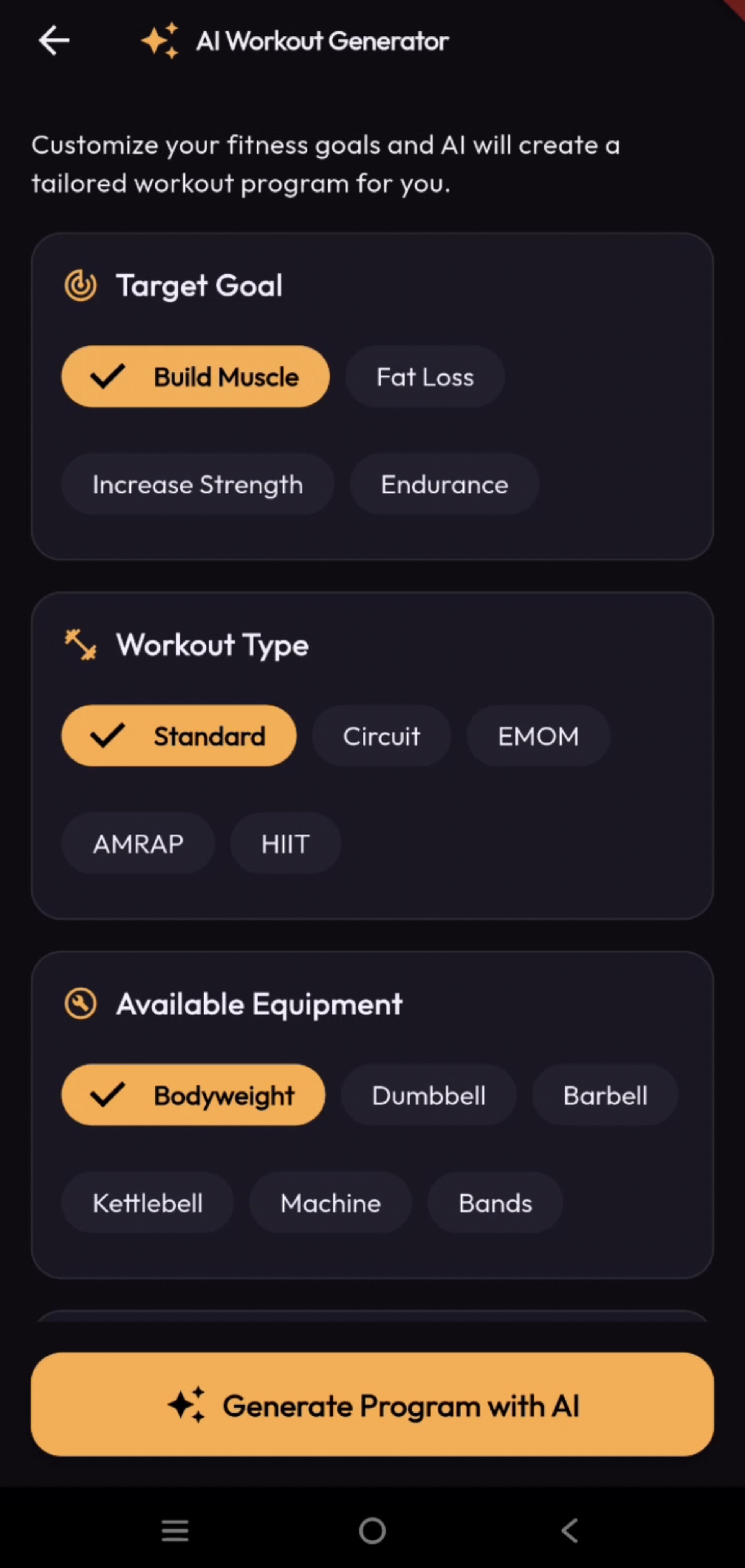
AI workout generator
-
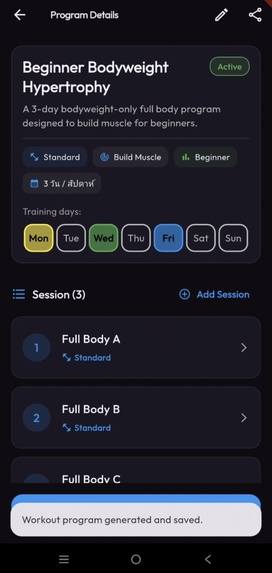
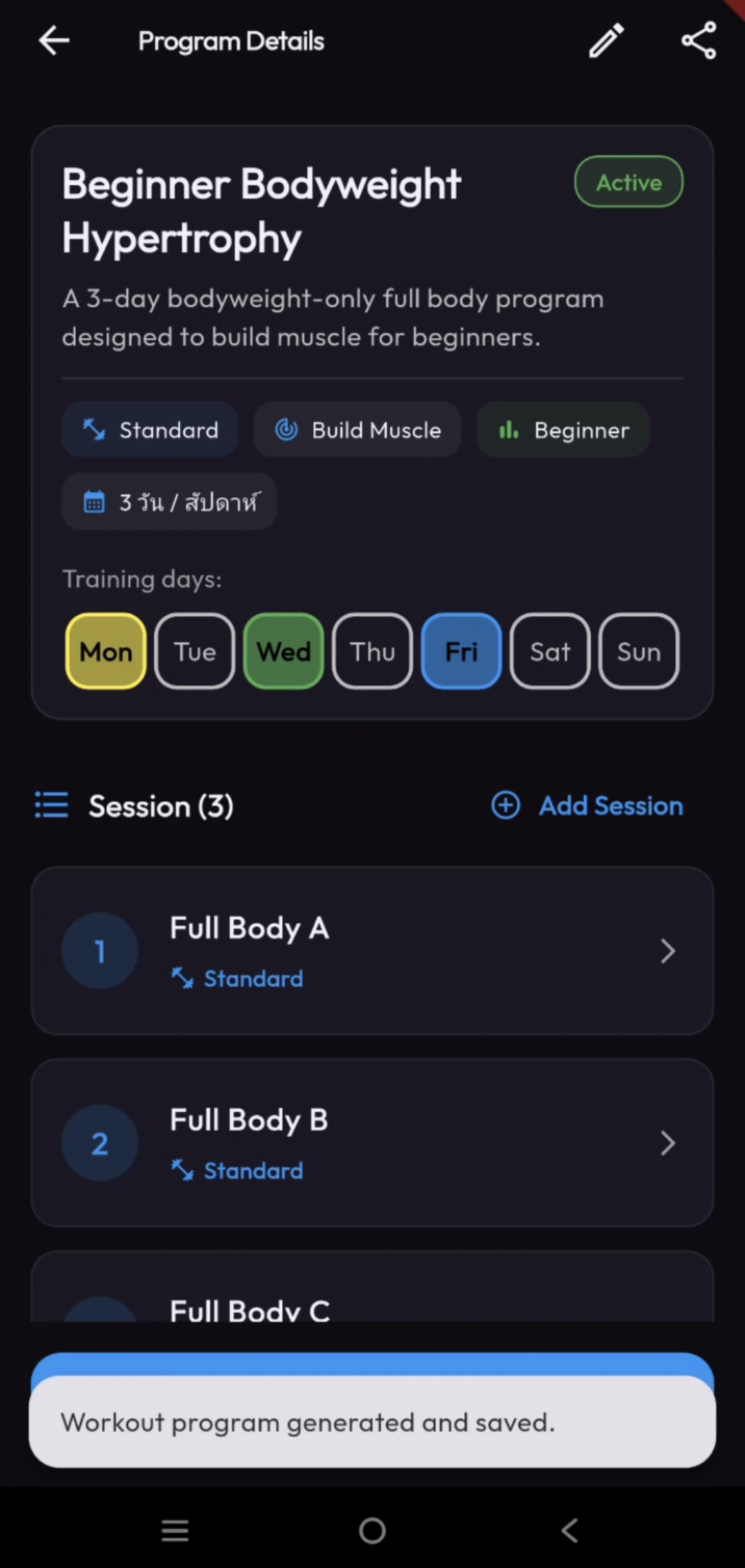
Workout program generated
-
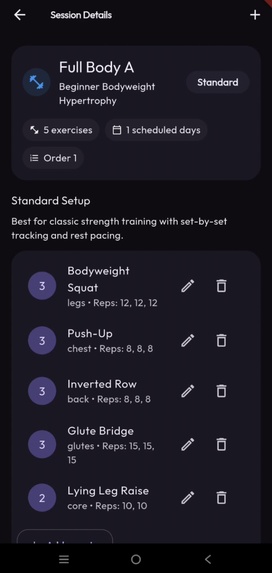
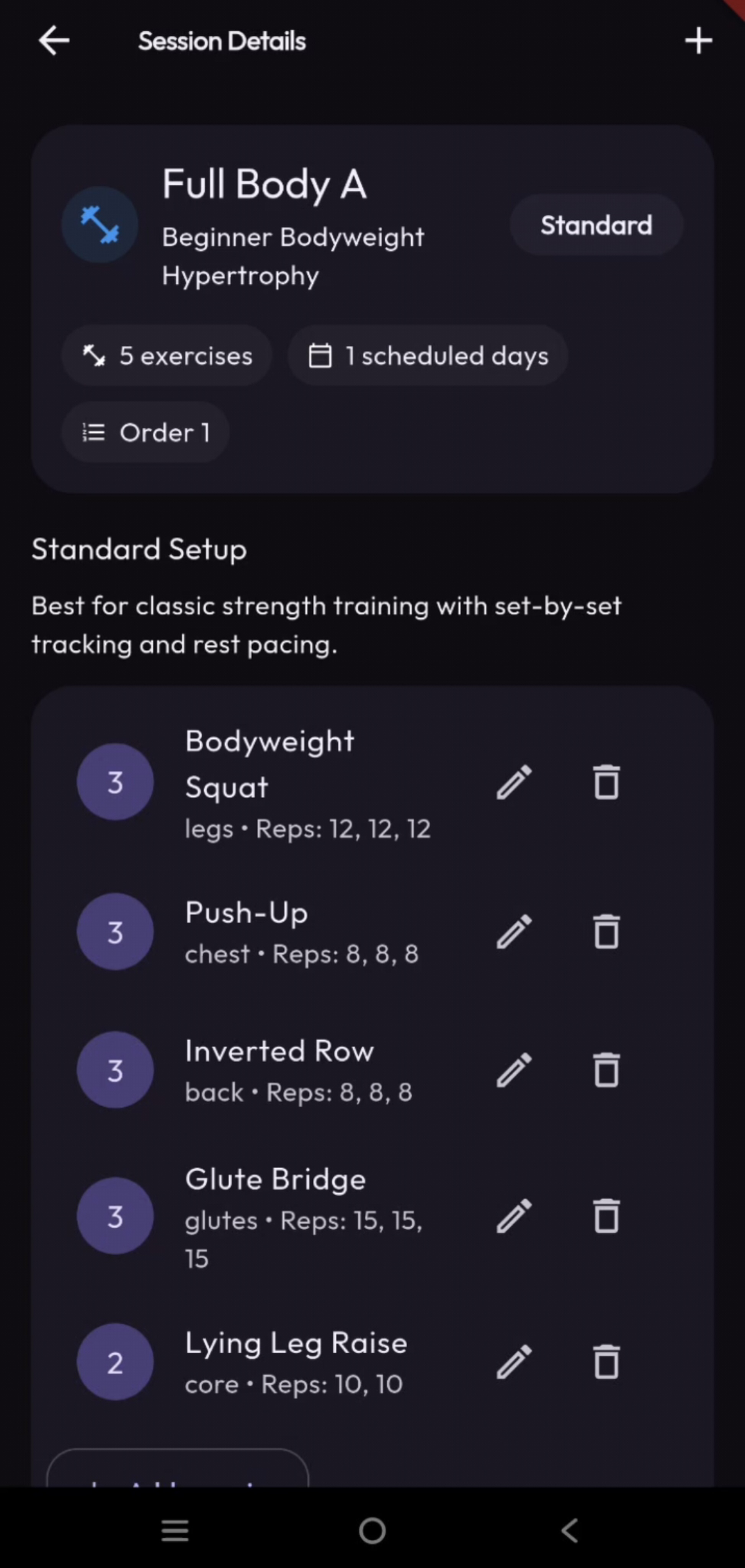
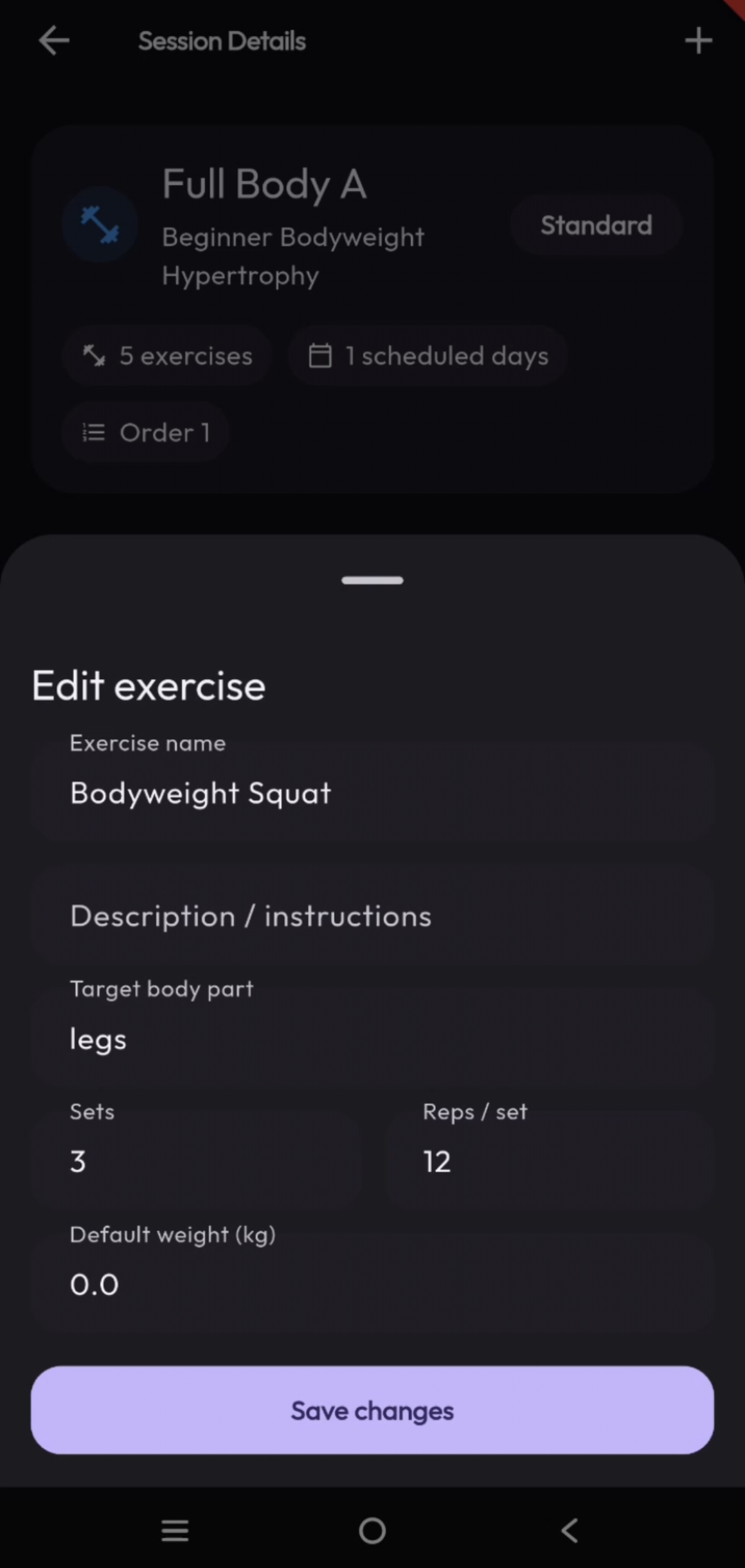
Session Detail
-
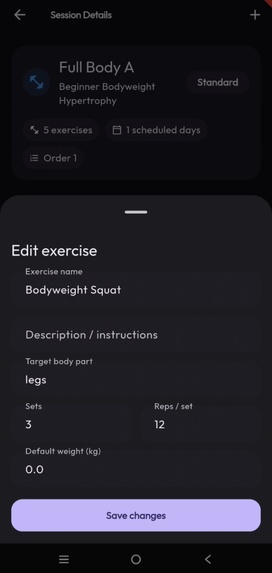
Exercise detail
-
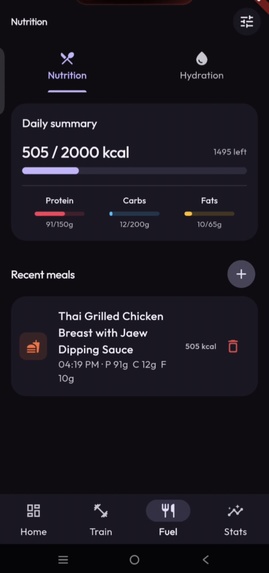
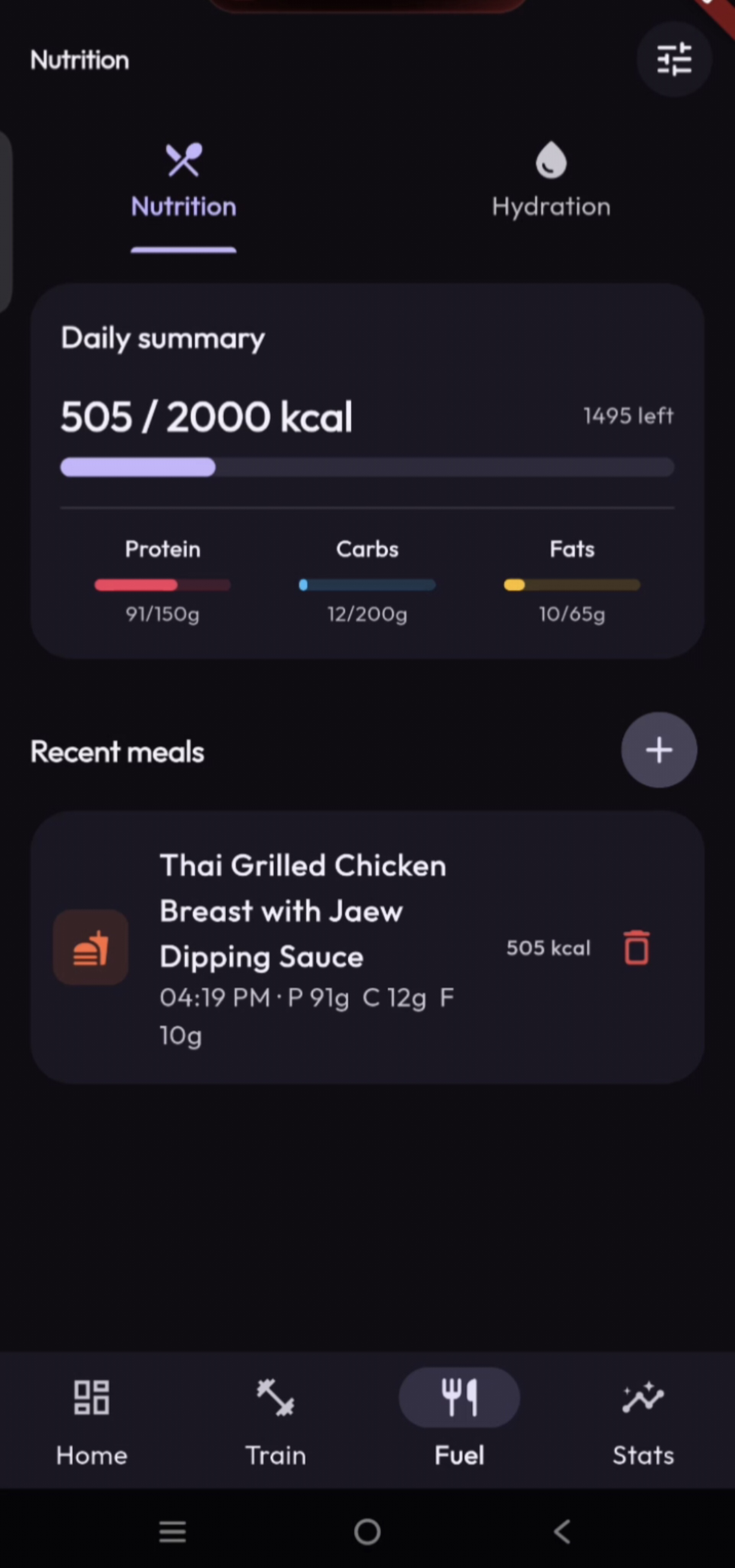
Nutrition & Hydration Tracker
-
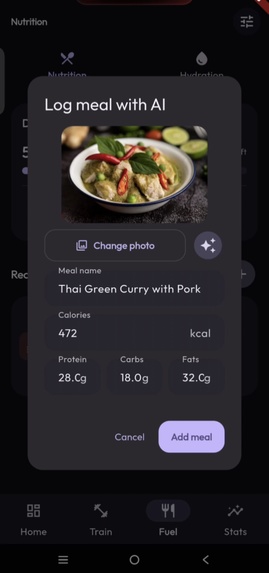
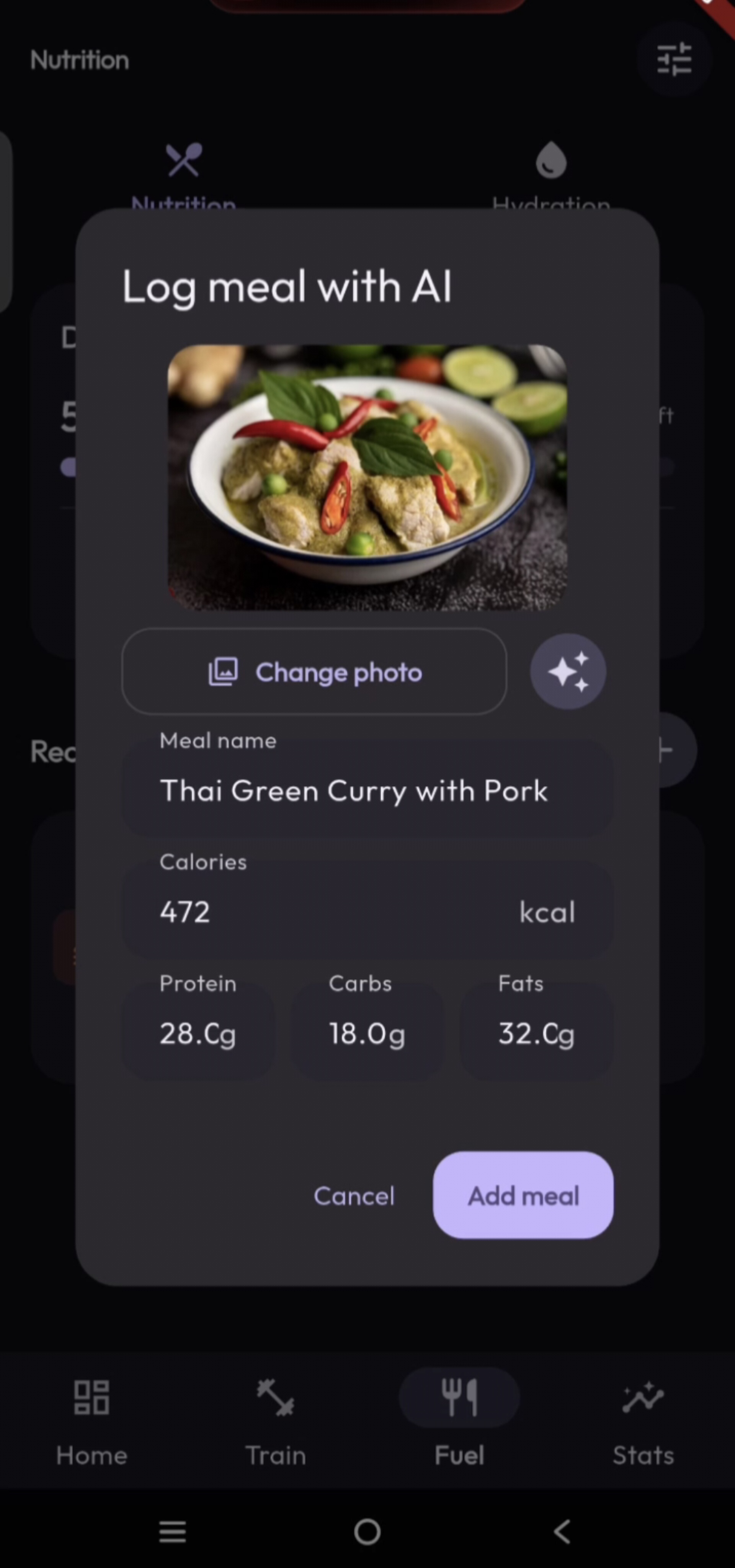
Smart Meal Recognition
-
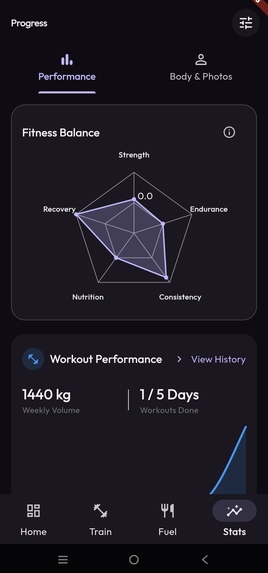
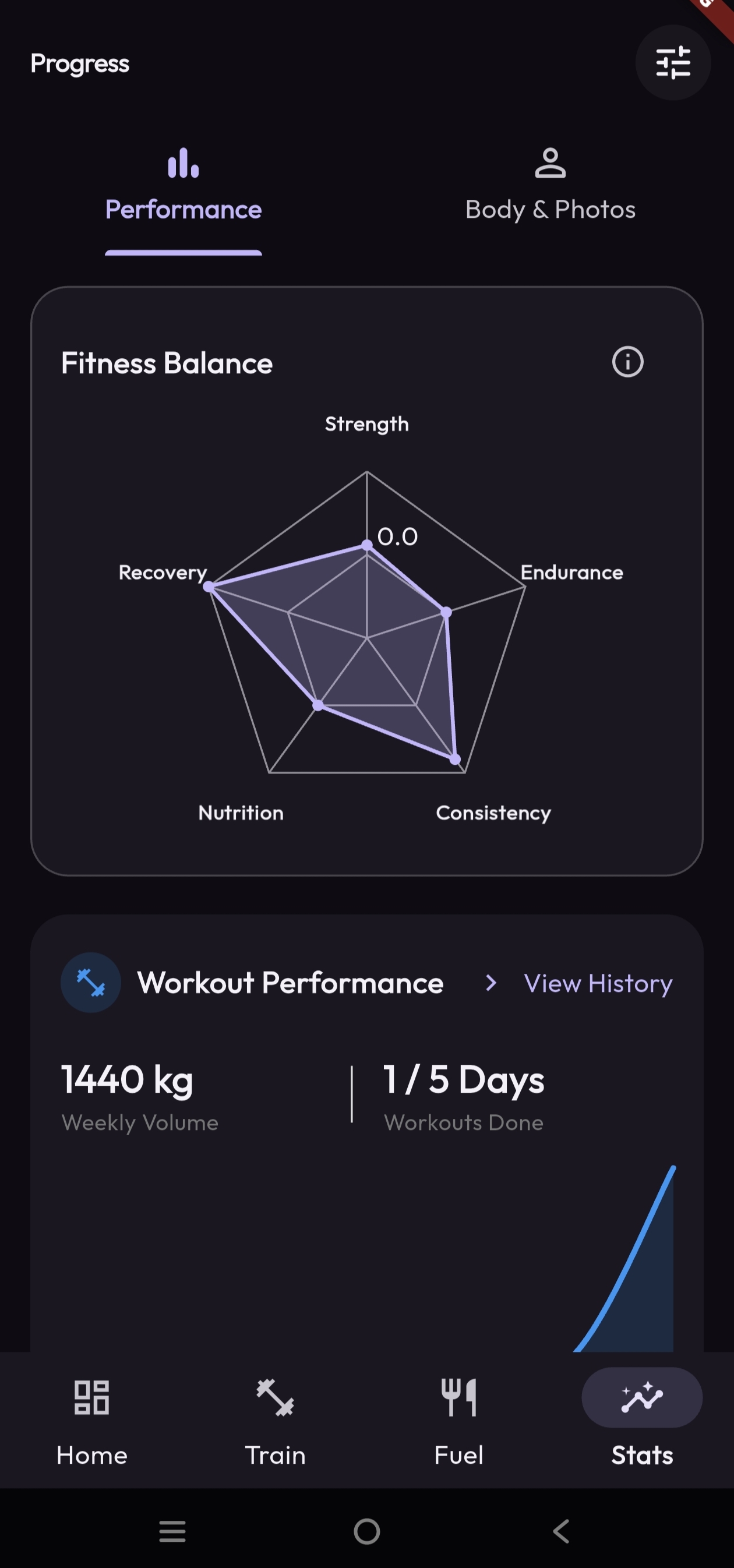
Performance Analytics & Radar Chart
Inspiration
- The motivation stems from the common struggles with workout discipline, the difficulty of visualizing overall physical performance, and the challenge of designing customized workout programs that flexibly adapt to individual limitations, such as available equipment.
- Secondary focus areas include tracking daily water and nutrient consumption.
What it does
- Analyzes daily nutritional requirements based on the user's biological data and goals.
- Creates a workout logging system to track physical routines.
- Analyzes physical performance based on user logs and biological data.
- Integrates AI to generate and dynamically update personalized workout routines. -Analyzes nutrition from food images using AI capabilities.
How we built it
- Frontend & Cross-Platform: Developed using Flutter for a high-performance, smooth multi-platform experience.
- Backend & AI Integration: Powered by Firebase for backend services and integrated with Google Gemini AI to process automated workout plans and image-based nutrition analysis.
- Data Visualization: Utilized charting libraries like fl_chart to render interactive graphs and deep performance analytics dashboards.
Challenges we ran into
- Designing a flexible data architecture for workout programs that seamlessly accommodates AI-generated routine structures and real-time user logging.
- Managing stability and precision in Prompt Engineering with Gemini AI to reliably parse unstructured AI outputs into structured data consumable by the application.
Accomplishments that we're proud of
- Successfully applying Google Gemini AI into the health and fitness domain to create a practical, working feature set.
- Building a feature-complete cross-platform fitness application in Flutter—featuring workout management, analytical dashboards, and nutrition tracking—within a constrained timeframe.
What we learned
- The critical importance of clean UX/UI design in health applications, ensuring the interface remains intuitive and frictionless despite complex data processing under the hood.
- Advanced state management techniques and best practices for integrating third-party SDKs and AI APIs stably.
What's next for Stacked Strength
- Expanding AI capabilities to provide real-time form correction or weight recommendation suggestions during active workout sessions.
- Enhancing deeper data integration with health wearables for even more seamless and accurate health analysis.

Log in or sign up for Devpost to join the conversation.