Inspiration
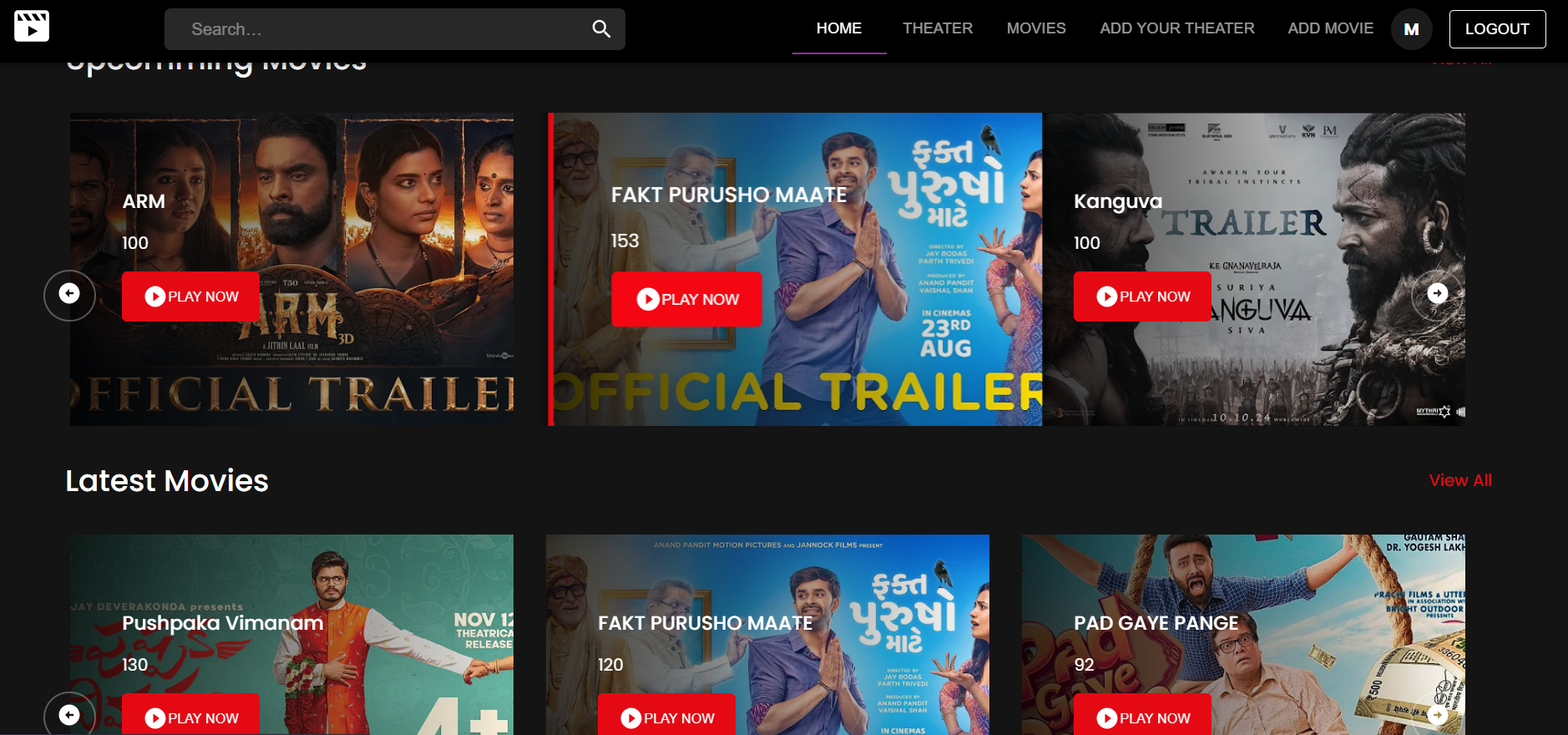
The idea for this project was inspired by the challenges faced by movie enthusiasts and theater managers in organizing and managing movie schedules, bookings, and user experiences. We wanted to create a user-friendly platform that simplifies the process of finding movies, reserving tickets, and managing theaters efficiently.
What We Learned
Throughout this project, we learned a lot about full-stack development, including:
Implementing secure user authentication and authorization with JWT. Using React for creating dynamic, responsive user interfaces. Managing complex relationships in MongoDB, such as movie-theater-user mappings. Writing efficient backend APIs for movie, theater, and reservation management. Optimizing performance and maintaining code modularity for scalability. How We Built It
Frontend:
We used React with Vite for fast development and responsive design, ensuring seamless navigation and usability. Tailwind CSS was employed for styling, providing a modern and clean look. Backend: Built using Node.js and Express.js, the backend handles authentication, movie management, and reservations. MongoDB, with the Mongoose library, was used for data storage and schema management. Features Implemented: User registration, login, and admin roles. Theater management for admins to add movies and control schedules. Real-time ticket booking with validation and conflict resolution. Responsive design for accessibility across devices. Hosting: The project is hosted on [Platform Name] to make it easily accessible to users. Challenges We Faced Dynamic Time Integration: Allowing admins to set custom movie times dynamically required significant adjustments to both the database schema and frontend logic. Handling Large Data: Managing relationships between users, movies, and theaters in MongoDB was complex, especially while ensuring performance. Responsive Design Issues: Ensuring that all pages, especially movie cards and reservation pages, looked great on all screen sizes was a challenging task. Deployment: Compressing the project for submission while keeping it functional was a tricky process, as the initial project size exceeded the limit.
