-
-
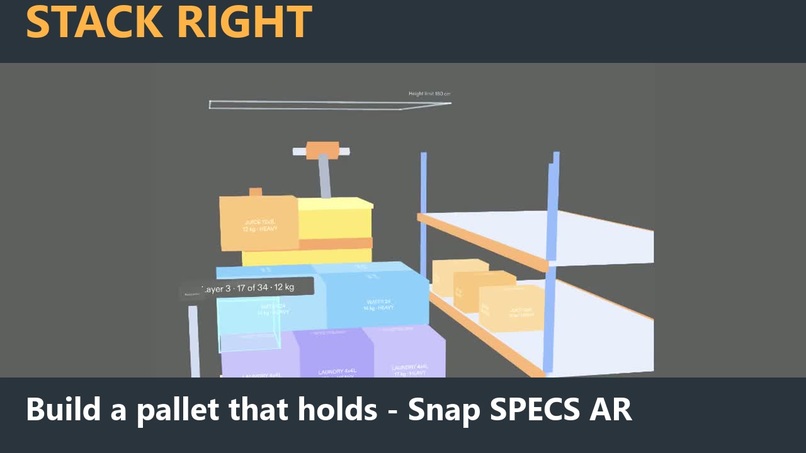
Stack Right: a pallet-building trainer for new warehouse pickers, on Snap SPECS.
-
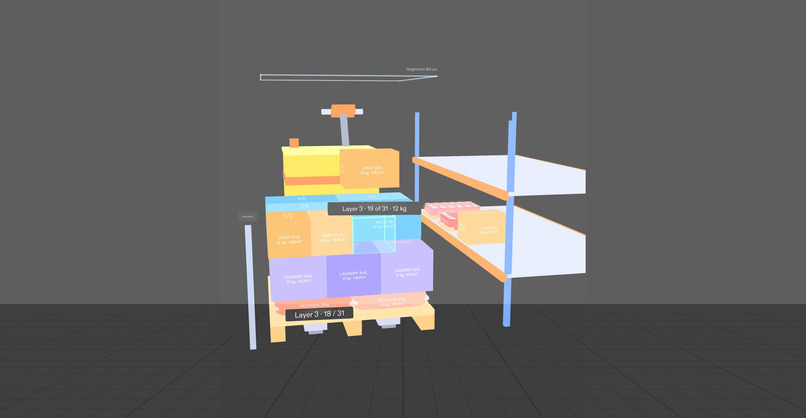
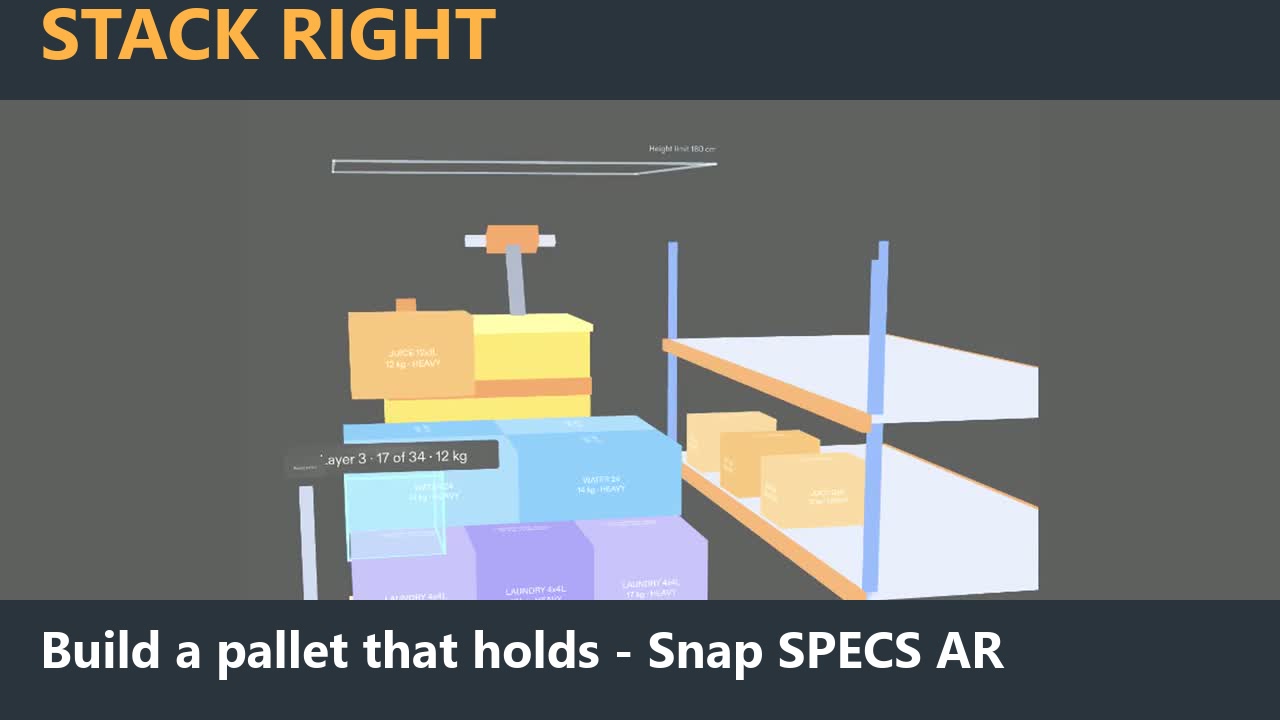
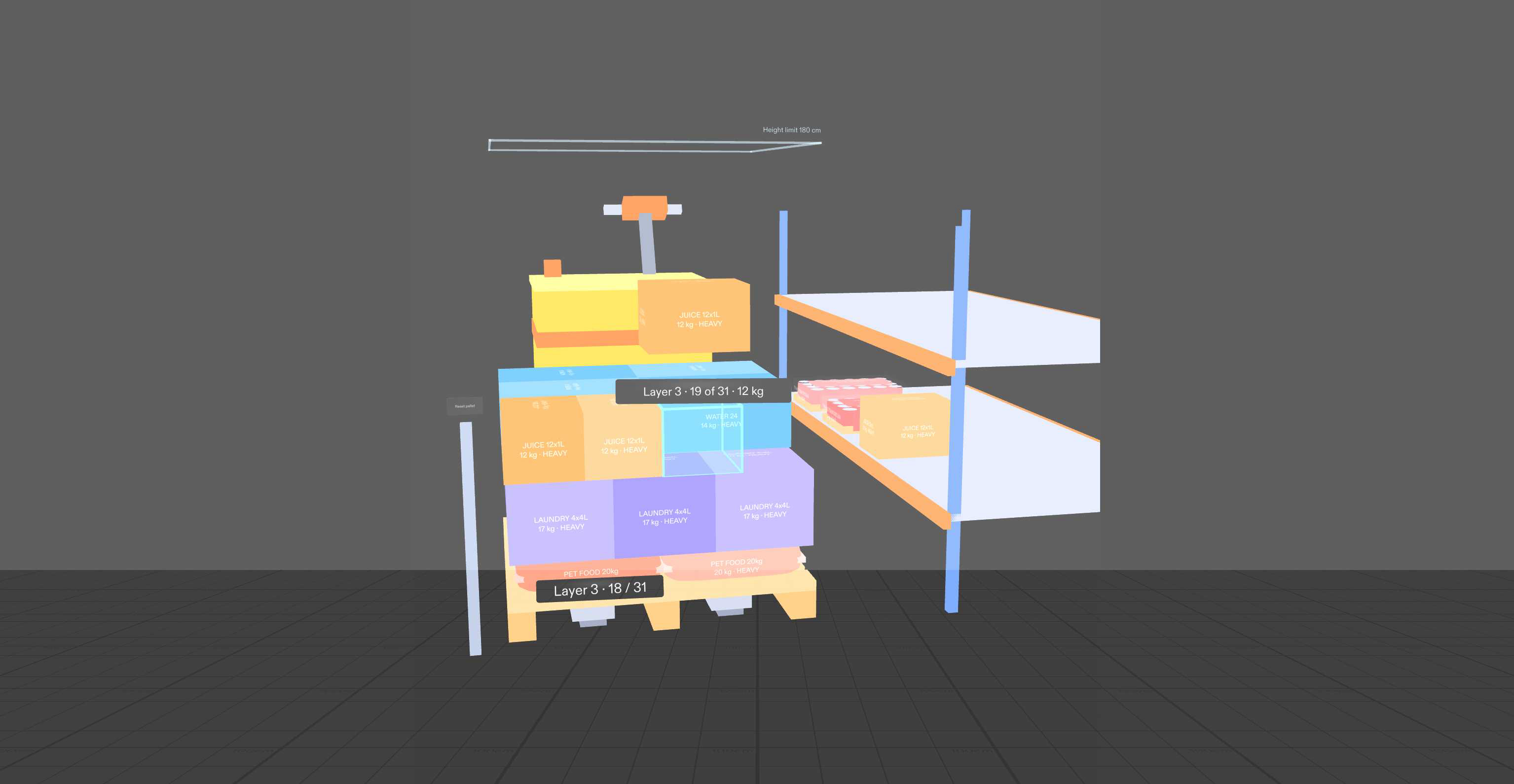
Layer 3 mixes water and juice, turned 90 degrees so the joints cross. The ghost shows where the next case goes, at real size.
-
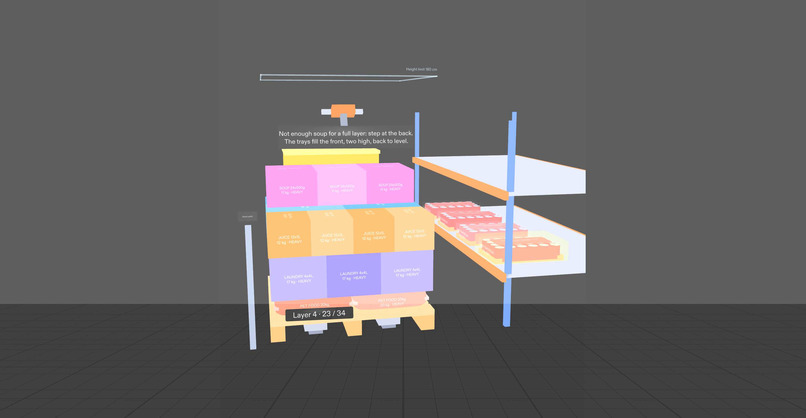
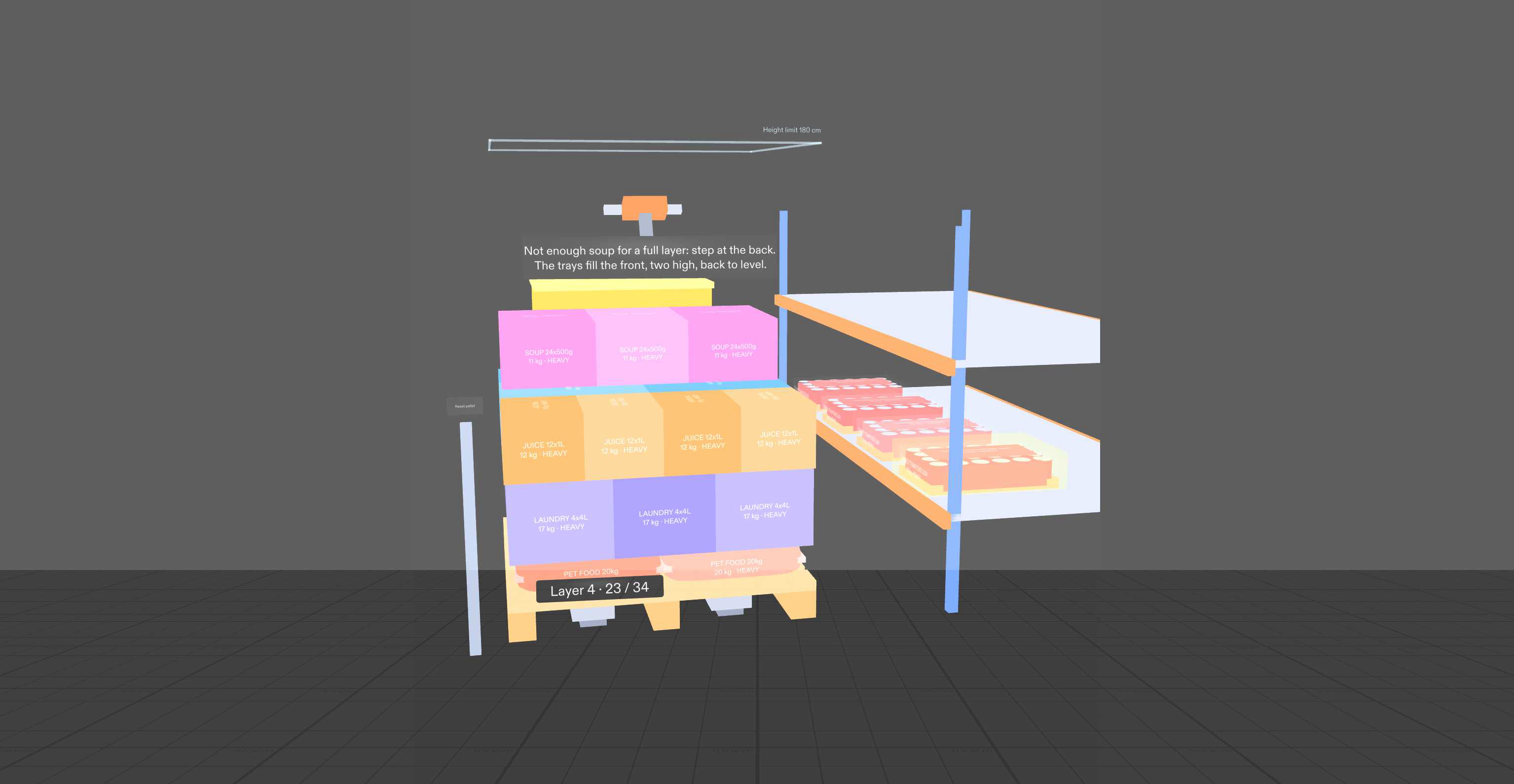
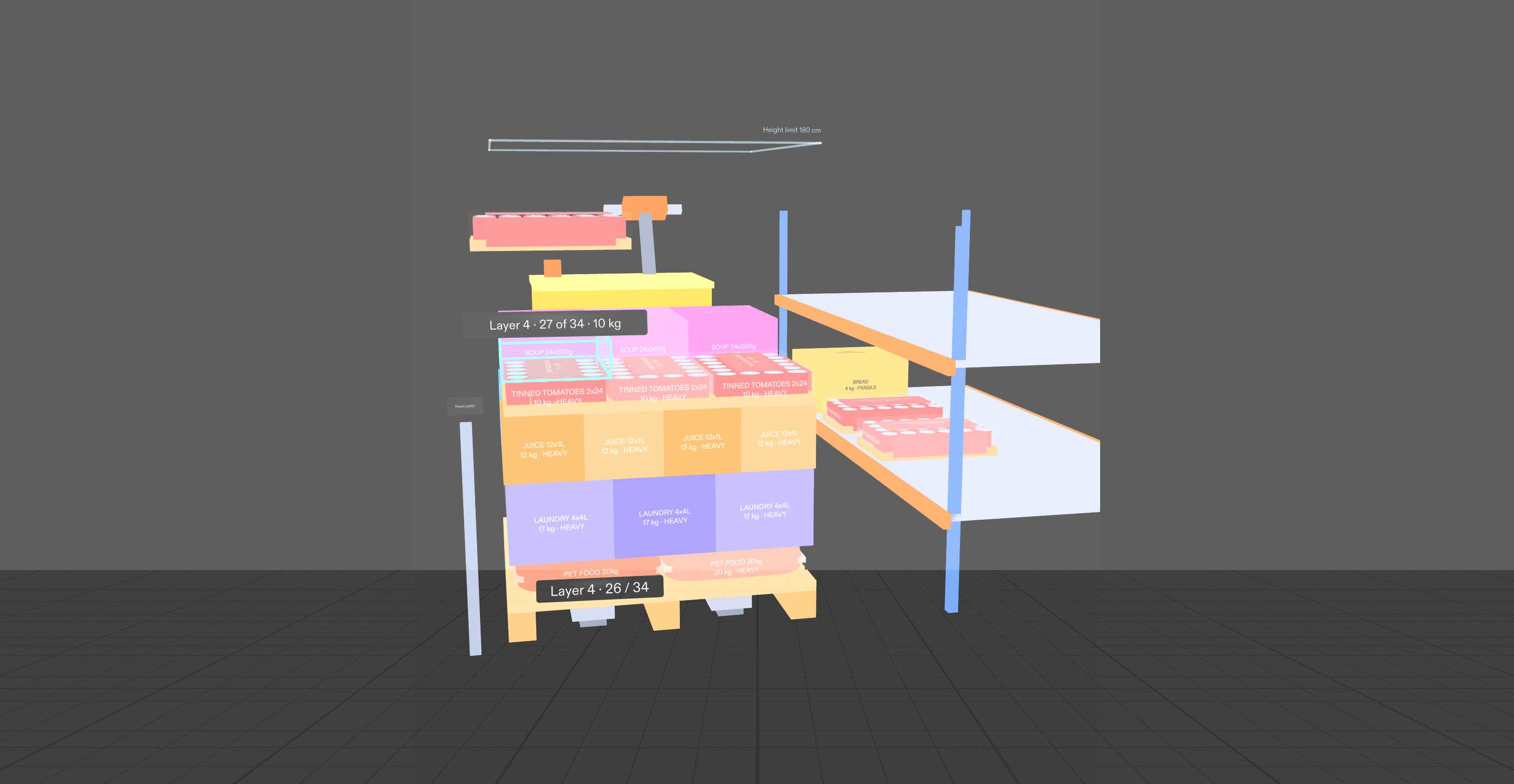
Not enough soup for a full layer: it goes at the back and leaves a step. The note says how it gets fixed.
-
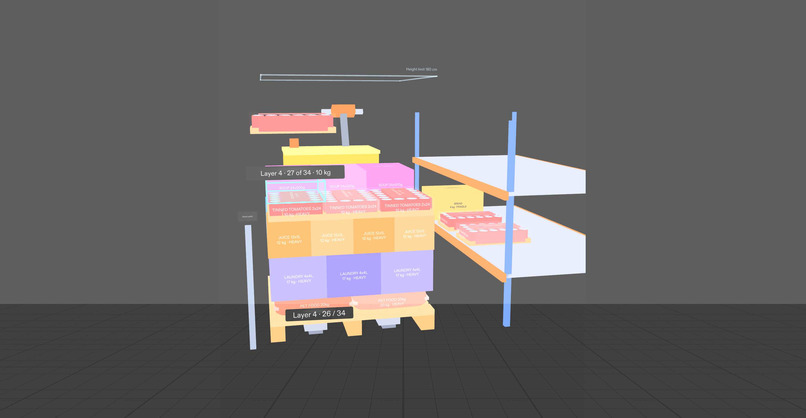
Trays of tins fill the front two high, so layer 4 comes back level.
-
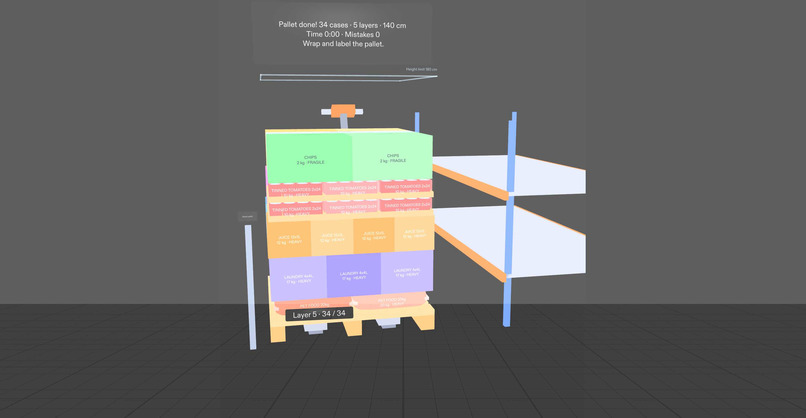
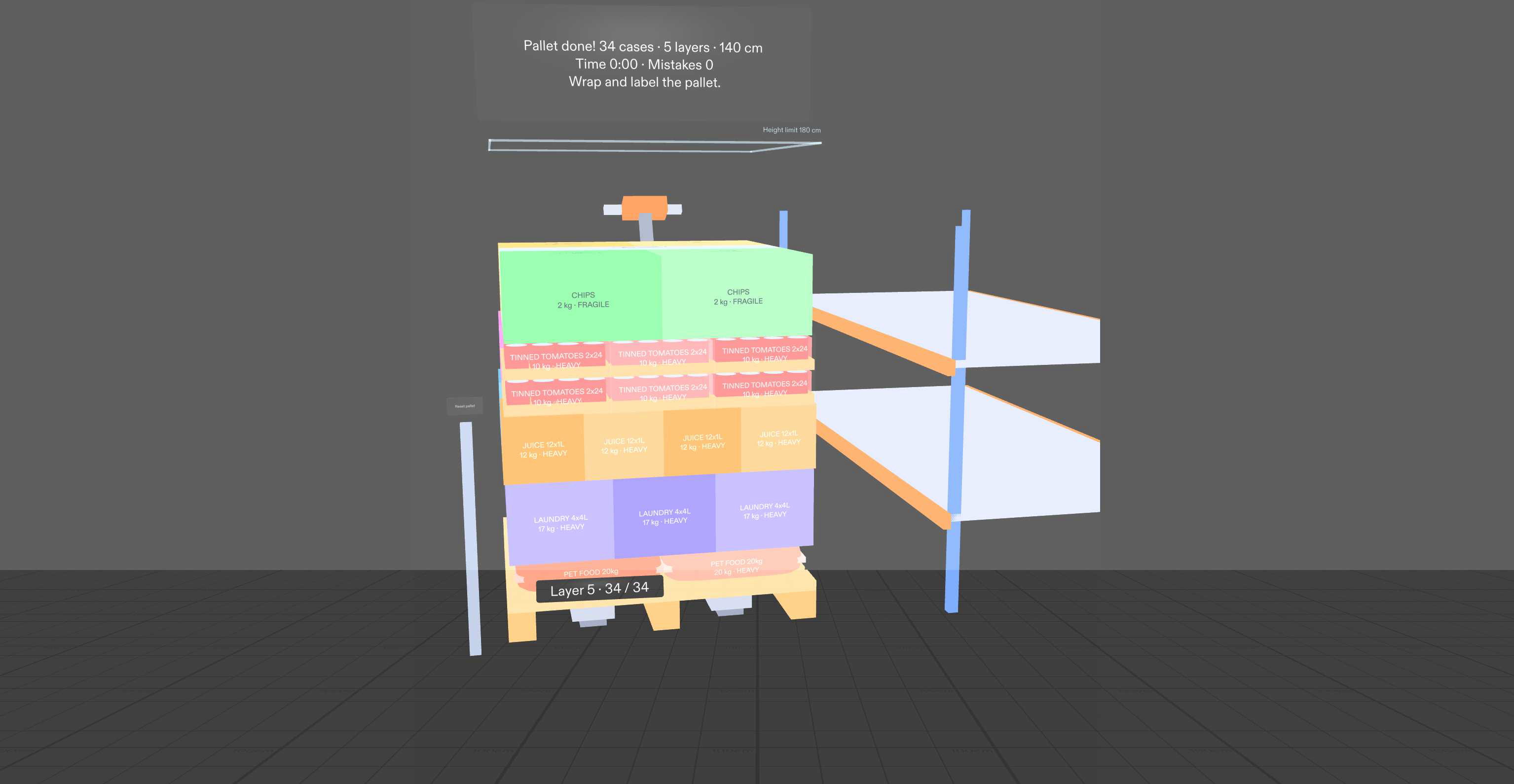
Finished: 34 cases, 5 layers, 140 cm under the 180 cm limit, time and mistakes by rule.
Inspiration
I pick store orders in a supermarket warehouse. The system already sends the cases heaviest first. What it never tells a new picker is where each odd-sized case goes. A real store order is 100+ cases, and if layer one goes down with gaps, the pallet leans eighty cases later and every layer above makes it worse. New pickers learn this by restacking pallets, on real stock, with someone waiting.
What it does
Stack Right is a pallet-building trainer for Snap SPECS.
- Real scale. A standard Australian pallet (116.5 x 116.5 cm) on the forks of a ride-on pallet jack, and a pick face to the right holding a 34-case store order.
- One instruction at a time. Grab the case that's glowing and a ghost appears on the pallet where it fits, turned the right way, with a tag like
Layer 3 · 17 of 34 · 12 kg. Drop it near the ghost and it snaps square. - Real freight, not tidy cubes. Pet food sacks, laundry and water cartons, juice, shrink-wrapped trays of tins, bread, chips and one 112 cm paper towel carton. Sizes differ inside a layer.
- A computed plan. Each layer is row-packed from the case sizes, and layers are turned 90 degrees so the joints cross the layer below (the interlock that stops a pallet splitting). Nothing is hand-placed.
- Layers that don't come out even. There's only enough soup for half of layer 4, so it goes at the back and leaves a step. A note explains it, then trays of tins fill the front two high until the layer is level again.
- Mistakes say why. Overhang the edge or leave a gap and the case slides back with the reason. Mistakes are counted by rule.
- A scored finish. Cases, layers, height against a 180 cm limit, time, and mistakes by rule.
How I built it
- Interview to brief. CLAD's
plan-lensskill turned my answers into a design brief. I corrected its premise (real orders already arrive heaviest first, so the skill to teach is placement and interlock) and approved the revised brief. Both versions are in the repo history. - Brief to Lens. Claude Code with the CLAD skills built the Lens through the Lens Studio MCP in headless sessions. The exact prompts and full transcripts are in
devpost/agent-logs/. - Tests. An in-Lens self-test driver (88/88 checks) and 7 LEAF scenarios cover layout, ghost and tag, snapping, the queue, overhang and gap, interlock, the stepped layer, completion and reset.
- Video. A scripted demo mode drives the Lens Studio preview, which was screen-recorded and cut with ffmpeg.
Challenges I ran into
- Injected mouse input doesn't register grabs in the preview, so the demo is driven by a test driver inside the Lens instead.
- The first plans were too perfect. Real layers often leave a one-sided step that you fix further up, so the planner learned zones and tiers, with a check that the step never gets taller than one case.
- Making mixed sizes, turned layers and a step all agree on joints that cross, inside the pallet, with no overlaps.
Accomplishments that I'm proud of
It teaches what I actually had to learn on the floor: where things go, and why a pallet leans. The plan is generated from case sizes, and every rule is covered by a test.
What I learned
Lens Studio's scene and scripting model, SPECS interaction design (one instruction at a time, both hands on the case), LEAF testing, and how to direct a coding agent through the Lens Studio MCP from a written brief.
What's next for Stack Right
Real Spectacles to test the feel: carrying real-size cases with hand tracking and comfort over a full 100-case order. Then scanning each case's barcode and anchoring to the real pallet.
Pre-existing work
Built new for this hackathon from the SPECS starter template, with Snap's Spectacles Interaction Kit and the LEAF test package. All Stack Right scripts, assets, tests and the video were made during the event.
Built With
- clad
- claude-code
- elevenlabs
- ffmpeg
- leaf
- lens-studio
- lens-studio-mcp
- snap-spectacles
- spectacles-interaction-kit
- typescript
