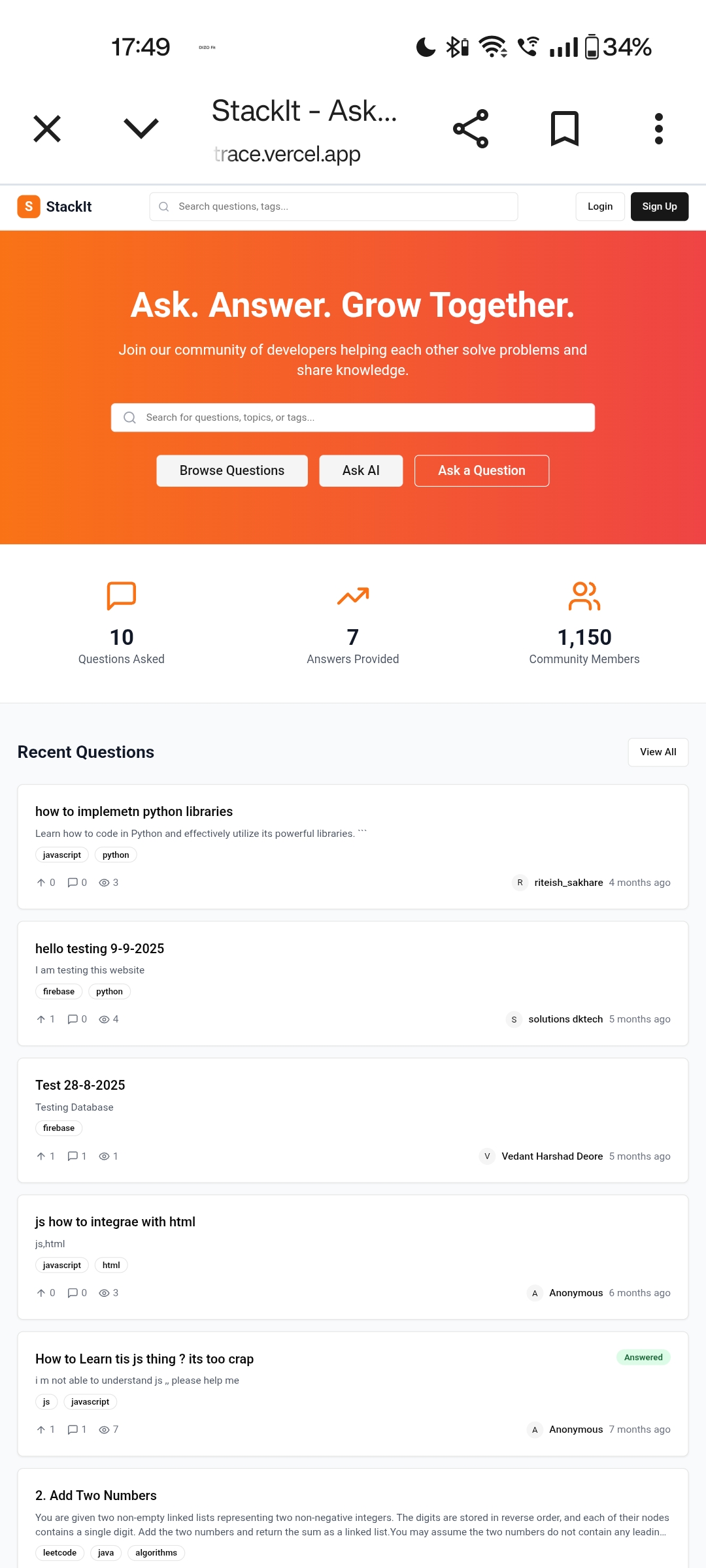
StackIt Project Story
🌱 What Inspired Me
StackIt is inspired by platforms like Stack Overflow, but built with a focus on simplicity, clarity, and modern community needs.
While Stack Overflow excels at structured knowledge sharing, it can feel overwhelming or heavy for smaller communities, college groups, and growing teams. On the other hand, chat-based platforms like WhatsApp or Discord make discussions easy but valuable answers often get buried and lost.
StackIt was created to bridge this gap:
- Stack Overflow–style structured Q&A
- Lightweight and intuitive experience
- Designed for collaborative learning
The goal was to retain the strength of Stack Overflow’s model while making it more accessible and flexible
📚 What I Learned
Building a Stack Overflow–like platform helped me understand:
Designing Scalable Q&A Systems
How structured questions, answers, voting, and tagging work together.Data Modeling for Discussions
Designing schemas for posts, comments, tags, and user activity.Authentication & Trust Systems
User identity, access control, and moderation are critical for quality content.User-Centered Design
Simpler workflows often improve engagement more than advanced features.
🛠️ How I Built the Project
Architecture Overview
StackIt follows a Stack Overflow–inspired architecture, built with modern tools.
Core Components:
- Frontend: React-based UI for clean and responsive interactions
- Backend: Firebase-powered services
- Database: Firebase Firestore
- Questions and answers stored as structured documents
- Tags and metadata for fast filtering
- Questions and answers stored as structured documents
- Authentication: Firebase Authentication
- Secure login and session handling
- Role-based access for posting and moderation
- Secure login and session handling
Optional AI Layer
- Automatic tag suggestions
- Detection of duplicate or low-quality questions
- Fully modular and optional
### Ranking & Relevance Logic
Inspired by Stack Overflow’s voting system, StackIt uses a simplified relevance model:
This ensures helpful and recent answers surface first without unnecessary complexity
⚔️ Challenges I Faced
1. Replicating Stack Overflow’s Core Without Complexity
Rebuilding essential features (Q&A, voting, tagging) while keeping the UI simple was challenging.
2. Firestore Schema Design
Efficiently supporting:
- One-to-many answers
- Voting mechanisms
- Tag-based searches
required careful data modeling.
3. Authentication & Moderation
Ensuring only authenticated users could post or vote, while keeping onboarding friction low.
4. Avoiding Overengineering
Rather than copying every Stack Overflow feature, I focused on what users actually need.
🚀 Final Thoughts
StackIt is a modern, lightweight alternative inspired by Stack Overflow, designed for communities that value clarity, learning, and structured knowledge.
This project reinforced that:
- Inspiration doesn’t mean imitation
- Great platforms are built by simplifying what already works “Ask Smart. Learn Together.”


Log in or sign up for Devpost to join the conversation.