-
-
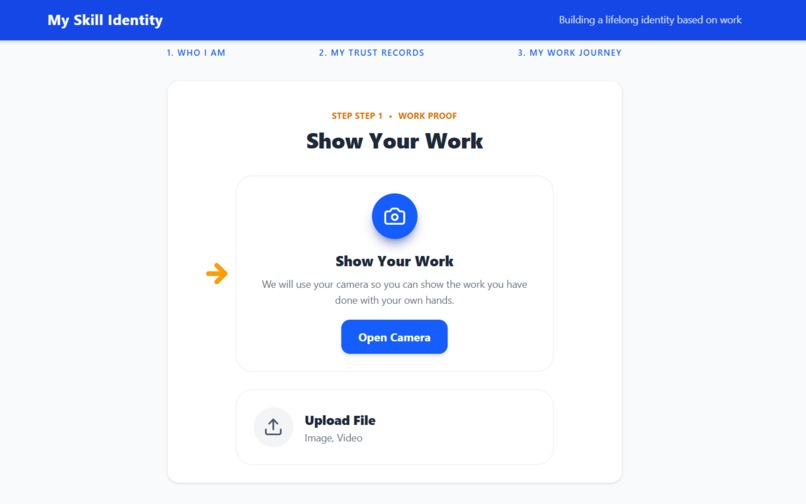
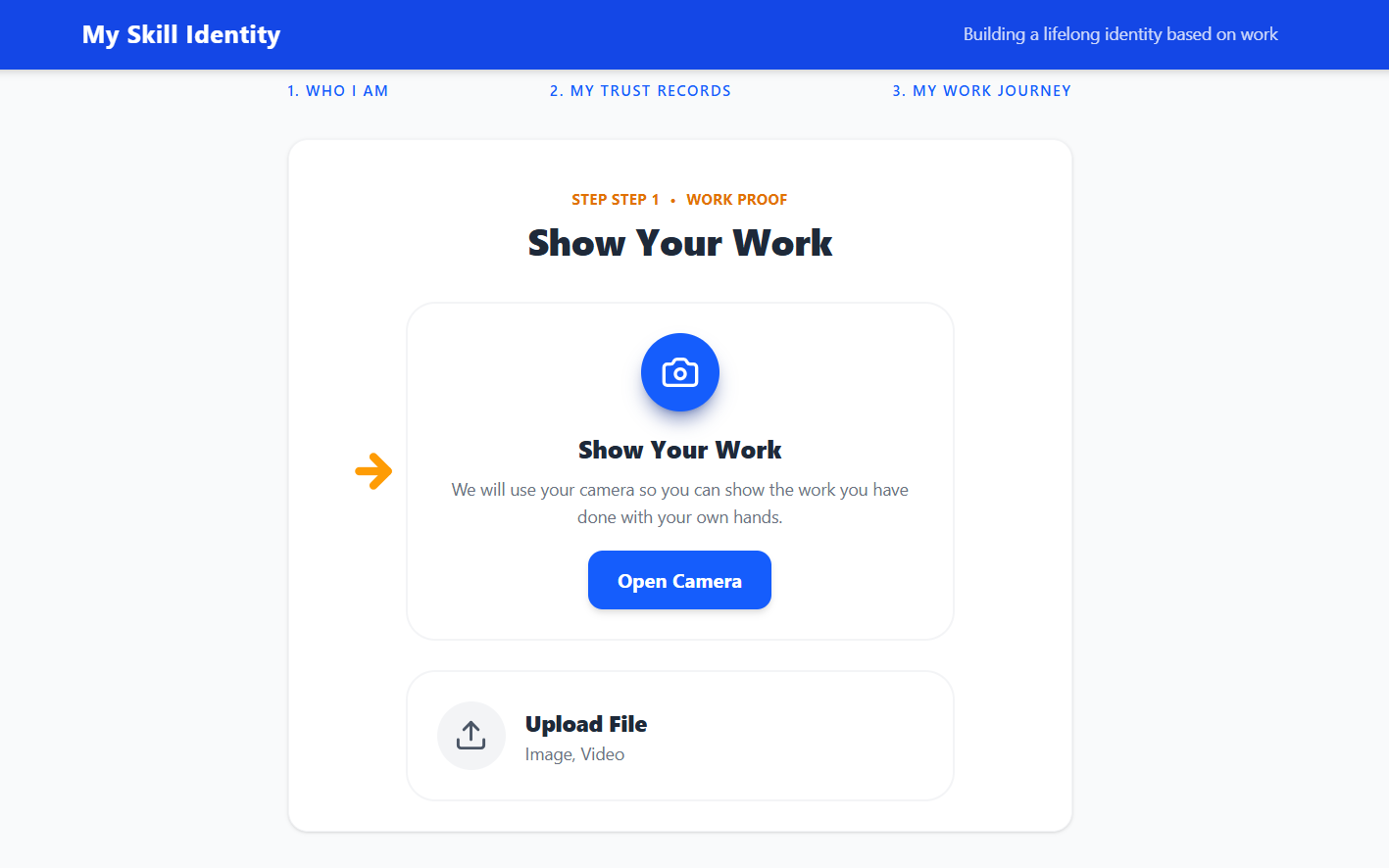
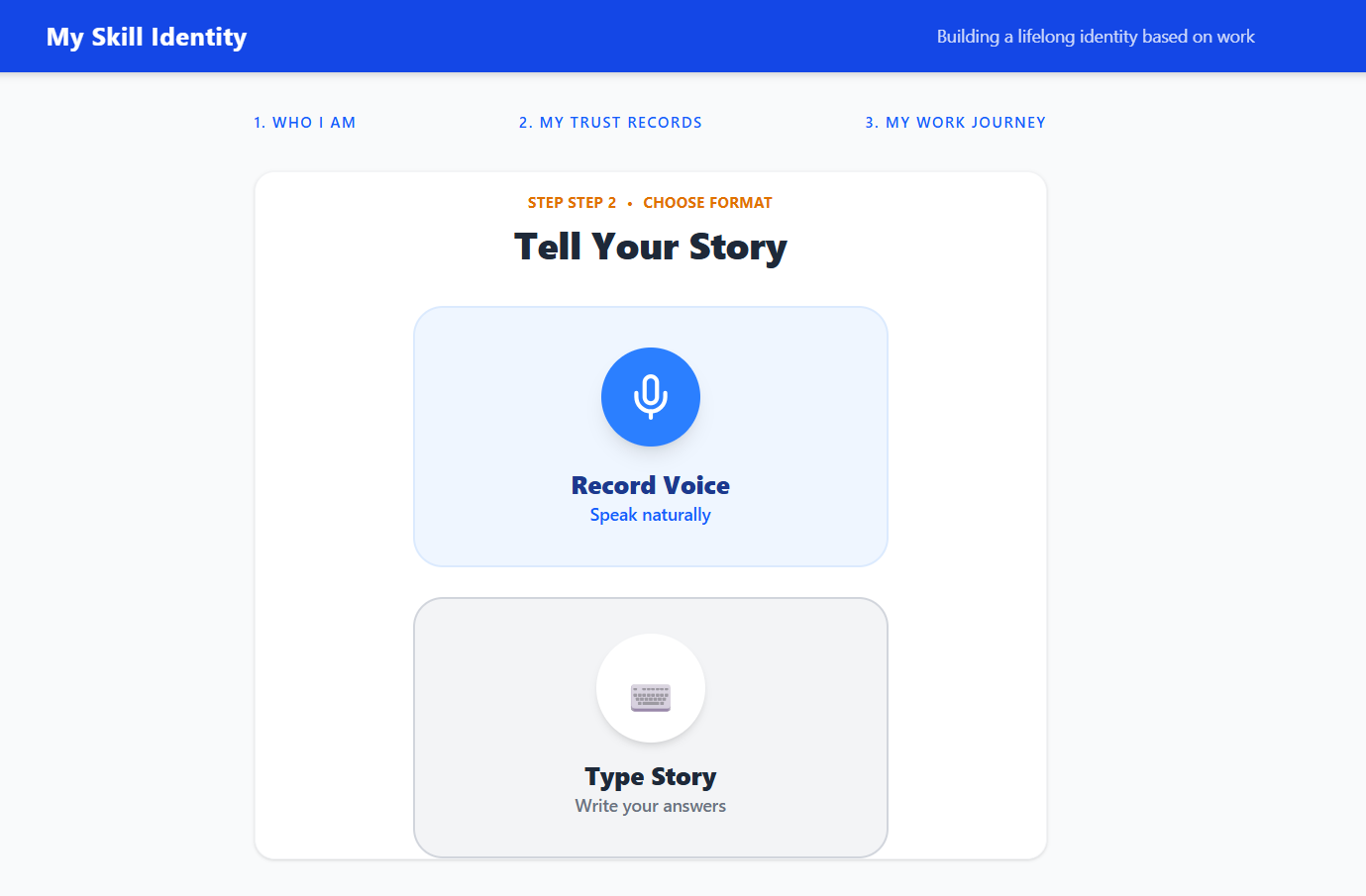
User Work Submission Interface 1
-
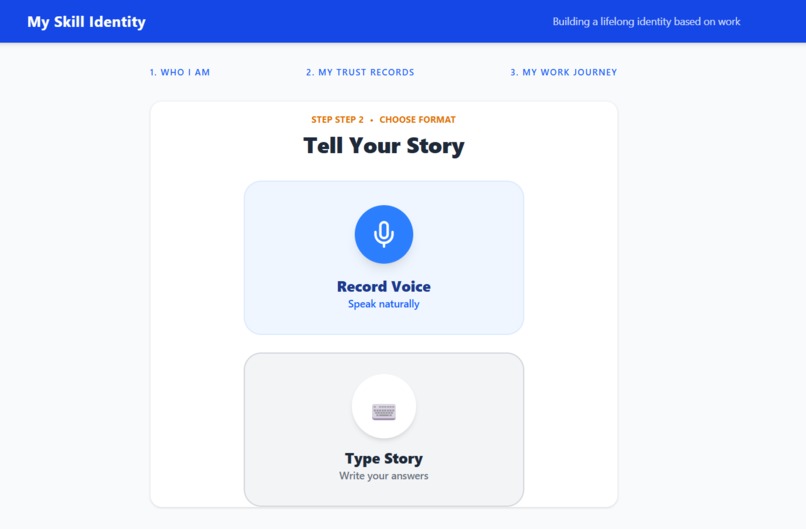
User Voice Submission Interface 2
-
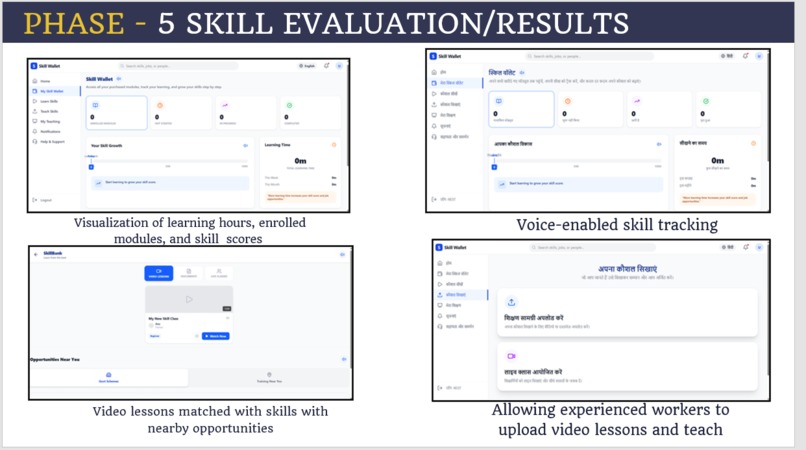
Profile Page
Inspiration
The current skill verification systems assume that all users possess digital literacy skills which allow them to produce standard resumes and written profiles. This situation excludes a major portion of society which includes informal workers and students who can demonstrate actual skills but have no means to do so. The concept of our inspiration came from our belief that skill validation needs to occur through authentic work evidence, which schools and test institutions currently use for their certification processes. We aimed to create a platform that enables all users to display their skills, which will be verified by established digital credentialing systems that they can trust.
What it does
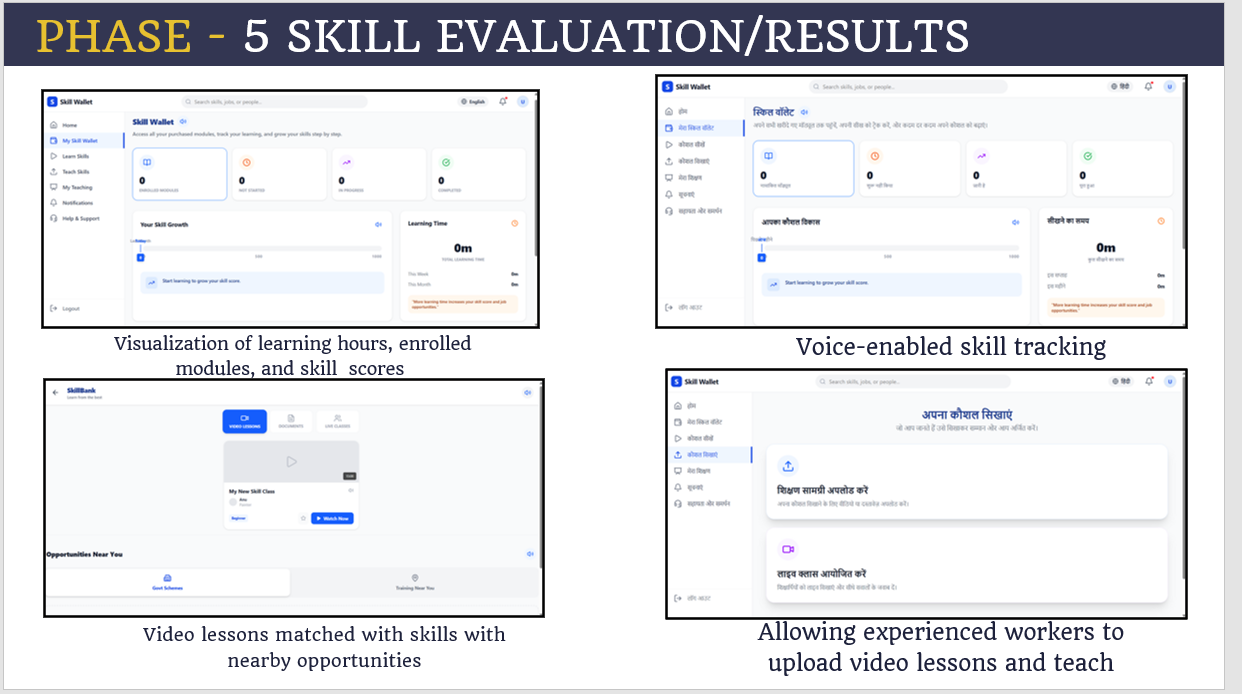
Skill Wallet provides an easy-to-use platform which enables users to authenticate their skills and discover job possibilities. The system transforms actual work evidence, which includes videos and projects and repositories, into reliable digital credentials. The platform allows users with basic digital skills to submit voice proof while students can use their GitHub and LinkedIn accounts to validate their abilities. The system uses artificial intelligence to identify modified media content, which includes both human-created and machine-generated visual elements, in order to maintain content authenticity. The platform offers educational material and local training facilities, enabling users to acquire new abilities which will enhance their job prospects.
How we built it
The frontend interface was developed using React.js with Vite, along with HTML, CSS, and Tailwind to create a responsive and user-friendly interface. The backend was developed using Python FastAPI, running on a Uvicorn ASGI server to efficiently handle API requests and communication between the frontend and backend. For data storage and management, we used SQLite and PostgreSQL with SQLAlchemy. Amazon S3 is used for secure storage of uploaded media such as images, videos, and voice recordings. Amazon Rekognition/Grok is used for image analysis and authenticity verification of uploaded work proofs. Additionally, Amazon Transcribe is used to convert voice recordings into text for skill documentation and evaluation.
Challenges we ran into
The user-provided work proofs were genuine while we conducted their evaluation. The development of a model to study and evaluate actual workproofs needed work evidence became challenging because it required numerous parameters for precise adjustment. The unstructured work patterns of different industries and current market conditions make it impossible for a single LLM to evaluate all skill sets. The system development process became difficult because various work evidence types required different assessment methods to achieve accurate results. Automated analysis has limitations because many practical abilities need human understanding and decision-making. Gap Analysis of academic-oriented work is relatively easier than unorganised work, as there are a lot of LLMs available in the market which can be fine-tuned easily based on our desired parameters, whereas it is much more difficult for unorganised work, as it largely varies based on different professions. thus requiring human intervention and being a tedious job to develop such an LLM
Accomplishments that we're proud of
Finalist at Aarohan (IIT Bombay Techfest 2025) 3rd Position at DEV:INIT - GDGOC( Google Developer Groups on Campus )PDEU x PDEU IIC
What we learned
The importance of building inclusive systems that consider users from diverse backgrounds and digital capabilities. The team discovered that technical solutions that appear impressive through their grand design will not function properly under real-world circumstances because actual conditions and user limitations differ from those solutions. At times, we also found ourselves overanalysing potential problems and trying to solve issues that did not actually exist, which can lead to solutions that are unnecessarily complex and less viable. The experience taught us to focus on actual user requirements while creating technological solutions through practical implementation and balanced problem-solving.
What's next for Skill Wallet
The Skill Wallet platform will become more effective through our efforts to increase its user base and operational reach. Our primary objective involves creating an application that functions effectively without delays in areas that experience either low network speeds or weak internet connections. The system will expand its operational capabilities by adding support for additional work domains which will enable it to verify and identify skills from multiple informal and technical work fields.The implementation of a human-in-the-loop verification system requires organizations to combine automated AI analysis with human reviewers who can enhance both skill evaluation fairness and assessment reliability. The underprivileged sections of society will benefit from our active partnerships with organizations and communities because we will help them develop their abilities to showcase their skills and access valuable opportunities.
Built With
- amazon
- amazon-rekognition
- amazon-web-services
- and
- css
- html
- postgresql
- python-fastapi
- react.js
- sqlalchemy
- sqlite
- tailwind-css
- uvicorn-(asgi-server)
- vite

Log in or sign up for Devpost to join the conversation.