-
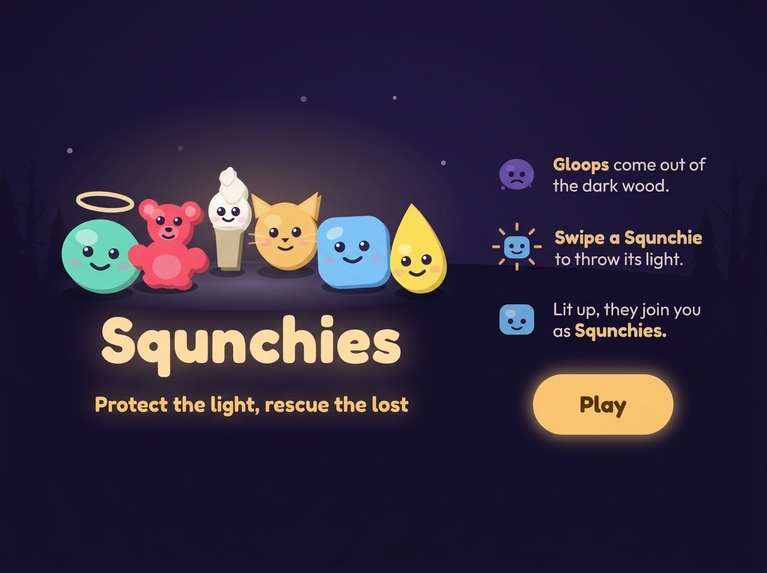
Squnchies!
-
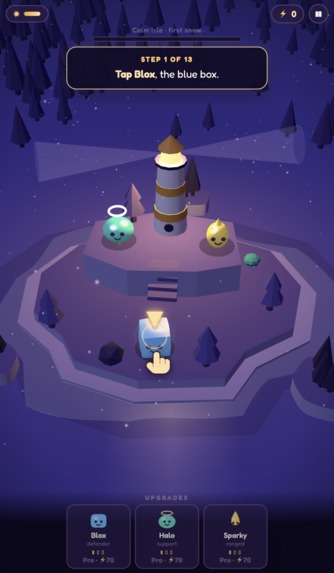
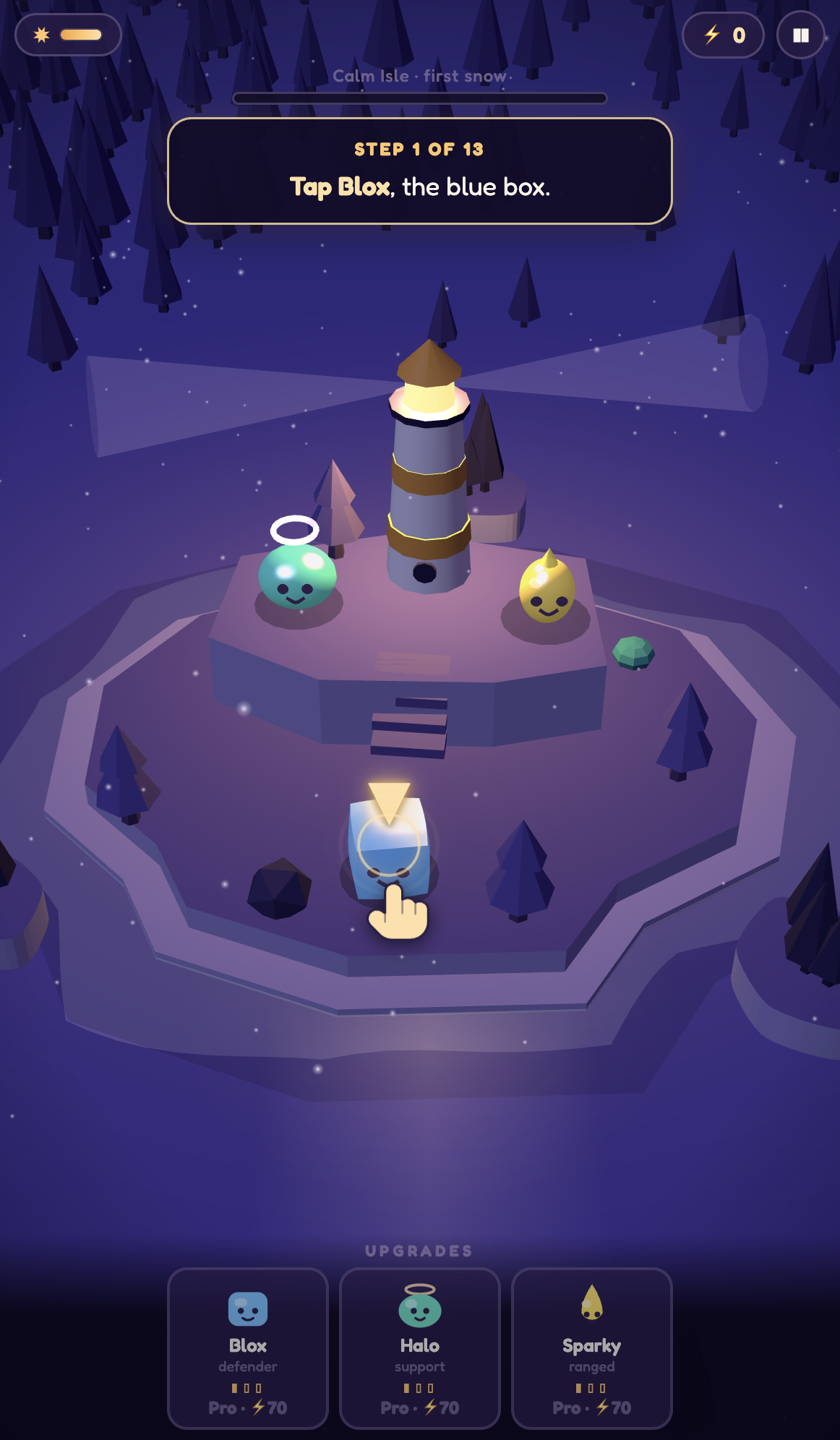
Level 1: Calm Isle
-
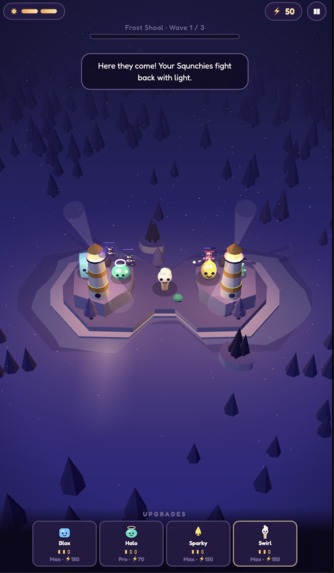
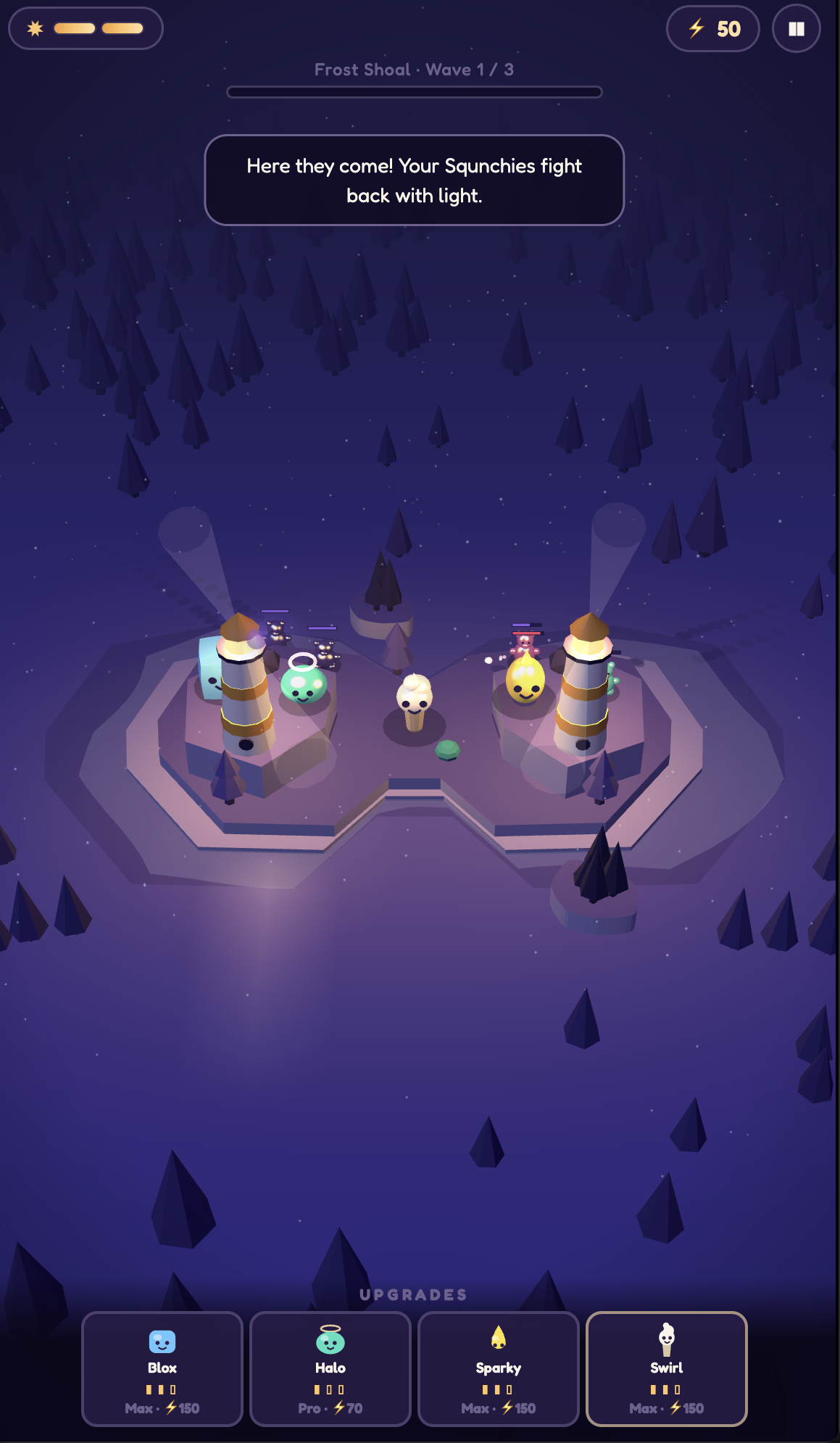
Level 2: Frost Shoal
-
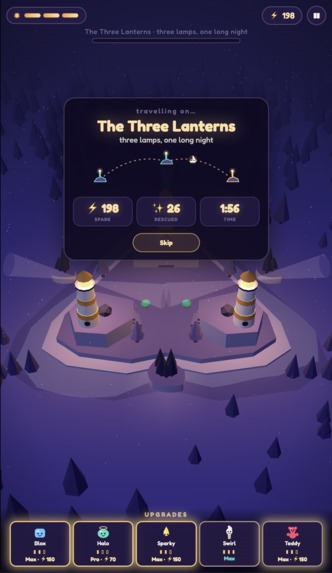
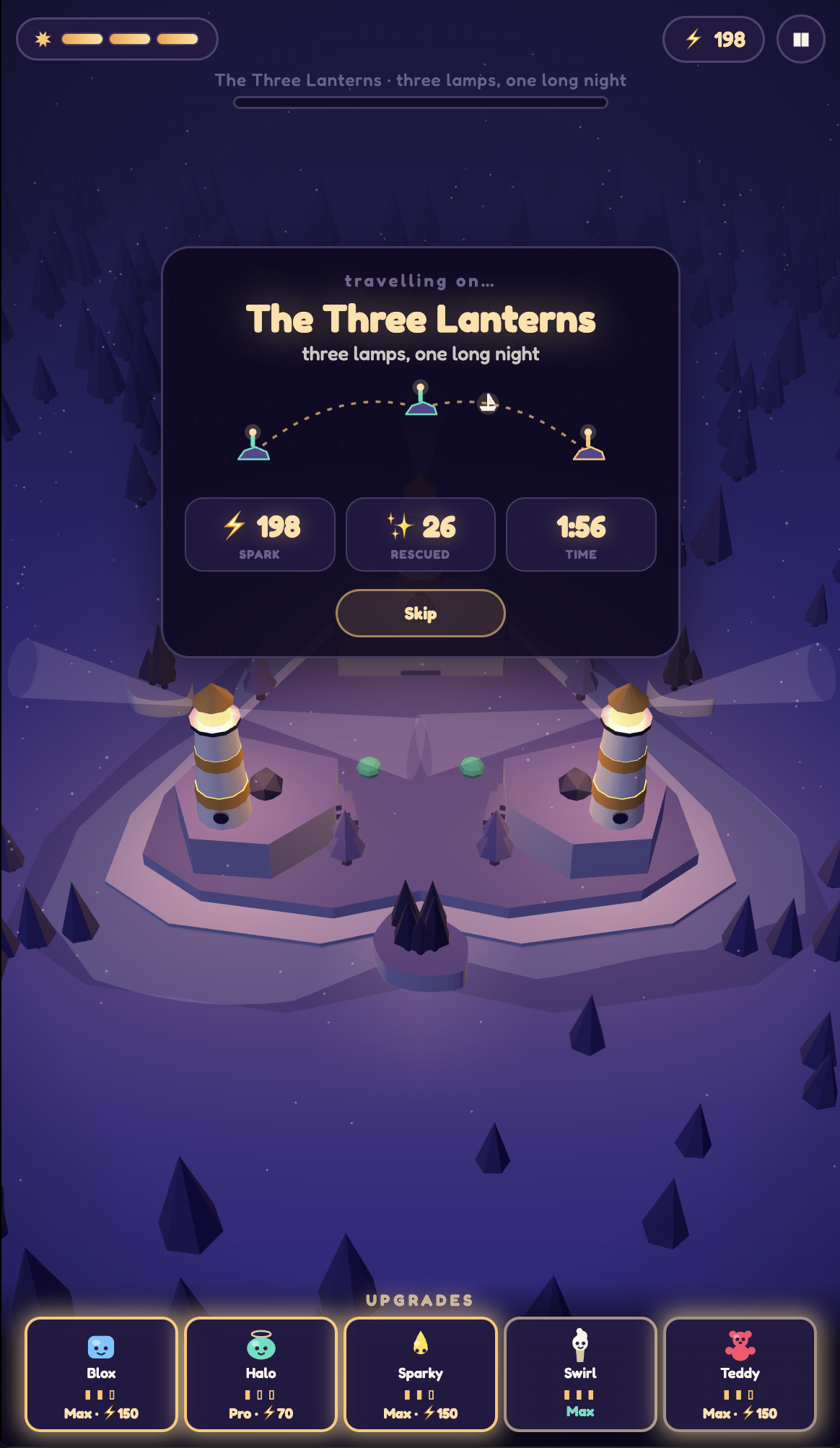
Level 2 to 3
-
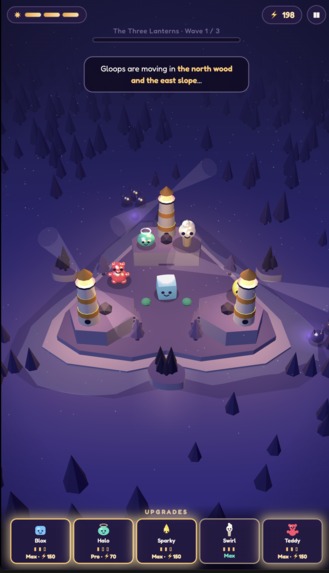
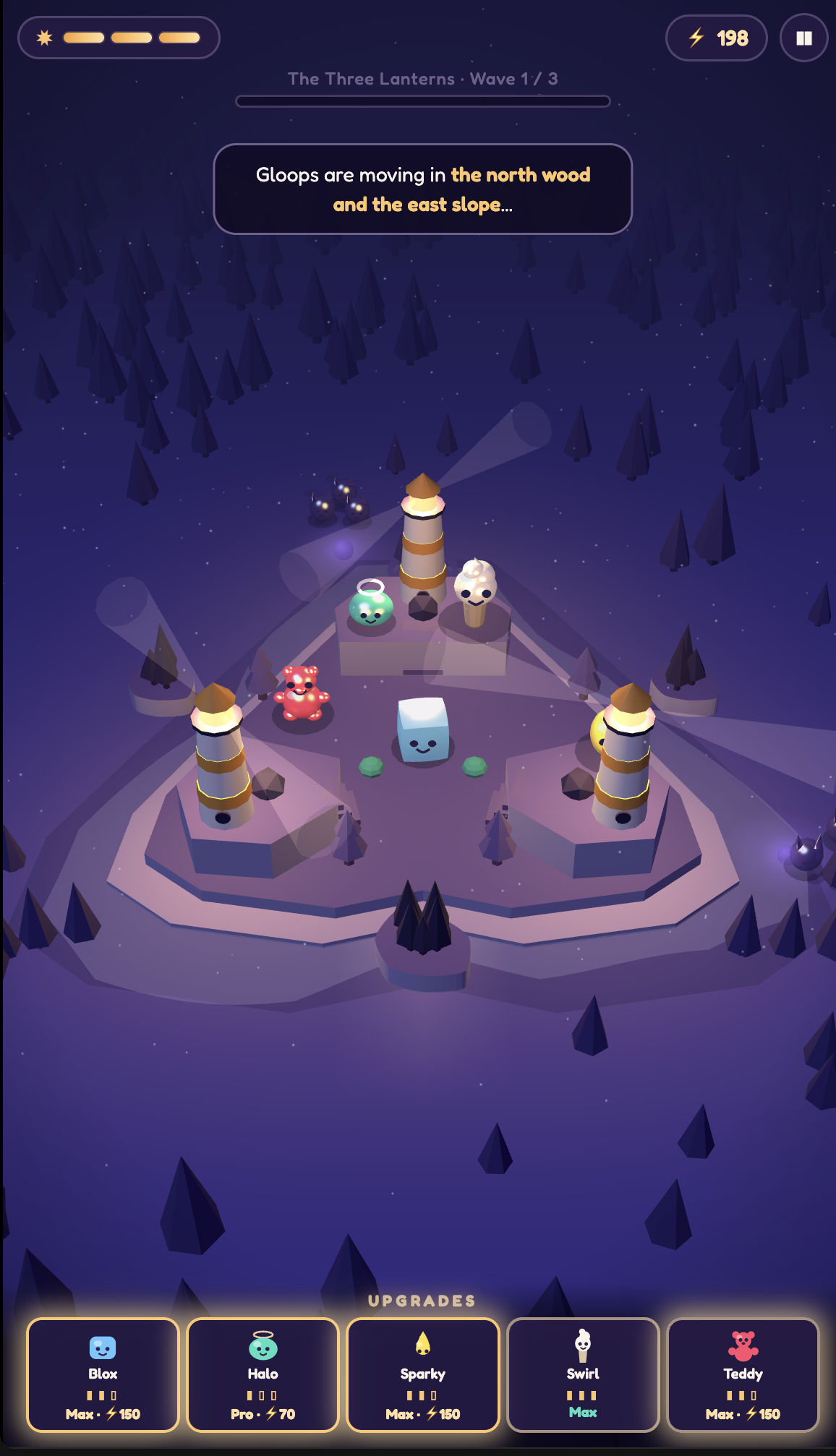
Level 3: The Three Lanterns
-
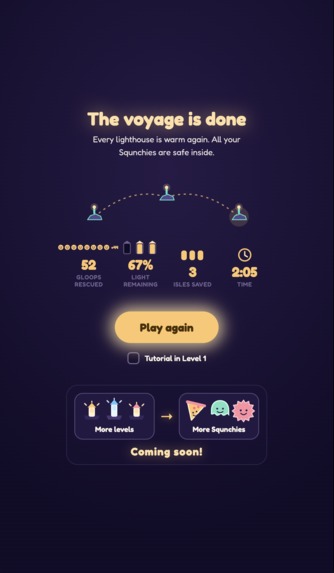
Win Screen
-
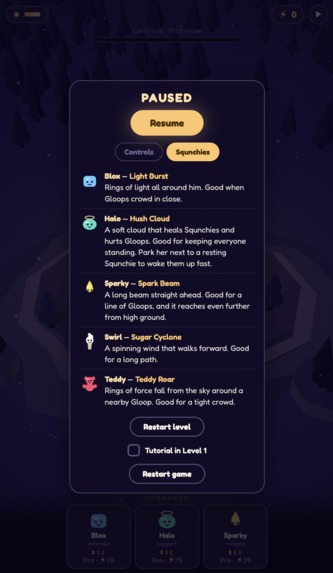
Pause Menu
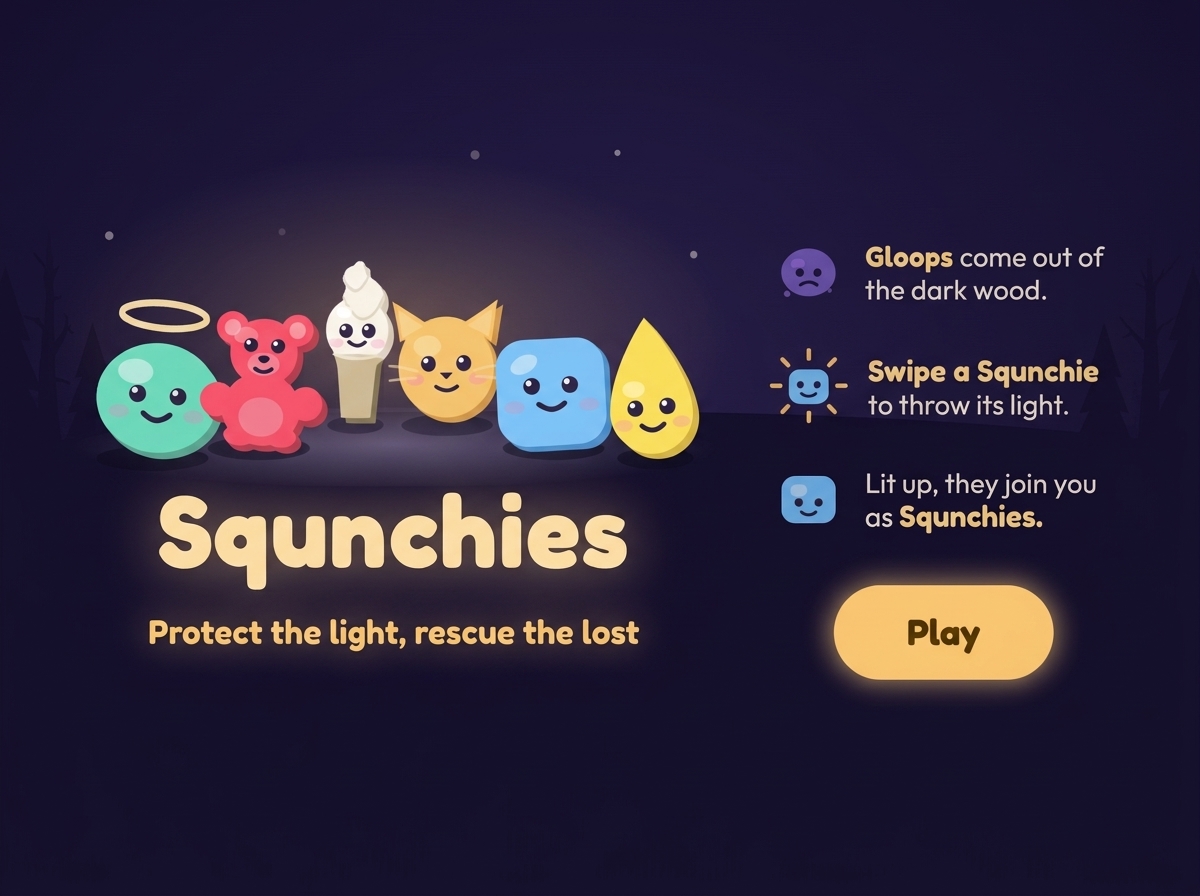
Inspiration
Squnchies began with the huge appeal of squishy toys: people already reach for them when they want something cozy, tactile, and calming. I wanted to build a game that gives those familiar physical toys a virtual world, personality, and story. Building on my previous winning Meta game-design-document entry, I explored what happens when the satisfying act of squishing becomes the core strategy mechanic.
What it does
Squnchies is a cozy mobile tower-defense game where players protect island lighthouses from corrupted Gloops. Players tap Squnchies to move them, swipe them to attack, and hold then release for stronger special attacks.
Instead of defeating enemies, players fill them with light, purify them, and bring them home. Bosses become playable allies for the rest of the voyage. Players earn Spark, upgrade their squad, and defend three islands in one continuous run.
How I built it
I built Squnchies as a mobile-first browser game with Three.js. The world, characters, islands, weather, visual effects, UI art, procedural sound, and haptics are created in code.
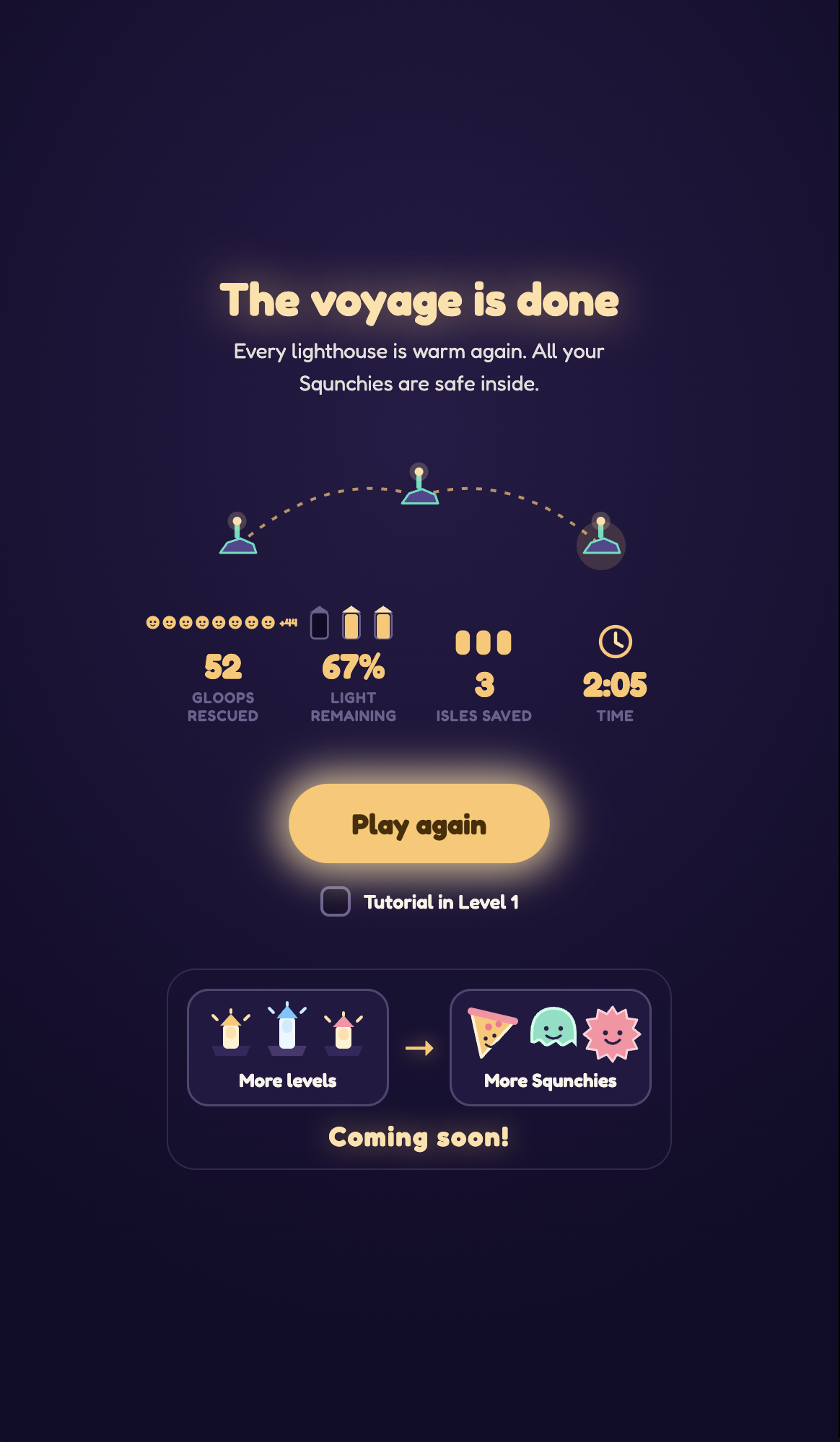
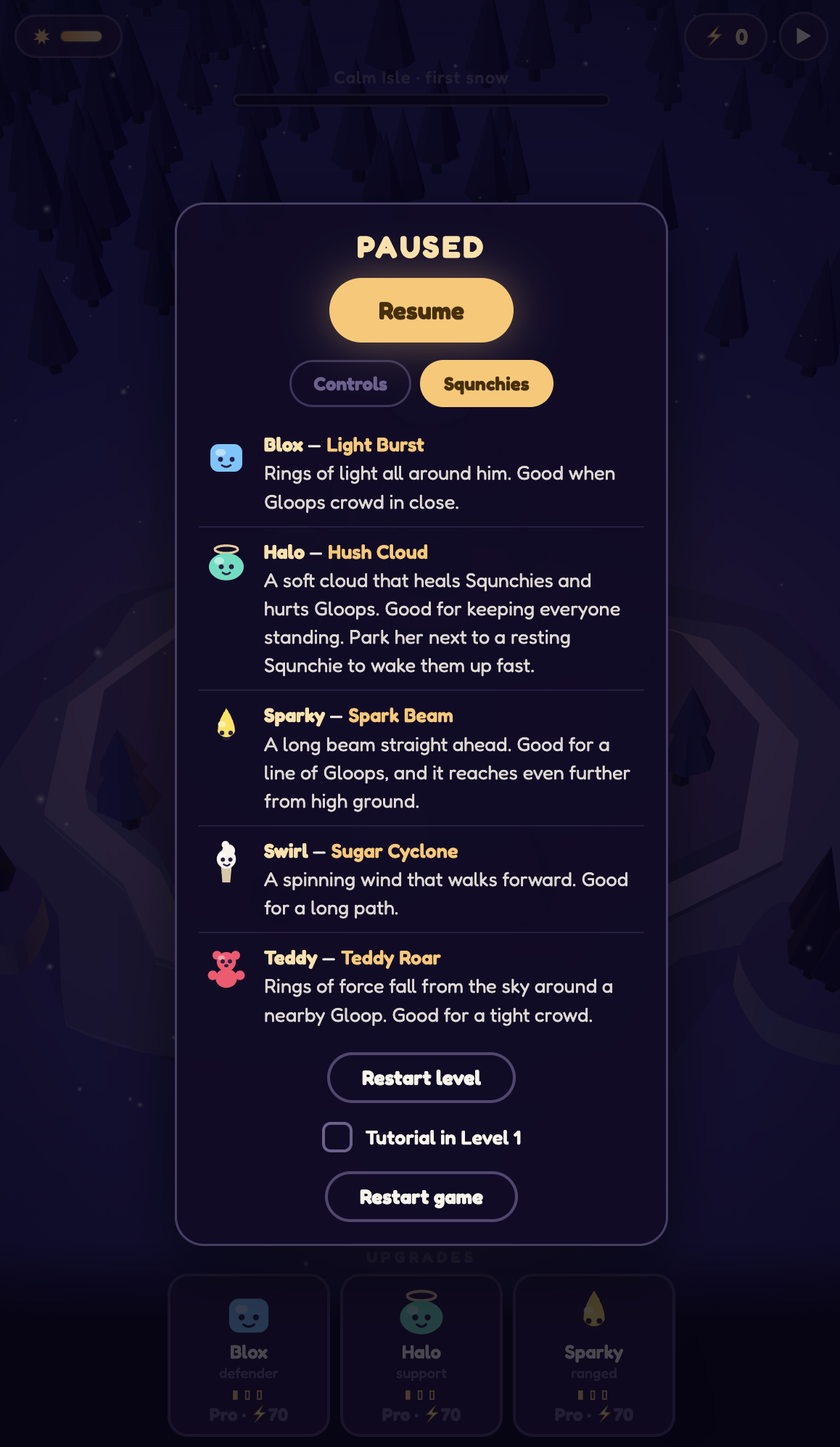
The game is designed for portrait, one-thumb play. I created a node-based island system for movement and strategy, a guided first-level tutorial, boss-to-ally progression, upgrades, pause and replay options, and a short between-level voyage summary.
Challenges I ran into
The biggest challenge was making a strategy game feel welcoming instead of overwhelming on a phone. I had to teach movement, swiping, charged attacks, island rotation, zooming, and upgrades without burying players in text.
I also spent time protecting the tutorial from unexpected player actions, such as moving a character to the wrong ring and accidentally making later steps impossible. Another challenge was making touch controls reliable on mobile Safari, including preventing accidental browser zoom without interfering with the game’s swipe, hold, and pinch controls.
Accomplishments that I’m proud of
I am proud that the squish is not only a visual theme. It is the strongest combat action in the game. Players must actively swipe and charge attacks to succeed, while movement and upgrades still provide meaningful strategy.
I am also proud of the warm, non-violent progression: enemies are purified rather than defeated, and bosses become friends. The prototype delivers a complete three-island voyage with upgrades, allies, a tutorial, win and loss states, and replay support.
What I learned
I learned that tactile interactions need immediate feedback and clear purpose. A swipe feels much better when it produces a strong, readable result, and a tutorial works better when it responds to what the player actually does instead of advancing only on timers.
I also learned that mobile games need careful guardrails. Small interaction issues, such as an incorrect movement option or a browser gesture taking over, can interrupt the whole experience.
What’s next for Squnchies!
Next, I want to add more islands, more Squnchies, and more collectible corrupted shapes to rescue. I also want to explore connecting virtual Squnchies with physical squishy toys, so a toy a player already loves can have a character, abilities, friendships, and an ongoing place in the game world.


Log in or sign up for Devpost to join the conversation.