
Squipi teaser (60sec)
Inspiration
Impact evaluators & Public Policy experts deal with confidential data that cannot leave the machine. The useful AI tools all send that data to a cloud (even enterprise clouds are tricky). I wanted a research agent that an economist could run on a 16 GB MacBook with open models, that does the stats, impact evaluation research while being fully reliable (no hallucinations), and that only uses the cloud when the user says so. Squipi is a small flapjack octopus desktop companion that does exactly that. As a policy researcher advising Governments on confidential policy analyses- I needed this myself; and see such an agent filling a market gap.
What it does
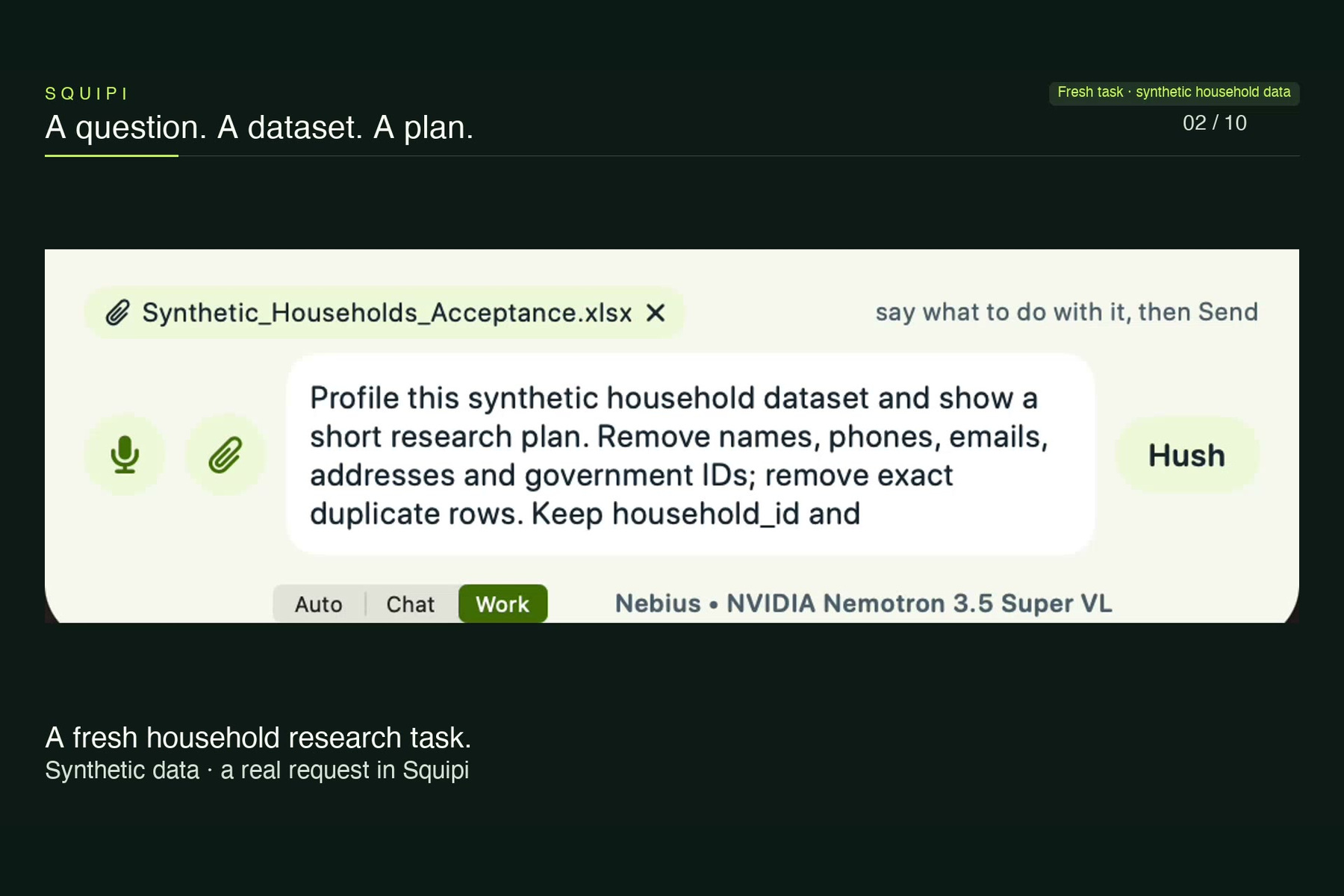
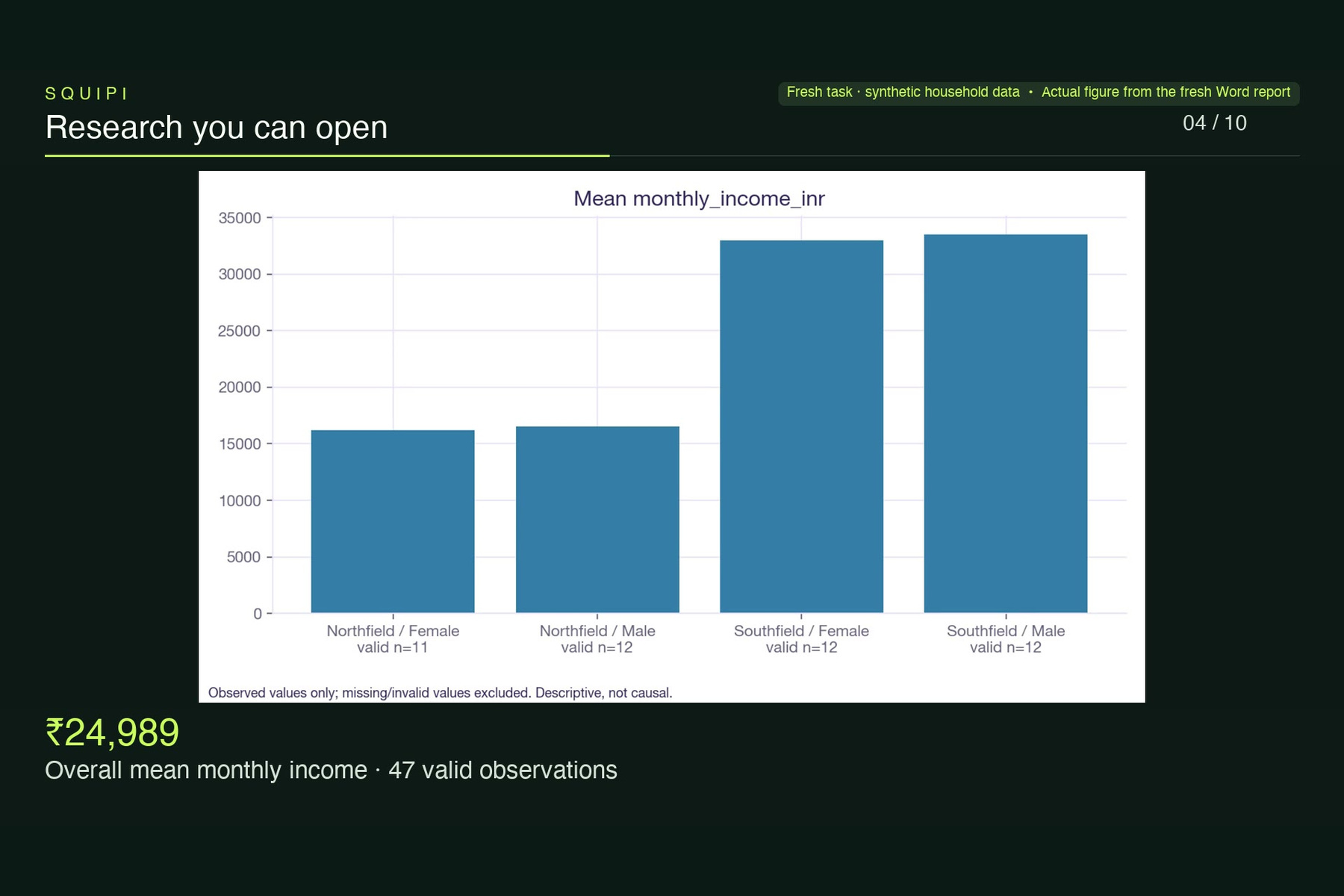
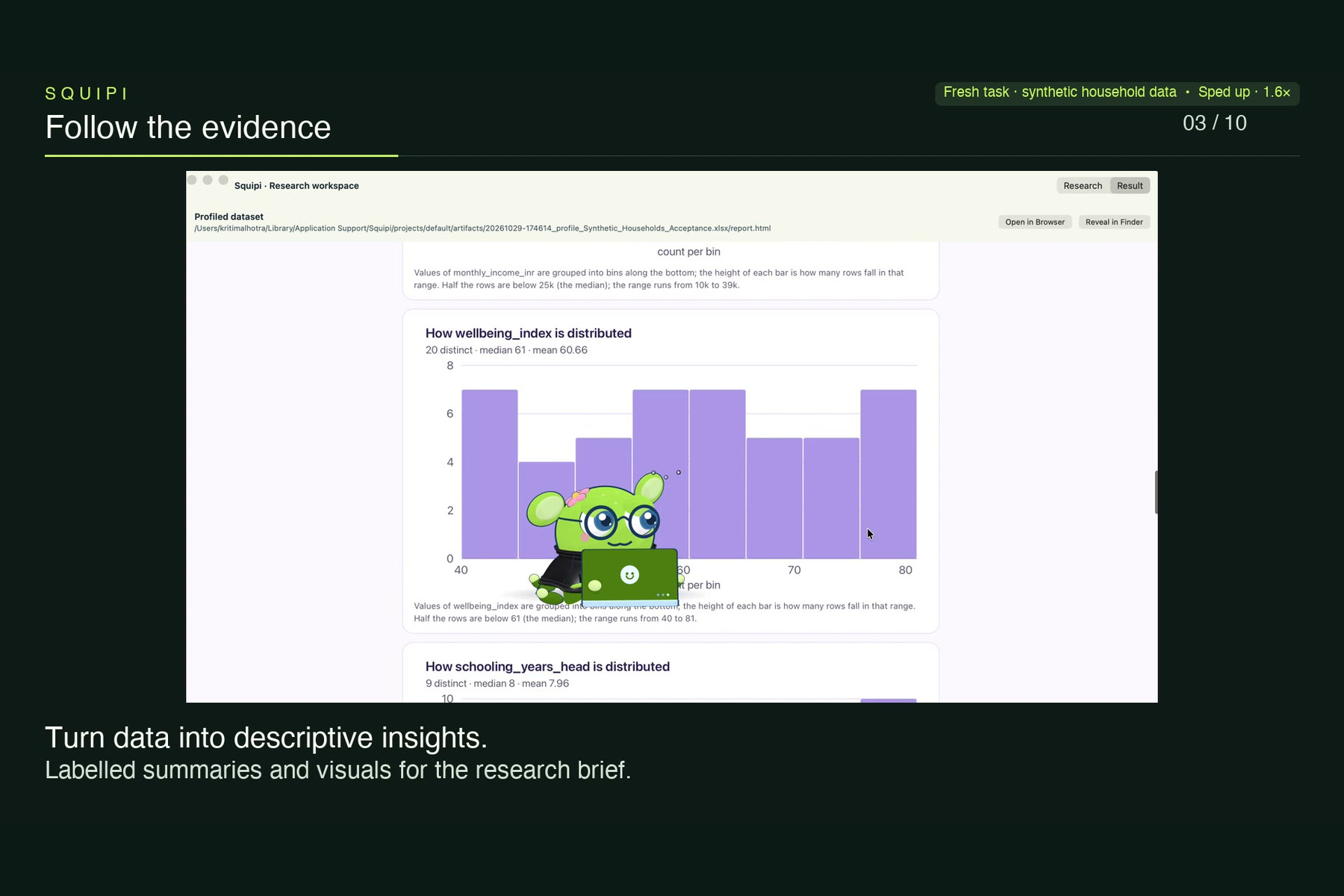
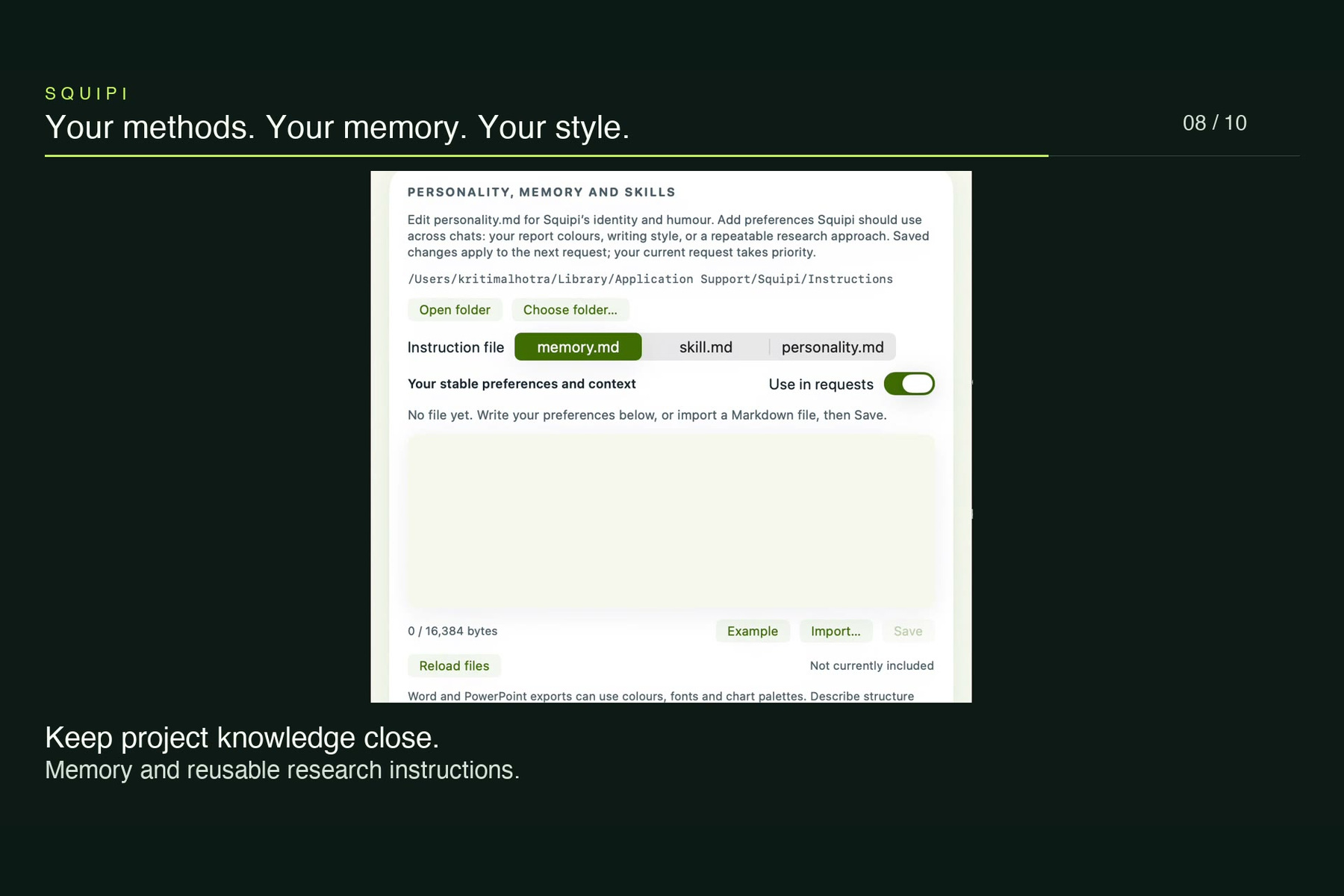
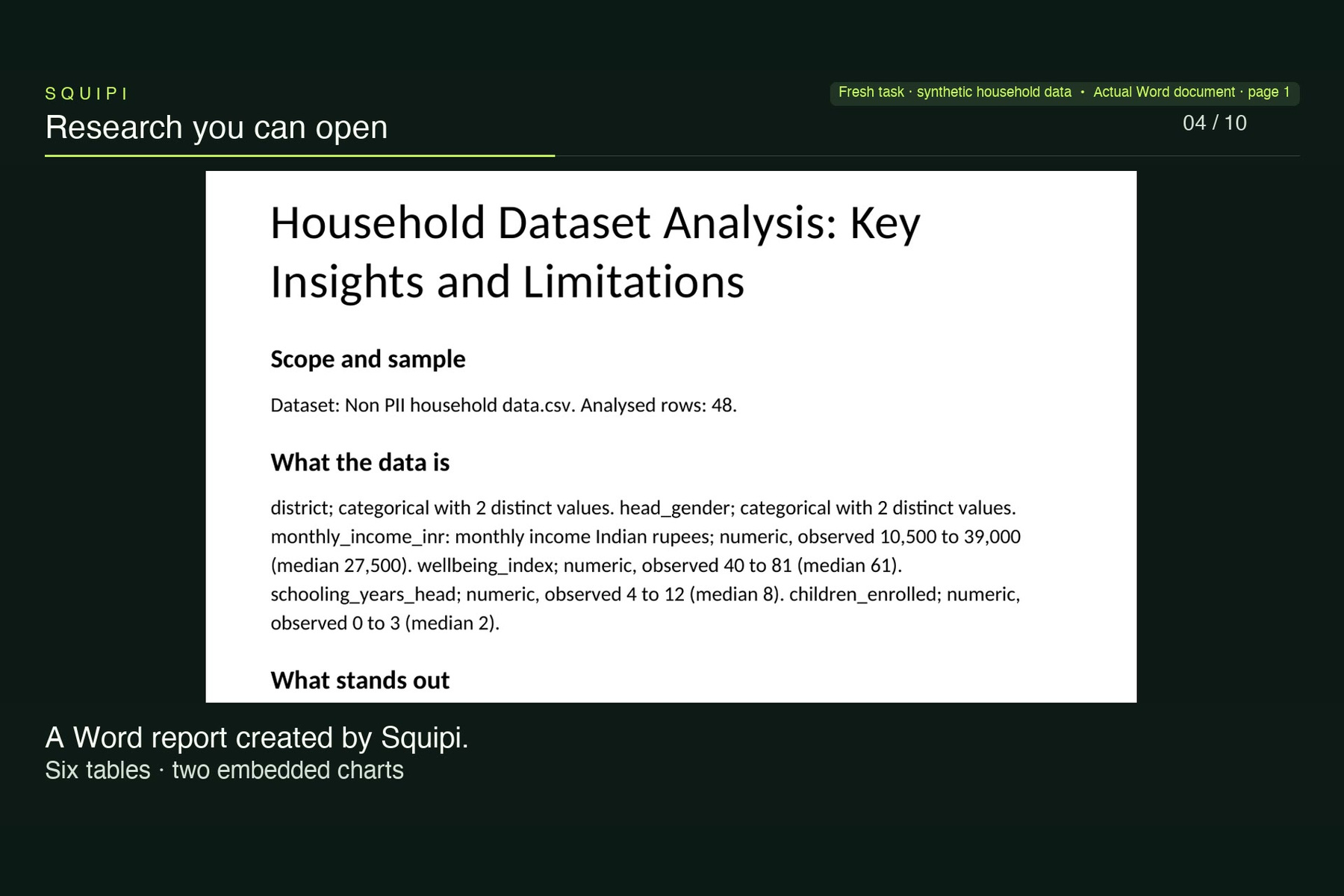
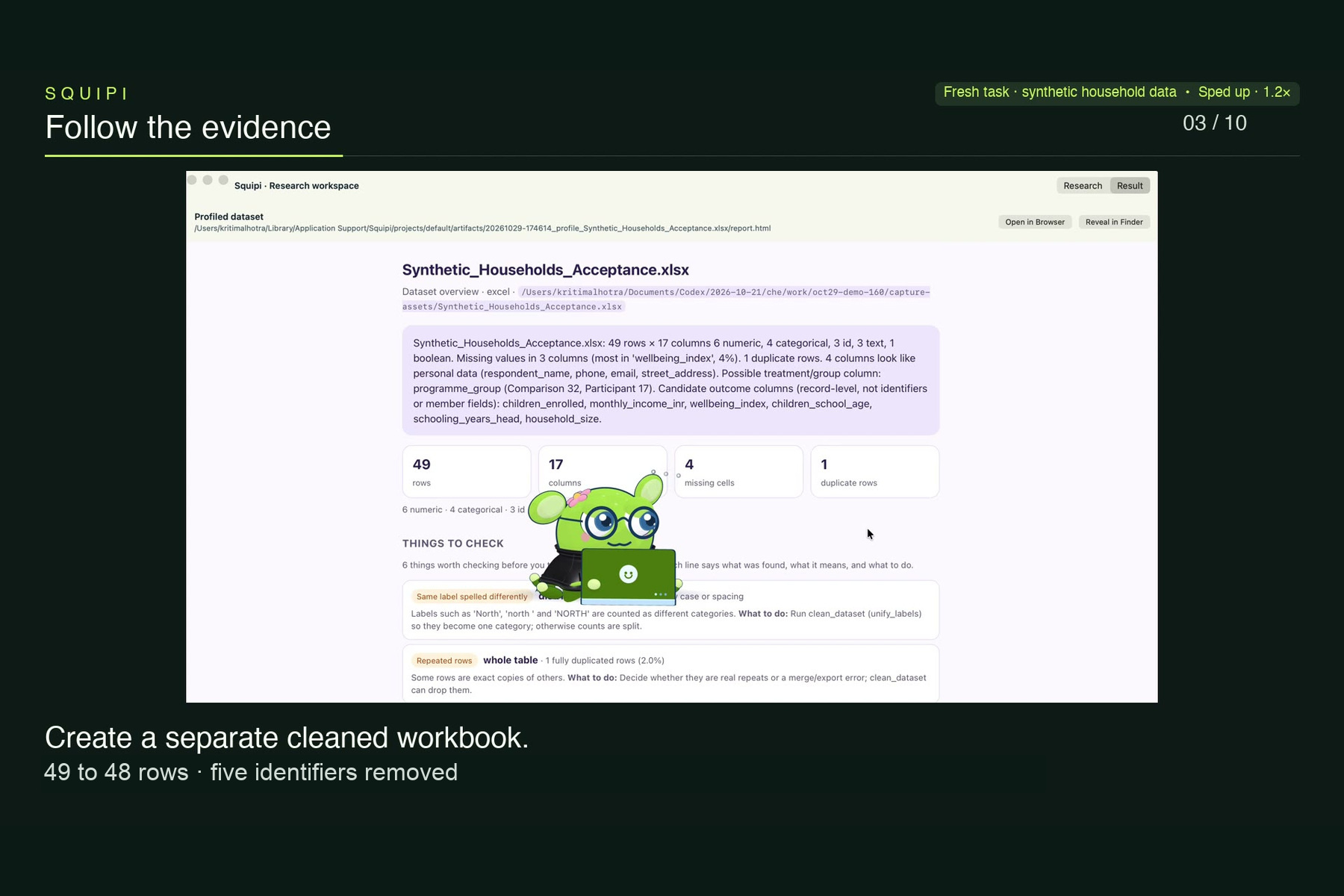
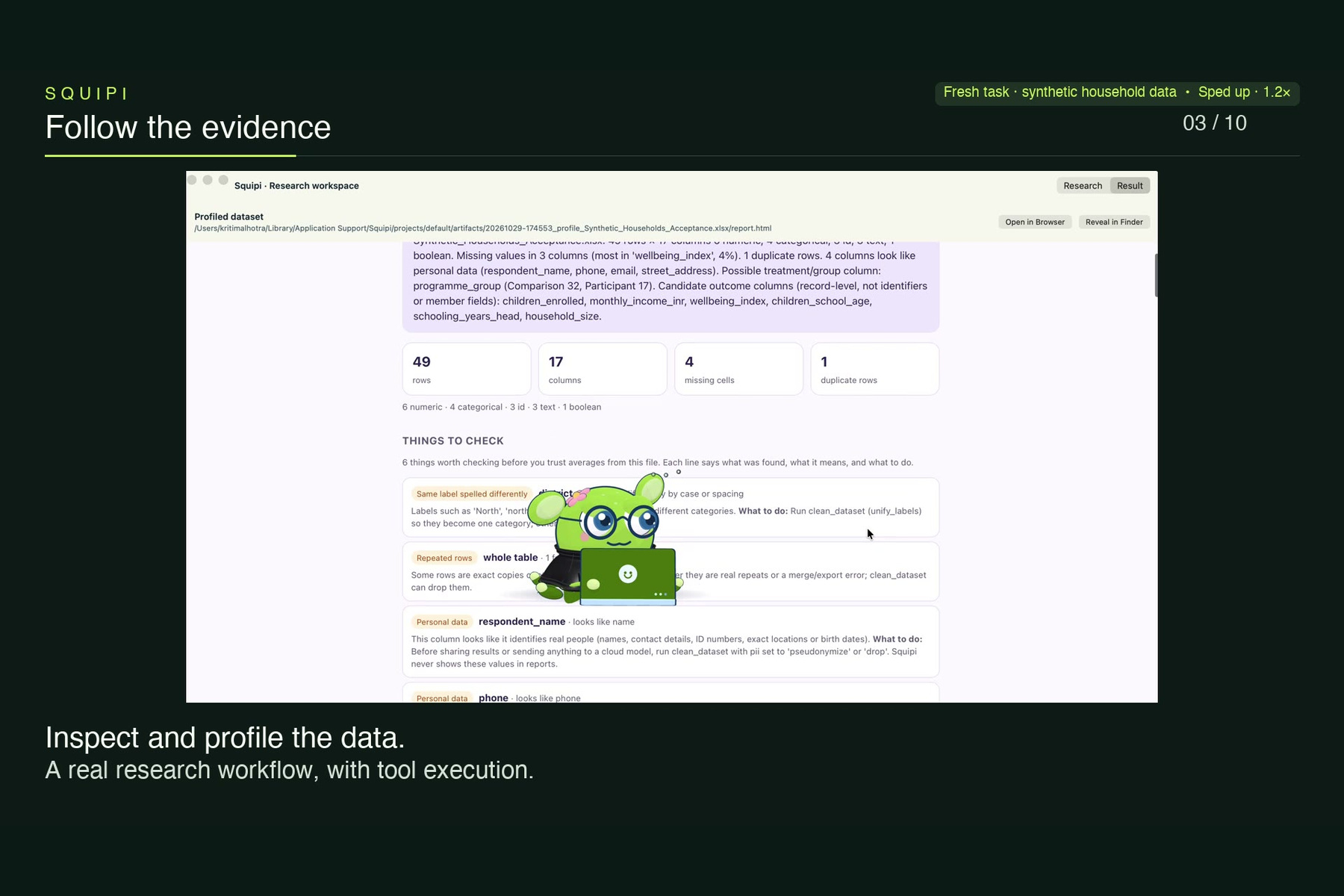
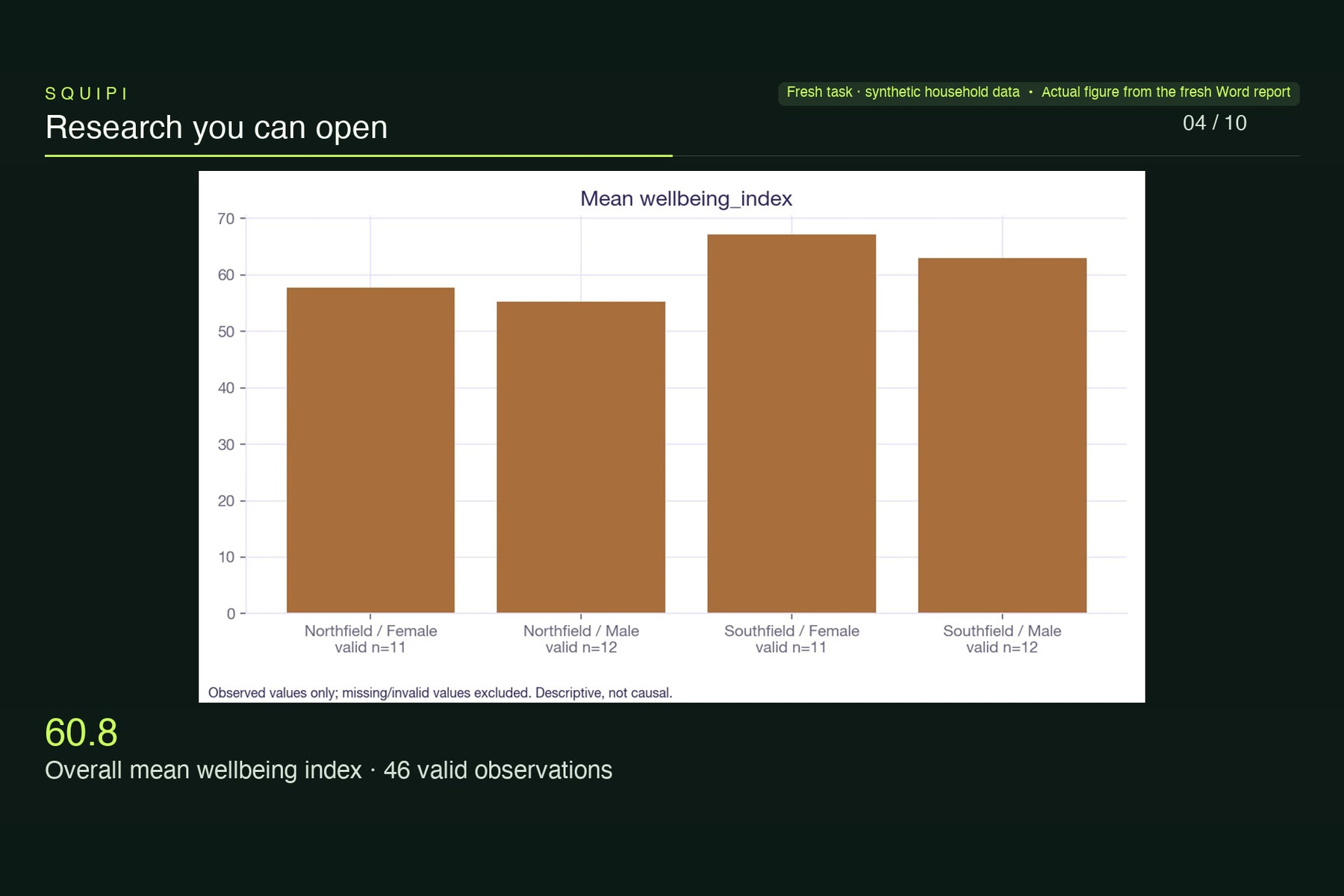
Squipi profiles, cleans and anonymises data, then runs the impact-evaluation toolkit: randomisation with stratification and balance checks, difference-in-differences, treatment effects with clustered errors, attrition and Lee bounds, regression discontinuity, matching, cost-effectiveness and ROI. It reads PDFs and Word reports with page citations, combines datasets with lineage, and writes Word and PowerPoint briefs from saved templates. It listens and speaks, writes meeting notes on-device, and learns procedures locally. Models propose; deterministic code computes. Every number in an answer is traced to a tool result or removed.
How I built it
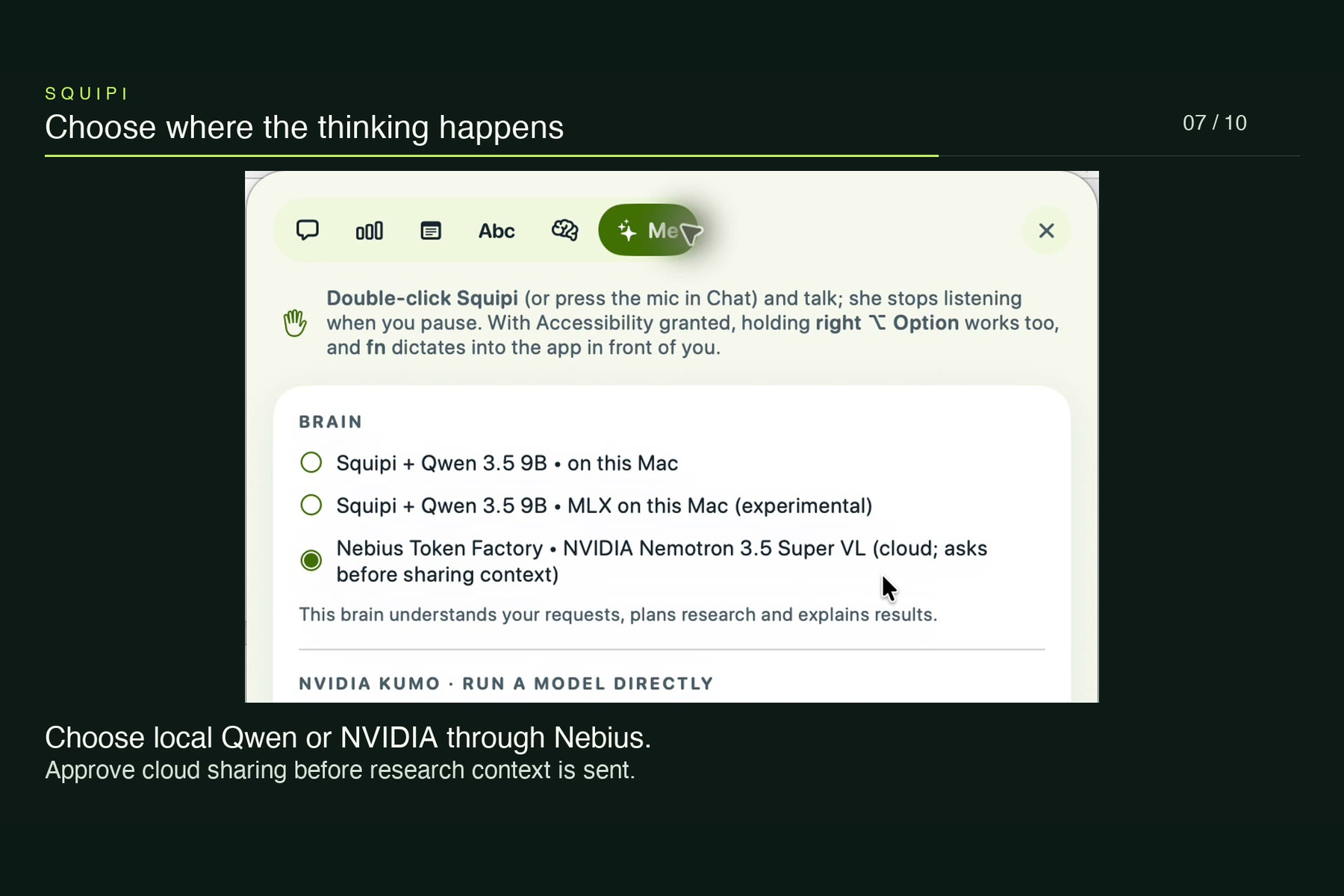
A Swift macOS app drives a Python worker with 75 typed tools (pandas, PyFixest, DoWhy, Presidio, Docling, python-docx, python-pptx, OpenAlex). One harness serves three brains: Qwen 3.5 9B on Ollama or MLX locally, and NVIDIA Nemotron 3.5 Super VL, Lightning and Nemotron 3 Ultra on Nebius through the OpenAI-compatible API. Cloud use goes through a per-task approval dialog showing the exact payload and byte count, an egress log, 7-day expiring approvals, and a local-only mode. The host extracts a checkable contract from each request, keeps a number ledger, profiles the dataset before the model's first round, and derives missing arguments from the data instead of refusing. Squipi also uses NVIDIA Kumo's forecast as an optional analytical tool.
Challenges I ran into
A 9B model narrates instead of acting, forgets long rule arguments loosely. Our first answer was more rules, and aday of per-incident fixes made the agent slower. The fix was fewer rules and more deterministic layers: a prompt diet with a hard ceiling, structure detection for 1,000-column roster exports, derilter tool, and a review that only judges what it can verify. On the cloud side, Nemotron's reasoning could spend the whole output budget with no visible text, and document spans piled up to 50K tokens; both needed host-side fixes, not prompts.
Accomplishments that I'm proud of
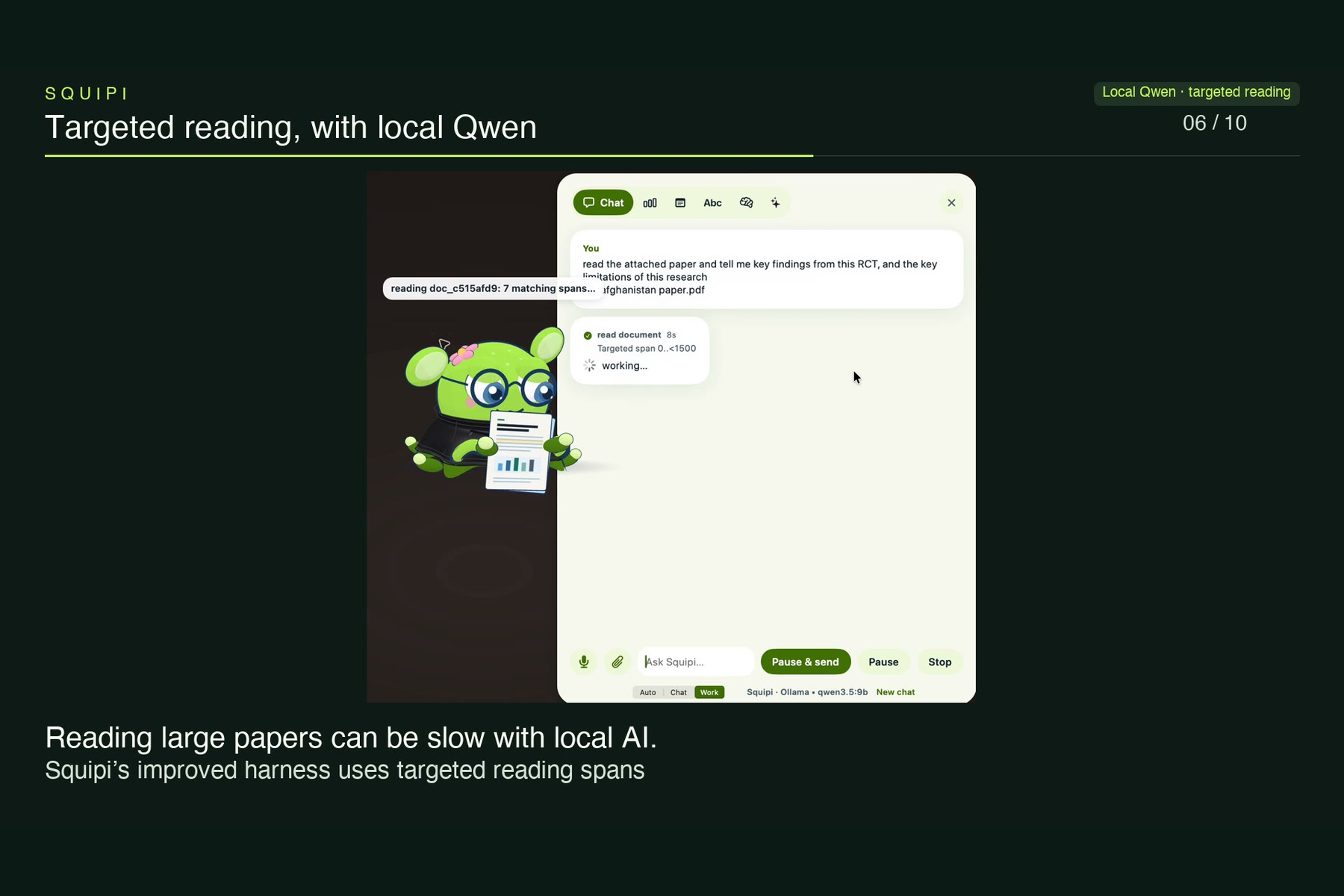
On a set of 9 new impact-evaluation tasks I ran, Nemotron 3.5 Super VL passes all nine exams, each in 16 to 46 seconds, through the same harness as the local brains. Squipi's agent harness is strong on end-to-end policy research tasks and performed well through local model too. I'm also proud of being able to optimise on Apple Intelligence on MLX, as well as successfully reducing reading times and long document ingests on local model.
What I learnt
Building Squipi taught me how much it takes to turn an open model into a research companion. I learned to work across local models on Ollama and MLX, NVIDIA Nemotron on Nebius, and the tools that connect a model to documents, data and statistical methods.
I learned that privacy needs practical choices: researchers should be able to work locally with confidential material and choose when a task goes to the cloud. I also learned how much the agent’s harness matters. Keeping track of the right files and the original question, managing context, and checking outputs are as important as the model itself.
Testing complete research workflows changed how I judge progress. A report existing is not enough: it has to use the right data, answer the question and make its findings clear. Making targeted reading work on a local model also showed me how careful engineering can make long-document research more practical on a laptop.
What's next for Squipi - Private Research Agent for Impact Evaluation
A nightly evaluation matrix on both local brains and Nemotron, so regressions show up as numbers. Grammar-constrained actions for MLX. Siri and Shortcuts intents so a field researcher can start notarised build.
On-device meeting notes and NVIDIA Kumo
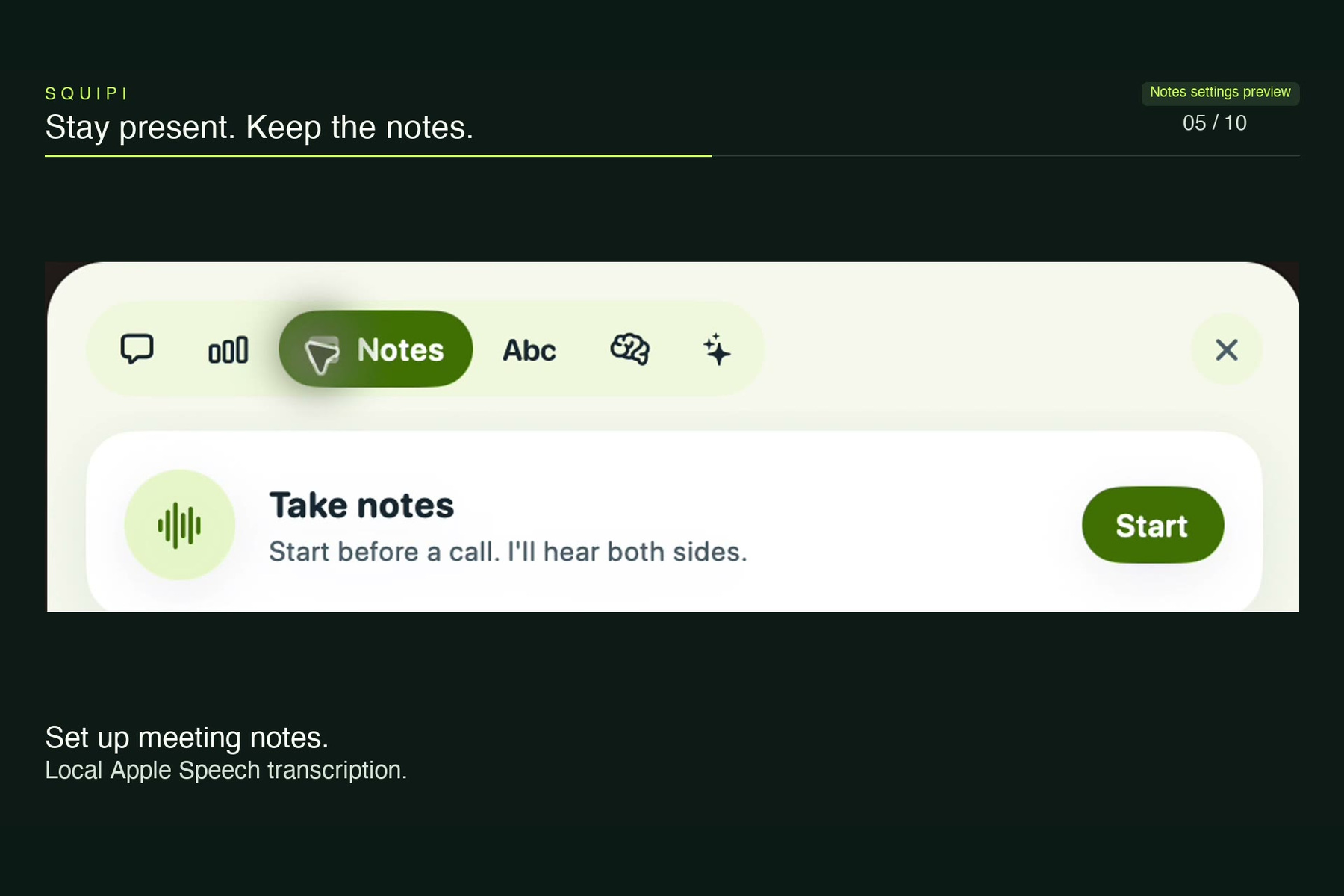
Squipi uses Apple Speech for on-device meeting transcription and, on supported Macs, Apple Intelligence for local summaries. This gives researchers an option for everyday note-taking without sending the transcript to a cloud model. Microphone and speech permissions are required; remote participants are grouped as call audio rather than individually diarized.
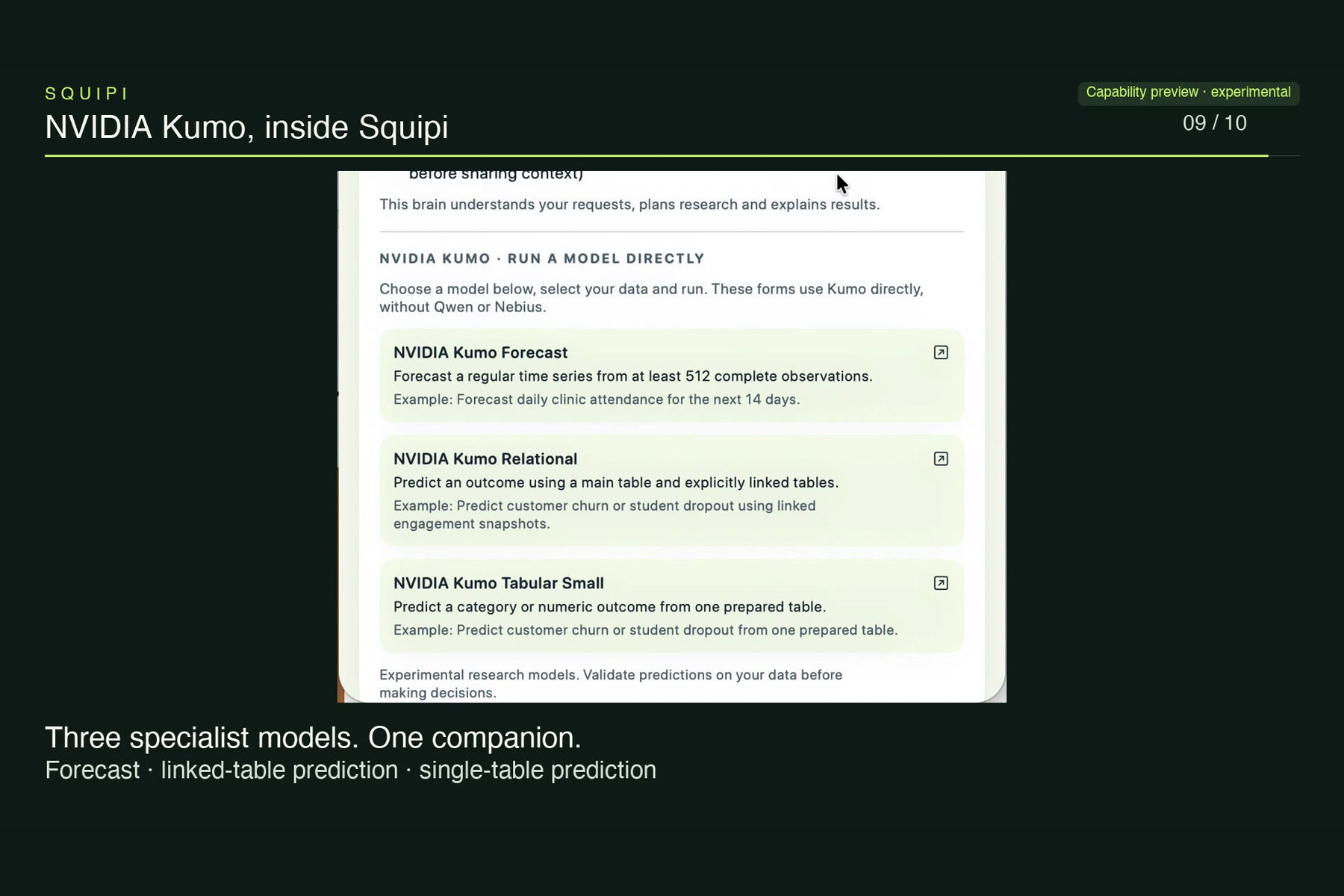
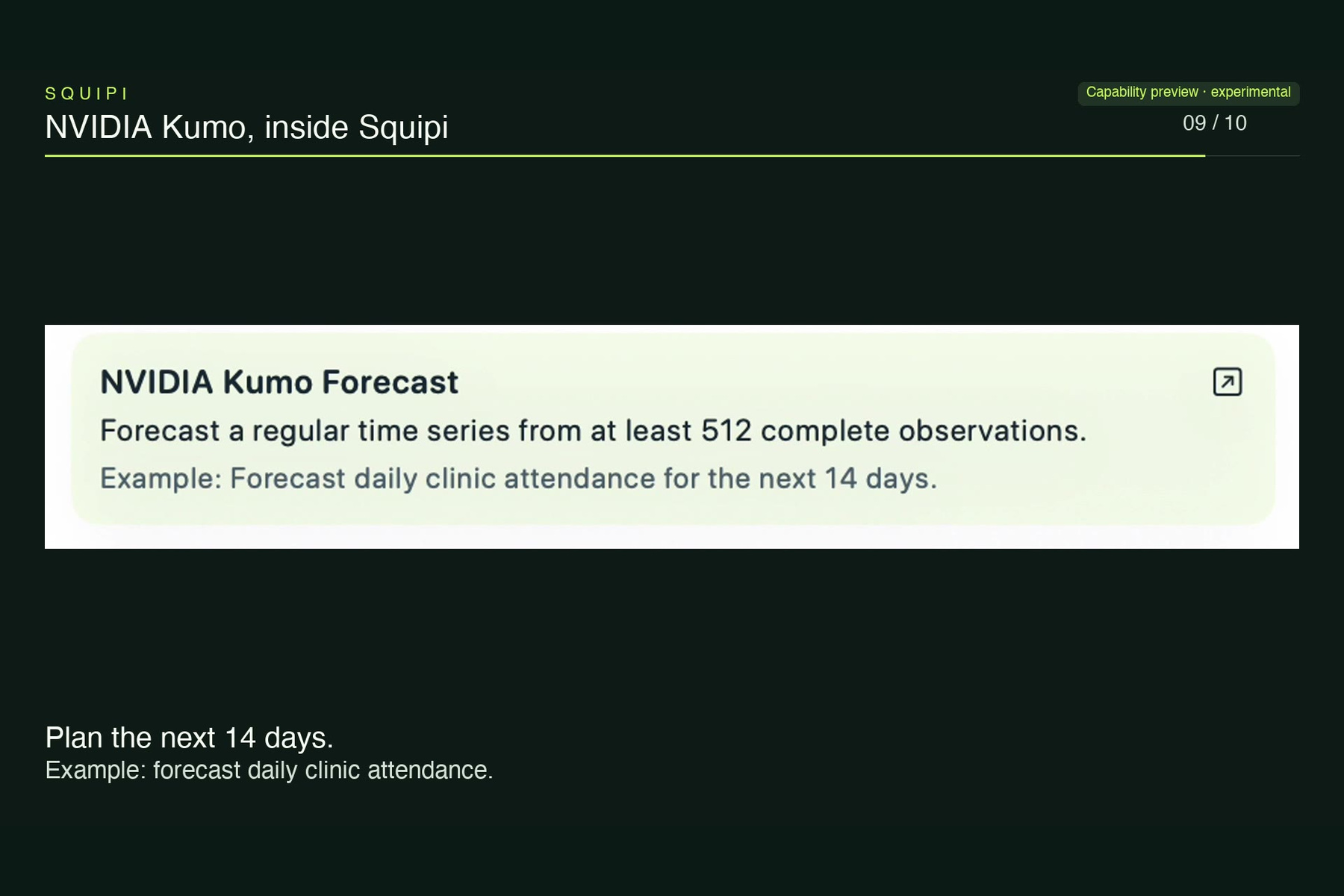
NVIDIA Kumo adds optional specialist models alongside Squipi’s conversational research agent. Kumo Forecast projects future values from a regularly spaced historical series, such as monthly programme attendance. Kumo Relational and Kumo Tabular support classification or regression predictions, such as student dropout or customer churn risk, from appropriate data. These specialists require additional setup; predictions are not causal estimates and should be checked against baselines. In one local synthetic forecast check, the tool ran successfully, while simple baselines were more accurate; the relational and tabular integration checks established execution, not predictive performance.
Apple-notarized Squipi pre-release
The Squipi Mac pre-release is signed with my Developer ID and notarized by Apple. Download the Apple Silicon app from the link below, unzip it, and drag Squipi.app into Applications. It requires macOS 26 or later. Installation instructions and test data.
Try the Apple-notarized Squipi pre-release on GitHub — download the notarized Mac app, installation instructions and synthetic test data.

