-
-
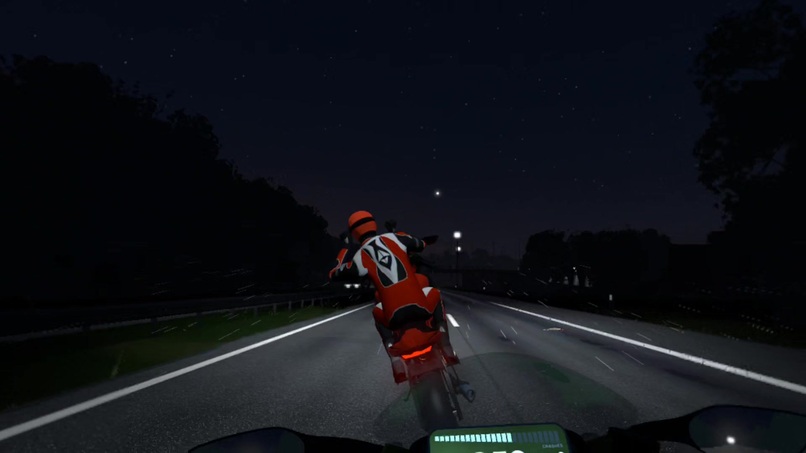
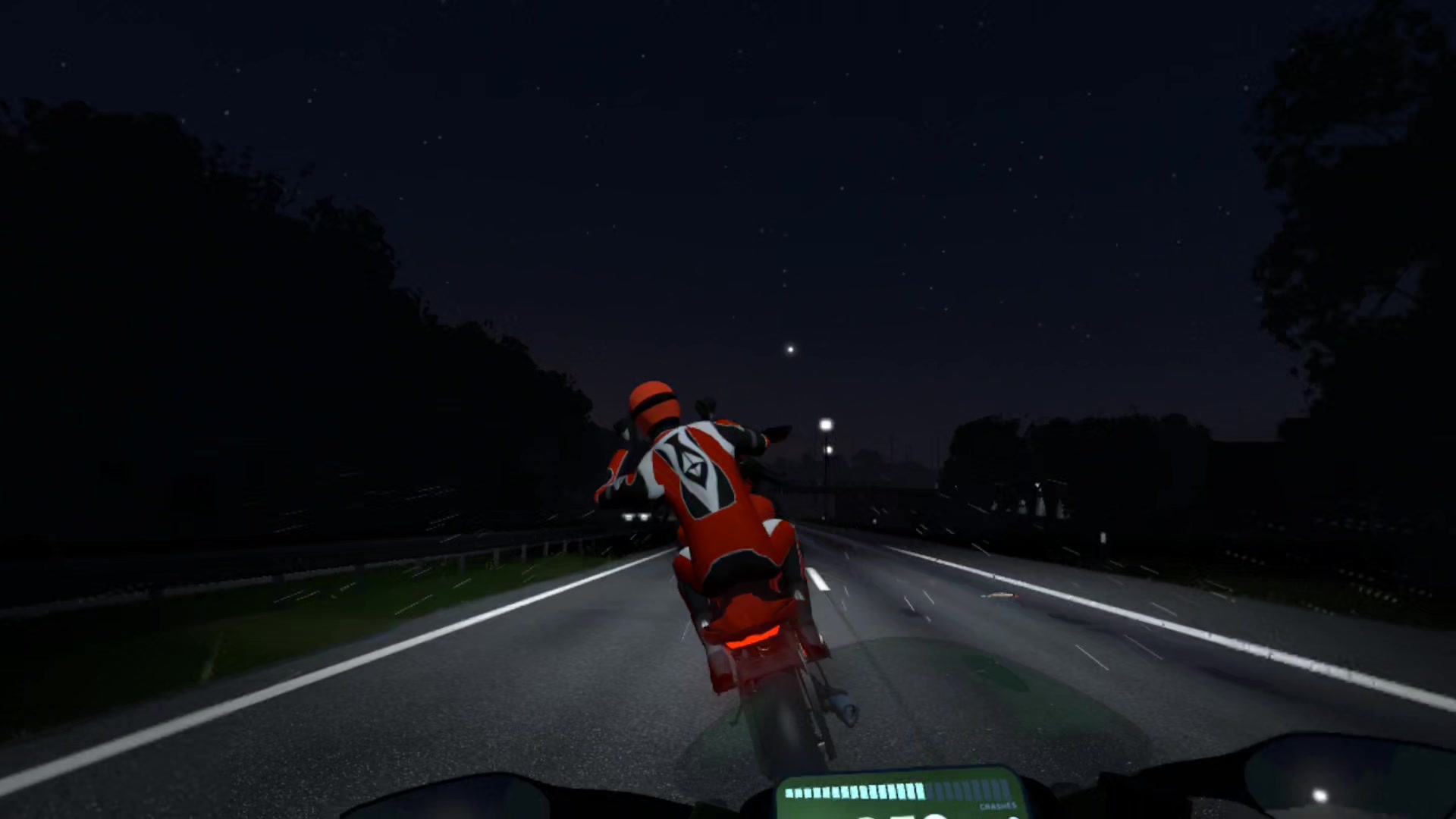
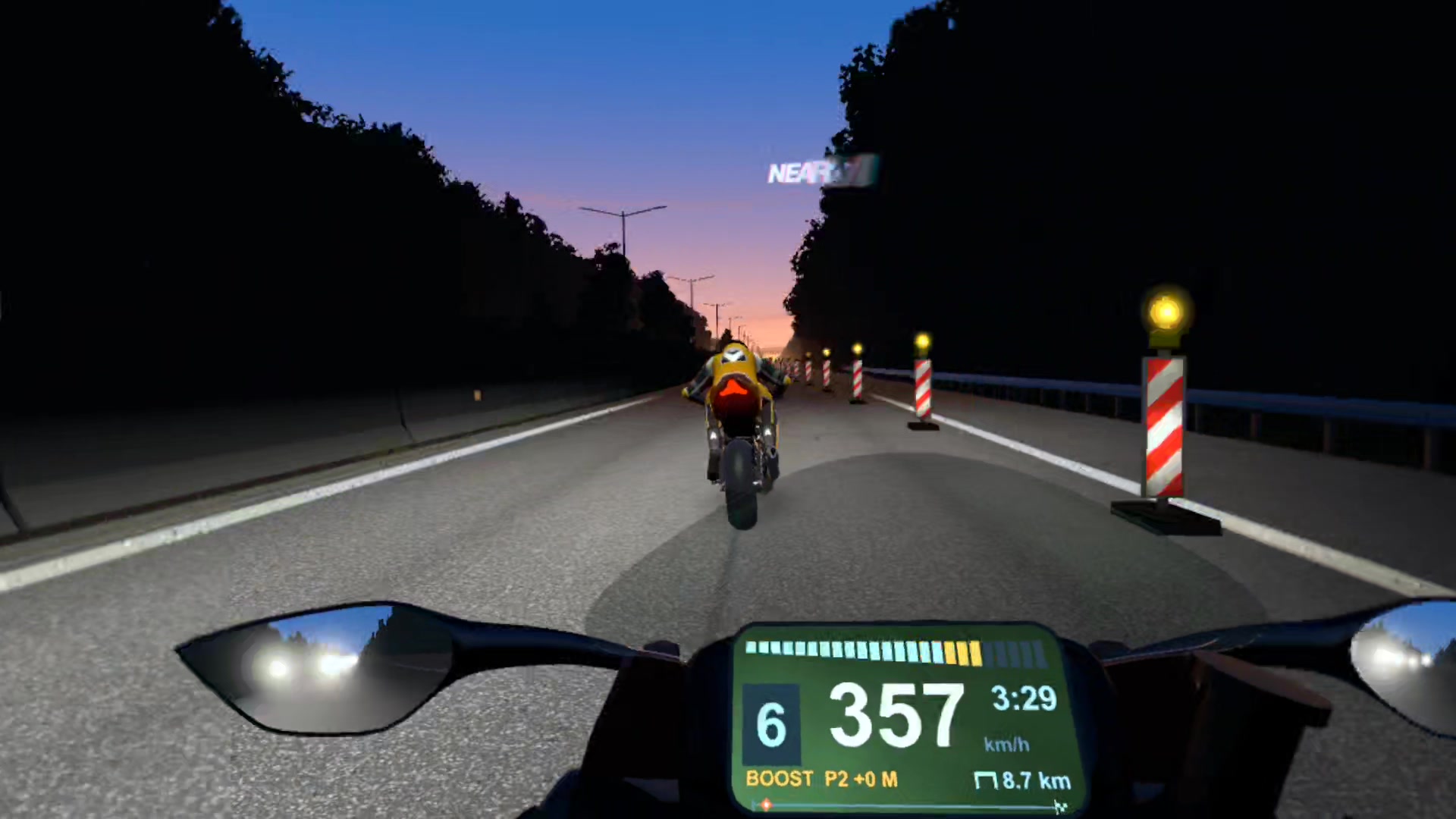
On the Autobahn at night, the other rider pulls a wheelie right in front of you.
-
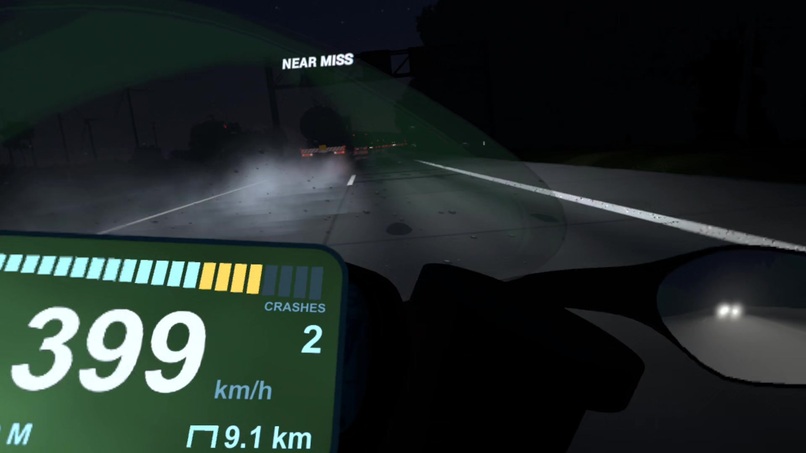
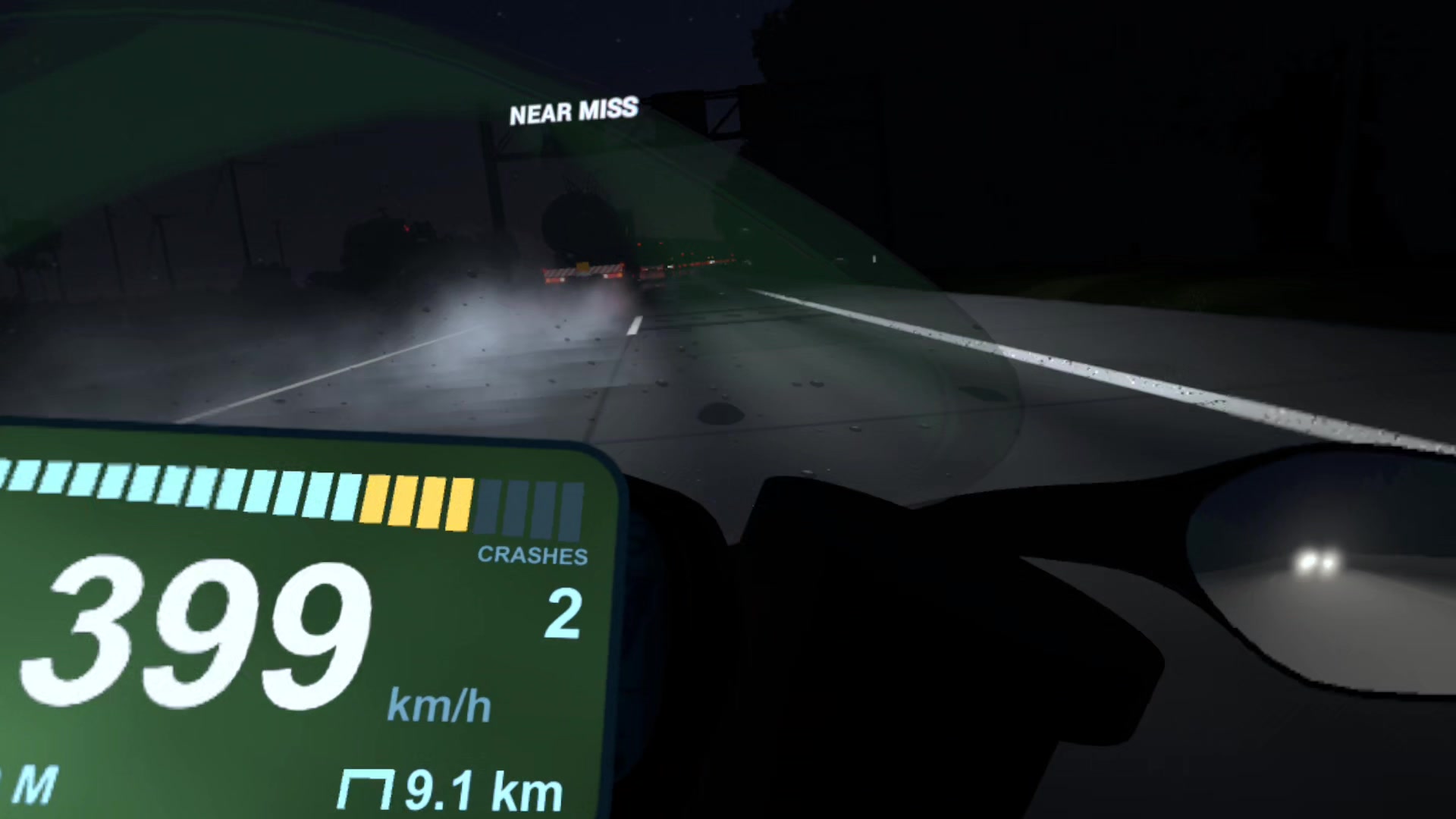
Through a lorry's spray on the wet Autobahn at 399 km/h, droplets on the screen.
-
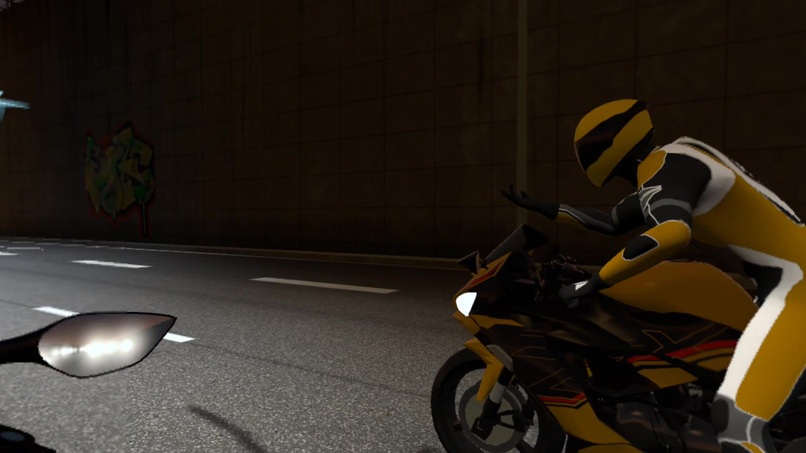
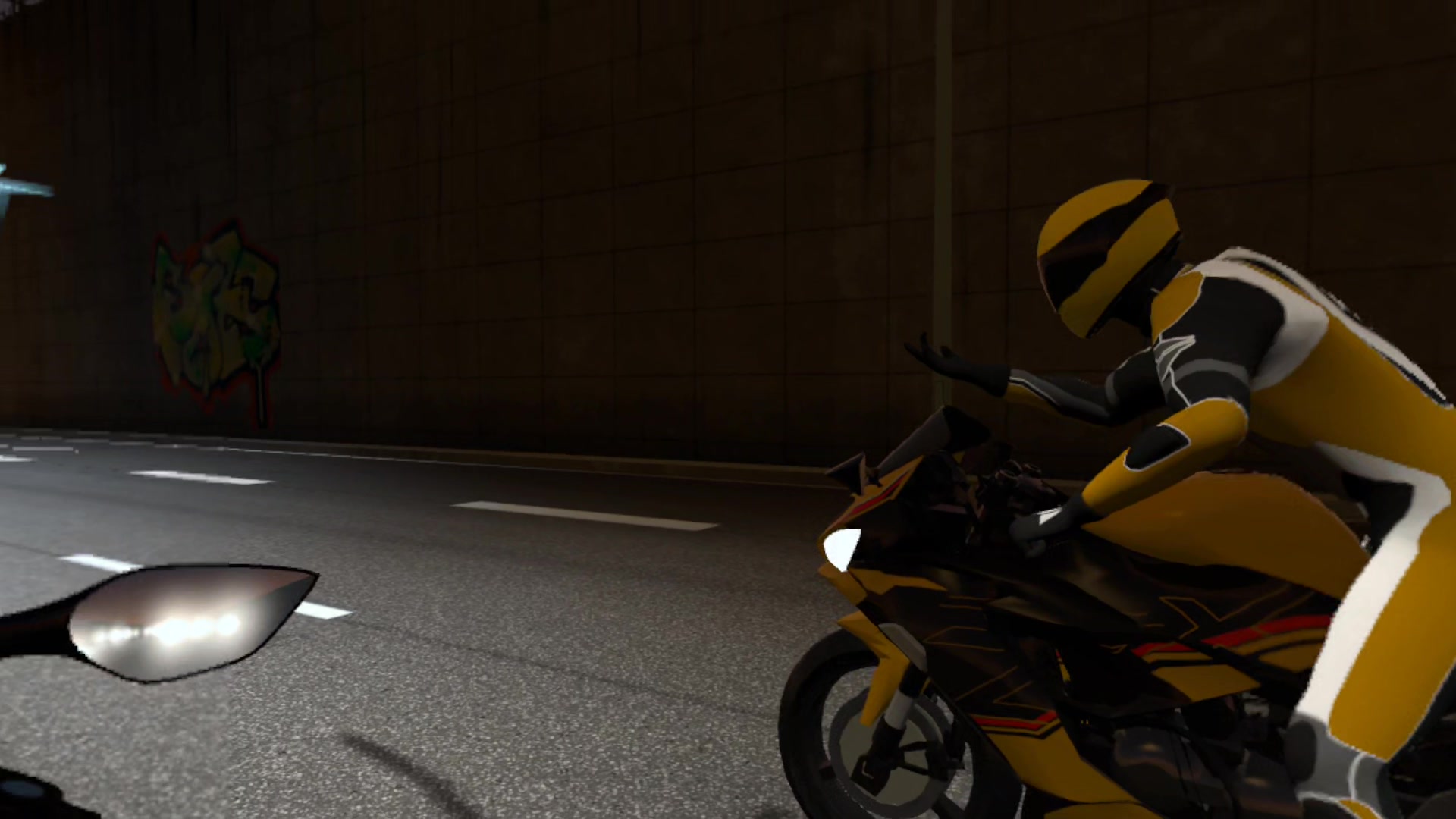
Head to head: your rival beside you in the lobby before the vote.
-
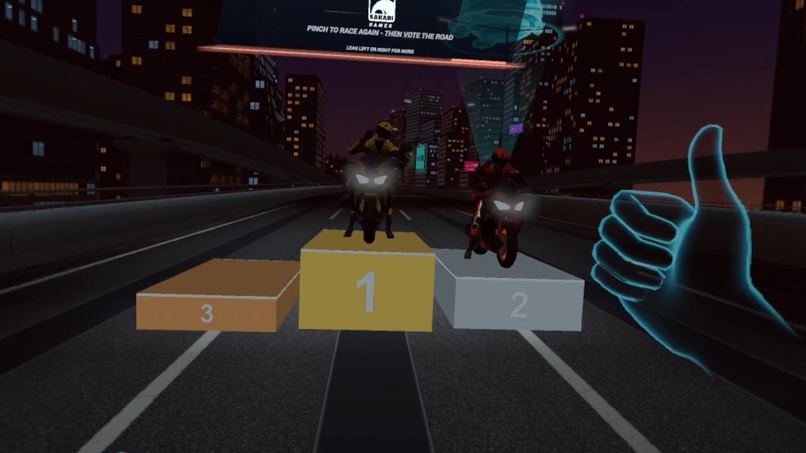
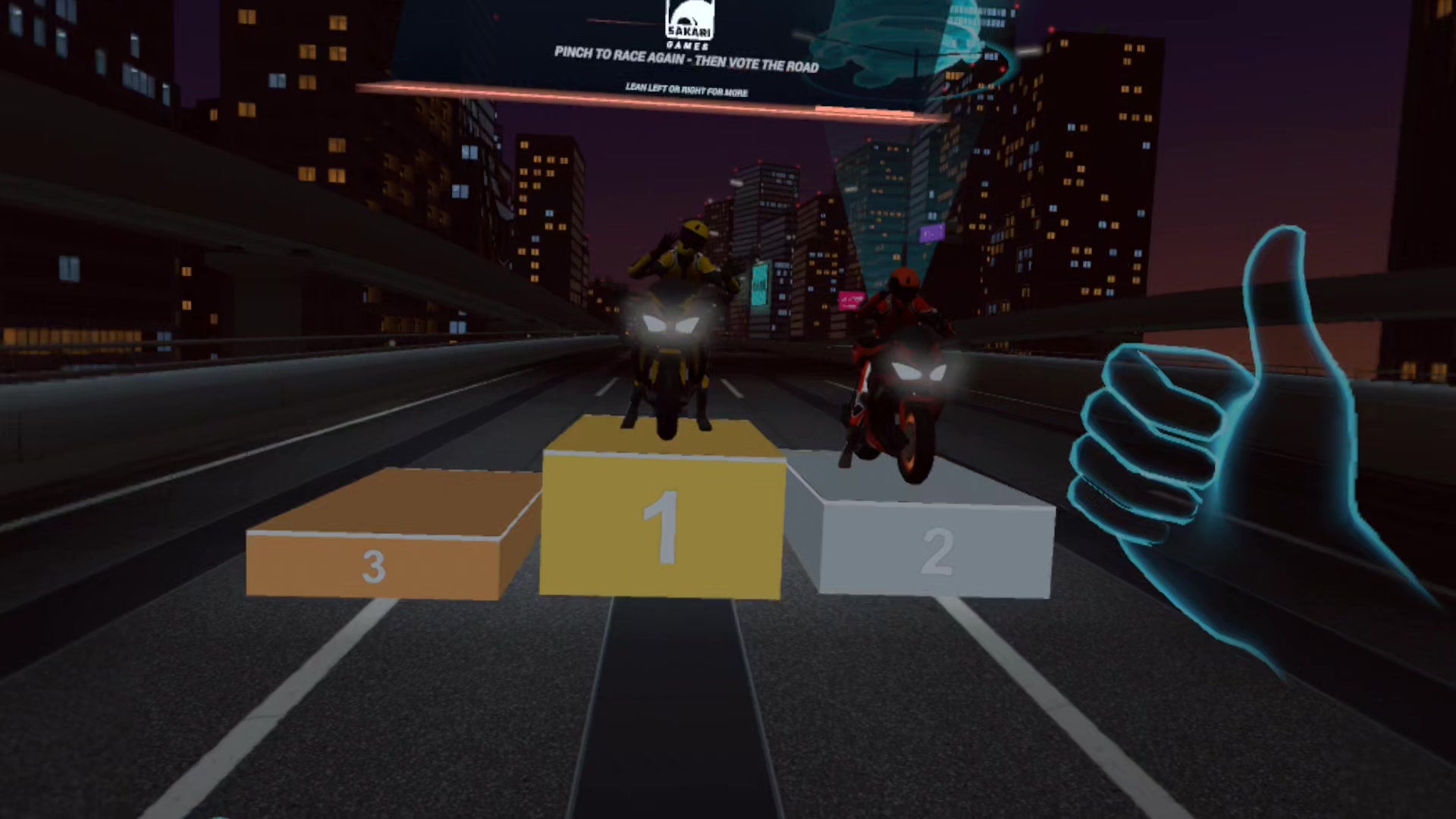
The podium after a race, and a thumbs up with your real hand.
-
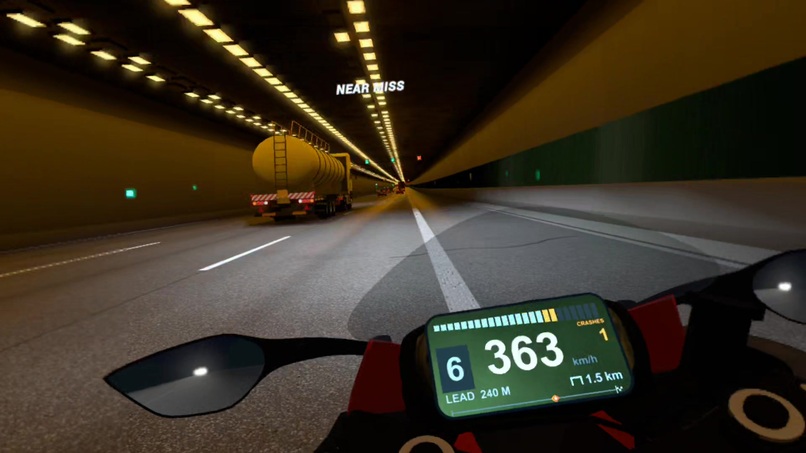
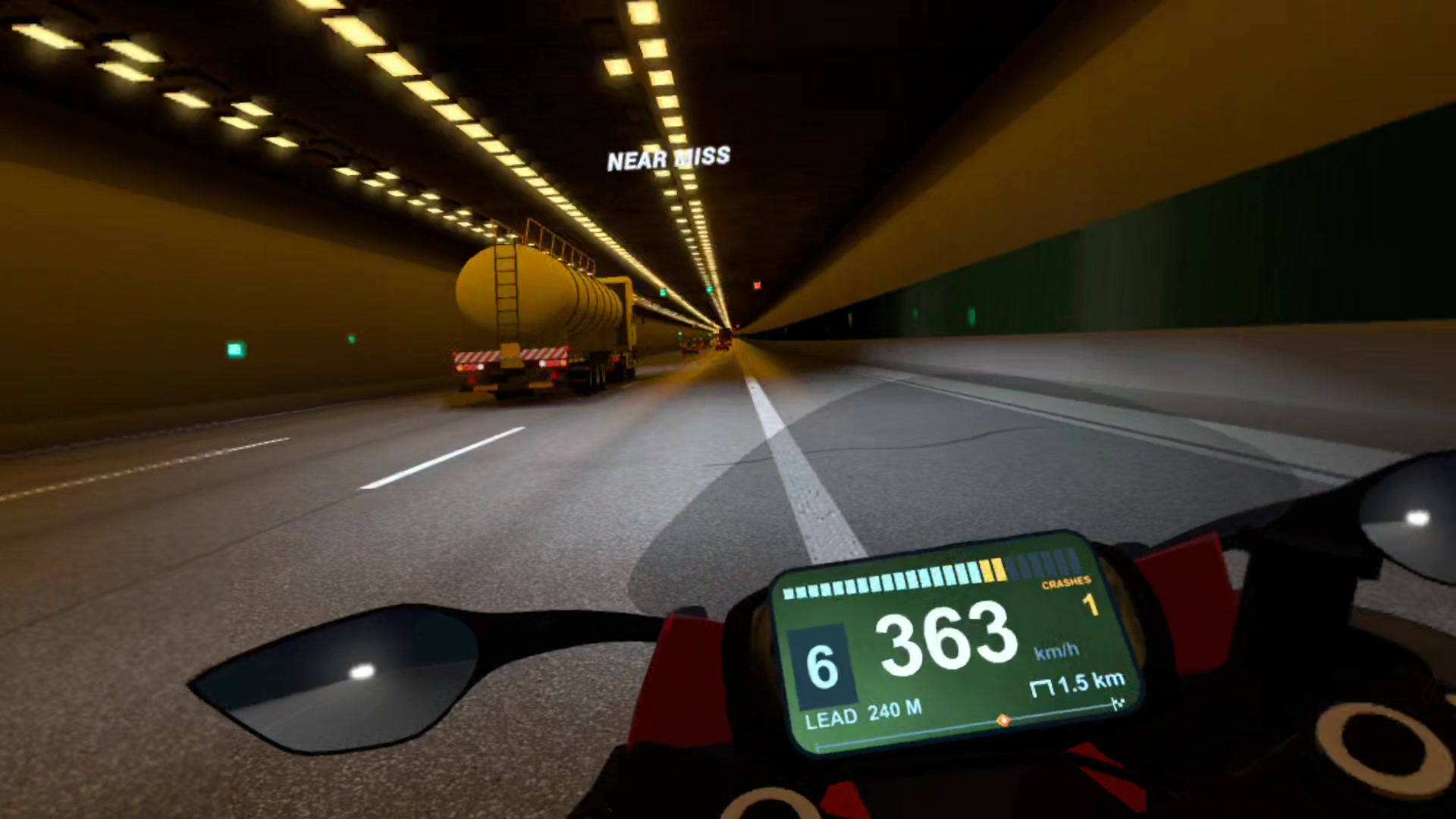
Threading the traffic in an Autobahn tunnel at 363 km/h.
-
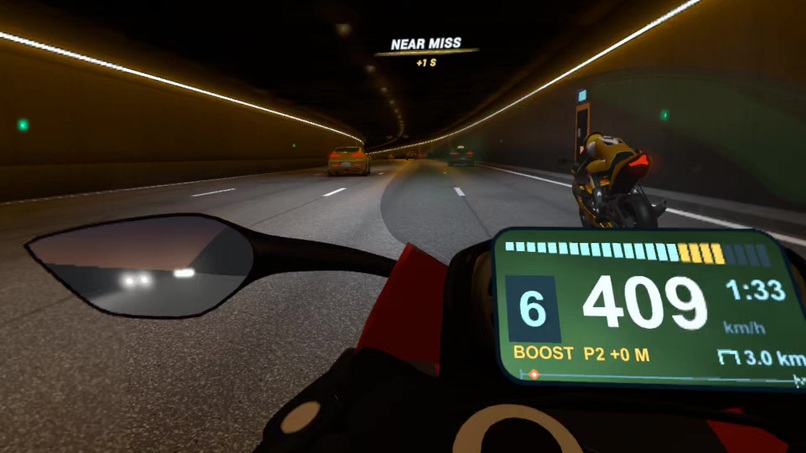
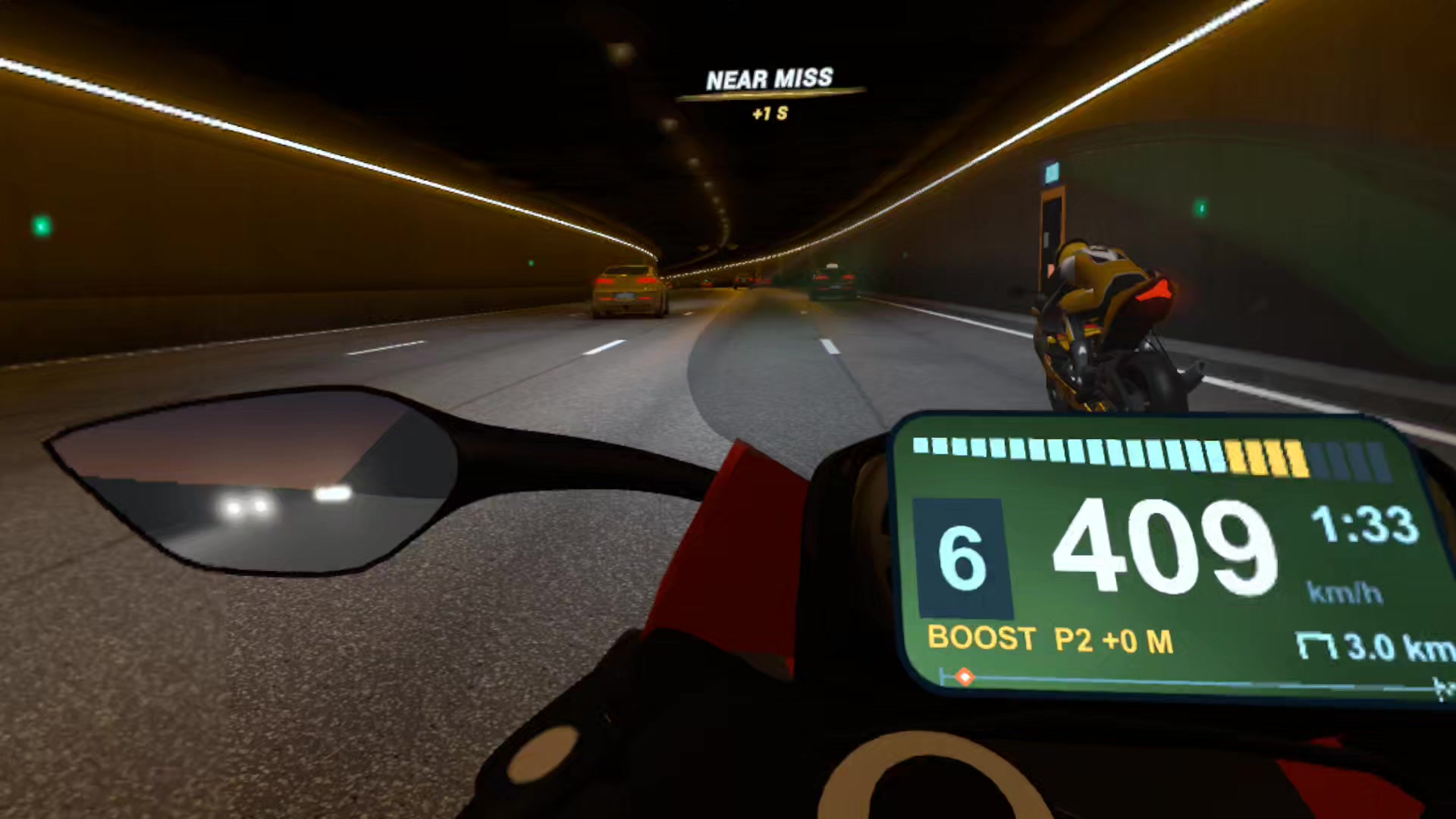
Chasing the other rider through a Périphérique tunnel at 409 km/h.
-
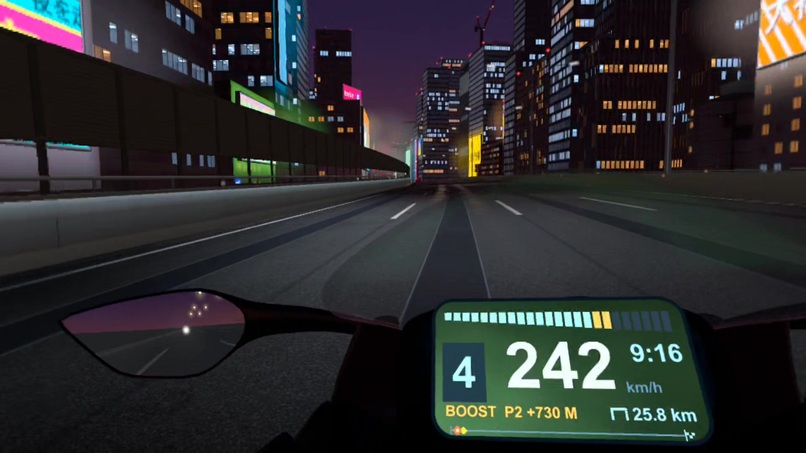
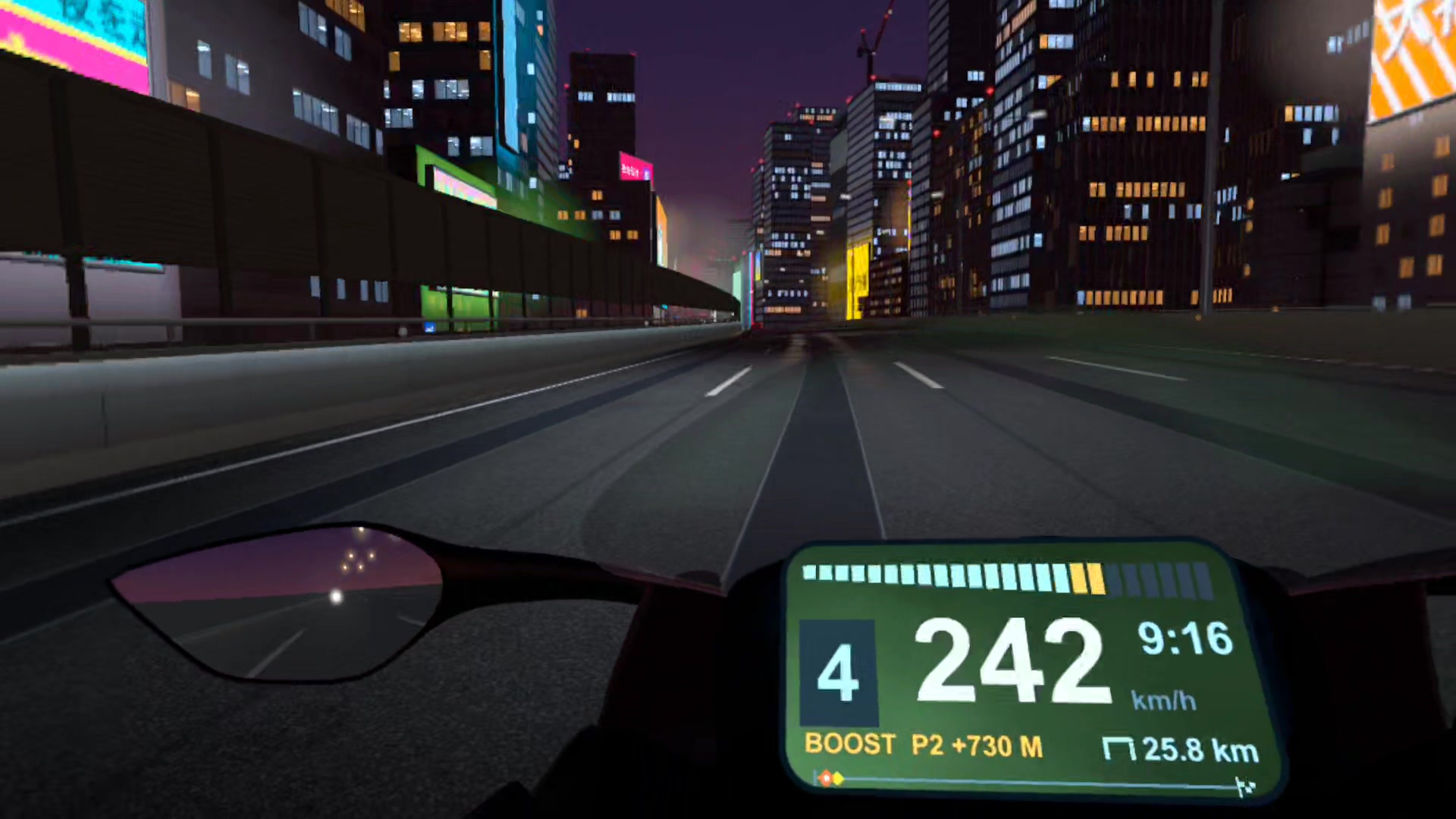
Fuyajō's neon skyline from the expressway.
-
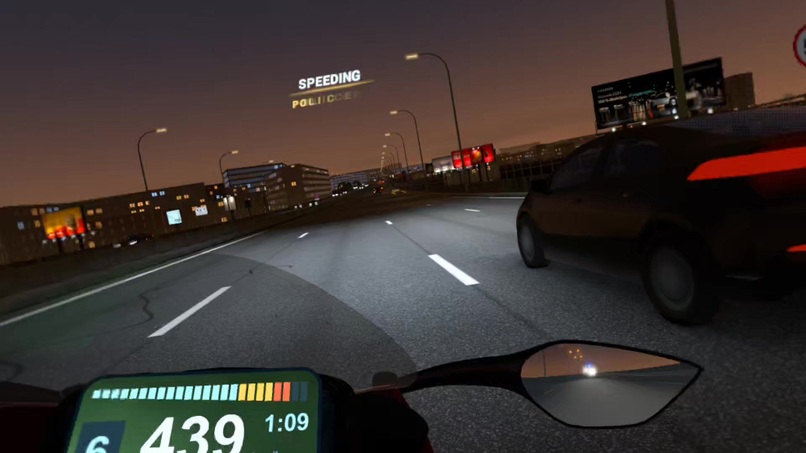
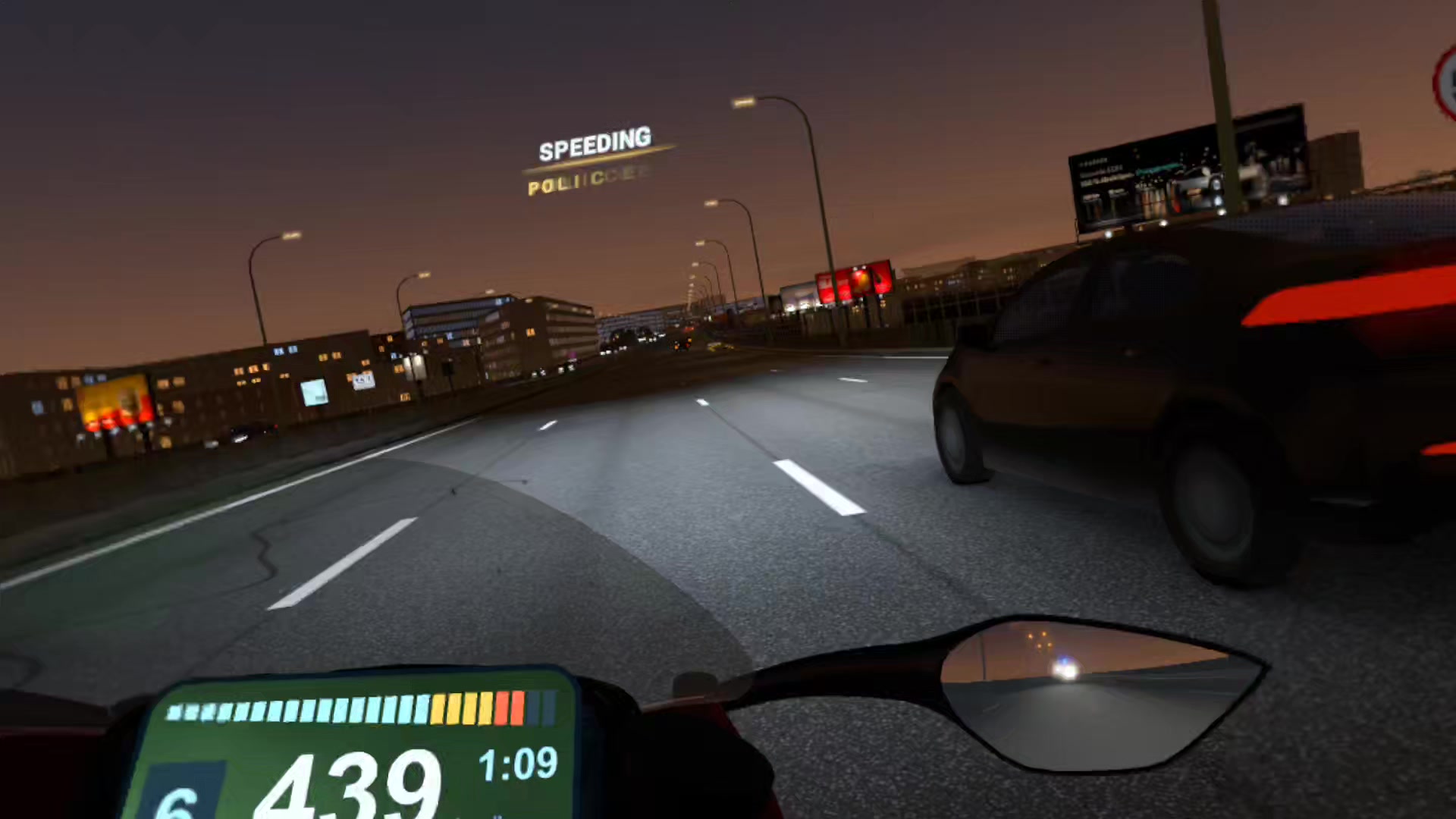
Squeezing past a car on the Périphérique at 439 km/h.
-
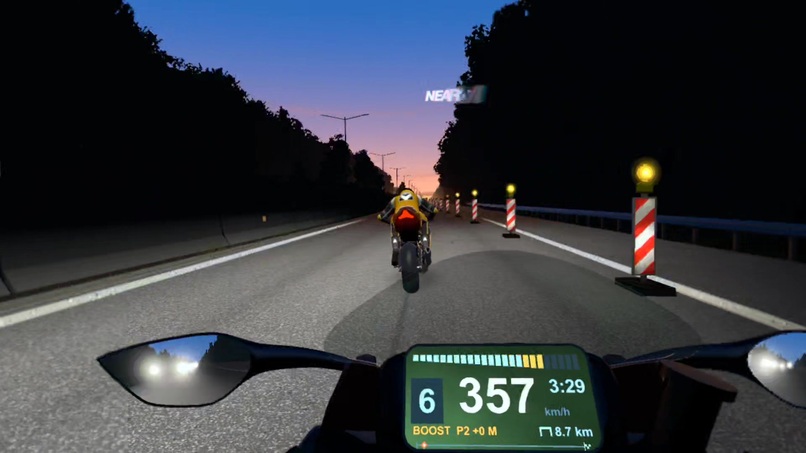
Following your rival through the road works on the Belgian motorway.
-
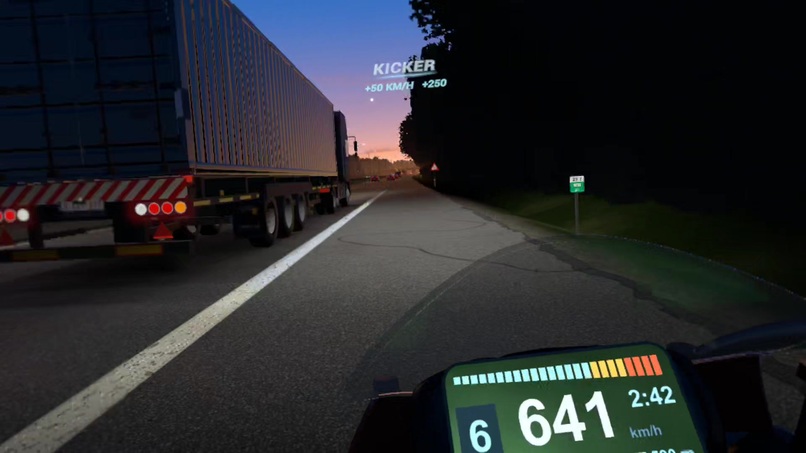
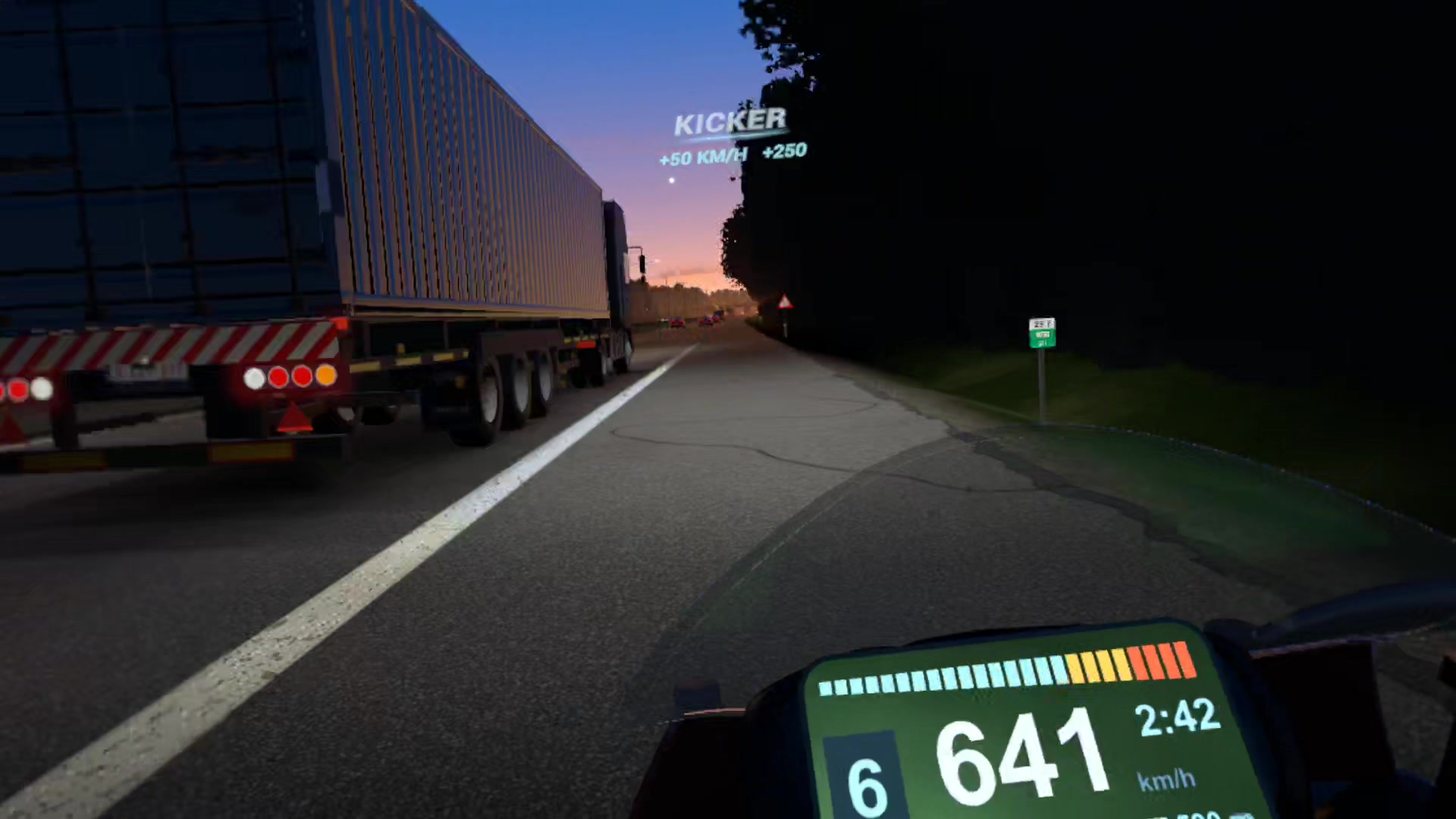
641 km/h past a lorry on the Belgian motorway at dusk.
-
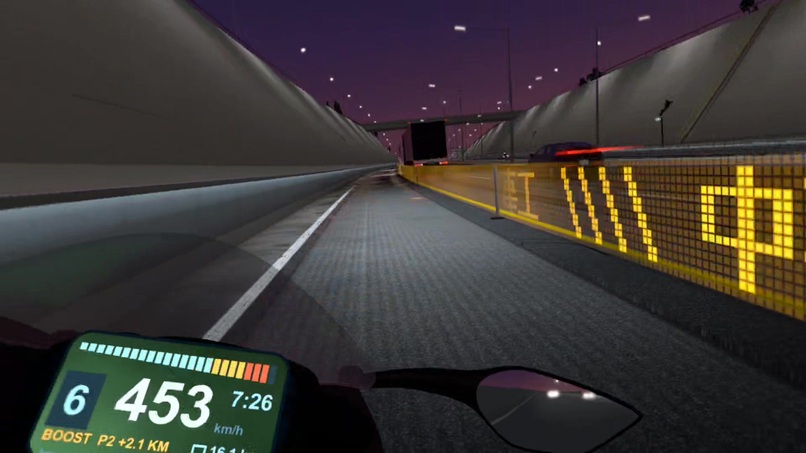
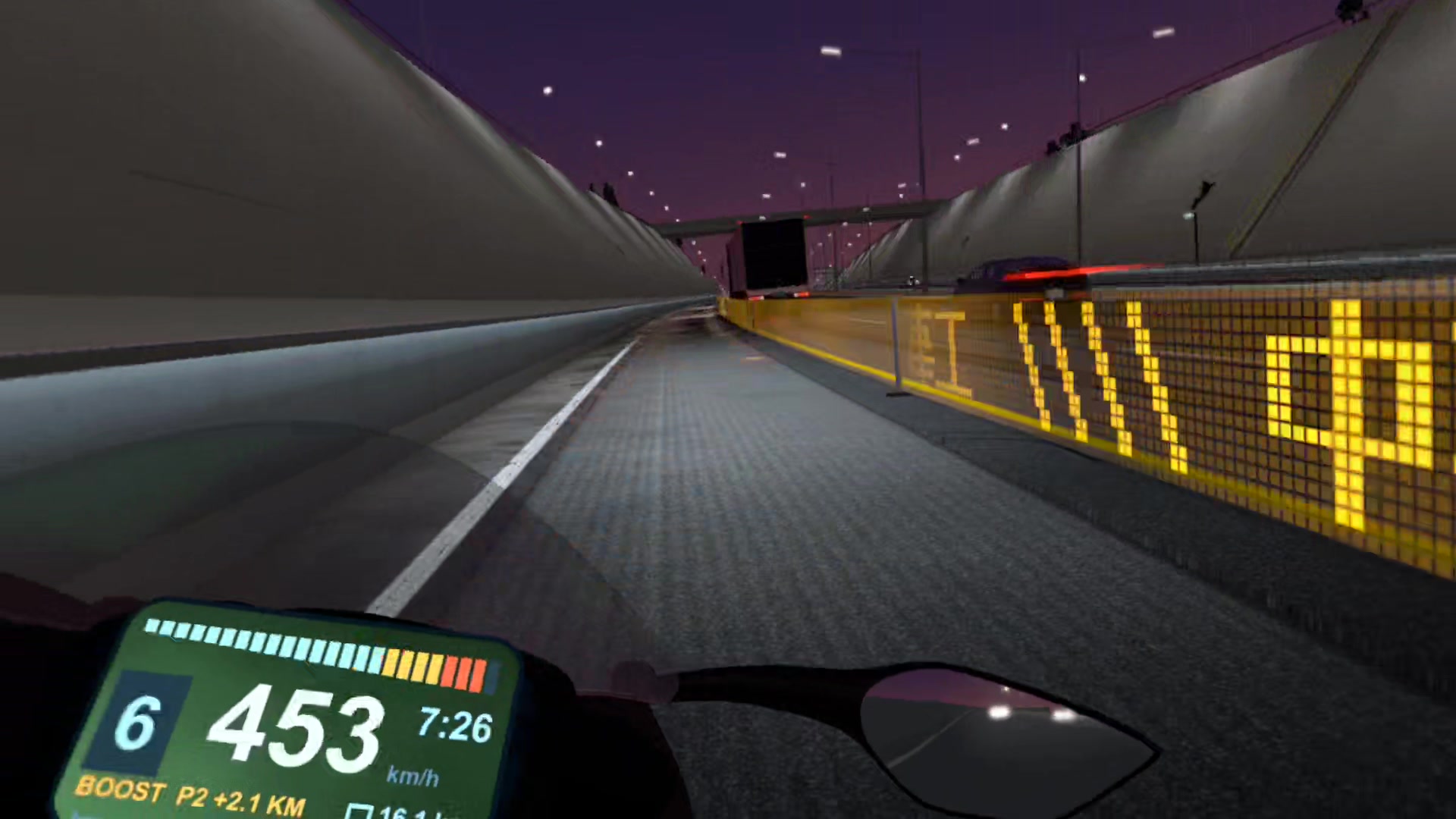
Fuyajō's road works: a wall of orange pixels at 453 km/h.
-
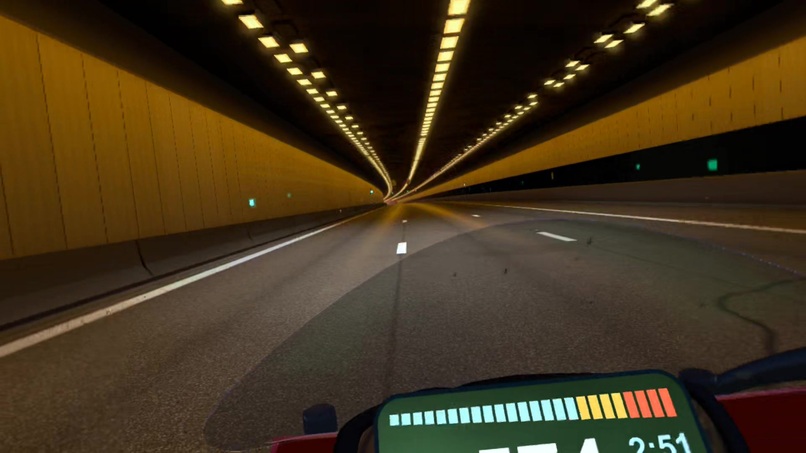
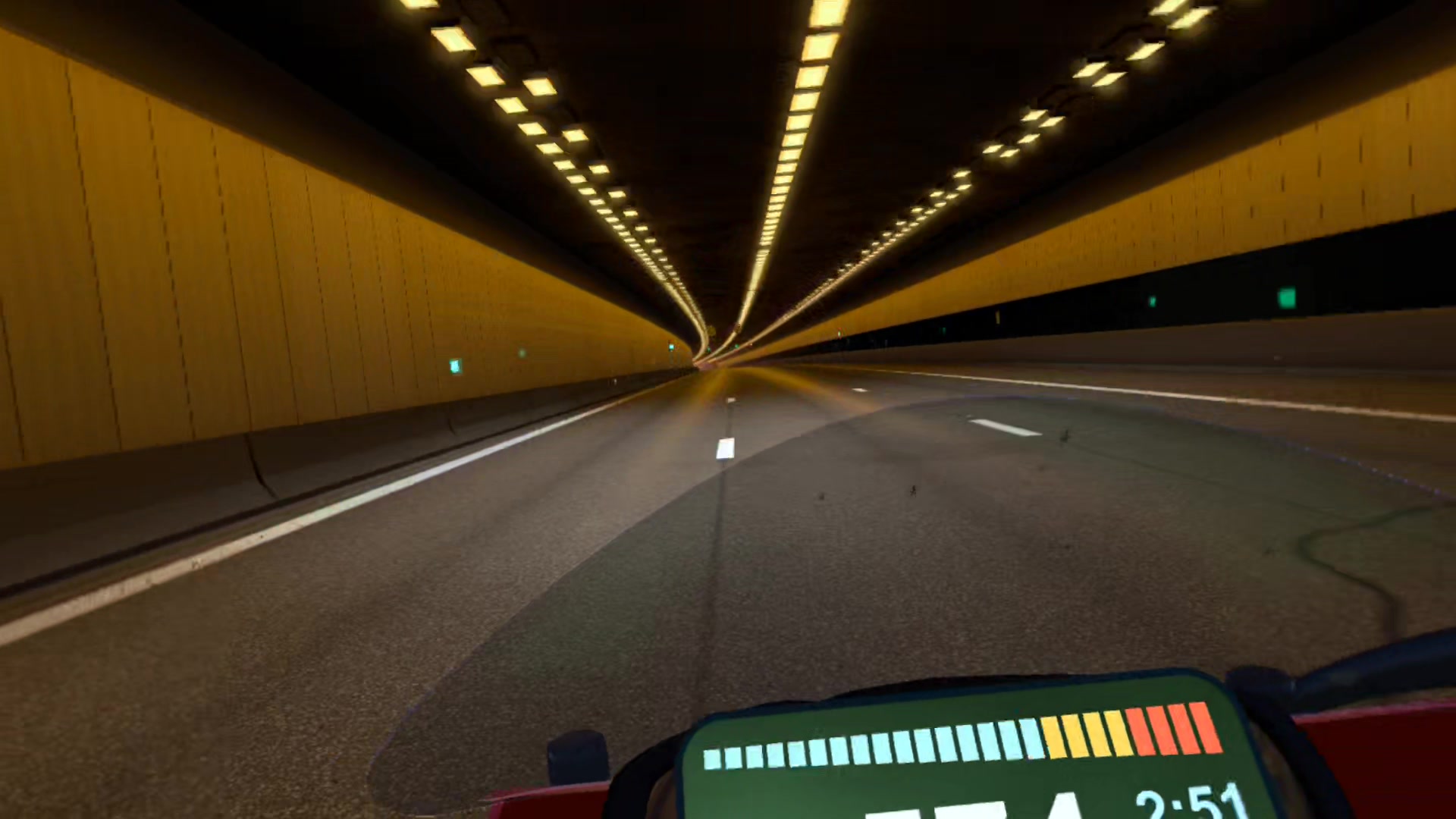
A Belgian motorway tunnel at close to 580 km/h.
Inspiration
Driving home with my kids after a visit to my parents in Holland, I was looking into a beautiful evening sky. The backlight turned the trees along the road into pure silhouettes: a great atmosphere made of almost nothing. Then a motorbike shot past us at 250 km/h at least. The kids and I were shaken, and we started imagining what it would feel like to ride through traffic at those speeds. "Squid" is biker slang for exactly that kind of daredevil. In VR you can be one without hurting anybody.
What it does
SQUIDS puts you on a superbike in traffic, and your body is the controller. No controllers needed, from the first menu to the last ride.
- Ride with your body. Lean or hang off the bike to steer, tuck in behind the screen to accelerate, sit up to slow down. Rather steer with your head? A peace sign switches to head-tilt steering.
- Hands free, hands first. You steer with your body, so your hands are yours. Pinch or lean to work the menus, give two thumbs up to restart, open your hand to recenter, throw the devil's horns to bounce the engine off the limiter and shoot flames out of the exhaust.
- Earn your top speed. The bike tops out at 450 km/h. A chain of near misses lifts that to 500, and holding a wheelie to 550. Now and then another rider pulls up alongside and holds out a fist: bump it with your real hand for 600. Pump your fist at a lorry while you wheelie past, it answers with its air horn, and you get 650.
- Four roads. A Belgian motorway at dusk, the Périphérique around Paris, a rain-soaked German Autobahn, and Fuyajō, an invented neon Japanese city expressway at night.
- A ride takes about six minutes. Reach each checkpoint before the clock runs out. Near misses buy time, crashes cost you, and police, road works, speed cameras and Fuyajō's rival gangs get in your way.
- A reason to come back. A daily leaderboard, five daily challenges, sixteen achievements and a ghost of your best ride to beat. Belgium, the Autobahn and Fuyajō are laid out new every day.
- Race your friends. Online or on local Wi-Fi, for up to four riders. Vote on the game, then the road. Race head to head against the clock and each other, or ride Endless as a team: no clock, one road on and on or all the roads in turn, and a budget of crashes shared by everyone. Every checkpoint adds a crash; when they are gone, the run is over. Fist bump each other at speed, then two thumbs up to go again.
How we built it
Some reference pictures, a whole lot of prompting with Claude Code, and years of game development knowledge. SQUIDS is built in Unity 6 on OpenXR. The roads and traffic are generated from code, so one seed gives every rider the same road of the day. The hand signs are our own, read directly from the tracked hand joints with Unity XR Hands. Bikes and props come from Blender with ambient occlusion baked into vertex colours, which keeps four worlds small and fast. The graffiti and tags along the roads were contributed by my son and by my friend in Bansko, Bulgaria. Online races run on Unity Lobby and Relay, and the leaderboards check every ride on the server from its ghost, so a time can't be faked. Traffic is spatialised with Meta XR Audio.
Challenges we ran into
To be honest, we mostly ran into the cars on the road while testing. But three things did fight back:
- A steady frame rate on a Quest 3S. The world flies past at 300 km/h, so nothing can pop in and no frame can be late. Fuyajō's wet streets and glowing screens took foveated rendering, Symmetric Projection, Multiview Render Regions and a long hunt for expensive pixels.
- Reading hands that are just resting. A pinch must not fire from a fist, a relaxed hand or Meta's system gesture, and a sign has to hold for a moment before it counts.
- Keeping it comfortable. At these speeds the view has to stay calm. The camera never shakes: the speed comes from the sound and the world rushing by.
Accomplishments that we're proud of
We did a lot with very little. I love creating the illusion of detail from very few assets, and here that means four complete worlds from vertex colours and small baked textures. All of it was built in under a month.
What we learned
That some real-life experiences translate amazingly well to VR. And that taking the controllers away makes a game better: once your body rides the bike, a thumbs up or a fist bump feels like part of the ride, not a button.
What's next for SQUIDS
More hand signs, so the horn and the headlights work without controllers too. More cities and roads. Support for Meta VR Glasses, which come without controllers, so SQUIDS is close to ready for them by design. Then the Meta VR Store: target launch March 2027, just ahead of Meta VR Glasses.


